REVIEW · LINZ
CITY QUEST LINZ: uncover the secrets of this city!
Book on Viator →Operated by Just Escape Austria · Bookable on Viator
Linz can feel like a proper puzzle. This city quest turns sightseeing into a smartphone-friendly game with codes, facts, and team problem-solving across three famous landmarks. You’ll move at your own rhythm, but still get a planned route that keeps you from wandering in circles.
I like that it’s built for groups: the price is $34.30 per group (up to 6), and the format works whether you’re traveling with family or friends. I also like the mix of landmark stops—Ars Electronica Center, Lentos Kunstmuseum (Museum of Modern Art Linz), and Martin Luther Kirche—because it makes the city feel layered, not one-note.
One thing to consider: if you hate tough puzzles, you might get stuck. The good news is there’s a HELP button for challenging tasks, but the experience isn’t designed like a guided lecture where someone will hand you the answer right away.
In This Review
- Key things to know before you start
- A smartphone treasure hunt that gives Linz a mission
- Price and value: $34.30 per group can be a steal
- Starting at Brucknerhaus Linz: easy to find and easy to finish
- The three stops: what each one adds to your puzzle day
- Stop 1: Ars Electronica Center and the start-of-game momentum
- Stop 2: Lentos Kunstmuseum (Museum of Modern Art Linz) and art-focused questions
- Stop 3: Martin Luther Kirche and history facts you can test
- How the help system works when you get stuck
- Time management: 2 hours 30 minutes can fly
- Getting the most out of a puzzle tour like this
- Who should book City Quest Linz?
- Should you book City Quest Linz?
- FAQ
- What is City Quest Linz?
- How long does the experience take?
- How much does it cost?
- What language is it offered in?
- What stops are included?
- Does it require a guide?
- Is it private for my group?
- Is the experience refundable if I cancel?
Key things to know before you start

- Smartphone-led treasure hunt: puzzles, codes, and facts run through your phone, so you can skip printed guide clutter.
- Three landmark stops: Ars Electronica Center, Lentos Kunstmuseum, and Martin Luther Kirche keep the route focused and walkable.
- Team-friendly challenge: it’s meant for solving together, not for a solo stroll.
- English only: plan on English prompts and questions.
- HELP button for hard bits: if a task gets stubborn, you can use built-in guidance.
- Private group format: only your group plays, so it feels less crowded and less rushed.
A smartphone treasure hunt that gives Linz a mission

This is the kind of outing that turns your day from I’m in Linz into I’m doing something in Linz. The City Quest Linz experience is a mix of a treasure hunt, an orientation game, and a self-guided tour—so you get movement, momentum, and real stops, not just a digital scavenger hunt.
You don’t need special gear beyond what you already carry. Your phone becomes your “ticket” to the route, the puzzle screens, and the final summary of what you solved. That matters, because it keeps the experience flexible. You can pause, regroup, and restart without waiting for a group meeting time to be perfect.
Best of all, it feels like a shared activity. When you’re solving codes and answering landmark-related questions, conversation happens naturally. That’s especially good if you’re traveling with people who don’t always love museums or long history talks.
You can also read our reviews of more tours and experiences in Linz.



Price and value: $34.30 per group can be a steal
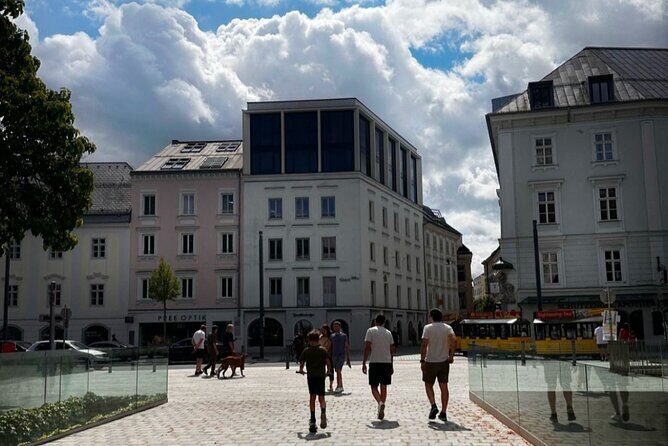
The cost is $34.30 per group for up to 6 people, and the game runs about 2 hours 30 minutes. If you fill all six spots, you’re effectively paying roughly $5.70 per person at the top end. Even if you bring fewer people, the per-person cost usually stays reasonable because the unit is per group—not per head.
Where the value really shows up is in structure. You’re not just walking through town and hoping you’ll feel inspired. You’re given a route, puzzle prompts, and a map to the best places. That reduces decision fatigue, which is huge when you’re new to a city and your time is limited.
One fair caution: this isn’t a guided museum tour where a person explains everything as you go. You’re doing the work. If you love hands-on problem-solving, it’s a good deal. If you prefer passive sightseeing, you might feel like you’re paying for instructions to keep you busy instead of a storyteller.
Starting at Brucknerhaus Linz: easy to find and easy to finish
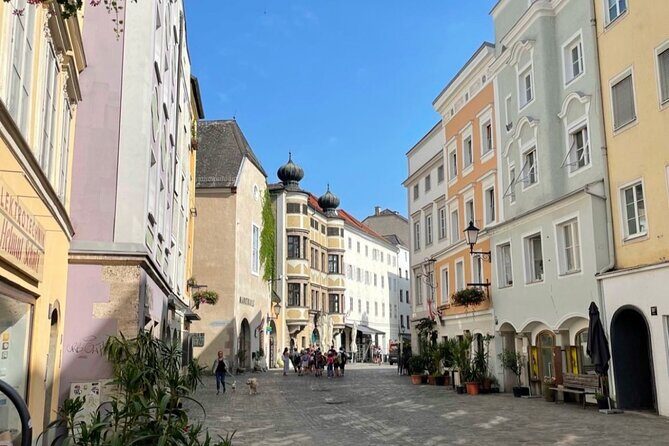
The meeting point is Brucknerhaus Linz, Untere Donaulände 7, 4010 Linz. The route also ends back at the same place, which saves you from the classic logistics headache of a one-way tour.
It’s open every day during the listed hours (the activity window is 6:00 AM to 11:30 PM). That wide range gives you options. You can pick a time that matches your energy level—morning if you like quiet streets, afternoon if you want more city life around you.
Also, it’s near public transportation. Even if you’re arriving by bus or train, you’re not stuck in a remote neighborhood where you need a car to do anything.
Practical tip: charge your phone before you start. These puzzle hunts can quietly eat battery life as you bounce between screens and scan details.
The three stops: what each one adds to your puzzle day
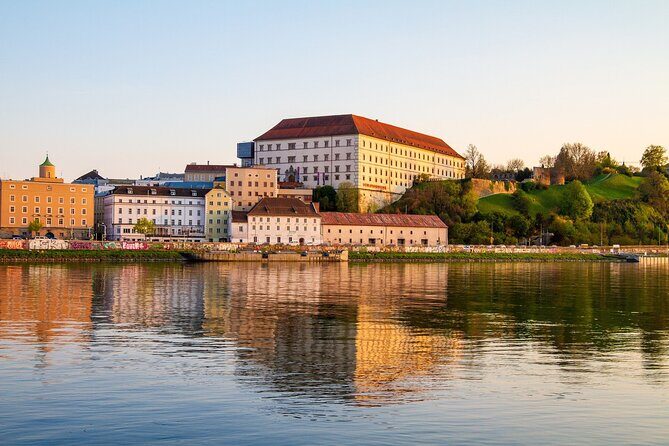
Stop 1: Ars Electronica Center and the start-of-game momentum
You begin at Ars Electronica Center. Starting here is smart because it’s a recognizable anchor point: you get your first puzzle right away, before everyone’s brains are warm or confused.
What you should expect at the opening stage is getting set up for the format—solving, reading clues, and using what the game asks to answer questions about the city and its landmarks. Early tasks often feel like calibration. You’ll learn what kind of thinking the quest rewards: pattern spotting, careful reading, and checking details rather than guessing.
Possible drawback here: if your group is more “let’s stroll and look around” than “let’s solve,” the first stop can feel like work. It helps to assign roles at the start. One person can read clues out loud, another can handle the phone, and another can double-check answers.



Stop 2: Lentos Kunstmuseum (Museum of Modern Art Linz) and art-focused questions
Next comes Lentos Kunstmuseum (Museum of Modern Art Linz). This is where the quest benefits from variety. A modern art museum stop signals that you’re not only learning dates and names—you’re also working with the idea of interpretation and observation.
During this part, the game’s mix of codes to crack and facts about landmarks and history tends to feel more satisfying. You’re still solving, but you’re doing it in a setting where the environment supports curiosity. Even if you don’t go deep into the museum galleries on your own, the quest gives you a reason to look closely at what’s in front of you.
One thing to keep in mind: modern art spaces can make people want to slow down. If your group includes both puzzle-lovers and museum fans, you’ll likely enjoy this stop most. If your group includes people who hate uncertainty, you may want a quick reset and agree on a pace.
Stop 3: Martin Luther Kirche and history facts you can test
The final landmark stop is Martin Luther Kirche. This is your history-facing turn. Churches often cue the kind of questions that match the “facts about landmarks and history” promise in the quest design.
By the time you reach the church stop, your group’s puzzle rhythm is usually smoother. You’ve seen the format twice already, so you can focus on the content: reading what the quest asks, extracting the right detail, and moving forward.
What I like about ending with a church stop: it gives a calmer, more reflective feel than a purely entertainment-heavy route. Even though this is a game, it tends to leave you with more than just solved steps. You start walking out with a clearer sense of what makes Linz feel like Linz.
How the help system works when you get stuck
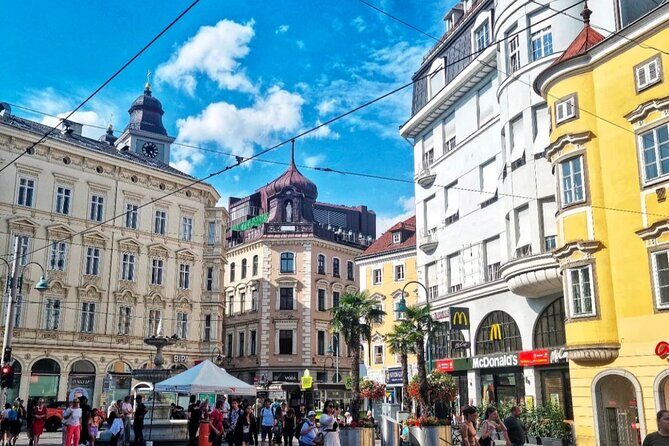
The quest is meant to be self-guided, which means you’re in the driver’s seat. That’s fun—until a task stops the group cold.
Here’s the key detail: there’s a HELP button for more challenging tasks. That’s important because it’s a built-in pressure release valve. If you hit a wall, you can see how the puzzle was completed rather than spiraling into frustration.
Still, one caution based on real feedback: the most frustrating moments are usually when a tip doesn’t feel useful enough. Some puzzles may require a very specific interpretation, and if the hint doesn’t guide your group toward that exact angle, you’ll burn time.
My practical advice: if you’ve spent too long on one item, hit HELP sooner rather than later. Then get back into solving mode. The quest only works well when your momentum stays up.
Time management: 2 hours 30 minutes can fly
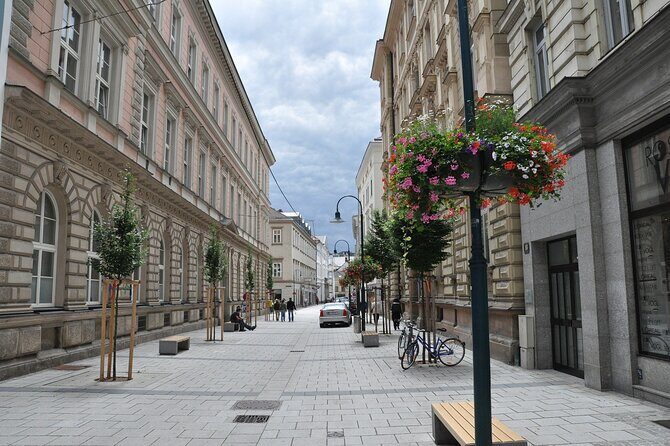
You’re looking at about 2 hours 30 minutes total. In practice, this amount of time is perfect for a medium-intensity city outing: long enough to feel like you saw and learned something, short enough that it doesn’t wipe out your whole day.
Plan for small friction points:
- finding the exact puzzle location within a busy area,
- re-reading a clue when your group gets distracted,
- taking a quick photo while you confirm details.
If your group includes kids or first-timers, they’ll benefit from quick role assignments and frequent check-ins. If your group is mostly adults who like puzzles, you’ll enjoy the freedom to argue over logic without someone correcting you every five minutes.
Getting the most out of a puzzle tour like this
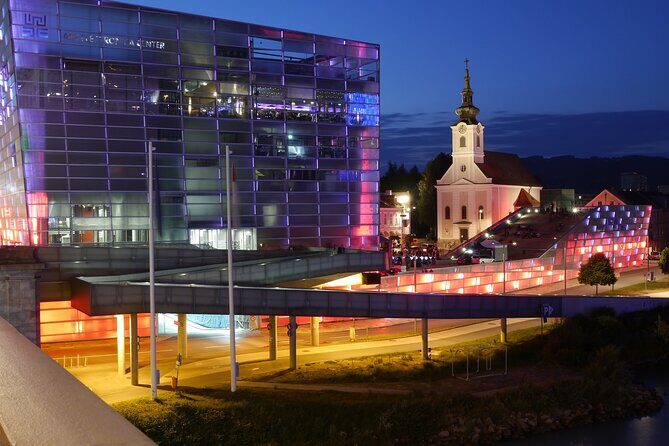
This quest is simple in concept: solve puzzles, crack codes, and answer facts tied to the route. The payoff is how it changes your attention.
Instead of walking past landmarks, you’re looking for the exact detail the game asks for. That’s why these city quests can feel more memorable than a standard checklist tour. You don’t just see a place—you earn your information.
To make it work smoothly, I recommend three tactics:
- Agree on a team strategy at the start (reader, phone operator, fact-checker).
- If you stall, use HELP and move on.
- Treat the final summary as part of the fun, not paperwork at the end.
One more note: the experience is offered in English, and confirmation comes at booking time. So you can plan around it without lots of waiting.
Who should book City Quest Linz?

You’ll likely enjoy this most if you want a city outing that mixes sightseeing with problem-solving. It fits well for:
- families who need an activity that keeps everyone engaged,
- friend groups who like light competition and teamwork,
- travelers who get bored by lectures but like learning through questions,
- anyone who wants a planned route without committing to a full guided tour all day.
If you’re the type who wants a quiet, fully guided experience with constant explanations, this may feel like too much self-direction. In that case, choose a standard walking tour instead.
Should you book City Quest Linz?
Yes, if you’re in Linz for a short stay or you want a fun way to get your bearings fast with smartphone puzzles and a tight route. The $34.30 per group pricing can feel very fair, especially up to six people, and the three-stop structure keeps it from becoming a wandering scavenger hunt.
I’d skip it—or at least be more cautious—if you hate getting stuck on puzzles. Even with a HELP button, the experience can depend on how well the prompts guide you through the trickier tasks. If that kind of challenge frustrates you, you might not get full value from the time spent.
If you do book, go in with a team mindset. Bring patience for codes. Then enjoy the best part: turning Linz landmarks into a solved story you can walk away with.
FAQ
What is City Quest Linz?
It’s a smartphone-based city search experience that mixes a treasure hunt, orientation game style challenges, and a self-guided tour with puzzles, codes, and city facts.
How long does the experience take?
It takes about 2 hours 30 minutes.
How much does it cost?
It costs $34.30 per group, up to 6 people.
What language is it offered in?
The experience is offered in English.
What stops are included?
The route includes Ars Electronica Center, Lentos Kunstmuseum (Museum of Modern Art Linz), and Martin Luther Kirche.
Does it require a guide?
A guide is not included. You use the smartphone for the city quest format, and there is a map with the best places in the city.
Is it private for my group?
Yes. It’s a private tour/activity, and only your group participates.
Is the experience refundable if I cancel?
No. The experience is non-refundable and cannot be changed for any reason.