REVIEW · LOWER AUSTRIA
Admission Pass to The Roman Quarter and the Museum Carnuntinum
Book on Viator →Operated by Roman City Carnuntum · Bookable on Viator
Roman rooms have a way of making time feel close. Here at Carnuntum, the Roman Quarter is built to be lived-in, with fully functional houses, a bathhouse you can tour, and outdoor spaces that feel like they belong to people who were here every day. Then the Museum Carnuntinum adds context with finds from around 2,000 years of Roman life in the area.
Two things I like a lot: first, the reconstructions are detailed enough that you stop imagining and start observing—furniture, decor, and household setups help you understand daily rhythms. Second, the pairing works: you can walk the site, then see what artifacts say about the people and the Danube frontier world.
One thing to consider: there’s a bit of distance between the main parts of the experience, and while there’s a shuttle bus set up on weekends during the season, you’ll still want to plan your timing and transport so you don’t feel rushed.
In This Review
- Quick hits before you go
- Roman Quarter Carnuntum: real spaces, not guesswork
- Walking the Roman Therme bathhouse (and why it’s worth your time)
- The four houses: everyday life from different angles
- Getting the rhythm right: how to pace your 3 hours
- Museum Carnuntinum: from buildings to artifacts
- When events and seasonal atmosphere matter
- Value and timing: what $16.21 buys you
- What you should know before you arrive
- Who this is best for (and who might want a different day plan)
- Should you book the Admission Pass to Roman Quarter and Museum Carnuntinum?
- FAQ
- What does the pass include?
- How long does the experience take?
- How much is the admission pass?
- When is it open?
- Are guided tours included?
- Where is this experience located?
- How will I receive my booking confirmation?
- Is it easy to get there by public transportation?
- Is there a way to get between areas if distances feel long?
- Is it refundable if my plans change?
Quick hits before you go
- Four fully functional houses plus multiple public-style spaces, so it’s not just ruins on display
- Roman Therme bathhouse experience—water, rooms, and Roman daily-life vibes
- Villa urbana murals and a more “home and status” feel compared with merchant and civic buildings
- House of Lucius garden stroll for a calmer, slower moment
- Museum Carnuntinum exhibition focus on Carnuntum’s story and the Danube Limes context
- Good value pass for about 3 hours of self-guided touring
Roman Quarter Carnuntum: real spaces, not guesswork
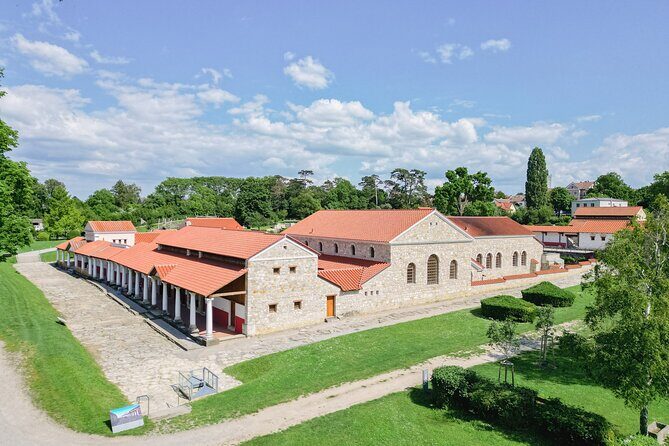
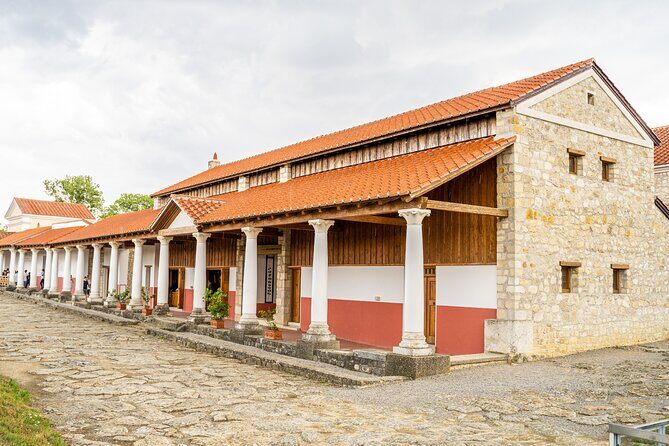
The Roman Quarter at Carnuntum is the reason people come. You’re not standing in front of a few stones and hoping your brain fills in the gaps. Instead, you move through reconstructed buildings designed for how Romans actually lived—rooms, layouts, and household details that make the place feel inhabited.
I especially like how the site is organized so you can keep your bearings. There’s a large visitor center to get oriented, and then the buildings and outdoor grounds spread out in a way that feels like a neighborhood rather than a checklist. That matters because Roman cities can be confusing fast. Here, you’re guided by space and theme.
You’ll also notice the site isn’t only “Roman stuff.” There’s practical visitor infrastructure too: an on-site restaurant called Forum Culinarium, a children’s playground, and plenty of open outdoor areas with trees and meadows. In other words, you can spend time without needing to sprint from one stop to the next.
You can also read our reviews of more tours and experiences in Lower Austria.


Walking the Roman Therme bathhouse (and why it’s worth your time)
A big highlight is the Roman Therme, the bathhouse area. Baths were a major part of Roman social life. People didn’t just wash; they talked, relaxed, and built community.
What makes this one work is that it’s built as a place you can actually tour. You’re not staring at a model or reading a panel only. You’re moving through the kind of rooms where the sounds and routines would have mattered—so the idea of water and daily care becomes physical, not theoretical.
If you like history you can touch—this is your moment. And if you’re visiting with kids, this is a natural win because the bath setting is visually engaging and easier to understand than, say, a purely military building.
The four houses: everyday life from different angles
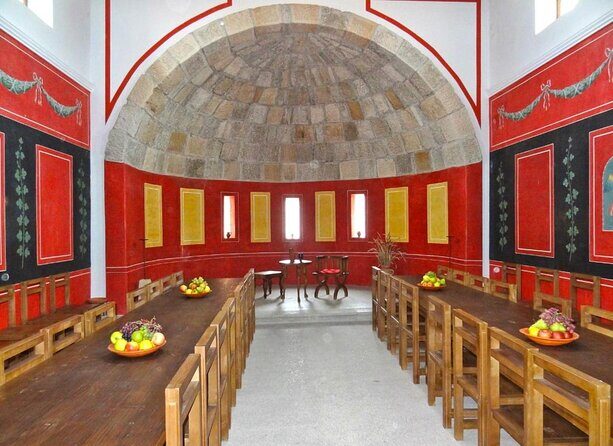
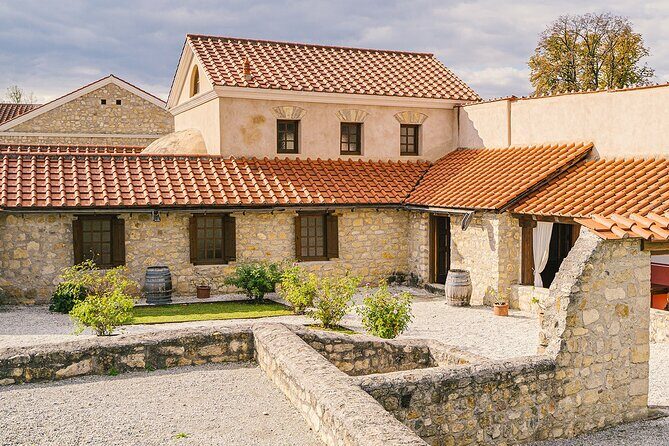
The Roman Quarter includes four fully functional houses, and that’s a gift. Instead of seeing the same “rich Roman house” story over and over, you get multiple social viewpoints. You can almost map who lived where by the type of space and how the buildings function.
Here’s what you’ll be able to experience on site:
- Stately city palace: a more formal, higher-status feel. This is where Roman power and public presence start to make sense.
- Villa urbana: the focus here is the home-and-art angle, including fantastic murals. Murals aren’t just decoration; they signal wealth, taste, and how people wanted rooms to feel.
- House of the oil merchant: this is where business life comes forward. It’s easier to picture work and trade when you can walk through a space built for that role.
- House of Lucius: the name alone gives it a personal touch, and the garden is a great payoff if you need a calmer break from the busier buildings.
I like that these houses also differ in atmosphere. One feels more formal. One feels lived-in and artistic. One leans toward commerce. And one adds a slower outdoor moment. It’s how you turn Roman life from a textbook topic into something that reads like a neighborhood.
Getting the rhythm right: how to pace your 3 hours

The experience is designed around a self-paced visit that totals about 3 hours. That’s a sweet spot. Long enough to see both the Roman Quarter and the museum, short enough that you won’t need half a day to feel like you did something.
My practical suggestion: treat the Roman Quarter as your main event and use the museum as the “connect-the-dots” layer.
A good flow is:
1) Start with the Roman Quarter and aim to focus on two or three buildings deeply, not all of them shallowly.
2) Then go to the Museum Carnuntinum with the site fresh in your mind. You’ll read exhibits with more meaning because you already walked the spaces.
If you’re visiting with kids, the playground and outdoor areas can become a time buffer. You can build in a short break so the day stays fun instead of tiring.
Museum Carnuntinum: from buildings to artifacts
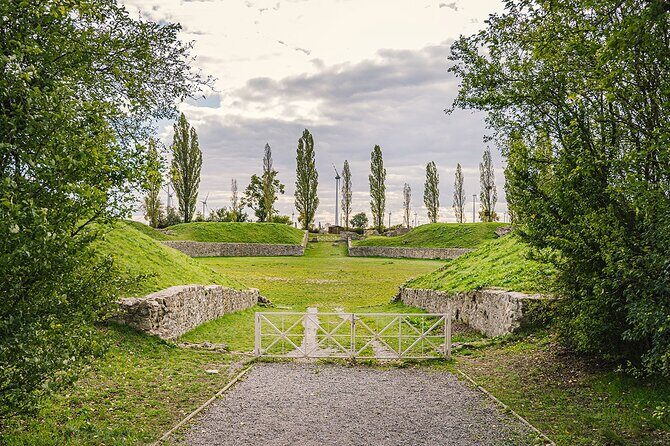
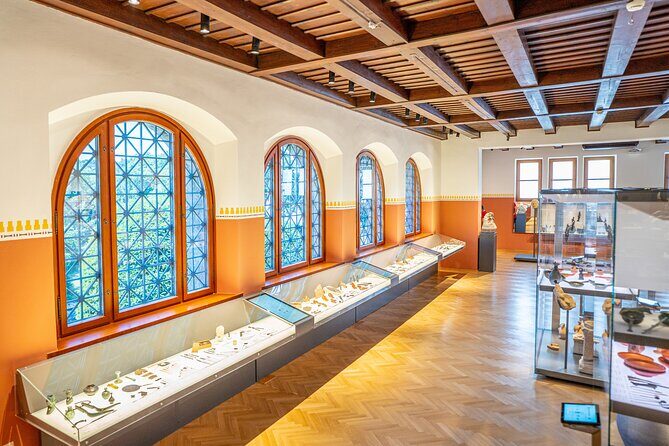
The Museum Carnuntinum is a must-do companion because it gives you evidence behind the setting. The museum houses finds tied to Roman history in Carnuntum—items that let you connect what you saw in reconstructed spaces with what archaeologists recovered.
The current exhibition is titled Weltstadt am Donaulimes (Metropolis at the Danube Limes). It covers the history of Carnuntum, stories of inhabitants, and the broader UNESCO context at the gates of Vienna tied to the Danube frontier system.
This is a smart pairing because it explains the “why” of the place. Roman cities on frontiers weren’t isolated. They were part of a wider network of roads, supply, defense, and cultural mixing. When you understand that frame, Carnuntum stops being a standalone stop and becomes part of a larger world.

When events and seasonal atmosphere matter
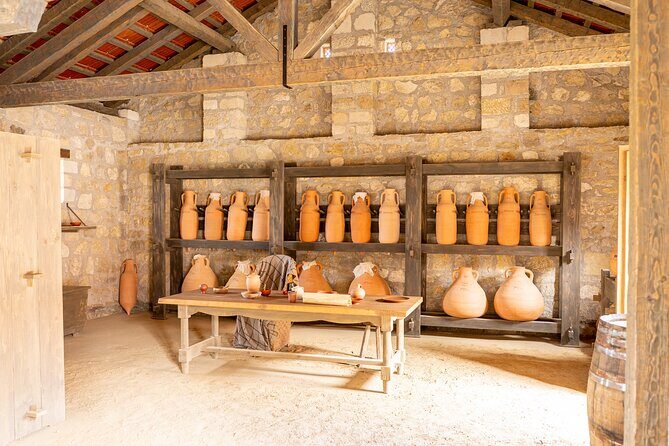
The site can feel extra alive depending on the season. One review mentions a summer recreation festival where people role-play and take part in an on-site event with a performer portraying an emperor. That kind of event can add color, but it also means the atmosphere may be more energetic and less quiet than a typical day.
If you’re the type who prefers calm museum time, aim for earlier visiting hours when possible, especially during warmer months.
Value and timing: what $16.21 buys you
This pass costs $16.21 per person and tends to be booked around 17 days in advance. That price is solid for two reasons.
First, you’re paying for entry to both the reconstructed Roman Quarter and the Museum Carnuntinum. A lot of regional attractions charge separately for sites that complement each other; here they’re bundled.
Second, the experience is built for self-guiding. You’re not paying for a paid lecture or a scheduled group tour. You can wander, look longer where your interests pull you, and use the museum when you’re ready to connect story to objects.
The duration also supports good value. At roughly 3 hours, it fits easily into a day trip without turning into an all-day haul.
What you should know before you arrive
A few practical points make the visit smoother.
The site runs Monday through Sunday, 9:00 AM to 5:00 PM, during the season 04/23/2025 to 11/15/2025. If you’re planning around a Vienna base, this is a doable daylight activity, not a late-evening plan.
Also, the experience is near public transportation, and the venue allows service animals. Most people can participate comfortably, since the touring is designed for visitors to move through reconstructed spaces.
One more logistics note: because the Roman Quarter and the museum are separate areas, there can be some distance to cover. The site has mentioned that a shuttle bus runs on weekends during the season, which can help you avoid unnecessary walking if you’re there on a weekend.
Who this is best for (and who might want a different day plan)
This is a great fit if you like:
- history you can see in 3D, not just read on a sign
- Roman daily life—homes, baths, commerce, and social spaces
- a mix of outdoor exploring and museum learning in the same stop
- a family-friendly environment with space to take breaks
It may be less ideal if you want:
- a fully guided narrative included in the price (guided tours are not listed as included)
- a quiet, strictly museum-only experience (the Roman Quarter is an active site with buildings, gardens, and family areas)
Should you book the Admission Pass to Roman Quarter and Museum Carnuntinum?
If your goal is to experience Roman life—walking through reconstructed houses, stepping into the bathhouse feeling, then tying it to artifacts in the museum—then yes, you should book it. For the money, it’s a well-matched pair: buildings first, evidence second.
The only reason I’d hesitate is if you’re set on a guided tour format as part of the experience. Since guided tours aren’t included, you’ll get more from this pass if you’re comfortable reading signs and letting the buildings do the storytelling.
If you can visit during the season hours and you plan for weekend shuttles (if relevant), this becomes an easy win for a day near Vienna’s Roman frontier world.
FAQ
What does the pass include?
It includes admission to The Roman Quarter and the Museum Carnuntinum, with all fees and taxes included.
How long does the experience take?
Plan for about 3 hours (approx.).
How much is the admission pass?
The price is $16.21 per person.
When is it open?
It’s open Monday–Sunday from 9:00 AM to 5:00 PM during the season 04/23/2025–11/15/2025.
Are guided tours included?
No. Guided tours are not listed as included.
Where is this experience located?
It’s in Lower Austria, Austria, in the Carnuntum area.
How will I receive my booking confirmation?
Confirmation will be received at the time of booking.
Is it easy to get there by public transportation?
Yes, it is listed as near public transportation.
Is there a way to get between areas if distances feel long?
A shuttle bus is mentioned as being set up on weekends during the season to help with the distances.
Is it refundable if my plans change?
Yes, free cancellation is available if you cancel at least 24 hours in advance of the start time for a full refund.