REVIEW · WATTENS
Swarovski Crystal Worlds Admission Ticket in Wattens
Book on Viator →Operated by Swarovski Kristallwelten · Bookable on Viator
Crystal heaven for kids and adults alike. Swarovski Crystal Worlds in Wattens is one of those rare museum visits where the wow factor starts immediately, from the Chambers of Wonder to the Crystal Cloud (about 800,000 hand-mounted crystals). Add in a mobile visitor guide and complimentary Wi‑Fi, and you can move at your own pace without feeling lost.
I also love the split-personality layout: dazzling indoor galleries for curious adults, plus outdoor art in the Garden of the Giant that keeps the visit from feeling like one long hallway. For families, the play tower and the playground give kids a real chance to burn energy, not just “look quietly at glass.”
The main drawback is that your wallet can start to creep—food and drinks are not included, and the on-site shop and extras can be pricey. Plan for that ahead of time so the day stays fun instead of stressful.
In This Review
- Quick hits before you go
- From ticket swap to first room: how the visit really works
- Chambers of Wonder: where crystal becomes a show
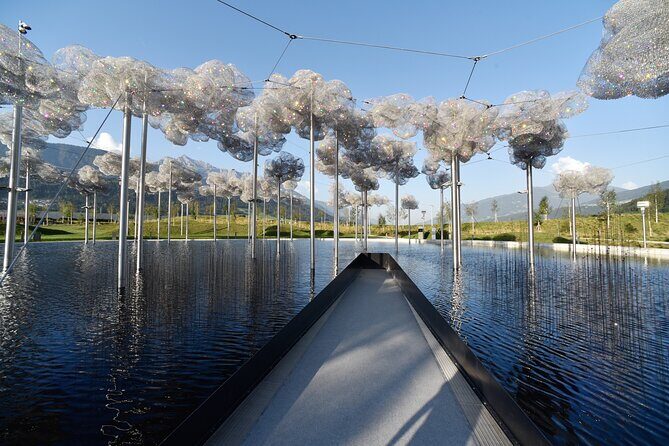
- Crystal Cloud: the 800,000-crystal moment you’ll remember
- Garden of the Giant: art outside where kids can move
- The play tower and playground: why families rate this so highly
- Carousel fun: a small thing that keeps the day light
- Eating at the Cafe and Restaurant: plan your budget
- Shop time: Swarovski is part of the experience, and the price reflects it
- Price and value: what you actually get for $30.04
- Getting there and getting around: public transport is close, but have a backup
- Duration tips: how long should you really budget?
- Is the Light Festival included? Timing matters
- Who this ticket is best for
- Final call: should you book Swarovski Crystal Worlds in Wattens?
- FAQ
- How long does the Swarovski Crystal Worlds admission usually take?
- Is a mobile visitor guide included with the ticket?
- Is the audio guide included in the admission price?
- Are food and drinks included?
- Is this experience good for children?
- Is there free cancellation?
Quick hits before you go

- Crystal Cloud = 800,000 hand-mounted crystals you can actually feel your eyes working to take in
- Mobile visitor guide + free Wi‑Fi so you can read as you go and skip stress
- Garden of the Giant outside with art installations that change the mood from indoor glow
- Kids get the play tower and playground, not just a token corner
- Audio guide costs extra, even though the mobile guide and Wi‑Fi are included
From ticket swap to first room: how the visit really works
Your entry starts with exchanging your voucher for admission. Once you’re inside, the museum is designed so you can pick a route and slow down when something grabs you. The vibe is part museum, part light show, and part family theme park. That mix is the point.
You’ll want to spend a little time early getting your bearings. The mobile visitor guide (included) helps you understand what you’re looking at without forcing you to read every label. And yes, the free Wi‑Fi is handy—especially if you’re traveling with kids and need to keep the day organized while people bounce between rooms.
If you’re the type who likes a clear plan, start with the indoor galleries. They set expectations fast: Swarovski cut glass and crystal treated like the star of a science experiment. If you’d rather pace things, head straight toward the big signature sight and then circle back to the rest.
One practical note: the experience lasts roughly 1 to 4 hours, and that range is realistic. A fast walk-through might take about an hour to an hour and a half; a slower family pace can stretch longer, especially with the play areas.
A few more Wattens tours and experiences worth a look


Chambers of Wonder: where crystal becomes a show
The Chambers of Wonder are where the museum flips the usual crystal-shopping idea on its head. Instead of only admiring objects behind glass, you’re in rooms designed to make light feel three-dimensional. It’s not about reading one fact at a time. It’s about watching how the crystal reacts in space.
This is where you’ll likely notice the museum’s strongest trick: it turns a luxury material into something playful and easy to follow. Even if you’re not a big fan of the brand, the room design does a lot of the explaining for you.
A bonus from the way the exhibits are presented: there can be sections with pop-culture sparkle and recognizable icons. One review highlights a Hollywood-themed portion with items like a Marilyn Monroe dress, the ruby slippers, and other well-known costumes. If that sort of pop-culture detour is your thing, it can be an unexpected highlight.
Crystal Cloud: the 800,000-crystal moment you’ll remember
Then you reach the big headline: the Crystal Cloud, built from over 800,000 hand-mounted crystals. This is the part people talk about because the scale is hard to fake. It looks like a sculpture, but it’s also a visual environment—something you stand near and feel your brain trying to process.
If you want to get the most out of it, don’t treat it like a photo stop you rush through. Spend a few minutes just watching the way light shifts as you move. When you do that, the Crystal Cloud stops being “a lot of crystals” and becomes a place with atmosphere.
Photo tip (based on common on-site frustrations): lighting in places like this can be tricky, and crowds can make angles harder. If you’re trying to get great shots, give yourself time to reposition instead of snapping one frame and moving on. When you get it right, the images look almost unreal.
Garden of the Giant: art outside where kids can move

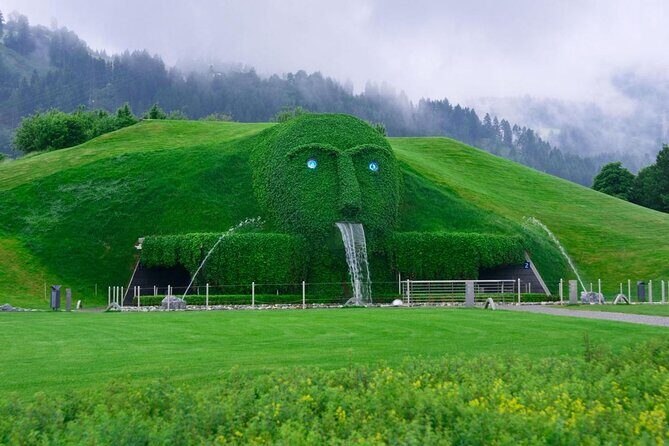
Heading out to the Garden of the Giant is a smart change of pace. Indoor rooms can make you feel like you’re “staying still.” The garden breaks that. You’ll see outdoor art installations, and you’ll also get access to the museum’s big family energy zones.
One of the garden’s best roles for visitors is simple: it prevents the day from turning into a single-focus activity. If you have kids (or if you just need a visual reset), outdoor space makes the museum feel less like a long indoor obligation and more like an outing.
There’s also mention of the Giant’s Cave in feedback, which suggests part of the outdoor experience includes themed, immersive spaces. Even if you’re not chasing specific names, it’s worth slowing down outside and letting yourself wander a bit rather than only following the most direct route.
The play tower and playground: why families rate this so highly
If you’re visiting with children, this is where the museum earns real loyalty. The play tower and the playground are not an afterthought. Kids can climb, move, and play in an outdoor area designed for energy release.
That matters because crystal museums can otherwise feel like adults quietly trying to enjoy something while kids get bored. Here, the museum gives kids their own mission: climb, explore, and run around safely. As a parent, that can turn your visit from “can we make it through” into “we’re actually having fun.”
One practical advantage: kids can stay busy while you still get moments of calm. You’ll likely find pockets of time where you can step into a room, enjoy the installations, then return to the garden to check on play time.

Carousel fun: a small thing that keeps the day light

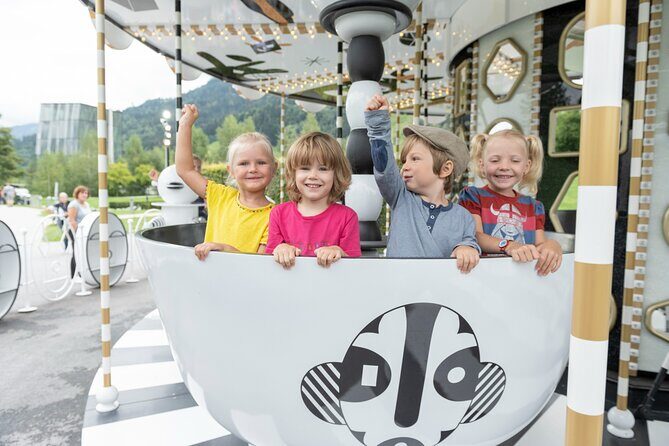
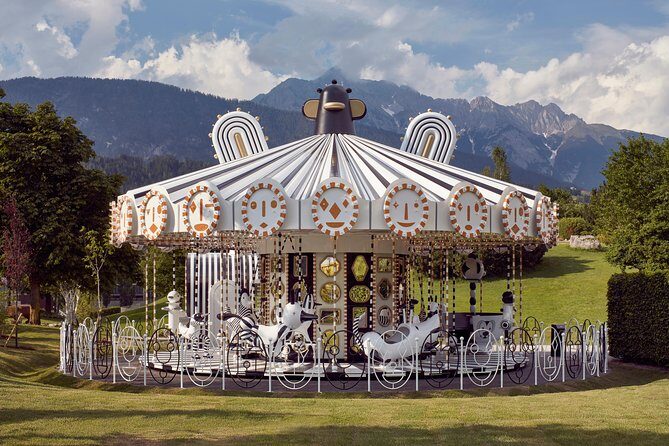
The museum also includes a ride called the Carousel. It’s not the main crystal spectacle, but it helps the visit feel balanced. Kids get a “moment” that’s not just running and climbing, and adults get an easy reset between more intense exhibits.
This kind of middle-ground attraction is worth something. It’s the difference between a day that feels like strict sightseeing and a day that feels like a family outing with culture built in.
Eating at the Cafe and Restaurant: plan your budget
When hunger hits, you’ll find the Cafe and Restaurant by the gardens. The big selling point here is the view over the surrounding countryside. It’s a nice reward after time spent in dark, sparkly rooms.
The catch is cost. Multiple comments flag that food and drink prices can feel steep once you’re onsite—comparable to airport-level pricing. You don’t want to ruin a fun morning by overspending on lunch. If you’re traveling on a tighter budget, consider timing snacks strategically so you’re not forced into one expensive meal at the last minute.
Also, food and drinks are not included in the ticket. So you’re choosing your own spend from the start.
Shop time: Swarovski is part of the experience, and the price reflects it
The museum store is a major stop for many people. It’s easy to understand why: Swarovski branding shows up everywhere, and the store is built to feel like a destination too.
Still, it can hit your wallet hard. Reviews point to “terrifying” pricing, which is a pretty clear warning. If you love the look of Swarovski and want a souvenir, set a limit before you go in. If you don’t, treat the shop as a quick browse and move on—there’s plenty to enjoy without spending.
Price and value: what you actually get for $30.04
At about $30.04 per person, this ticket can feel like a good deal if you value the main features. Your admission covers entry to Swarovski Crystal Worlds, plus local taxes, a mobile visitor guide, and complimentary Wi‑Fi.
What’s not included matters:
- Food and drinks (you decide what you spend)
- Audio guide (available in 10 languages upon request, but not included)
- Transportation to/from the attraction (you’ll handle getting there)
So the “value” depends on your style. If you like exploring at your own pace, the included mobile guide and Wi‑Fi help a lot. If you’re the type who always uses audio guides, you’ll want to budget extra.
Also keep in mind timing: the average booking happens around 18 days in advance. That’s not a guarantee of sold-out crowds, but it’s a good sign to plan ahead—especially if you’re traveling in peak season.
Getting there and getting around: public transport is close, but have a backup
The attraction is near public transportation, which helps. You should be able to plan a straightforward ride from the region without needing a car.
Still, don’t ignore small practical details. One comment mentions a shuttle bus from the city and says it only takes cash. I can’t confirm that for every route and day, but it’s smart to bring a little cash as a backup, just in case your plan relies on a transit option with limited payment types.
Inside, your time is the main “logistics.” The museum is walkable, and most people can participate, but there are rooms connected by stairs. One review flags this as a challenge for people with mobility needs, while another says it was manageable even with a wheelchair. If that’s relevant for you, it’s worth thinking about your comfort level with stairs before you go.
Duration tips: how long should you really budget?
The ticket experience is listed as about 1 to 4 hours. That’s a wide range, and it matches how different visitors use the site.
- If you want a quick hit: target roughly 1 to 2 hours, focused on the main rooms and the Crystal Cloud.
- If you’re with kids or you want time outdoors: plan closer to 2.5 to 4 hours, because the play tower and garden take time.
If you’re trying to avoid rushed photo moments, give yourself more than you think you need for the Crystal Cloud and the garden.
Is the Light Festival included? Timing matters
There’s a special note: from 29 November 2019 until 6 January 2020, an award-winning Light Festival was included with entrance. If you’re visiting around a similar seasonal schedule, you might find special light programming, but the only confirmed dates provided are for that 2019–2020 period.
So treat this as a “nice-to-know historical bonus,” not something to plan your whole trip around—unless your dates match those specific days.
Who this ticket is best for
This is a strong fit if:
- You’re traveling as a family and you need a destination where kids have a real play area.
- You like hands-on visual experiences where lighting and materials do the storytelling.
- You want a unique stop in Austria that doesn’t require deep knowledge of crystal or design.
It may be less ideal if:
- You want a quiet, purely educational museum day with minimal spending.
- Your budget is tight for lunch and snacks, since food isn’t included.
- You rely on a fully accessible route without stairs and want certainty. Since stair navigation is mentioned, you’ll want to plan carefully.
Final call: should you book Swarovski Crystal Worlds in Wattens?
I’d book this ticket if you want a high-impact experience that works for both adults and kids. The combination of indoor wonder (especially the Crystal Cloud) and outdoor freedom (garden plus the play tower) is what makes the day feel worth your time.
Before you click confirm, decide one thing: are you okay with paying extra once you’re inside for food, and maybe an audio guide or shop purchases? If you go in with a simple plan—one snack plan, one souvenir limit, and enough time to enjoy the big rooms—you’ll leave with that rare feeling of having done something fun and memorable without it turning into a headache.
FAQ
How long does the Swarovski Crystal Worlds admission usually take?
It’s listed as about 1 to 4 hours, depending on how much you explore and how much time you spend in the indoor galleries, outdoor garden areas, and the kids’ play spaces.
Is a mobile visitor guide included with the ticket?
Yes. The entry ticket includes a mobile visitor guide, and it also includes access to complimentary Wi‑Fi.
Is the audio guide included in the admission price?
No. An audio guide is available in 10 languages upon request, but it is not included with the ticket.
Are food and drinks included?
No. Food and drinks are not included. There is a Cafe and Restaurant on site if you want to eat during your visit.
Is this experience good for children?
Yes. Children can play on the play tower and in the innovative outdoor playground. Children must be accompanied by an adult.
Is there free cancellation?
Yes. You can cancel for a full refund up to 24 hours in advance. If you cancel less than 24 hours before the experience’s start time, the amount paid is not refunded.