REVIEW · INNSBRUCK
Innsbruck: Tickets for Schloss Ambras
Book on GetYourGuide →Operated by Kunsthistorisches Museum · Bookable on GetYourGuide
Odd objects, real wonder. Schloss Ambras in Innsbruck turns Renaissance collecting into something you can actually walk through—art, science, armor, and painted faces from across centuries, all under one roof. I particularly like how fast you can start making sense of the place once you’re inside, because the rooms are arranged around Ferdinand II’s passion for gathering remarkable things.
My second favorite part is the Kunst- und Wunderkammer, where priceless objects and scientific curiosities sit side by side, including odd materials like coral and ivory and portraits of people considered miracles. You also get a major hit of visual variety in the Habsburg portrait gallery, with more than 200 paintings across a long span of rulers. The main drawback to plan for: this is an admission ticket experience without an audio guide or a guided tour included, so if you want context while you go, you’ll need to bring your own guide or plan for a private guide.
In This Review
- Key things you’ll notice at Schloss Ambras
- Schloss Ambras ticket value: $16 for a whole museum mood
- Where Schloss Ambras starts in Innsbruck: meeting point and approach
- The Kunst- und Wunderkammer: Renaissance cabinets that act like encyclopedias
- A practical way to enjoy the cabinet without feeling overwhelmed
- What’s special about the objects: ivory, coral, portraits of miracles, and faraway culture
- The armories: tournament, ceremonial armor, and why people collected steel
- If you’re short on time
- The Antiquarium and how it fits with Ferdinand II’s collecting mindset
- The Habsburg portrait gallery: 200+ paintings across rulers and eras
- How to pace the portrait gallery so it doesn’t blur together
- What to expect from a one-day visit (and how to make it feel complete)
- Who this visit is best for
- Booking call: should you get tickets for Schloss Ambras?
- FAQ
- What is included with the Schloss Ambras ticket?
- Is an audio guide included?
- How long is the visit valid?
- Where is the meeting point?
- Can I cancel for free?
- Do tour guides get free admission?
Key things you’ll notice at Schloss Ambras

- Kunst- und Wunderkammer shows Renaissance “one-world” thinking, where art, nature, and science are displayed as part of the same big picture
- Ferdinand II’s collecting personality is the thread that connects musical instruments, curiosities from far places, and strange human portraits
- The armories are more than display cases: tournament armor, ceremonial armor, and the Turkish Chamber capture 16th-century power and fascination
- The Habsburg portrait gallery is a full afternoon-style art stop, with 200+ paintings from Albrecht III through Franz II
- Even the materials tell a story, with objects made from materials like coral and ivory and other rare natural products
Schloss Ambras ticket value: $16 for a whole museum mood
For $16 per person, your day at Schloss Ambras is a strong value because you’re not paying for one narrow highlight. You’re paying for several different ways of experiencing Renaissance ambition: a cabinet of wonders, armor rooms, and a large portrait gallery.
The key detail is what’s included: admission to Schloss Ambras. That means the “tour” you’re booking is essentially the museum experience itself—you’ll spend your time choosing how to pace the collection. If you’re the type who likes reading labels and moving at your speed, the ticket works well as-is.
If you’re the type who wants a narrative, you should note what’s not included: an audio guide and a guided tour. You can still go without either, but plan on taking a bit more time to read, or consider a private guide so you don’t just see objects—you understand why they mattered.
A few more Innsbruck tours and experiences worth a look



Where Schloss Ambras starts in Innsbruck: meeting point and approach
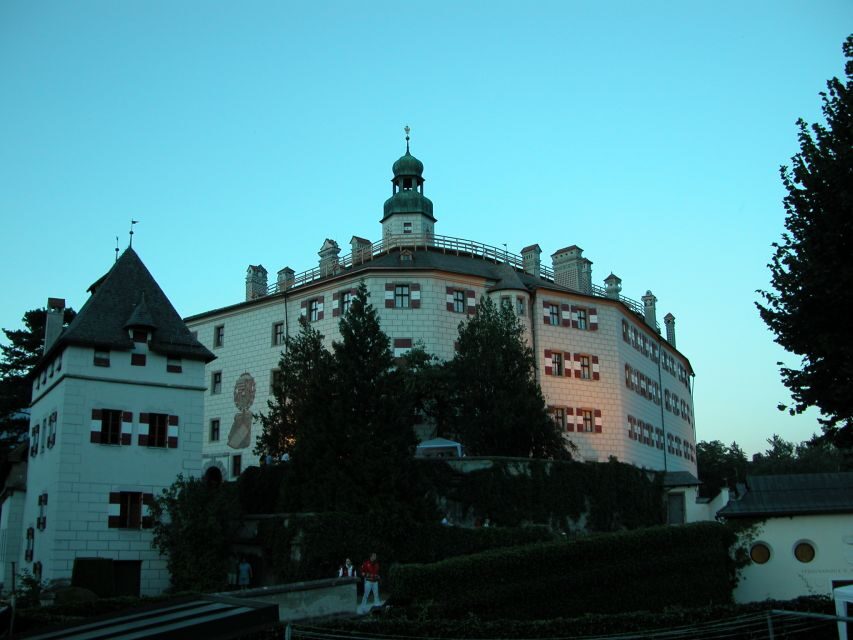
Your meeting point is Schloss Ambras, Schlossstrasse 20, 6020 Innsbruck. Since this is an admission ticket, the most practical way to use your one day is to arrive ready to move through multiple sections without getting stuck in one room too long.
Here’s what I’d do: give yourself a calm start and then commit to a simple plan—early focus on the Kunst- und Wunderkammer, then armor, and save the portrait gallery for when you’re ready to settle in. The museum content shifts in tone across these areas, so switching tasks after you’ve absorbed the cabinet of wonders keeps your attention sharp.
Also, keep an eye on the “valid 1 day” detail when you pick a start time. Your ticket is tied to availability and starting times, so treat your chosen entry time as your anchor for the whole day.
The Kunst- und Wunderkammer: Renaissance cabinets that act like encyclopedias

This is the heart of Schloss Ambras for most people, and for good reason. The Kunst- und Wunderkammer is described as an encyclopedic, universal collection—basically a Renaissance answer to how the world works. Instead of separating art from science or culture from nature, the display logic treats everything as knowledge worth collecting.
What you’ll actually see here goes beyond one category of “curiosities.” It includes:
- Outstanding objects (like the Tödlein)
- Scientific items (including an attachment with compass)
- Items from distant countries (like the Ryukyu bowl)
- Rare natural products (including corals)
- Human portraits tied to the era’s idea of miracles (including the Haarmensch)
That mix is the point. When you walk through, you can feel the collecting mindset: if it’s rare, strange, beautiful, or measurable, it belongs in the same intellectual space. For you, that means the museum won’t feel like a single-theme lecture. It’s more like moving between mini-worlds—science, travel, nature, and imagination—without changing buildings.
A practical way to enjoy the cabinet without feeling overwhelmed
This room type can be visually intense. Your best strategy is to pick a few “threads” while you walk:
- One thread could be materials: ivory, coral, and other unusual substances.
- Another thread could be “how people understood the world”: scientific objects like the compass attachment next to cultural artifacts.
- A third thread could be human fascination: portraits labeled as miracles and the era’s curiosity about bodies, not just paintings.
When you use threads, you don’t need to study every object. You just need to notice how they relate.
What’s special about the objects: ivory, coral, portraits of miracles, and faraway culture
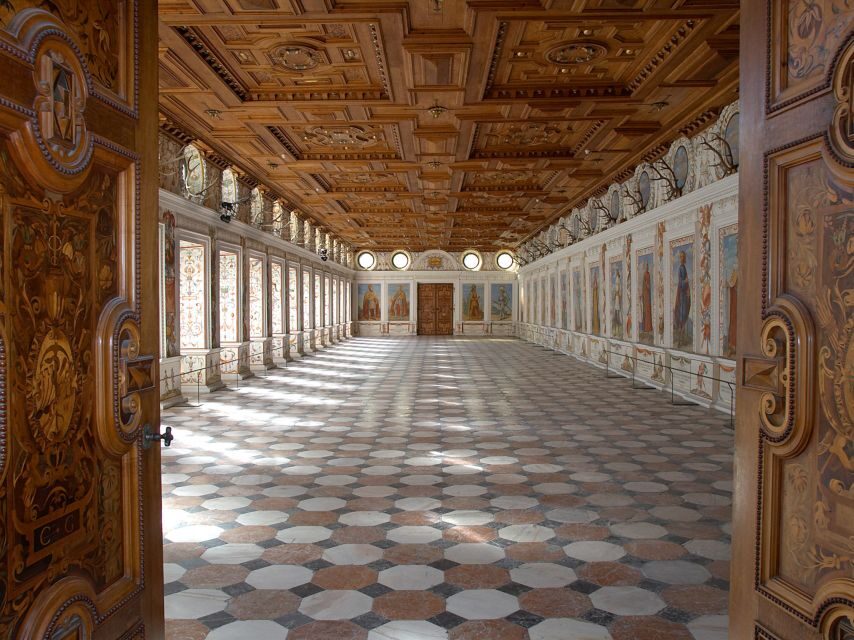
Schloss Ambras doesn’t just show fancy displays; it shows objects that carry the cultural attitudes of the 1500s. That’s why you’ll likely remember a few items long after the visit.
From your highlights list, these stand out as the kind of objects people usually linger over:
- Materials like ivory or coral: they signal rarity and reach—where the material came from, and why it fascinated collectors.
- Portraits of people considered miracles, including the Haarmensch: it’s a look into what counted as wonder in that era.
- Scientific objects, such as an attachment with compass: a reminder that curiosity was also technical and practical.
- Artifacts from distant places, like the Ryukyu bowl: a sign of how Renaissance collecting was tied to global contact.
- Unusual musical instruments and games: the collection isn’t only about seriousness; it also includes entertainment and performance.
The “value” of seeing items like these isn’t that you’ll become an expert in one afternoon. It’s that you’ll get a feel for Renaissance collecting as a way to organize reality. The cabinet becomes a snapshot of the mental map Ferdinand II wanted to build.





The armories: tournament, ceremonial armor, and why people collected steel
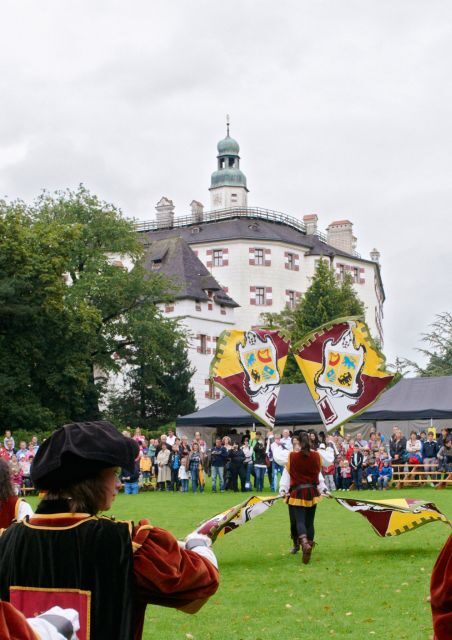
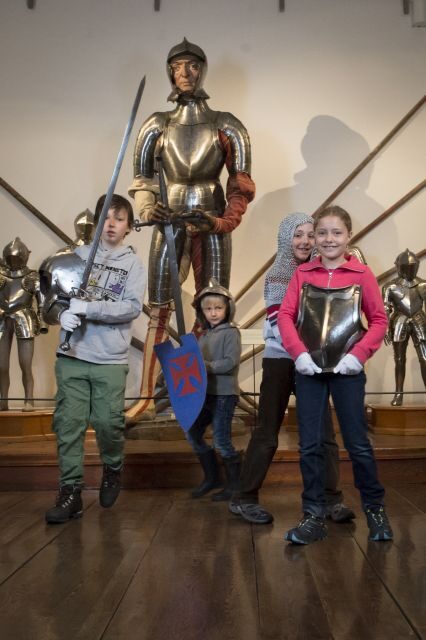
Then the mood shifts. In the armories, Schloss Ambras shows you the glamour and the machinery of power.
This part includes:
- Rare tournament armor
- Ceremonial armor used for courtly feasts and festivals
- The armor of famous generals
- The Turkish Chamber (Türkenkammer), connected to Ferdinand II’s 16th-century fear of the Turks and fascination with the Orient
That combination is fascinating because it ties artful display to real political anxieties. You’re not only looking at armor as protection—you’re looking at armor as storytelling.
Tournament armor and ceremonial armor tell you how status was performed. Armor of famous generals tells you how rulers wanted history and authority to look in metal. And the Türkenkammer is a blunt reminder that even when the world felt dangerous, Europeans also wanted to understand the unfamiliar—sometimes with fear, sometimes with curiosity.
If you’re short on time
If you only have limited energy, don’t try to read every description. Instead, focus on the “type of purpose” for each piece:
- ceremonial = power in public
- tournament = skill and spectacle
- generals = reputation and lineage
- Türken chamber = fear + fascination
That mindset makes the armory feel coherent rather than just impressive.
The Antiquarium and how it fits with Ferdinand II’s collecting mindset
Your visit also includes the Antiquarium, which belongs to the same Renaissance collecting worldview. While the highlights list doesn’t spell out its exact objects, the museum’s theme is consistent: Ferdinand II’s passion for collecting ties together his chamber of art and wonders, armories, and this section devoted to the older material of human culture.
So treat the Antiquarium as the connective tissue. If the Kunst- und Wunderkammer shows the Renaissance world as it was being assembled, the Antiquarium helps anchor that effort with the “past” that collectors were trying to frame and preserve.
This can be a good rest point too. After the visual variety of the cabinet and the metallic intensity of the armor, an older-feeling section gives your eyes a chance to slow down.
The Habsburg portrait gallery: 200+ paintings across rulers and eras
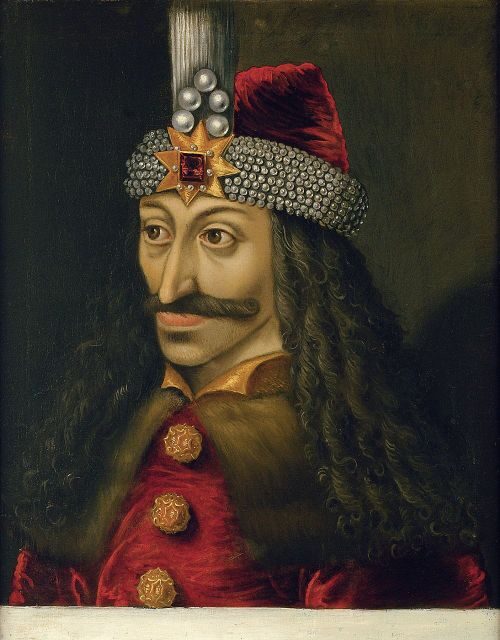
The last big art experience is the Habsburg portrait gallery, holding more than 200 paintings.
What I like about this for a one-day visit is that it gives you depth without demanding deep technical knowledge. Even if you don’t know every artist name (though the collection includes major names like Lukas Cranach, Giuseppe Arcimboldo, Rubens, Anton van Dyck, and Diego Velázquez), portraits are readable on a human level: face, costume, rank, and how power wanted to be shown.
The range is also a big deal. The gallery includes paintings from the time of Albrecht III (1349–1395) through the reign of Emperor Franz II (1768–1835). That’s a long timeline in one place. It lets you spot how portrait styles and symbols of authority shift over centuries.
How to pace the portrait gallery so it doesn’t blur together
With 200+ paintings, your risk is “gallery fatigue”—you start seeing frames instead of faces. Your best move is to slow down and pick a few comparison points:
- Look at clothing and insignia first. That’s where the identity of status lives.
- Then check facial expressions and posture. They often tell you more about political mood than you’d expect.
- Finally, if you recognize any big-name artists listed for this gallery (like Rubens or Velázquez), spend extra time there. Use them as “anchors” for your attention.
That way, the collection stays specific, not generic.
What to expect from a one-day visit (and how to make it feel complete)
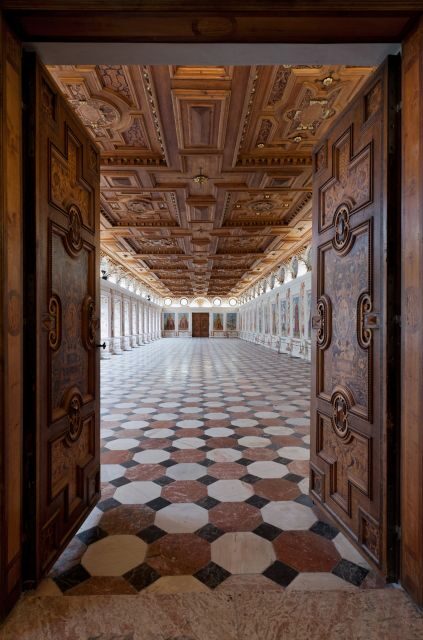
You’ve got a 1-day window, and the Schloss Ambras experience is not one-room simple. You’re juggling at least three major areas: the chamber of art and wonders, the armories (including Türkenkammer), and the Habsburg portrait gallery, plus the Antiquarium.
To make your day feel complete, I’d plan on spending time in this order:
1) Start with the Kunst- und Wunderkammer while your curiosity is fresh. It sets the tone and makes the rest of the museum easier to understand.
2) Move into the armories so your attention shifts from objects and ideas to power and craftsmanship.
3) Finish with the portrait gallery, because it’s the biggest long visual experience and benefits from settling into a slower rhythm.
Don’t force speed. The whole point is that the museum content is built to be looked at in different ways. If you try to sprint, you’ll only catch the loudest highlights and miss the subtler connections between categories of collecting.
Who this visit is best for
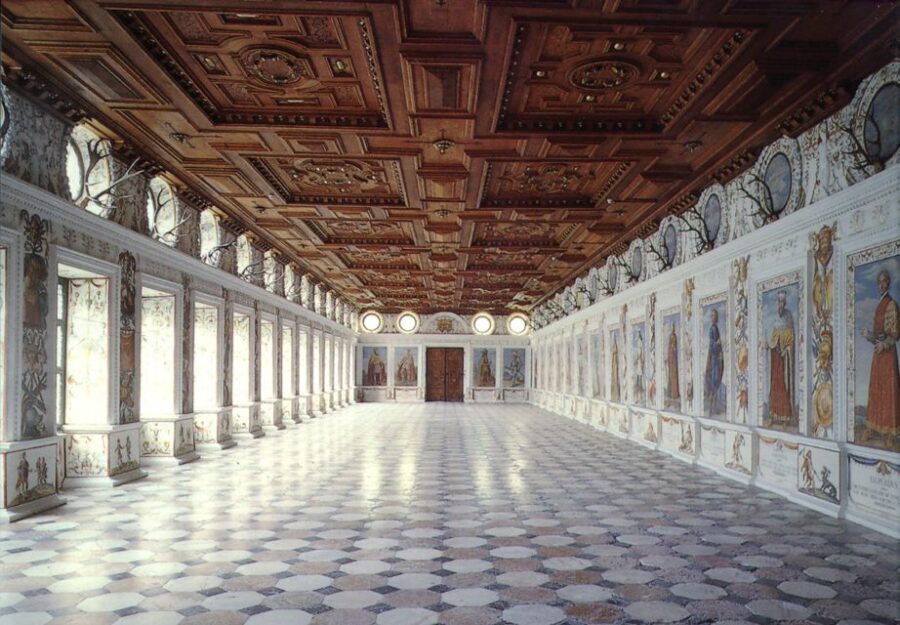
This is a great fit if you like museums with variety—art, science, and history in one flow. It’s also a smart choice if you’re traveling with mixed interests because you can split your attention across rooms without the day feeling repetitive.
If you’re traveling with kids, the cabinet of art and wonders tends to do well because it includes unusual materials and strange human portraits alongside more “wow” objects like armor.
If you’re a solo traveler who enjoys reading and wandering, you’ll enjoy the fact that you can set your pace. If you prefer a guided narrative, plan for a private guide, since the ticket itself doesn’t include an audio guide.
Booking call: should you get tickets for Schloss Ambras?
I’d book this if you want a one-day museum experience in Innsbruck that goes beyond standard sightseeing. For $16, you’re getting a packed mix: the Renaissance Kunst- und Wunderkammer, armories with tournament and ceremonial armor plus the Türkenkammer, and a portrait gallery with more than 200 paintings.
I wouldn’t book it as your only major plan for the day if you need a fully explained, hands-held tour. Because an audio guide and guided tour aren’t included, you’ll do best if you’re happy to read labels and connect the dots, or if you plan to hire a private guide.
FAQ
What is included with the Schloss Ambras ticket?
The ticket includes admission to Schloss Ambras in Innsbruck.
Is an audio guide included?
No. An audio guide and a guided tour are not included.
How long is the visit valid?
The ticket is valid for 1 day. You’ll select a starting time based on availability.
Where is the meeting point?
The meeting point is Schloss Ambras, Schlossstrasse 20, 6020 Innsbruck.
Can I cancel for free?
Yes. You can cancel up to 24 hours in advance for a full refund.
Do tour guides get free admission?
Only 1 tour guide per group gets free admission if they accompany the group to the museum, and the group must have at least 10 people. For groups under 10, the guide is charged as a regular paying visitor. State-certified tourist guides always receive free admission.