REVIEW · INNSBRUCK
Innsbruck – “Welcome Tour” by Per Pedes. Guided City Tour.
Book on GetYourGuide →Operated by Clemens Lindig - Austria Guide · Bookable on GetYourGuide
One hour to get your bearings fast. This is a smart walk through Innsbruck’s layers, from medieval streets tied to Emperor Maximilian I to the baroque feel of Maria Theresien Straße, led by licensed Austria Guides. I especially love the mix of big sights and street-level details, and the chance to see the Dom of Innsbruck interior when it’s open. The main thing to consider is that it’s a German-language, group walking tour—so if you need another language, you’ll feel it.
The route also gives you geography without lecturing: you’ll understand why the Nordkette is called Innsbruck’s green lung, and you’ll get a clean sense of where the city “breathes.” In the same hour, you’ll cover famous landmarks like the Inn Bridge and the Hofburg (the only one outside Vienna), then tie it all together with practical tips for what to do next.
One drawback worth flagging: this is not a slow stroll with lots of sitting, and there’s no long indoor detour besides the cathedral—so plan for a steady pace and bring your best walking shoes.
In This Review
- Key highlights to look for
- Why the Innsbruck Welcome Tour is such good value
- Starting at Burggraben 3: the easiest way to avoid stress
- Maria Theresien Straße: Innsbruck’s baroque boulevard in walking form
- The medieval old town streets: when Maximilian I feels close
- Inn Bridge and the Nordkette: understanding Innsbruck’s “green lung”
- Innsbruck Cathedral (Dom): a Baroque interior stop when open
- The Hofburg outside Vienna: a landmark with a bigger story
- Group size, pace, and the rules that affect your comfort
- Price and logistics: what you’re really paying for
- Who should book this Innsbruck Welcome Tour
- Should you book this tour or skip it?
- FAQ
- How long is the Innsbruck Welcome Tour?
- How much does it cost?
- Where is the meeting point?
- What language is the tour guide?
- Is the tour wheelchair accessible?
- What inside visit is included?
- Do I need to pay to take photos inside the cathedral?
- Are video or audio recordings allowed?
Key highlights to look for
- Licensed Austria Guides leading the route, with plenty of question time
- Medieval Innsbruck atmosphere in the old town streets tied to Maximilian I
- Inn Bridge + Nordkette views that explain the city’s mountain setting
- Dom of Innsbruck interior stop when open to the public
- The Hofburg outside Vienna, with context that makes it click
Why the Innsbruck Welcome Tour is such good value
For $22, you’re not just paying for sightseeing—you’re buying a shortcut to understanding Innsbruck. The city is small enough to walk, but it’s layered enough that it helps to have someone translate what you’re looking at. This tour is positioned as the cheapest city-tour option with state-certified Austria Guides, which matters when you want accuracy and local context (not just a script).
I like that the experience stays focused: one hour, big landmarks, and clear storytelling. You’ll see the core of Innsbruck’s center—then you’ll walk away knowing what’s important, what’s worth a return visit, and how the old city links to today’s life.
The value shows up in two ways. First, the guide is included, and you’re encouraged to ask individual questions. Second, the tour keeps the stops “useful,” not random—so even if you’re only in town briefly, you can still make confident plans after the walk.
You can also read our reviews of more guided tours in Innsbruck


Starting at Burggraben 3: the easiest way to avoid stress
The meeting point is the Innsbruck Information desk area, inside the counter hall at Burggraben 3. Look specifically for the Stadtführung / city tour meeting-point sign, and aim to be there about 10 minutes early.
That timing is not fussy for no reason. With a group size capped at max 35, the tour runs as a coordinated walk. Being late can mean you get shuffled to the back, and you’ll miss the quick orientation that helps you enjoy the route more.
Language is German, so if you’re comfortable with basic German or you’re used to guided tours, you’ll be fine. If you’re not, you might still enjoy the architecture and views, but your experience will depend more on watching than listening.
One detail I found helpful from the experience feedback: the tour can include headphones so you hear the guide clearly. That’s a practical touch in a busy pedestrian zone where street sounds can swallow a normal voice.
Maria Theresien Straße: Innsbruck’s baroque boulevard in walking form
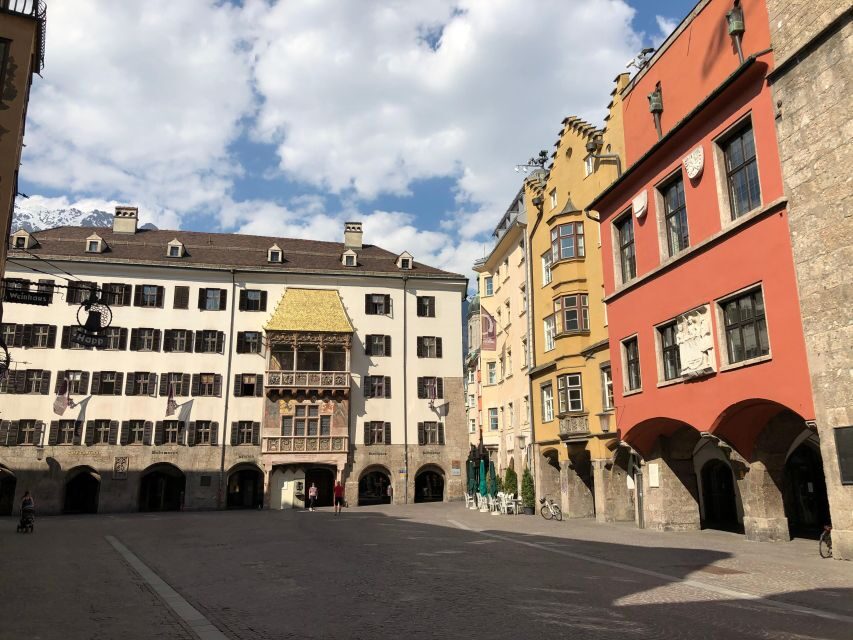
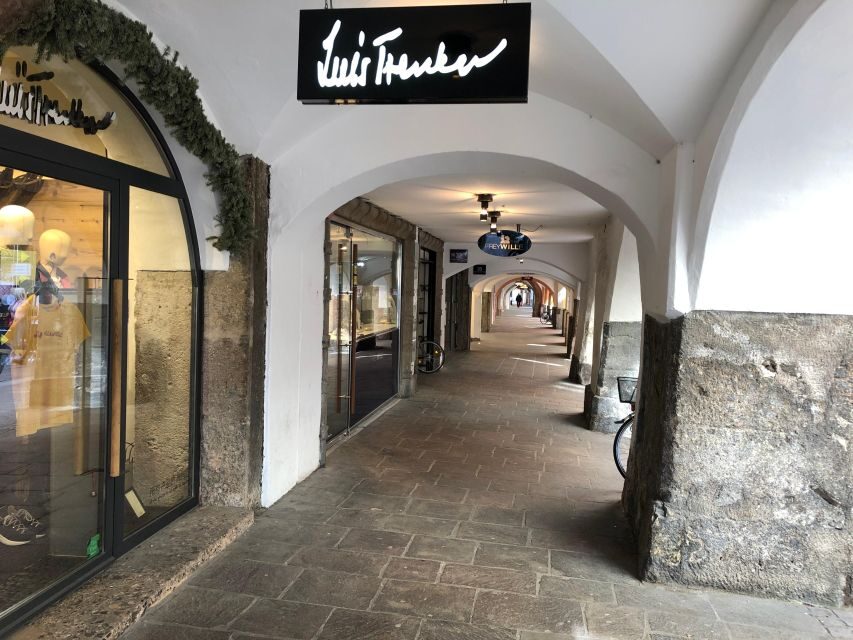
The tour starts on Maria Theresien Straße, which today functions as a pedestrian zone and promenade. That’s an underrated detail. You’re not just looking at a street—you’re seeing how the city uses its center, how people move, and how the “showcase” areas connect to everyday life.
Historically, the baroque character matters because it signals a different era than the medieval lanes you’ll explore next. This is where the tour becomes more than a list of buildings. The guide helps you notice style shifts—how architecture changes your sense of time, and how the city’s power and taste moved from one period to the next.
If you like walking tours that feel like a guided reading of a map, this starting segment is a strong opener. You get orientation fast: where you are, what zone you’re entering, and what kind of story the old town streets will tell.
The medieval old town streets: when Maximilian I feels close
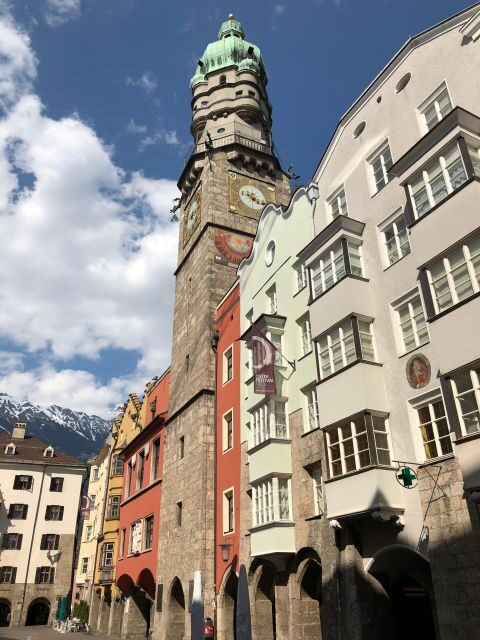
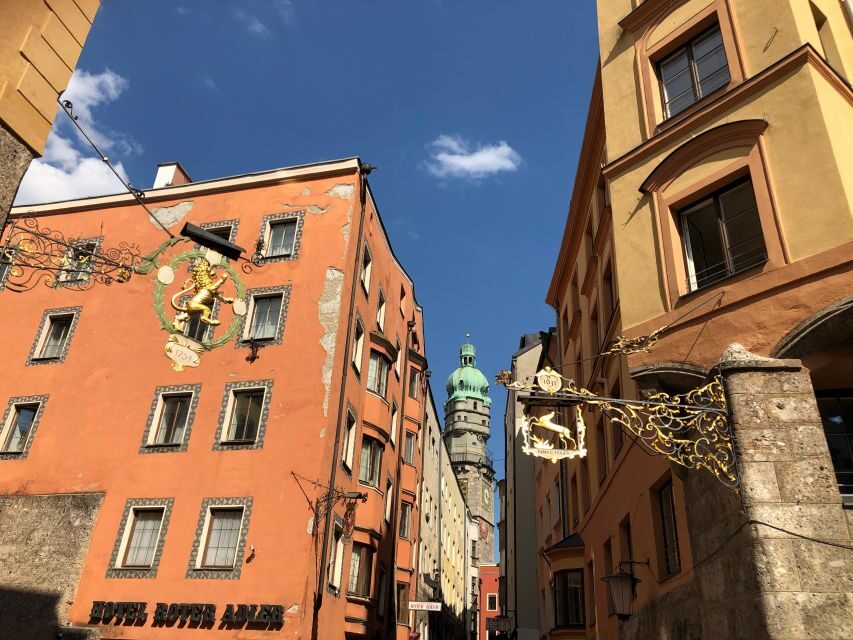
Once you move into the old town, the vibe changes. Narrow streets, tighter corners, and the kind of urban design that makes you slow down without being told. This part is where you’ll appreciate how Innsbruck grew and what it valued at the time of Emperor Maximilian I.
The best value in this section is the “lives of Innsbruck citizens then and now” framing. You’re not only learning dates; you’re learning how people likely moved through the city, what mattered to them, and how the physical layout supports everyday routines.
For you, that means you can read what you see. A church doesn’t become just a landmark—it becomes a marker of community life. A street isn’t just pretty—it tells you where movement funnels and where social gravity sits. And because the tour is only about one hour, you won’t get bogged down in excessive background.
Inn Bridge and the Nordkette: understanding Innsbruck’s “green lung”
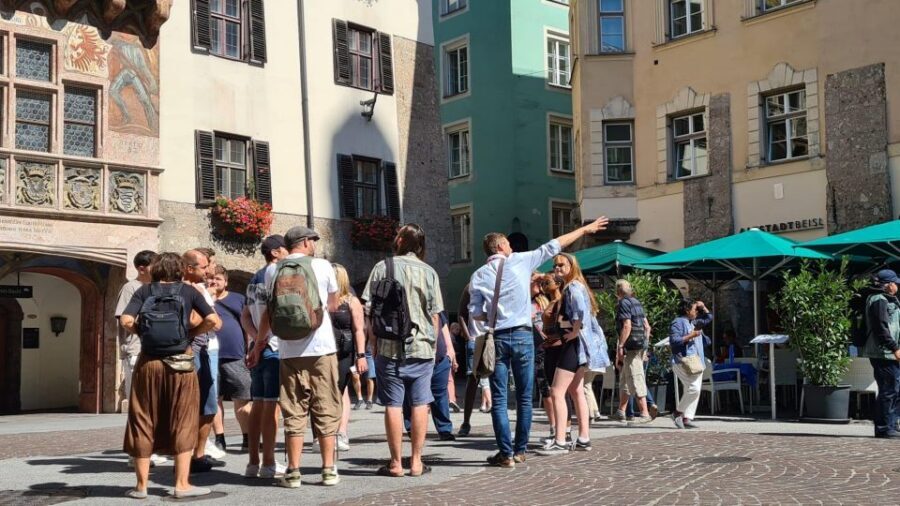
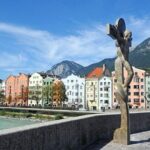
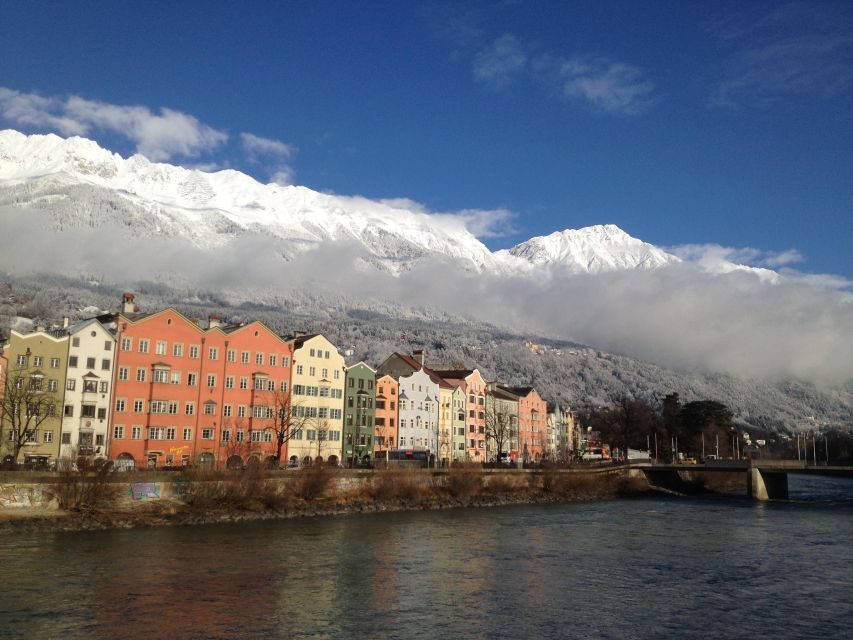
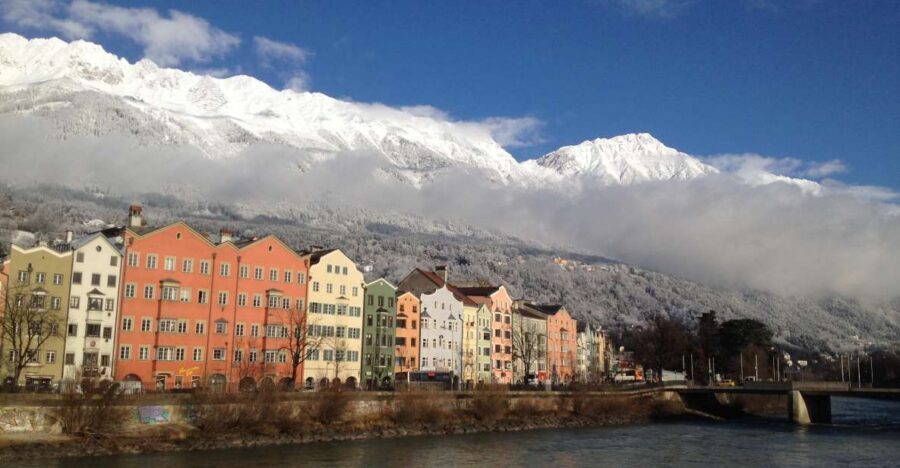
One of the most memorable stops is the area around the Inn Bridge, where you also get a view toward the Nordkette. The tour treats this view as more than a postcard moment. It’s used to explain why the mountains and the green slopes function as Innsbruck’s outdoor relief—its “green lung.”
Why that’s useful: once you understand the geography, you’ll plan your other time better. You’ll know why certain hikes and viewpoints feel so close, and you’ll understand why the city looks the way it does—compact center, dramatic mountain backdrop, and a clear relationship between water/valley life and high terrain.
You’ll likely have a few quick minutes to take in the view, then move on without feeling stuck. It’s exactly the kind of stop that works well during a short city orientation tour: enough time to see, not so much that you lose momentum.
You can also read our reviews of more city tours in Innsbruck

Innsbruck Cathedral (Dom): a Baroque interior stop when open
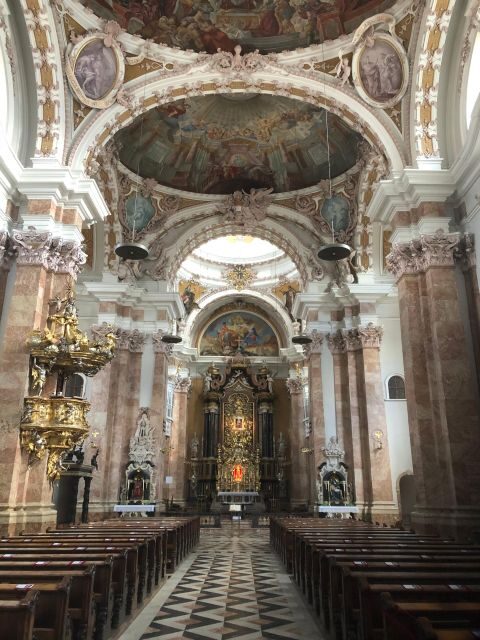
The most significant indoor component is the Dom of Innsbruck. The tour visits it if open to the public, and when it is open, entry is currently free of charge (with a note that photo rules apply inside).
Here’s how to plan for it. If you want to take photos inside the church, you’ll need to purchase a small photo ticket—€1—available within the church. Also, you can only count on this interior stop; everything else is outdoor walking. So if you’re hoping for multiple inside visits, set expectations now.
I like this stop because it gives you a cultural anchor. The cathedral interior helps balance the medieval lanes and the bridge views. It’s a baroque jewel in the heart of the city, and the guide’s commentary typically makes it easier to notice the details rather than simply walking through.
If you arrive when it’s closed, you’ll still learn about its importance from the outside and the route will keep moving. But since the cathedral is the only inside visit included, it’s worth checking the general opening pattern for the day you go—so you’re not disappointed.
The Hofburg outside Vienna: a landmark with a bigger story
The tour includes a look at the Hofburg, and here’s the fun twist: it’s the only Hofburg outside Vienna. That single fact can help the building feel instantly more significant, because it’s tied to how power and administration spread, not just where a famous structure happens to be located.
The guide’s job here is to make the building feel connected to your visit, not like a random palace stop. In a short tour, context is everything. You’ll get the why behind the walls—how this kind of residence or institutional center relates to the broader story of Austrian governance and prestige.
This stop also pays off for future exploring. Even if you don’t go inside, you’ll know what to look for when you return later, and you’ll have a few facts in your pocket for any museum or historic-building conversations that come after.
Group size, pace, and the rules that affect your comfort
This is not a private tour. It’s a walking tour of about one hour with up to 35 participants. The pace is steady. Think “orientation walk,” not “linger and snack while you learn.”
Two rules affect your experience. Video recording and audio recording are not allowed. That’s common on many guided tours, but it’s still good to know so you don’t accidentally plan around recording.
Wheelchair accessibility is listed as available, which is reassuring if you need mobility support. Still, because it’s a walking format, you’ll want to consider your personal comfort with sidewalks and turns.
Also: the guide is listed as German-speaking. If you’re traveling as a non-German speaker, headphones (when provided) and your willingness to observe architecture can still make the walk worthwhile. Just don’t expect a full bilingual experience.
Price and logistics: what you’re really paying for
The price is listed as $22 per person. That sounds straightforward, but here’s how I’d evaluate it.
You’re paying for:
- A licensed guide (not just a volunteer or an unofficial guide)
- A structured route through major highlights
- Time-efficient orientation in old town center
- An included cathedral visit when open
At this price point, the bargain isn’t that the tour is short. It’s that it’s a guided tour with credentialed Austria Guides hitting the right anchors—old town, bridge/valley view, and cathedral interior.
If you’re the type who wants to spend your limited time sightseeing but still wants historical context and practical tips, this is a good match. If you prefer long museum time, this likely won’t replace that kind of day—it’s a starter course.
Who should book this Innsbruck Welcome Tour
This tour is ideal if:
- You have a tight schedule and want the center of Innsbruck mapped out quickly
- You enjoy guided explanations more than wandering alone
- You want a simple, low-cost introduction before picking your next activities
- You appreciate architecture, city layout, and how different eras show up in the streets
It’s also a strong fit for first-time visitors. Even if you’re not a “history person,” the way the guide links architecture, geography, and city life helps you understand what you’re looking at without drowning you in facts.
If you already know Innsbruck well and you’re chasing specialized topics (deep church art, advanced architectural history, long indoor stops), you might feel the hour is too short. But as a grounding walk, it’s hard to beat.
Should you book this tour or skip it?
I’d book it if you want a clean, efficient introduction to Innsbruck that doesn’t feel generic. The licensed Austria Guides, the tight one-hour route, and the chance to see the Dom of Innsbruck interior when open make it a practical value play—especially if you’re new to the city.
Skip it only if you strongly need a non-German guide, you hate walking tours, or you’re specifically seeking multiple indoor museum-style visits. This walk is about the city’s center: streets, views, and key landmarks that help you move through Innsbruck with confidence.
If you can be at the meeting point on time and you’re ready for a brisk but friendly orientation, this is exactly the kind of tour that pays you back later when you’re choosing what to do next.
FAQ
How long is the Innsbruck Welcome Tour?
The tour lasts about 1 hour.
How much does it cost?
It’s listed at $22 per person.
Where is the meeting point?
You meet at the Innsbruck Information counter hall at Burggraben 3. Look for the Stadtführung / city tour meeting-point sign.
What language is the tour guide?
The tour guide speaks German.
Is the tour wheelchair accessible?
Yes, the tour is listed as wheelchair accessible.
What inside visit is included?
The tour includes a visit to the Dom of Innsbruck if it is open to the public. Other inside visits are not included.
Do I need to pay to take photos inside the cathedral?
If you want to take photos in the church, you need a €1 photo ticket, available inside the church.
Are video or audio recordings allowed?
No. Video recording and audio recording are not allowed during the tour.