REVIEW · VIENNA
Vienna Oldtown Tour
Book on Viator →Operated by Libra Tours Vienna · Bookable on Viator
Vienna’s big sights, in 45 minutes. This tour packs the Habsburg core and Ringstraße power buildings into a tight route, with quick photo stops that actually make the city feel understandable. I also like that it’s priced as a short, do-it-early orientation stop (not a full-day commitment), and the tour format can be mobility-friendly with extra help. The one thing to watch: the route is fast, so you won’t get deep time inside every landmark you pass.
Another plus I value is the guide energy. On tours like this, you tend to get the kind of smooth, stop-and-explain storytelling that helps Vienna’s names stop feeling like a blur. In the reviews, guides like Jerry and Jeremiah are called out as especially engaging, and they even adapt when conditions get messy (like rain or tight timing).
My practical caution: it runs in English, and while guides are friendly, your experience depends on the guide’s language strength. If you’re counting on a specific language (like Chinese), confirm ahead of time.
In This Review
- Key highlights you’ll feel on the ground
- Price and what you’re truly buying for $42.17
- Entering the Hofburg zone: imperial power, Sisi-style detours
- National libraries, peace missions, and why Vienna loves institutions
- Museums in fast motion: art, nature, global culture
- Kunsthistorisches Museum: the Habsburg art collection spotlight
- Naturhistorisches Museum: nature as spectacle
- Weltmuseum Wien and MuseumsQuartier: the global and the modern
- Monuments and rulers: turning names into faces
- Ringstraße landmarks: Parliament, City Hall, and twin-spire drama
- Austrian Parliament Building and its libraries
- Vienna City Hall (Rathaus)
- Votive Church and University of Vienna
- Old town squares and churches: Am Hof and the 12th-century spine
- Freud, cafés, and a darker memorial thread
- How the 45-minute format actually feels
- Guide quality tips: what to ask so you get the most value
- Should you book the Vienna Oldtown Tour?
- FAQ
- How long is the Vienna Oldtown Tour?
- What is the price per person?
- Is the tour offered in English?
- Is the tour private?
- How do I get the ticket?
- Are service animals allowed?
- Do you need good weather for the tour?
Key highlights you’ll feel on the ground
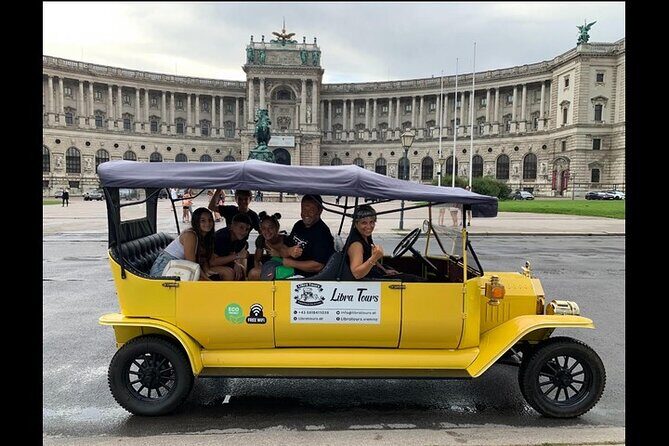
- 45-minute overview that actually covers the map: Hofburg, major museums, and Ringstraße icons in one loop.
- Select stop time for photos and entrances: you get moments to step out and look up close, not just drive-by.
- Guides matter here: reviews consistently credit Jerry and Jeremiah for clear, lively explanations.
- Mobility support included: an extra stool option is noted for handicaps and elderly guests.
- English-only by listing: plan around that if you need another language.
- Good-weather dependence: the tour is sensitive to weather conditions.
Price and what you’re truly buying for $42.17
At $42.17 per person for about 45 minutes, you’re not paying for a museum-ticket day. You’re paying for two things: sequence and story.
Vienna’s center is packed. If you try to self-drive or self-walk everything on day one, you’ll lose time negotiating directions, entrances, and what to care about first. This tour gives you a front-loaded orientation: it points your eyes at the “why” behind the sights—Habsburg power, baroque-and-gothic ambition, and the city’s love of art and learning—while still leaving you free to explore in more depth afterward.
It also helps that it’s a private tour, meaning only your group participates. That usually makes a difference with pacing: if someone needs extra time at a point of interest (or needs to keep things slower), you’re not stuck behind a large group shuffle.
You can also read our reviews of more tours and experiences in Vienna.
Entering the Hofburg zone: imperial power, Sisi-style detours
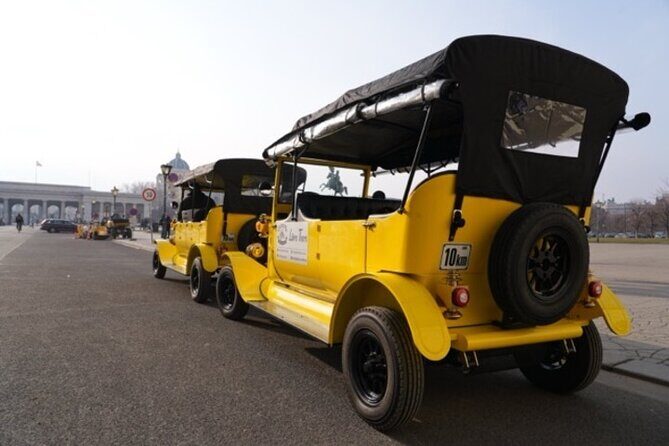
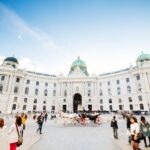
The Hofburg is the big starting point for most first-time Vienna visitors, and it’s the right kind of “anchor stop” for a short tour. You’re looking at a palace complex that stretches back to the 13th century, tied to the Habsburg dynasty’s winter residence tradition. Today, parts of it function as the official workplace and residence space connected to Austria’s presidency—so it’s not just a pretty shell. It’s still tied to the country’s political identity.
Within the Hofburg area, the tour route highlights key sections tied to the palace’s public face: the Imperial Apartments, the Sisi Museum, and the Imperial Treasury. Even when you don’t go inside, these are useful names to remember later if you decide to purchase museum tickets on your own.
What makes this work on a 45-minute format is that the Hofburg is the “origin story.” You see it early, then the rest of the city starts to make sense: why you keep running into grand courtyards, formal institutions, and monuments with heavy political symbolism.
Possible drawback to keep in mind: with a short schedule, you’re getting orientation and exterior context more than a full palace deep-dive. If you crave long museum time inside the Imperial Apartments or the Treasury, you’ll want to book that separately.
National libraries, peace missions, and why Vienna loves institutions
Next, the tour swings toward the city’s “thinking buildings.” You’ll pass the Austrian National Library, described as one of the oldest and largest in the world, with 11 million books and manuscripts and special collections like the Papyrus and Globe museums. That matters because Vienna isn’t only castles and opera houses. It’s also administration, scholarship, and careful preservation.
The tour also references the Library of the Austrian Parliament, tied to legal and historical texts. Again, this reinforces the city’s identity: the grand-looking buildings aren’t just for show; they support governance and research.
Then you get the OSCE connection. The OSCE is the world’s largest regional security organization, with 57 participating states, founded in 1975 as the CSCE. Vienna’s role here is part of why so many official headquarters and diplomatic institutions feel “built in” to the city’s center. Even a quick pass helps you connect that dots later.
Practical tip: if books and peace talks aren’t your main interest, don’t assume you’ll be bored. These stops work best as “context markers.” When you know what you’re looking at—library, parliament, security institution—you’re more likely to remember the city later.
Museums in fast motion: art, nature, global culture
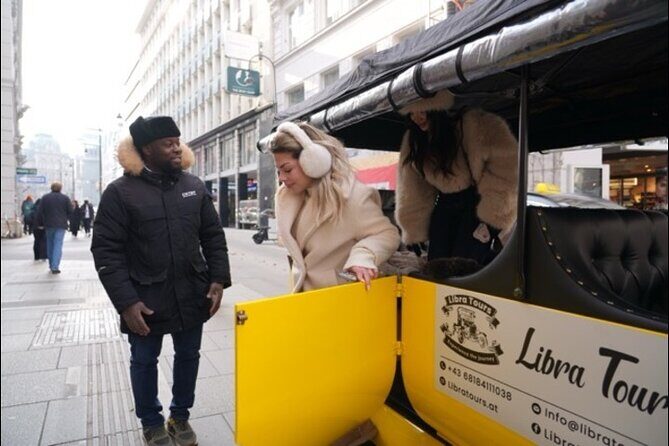
Vienna is famous for museums, but not all are equally easy to experience in a tight schedule. The tour’s advantage is that it picks big, recognizable names that you can either revisit later or at least understand right away.
Kunsthistorisches Museum: the Habsburg art collection spotlight
The Kunsthistorisches Museum (opened in 1891) houses the imperial art collection of the Habsburgs and focuses on European art from antiquity into the late 18th century. Seeing it early gives you a theme: the Habsburgs didn’t just rule; they collected, displayed, and shaped taste.

Naturhistorisches Museum: nature as spectacle
The Natural History Museum Vienna (founded 1807, with its current building opened 1889) is described with standout holdings like dinosaur skeletons, minerals, and animal exhibits. Even from the outside, it’s the kind of building that signals this city treats science and curiosity like a public celebration.
Weltmuseum Wien and MuseumsQuartier: the global and the modern
The World Museum Vienna (Weltmuseum Wien) is positioned as a collection of artifacts from around the globe, emphasizing ethnography, art, and history. You’re also routed near MuseumQuartier Wien, a restored museum district opened to the public in 2001.
If you like variety, this combo is useful: Weltmuseum leans global, MuseumsQuartier leans modern-and-mixed. In one short loop, you see the city’s museum identity isn’t one-note.
Possible drawback: when you stack so many museum names close together, your brain may feel “museum overload.” The trick is to choose just one or two for a real ticketed visit afterward.
Monuments and rulers: turning names into faces
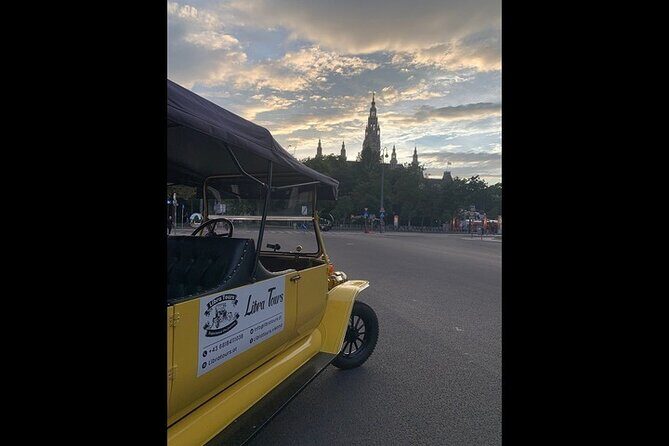
A big part of making Vienna click is connecting monuments to the people behind them. This tour includes several.
You’ll see the Prince Eugene of Savoy reference: a famed Austrian general and statesman known for victories against the Ottoman Empire and France. Next to that kind of monument talk, you start to understand Vienna’s war-and-diplomacy timeline without reading a textbook.
The route also includes the Archduke Karl equestrian statue at Heldenplatz—described as a popular tourist attraction with beautiful design. Stopping at or near Heldenplatz is powerful because it ties the Hofburg area to the public square world.
And because Vienna remembers its past in multiple ways, the itinerary includes the Memorial Against Fascism at Albertinaplatz. It commemorates victims of Nazi terror and was unveiled in 1988 by Alfred Hrdlicka. This is one of those stops where even a quick explanation helps you avoid “pretty monument” thinking and instead recognize the city’s insistence on memory.
Ringstraße landmarks: Parliament, City Hall, and twin-spire drama
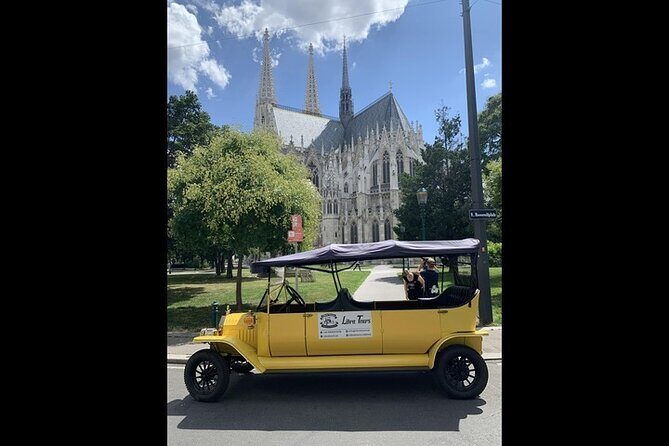
If you want one street that explains Vienna’s style shift from courtly power to public civic identity, it’s Ringstraße. The tour hits multiple Ringstraße institutions.
Austrian Parliament Building and its libraries
The Austrian Parliament Building was completed in 1883, with a Greek Revival style, and houses the National Council and Federal Council. The presence of the Parliament Library ties the building to research and legal history rather than politics as theater only.
Vienna City Hall (Rathaus)
The Vienna City Hall is massive, built between 1872 and 1883 in a Neo-Gothic style. It’s also described as one of Europe’s largest municipal buildings, with a floor area over 200,000 square meters. This matters because it’s the “municipal power” counterpart to the national government feel of the parliament.
Votive Church and University of Vienna
You’ll also run into the Votivkirche (Votive Church), a neo-Gothic masterpiece completed in 1879, commissioned after a failed assassination attempt on Emperor Franz Joseph I. Nearby context includes the University of Vienna (founded 1365), one of the oldest and largest universities in Europe.
This section is where Vienna’s architecture becomes legible: courts, parliaments, universities, and churches are all responding to the same need—public identity, authority, and meaning.
Photo note: if you’re the type who likes skyline shots, plan for short stops, not long standing. The tour is timed at about 45 minutes total, so you’ll want to practice quick photo setups.
Old town squares and churches: Am Hof and the 12th-century spine
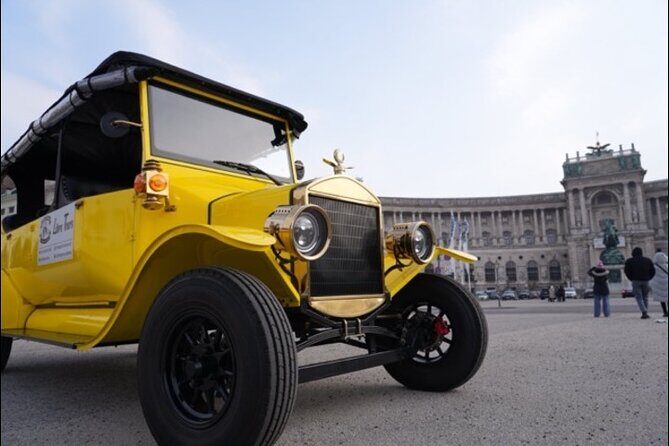
The itinerary also features “old Vienna texture” stops—small squares and long-lived churches.
The Am Hof area is highlighted as a historic square dating back to Roman-era Vienna, later connected to Babenberg dukes’ residence in the 12th century. Today it’s a vibrant spot with the Baroque Kirche am Hof, the Mariensäule, and shops and restaurants. Even on a short tour, this kind of stop gives you a sense of street-level life, not only official buildings.
The Scots Church (Schottenkirche) is described as one of Vienna’s oldest churches, founded by Irish monks around 1158, with a current Baroque facade completed later. It’s the kind of landmark that helps you see Vienna as layers, not one era repeating.
Freud, cafés, and a darker memorial thread
Vienna’s “people history” matters too, and the tour includes at least one standout: the Sigmund Freud Museum in his former residence. The museum provides a view into his life and work and traces the development of psychoanalysis. Freud lived and worked there from 1891 to 1938, which gives the building a lived-in credibility.
Food and conversation show up as well. Café references like Café Central (founded 1876) and Café Mozart (established 1794) point to the city’s coffee-house culture—places associated with intellectuals and long chats. Even if the tour doesn’t guarantee a sit-down stop, seeing these names within the route helps you decide whether you want to build a coffee break into your later self-guided time.
And the darker note is present through the Memorial Against Fascism already mentioned. It’s an important balance to the charming café atmosphere.
How the 45-minute format actually feels
This kind of route lives or dies by timing. The listing says about 45 minutes, and the reviews reinforce that the ride feels short but packed.
Here’s what to expect in practice:
- You’ll be shown major exterior sights, with brief stops that let you look closely and take photos.
- Your guide will provide “taste” explanations—enough facts to help you keep up and later recognize what you saw.
- The route is tight, so it’s smart to decide your must-see list ahead of time. If you’re hoping to go inside every building, you’ll be disappointed.
Weather matters. The experience is noted as requiring good weather, and if it can’t run due to poor conditions, you’ll get a different date or a refund.
One detail from the reviews: street closures can cause start delays (including a reported 30-minute slip). So I’d treat it like an early-day appointment—show up a little before you think you need to, and keep your phone ready for updates.
Guide quality tips: what to ask so you get the most value
Reviews specifically highlight guides Jerry and Jeremiah as knowledgeable, friendly, and able to adapt—like stopping for photos at the roses or adjusting when rain rolled in. That tells me the tour’s value depends a lot on the day’s guide.
Before you start, you can improve your results with one smart question:
- Ask for the one stop you should return to later if you only have time for two ticketed sights.
Also, if English isn’t enough for you, confirm language options before you arrive. One review mentioned that a Chinese request did not line up with what was available. With a short, timed route, you don’t want to discover that mismatch after the tour begins.
Should you book the Vienna Oldtown Tour?
Yes, if you fit one of these profiles:
- You’re in Vienna for a short time and want a fast overview that makes your next days easier.
- You like architecture and city identity more than deep museum immersion.
- You want a private experience and may benefit from pacing help (an extra stool option is noted).
Skip it (or pair it carefully) if:
- You want long indoor time at major museums and churches. This route is about orientation and context, not full visits.
- You require a non-English language option and haven’t confirmed availability.
If your goal is to get your bearings fast and then choose what to explore in depth, this is strong value at $42.17 for about 45 minutes. Book it early in your trip, then build your day-two plan around whatever stops feel most interesting to you.
FAQ
How long is the Vienna Oldtown Tour?
It lasts about 45 minutes.
What is the price per person?
The price is $42.17 per person.
Is the tour offered in English?
Yes. The tour is offered in English.
Is the tour private?
Yes. It’s listed as a private tour/activity, so only your group participates.
How do I get the ticket?
You’ll receive a mobile ticket.
Are service animals allowed?
Yes, service animals are allowed.
Do you need good weather for the tour?
Yes. The experience requires good weather. If it’s canceled due to poor weather, you’ll be offered a different date or a full refund.
If you want, tell me your travel dates and what you care about most (palaces, museums, churches, or coffee-house Vienna), and I’ll suggest a smart “what to do next” plan after this 45-minute loop.