REVIEW · SALZBURG
3D Salzburg: Unique VR-Tour
Book on GetYourGuide →Operated by TourGuide Sabine Rath · Bookable on GetYourGuide
Salzburg, rebuilt in 3D time travel sounds cool, and this tour delivers a landmark-based VR experience with Sabine Rath’s guided storytelling. I like the way the city’s real locations are the anchor, so the 3D scenes feel tied to place, not random screens. The main drawback is simple: the VR moments are limited and scene-based, so if you expect lots of roaming content, it may feel short.
You meet at Mirabellplatz 5, right in front of St. Andrä Church, then you’ll pair a short live guide session with VR sequences in different time periods. It runs about 90 minutes, and the price is $32 per person—not huge for VR, but it’s still a “make it count” activity. Also, the guide runs in German, and you’ll need your own smartphone with the TimeTour app ready.
In This Review
- Key Takeaways Before You Go
- Where the Tour Really Starts: Mirabellplatz 5 and a Smart Meeting Point
- The VR Setup That Can Make or Break Your Experience (TimeTour + Phone)
- How the Format Works: Live Guide + 3D Recreated City Epochs
- Mirabell Palace and Square: A Familiar Landmark in an Unfamiliar Era
- Markart Square Old Wood Market: Seeing Daily Life, Not Just Famous Views
- Pfeifergasse in World War II: The Most Serious Stop on the Route
- Price and Value: Is $32 Worth It for VR in Salzburg?
- The Guide Factor: Sabine Rath and German-Only Storytelling
- What You Should Bring (And How to Not Lose Time)
- Who This VR Tour Fits Best (and Who Might Skip It)
- Should You Book 3D Salzburg: Unique VR-Tour?
- FAQ
- How long is the 3D Salzburg VR tour?
- Where do I meet for the tour?
- Do I need a smartphone for this VR tour?
- What language is the live guide?
- Are tickets pricey, and what’s included?
- Is the tour wheelchair accessible?
- Is the tour suitable for children?
- What should I bring besides my smartphone?
Key Takeaways Before You Go

- Mirabellplatz 5 + St. Andrä Church is your clear starting point in the center of Salzburg.
- TimeTour app on your smartphone is required; VR glasses are provided on-site.
- German-only guidance means plan to go with the language or bring a translation strategy.
- WWII-era Salzburg scenes show up in the route, including a stop in Pfeifergasse.
- Markart Square recreation includes an old wood market view about 120 years back.
- Wheelchair accessible, but the tour is not suitable for children under 6.
Where the Tour Really Starts: Mirabellplatz 5 and a Smart Meeting Point
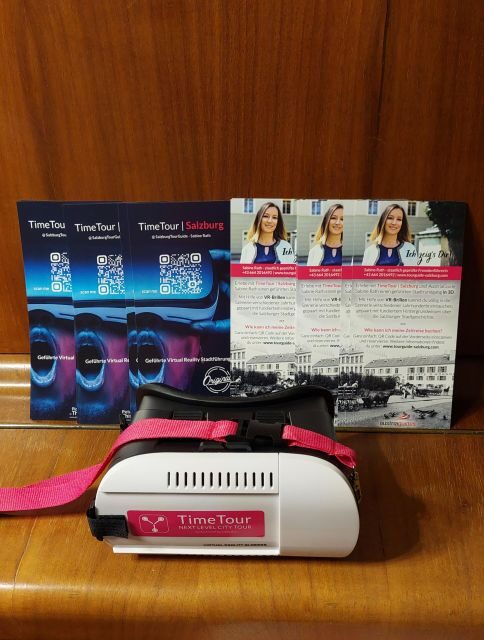
This is the kind of tour where the meeting point matters, because you’ll need a smooth handoff into the phone app and the VR glasses. You start at Mirabellplatz 5 (5020 Salzburg), meeting in front of St. Andrä Church. That’s great because Mirabellplatz is easy to orient around, whether you’re arriving from the station area or walking in from the Old Town.
From the start, the focus is practical: you’re not given a long lecture in one place. Instead, you move between real Salzburg anchors and then swap into 3D views tied to those places. That makes the experience feel more like a guided walk with “time slices,” rather than a static museum demo.
If you’re planning your day, build in a buffer. Arrive at least 5 minutes early, because you’ll be getting set up before the VR sequences begin and you’ll want your phone ready.
You can also read our reviews of more tours and experiences in Salzburg.



The VR Setup That Can Make or Break Your Experience (TimeTour + Phone)

This tour uses VR glasses, but your smartphone is the key that starts the whole thing. You must bring a charged phone and download the free TimeTour app before the tour starts. When you arrive, the password and the VR glasses are provided for you.
That means two things for your planning:
- If your phone battery is low or the app install fails, you’ll lose time right when you want to be enjoying the show.
- If you don’t like fiddling with apps while a guide is moving you along, you should expect a little “tech choreography” up front.
Price-wise, it’s worth noting that the tour includes the VR glasses and doesn’t charge you any entrance fees. But you’re also not paying for a smartphone. So the real cost isn’t just the $32 ticket—it’s also that you need to show up with the right tech ready to go.
How the Format Works: Live Guide + 3D Recreated City Epochs
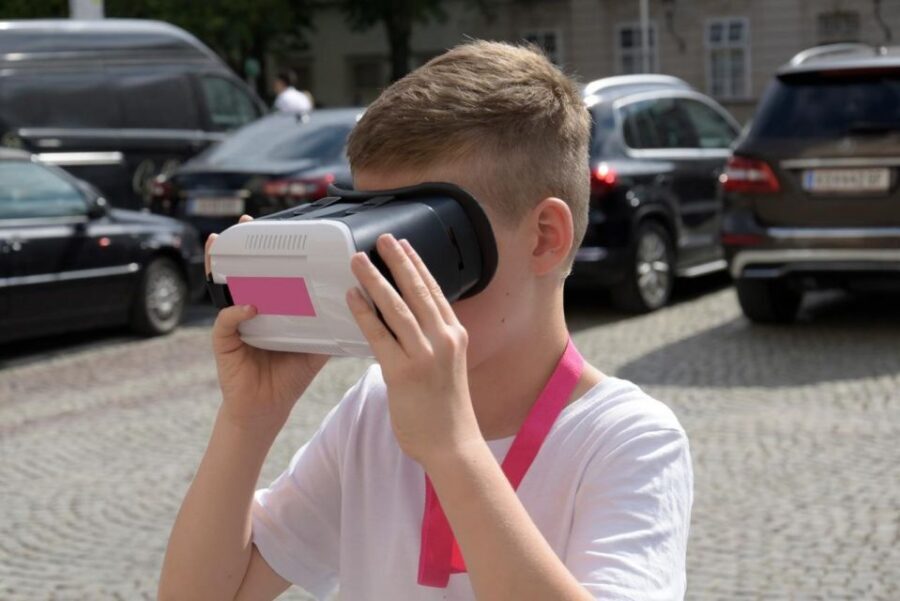
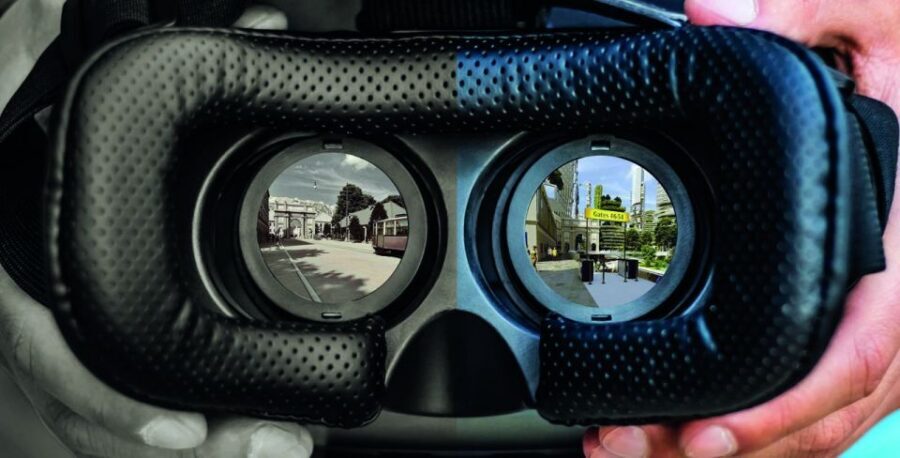
The concept is refreshingly straightforward. You get a live guided tour while the VR glasses transport you into different eras of Salzburg’s past. The 3D scenes are described as realistic 3D pictures, and the guide ties them to background information as you move through the route.
The big value here is that VR is not used as a gimmick. It’s used as a visual explanation tool. Instead of hearing that a place looked different long ago, you see a reconstructed view linked to that specific location—like stepping into a memory of the city.
The trade-off is also built into the format. VR time on this tour is scene-based, not endless footage. You’ll get time periods such as the Mirabell area, an old wood market on Markart Square, and a WWII-era view connected to Pfeifergasse. If you want a huge menu of scenes, you might feel the tour stops after a handful of strong moments.
Mirabell Palace and Square: A Familiar Landmark in an Unfamiliar Era

One of the strongest anchors is Mirabell Palace and Square. Even if you’ve walked by Mirabell Palace before (many people do), this experience uses that familiarity as a contrast. The VR glasses shift you into different epochs, so you’re not only seeing the present-day postcard version—you’re learning how the same spot can look and feel in earlier times.
I like this choice because Mirabell is a central, open location. That matters when you’re switching between your surroundings and the VR scene. You’re less likely to feel disoriented, and the guide can point you back to the real place as the story changes.
Possible drawback: if you’re hoping for a long, detailed narration of each building’s evolution, the VR format can keep the storytelling fairly quick between scenes. The experience is designed to keep momentum, not to turn into a slow deep lecture.
Markart Square Old Wood Market: Seeing Daily Life, Not Just Famous Views

Next up is Markart Square—specifically a look at an old wood market setup from about 120 years ago. This is a smart stop because it’s not only about castles and big monuments. Markets are where you understand a city as lived-in space: commerce, everyday movement, and the practical rhythm of people’s days.
In VR, a market scene can work really well, because it turns “history” into something visual and spatial. You can grasp how the space was used, where activity clustered, and how crowds might have moved through the area.
From the feedback connected to this tour, you can also see why people either love or feel lukewarm about the experience: if the VR sequence is more about a small number of 3D pictures than a long arc of daily-life detail, you may want more guided context about the people and buildings around the scene. The good news is that the tour is explicitly framed as historical storytelling, so the guide is there to add meaning, not just point at the screen.






Pfeifergasse in World War II: The Most Serious Stop on the Route

The most striking theme is what the tour frames as WWII-era Salzburg, with a specific mention of Pfeifergasse. This is the stop where the tone likely shifts from “colorful past scenes” to something heavier. A WWII reconstruction in a real neighborhood is a powerful way to make the past feel immediate, because it connects global events to a local street.
This is also where expectation-setting matters. VR can make the setting feel vivid, but the amount of historical detail you get depends on how much the guide can cover within the overall 90-minute window. If you want a thorough, lecture-style account of the war’s effect on Salzburg—who did what, how daily life changed, and what happened afterward—you may find the tour’s format doesn’t give you a full deep-dive.
Still, if you’re the type of traveler who enjoys history through visuals and place-based storytelling, this WWII segment is likely the part that sticks in your memory.
Price and Value: Is $32 Worth It for VR in Salzburg?
At $32 per person, this tour sits in a “mid-range” zone: you’re paying for VR glasses, a guided component, and no entrance fees. You also aren’t paying for food or drinks—so plan on a snack plan separately.
The best way to judge the value is to match the tour to what you want:
- If you want a fun, modern way to learn a few specific historical scenes tied to landmarks, this can feel like good value.
- If you expect a long immersive VR movie with lots of scenes and lots of narration, you may feel the cost doesn’t match the amount of content you get.
Based on the tone of feedback associated with the experience, the biggest divide comes down to expectations about the number of VR moments and how much city-history context is included beyond the visuals. So my practical advice: treat this as a short, focused “VR history highlights tour,” not as the only history lesson you’ll get in Salzburg.
The Guide Factor: Sabine Rath and German-Only Storytelling

This tour is guided in German, and the listed guide is Sabine Rath. A good guide can turn a short time window into something memorable, because they control pacing and meaning. One highlight that comes through in feedback is that Sabine Rath’s style can be charming, friendly, and story-driven, which helps the VR scenes land emotionally and historically.
Here’s the practical catch: if your German is limited, you can still enjoy the visual pieces, but you may miss some of the nuance the guide adds. That’s why this tour is best for:
- people comfortable catching gist-level German,
- people who enjoy visual history even when they can’t follow every sentence,
- or couples/friends who can quietly share what they understand and keep the experience moving.
Wheelchair accessibility is noted, which is helpful for planning. The tour still requires smartphone setup and VR glasses timing, so it’s wise to arrive early so you’re not rushed at the beginning.
What You Should Bring (And How to Not Lose Time)

The essential checklist is short and very clear:
- Charged smartphone
- TimeTour app downloaded in advance
- Be ready to follow the guide’s instructions quickly when it’s time for the VR sequences
VR glasses are provided. Password details are provided at the start. You also shouldn’t plan on food during the tour since no food and beverage are included.
One small planning tip: if you’re the type to take lots of photos, keep in mind VR scenes are controlled through the app experience. You might not have a standard “point-and-shoot” setup for long photography runs, so don’t build your plan around getting dozens of images.
Who This VR Tour Fits Best (and Who Might Skip It)
This experience fits best if you:
- enjoy history when it’s tied to specific places you can recognize,
- want a modern activity that complements Salzburg’s traditional sightseeing,
- like the idea of a WWII-connected stop in a real neighborhood, shown through recreated 3D views,
- are okay with German-only narration.
It might not fit if you:
- want a long history lecture or lots of detailed background on daily life and architecture,
- expect a big set of VR scenes beyond a handful of short sequences,
- need an English-language guide.
Also, it’s not suitable for children under 6, so families should check age fit carefully.
Should You Book 3D Salzburg: Unique VR-Tour?
Book it if you want a short, focused way to experience Salzburg through visual historical reconstructions—especially if you’re curious about WWII in Salzburg and like learning with your eyes. The $32 price can feel reasonable because it includes the VR glasses and avoids entrance fees, and the route ties VR moments to recognizable landmarks.
Skip it or adjust your expectations if you’re looking for an extensive, multi-hour VR exploration with lots of scenes and deep city-history coverage in your preferred language. This is more “highlight reel with a guide” than a full-scale history program.
If you do book, do yourself the favor of arriving early, having your phone charged, and getting the TimeTour app ready before you leave your hotel. That’s how you get the smoothest experience—and the most value from your 90 minutes in Salzburg.
FAQ
How long is the 3D Salzburg VR tour?
The tour runs about 90 minutes, which is also described as around 1.5 hours.
Where do I meet for the tour?
Meet at Mirabellplatz 5, 5020 Salzburg, in front of St. Andrä Church.
Do I need a smartphone for this VR tour?
Yes. You must bring your own smartphone and download the free TimeTour app before the tour. The tour provides the VR glasses, but not the phone.
What language is the live guide?
The live guided tour is in German.
Are tickets pricey, and what’s included?
It costs $32 per person. VR glasses are provided, and there are no entrance fees. No food or drinks are included.
Is the tour wheelchair accessible?
Yes, the tour is listed as wheelchair accessible.
Is the tour suitable for children?
It is not suitable for children under 6 years.
What should I bring besides my smartphone?
Bring a charged smartphone. The VR glasses and the password are provided when the tour starts.