REVIEW · VIENNA
Private Klimt & Vienna Art Walk — From Baroque to Secession
Book on Viator →Operated by SCHINDL Local Services & Day Tours · Bookable on Viator
Klimt in Vienna feels like a scavenger hunt. This half-day private art walk ties together skip-the-line Belvedere access with Baroque gardens and then pushes into Art Nouveau with the Secession Building. You get a focused route that’s built for seeing more of Vienna without burning your whole day in queues.
I really like that you start with the Klimt’s Kiss moment, not as a random stop, but as the payoff for an earlier look at how the gardens, palace design, and imperial power work together. I also like the way the walk links Klimt’s work to the Beethoven Frieze at the Secession, so you’re not just staring at art, you’re understanding the idea behind it.
One thing to consider: admissions are not included for the Upper Belvedere and the Secession. That’s normal for this style of tour, but it does mean you should plan for extra tickets on your own.
In This Review
- Key highlights worth your time
- Why this Vienna route works: Baroque to Secession in one half day
- Belvedere Palace and Klimt’s Kiss: gardens that set the mood
- Practical note on tickets
- Walking Vienna’s layers: Schwarzenbergplatz and the city’s 1900 boom
- Baroque church energy, Otto Wagner metro, and the Musikverein’s Golden Hall
- Secession Building: Art Nouveau as a breakaway manifesto
- Admissions not included again
- Naschmarkt as your built-in lunch and snack option
- Private guide style: what you can expect from Walter and the pacing
- Price and value: how $372.47 per group can work in your favor
- Who should book this Vienna Art Nouveau and Baroque walk
- Should you book the Private Klimt & Vienna Art Walk — From Baroque to Secession?
- FAQ
- How long is the Private Klimt & Vienna Art Walk?
- What time do the tours start?
- Is this tour private, and how big is the group?
- What’s included in the tour price?
- Do I need to buy museum tickets separately?
- Where can the guide pick me up?
- Can I get a full refund if I cancel?
Key highlights worth your time
- Skip-the-line entry at Belvedere so you can get to Klimt faster
- Baroque gardens first, painting second for a better sense of why it all looks the way it does
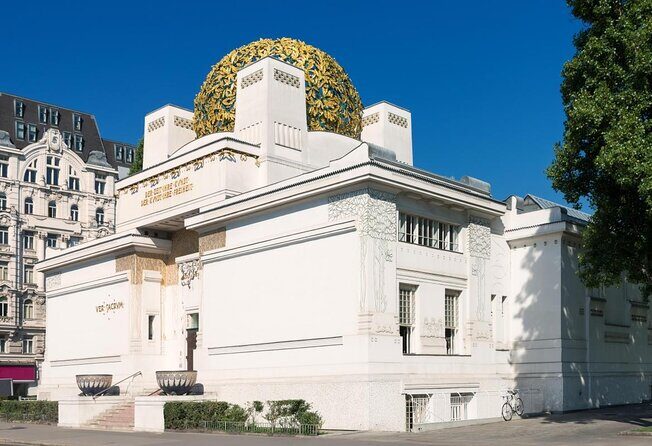
- Art Nouveau landmarks on the same route (Otto Wagner at Karlsplatz and the Secession)
- Klimt context, not just close-up viewing: Beethoven Frieze background and its symbolic ending
- Naschmarkt as your flexible break for lunch or a late snack
- Private guide from your doorstep with a group size of up to 8
Why this Vienna route works: Baroque to Secession in one half day
If your Vienna days feel jammed with museums, this tour is a smart alternative. It’s built around two big “eras” that actually overlap in time: the grand Baroque world of palaces and power, then the more modern push of Art Nouveau (Sezession) and the artists who wanted something new.
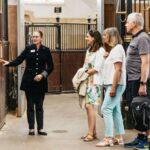
The private format matters more than it sounds. Up to 8 people keeps the pace realistic for a walking tour that still has “stop time” for architecture and artworks. And because the guide meets you at hotels, rentals, or major transit points like Vienna Hbf and Vienna West, you lose less time getting oriented.
This is also a route where the order helps. You hit Belvedere before you’ve built up a crowd headache, then you slide into Art Nouveau stops while the day still feels light. If you’re the type who likes to connect dots—why Vienna looks the way it does around 1700 vs. 1900—this one fits.
You can also read our reviews of more walking tours in Vienna
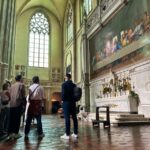
Belvedere Palace and Klimt’s Kiss: gardens that set the mood
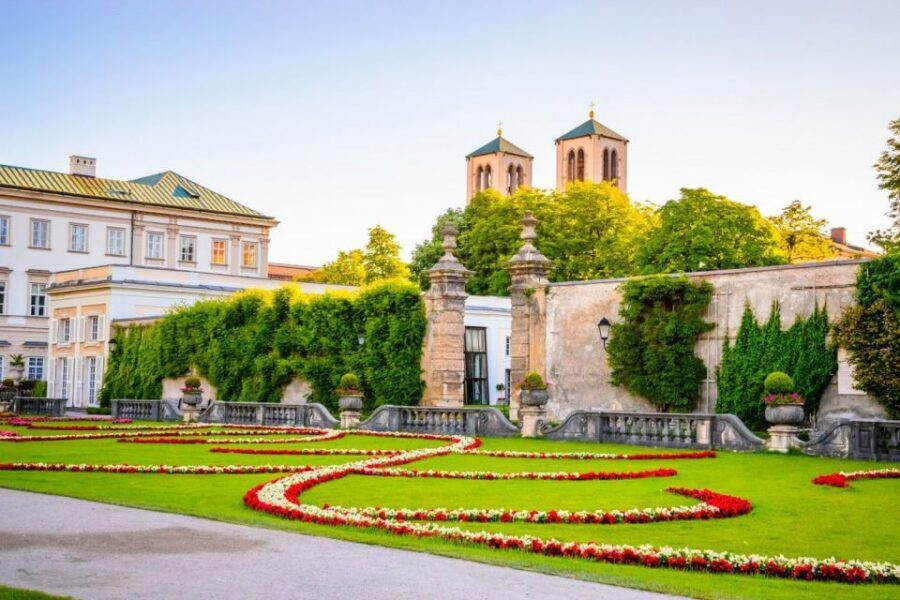
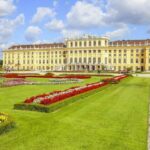
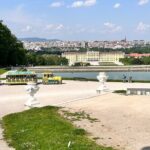
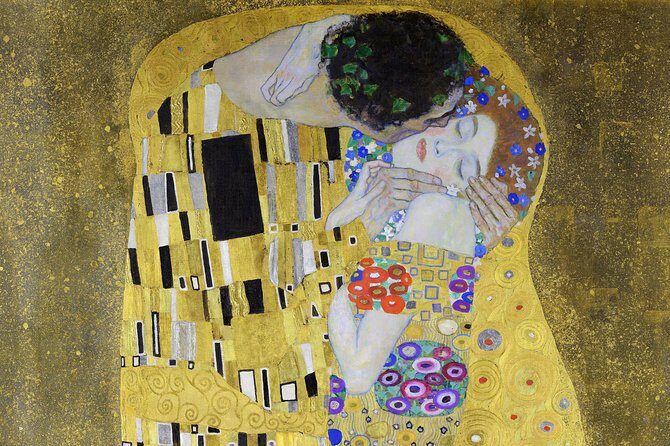
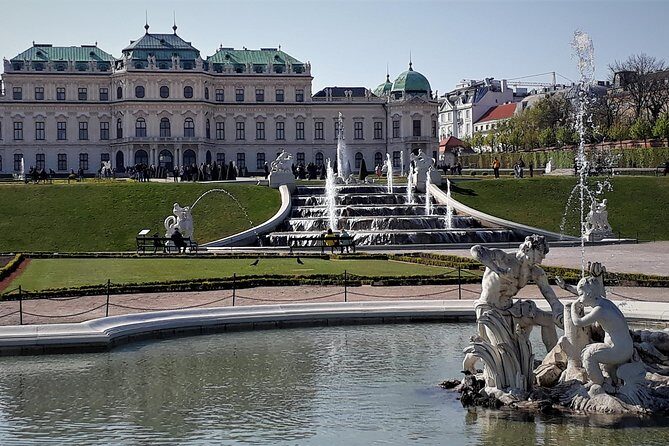
Belvedere starts with theatre: those famous wrought-iron gates open into the gardens like a stage curtain. The first “win” here is timing. The tour includes skip-the-line, and the goal is simple: get you to see Klimt’s best-known work (Klimt’s Kiss) embedded in the Austrian Gallery.
But here’s the part I’d pay attention to: you don’t rush straight to the painting. On the way down through the grounds, you get help reading what the gardens are doing—three levels and visual tricks that make the space feel arranged for perspective and drama. That’s not just garden trivia. In Vienna, designers often used layout like storytelling, and Belvedere is one of the clearest examples.
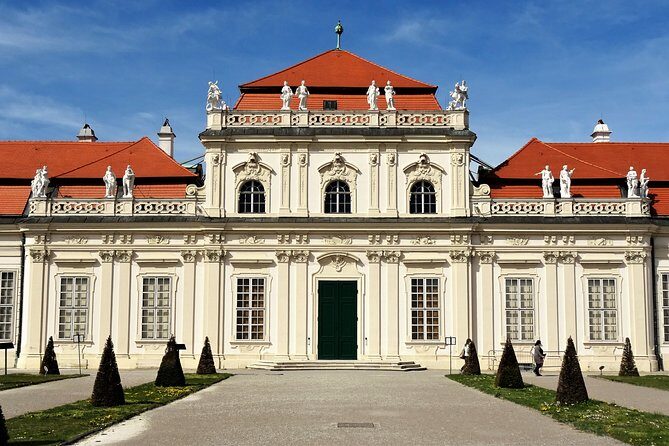
Then you enter the Lower Belvedere and the tour frames what Prince Eugene brought to Vienna from Versailles, just on a smaller scale. The garden room and the honor court are where that idea starts to click. You’ll understand the ambition behind the palace complex: it isn’t only pretty. It’s a statement about rank, taste, and control of the environment.
Practical note on tickets
Belvedere-related entry is partly handled for you, but admission is not included (Upper Belvedere/Secession). So if you’re budgeting, plan for museum/ticket costs on top of the tour price. The upside is that the guide’s routing and line-skipping can still save you a lot of frustration once you’re at the site.
Walking Vienna’s layers: Schwarzenbergplatz and the city’s 1900 boom
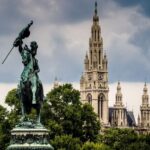
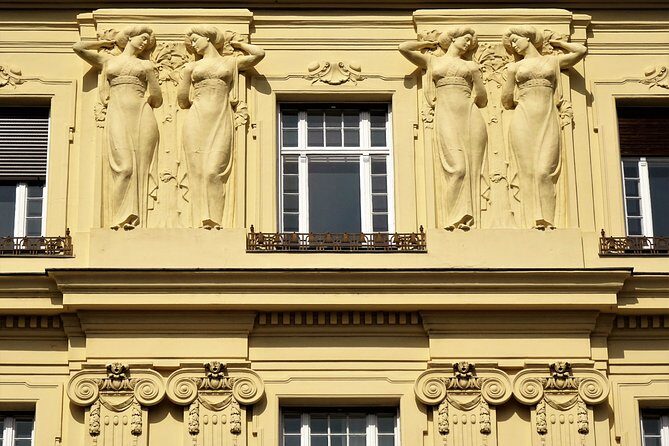
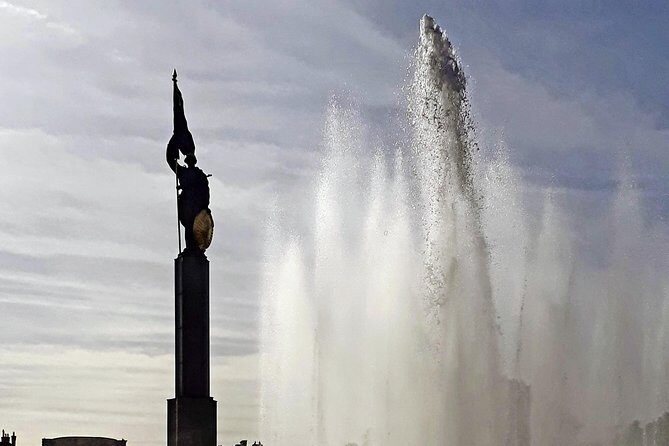
After Belvedere, you shift gears from royal gardens to real city history. Schwarzenbergplatz comes next, and it’s a useful reminder that Vienna isn’t only palace and painting. It’s also political memory and the story of the 20th century.
The Soviet Memorial dominates the square, and the surrounding buildings reflect Vienna’s boom period at the end of the 1800s. This is the kind of stop that can feel “extra” if you only want art museum walls. But if you want Vienna to make sense as a living place, it works.
I like this segment because it gives you context for why so many architectural styles can exist close together. In a city where empires rose and fell, styles didn’t erase the past. They stacked it. That’s exactly the feeling you get when you compare Baroque grandeur with Art Nouveau’s attitude of questioning the old rules.
Baroque church energy, Otto Wagner metro, and the Musikverein’s Golden Hall
From Schwarzenbergplatz, the walk continues through areas that mark Vienna’s transition between styles.
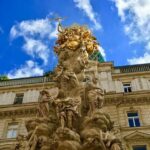
You pass a dramatic Baroque church positioned so you see it from a distance, the kind of building that was meant to impress. The tour frames it as Austria’s glorious 1700s epoch, and that description is accurate in spirit: Baroque architecture often uses motion, contrast, and spectacle to pull your attention in before you even reach the doors.
Next comes Karlsplatz and a stop at the Otto Wagner metro-station. This is one of those Vienna moments that helps you understand how Art Nouveau wasn’t only about painting and facades. It shaped everyday infrastructure too. Around 1900, Vienna embraced a look that felt modern in materials and design language, and Wagner is one of the key names tied to that shift.
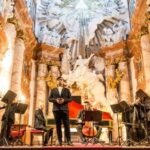
Then you reach the Wiener Musikverein area. The tour highlights the home of the Vienna Philharmonic and points out the Great/Golden Hall (Großer Saal), known for its acoustics and often considered among the finest concert halls in the world. Even if you don’t go inside, the explanation is valuable. It helps you see why the building’s importance goes beyond aesthetics—music here is the reason the architecture matters.
You can also read our reviews of more private tours in Vienna



Secession Building: Art Nouveau as a breakaway manifesto
Now the tour flips to the turn-of-the-century attitude. The Secession Building is treated as an architectural manifesto for Art Nouveau, and that framing changes how you look at it. This wasn’t just “pretty buildings.” It was made by rebel artists who broke away (seceded) from a long-established fine arts institution, basically saying the art world needed new permission structures.
This is also where you connect to Klimt again, but this time through a work that tells you about the artist’s ambitions and symbolism, not only his style.
The tour explains Klimt’s Beethoven Frieze, created for an exhibition celebrating the composer. It notes an important production detail: the frieze was painted directly on the walls with light materials, meant for the exhibition only, and it builds toward a climactic meaning described as a kiss to the world.
Admissions not included again
Like Belvedere, admission for the Secession is not included. The tour’s value is that you show up with the story in your head, so the time you spend there becomes more focused. If you’re the kind of person who wants to stand still for a long time with just the artwork, you’ll likely feel happiest here. If you want a lot of free wandering without guide input, you might have less time than you expect, since the stop is planned.
Naschmarkt as your built-in lunch and snack option
Between big architecture moments, the walk includes the Naschmarkt area. The tour frames its current transitional form as dating to 1915, and describes it as a mix of a market and an international food scene.
This is a useful stop for two reasons:
- You get a break from “art mode.”
- You can choose your own rhythm—either a real lunch or a quick late-afternoon snack depending on how you feel.
I also like Naschmarkt in a tour like this because it’s a reminder that culture isn’t only in museums. Vienna’s food markets are part of the city’s daily life, and taking a few minutes here can refresh your legs and your brain before the route ends.
Private guide style: what you can expect from Walter and the pacing
Because this is private, the guide quality is a bigger factor than on group tours. The best feedback centers on guides like Walter being strong with art-history storytelling and an appropriate pace, including adjusting when someone needs to slow down.
That said, there are also mixed notes about the presentation style. One comment described the guide more like a lecturer than an interactive guide, and mentioned humor that felt dated to at least one person. Another major point from that same general theme: if you prefer strictly art-focused talk with minimal opinions about modern politics, you might want to steer the conversation early.
My practical advice: if you care about a specific tone, say it at the start. A private tour makes that easy. I’d also wear shoes with traction, because a half-day walk still adds up fast.
Price and value: how $372.47 per group can work in your favor
The price is $372.47 per group (up to 8) for about 4 hours. That cost structure matters. You’re not paying per person. So the tour gets better value the more people you bring.
What you’re getting for that price is clear:
- Live guiding by a licensed Austria Guide
- Pickup offered from hotels and major points like Reichsbruecke pier, Vienna Hbf, and Vienna West
- Skip-the-line included
- Mobile ticket included
What you’re not getting:
- Public transportation included (so you’re relying on the pickup or your own movement)
- Museum admissions for Upper Belvedere and the Secession
So the value equation is: if you’re paying for two or more people and you want the line-skipping and guided context, the price feels reasonable. If you’re traveling solo and still need to buy admissions, it can feel more expensive on a per-person basis. In that case, you might compare against do-it-yourself planning only if you’re comfortable buying tickets and navigating busy sites alone.
Who should book this Vienna Art Nouveau and Baroque walk
This tour fits best if you:
- Want to see both Klimt “moments” in a single morning/afternoon
- Like architecture and want explanations tied to the artwork
- Prefer a guided route that reduces crowd stress
- Are okay with walking at a moderate fitness level for around half a day
- Value pickup, especially if you’re staying outside the most convenient hotel clusters
It’s less ideal if you:
- Hate walking and want frequent sitting breaks
- Want unlimited time inside museums with no line management
- Prefer a strictly silent, no-opinion guide style
Should you book the Private Klimt & Vienna Art Walk — From Baroque to Secession?
Yes, I’d book it if your goal is smart coverage: Belvedere gardens into Klimt, then Secession and the Beethoven Frieze idea, plus key architecture stops that connect Vienna’s styles. The combination of skip-the-line, private pacing, and guided context is where the tour earns its keep.
I’d think twice only if you strongly dislike museums where admissions are extra, or if your priority is long, independent time inside the Secession and Belvedere beyond what the half-day schedule allows. If that sounds like you, you might still go, but you’d want to pre-plan your ticket timing so the stops don’t feel rushed.
FAQ
How long is the Private Klimt & Vienna Art Walk?
It runs for about 4 hours.
What time do the tours start?
There are two start times: 09:30 and 14:00.
Is this tour private, and how big is the group?
Yes. It’s private, and the group size is up to 8 people.
What’s included in the tour price?
Live guiding by a licensed Austria Guide, pickup offered from your lodging or transit points, and skip-the-line. A mobile ticket is also included.
Do I need to buy museum tickets separately?
Yes. Admissions for Upper Belvedere and the Secession are not included, so you’ll need tickets for those sites.
Where can the guide pick me up?
The guide meets guests at hotels and vacation rentals in town, Reichsbruecke pier, or train stations including Vienna Hbf and Vienna West.
Can I get a full refund if I cancel?
Yes. There’s free cancellation, and you can cancel up to 24 hours in advance for a full refund.