Vienna rewards slow looking. This private 3-hour walk threads major landmarks with quieter stories in between. You start at the city’s old eastern gate, then work your way toward St. Stephen’s, the Jesuit church, and the Judenplatz Holocaust Memorial—plus time for a secret rooftop viewpoint.
What I like most is the way architecture becomes a story you can actually read on the street. The other big win is that you get a licensed local guide for your own group, and that makes it easier to ask questions and control the pace.
One drawback: it’s still a walking tour. The route is set up for people with at least moderate fitness, and you should expect a fair number of steps in 3 hours.
In This Review
- Key things you’ll notice on this quiet-corners route
- Starting at Stubentor U: why the walls matter before the churches
- The Jesuit Church and the Schönlaterngasse basilisk-and-schnitzel combo
- Deutschordenshaus (Sala Terrena) and Mozart’s Vienna in real rooms
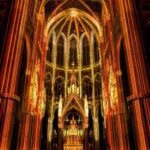
- St. Stephen’s Cathedral: outside details first, then a real chance inside
- Judenplatz Holocaust Memorial: history that lives in a neighborhood square
- Café Central, Ferstel Passage, and the Trotsky-Stalin story you actually remember
- Palais Daun-Kinsky: a palace with composer-adjacent context
- Rathausplatz and Café Landtmann: Freud’s Vienna at street level
- The rooftop viewpoint: the “secret” moment that makes the photos worth it
- How private guiding changes the pace (and what to say upfront)
- Price and value: $344.80 for up to 10, with free-entry style stops
- Who this walk suits best (and who may want something shorter)
- Should you book this Hidden Vienna Walk?
- FAQ
- How long is the private Hidden Vienna Walk?
- Is this tour private?
- What language is the tour offered in?
- Do they offer pickup in Vienna?
- What is included in the price?
- Are entrance tickets required for the stops?
- What physical ability is needed?
- Can I cancel and get a full refund?
- When do I get confirmation?
Key things you’ll notice on this quiet-corners route
- Stubentor U (eastern gate) first: you’ll start with the city walls so everything else makes more sense.
- Schönlaterngasse stories: the basilisk mural legend and the famous schnitzel connection on the same street.
- Teutonic Order setting (Sala Terrena): Mozart gets tied to real rooms in real buildings.
- St. Stephen’s Cathedral, inside and out: exterior details first, then a chance to step in.
- Judenplatz Holocaust Memorial: a square where 700 years of layers show up in one stop.
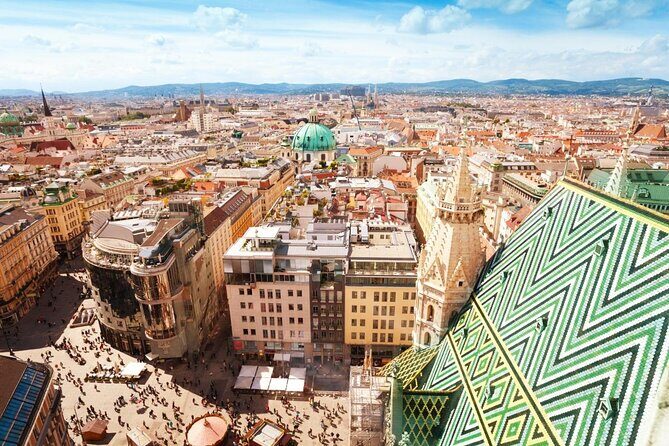
- A rooftop reveal: a “secret” viewing moment that’s often the highlight photo of the day.
Starting at Stubentor U: why the walls matter before the churches
The walk kicks off near Stubentor U, one of Vienna’s eastern gates. If you only start at the big churches, Vienna’s center can feel like a pile of impressive buildings. Starting here flips the order: you see how massive the walls were, so the later sights feel like they grew out of a defended city.
This opening also sets the tone. Your guide isn’t just naming streets; they’re explaining why Vienna grew the way it did and how power and protection shaped daily life. It’s a small stop on paper, but it becomes a mental map.
You can also read our reviews of more walking tours in Vienna
The Jesuit Church and the Schönlaterngasse basilisk-and-schnitzel combo
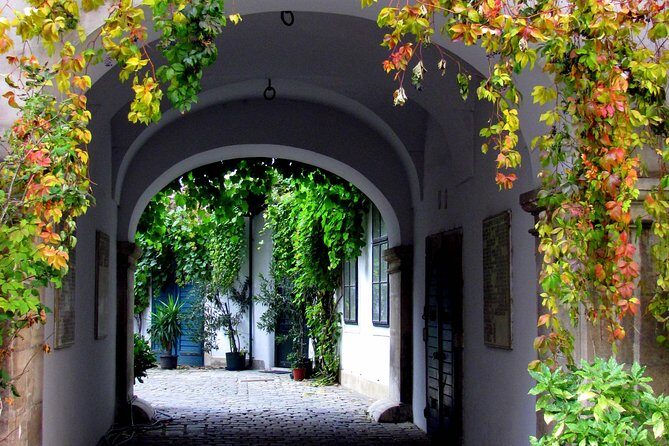
Next comes the Church of the Jesuits, where the tour leans into the idea that architecture and decoration aren’t random. You’ll spend a bit of time picking apart how the building’s visual language points people toward spiritual meaning.
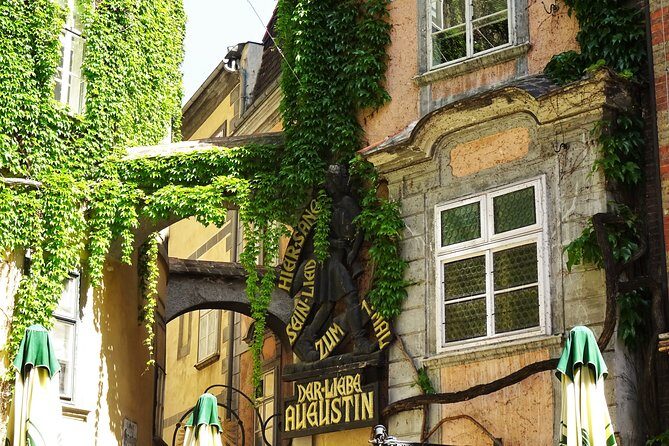
Then you’re in Schönlaterngasse, the street where two famous ideas share the spotlight. First, there’s a mural telling the legend of the Vienna basilisk, the kind of story Vienna loves to keep alive in public art. Right after that, you’ll hear about the basilisk connection to the Basilisk House area—and how this neighborhood also became famous for a very specific culinary identity.
The tour also includes a connection to schnitzel lore since 1905, which is a fun reminder that Vienna’s history isn’t only about emperors and composers. It’s also about what people ate, where they gathered, and how traditions got repeated until they became part of the city’s brand.
Practical note: these are short breaks. If you want to linger, ask your guide early. In a private format, you’ll usually get more flexibility than on fixed group tours.
Deutschordenshaus (Sala Terrena) and Mozart’s Vienna in real rooms
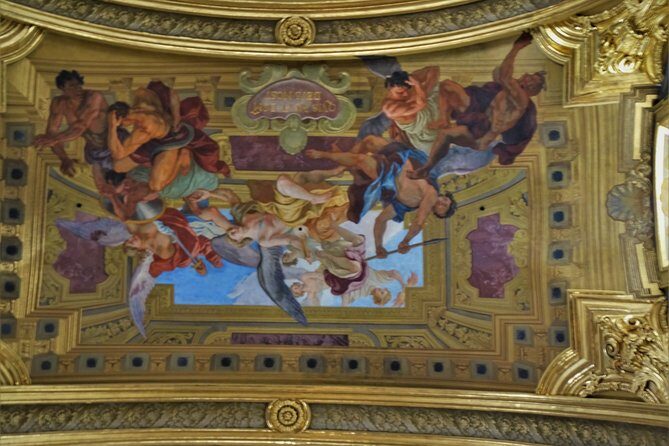
One of the most memorable stops is Sala Terrena im Deutschordenshaus—the “sala terrena” in the Deutschordenshaus, connected to the Teutonic Order. The tour ties music to space, explaining that while Mozart lived in the house of the Teutonic Order in 1781, this setting mattered to what he could hear, do, and experience.
The biggest value here is not the “Mozart fact.” It’s the way your guide helps you understand how Vienna’s cultural life worked through institutions and buildings. Mozart isn’t treated like a statue; he’s treated like a person moving through a specific city layout.
St. Stephen’s Cathedral: outside details first, then a real chance inside
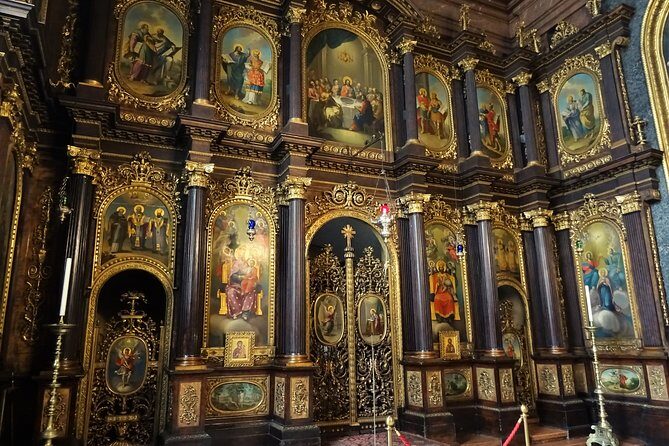
At St. Stephen’s Cathedral, the approach is smart: you get time for outside details before you go in. That way, the cathedral stops being just a grand photo backdrop and becomes something you can read with your eyes.
The tour includes time to look inside too. That matters, because a lot of people rush past what’s actually inside—woodwork, chapels, and the feeling of scale you only notice once you’re standing there.
Downside to consider: cathedral time is limited inside a 3-hour walk. If you’re the type who likes to sit quietly for a long stretch, tell your guide at the start of the tour. A private walk can adjust, but the overall structure still needs to fit the route.
Judenplatz Holocaust Memorial: history that lives in a neighborhood square
Then you reach Judenplatz and the Holocaust Memorial. This stop is brief on the clock, but the emotional impact is the point. The square is described as telling the story of seven hundred years, and you can feel that layering right away: the memorial isn’t floating in isolation; it’s embedded in the city’s day-to-day fabric.
If you want to ask questions, this is the moment. Your guide can connect what you’re seeing now with the longer sweep of Jewish life in Vienna—and the rupture that followed. It’s one of those stops where good guiding turns a quick photo stop into something more thoughtful.
You can also read our reviews of more private tours in Vienna



Café Central, Ferstel Passage, and the Trotsky-Stalin story you actually remember

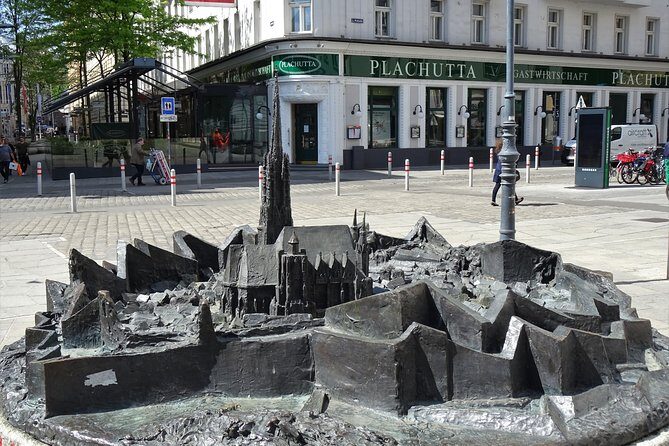
The walk also passes by Café Central and the Ferstel Passage. These aren’t just named drops. They’re tied to a story about politics, ideas, and famous people who were in the same world but never became friends the way one might expect.
The tour gives you that “wait, really?” detail about Trotsky and Stalin not becoming friends, and it works because cafés and passageways are where history often shows up first: conversations, newspapers, and overheard arguments.
Also, cafés are useful for you later. If you like to plan your day, this stop gives you a sense of where to return for a longer break after the walk. In fact, guides on this experience often share specific coffee and bread recommendations, and that kind of local tip can save you time once you’re off the tour route.
Palais Daun-Kinsky: a palace with composer-adjacent context
Next is Palais Daun-Kinsky, commissioned by Count Wirich Philipp von Daun, with construction beginning in 1713 under architect Johann Lucas von Hildebrandt. The tour also mentions that Prince Józef Poniatowski—a Polish general and Marshal of France—was born there on 7 May 1763.
Why this matters to you: it connects Vienna’s grand buildings to specific people and timelines, instead of treating the palace district as decorative wallpaper. You’ll start noticing the building styles and the way power is expressed in entrances, facades, and scale.
This stop is short. Treat it as a “look and understand,” not a full architecture lecture. If you’re the kind of person who loves to read details, you may want your guide to point out one or two features to focus on so you don’t get overwhelmed.
Rathausplatz and Café Landtmann: Freud’s Vienna at street level
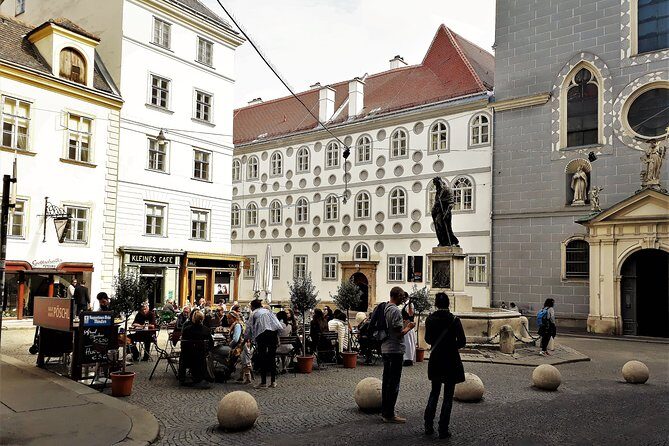
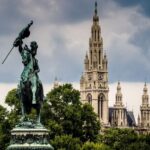
Near Rathausplatz, the tour includes a reference point for Café Landtmann, described as Freud’s favorite. It’s a compact way to connect Vienna’s cultural identity to the history of psychology.
What I like about ending this way is that it brings the stories back to everyday Vienna. Freud’s era isn’t shown as distant. It’s shown through a place you can picture returning to for coffee.
If you’re planning to continue on your own, this final segment helps you orient yourself toward the kinds of stops you’ll enjoy later: cafés, passages, and streets where history shows up through small rituals.
The rooftop viewpoint: the “secret” moment that makes the photos worth it
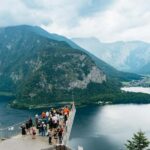
The tour includes a climb to a secret rooftop for views. The exact rooftop location isn’t spelled out here, but the purpose is clear: you get a high-angle sense of how Vienna’s inner city sits together.
This kind of stop is valuable even if you’re not obsessed with photography. Seeing rooftops and street patterns from above helps you connect the architecture you just learned to the city’s overall shape. It makes the whole walk feel like more than a checklist.
How private guiding changes the pace (and what to say upfront)
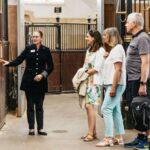
This is a private tour for your group, typically up to 10 people, so you’re not stuck with one rigid pace. The guides for this experience have been praised for being responsive and flexible, and names that come up include Walter, Sabine, Brigitte, Danielle, and Hannes.
Still, here’s the practical part: it’s a 3-hour walking route. One of the most important things you can do is be clear about your comfort level and what you need out of the time—especially if you want longer sits in churches or slower stops for photos.
One caution from real-world experience: sometimes the plan includes regrouping at a nearby café if you’re finishing a cathedral segment. If you need accessibility-friendly restrooms or a very slow pace, bring that up immediately so your guide can structure breaks around your needs.
Price and value: $344.80 for up to 10, with free-entry style stops
At $344.80 per group (up to 10), the math can be surprisingly fair if you’re traveling with friends or family. The pricing is per group, not per person, which shifts the value from ticket cost to guide time.
You also get several value multipliers:
- A private licensed Austria Guide with pickup from your doorstep/pier/train-station area.
- A route where the tour details list admission ticket free for the named stops.
- A tour duration of about 3 hours, so you’re not burning a whole day to get a meaningful orientation.
Not included: transportation to and from attractions. So if you’re relying on public transit, your day may include some extra walking on your own before the guide meets you.
If you’re a solo traveler, this price might feel steep compared to group tours. But if you want quiet-corner storytelling, direct Q&A, and flexibility to match your interests, it can still be worth it.
Who this walk suits best (and who may want something shorter)
This is ideal if you:
- Like a guided mix of major sights plus side streets
- Want stories tied to actual buildings (Jesuits, Teutonic Order setting, palaces)
- Enjoy cultural context on the way to a cathedral and a memorial
- Prefer a route that avoids the most crowded patterns when possible
It may not be your best fit if you:
- Have limited mobility or need frequent long rests
- Expect a fully relaxed pace with lots of sitting time
- Want only a couple of stops and deep time in one place
The tour is listed for people with moderate physical fitness, and it’s still designed as a walking experience.
Should you book this Hidden Vienna Walk?
I’d book it if you’re in Vienna long enough to want more than the postcard version. This walk gives you a strong sense of the city’s structure, then layers in music, religion, art legends, politics in cafés, and the emotional weight of Judenplatz. The rooftop viewpoint is a nice payoff for the effort.
I’d pause and consider another option if your mobility needs are high or you know you’ll struggle with stairs and lots of moving. In that case, ask for a shorter format before you commit, and tell your guide what will make the day comfortable for you.
FAQ
How long is the private Hidden Vienna Walk?
It’s about 3 hours.
Is this tour private?
Yes. It’s listed as private, and only your group participates.
What language is the tour offered in?
The tour is offered in English.
Do they offer pickup in Vienna?
Yes, pickup is offered. You can also meet at a restaurant or another location in Vienna. If you’re with A’Rosa, the meeting point listed is Pier Handelskai 265, 1020 Wien.
What is included in the price?
Included is a private licensed Austria guide for pickup from your doorstep/pier/train station.
Are entrance tickets required for the stops?
The tour details list admission ticket free for the named stops.
What physical ability is needed?
The tour is intended for people with moderate physical fitness. Service animals are allowed, and pets are not permitted in certain areas visited.
Can I cancel and get a full refund?
Yes. Free cancellation is available if you cancel at least 24 hours in advance for a full refund.
When do I get confirmation?
You receive confirmation within 48 hours of booking, subject to availability.