REVIEW · VIENNA
Vienna Highlight Tour – yue walk
Book on Viator →Operated by Vienna Highlight Tour · Bookable on Viator
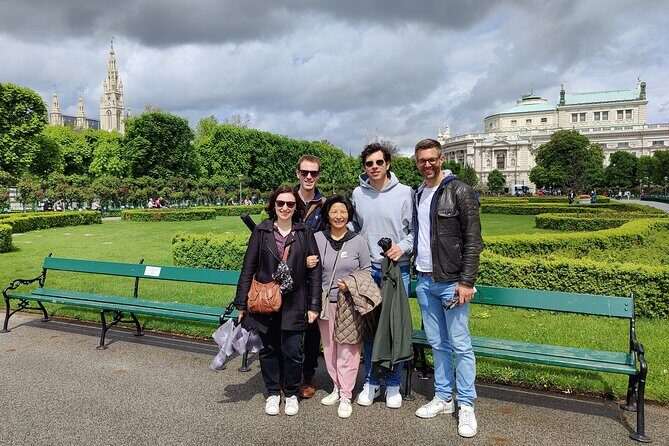
Two hours, and Vienna starts making sense. What I love most is the quick orientation: you walk Vienna’s historic center with a licensed guide who turns landmarks into one connected story. It’s a small group (max 6), so you can ask questions without shouting over the crowd.
I also liked how Yue’s humor and energy make the city feel personal, not like a list. She explains why places sit where they do, and how Vienna’s music, court life, and power politics link together as you move from stop to stop. By the end, you’re not just seeing buildings, you know what to notice next.
One consideration: several of the bigger attractions are marked as paid admission not included, like the Opera and the Sisi Museum. Plan a bit extra time and budget if you want to go inside, and keep an eye on the good weather requirement since this is a walking tour.
In This Review
- Key things I’d watch for
- Starting at Vienna State Opera: the best way to map the center
- Vienna State Opera and the music-and-court zone (without paying yet)
- Memorial Against War and Fascism: Vienna adds hard truth to the walk
- Lobkowitzplatz and the mix of styles you can actually spot on foot
- Josefsplatz to the Spanish Riding School area: court life in walking distance
- Wiener Hofmusikkapelle and the Hofburg: where power, music, and bureaucracy overlap
- Heldenplatz and Maria Theresien Square: statues, institutions, and a woman who changed everything
- Sisi Museum and Michaelerplatz: the choice between icon photos and paid entry
- Plague Column to St. Stephen’s: ending with the city’s skyline centerpiece
- Price and value: what $106.20 buys in two hours
- Should you book this Vienna highlight walk?
- FAQ
- How long is the Vienna Highlight Tour – yue walk?
- What language is the tour offered in?
- How many people are in the group?
- Where do I meet the tour guide?
- Where does the tour end?
- Is a mobile ticket included?
- Do I need to pay admission fees for the stops?
- Is the tour dependent on weather?
- What is the cancellation policy?
- Are service animals allowed?
Key things I’d watch for
- Max 6-person group size keeps the pace comfortable and questions possible
- Yue’s story style connects music, Habsburg power, and street-level details
- Many stops are free while a few key sights require separate tickets
- Mostly exterior viewing with short stops means you get the layout fast
- Photo help and practical tips make the whole day easier afterward
Starting at Vienna State Opera: the best way to map the center
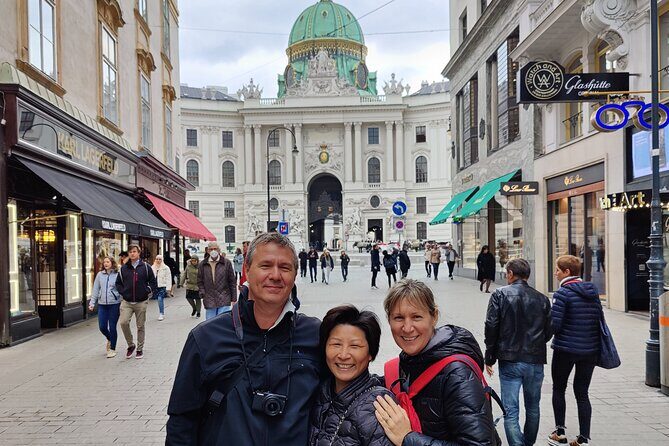
You start at Herbert-von-Karajan-Platz in front of the Staatsoper, with a 10:00 am departure. Meeting here matters. It’s central, easy to find if you’re using public transport, and it puts you right at the edge of Vienna’s big “showpiece” zone.
This tour also uses a mobile ticket, which makes day-of logistics simple. And with a maximum of 6 people, you’re not stuck behind a wall of hats and tote bags. That smaller size shows up fast: the guide can adjust pacing, you’re able to hear details, and you can ask the random question that always pops up when you’re staring at a building and thinking, Wait, why is it designed like that?
From the start, the walk has a clear goal: help you understand Vienna’s layout and the meaning behind the sights. Instead of bouncing between disconnected stops, you build a mental map. You’ll walk away knowing which areas belong to the imperial core, where the major court buildings cluster, and where to go next if you want a deeper visit.
You can also read our reviews of more walking tours in Vienna
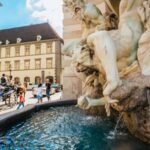
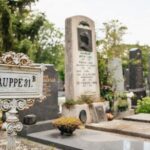
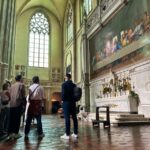
Vienna State Opera and the music-and-court zone (without paying yet)
The first stop is the Vienna State Opera area. You’re taking in the Neo-renaissance building dating to 1869 from the outside. This is one of those places where architecture and city identity merge. The grand scale isn’t just for show; it’s a clue that Vienna built its reputation on performance and prestige.
The guide ties the neighborhood to major personalities, including stories connected to Johann Strauss and the nearby Sacher Hotel. Even if you have no plan to go inside, this is a smart opening. You set a theme immediately: Vienna’s history isn’t only political. It’s also musical, social, and theatrical.
Important note: the admission ticket is not included for this stop. That doesn’t mean you can’t enjoy it. It means your time here is about orientation and context, not an opera-house ticket experience. If you want to add an interior visit later, you’ll already know why the opera is a key piece of the city puzzle.
Memorial Against War and Fascism: Vienna adds hard truth to the walk
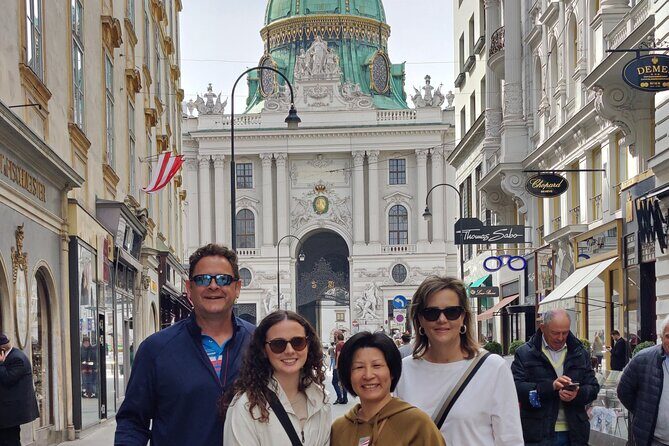
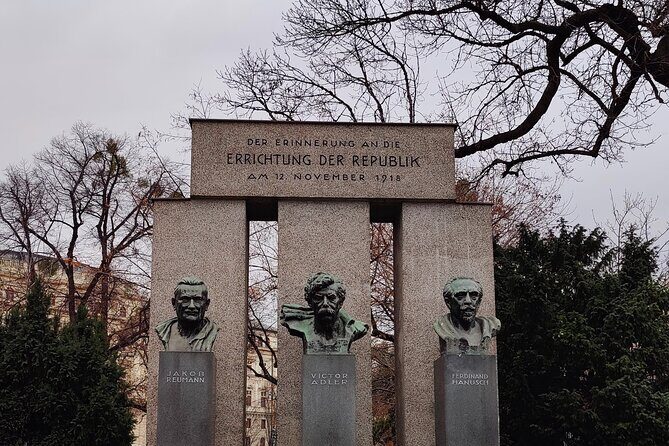
Stop 2 moves you from the prestige zone to a memorial that forces a pause. The Memorial Against War & Fascism includes a Jewish statue, the Gate of Hell, and an Independence Declaration Stone. It’s a short stop, but it’s not a throwaway moment.
What I like about placing this early: it keeps the tour honest. Vienna’s center can feel like pure beauty and stonework at first glance. This memorial snaps you back to the twentieth-century reality that shaped Europe. You’re reminded that architecture and monuments aren’t only decorative. They also carry memory and warning.
The stop is listed as free, so there’s no ticket factor here. You just have to be willing to take in something serious for a few minutes. If you rush it, you’ll miss why it’s worth standing still.
Lobkowitzplatz and the mix of styles you can actually spot on foot
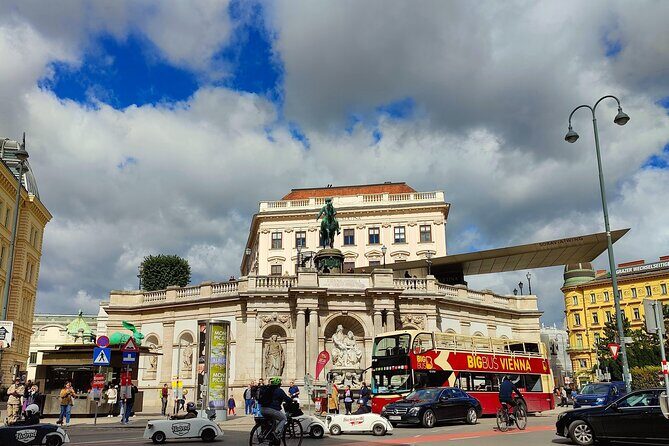
At Lobkowitzplatz, the walk starts showing how Vienna layers eras on top of each other. You pass or view the Albertina Palace and Museum area and the Augustina Church Tower. You also get a look at a Baroque building (Lobokowitz Palace) and an Art Deco building designed by Otto Wagner.
This is one of the most useful parts of the tour if you care about architecture, because you’re not just told that Vienna has variety. You’re guided to notice it within minutes. Baroque curves and ornament sit near modern lines, and the city’s evolution feels visible instead of abstract.
Like the memorial, this stretch is free for you to enjoy. The tradeoff is simple: you’re not entering museums during these short segments. You’re learning what to look for, so that when you later choose a museum or church visit, you’ll know what you’re walking into.
Josefsplatz to the Spanish Riding School area: court life in walking distance
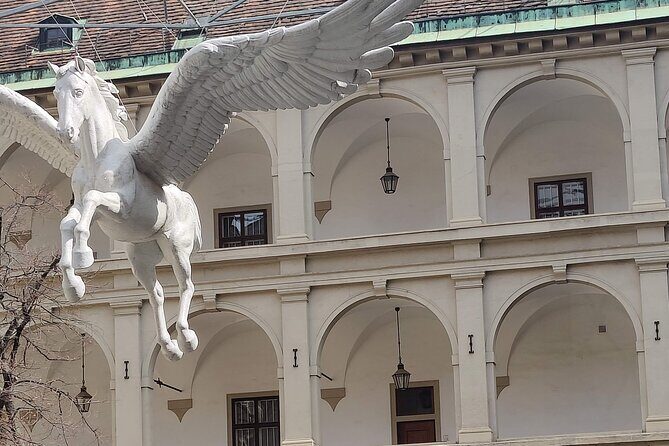
Next comes Josefsplatz, where the tour tightens around the imperial center. The standout here is the Augustina Church, because you get a visit inside, and the stop is listed as free. A quick interior stop can be the difference between seeing a building and actually feeling it.
Around the church area you also see the Josef Statue, the Court Library, and Pallavicini Palace. Then you head toward the Spanish Riding School zone, with the stop connected to Josefsplatz and nearby court buildings.
This part is valuable even if you don’t plan to attend a performance. The Spanish Riding School is one of those Vienna icons people hear about constantly. Seeing where it sits in the broader court environment helps it make sense. It stops being a name and becomes a place.
The later stop at Stallburg mentions Lipizzanner horses, and again, admission tickets are not included there. Translation for you: expect to see the area and horse connection from the outside, not a ticketed stable visit. If you want more, you’ll need to plan that separately.


Wiener Hofmusikkapelle and the Hofburg: where power, music, and bureaucracy overlap
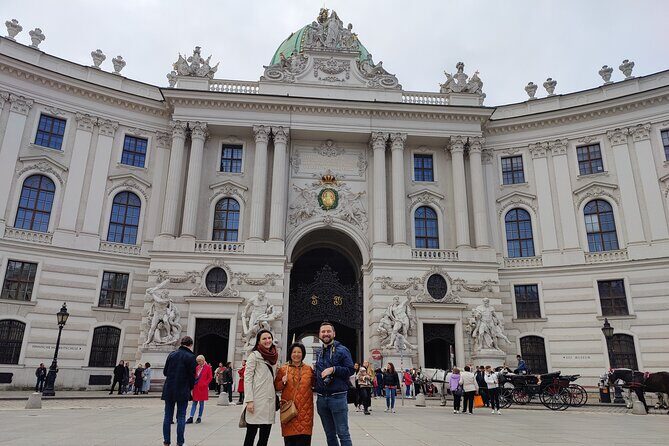
After Josefsplatz, the route continues into the Hofburg orbit. You’ll pass the Wiener Hofmusikkapelle area, which includes the Imperial Treasury Museum, the Court Music Chapel, and a Renaissance Gate. Like a few other highlights on this tour, admission is listed as not included.
That’s a pattern here: the tour gives you the setting and the significance, not a full museum day. It’s still worth it because the guide connects what you’re looking at to how the court functioned. Vienna’s imperial buildings weren’t separate from each other. They operated like a network, and this walk shows that network in one go.
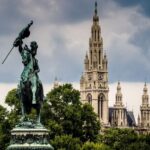
Then you reach the Hofburg proper, specifically the Inner Court. You’ll see the statue of Franz II/I and the wings around the inner courtyard: the Amalien Wing, Leopoldinischer Wing, and Reichskanzlei Wing. Even on a short stop, this area is powerful because of scale and layout. You feel the weight of governance.
The listed stop time here is longer (about 10 minutes), and that extra minute matters. If you’re trying to understand Vienna’s center, the Hofburg is one of the anchors. Once you understand where it sits and what surrounds it, the rest of the walk clicks into place.
Heldenplatz and Maria Theresien Square: statues, institutions, and a woman who changed everything
Heldenplatz is stop 8, and it’s a big open-city moment. You’ll see statues of Karl and Prince Eugen, plus the National Library and OSCE. The walk also mentions the Burgtor, City Hall, and Parlament in the area, which helps you understand how civic life and imperial history sit side by side here.
This is where Vienna feels theatrical again, but now it’s political theater. The guide’s job is to point out what each building type signals: court authority, public institutions, and how the city projected power.
Then you move to Maria Theresien Square. The tour frames it around Maria Theresa as one of the most powerful female rulers in Habsburg history. The statue is described as surrounded by major museum buildings—art and natural history—so the square becomes a link between rule, culture, and public learning.
Both Heldenplatz and Maria Theresien Square are listed as free stops. That’s a real value factor. You get major-picture views without paying anything, and you still come away with a story you can repeat later.
Sisi Museum and Michaelerplatz: the choice between icon photos and paid entry
Stop 10 is the Sisi Museum, and it’s a classic “do you want more?” moment. The stop is listed as admission ticket not included. The tour gives you context—Sisi as an enduring icon after her death and the story around her personality and destiny—but it doesn’t force you into a museum ticket decision.
If you’re a Sisi fan, you can treat this as your launch point: you’ll know what to look for if you buy a ticket later. If you’re not, you can still appreciate why this icon mattered to Austrian identity and how the city turned it into a museum story.
Then the route moves to Michaelerplatz. You’ll see Michaeler Church and Michaeler Gate, plus the Loose House and excavations. That excavations mention is a nice reminder: the city under your feet isn’t new. The stop is free, and the time is short, but it helps you notice that Vienna’s center is built on layers, not just renovations.
From there you hit Kohlmarkt with a quick stop linked to Cafe Demel. This is mainly a location-and-neighborhood moment, free and brief, but it’s the kind of stop that helps you match streets to names you’ll see again while you eat and wander later.
The tour then takes you through the luxury shopping streets and splendid buildings—basically the city showing off its polished urban edge.
Plague Column to St. Stephen’s: ending with the city’s skyline centerpiece
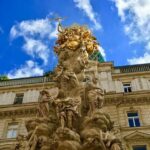
Stop 13 is the Colonna Della Peste (Pestsaule), a plague monument. You also see Grabenhof and Ankerhaus nearby. The value here is perspective. If your Vienna day started with opera grandeur, this stop reminds you that Vienna has also coped with sickness, fear, and survival—so the city’s monuments carry real emotional history.
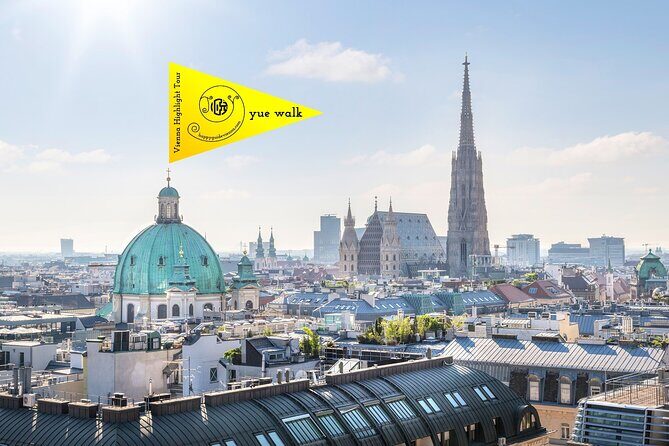
Finally, you reach St. Stephen’s Cathedral. The tour notes that it’s a building that spans from the 12th century through the 16th century, and it’s known for having the tallest tower in the city center. You’ll have about 5 minutes here, so this is more of a landmark wrap-up than a cathedral deep visit.
The stop is listed as free. The guide’s likely move is to orient you—what’s worth noticing from street level and where the important angles are—so you can return later if you want a longer look. Even if you’ve seen photos of the cathedral, seeing it in person at the end of a walk like this usually sticks harder, because you’re ending with the city’s visual anchor after learning how the center works.
Price and value: what $106.20 buys in two hours
At $106.20 per person for about 2 hours, you’re paying for something more useful than sightseeing alone: a licensed guide who makes the big sites connect into one coherent route. With a max group size of 6, you’re also paying for attention, not just movement.
Here’s where the value lands:
- You get a lot of major sights packed into one morning slot, starting at the Staatsoper and ending near Stephansplatz.
- Many stops are listed as free, so you’re not constantly adding small entrance fees.
- Several big-ticket items are marked as admission not included (State Opera, Stallburg, Wiener Hofmusikkapelle areas, and Sisi Museum). That’s not a trick. It keeps the tour short and focused on orientation.
So the best way to think about the price is this: you’re buying the map and the meaning. If you already planned to visit a museum or go inside one of those ticketed sites later, the guide’s explanations can help you choose where your time and money go. If you want every site fully ticketed and inside, this tour alone won’t replace a day-trip of museum entrances.
Should you book this Vienna highlight walk?
Book it if:
- you want an efficient way to understand Vienna’s center before you start picking your own day plans
- you like story-driven sightseeing, especially with a guide who uses humor and keeps things moving
- you’ll benefit from a small group where questions are easy
Skip or adjust expectations if:
- you plan to go inside lots of ticketed attractions right away, since some major stops list admission not included
- you need a language other than English; this tour is offered in English, and matching your language matters
FAQ
How long is the Vienna Highlight Tour – yue walk?
The tour lasts about 2 hours.
What language is the tour offered in?
It is offered in English.
How many people are in the group?
The maximum group size is 6 travelers.
Where do I meet the tour guide?
You meet at Herbert-von-Karajan-Platz, Staatsoper, 1010 Wien, Austria.
Where does the tour end?
The tour ends at Wien Museum Virgilkapelle, Stephansplatz U-Bahn-Station, 1010 Wien, Austria.
Is a mobile ticket included?
Yes, the tour includes a mobile ticket.
Do I need to pay admission fees for the stops?
Some stops list admission tickets as not included, including the Vienna State Opera area and also later sights such as Stallburg, Wiener Hofmusikkapelle, and the Sisi Museum. Other stops on the route are listed as free.
Is the tour dependent on weather?
Yes. This experience requires good weather. If it’s canceled due to poor weather, you’ll be offered a different date or a full refund.
What is the cancellation policy?
Free cancellation is available. You can cancel up to 24 hours in advance for a full refund.
Are service animals allowed?
Yes, service animals are allowed.