REVIEW · VIENNA
Vienna: Tour with locals in RAXI electric rickshaw
Book on GetYourGuide →Operated by Guide from Vienna - RAXI Tours · Bookable on GetYourGuide
A Vienna highlight without the usual walking stress? A ride on a RAXI electric rickshaw lets you glide through neighborhoods and vantage points that larger vehicles can’t reach, with a local guide steering you toward the sights you’ll care about. I like that it moves like a bike tour but feels calmer, with stops that don’t leave you cooked.
Two things I really like: you get bike-lane access around the Danube Canal and in other car-restricted stretches, and the tour includes a comfort setup for cold weather (heated blanket + heated ride time) so you can still enjoy the city when it’s chilly. One thing to consider: this is a two-person ride with limits on weight and luggage, so it’s important to plan around what you’re bringing and how flexible your schedule is.
In This Review
- Key moments people will love
- Vienna by RAXI: why this feels different from a bus tour
- How the electric rickshaw experience actually works (comfort + control)
- The route: historic center to Hofburg, then Hundertwasser to the river
- Historic center segment: get your bearings fast
- Hofburg Palace stop: a focused taste of imperial power
- Hundertwasser House: eco-minded design with real personality
- Donau Park and the Old Danube: Vienna slows down
- Danube Canal bike lanes and Ringstraße views: the in-between magic
- How pickup and drop-offs affect your day
- Price and value: when $175 makes sense
- Cold-weather comfort: heated blanket plus waterproof picnic cover
- What happens if weather cancels the RAXI ride
- Best-fit travelers: who this tour works for
- A few practical notes that make the day smoother
- Should you book the Vienna RAXI electric rickshaw with Nicole?
Key moments people will love
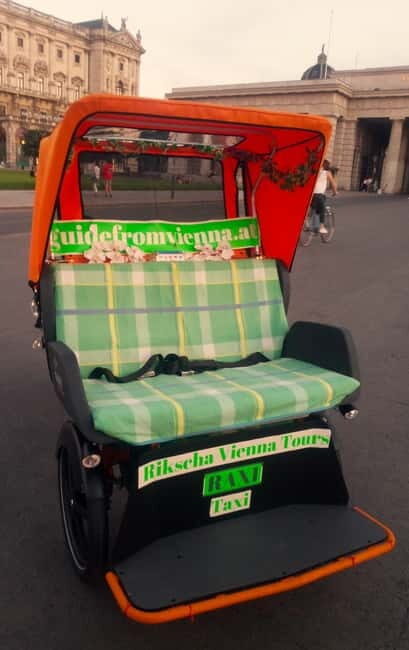
Ride closer on bike lanes around the Danube Canal and through areas cars can’t enter easily.
A guide who can shape your route around what you want most—architecture, history, or both.
Hofburg + Hundertwasser in one loop so you get old power and modern eco design back-to-back.
Donau Park and Old Danube pace gives you a break from the busiest central streets.
Heated and protected for shoulder-season rides with a battery-powered blanket and windproof picnic setup.
Vienna by RAXI: why this feels different from a bus tour
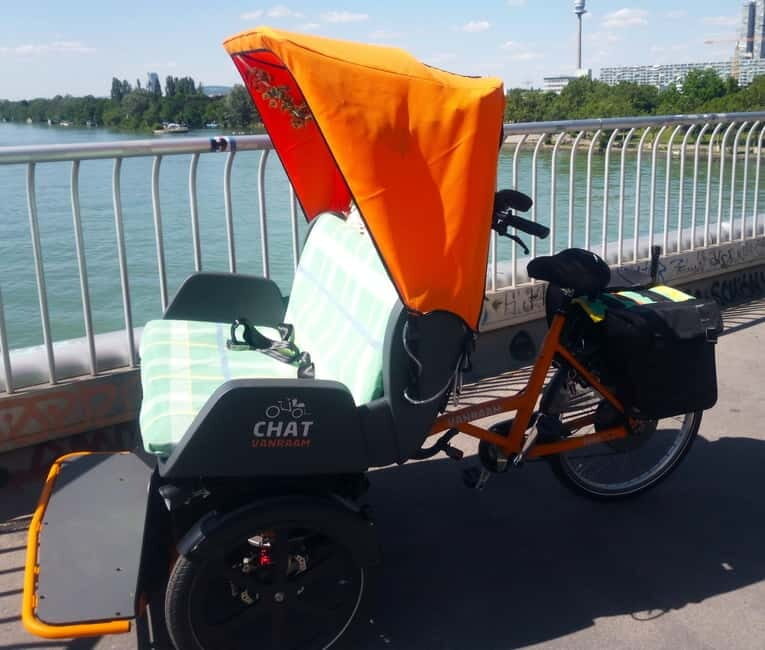
If you’ve ever done the classic “see it all” tour and felt like you were sprinting through highlights, this is the opposite vibe. The RAXI is a small electric rickshaw for two adults, so you move under your own rhythm. You can slow down for photos, stop when something catches your eye, and still cover a lot of ground in a short window.
What makes it click in Vienna is where it lets you go. You’re not stuck to the big roads and fixed bus routes. Instead, you travel using bike-friendly streets and car-restricted areas, including the Danube Canal bike lanes that locals use. That changes the experience fast: you spend less time looking at sights from far away and more time getting a proper view—then rolling on before you hit the sore-legs wall.
I also like the “guided but not rigid” format. Nicole can adapt the route to your interests, which matters in a city where there are multiple great ways to do the same walk. Instead of paying for a generic script, you’re paying for access and guidance tied to your priorities.
You can also read our reviews of more tours and experiences in Vienna.


How the electric rickshaw experience actually works (comfort + control)
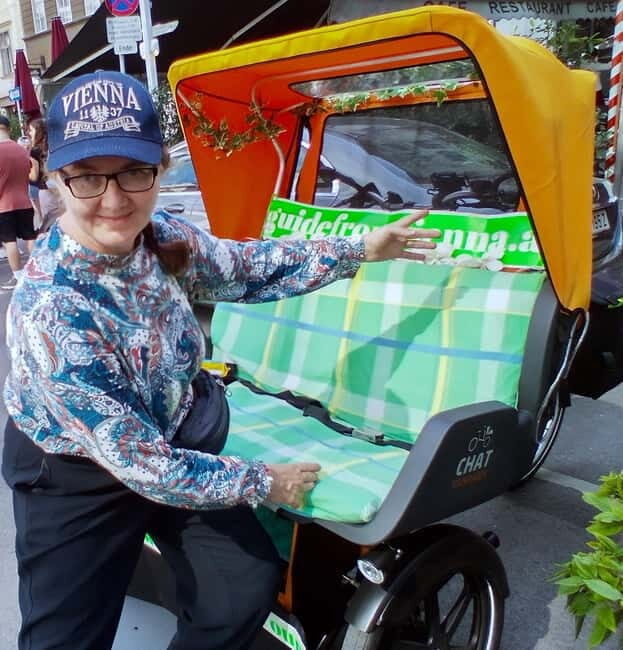
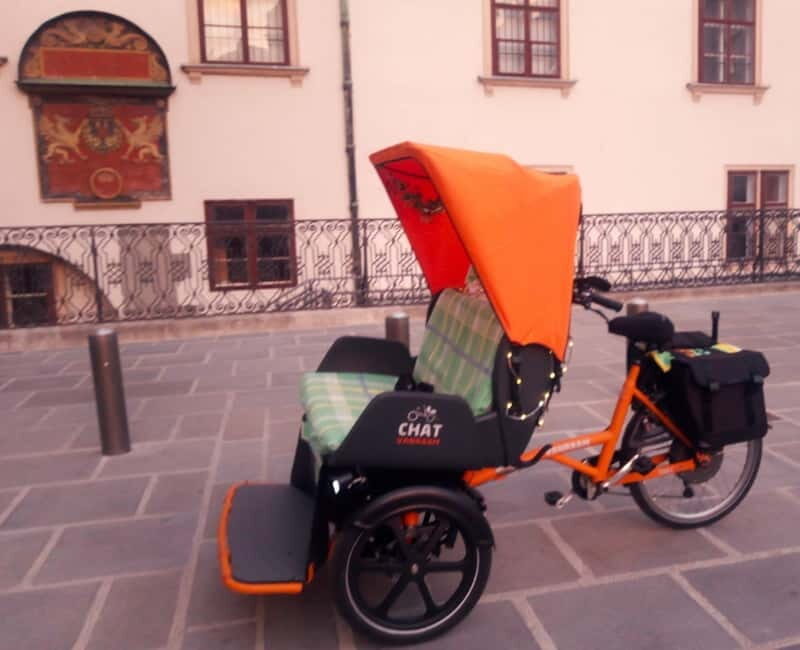
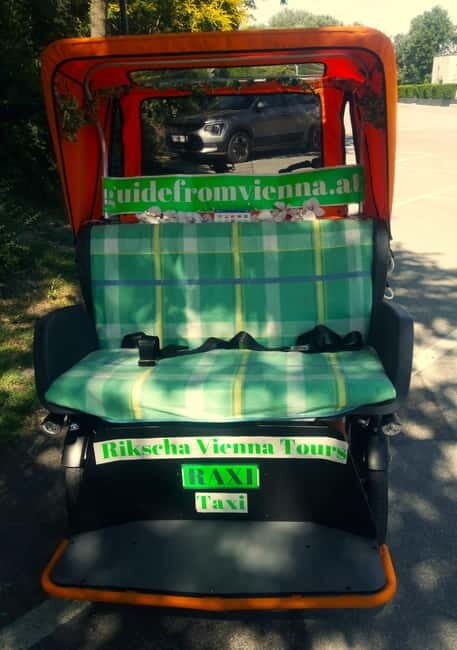
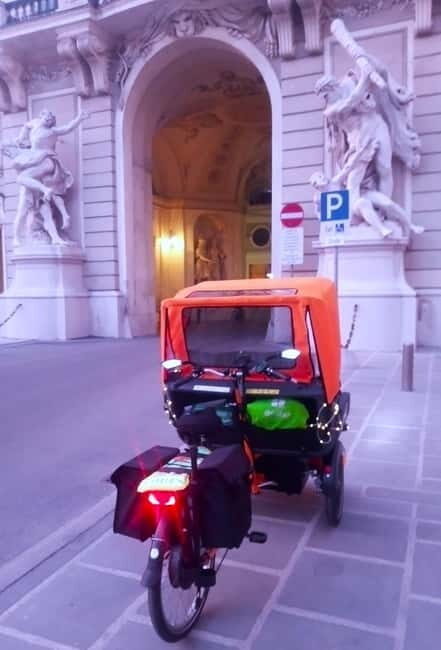
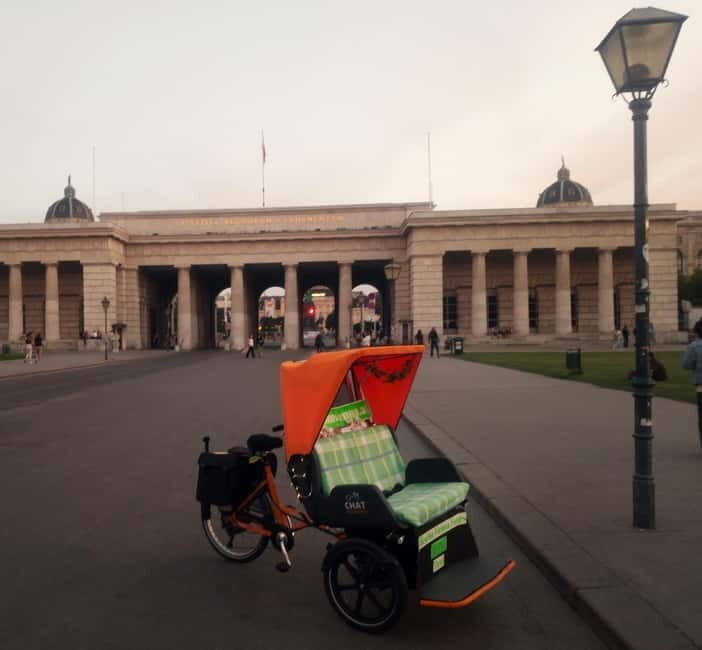
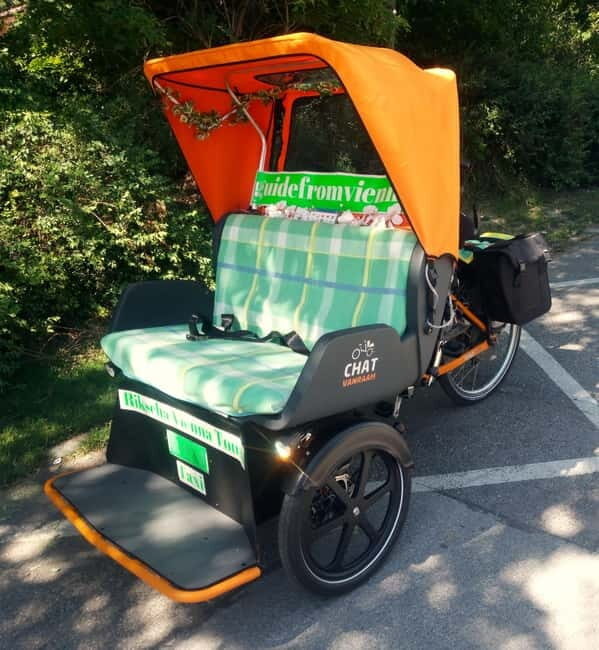
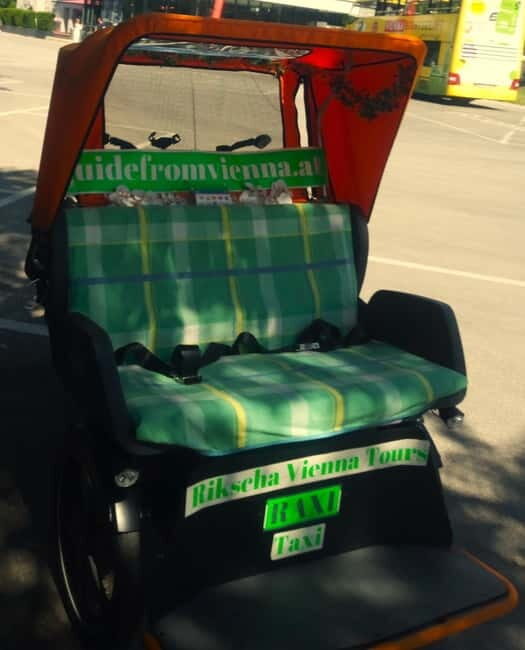
On paper, an electric rickshaw sounds like a gimmick. In practice, the details matter. The RAXI used here is a new, Holland-designed two-person model in very good condition, with features that make it feel stable and easy to enjoy.
- Shock absorbers help smooth out uneven surfaces.
- A retractable footplate makes entry and exit easier than with many low-slung vehicles.
- The engine sits under the rider seats, so you don’t get engine heat wafting onto guests.
- The orange canopy adds shade and practical cover, especially for short rain or sharp wind.
It also has a small but thoughtful touch for active travelers: you can transport two walking or hiking sticks on a special frame. If you like to walk a little, or you have balance needs, that’s useful.
Sound and attention are handled too. You’ll get headsets so you can actually hear the guide clearly while rolling along—no craning your neck toward a passing figure.
And yes, it’s still just a bike. That’s the right mindset. You won’t get the “seat-and-forget” feeling of a car. But the ride is designed for comfort, and that difference is part of the charm: you’re close to the city, at city speed, with time to notice details.
The route: historic center to Hofburg, then Hundertwasser to the river
This tour is built as a tight loop that mixes “must-see” landmarks with off-the-usual-stops energy. The big idea is to connect Vienna’s centerpiece with areas that feel more local—without turning your day into a marathon.
Historic center segment: get your bearings fast
You start with a short safety briefing, then you head into the Historic Center of Vienna for about an hour of guided orientation. This is where the guide helps you understand the layout—what’s central, what’s ceremonial, and what’s practical for moving around.
Why it’s valuable: Vienna’s streets can look similar until someone explains the logic behind them. In a RAXI, you can cover the perimeter of key areas quickly, then you’re not stuck guessing what to see later.
A practical note: if you’re the type who wants to take your time and stop for a long chat at every view, the guided portion is structured. You’ll still have moments to pause, but it’s not a roam-at-will free-for-all.
Hofburg Palace stop: a focused taste of imperial power
Next comes a short Hofburg Palace visit. You’re not lingering for hours, but you get guided context in the moments that matter—what you’re looking at and why it was built for authority and ceremony.
The value here is time. Many Vienna days blow up because you pick one palace and spend the entire day inside. This gives you the imperial storyline, then moves you toward the more surprising architecture that follows.


Hundertwasser House: eco-minded design with real personality
Then the tour moves to the Hundertwasser House, guided for around 45 minutes. If your Vienna checklist is usually classical, this is the useful pivot. You get a strong contrast: lush, irregular forms and an eco-first approach that feels human-scale, not museum-distant.
I like that the guide doesn’t just point at the façade. The better benefit is how you learn to “read” the building—what makes it different and why it was meant as more than just visual oddness.
Donau Park and the Old Danube: Vienna slows down
After Hundertwasser, you shift to Donau Park (about 45 minutes) and then the Old Danube segment (around 30 minutes). This is where you feel the city move away from the high-drama center and toward a calmer river mood.
Why this matters: Vienna can be stunning but also intense on foot. The park and river areas give you breathing space. You also get views that feel more everyday—places locals use—so your day doesn’t become only a highlight reel.
One small drawback: if you’re craving only grand palaces and formal squares, the river stops may feel less dramatic. But if you want a Vienna you can actually imagine living in, this pacing helps.
Danube Canal bike lanes and Ringstraße views: the in-between magic
The itinerary centers on specific stops, but the “in-between” travel is part of the magic. Highlights here include driving the green Prater and the Ringstraße, plus using the Danube Canal bike lanes like the Viennese do.
Here’s the practical payoff: those roads and paths put you close to key sightlines while keeping you out of car-grid chaos. You’ll spend more time enjoying views rather than fighting traffic.
And the perspective changes. From a bus, Vienna can look like a backdrop. From a RAXI, you’re at a human height with a clear sense of scale—imperial buildings on one side, modern city elements on the other.
It’s also a clever compromise for architecture fans: you see the contrast without needing to decide in advance whether to make the day about history or modern design. You get both, in a single loop.
How pickup and drop-offs affect your day
This is a private group for up to two people, and the cost is set per group (not per person). You can choose pickup options depending on your hotel area, including parts of districts 1, 2, 3, and 4, with pickup also available from selected meeting points.
This matters for value. Vienna can be easiest when you don’t waste time crossing the city on public transport when you’re already paying for guided access. If you can start near where you’re staying, your day gets simpler.
Drop-off points are flexible and include stops like Praterstern, Wiener Musikverein, Reichsbrücke, Musikverein Wien, and Mozart cafe. That’s helpful because it can line you up for dinner or a next walk without forcing a long return trip.
There’s one timing reality to keep in mind: the ride length is listed as 90 minutes to 3 hours, depending on availability and the route you choose. If you’re trying to connect to a strict concert or train time, plan a little buffer.
Price and value: when $175 makes sense
The price is $175 per group up to 2 for a private ride (90 minutes to 3 hours). On the surface, that might sound like “two people, not cheap.” But the value comes from what you get that most standard tours don’t deliver:
- Private guiding with a tailored route idea based on your interests
- Headsets for clear narration while moving
- Comfort add-ons that let you keep riding when Vienna turns cold
- Access to bike lanes and car-restricted sight approaches where buses can’t go close
If you compare this to paying separately for a taxi, a city transport pass, and a guided architecture walk, the cost starts to feel less crazy—especially if you’re short on time and don’t want to spend your energy hauling bags around or walking uphill.
It’s also great for couples, but it’s not limited to couples. Two people sharing a private ride is exactly how the RAXI is designed to work.
Cold-weather comfort: heated blanket plus waterproof picnic cover

One of the best things about this tour is that it’s planned to keep working in real weather, not just postcard days.
You can ride in temperatures from about +2°C up to 30°C, assuming roads aren’t slippery, and with a maximum wind listed at 50 km/h. Light rain or snow can be handled with a rain cover.
The standout comfort item is the heated blanket. It’s battery-powered and designed to last about 3 hours, which matches the longer end of the tour window. There’s also a large waterproof picnic blanket that’s built to handle wind and rain.
This matters because in Vienna, “just a bit cold” can turn sightseeing into counting minutes. With this setup, you can focus on views and questions instead of flexing your fingers and freezing your face.
What happens if weather cancels the RAXI ride
Vienna weather can be unpredictable, so there’s a plan B. If the conditions make the RAXI tour impossible, the guide can run an almost identical tour using public transport—with walking still involved.
Your pickup remains free, and you’ll get a message 48 hours in advance if the RAXI can’t operate, so you can decide what to do next. If you don’t want the public-transport version, you can cancel free of charge.
Practical tip: if you’re visiting in late autumn or early spring, this weather plan is a comfort. You’re less likely to lose the entire day to rain.
Best-fit travelers: who this tour works for
This experience fits best when you want Vienna with less leg fatigue and more closeness to the city.
You’ll probably love it if:
- You want to see a lot in a short time without turning it into a long walk.
- You care about architecture contrast—imperial to modern eco design.
- You’d rather ride where cars can’t easily go and where bike lanes lead to better sightlines.
- Your travel style is “private, guided, and flexible,” with room for route tweaks.
It can be less ideal if:
- You need to bring luggage or large bags (those aren’t allowed).
- You rely on non-folding wheelchairs (not allowed).
- You’re expecting a long, unscheduled wander with no structure. This is guided and paced.
Also, note the RAXI has a capacity limit: it can transport two people with a combined weight not exceeding 180 kg. If weight is a concern, check with the provider before booking so you don’t hit an avoidable snag.
A few practical notes that make the day smoother
A couple small things can make the experience go from good to easy:
- Bring light items. This is a tight vehicle with restrictions on bags.
- If you use walking sticks, you’re set. The RAXI frame can transport up to two sticks.
- Come with an idea of what you want most. The route can be personalized for architecture or history, so a short list helps Nicole shape the loop quickly.
- Keep it photo-friendly, not video-recording-heavy. Any recording of explanations is strictly prohibited, since the tour narration is protected.
These are the kinds of rules that protect the experience for everyone. They also prevent awkward moments where you’re trying to film mid-sentence.
Should you book the Vienna RAXI electric rickshaw with Nicole?
I’d book this tour if you want a private Vienna highlight loop with better access than a bus can offer, and you like your sightseeing guided but not rushed. The combination of bike-lane routing, comfort features (especially the heated blanket), and a route that mixes Hofburg + Hundertwasser + river areas makes it a smart use of limited time.
Skip it if you’re bringing bulky luggage, you’re traveling with mobility needs that don’t match the allowed setup, or you want a purely free-roaming day with no structure.
If your goal is simple—see more Vienna with less effort, and get a local perspective while you’re doing it—this is one of the most practical ways to pull that off.