REVIEW · VIENNA
Vienna: The Great Plague Exploration Game
Book on Viator →Operated by Questo · Bookable on Viator
A plague-themed Vienna quest beats the usual sightseeing. You follow audio stories and clue-based puzzles on your smartphone as you wander from old churches to legendary cafés. I love that it feels like exploring Vienna on your own terms, and I especially liked the way it sends you to places like Ruprechtskirche and Stock im Eisen that many standard tours skip. One thing to consider: the whole experience depends on your phone and the app setup, so if it’s temperamental, plan a few extra minutes.
This is also genuinely good value at $7.23 per person for about 90 minutes, with plenty of built-in flexibility. You can play it anytime after booking, pause for a coffee, and continue whenever you want without rescheduling. If you’re traveling with kids who get distracted fast, the mission-and-clue format keeps attention moving—just keep a charged battery handy.
In This Review
- Key highlights worth knowing before you go
- Vienna’s Great Plague game: why it works better than a checklist
- Price and time: the value is the freedom
- From Ruprechtskirche to Griechenbeisl: start old, then go musical
- Stop 1: St. Rupert’s Church (Ruprechtskirche)
- Stop 2: Griechenbeisl
- Stop 3: Bäckerstrasse and the wolf-and-cow mural
- Stephansplatz, then Stock im Eisen: puzzles you can grin at
- Stop 4: Stephansplatz
- Stop 5: Stock im Eisen (Nails Tree Vienna)
- St. Stephen’s Cathedral and Café Frauenhuber: views, tiles, and coffee silence
- Stop 6: St. Stephen’s Cathedral (Stephansdom)
- Coffee break: Café Frauenhuber on Rauhensteingasse
- Albertina and the Hofburg: museum luxury meets power center
- Stop 7: Albertina
- Stop 8: The Hofburg and where the game ends
- Practical tips so the app and puzzles don’t annoy you
- Who should book this Vienna quest?
- Should you book Vienna’s Great Plague Exploration Game?
- FAQ
- Is there a physical guide on this Vienna experience?
- How long does the Great Plague Exploration Game take?
- Is it private for my group?
- Can I choose when to play after booking?
- Is admission included at all the stops?
- Where does the game start and end?
- Can I cancel and get a refund?
Key highlights worth knowing before you go
- Self-paced on your smartphone: no physical guide, just audio stories and on-screen clues
- Private for your party: only your group plays, so you can go at a family pace
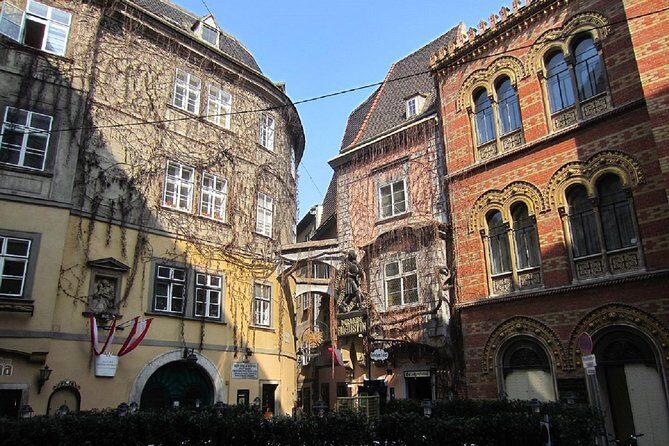
- Off-route walking: you’ll cut through small streets and courtyards to find details
- Legendary stops included: Ruprechtskirche, Griechenbeisl, St. Stephen’s area, Albertina, Hofburg
- Family-friendly rhythm: puzzles make it easier to handle wanderers and rest breaks
- Some entries cost extra: not every stop includes admission tickets
Vienna’s Great Plague game: why it works better than a checklist
The fun here is the pacing. Instead of a guide talking over your shoulder, you’re the decision-maker. You stop, look closely, and solve the next step—then you learn why that exact wall, window, or doorway matters.
I also like that the route mixes famous names with stranger details. You get the big hits near central Vienna, but you also get sent down calmer lanes where the city feels lived-in. In practice, that means less time feeling like you’re rushing and more time noticing things you’d normally walk right past.
The trade-off is simple: you’ll spend some time reading your phone and scanning for answers. One review mentioned the idea of crossing Vienna with a GSM in hand, and that’s honestly part of the deal. If you want zero screen time, this may not be your best match.
A few more Vienna tours and experiences worth a look

Price and time: the value is the freedom
At about 1 hour 30 minutes, this fits neatly into a half-day plan. The price is low enough that it feels more like an activity than a major add-on—especially since you don’t need to line up with a guide or commit to a single appointment time.
What you’re really paying for is structure. Vienna can be overwhelming: huge sights, lots of directions, and a million places that look similar from far away. The game gives you a line to follow, plus a reason to slow down at each stop.
You’ll also be able to choose the moment. The experience can be played anytime after booking without rescheduling, and you can stop for a coffee and resume later. That flexibility is a big deal when you’re traveling with a time-sensitive crowd, like kids or people who hate being herded.
From Ruprechtskirche to Griechenbeisl: start old, then go musical
Stop 1: St. Rupert’s Church (Ruprechtskirche)
Your journey begins at Ruprechtskirche, Ruprechtspl. 1. This church is described as 13 centuries old, built from stone taken from an ancient Roman settlement. That blend of eras is exactly the kind of detail that makes the game feel rewarding: you’re not just at a landmark, you’re at a landmark with a story hiding in plain sight.
You’ll also get a specific prompt at this stop: you have to look around to find the answer to a question to move on. The church is said to hold the oldest stained-glass window and the oldest bells in Vienna, and there’s a window depicting Christ on the cross with the Madonna and Child that has reportedly stood since the 13th century.
Practical note: since there’s no guide, go in with the mindset of short observations. Look up. Scan for text or symbols. Then answer and move on. The time listed here is about 10 minutes, but if your group loves churches, you might want to linger after you finish the puzzle.
Stop 2: Griechenbeisl
Next up: Griechenbeisl, one of Vienna’s iconic taverns. This is where the story gets extra fun for music fans. It’s associated with Mozart, Beethoven, and Schubert dining here, and there’s a Mark Twain room with framed signatures of famous guests.
The name is part of the clue too. The tavern’s name is said to come from Greek tradesmen and Levant travelers in the area, tied to the Greek Inn meaning behind Griechenbeisl. Again, you don’t just read this. You’re challenged to look around and solve a puzzle so you can learn more as you move forward.
This stop is around 15 minutes, and you’re meant to do a bit of hunting with your eyes. If you’re the kind of traveler who loves stepping inside places and scanning walls for details, this is a good match.


Stop 3: Bäckerstrasse and the wolf-and-cow mural
Now you’re into back streets. On Bäckerstrasse, you’ll look at an unusual mural on the façade of the Hasenaus, also called the Hare House. The scene: a wolf and a cow wearing spectacles playing backgammon. The explanations given for what you’re seeing vary—some say it connects to an older depiction of medieval life, while others suggest it’s an allegory about conflict between Protestants and Catholics.
You only get about 5 minutes at this step, but that’s actually ideal. It’s long enough to find the mural and take a close look, not long enough to stall the whole route.
This part is also where the game earns its repeat value. One recurring theme from real-world experiences with this format is that the route nudges you into courtyards and small streets you might miss if you just chase the biggest monuments.
Stephansplatz, then Stock im Eisen: puzzles you can grin at
Stop 4: Stephansplatz
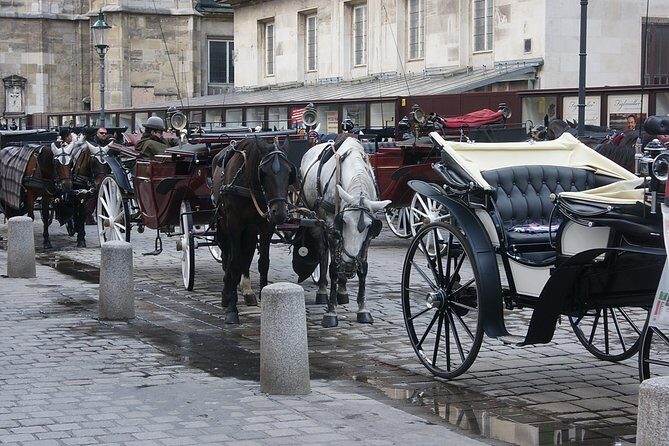
At Stephansplatz, the game takes a different shape: you’ll follow a clue and solve a puzzle, then you get guidance for the next part. This is one of those transitions where the game feels like it’s steering you rather than just informing you.
You’ll spend about 10 minutes here, and the goal is to get your bearings for the next stop. In other words: don’t over-plan photography at this point. Solve, orient, and roll.
Stop 5: Stock im Eisen (Nails Tree Vienna)
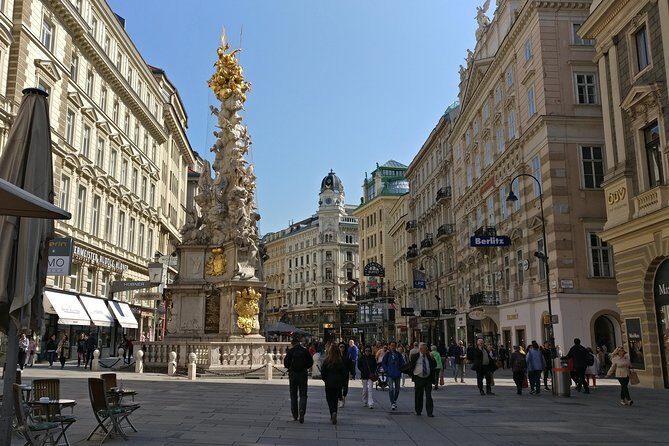
Then comes the star of the weird-luck section: Stock im Eisen, the Nails Tree. It’s located at the corner of Karntner Strasse, and the tree has long been tied to superstition. It was once thought to be the work of Satan, but the explanation here is more practical: people hammered nails into the trunk over generations to bring good luck.
You’ll see hundreds of nails, and the trunk is set on a 1.5-meter high pedestal. There’s also an iron ring with a lock dummy. You’re meant to reach the place via clue + puzzle, then you can take your time until you’re ready to follow the next clue.
This stop is around 10 minutes, and it’s one of those locations where even non-museum people can enjoy the story. You get a real object, a real tradition, and a bit of legend—all in one glance.
If you’re traveling with kids, this is a great moment. They can point out the nails, count visible patterns, and get emotionally invested in the idea of good luck. It’s harder for that to feel like a chore.
St. Stephen’s Cathedral and Café Frauenhuber: views, tiles, and coffee silence
Stop 6: St. Stephen’s Cathedral (Stephansdom)
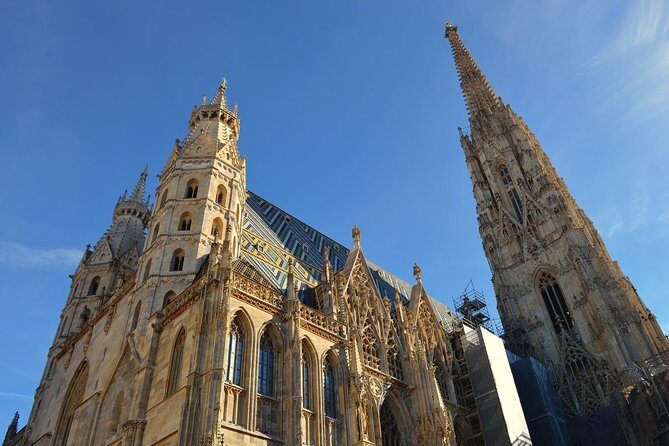
You’ll reach the cathedral area next via clue-based navigation. St. Stephen’s Cathedral is said to have stood since the 12th century, and it’s described as one of Austria’s most important Gothic buildings. If you’ve seen it from outside before, this is a chance to do more than admire the façade.
Key details that are worth catching:
- The tower room includes 13 bells
- The cathedral’s colourful roof is 38 meters high and made of 230,000 glazed tiles forming patterns
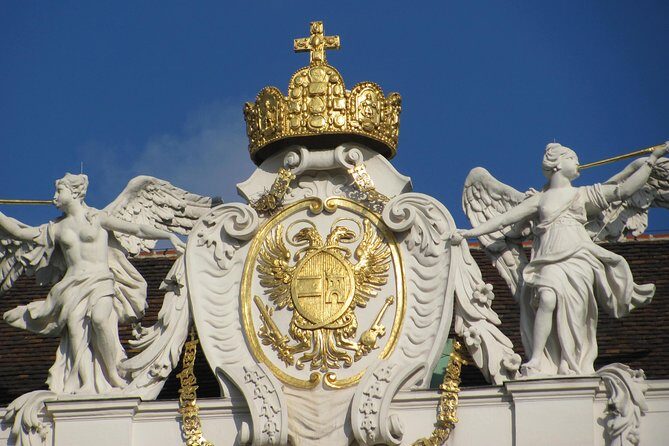
- The roof mosaics feature a double-headed eagle, tied to the Austrian empire during the Habsburg era
- The north-side eagles reportedly carry coats of arms for the city of Vienna and the Republic of Austria
Time here is about 15 minutes, and the important practical piece: admission ticket is not included for this stop. So if you want the tower room view, plan on paying the entry separately.
This is also where your approach matters. If your group is puzzle-motivated, you’ll likely speed through basics and miss the scale. If your group loves details, you’ll want to look up at the roof tiles and take in the bell/tower story at a slower pace.
Coffee break: Café Frauenhuber on Rauhensteingasse
After the cathedral step, there’s an optional café moment built into the flow: Café Frauenhuber. It’s described as the oldest coffeehouse in Vienna dating back to 1746, and it’s also known for famous table music from Mozart and Beethoven in the period 1782–1791.
The tone here is practical and human, not stuffy. The café is described as unpretentious and peaceful, and it still preserves a traditional Viennese coffeehouse atmosphere.
The data says the admission ticket is not included here, but for a café stop you should assume you’ll pay normally for drinks. Think of it as the game’s built-in reset button. You can refuel, calm down, then keep solving.
Albertina and the Hofburg: museum luxury meets power center
Stop 7: Albertina
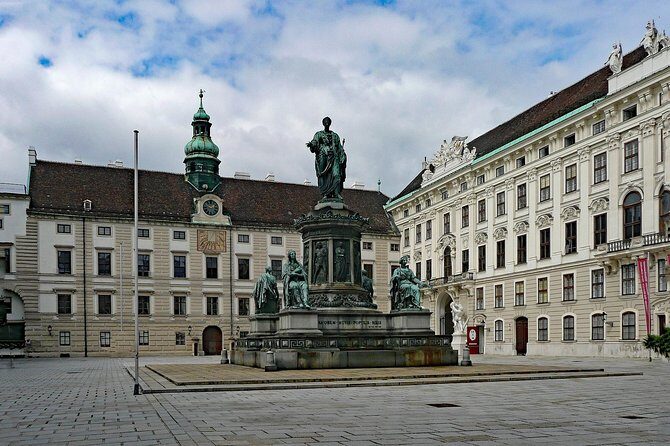
The game then brings you to Albertina Museum, set in Hofburg Palace. The museum is described as having over 50,000 drawings and over 1 million master prints on a rotational display, and it’s been part of Vienna’s culture since 1805.
It’s also positioned in a big Habsburg residential palace, and the collections mentioned include:
- modern art
- graphic art
- architecture
- photography
The game points you toward notable works like Monet’s The Water Lily Pond, and it also nudges you toward the feeling of imperial space—this is the luxury layer of the route.
But here’s the practical caution: admission ticket is not included for Albertina. If you want to actually see inside, budget for the entry separately.
Time on this step is about 10 minutes, so keep expectations realistic. This is not a full museum day. It’s a highlight stop guided by puzzles and context.
Stop 8: The Hofburg and where the game ends
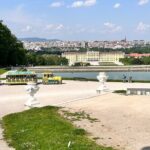
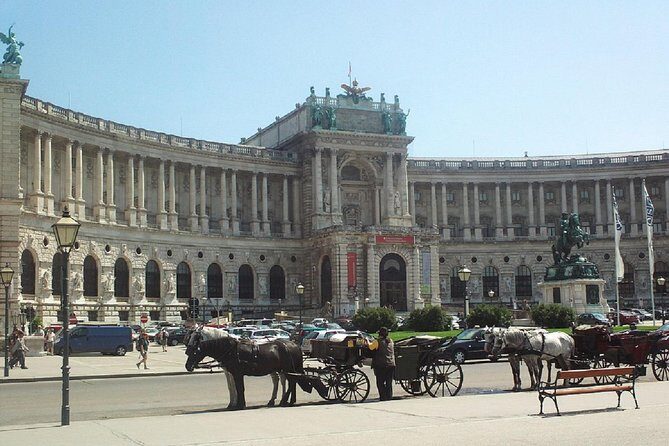
Finally, you reach the Hofburg, the former home and seat of government of the Habsburg emperors until 1918. Today it’s described as the place where the President of Austria works, and it’s still Vienna’s center of power since the 13th century.
You’re pointed to features like:
- imperial apartments (24 rooms)
- the Sisi Museum
- lavish silver collections
- the National Library within the complex
- the Hall of Ceremonies used for Viennese balls
This is where the city-game part ends, and you can keep exploring at your own pace. The time listed here is about 10 minutes, and admission ticket is not included.
In other words: by the time you’re at the Hofburg, you’ve earned the right to slow down, wander, and decide what you want to see next without being dragged by a schedule.
Practical tips so the app and puzzles don’t annoy you
If you want this to feel smooth, treat it like a real activity, not background walking.
Bring a charged smartphone
The whole game uses your phone for audio stories and clues. A low battery will hurt more here than on a normal stroll.
Expect to type answers carefully
One experience shared a frustration when answers weren’t accepted due to small details like capitalization or how names were combined. That’s a good reminder: slow down when you enter the response. The game is picky.
Allow a little setup time
One person noted the app installation and unlocking can be tricky at first, then said support fixed issues within about 15 minutes. So if you’re arriving right at your preferred start time, don’t start the process while you’re starving and sprinting.
Use support if it breaks
If something truly doesn’t work, there’s support available at [email protected]. Having a contact in your back pocket reduces the stress.
Look up and around, not just forward
The puzzles are built around observing details—windows, signs, façades, objects. If you stay locked in street-level walking mode, you’ll miss clues and waste time.
Wear shoes for back streets
The route includes steps through small streets and courtyards. It’s not a marathon, but you’ll appreciate comfortable footwear.
Who should book this Vienna quest?
This is ideal if you want a guided-feeling walk without the guide.
It’s especially good for:
- families with children who get bored during long explanations
- couples who like exploring but want structure
- small groups who enjoy solving light puzzles
- anyone who loves Vienna’s hidden details like old bells, special windows, and unusual street stories
It may be less ideal if you want:
- deep, lecture-style history at each stop
- zero-phone experiences
- a fixed, step-by-step itinerary with no wandering
Should you book Vienna’s Great Plague Exploration Game?
I’d book it if you want an easy, fun, flexible way to see Vienna beyond the standard photo stops. For the money, it’s a clever format: you get a chain of notable locations, plus you’re pushed to actually notice what’s in front of you.
I would hold off if you know your group hates puzzles or you don’t trust phone apps with crucial steps. The route is simple enough, but the experience depends on the app doing its job.
If you’re on the fence, do this: start near Ruprechtskirche, give the app a few minutes to behave, then treat the game as your excuse to slow down and look around. When it clicks, it turns Vienna into a walk with purpose.
FAQ
Is there a physical guide on this Vienna experience?
No. This is a smartphone-based game with audio stories. You’ll follow clues and answer questions to move between stops.
How long does the Great Plague Exploration Game take?
It’s about 1 hour 30 minutes (approx.).
Is it private for my group?
Yes. It’s private, and only your group participates.
Can I choose when to play after booking?
Yes. You can play anytime after booking without rescheduling, and you can play at any hour.
Is admission included at all the stops?
Not at every stop. St. Stephen’s Cathedral, Café Frauenhuber, Albertina, and the Hofburg are listed as admission ticket not included. Other stops are free.
Where does the game start and end?
It starts at Ruprechtskirche, Ruprechtspl. 1, 1010 Wien, Austria and ends at Hofburg, 1010 Vienna.
Can I cancel and get a refund?
Yes. You can cancel for free up to 24 hours in advance for a full refund. If you cancel less than 24 hours before, you won’t get refunded.