REVIEW · VIENNA
‘Armenia In The Heart Of Vienna
Book on Viator →Operated by MAGELLINE · Bookable on Viator
Vienna has a side most people skip. This 1 hour 30 minute tour ties Armenian heritage to Austria through the Mekhitarist story, museum objects, and a tasting that turns history into something you can actually remember. You’ll move between curated cultural displays and the famed monastery setting that’s known for scholarship and archives.
I particularly like how the tour focuses on real objects—ancient and medieval coins, manuscripts, folk costumes, rugs, books, and periodicals—so you’re not stuck with only broad talking points. I also like the payoff: the Chatherine liquor portion brings taste and family tradition into the mix, and one recent review calls the liquor some of the best in the world. One consideration: at this length, it’s not a slow, deep museum marathon, and if you’re not interested in Armenian history and monastic scholarship, you might find the theme a bit narrow.
In This Review
- Key things to look forward to
- Armenia in the Heart of Vienna: what this tour actually feels like
- Start at Mechitaristengasse: the monastery setting matters
- What you’ll see inside: manuscripts, coins, and textiles you can name
- Chatherine liquor: taste, history, and family behind the label
- The Militarist Museum connection: art exhibitions with Armenian threads
- How the Mekhitarist Order story connects Armenia and Austria
- Who this tour is best for (and who should skip it)
- Price and value: $89.36 for a short, focused cultural visit
- Practical details that affect your day
- Should you book Armenia in the Heart of Vienna?
- FAQ
- How long is the Armenia in the Heart of Vienna tour?
- Where does the tour start?
- Is admission included?
- What language is the tour offered in?
- Is a mobile ticket provided?
- How many people are in the group?
- Is the meeting point near public transportation?
- What is the cancellation policy?
Key things to look forward to
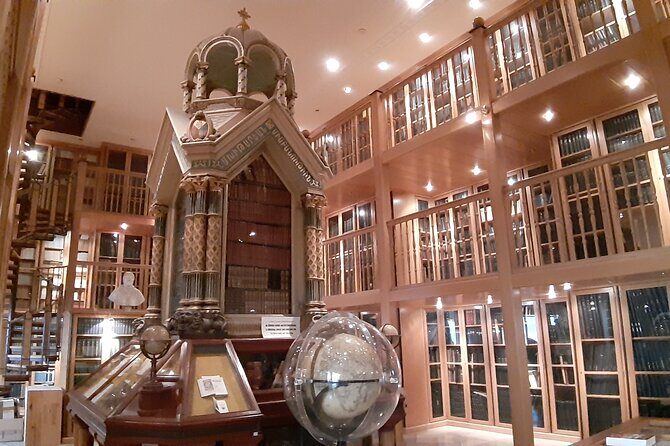
- Mekhitarist Congregation in Vienna: a 17th century monastery setting linked to Armenian and Austrian cultural history
- Armenian artifacts on display: coins, manuscripts, folk costumes, rugs, books, and periodicals
- Armenian heritage in Austria, explained clearly: how the Order supported Armenian cultural renaissance
- Chatherine liquor world: taste plus history and family context (with a tasting element)
- Small group size: up to 15 travelers, which keeps the experience more personal
- English tour: offered in English, with a mobile ticket for easy entry
Armenia in the Heart of Vienna: what this tour actually feels like
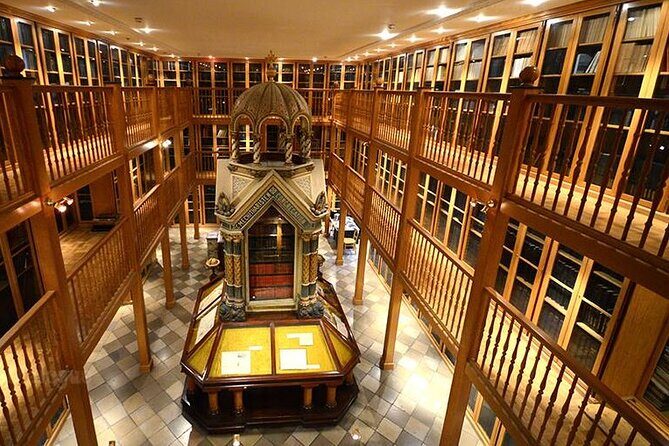
This isn’t the kind of Vienna tour that sprints through famous street corners. It’s a compact, theme-driven cultural experience centered on one place of Armenian learning in Austria and the materials connected to it. In about 1.5 hours, you’re meant to leave with a clearer sense of how scholarship, culture, and even spirit traditions traveled across borders.
The tone is practical and story-led. You’re shown tangible evidence: old documents, coins, books, and textiles. That matters because Armenian history in Austria can feel abstract if you only hear it in general terms. Here, you’re looking at artifacts while someone explains why they matter.
The other big “feel” factor is the Chatherine liquor portion. It turns the tour from museum-only education into something with a sensory anchor. And yes, that lines up with what one reviewer highlighted: free liquor and stories, with a strong emphasis on quality.
You can also read our reviews of more tours and experiences in Vienna.


Start at Mechitaristengasse: the monastery setting matters
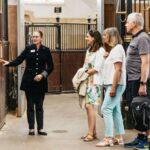
The tour starts at Mechitaristengasse 4, 1070 Wien, Austria, and it ends back at the same meeting point. That round-trip setup is more convenient than many “different stop, different exit” tours, especially if you’re planning your day around dinner reservations or evening transit.
The meeting spot is also close to public transportation, which is a big deal in Vienna. You won’t waste time with the usual “how do I get there” stress. With a 1 hour 30 minute format, that efficiency helps you keep the day feeling light, not squeezed.
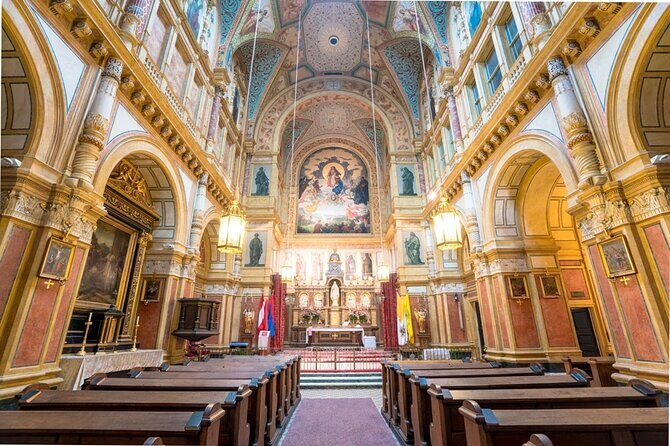
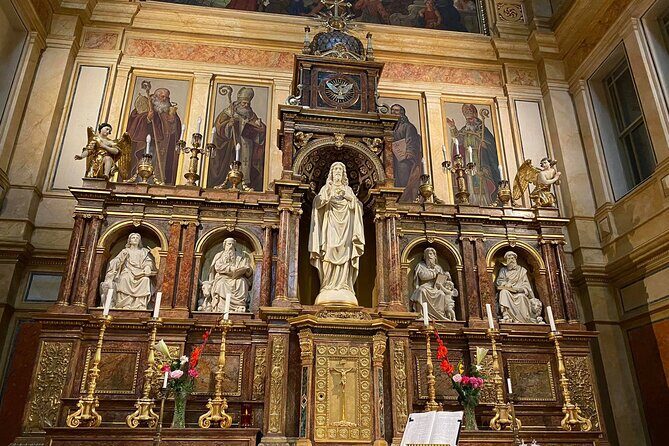
Once you’re at the Mekhitarist Congregation area, the tour’s focus locks in. The Mekhitarist Order is described as a major intellectual and scholarly force for nearly three centuries, tied to Armenian culture and its renaissance in the nineteenth century. The tour also frames the Order as a “first pioneers of Austrian Culture in the Orient,” which is a striking phrase—and a useful one to understand why Vienna is part of the Armenian cultural map, not just a distant European backdrop.
What you’ll see inside: manuscripts, coins, and textiles you can name
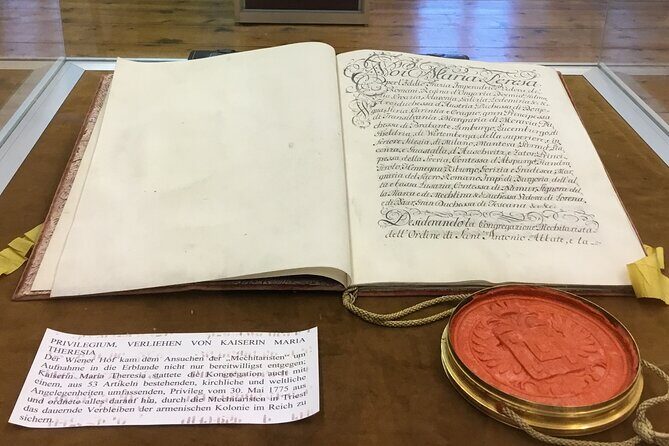
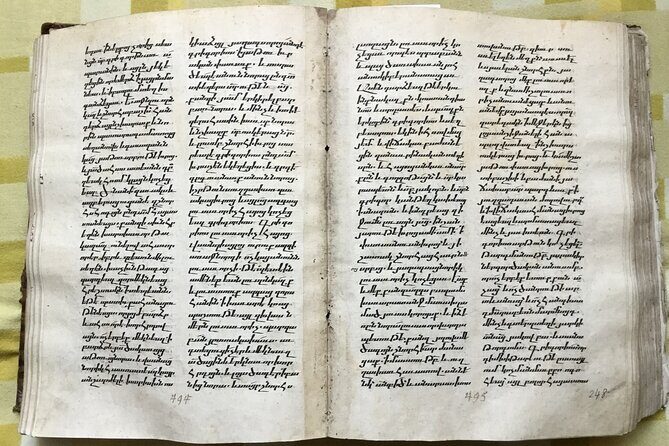
One of the best parts of this experience is how it teaches you to look. Instead of vague “historic items” talk, you’re guided through a range of categories: ancient and medieval coins, manuscripts, folk costumes, rugs, books, and periodicals. That list alone gives you an idea of the teaching approach: history through materials.
Here’s why that matters for you. Coins help you connect dates and economic life. Manuscripts and books point to learning, language, and record-keeping. Folk costumes and rugs carry regional identity and craft traditions. Periodicals—often overlooked in tours—can show what people argued about and discussed over time.
And you don’t just see a single drawer of relics. The tour highlights an exhibit-like spread: coinage, manuscripts, manuscripts related items, and cultural textiles. It’s the sort of arrangement that helps you build a mental picture of Armenia’s cultural range rather than reducing it to one era or one style.
A review also notes that the monastery was founded in the 17th century. Even if you don’t quote dates, that founding time gives the visit weight. You’re not walking through something modern and themed; you’re in a long-running institutional world.
Chatherine liquor: taste, history, and family behind the label

The Chatherine portion is the other major pillar of the tour, and it’s clearly the favorite for many people. You’ll learn about the taste, the history, and the family side of Chatherine liquor—meaning you’re not just tasting something sweet or strong without context.
This is where the tour becomes more memorable. When you get a quick story tied to a flavor, your brain links it to meaning. You’re more likely to remember the experience later, and you’ll also understand why certain traditions matter in cultural identity.
You should also think realistically about your own preferences here. If you avoid alcohol or prefer not to taste spirits, consider whether this portion will fit your comfort level. The tour is built around it, and the theme is part of what makes it feel special compared with a standard “heritage talk” tour.
On the plus side, one reviewer specifically called out the liquor as among the best in the world and praised the combination of liquor and stories. That’s not a guarantee for everyone, but it does tell you what the tour is aiming for: quality plus narrative.
The Militarist Museum connection: art exhibitions with Armenian threads
The tour’s highlights mention art exhibitions displayed in the Militarist Museum. That detail is important because it suggests the experience isn’t confined to one building. Instead, you’re likely moving through at least two “interpretation spaces”: the monastery-linked cultural learning setting and the museum’s exhibition world.
Why that pairing works: the monastery context frames Armenian cultural scholarship and identity, while the museum angle often helps modern visitors connect those ideas to visual and physical presentation. You may find it easier to understand what the tour is trying to show when artifacts and exhibitions are supported by storytelling.
This is also where you’ll likely appreciate the tour length. At 1 hour 30 minutes, the museum time is likely short enough to stay energetic, but long enough to avoid that feeling of “we walked past things.” If you like art displays plus history, this structure tends to land well.
If you’re someone who hates time pressure in museums, though, keep expectations tuned. This is a guided, short format, not a long independent visit where you can linger at every label.


How the Mekhitarist Order story connects Armenia and Austria

The tour description leans into a specific narrative: the Mekhitarist Order’s influence in Armenian and Austrian legacy, its intellectual achievements, and its role in the nineteenth century Armenian cultural renaissance. It also frames the Order as a cultural bridge, with the Order described as pioneers of Austrian culture in the Orient.
For you, that matters because it changes how you think about Vienna’s role in European history. Vienna isn’t only imperial politics and grand opera. It’s also scholarship networks, diaspora communities, and cross-cultural learning institutions that affected what people read, preserved, and taught.
This kind of context is ideal if you want more than surface-level culture. You’ll get vocabulary for what you’re seeing: scholarly achievements, preservation of manuscripts and books, and the way a religious order can become a cultural engine.
And the tour’s object-based approach reinforces that story. When you see coins and manuscripts grouped with cultural items like rugs and folk costumes, you get the sense that scholarship wasn’t limited to one topic. It covered history, language, material culture, and what people wore and used.
Who this tour is best for (and who should skip it)
I think this tour is especially strong for:
- People interested in Armenian heritage and its links to Vienna
- Anyone who enjoys museum objects more than big-picture lectures
- Travelers who like cultural storytelling paired with a tasting element
- Visitors who want a smaller group experience (max 15 travelers)
You might skip it if you’re in Vienna purely for the classic sights and you want “one neighborhood, one viewpoint” sightseeing. This tour is themed, not panoramic. It’s also a better fit if you’re comfortable spending most of your time focused on exhibits, texts, and curated displays rather than walking around checking landmark photos.
Price and value: $89.36 for a short, focused cultural visit
At $89.36 per person, this is not a budget “free walking tour” kind of day. But you’re not paying only for a guide’s time. The experience includes an admission ticket, and it appears to combine multiple components: the Mekhitarist Congregation visit, exhibition time (including the Militarist Museum reference), and the Chatherine liquor storytelling and tasting.
So the value equation comes down to your interests. If you’d otherwise pay separate museum admission and you also care about Armenian cultural history, it starts to look like a bundled deal. If you’re the type who likes to sample local culture through a drink story, the tasting component adds another layer that many history tours skip.
The short duration (about 1 hour 30 minutes) also changes the value math. You’re paying for focus and guidance, not for a long day where you’re quietly wandering and deciding what to do next. That can be great if you hate long, slow museum afternoons. If you love staying in places for hours, you may feel it ends quickly.
Practical details that affect your day
A few logistics details matter more than they look:
- You get a mobile ticket, which reduces friction and lines
- It’s offered in English, so you can follow without relying on translation
- The group is limited to 15 travelers, which can mean a calmer pace
- The meeting point is Mechitaristengasse 4, 1070 Wien, Austria, and you return there at the end
Also, confirmation is received at time of booking, so you aren’t left waiting for details. And it’s described as near public transportation, which helps you build this into a busy itinerary without getting trapped in Vienna’s slower walking transfers.
One more note: the tour says most travelers can participate. That’s a helpful signal, even though comfort levels still vary by person.
Should you book Armenia in the Heart of Vienna?
Yes, if you want Vienna through a different lens—Armenian cultural scholarship, carefully presented artifacts, and a story-driven tasting. This is the kind of tour where you leave with specific things you can point to in your memory: coins, manuscripts, costumes, rugs, books, periodicals, and the Chatherine flavor story attached to it.
I’d be more cautious if you need only classic sightseeing, or if you strongly prefer experiences without any alcohol tasting element. And since the whole thing is about 1 hour 30 minutes, it’s best if you like focused guided time, not slow independent roaming.
If your goal is authentic cultural context—real objects, real institutional history, and a sensory payoff—this is a solid choice for your Vienna mix.
FAQ
How long is the Armenia in the Heart of Vienna tour?
The tour is about 1 hour 30 minutes.
Where does the tour start?
It starts at Mechitaristengasse 4, 1070 Wien, Austria.
Is admission included?
Yes, an admission ticket is included.
What language is the tour offered in?
The tour is offered in English.
Is a mobile ticket provided?
Yes, the tour uses a mobile ticket.
How many people are in the group?
The tour has a maximum of 15 travelers.
Is the meeting point near public transportation?
Yes, it is near public transportation.
What is the cancellation policy?
You can cancel for a full refund up to 24 hours in advance of the experience start time. If you cancel less than 24 hours before, the amount paid is not refunded. The experience may also be canceled if a minimum number of travelers isn’t met, in which case you’re offered a different date or a full refund.