REVIEW · SALZBURG
DomQuartier Salzburg Day Ticket
Book on GetYourGuide →Operated by DomQuartier Salzburg · Bookable on GetYourGuide
Baroque power, tucked in one walk. DomQuartier Salzburg re-links the Salzburg Residenz and the Cathedral into a single visit circuit, with passageways and viewpoints that were closed off for roughly 200 years. It’s a smart way to understand how Salzburg’s prince-archbishops shaped the city—without needing a live guide.
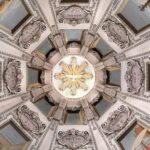
I really like two things right away. First, the Salzburg Residenz State Rooms hit you with opulent stucco work and ceiling frescoes that make the palace feel like a performance. Second, the Cathedral Arches Terrace gives you a shortcut to Salzburg views you don’t get from the usual street-level angles.
One consideration: parts of the route can shut on certain days for events or conversion work, and the Cathedral Arches Terrace can also be closed during exceptional situations like storm warnings. So plan to start early—if you show up late in the day, entry can be an issue.
In This Review
- Key highlights you’ll actually care about
- Why DomQuartier Salzburg feels like the real Salzburg center
- Ticket value: what your roughly $14 day pass buys you
- Start at the Salzburg Residenz State Rooms: where power shows
- Residenz Gallery and the Baroque picture trail
- Cathedral Arches Terrace: the best “pause and look” moment
- North Oratory and the Cathedral interiors: special exhibitions in tight spaces
- Kunstkammer, Long Gallery, and the Wallistrakt: object rooms that reward curiosity
- Ending feel: Gothic choir and the Carabinieri Hall at the Residenz
- Museum St. Peter: when your “next room” is an old monastery
- Timing and on-site rules that affect your day
- Who this suits best (and who may want a different plan)
- Should you book DomQuartier Salzburg Day Ticket?
Key highlights you’ll actually care about
- A restored cathedral-residence complex: the tour explains what was lost after 1803 and what was brought back in the DomQuartier project
- Audio guide built for your pace: use your smartphone with no app download (English, German, and more)
- Big art footprint: about 15,000 square meters with 2,000 exhibits spanning roughly 1,300 years
- Terrace viewpoint: Cathedral Arches Terrace is the best quick reward after museum rooms
- Monastery treasures next door: Museum St. Peter connects you to an older Salzburg that still runs today
Why DomQuartier Salzburg feels like the real Salzburg center
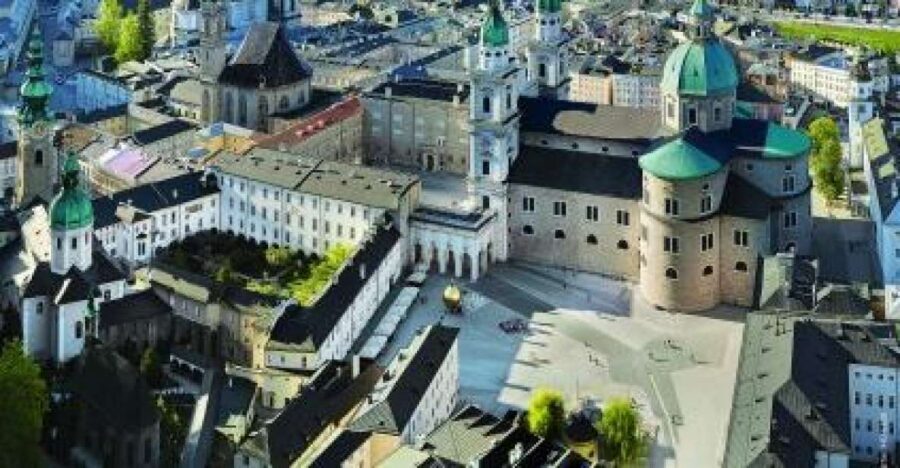
DomQuartier Salzburg is set in the historic core where the Salzburg Cathedral and the Salzburg Residenz sit side by side. The special part is that the ticketed route reconnects spaces that used to function as one integrated complex. After the Prince-Archbishopric was dissolved in 1803, that unity was lost—and then DomQuartier helped restore it after about 200 years.
The story behind the visit is the Baroque building push led by Prince Archbishop Guidobald von Thun. During his reign (1654–1668), he shaped Salzburg’s look in a major way: cathedral arches, the Residenz and cathedral squares, and an art gallery connected to today’s Long Gallery at St. Peter’s Abbey. He also supported the passageways linking the Cathedral and the Residenz, plus connections toward St. Peter’s Abbey.
When you walk through DomQuartier, you’re essentially reading that power-and-faith blueprint. You’ll notice how the route uses windows, corridors, and room transitions to shift your perspective—so the complex doesn’t feel like a stack of isolated museums.
A few more Salzburg tours and experiences worth a look
Ticket value: what your roughly $14 day pass buys you
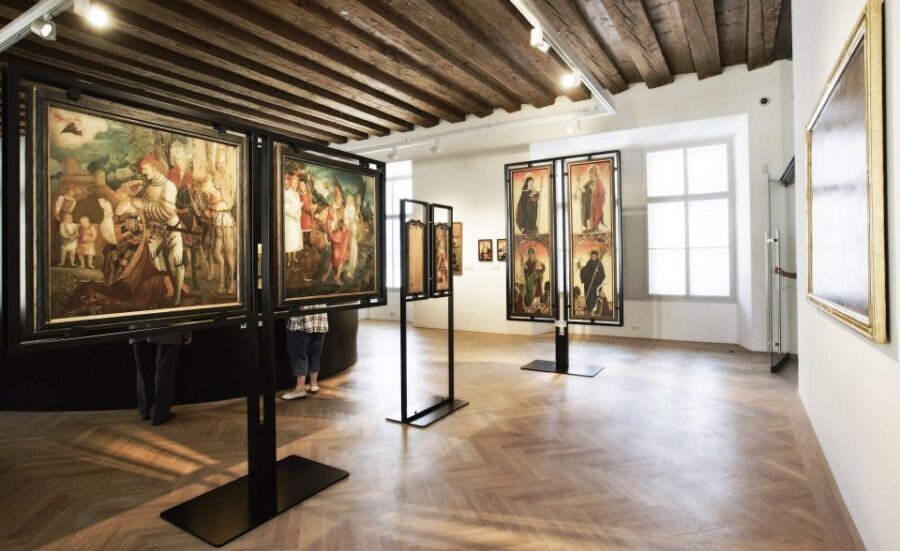
For about $14, you’re not just buying entry to one museum. You’re getting access to a whole architectural ensemble with many rooms and collections, spread across the Cathedral area and the Residenz. The numbers matter here: the idea is a circuit across about 15,000 square meters with around 2,000 exhibits.
You also get flexibility that’s rare in a “one-day” ticket. The ticket is valid for 1 day, and it includes multiple admissions that day. If you stop for a break, you can interrupt the tour and resume later the same day, using the audio guide on your own schedule.
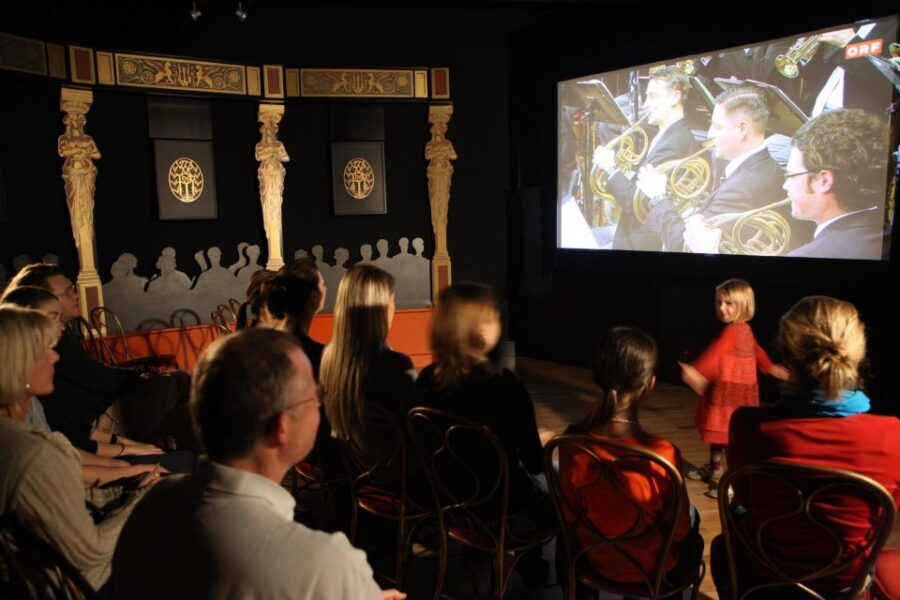
The audio guide is part of the value too. You can use it online on your smartphone—no pre-installing an app—and you’ll have it in many languages. That matters because this is the kind of place where little visual details reward slow reading: fresco themes, room layouts, and the way the complex was planned.
Start at the Salzburg Residenz State Rooms: where power shows
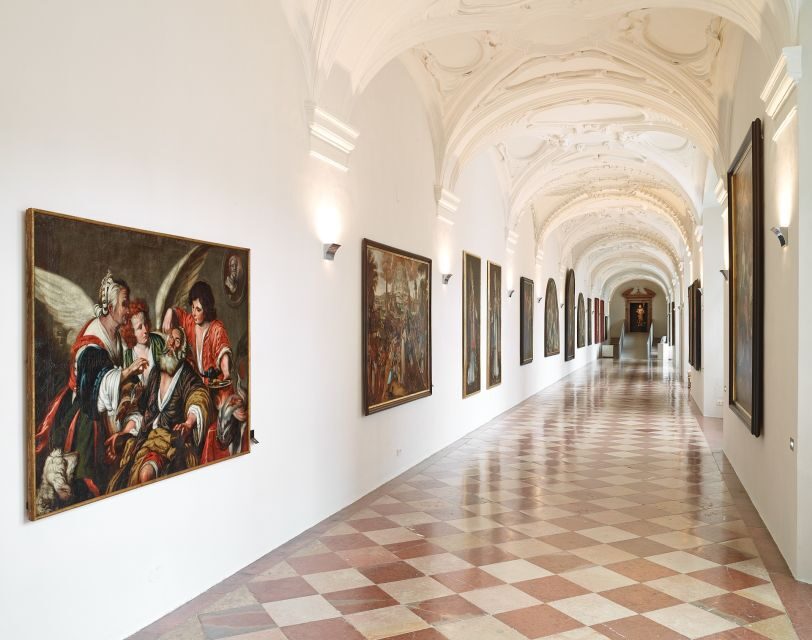
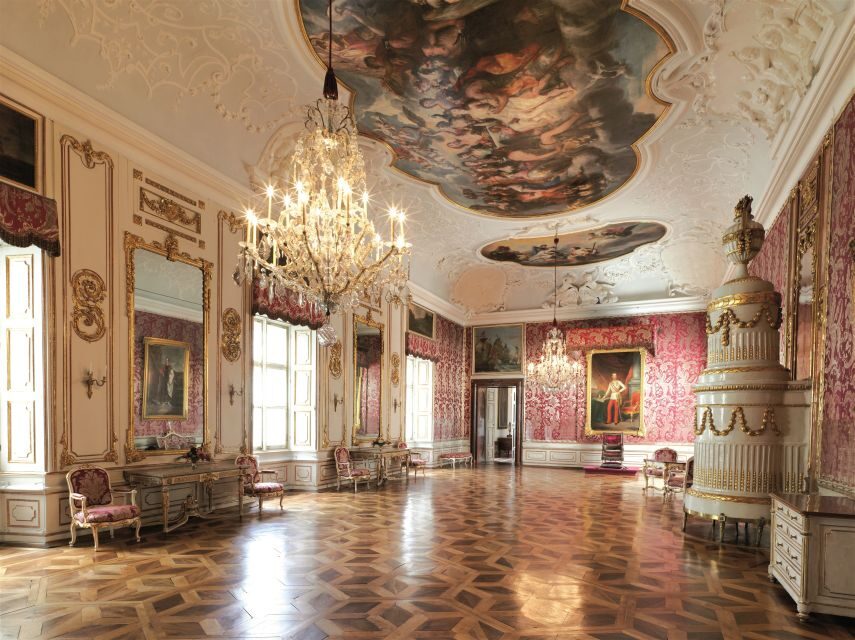
Your visit begins with the State Rooms of the Salzburg Residenz Palace—the official seat and living quarters of the prince-archbishops. This is not a quiet, “walk in and out” kind of area. It’s meant to impress, and you feel that quickly in the stucco and ceiling frescoes, the formal planning, and the way the rooms communicate status.
Even if your art interests are practical more than academic, these rooms make sense. The palace decor isn’t random. It’s visual messaging: rulers presenting themselves through craftsmanship and space. I like that you’re seeing the political side of Baroque art, not just religious symbolism.
A small drawback: because this is an active historic building, a few sections can be closed on some days due to conversion works or events. If you arrive and find a gap, don’t panic—your ticket route is still designed to keep the flow going through the rest of DomQuartier.
Residenz Gallery and the Baroque picture trail
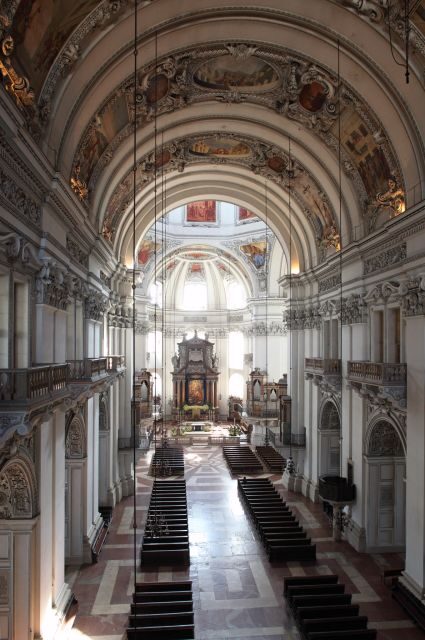
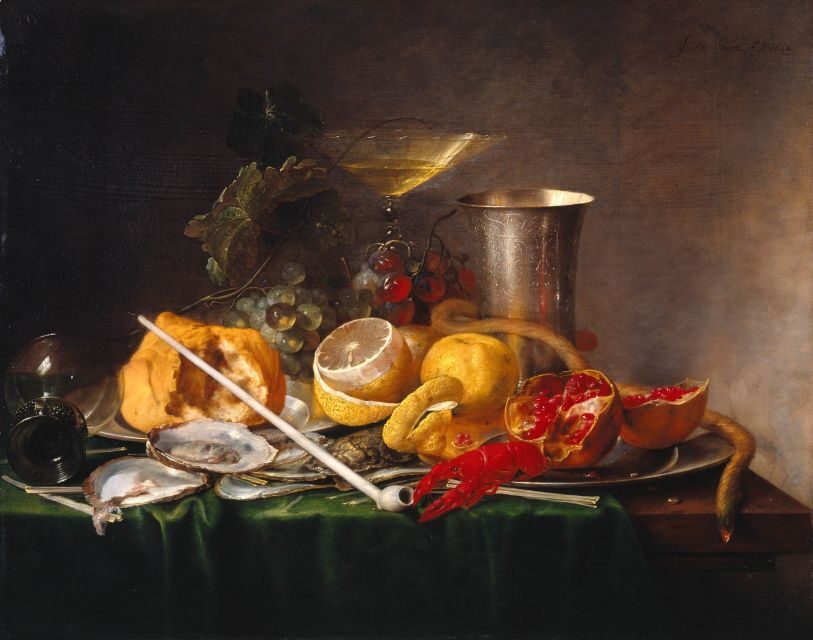
After the State Rooms, you continue to the Residenz Gallery, which focuses on European paintings from the 16th to the 19th centuries, with a clear emphasis on the Baroque period. This is where the palace story turns into art that you can study at a human pace.
What I appreciate in galleries like this is the way they let you compare time periods without leaving the complex. Even if you’re not a “big museum person,” you can pick out a handful of works and connect them back to the Baroque environment you just saw in the Residenz rooms.
Special exhibitions may shift, too. Depending on what’s on view, you might encounter memorable themes like a portrait exhibition or even a tapestry exhibition—those were standout points for some visitors, and they fit the DomQuartier style of mixing masterpieces with curatorial storytelling.
Cathedral Arches Terrace: the best “pause and look” moment
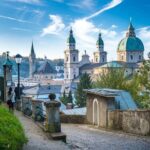
Then comes the Cathedral Arches Terrace, which acts like a bridge between the secular and the spiritual centers of Salzburg: the Residenz side and Salzburg Cathedral. The reward is straightforward—a strong view over the city—and it changes how you understand the rest of the visit.
This is the moment I’d build into your pace. You’re walking through rooms full of details; the terrace lets your eyes reset. You also start noticing how the cathedral complex anchors the street grid and public spaces you’ll recognize later as you explore Salzburg outside.
Just be aware the terrace can close on exceptional days. Storm warnings or special events can shut access, so if you’re counting on terrace photos and views, start your route early so you have options if closures happen.



North Oratory and the Cathedral interiors: special exhibitions in tight spaces
Next you’ll move toward the North Oratory, where special exhibitions are planned, and the original structure is being preserved for future recording. On opening phases, the Salzburg Museum with the Rossacher collection has been part of this mix, so you can expect a museum-style presentation inside the cathedral complex—not just a static “room full of history.”
The organ loft is part of the path, and it’s worth treating as a mini viewpoint inside the building. Even in a self-guided visit, it breaks up the experience so you’re not staring at paintings the entire time.
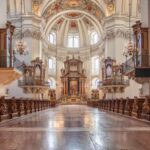
From there, your route continues into major collections tied to the Cathedral Museum and related spaces. That includes the Cathedral Museum and the Kunstkammer, plus the Long Gallery. The order matters because it lets you shift from sacred architecture to curated objects—then back again—so you keep getting meaning, not just motion.
Kunstkammer, Long Gallery, and the Wallistrakt: object rooms that reward curiosity
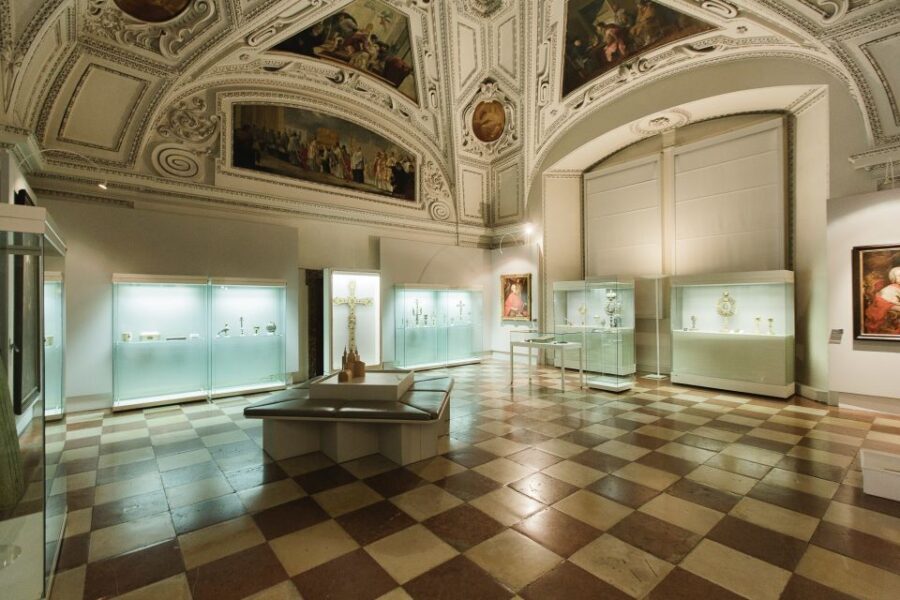
A major reason people enjoy DomQuartier is that it doesn’t only show paintings. It mixes formats: museum rooms, gallery layouts, and collections designed around artifacts and craftsmanship.
After the Cathedral Museum and Kunstkammer, you’ll also reach the Long Gallery, and then the Museum St. Peter is connected through the newly adapted Wallistrakt. If you like the idea of seeing how different kinds of collections are displayed—some meant for focus, some meant for wandering with a plan—this part of the route gives you that.
If you happen to see a room devoted to cathedral oddities, that’s the kind of stop that can turn a “serious museum day” into a more fun one. It’s also the sort of room where an audio guide helps, because the context is often what turns objects into stories.
Ending feel: Gothic choir and the Carabinieri Hall at the Residenz
As your circuit continues, you’ll go through the Gothic choir of the Franciscan Church. It’s a contrasting visual note right in the middle of a Baroque complex, and it helps you remember that Salzburg’s religious architecture didn’t develop in one single style.
Finally, the tour ends in the Carabinieri Hall of the Salzburg Residenz. This finishing room matters because it closes the loop: you started in the prince-archbishop “home territory,” and you end within a grand hall that brings the whole ensemble feeling together.
The route is designed so you don’t feel like you’re wandering randomly. With the audio guide and clear sequence, it’s easier to keep track of where you are and what to see next.
Museum St. Peter: when your “next room” is an old monastery
One of the best parts of DomQuartier is how it connects you to St. Peter’s Abbey, right next to the Cathedral and Residenz complex. St. Peter’s is described as the oldest continuously running monastery in the German-speaking countries, and it played a role in Salzburg’s cultural and intellectual life.
You’ll encounter the Museum St. Peter, which presents monastic treasures in a specially designed permanent museum setting. The collection is tied to an abbey art collection estimated at around 40,000 exhibits, and the most beautiful objects are presented there for the first time since 1982.
This section is a good fit if you want more than palace and cathedral walls. It gives you Salzburg as a living center of learning and religion, not just a snapshot from one golden era. Even if you only give St. Peter’s part of your time, it’s the place that often makes the day feel more three-dimensional.
Timing and on-site rules that affect your day
DomQuartier is self-guided, but it still has a rhythm. If you want the full experience without stress, plan for about a couple of hours for a solid circuit, and more if you pause often with the audio guide. One person noted that audio guided their visit for a couple hours, and another mentioned exploring in about two hours for a morning visit—so treat 2 hours as a realistic minimum, not a hard limit.
Here are the practical rules that can change your comfort level:
- No large bags, and no luggage
- No flash photography, and no cameras
- No selfie sticks, no umbrellas
- No food and drinks allowed
- Pets are not allowed, though assistance dogs are permitted
- No smoking
On the included side, you’ll have free WiFi inside the museum, which can help if you need the audio guide on your smartphone. The audio guide itself is available online through your web browser (no app install), using: www.domquartier.at/audioguide.
Don’t count on everything being open every day. Partial closures can happen in the State Rooms or the Cathedral area due to events and conversion works. If a section is closed, the smart move is to keep moving—your ticket route is set up to keep the flow going.
One extra timing note: I’d give yourself a buffer. If you arrive very close to closing, you might be refused entry. Aim to get in comfortably earlier, not at the last moment.
Who this suits best (and who may want a different plan)
This is ideal if you like Baroque Salzburg but don’t want to spend your day in long travel lines. The complex structure—palace rooms, galleries, terraces, cathedral spaces, and monastery treasures—makes it a strong “city core” option when you want value from one ticket.
It also suits you if you enjoy learning at your pace. The audio guide in many languages is a big deal here: you can slow down when something grabs you and move quickly when it doesn’t.
You might want a different plan if you only want outdoor views and don’t care about indoor art or museum objects. DomQuartier is mostly indoors, and the best view comes from the terrace inside the route.
Should you book DomQuartier Salzburg Day Ticket?
Book it if you want a high-value Salzburg center experience in one place, with smart self-guided pacing and multiple collections that connect palace, cathedral, and monastery. For roughly $14, the mix of State Rooms, galleries, terrace views, and Museum St. Peter is a lot of “Salzburg meaning” for one day.
Skip it only if you strongly prefer guided tours with a live narrator or if indoor museums don’t match your travel style. If you do go, start early, keep your camera-free kit in mind, and plan to use the audio guide so you get the architecture story behind the artwork.