Vienna’s alleys turn into a game. This CityRiddler self-guided riddle tour leads you from Annagasse to Freyung, with audio clues for famous sights like Schwedenplatz and Cafe Central, plus lesser-known stories like Blutgasse.
I really like the time-your-way setup. You can pause whenever you want, restart later, and keep moving at a pace that fits you instead of a group schedule. Two details I especially enjoy: you’re led through side streets (not just big boulevard stops), and the format makes you hunt for meaning, not just read plaques.
One thing to think about: you’ll rely on a charged smartphone and decent sight to follow the clues. Also, the info gives mixed signals about mobility support (it says wheelchair accessible, but also says it is not suitable for wheelchair users), so if that matters, you should double-check before booking.
In This Review
- Key highlights worth planning around
- How a riddle tour changes the way Vienna “lands”
- Route reality: Annagasse to Freyung on a 2.7 km puzzle walk
- Starting at Annagasse: a smart way to begin away from the crowd
- Blutgasse and the side-alley stories you actually remember
- Schwedenplatz and Hoher Markt: where the route keeps you oriented
- Cafe Central and Herrengasse: the city center mood shift
- The oldest church clue (and why you’ll rethink your Vienna map)
- Finding the most beautiful clock: the representation lesson
- The Basilisk mystery: who did it, and why the story lingers
- Freemasons HQ and Freyung: a city-center twist you don’t expect
- Price and value: is $23 for an audio riddle walk worth it?
- When to do it (and who it suits best)
- Quick FAQ about the CityRiddler riddle tour
- FAQ
- Is this a guided tour with a person?
- How long does the tour take?
- Where do I start and end?
- How far do I walk?
- Can I pause and continue later?
- What languages are available?
- What do I need to bring?
- Do I need to install an app?
- What if my access code email arrives late?
- Is it suitable for wheelchair users or visually impaired people?
- Should you book the Riddle Tour: Explore the Hidden Gems of Vienna?
Key highlights worth planning around
- Blutgasse and nearby alleys: you’ll connect the street names to the stories behind them
- An oldest church in Vienna clue: and yes, it’s not St. Stephen’s Cathedral
- A “most beautiful clock” mystery: you learn what it represents as you spot it
- The Basilisk investigation: you’ll follow the trail on who did it and why it matters
- Freemasons HQ on the route: Vienna’s secret-society side shows up in the city center
How a riddle tour changes the way Vienna “lands”
I love Vienna most when I’m not sprinting. Big landmarks are great, but Vienna’s best magic is often down a side lane: a tucked-away doorway, a surprising corner view, a street name that feels like it’s hiding a punchline. This tour is built for that exact kind of noticing.
Instead of walking past sights like scenery, you’re solving a chain of clues using the CityRiddler app and audio guide (English and German). That means you’re paying attention to details in context. You’re not memorizing facts for later. You’re collecting small pieces while you walk, which is a much more natural way to remember a city.
And since it’s self-guided, you control the “tempo of wonder.” If a corner catches your eye, you can pause and take your time. If a square feels too busy, you can stop, breathe, and continue when you’re ready.
You can also read our reviews of more tours and experiences in Vienna.
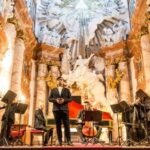
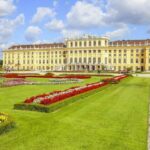
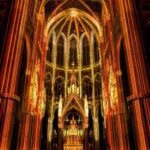
Route reality: Annagasse to Freyung on a 2.7 km puzzle walk
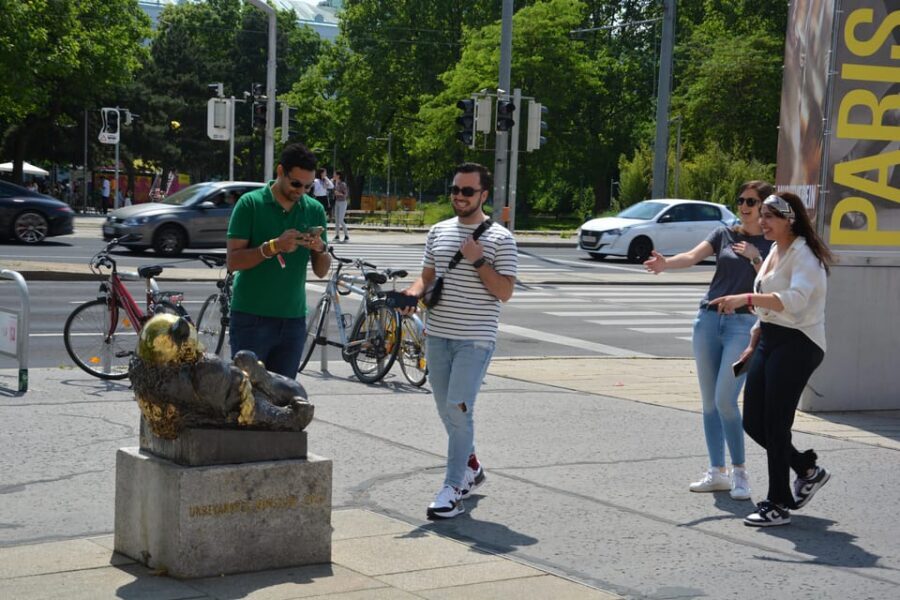
The walk runs about 2.7 km on foot between Annagasse (near Kärntner Straße) and Freyung. The target time is around 1.5 to 2 hours, but the tour is designed so you can pause and come back later instead of feeling stuck in one continuous stretch.
That length is part of the value. It’s long enough to feel like a real “Vienna walk” through the center, but not so long that you’ll be exhausted before you hit dinner plans. If you’re sightseeing for the first time, this kind of mid-length route works well because it gives you a backbone map of the area. If you already know Vienna, it’s a way to refresh your mental map by following a different trail.
You’ll pass through areas tied to major landmarks—Kärntner Straße, Schwedenplatz, Hoher Markt, Cafe Central, Herrengasse, and Freyung—but the tour’s attention stays on the smaller lanes around them. That balance is key. You get the energy of the center without forcing yourself into only the postcard views.
Practical tip: bring water and wear comfortable walking shoes. The route is mostly straightforward, but it’s still a city-center stroll where your feet do the talking.
Starting at Annagasse: a smart way to begin away from the crowd
You start at Annagasse, a side street off Kärntner Straße. I like starting here because it prevents the tour from feeling like you begin at a tourist stampede. Kärntner Straße is busy, but Annagasse gives you a calmer entry point into the city-center layout.
Because it’s app-based, there’s no person meeting you at a specific time. That’s convenient, but it also means you’ll want to prep. Download and install the CityRiddler app before you go, and after booking, expect an email with your access code from CityRiddler. The tour notes that it can take up to 24 hours, so don’t wait until the last minute.
Once you’re set, you’ll be following the riddle prompts as you go. It’s a good fit if you like planning lightly and letting the city guide your rhythm.
Blutgasse and the side-alley stories you actually remember
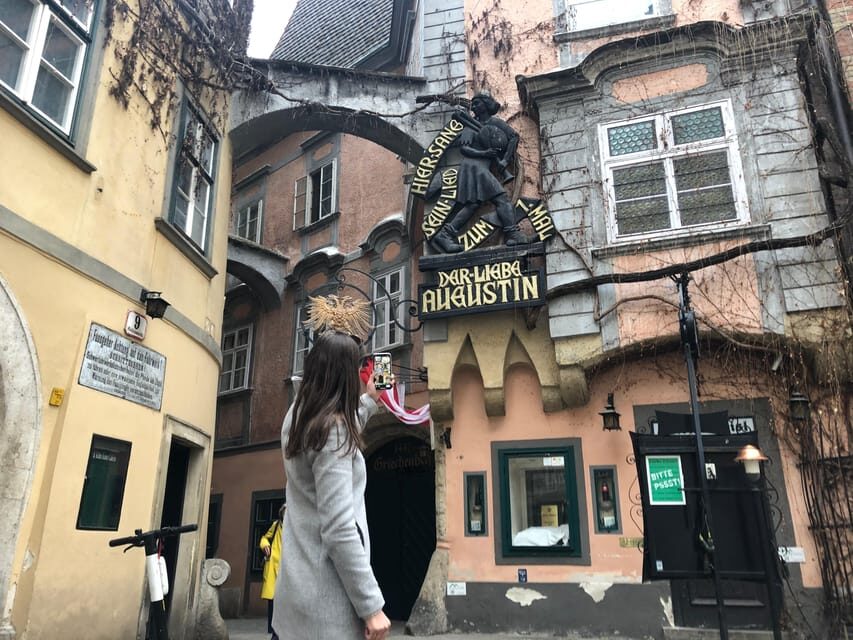
The tour’s name nods to one of Vienna’s most striking street histories: Blutgasse (Blood Alley). What I like here is that the clue doesn’t stay abstract. You’re encouraged to explore not only the main streets, but also the nearby alleys where the atmosphere changes fast.
This is where the riddle format helps. Street-name lore can become trivia if you only read about it. But as you walk, you start to understand why the location matters: the “shape” of the city center, how lanes connect, and how stories stick to places because people keep passing through them.
Even if you don’t know anything about Vienna’s darker legends, you’ll have a reason to slow down. You’re not just moving between major sights. You’re looking for the next clue in the same patch of streets, which naturally turns a walk into a mini investigation.
If you enjoy urban legends, this part is especially satisfying because it makes you look at ordinary corners with new context.
Schwedenplatz and Hoher Markt: where the route keeps you oriented
Along the way, you’ll hit big wayfinding anchors like Schwedenplatz and Hoher Markt. I find these stops useful because they help you keep your bearings. Even though the tour is self-guided, those larger squares and street junctions act like mental landmarks.
Why does that matter? Because it reduces the “what direction am I going?” friction that can happen with audio tours. If you’re a first-timer, that orientation helps you enjoy the smaller alleys without worrying you’ll get lost. If you’re a repeat visitor, it still works because it anchors your route in familiar geography while teaching you fresh associations.
This is also where you’ll likely appreciate the pause option. If you need a quick photo, a snack break, or a moment to regroup, you can stop without feeling like you’re falling behind a guide.


Cafe Central and Herrengasse: the city center mood shift
You’ll pass by Cafe Central and later Herrengasse. I’m not going to pretend the tour turns Vienna’s cafe culture into a dramatic storyline. But walking past these spots on a riddle route adds a subtle layer: you start connecting what you see now with what the tour is asking you to notice next.
Herrengasse in particular is the kind of place where Vienna’s center reveals its rhythm. It feels grand, but it doesn’t scream “museum.” That makes it a good stretch to stay present rather than rush.
If you’re doing this in between other activities, I’d time it so you’re not immediately trying to sprint to another appointment. You want enough mental space for the clues to do their job.
The oldest church clue (and why you’ll rethink your Vienna map)
One highlight is finding the oldest church in Vienna—and the tour specifically signals that it’s not St. Stephen’s Cathedral. That’s a fun setup because it challenges the default tourist assumption.
What you’ll get from this isn’t just a trivia correction. It’s a reminder that Vienna’s religious and cultural history isn’t a single monument. The “oldest” claim forces you to pay attention to where history actually lives—sometimes in plain sight, often in a context that’s easy to overlook if you’re only chasing the most famous skyline.
This also makes the walking route feel more purposeful. If you know you’re hunting for a particular church-related answer, you pay attention to street cues and building context instead of just going by what you already recognize.
Finding the most beautiful clock: the representation lesson
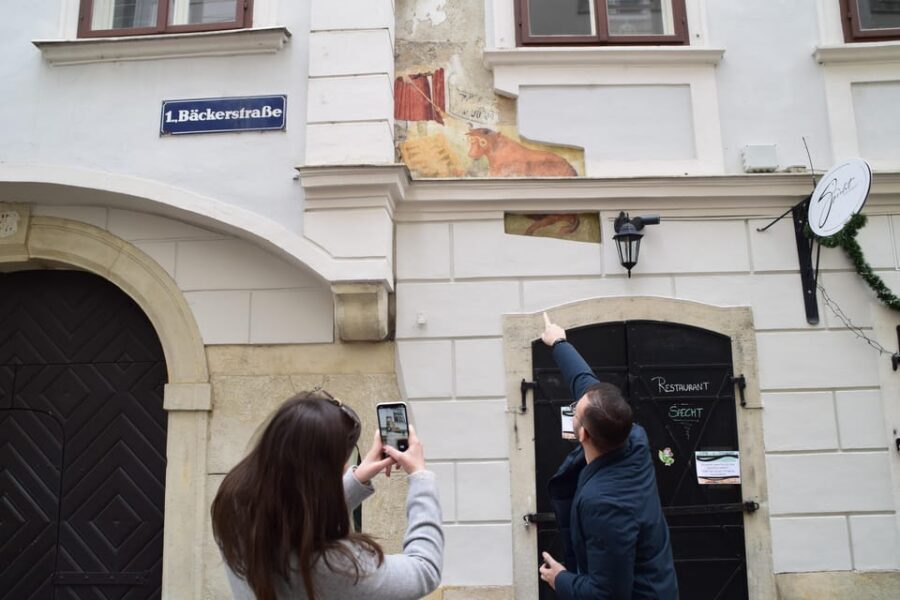
Another featured moment involves the most beautiful clock in Vienna and what it represents. Since the tour uses audio clues, you’re not left guessing why a clock matters. You’re guided to the meaning as part of the experience.
I like clock stops on walking tours because they stop the usual sightseeing pattern. Many tours move from one landmark to the next. A clock makes you slow down. You can look at it, read it through the explanation, and then continue with that fresh understanding.
Even if you don’t consider yourself a “clock person,” the representation angle helps you see the object as a message from the time it was built—something cultural, not only decorative.
The Basilisk mystery: who did it, and why the story lingers
The tour includes a riddle about the Basilisk: you’ll discover who killed it and the history behind it. This is exactly the kind of Vienna storytelling that works well when you walk.
Legends are often told like party facts. Here, the tour turns the legend into a thread you follow. You’re meant to connect story details with the physical city around you, and that makes it easier to remember. You’ll also probably enjoy the experience even more if you like mysteries, odd historical characters, or anything that mixes folklore with real locations.
If you’re someone who tends to gloss over story tours, this one can be a good change of pace because the format asks you to look and think, not just listen.
Freemasons HQ and Freyung: a city-center twist you don’t expect
The route also takes you past the headquarters of the Freemasons and ends at Freyung. I like that this tour isn’t only “royal Vienna” and “church Vienna.” It includes a more secretive angle of the city center, where power and story don’t always travel in straight lines.
Freyung is a strong finish area because it feels like a real square in the heart of things, not just a terminal point. Ending here gives you a natural place to pause your walk and decide what’s next—coffee, dinner, or another short wander.
The overall arc—start near Kärntner Straße, move through center nodes, and finish at Freyung—also gives you a satisfying sense of route completion.
Price and value: is $23 for an audio riddle walk worth it?
At $23 per person, this is priced like a value activity for a couple of reasons.
First, you’re getting an audio guide experience with multiple story beats built in—Blood Alley, the oldest church clue, the clock and its meaning, and the Basilisk mystery—without needing to coordinate with a group. That matters if your schedule is tight or if you just don’t want to wait on others.
Second, the format encourages repeat benefit. Even if you forget a specific detail later, you’ll still remember the streets. A walk that teaches you where things are tends to pay off when you go back the next day and explore on your own.
Third, the walking distance and time fit real travel days. Around 1.5 to 2 hours is long enough to feel substantial, but short enough to mix with other plans.
The only “value tax” is that you must carry a charged smartphone and pay attention as you walk. If you hate app-based sightseeing, this won’t feel as effortless.
When to do it (and who it suits best)
This tour fits best when you want an active, curiosity-led day. I’d do it:
- on a first trip to Vienna, to get your bearings through the center lanes
- on a repeat trip, to see the city through a different lens
- with flexibility in your schedule, because you can pause and continue
It’s also marked as suitable for:
- families with children from 6 years
- explorers and adventurers of all ages
- local tourists
If you’re going with someone who likes puzzles, the riddle format turns the walk into a shared activity. If you’re traveling solo, it still works because the pauses let you control your focus.
Two cautions: it’s listed as not suitable for visually impaired people, and there’s conflicting info about wheelchair users. If accessibility is a concern for you, I recommend confirming directly with CityRiddler before buying.
Quick FAQ about the CityRiddler riddle tour
FAQ
Is this a guided tour with a person?
No. It’s self-guided using the CityRiddler app, so there isn’t someone waiting at the meeting point.
How long does the tour take?
The experience is designed for about 1.5 to 2 hours on foot.
Where do I start and end?
You start at Annagasse, a side street of Kärntner Straße, and you end at Freyung.
How far do I walk?
The walking distance is about 2.7 km.
Can I pause and continue later?
Yes. You can start and pause the tour and continue to your liking.
What languages are available?
The audio guide is available in English and German.
What do I need to bring?
Bring a fully charged smartphone and water.
Do I need to install an app?
Yes. Download and install the CityRiddler app first.
What if my access code email arrives late?
After booking, you’ll receive a separate email from CityRiddler with your access code, and it may take up to 24 hours.
Is it suitable for wheelchair users or visually impaired people?
The information includes wheelchair accessible, but it also lists wheelchair users under not suitable. It also states it is not suitable for visually impaired people.
Should you book the Riddle Tour: Explore the Hidden Gems of Vienna?
If you want to experience Vienna’s center with your brain switched on—plus a route you can control—then yes, I think it’s a good booking. The strongest reasons are the time-flexible app setup, the focus on side streets and alleys, and the mix of stories that go beyond the usual monuments (Blutgasse, an oldest church clue, the clock’s meaning, and the Basilisk mystery).
Skip it if you dislike app-based sightseeing, can’t easily use a smartphone while walking, or you rely on accessibility support not confirmed clearly by the provided info.
For $23, it’s the kind of activity that can turn an ordinary sightseeing day into a memorable walk, especially if you enjoy solving small puzzles along the way.