Vienna hides murders in plain sight. This offbeat inner-city walk connects real landmarks to the grim stories that shaped the city. You also get a complimentary smartphone audio guide, so the facts stay with you as you move.
What I like most is how the tour turns everyday streets into evidence boards: you see buildings, courtyards, and corners you’d normally speed past, then learn what happened there. I also love the pace and structure, with smooth transitions that keep you curious about the next era. A clear heads-up: the subject matter is dark and often gruesome, so it’s not a good fit if you want a light, kid-friendly stroll.
In This Review
- Key highlights at a glance
- Why Vienna’s crime stories are the best way to tour the inner city
- Price and time: what $46.13 buys you in practice
- Starting in the Albertina area and finishing near Rauhensteingasse
- Using the mobile ticket and phone audio guide without stress
- The inner-city crime route: what each stop teaches you
- Tegetthoffstraße 2: Capuchin monastery dungeon and Father Innocentius
- Trattnerhof: the Jaroszynski murder case and Therese Krones
- Augustinerstraße 12: Palais Bathory and the blood countess legend
- Graben and Kohlmarkt: Demel’s place in the Udo Proksch insurance-fraud plot
- Herrengasse: Palais Ferstel and the medieval “Zu den Fünf Morden” house
- Herrengasse (across from Palais Ferstel): Hotel Klomser and Colonel Redl
- Molker Bastei: the Anna Gaugisch murder and dismemberment story
- Am Hof: the war minister’s lynch murder in 1848
- Hannaken-Brunnen: the Hannakenkönig surgeon and a fraud-by-injury scheme
- Maria Am Gestade: the Zahlheim case and the wheeled execution
- Hoher Markt: Thekla Riener, torture, and a jealousy-driven tragedy
- St. Stephen’s Cathedral area: the bakers and the Danube punishment legend
- Steffl: the executioner’s apartment, dungeon, and the witch Plainacher
- Himmelpfortgasse: the walled-in nun story from 1319
- The real value: how the crimes map to Vienna’s changing justice
- Who should book this tour, and who should skip it
- Should you book this Vienna crime-and-inner-city tour?
- FAQ
- How long is the tour?
- What language is the tour offered in?
- How much does it cost?
- Where does the tour start and end?
- What’s included with the ticket?
- Is there a group size limit?
- Is the tour suitable for most people?
- Does the tour run in bad weather?
- Are the stops free to enter?
- Can I get a refund if I cancel?
Key highlights at a glance
- Offbeat true-crime storytelling tied to specific Vienna addresses, not vague “it happened somewhere around here”
- Complimentary smartphone audio guide that helps you follow the plot while you walk
- Free-entry stops at each listed hotspot, so your money mainly goes to the guide and the narrative
- A compact inner-city route that includes older-looking sights many visitors miss
- Small group size (max 20) for a more focused experience
- English-language tour in an easy, two-hour format
Why Vienna’s crime stories are the best way to tour the inner city
Vienna can feel shiny from a distance. This tour gives you the other side of the mirror: a city of emperors and courtiers, but also monks, spies, executions, and affairs that ended in blood. Instead of treating crime like tabloid gossip, the walk frames each case as a small window into what Vienna believed, feared, and protected at the time.
That’s the big value here. You aren’t just learning names. You’re seeing why certain places mattered. A monastery dungeon is a lesson in discipline and power. A palace rumor is a lesson in how reputation can destroy someone. A spy scandal is a lesson in how secrecy works when institutions are shaky.
And yes, it’s enjoyable in a slightly uncomfortable way. Think of it as history with teeth.
You can also read our reviews of more city tours in Vienna


Price and time: what $46.13 buys you in practice
At about $46.13 per person for roughly 2 hours, you’re paying for a guided storytelling route through the oldest streets of central Vienna. The stops are listed with free admission tickets, so you’re not stacking extra entry fees on top. In other words, your cost is mostly for the human guide and the structured narrative.
A two-hour format also matters. It’s long enough to connect the centuries, but short enough that you won’t spend your whole day walking with no payoff. You get a concentrated highlight reel of the city’s darker moments, from medieval punishments to 19th-century scandals and 20th-century espionage and fraud.
One practical consideration: this tour needs good weather, so if rain is likely, plan on going with the date they schedule in better conditions.
Starting in the Albertina area and finishing near Rauhensteingasse
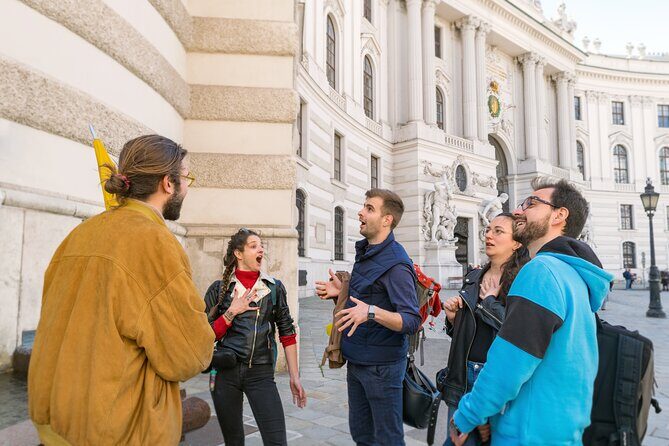
You start at Helmut-Zilk-Platz near Albertinapl. 2–3 (1010 Wien). The tour ends at Rauhensteingasse (1010 Wien). That makes it convenient for building this into an inner-city day, because you’re not being whisked to the far edge of the map.
The walk stays in the center. You’ll cover a sequence of addresses close enough that the tour stays flowing, which is a big deal for a story-based route. You don’t want long transit gaps that kill the momentum when the guide is connecting centuries through place.
Also, the maximum group size is 20, which helps. Smaller groups tend to keep questions, pacing, and audio syncing from getting chaotic.
Using the mobile ticket and phone audio guide without stress
You’ll have a mobile ticket, and the experience includes a complimentary smartphone audio guide. That’s a smart pairing: the guide provides the live narrative, while your phone audio helps reinforce names, dates, and details when you’re standing right where the story happened.
Practical tip: keep your phone charged and your brightness up enough to read quickly while you’re walking. With crime-history content, details matter, and the audio is there to make sure you don’t miss them.
If you prefer learning with your ears rather than stopping to read plaques, this format fits your style. If you hate looking at your phone while walking, the live guide should still carry the experience, and the audio is there as backup.
The inner-city crime route: what each stop teaches you
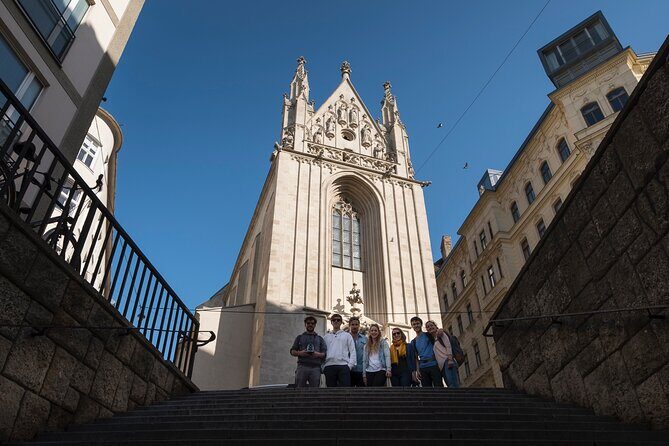
This tour works like a timeline you walk through. Each stop centers on a real place in the city center, and the story always ties back to how power and justice were handled at that moment.



Tegetthoffstraße 2: Capuchin monastery dungeon and Father Innocentius
Your first stop is at Tegetthoffstraße 2, where you encounter the Capuchin monastery and the story of a dungeon tied to Father Innocentius. The key detail is the way the monastery handled punishment: monks could be locked away for decades, including for reasons that sound almost absurd—things like unauthorized afternoon walks or misconduct involving monastery officials.
Then the story pivots to Joseph II. Father Innocentius announced the dungeon to Emperor Joseph II, who ordered the dungeon closed and moved Father Innocentius to Lviv for his safety. The tale gets even stranger from there, with Father Innocentius later becoming a Protestant, Freemason, and advisor to the tsar.
What this stop adds: it shows that crime and punishment aren’t just about violent acts. Sometimes the threat is social control.
Trattnerhof: the Jaroszynski murder case and Therese Krones
Next you head to Trattnerhof, where the focus is the Jaroszynski murder case and the actress Therese Krones. The core drama here is how she got pulled into a case she had little to do with, and how her career was destroyed.
There are rumors about extravagant desires pushing Jaroszynski toward despair and crime. The more grounded version in the story is different: Jaroszynski was described as addicted to games and heavily in debt.
What this stop adds: a useful reminder that scandal often sticks to the wrong person, and the public narrative can diverge from the actual causes.
Augustinerstraße 12: Palais Bathory and the blood countess legend
At Augustinerstraße 12, you visit Palais Bathory, linked to the story of Elisabeth Bathory—often called the blood countess. The tour raises the allegations: hundreds of victims, the famous claim that she bathed in blood to preserve youth and beauty.
The tone here is intentionally unclear in a historical way. The case is presented as either one of the most dangerous serial killers ever described or as the target of a violent intrigue tied to loyalty and power struggles.
What this stop adds: it trains you to think critically while still enjoying the drama. This is Vienna as rumor factory, where court politics and accusations could be weaponized.
Graben and Kohlmarkt: Demel’s place in the Udo Proksch insurance-fraud plot
Walking through Graben and Kohlmarkt, you reach Place of the Demel, a point tied to Udo Proksch and the Lucona affair. The story centers on a far overinsured freighter, an explosive charge hidden on board, and a conspiracy that ended in mass murder and massive insurance fraud.
It took years to investigate, and the narrative emphasizes how Proksch had connections in multiple directions. That detail is what makes the story feel real: crime isn’t always a lone criminal moment. Sometimes it’s a network.
What this stop adds: it brings 20th-century criminal logic into an area most people visit for pastries and atmosphere.
Herrengasse: Palais Ferstel and the medieval “Zu den Fünf Morden” house
On Herrengasse, the tour goes to Palais Ferstel, focusing on the former house known as Zu den Fünf Morden, tied to the most notorious mass murder of medieval Vienna.
The perpetrator is described as being impaled because the deed was considered unusually terrible, including five murders and one victim who was seven years old. The story also notes that the executioner was not very experienced with this type of punishment, meaning it took an extremely long time.
What this stop adds: it shows how Vienna’s justice system could be about spectacle, not just punishment.
Herrengasse (across from Palais Ferstel): Hotel Klomser and Colonel Redl
Still on Herrengasse, you visit the former Hotel Klomser location opposite Palais Ferstel, tied to Colonel Redl. This is presented as the end of the greatest spy affair of the monarchy, with a sting in the timeline: the affair could have influenced events tied to the start of World War I.
What stands out is the fallout. Redl’s espionage activity exposed vulnerabilities in the underfunded secret service (described as the Evidenzbureau) and damaged the army’s reputation.
What this stop adds: it’s political crime with national consequences, not just personal tragedy.
Molker Bastei: the Anna Gaugisch murder and dismemberment story
At Molker Bastei, the tour tells the story of Anna Gaugisch, murdered and dismembered in 1861 by her boyfriend Raimund Lewisch. Some body parts were found in the Danube, others in the one located here (the story points to the nearby water setting).
The motive is explained as removing someone the offender wanted to get rid of, and the narrative includes details about other men and tools connected to the setting.
What this stop adds: it’s the darkest kind of personal crime, and it’s a reminder that “inner city” doesn’t mean safe.
Am Hof: the war minister’s lynch murder in 1848
At Am Hof, the tour covers the lynch murder of the war minister Theodor Baillet de Latour during the revolution year 1848. This is framed as one of the rare cases of political violence in Vienna, and it’s linked to the early phase of the “Wiener October Revolution.”
The story also connects the spot to the civil arsenal nearby, which was looted during the revolution—another way Vienna’s politics and crime blur into one timeline.
What this stop adds: it makes revolutions feel less like books and more like street-level turning points.
Hannaken-Brunnen: the Hannakenkönig surgeon and a fraud-by-injury scheme
Next is Hannaken-Brunnen, tied to a figure known as the Hannakenkönig, described as a surgeon who caused broken bones himself to improve business. The method is grim but clear: he supposedly set trip hazards to provoke injuries, then treated the victims.
The fountain artwork is described as showing two men carrying an injured comrade to the Hannakenkönig. The story also says the Hannaken were a minority in Moravia who often sought work in Vienna.
What this stop adds: it’s crime shaped by economics—how work, desperation, and trust can be exploited.
Maria Am Gestade: the Zahlheim case and the wheeled execution
At Maria Am Gestade, the focus is a section of the city wall connected to the Zahlheim case. It’s described as the last wheeled in Vienna. The death penalty is portrayed as extremely cruel and as being phased out in many places later.
The timing matters here too. The story notes that this happened during Joseph II, who usually rejected the death penalty. The case facts forced a different decision.
What this stop adds: it’s a clean example of how one event can override a ruler’s usual policy.
Hoher Markt: Thekla Riener, torture, and a jealousy-driven tragedy
At Hoher Markt, you learn about Thekla Riener, played in the story by her husband Anton Grünborn with instruments associated with a courthouse. She’s described as being tortured and forced into betrayal of a supposed lover who, in the story, wasn’t real.
The guide’s version of the motive is jealousy fed by imagined lovers, ending with Thekla Riener’s death and even pushing her parents into insanity.
What this stop adds: it’s a crime-of-mind case—how obsession can create its own reality.
St. Stephen’s Cathedral area: the bakers and the Danube punishment legend
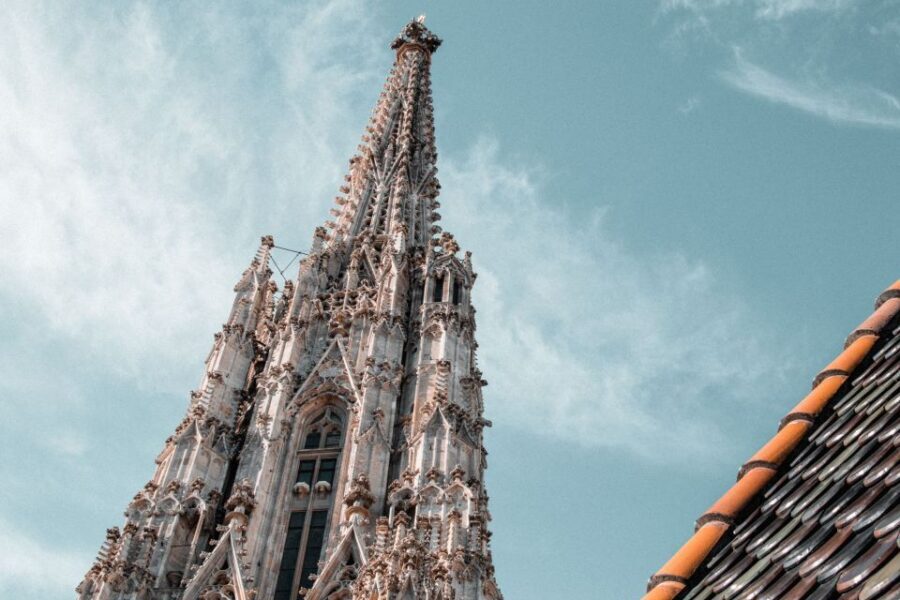
Near St. Stephen’s Cathedral, you hear the legend tied to a brutal medieval punishment involving bakers. The story includes the idea of the city using a cage and dipping bad bakers into the Danube—often called the baptism of bakers.
It’s framed as an alleged practice tied to the city’s reputation for quality assurance, including a note about the bad baker. It also compares the concept to a punishment in English-speaking countries aimed at women in dispute (as presented in the story).
What this stop adds: a grim look at workplace discipline and public humiliation in the Middle Ages.
Steffl: the executioner’s apartment, dungeon, and the witch Plainacher
At Steffl, the tour points to the former Malefizspitzbubenhaus, described as the executioner’s apartment and dungeon. The story then turns to the only witch burned in Vienna, known as the Plainacher, who is said to have been tortured for accusations related to an epileptic granddaughter being bewitched and demons being summoned.
The tour also notes that witch persecutions were not common in Vienna, but this judge tried to avoid public pressure in the case.
What this stop adds: it’s how fear becomes law—plus the political cost of public opinion.
Himmelpfortgasse: the walled-in nun story from 1319
Finally, at Himmelpfortgasse, you visit the former Himmelpfort monastery. The story says a nun was walled in during 1319 because she didn’t want to part with her lover, whose father hated the match.
The tour frames it like a Vienna take on Romeo and Juliet: the mayor and an enemy whose children are friends, then a clash between love and family control.
What this stop adds: it closes the tour with a human story about control and consequences, not just violence.
The real value: how the crimes map to Vienna’s changing justice
What makes this tour more useful than a standard “darker side of Vienna” walk is how it treats each crime as a clue to the city’s changing mindset. You move from monastery discipline to court scandals, from medieval punishments to 19th-century political violence, and then into modern intrigue like spying and fraud.
By the end, you’ve got a clearer map of Vienna’s institutions over time:
- Who had power
- How they controlled behavior
- What counted as a threat
- What punishment looked like on the street
That’s also why the transitions matter. When your route flows cleanly, the stories feel connected. When it doesn’t, it becomes random trivia. Here, the structure is built to keep you asking: how did we get from that to this?
Who should book this tour, and who should skip it
This is best for you if you like history with narrative and you enjoy true-crime style storytelling tied to locations. It also works well if you’ve already seen the big headline monuments and want something more personal and street-level in the center.
One more fit check. Because the stories can be gruesome and the tone is adult-focused, you should treat it as an entertainment choice with real dark content. If you’re sensitive to torture, executions, dismemberment, or violent political scenes, you’ll probably feel the heaviness.
It’s also a good pick for solo travelers who like walking and for couples who enjoy a shared story arc. With max 20 people, you’re not stuck in a giant herd.
Should you book this Vienna crime-and-inner-city tour?
I’d book it if you want a guided walk that uses Vienna’s addresses as evidence and ties the timeline together in just a couple of hours. The complimentary smartphone audio guide is a practical bonus, and the fact that the listed stops are free-entry means you’re paying for the guide’s research and the story flow, not for separate attractions.
I would skip it if you want a light sightseeing vibe, because the subject matter is intentionally dark and sometimes graphic. Also, go only when weather looks decent, since the tour requires good conditions.
If you’re the type who likes learning what happened to real people in real places, this one gives you a memorable, darker lens on a city most people only see at its most polished.
FAQ
How long is the tour?
It’s listed as about 2 hours.
What language is the tour offered in?
The tour is offered in English.
How much does it cost?
The price shown is $46.13 per person.
Where does the tour start and end?
It starts at Helmut-Zilk-Platz near Albertinapl. 2–3, and it ends at Rauhensteingasse (all in 1010 Wien).
What’s included with the ticket?
You get a mobile ticket, a complimentary smartphone audio guide, and the tour includes multiple stops with free admission tickets.
Is there a group size limit?
Yes. The maximum group size is 20 travelers.
Is the tour suitable for most people?
The information says most travelers can participate.
Does the tour run in bad weather?
It requires good weather. If it’s canceled due to poor weather, you’ll be offered a different date or a full refund.
Are the stops free to enter?
Each listed stop notes admission ticket free, as part of the tour stops.
Can I get a refund if I cancel?
Yes, it offers free cancellation. You can cancel up to 24 hours in advance for a full refund.