REVIEW · GRAZ
Universalmuseum Joanneum Pass in Graz
Book on Viator →Operated by Universalmuseum Joanneum · Bookable on Viator
One pass, 12 museums across Styria. I like how the Universalmuseum Joanneum pass lets you build your own itinerary on your schedule, not someone else’s. I also love the big-name stops you can stack in just two days, especially the Styrian Armoury and Eggenberg Palace. The main catch: you’re not getting included guided tours or audio, so you’ll want to budget a little extra if you crave commentary.
This is a paper-ticket experience, so plan to show your confirmation when you pick up the pass. You also want to be ready for the day-to-day flow: different locations across Styria, different opening rhythms, and plenty of “choose what to see next” moments. If you hate logistics surprises, consider printing your confirmation ahead of time, since some people have reported not receiving a QR code email.
In This Review
- Key highlights to know before you go
- How the Joanneum Pass Fits Into 24 or 48 Hours
- Price and value: is $24.08 really a bargain?
- Your best starting strategy in Graz: pick anchors, then fill gaps
- Universalmuseum Joanneum sites: what to expect when you go in
- Eggenberg Palace: baroque rooms and ceiling paintings that take over your senses
- Kunsthaus Graz: contemporary art in a “floating balloon” building
- Styrian Armoury: the world’s largest historical weapons arsenal
- Natural History Museum and Austrian Sculpture Park: nature and modern art, side by side in your schedule
- Schloss Stainz: Austria’s largest Hunting Museum in a castle
- Schloss Trautenfels: baroque interiors plus geology, minerals, and regional finds
- Folk Life Museum: human stories behind everyday objects
- Neue Galerie: Austrian art from Biedermeier to expressionism and after 1945
- Rosegger and the Roman story: Flavia Solva, Alpl, and Krieglach for history-minded days
- Graz Altstadt as your between-museums rhythm
- Accessibility, languages, and the guided-tour gap
- Practical tips that keep your day smooth
- Should you book the Universalmuseum Joanneum Pass?
- FAQ
- FAQ
- Is the Universalmuseum Joanneum pass available for 24 or 48 hours?
- How much does the pass cost?
- What does the pass include?
- Are guided tours included?
- Are audio guides included?
- What language is the pass offered in?
- Do I need to print anything to get the pass?
- What is the cancellation policy?
Key highlights to know before you go
- 12 museums and cultural institutions you can mix and match across Styria with a 24- or 48-hour pass
- Choose your own order: no guided route, so you can follow your interests (art, science, arms, nature, history)
- Major Graz anchors like Eggenberg Palace and Kunsthaus Graz, plus the world-scale collection of the Styrian Armoury
- Family-friendly pause at the Austrian Sculpture Park, with contemporary works that are easy to browse at your own pace
- Baroque interiors and ceilings at Eggenberg Palace, including 24 state rooms and more than 500 ceiling paintings
How the Joanneum Pass Fits Into 24 or 48 Hours
Think of this pass as a menu, not a set tour. You choose between a 24-hour or 48-hour window, and you use it to enter 12 museums and exhibits run under the Universalmuseum Joanneum umbrella. Guided tours are not included, but you can buy them on site if you want a structured explanation for a specific museum.
Because there’s no fixed route, your real “tour plan” becomes timing. In two days, the smart move is to cluster what’s closest. Graz is your natural base for several locations (like Kunsthaus Graz and Eggenberg Palace), while other stops can feel like excursions if you go for the Roman site or the more distant Rosegger-related museums. If you’re short on time, pick one “theme” for day one and one for day two.
One more practical thing: this is an actual paper pass. The guidance is to print and show your booking confirmation from Viator at the cashier point to receive your pass. That matters because if you arrive with only a phone screenshot, you may waste time tracking down Wi‑Fi or a printer.
You can also read our reviews of more tours and experiences in Graz.
Price and value: is $24.08 really a bargain?
At about $24.08 per person, the value comes from how many places you actually visit inside the 24 or 48 hours. The pass pays off when you’re not treating it like a “maybe I’ll see one museum” ticket. It’s designed for stacking multiple admissions without buying separate tickets every time.
Here’s the simple math mindset I’d use: if you visit multiple major sites—especially ones you’d feel awkward skipping—you usually come out ahead. Eggenberg Palace alone is a big, full-stop experience, and the Styrian Armoury is a major attraction in its own right. Add in a contemporary art museum like Kunsthaus Graz or the Natural History Museum, and suddenly you’re spending your time instead of shopping for tickets.
Also, the pass gives you flexibility. That matters because museum days rarely go to plan. A queue might slow you down. A rainy hour might push you indoors. With this pass, you’re not stuck with a single route—you can swap one museum for another.
Your best starting strategy in Graz: pick anchors, then fill gaps
You’ll get the most satisfying two-day visit by anchoring your plan around 2–3 “must-see” locations and then filling the rest with smaller stops. In Graz, the easy anchors are:
- Eggenberg Palace (at the city edge, but still very doable as part of a central day)
- Kunsthaus Graz (contemporary art in the historic city center area)
- Styrian Armoury (the world’s largest historical weapons arsenal)
From there, you can choose your second-line options based on mood. Want animals and fossils? Natural History Museum. Want folk culture? Folk Life Museum. Interested in art styles from Biedermeier through Jugendstil and expressionism into modern painting after 1945? Neue Galerie.
One small drawback of having so many choices: it’s easy to overbook yourself. Try to keep one museum “as a wander” and one museum “as a sit-and-look.” Your feet will thank you.
Universalmuseum Joanneum sites: what to expect when you go in
Universalmuseum Joanneum is not one building. It’s a network of museums and institutions, so your experience is a sequence of different atmospheres. You might move from fine art rooms to Roman artifacts to a sculpture park designed for relaxed browsing.
A typical day with the pass feels like this:
1) Enter one museum and give yourself time to adjust to the collection type
2) Move on when you feel your attention drop (not when you hit an arbitrary finish line)
3) Leave room for snacks and short breaks—especially in winter or shoulder seasons
Because guided tours are optional and extra, your visit style matters. If you like to read labels and connect dots yourself, this works well. If you want a storyteller telling you what matters most, plan a paid guide or audio at one of the biggest sites.
Eggenberg Palace: baroque rooms and ceiling paintings that take over your senses
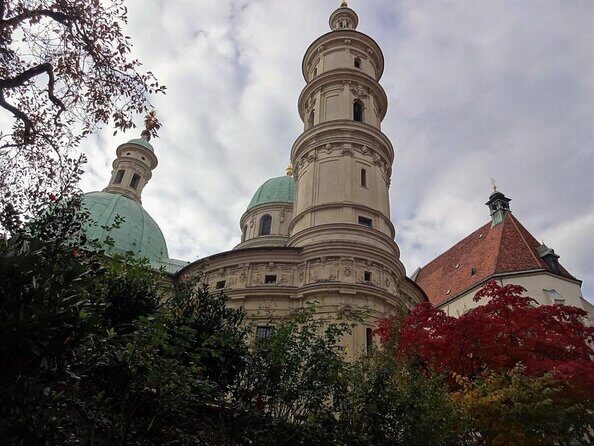
Eggenberg Palace is a standout for a reason. You get 24 state rooms with original interiors and historical furniture, plus the kind of ceiling artwork that makes it hard to look away. The palace includes more than 500 ceiling paintings, so even if you think you’ll just “see the highlight,” you’ll end up spending longer than you expected.
What I like about Eggenberg Palace with this pass is pacing. It’s a museum where you can slow down. You can choose a few rooms to go deep on rather than rushing everything. And because the palace is set on the edge of the city center in a park, you get a natural break zone after your indoor time.
Possible consideration: if you’re doing multiple museums back-to-back, Eggenberg can absorb your whole focus. Pair it with one lighter stop that doesn’t require as much concentration later that day.





Kunsthaus Graz: contemporary art in a “floating balloon” building
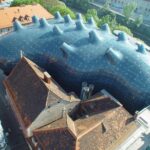
Kunsthaus Graz is contemporary art housed in a building described as a mysterious blue balloon-like form between roofs in the historic city center. That alone sets the tone. Even before you get to the art, the architecture feels like a statement.
Use this stop as your “change of gear” museum. After historic interiors or Roman/folk objects, contemporary art can feel like a reset. It’s also a good choice if you like a museum where your curiosity leads you, rather than a museum where you feel you must memorize dates and dynasties.
Because the pass gives you access without including a guide, you’ll get the most out of it if you lean into the visual experience: stand back, then go closer, then step away and come back with fresh eyes.
Styrian Armoury: the world’s largest historical weapons arsenal
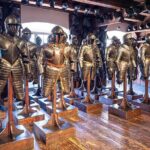
The Styrian Armoury is the kind of museum stop that changes how you think about a subject. It’s listed as the world’s largest historical weapons arsenal, so even if you’re not a “weapons person,” it’s hard not to appreciate the scale and historical focus.
For a visit plan, treat it as your “big-ticket” attraction. If you want one museum where you give yourself real time, this is likely it. Go early or mid-morning if you can, so you’re not fighting for space as other visitors arrive.
Consideration: if you’re sensitive to weapons imagery or heavy displays, you may want to preview what you can handle and take breaks outside the galleries. The pass makes it easy to shorten this stop without ruining your day.
Natural History Museum and Austrian Sculpture Park: nature and modern art, side by side in your schedule
The Natural History Museum leans into the planet’s variety, with examples like wild cats, birds in flight, strange plants, and mysterious fossils. If you want a museum that feels more sensory and less text-heavy, this is often a strong pick. It’s also a nice change from the palace-and-armor pattern.
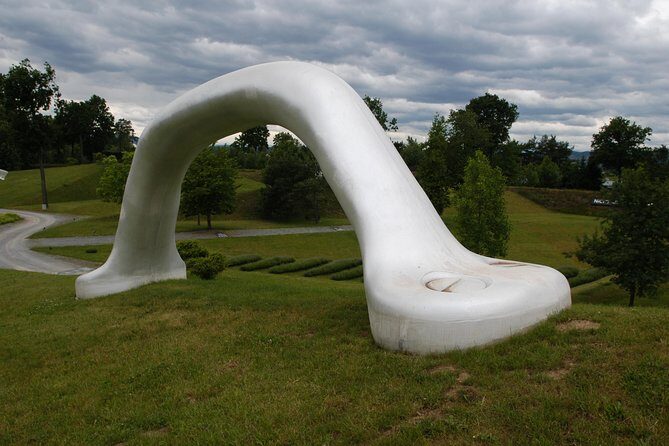
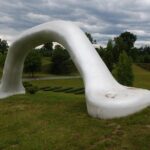
Then there’s the Austrian Sculpture Park, designed for contemporary works and made to be relaxing. It’s listed as child-friendly too, so it’s a smart “between heavy museums” slot. You can slow your pace, step through the park, and view sculpture as something you experience in motion, not only behind glass.
A practical tip: use the park day wisely. If weather is good, it’s an easy win. If weather turns, you may prefer to prioritize the indoor museums first so you don’t get forced into a last-minute rearrangement.
Schloss Stainz: Austria’s largest Hunting Museum in a castle
Schloss Stainz is described as Austria’s largest hunting museum, located in Stainz Castle, with historical weapons and equipment. If you’re interested in how hunting culture shaped artifacts, machinery, and historical practice, this fits neatly into a weapons-and-history day.
What I like about including Stainz with the pass is the breadth of context. You’re not seeing one narrow category. Instead, you’re able to connect weapons collections with social and historical settings across different sites.
Consideration: because it’s in a castle and specifically tied to hunting history, it may be a less “universal” museum. If you’re bringing kids or you’re unsure about the hunting theme, make sure you have at least one more general-interest stop in your schedule on the same day.
Schloss Trautenfels: baroque interiors plus geology, minerals, and regional finds
Schloss Trautenfels mixes natural science objects—zoological, geological, and mineralogical—with archaeological finds from the region. Then there are the high-quality baroque interiors and impressive views of the surrounding mountains.
This is a good stop when you want both brains and scenery. If your itinerary is heavy on art and weapons, Trautenfels brings you back into the world of earth sciences and regional history, plus the view component gives you a mental breath.
Possible drawback: castles with mountain views can be weather-dependent for how much you want to linger outside. If conditions are poor, plan to prioritize the indoor collections first.
Folk Life Museum: human stories behind everyday objects
The Folk Life Museum has been collecting and interpreting material artifacts of social life and human destinies since 1913. That date matters. It signals a long-running effort to preserve and explain daily life patterns, not just one-off displays.
When you visit, don’t treat it like a “quick look” museum. The value is in how objects connect to people. If you like museums that show how society actually lived—through items, clothing, household life, and local culture—you’ll probably enjoy this one.
Neue Galerie: Austrian art from Biedermeier to expressionism and after 1945
The Neue Galerie covers art across major Austrian periods and also includes painting after 1945, spanning classic modernism and international work. It’s a great choice if you want a museum where the timeline helps you see shifts in style.
With no included guided tour, your best approach is to pick a few rooms or artists and spend time there. Jumping randomly can leave you feeling like you saw a lot but understood little. Pick a path.
Rosegger and the Roman story: Flavia Solva, Alpl, and Krieglach for history-minded days
If you want more “place-based” history, these stops help you understand Styria as more than a backdrop.
- Roman Museum Flavia Solva: described as the only Roman city within the modern province of Styria. You’ll see archaeological finds, inscriptions, and reliefs tied to Noricum. This works well if you like evidence you can follow visually, not just stories on panels.
- Rosegger’s Birthplace Alpl: a look at furnishings and items that testify to rural life in the 19th century. It’s the kind of museum where details make the difference.
- Rosegger Museum Krieglach: traces stages in the life and work of Styrian poet Peter Rosegger (1843–1918), in the former country home in Krieglach.
Potential consideration: these add a “regional” feel to your trip. If you want everything to stay walkable in the Graz center, you may not fit all three in a tight 24-hour plan. For a 48-hour pass, they become much more realistic.
Graz Altstadt as your between-museums rhythm
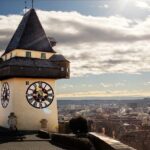
The pass works across multiple locations, so you need a buffer. Graz’s Altstadt is the obvious buffer: it’s where you can reset between museums, grab a bite, and walk off a bit of museum fatigue.
A practical way to use the old town with this pass:
- Do one museum that’s indoor-heavy in the morning
- Use the afternoon for a mix (a palace, then a walk, then one more gallery)
- Cap your day with something that doesn’t demand marathon focus
This is also a good approach if your schedule gets messy. If one museum runs slower than expected, you can keep moving without ruining the whole itinerary.
Accessibility, languages, and the guided-tour gap
The pass is offered in English, and most travelers can participate. Service animals are allowed, and the museums are listed as near public transportation, which matters in a pass like this where you hop between locations.
One key point: guided tours and audio guides are not included. Guided tours can be purchased separately on site, and audio guides cost 2.50 EUR per person. If you’re the type who loves context, factor that into your budget and pick one or two museums where you’ll most want interpretation. If you’re okay reading at your pace, you can skip extras and still have a full experience.
Practical tips that keep your day smooth
- Print your booking confirmation before you leave. You’ll use it at the cashier point to receive the paper pass.
- Don’t try to cram all 12 places into 24 hours. Pick your strongest 3–6 and let the rest be a bonus if timing allows.
- Build one “flex slot” into your schedule, so if a museum runs longer, you can adjust without stress.
- If you care about English audio or guides, check your plan early. With optional extras, last-minute decisions can cost more time.
And a small reality check: with an overall rating of 4.1 (14 reviews), this pass seems to work well when you’re prepared. The one clear complaint is about digital organization for tickets, which is exactly why I’d rather you show up with a printed backup.
Should you book the Universalmuseum Joanneum Pass?
Yes, I’d book it if you want a two-day museum plan with choices. It’s especially worth it when you like variety: Roman history, folk culture, art across eras, nature and fossils, contemporary sculpture, and large-scale historical collections all in one pass system.
Skip it if you want a single, guided experience with no planning. Since guided tours and audio are extra, you’ll be doing more of the decision-making yourself. Also, if you hate juggling multiple locations, consider whether a more fixed museum route would suit you better.
If you’re traveling on your own time and you’re comfortable picking what to see next, this pass is a strong value way to experience Graz and the wider Styria museum world.
FAQ
FAQ
Is the Universalmuseum Joanneum pass available for 24 or 48 hours?
Yes. You can choose a 24-hour or a 48-hour pass.
How much does the pass cost?
The listed price is $24.08 per person.
What does the pass include?
The pass includes admission to 12 museums and exhibits.
Are guided tours included?
No. Guided tours are not included, but you can purchase them separately on site.
Are audio guides included?
No. Audio guides are not included and cost 2.50 EUR per person.
What language is the pass offered in?
It’s offered in English.
Do I need to print anything to get the pass?
Yes. To receive your pass, you’re instructed to print and show your booking confirmation from Viator at the cashier point.
What is the cancellation policy?
Free cancellation is available. You can cancel up to 24 hours in advance of the experience start time for a full refund.