Four hours, and Vienna feels personal fast. This small-group walk knits together Mozart sites, medieval passages, major squares, and the Vienna State Opera finish, plus a 30-minute coffee-house break. I love the structured pace that still lets you linger just enough, and I really like the focus on the streets you would otherwise miss. One possible drawback: it’s a lot of stops in a short time, so if you want long museum time, plan to book something separate.
I also appreciate how the guide keeps things practical. In winter, when cold hits hard, the route can include quick chances to warm up along the way, and that middle break makes a real difference. For instance, Nicoleta stood out for explaining history clearly and with an easy flow, so each corner felt connected instead of random.
If your main goal is a relaxed sit-and-stare tour, this may feel brisk. But if you want to get your bearings fast and leave with a stronger sense of Vienna’s layers, this is a smart half-day plan.
In This Review
- Key Things I’d Prioritize on This Tour
- Price and time: $84.29 for a half-day strategy session
- From Mozarthaus to Wiener Staatsoper: how the walking route really flows
- Stop-by-stop: the Mozart, medieval lanes, and cathedral thread
- Mozarthaus Vienna (Mozart apartment, Figaro house)
- Blutgassenviertel (Blood Alley Quarter)
- Sala Terrena im Deutschordenshaus (a first concert-house setting)
- Stephansdom (St. Stephen’s Cathedral)
- Figlmüller at Wollzeile (historic schnitzel stop in a passage)
- Church of the Jesuits (Baroque intensity)
- Heiligenkreuzerhof Market (and a dramatic imperial story thread)
- Griechenkirche zur heiligen Dreifaltigkeit
- St. Rupert’s Church (Ruprechtskirche)
- Ankeruhr Clock
- Hoher Markt (Roman museum area)
- Judenplatz Holocaust Memorial
- Am Hof (one of the oldest parts)
- Freyung Passage
- Minoritenkirche (copy of Leonardo’s Last Supper)
- Volksgarten (garden of thousands of roses)
- Justizpalast
- MuseumsQuartier Wien (inner yard with museums)
- The Hofburg (Habsburg palace)
- Burggarten (Mozart statue and the Butterfly Museum)
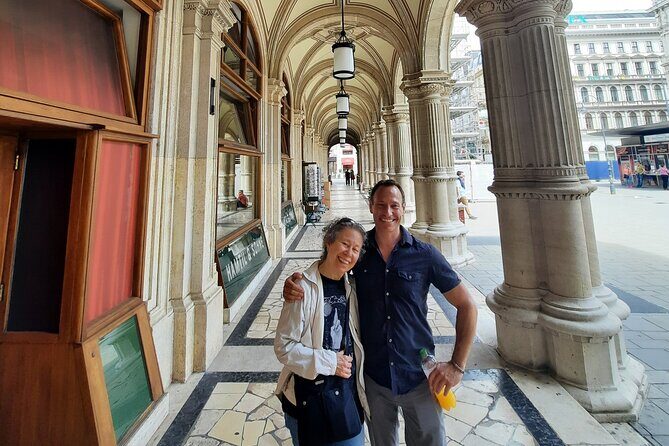
- Wiener Staatsoper (finish at Vienna State Opera)
- The included coffee-house break: where to recharge and what to order
- Guide quality and the small-group advantage (the part you feel)
- Who this tour fits best (and who should choose something else)
- FAQ
- FAQ
- How long is the Vienna walking tour
- What time does the tour start
- Where do I meet the guide
- Where does the tour end
- Is the tour offered in English
- What is included in the price
- Are museum entrance fees included
- How big is the group
- Does the tour require good weather
- Can I cancel for a full refund
- Should I budget for tips
Key Things I’d Prioritize on This Tour
- A small group that actually talks: ideal for questions and real back-and-forth.
- 30 minutes in a classic coffee house with apple strudel as part of the tour rhythm.
- Major landmarks plus side streets without turning it into a checklist.
- Mostly free stops along the way, so you spend money on your next meal, not entry tickets.
- You finish at the Vienna State Opera, a great anchor for planning your evening.
Price and time: $84.29 for a half-day strategy session
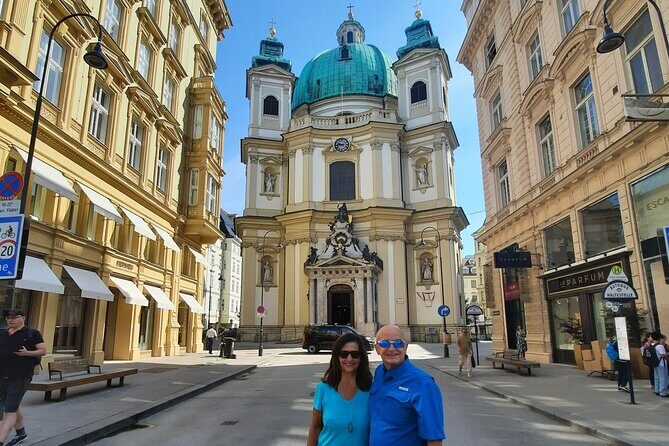
At $84.29 per person for about 4 hours, this tour is priced like a value-focused orientation to Vienna’s core. You’re not paying for a full museum lineup here. Instead, you’re paying for a guide to connect the dots across dozens of sites and short stops, plus that built-in coffee break and the materials that help you keep exploring afterward.
What makes the cost feel reasonable is the mix of time-saving and comfort:
- A live guide for the whole stretch means you don’t waste your first afternoon guessing where to go next.
- The 30-minute coffee-house break with coffee and apple strudel is included, so you’re not hunting for a good place under pressure.
- You also get a printed Vienna Information Package, a Vienna City Map, and lots of suggestions for what to do outside the city center.
The practical catch: the tour is still a walking loop. You’ll cover a lot of ground and see a lot of facades and interiors from the outside, with very short stop-and-look moments at each location.
You can also read our reviews of more tours and experiences in Vienna.
From Mozarthaus to Wiener Staatsoper: how the walking route really flows
You start at Mozarthaus Vienna (Mozart apartment) at Domgasse 5, around 1:00 pm, and you end at Vienna State Opera at Opernring 2. It’s designed as a loop through central Vienna, mostly in the historic core, with multiple “pop-in and look” moments.
The tour is listed for English. The group size is kept small (up to 15 travelers), which matters more than people think. With a smaller group, the guide can pause for questions, adjust pace, and keep conversations from feeling like you’re trapped in a herd.
You’ll want moderate physical fitness and good shoes. And because this is a walking experience, the tour specifically notes it requires good weather. If the weather turns, expect the operator to offer an alternative date or a full refund.
Stop-by-stop: the Mozart, medieval lanes, and cathedral thread
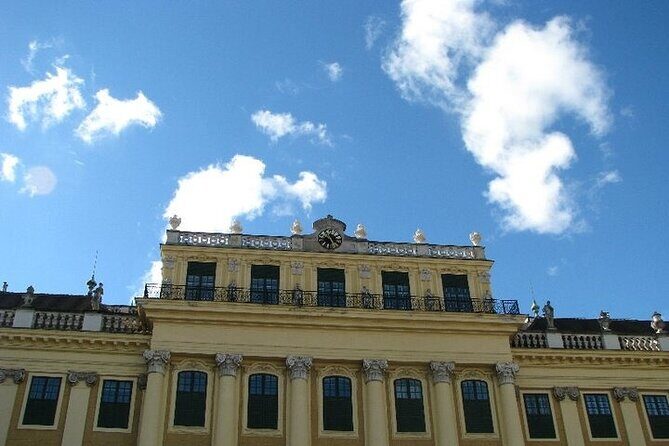
This route is built like a story. You start with Mozart, then you move into old Vienna neighborhoods and religious landmarks, then you work your way through squares, passages, and palace-area architecture.
Mozarthaus Vienna (Mozart apartment, Figaro house)
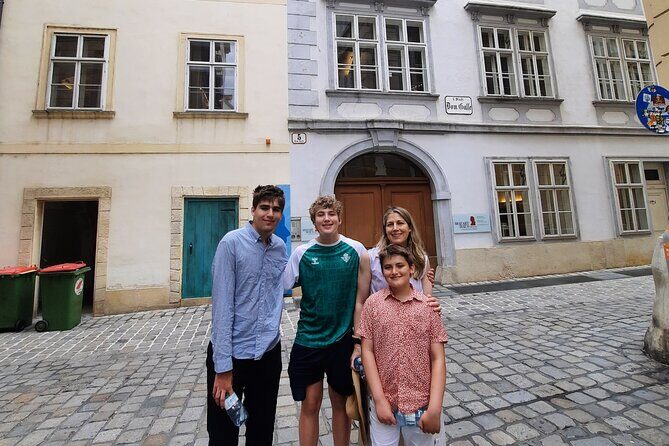
You begin at Mozarthaus Vienna at Domgasse 5. Even if your visit time is brief, this stop sets the tone: Vienna isn’t just pretty buildings, it’s a lived-in stage for people and music. The fact that this stop is marked free makes it a strong start point.
Blutgassenviertel (Blood Alley Quarter)
Next, you pass through Blutgassenviertel, a pocket where you can see traditional Czech-style houses. It’s not about one landmark. It’s about atmosphere—tight streets, older-looking facades, and that sense of Vienna having layers you can still read.

Sala Terrena im Deutschordenshaus (a first concert-house setting)
Then you head to Sala Terrena im Deutschordenshaus, described as one of Vienna’s early concert-house spaces where Mozart performed. This is the kind of stop where the guide’s wording matters. A good explanation turns a room name into a real image: music happening in the city’s heartbeat.
Stephansdom (St. Stephen’s Cathedral)
Of course you hit Stephansdom, Vienna’s big cathedral landmark. You’ll get a short window to take in the exterior presence and start noticing why this cathedral anchors so many views and stories in town. The 10-minute timing is short, so aim to look first, then read what the guide points out.
Figlmüller at Wollzeile (historic schnitzel stop in a passage)
You get a stop for Figlmüller at Wollzeile, described as Vienna’s most historical schnitzel restaurant, tucked into a passage. This is one of those “walk-in-your-brain” locations: you picture a meal without having to schedule it yet. If you like food stops, this is an easy one to file away for later.
Church of the Jesuits (Baroque intensity)
Church of the Jesuits is next—built for baroque impact. A short stop works here because the architecture does a lot of the talking. Don’t try to read every detail at once. Instead, take one minute for scale, then one minute for decoration patterns your eyes can actually catch.
Heiligenkreuzerhof Market (and a dramatic imperial story thread)
Then comes Heiligenkreuzerhof Market, tied to a dramatic story about a suicide connected to the son of the last emperor and its relation to the abbey of the Holy Cross. Even with a brief stop, a good guide can connect the moral and emotional weight to a place you can physically stand in.
Griechenkirche zur heiligen Dreifaltigkeit
At Griechenkirche zur heiligen Dreifaltigkeit, you’re in the medieval part of the city, with old pedestrian streets and passages. This stop is less about one monument and more about the experience of walking where older routes shaped daily life. Take your time looking down, not just up.
St. Rupert’s Church (Ruprechtskirche)
Ruprechtskirche is Vienna’s oldest church in this route’s framing. That word—oldest—changes how you look. Even in a short time, you’ll tend to notice what has survived and how the neighborhood supports that sense of continuity.
Ankeruhr Clock
Next is the Ankeruhr Clock, famous for being one of Vienna’s most beautiful clocks. This is a quick “pause and appreciate” moment. Clocks are easy to overlook while walking, but they’re also perfect for a short break where you can stop without feeling like you’re falling behind.
Hoher Markt (Roman museum area)
At Hoher Markt, the focus is on the Roman museum and Vienna’s earlier layers. In just a few minutes, you’re not going to become an expert on Roman Vienna. But you’ll start understanding why the modern city sits on older streets and why archaeology shows up in daily life.
Judenplatz Holocaust Memorial
Then you reach Judenplatz Holocaust Memorial, a memorial square where you learn about the impact of World War II on Vienna’s Jewish community. This stop is heavier than the rest, and the tour’s short timing matters. You can take it in without rushing by focusing on what the place asks you to remember, not by trying to read everything at once.
Am Hof (one of the oldest parts)
At Am Hof, you’re in one of Vienna’s oldest city areas. This is a “texture” stop—stone, street shape, and the feeling of old Vienna being close to the surface. If you like street-level history, you’ll enjoy this more than a quick landmark photo.
Freyung Passage
Freyung Passage is described as a wonderful passage shaped by nearly buildings. Passages can feel like nothing until you walk into one and suddenly the city becomes quieter, more intimate, more human. Use this stop to look at how buildings frame the light and movement.
Minoritenkirche (copy of Leonardo’s Last Supper)
At Minoritenkirche, you’ll see a copy of Leonardo da Vinci’s Last Supper. Since this tour keeps stop times short, I’d focus on the idea that a world-famous work has a local presence here—then let the guide explain the connection.
Volksgarten (garden of thousands of roses)
Then it’s Volksgarten, described as the garden of thousands of roses. Even if you’re not there in peak bloom, gardens still matter because they change pacing. It’s a gentle reset before the final big architecture sweep.
Justizpalast
You pass the Justizpalast, one of Vienna’s impressive buildings. This stop is about scale and attitude—how power and institutions show up in architecture. If you like city design, you’ll notice how the building sits in its setting and how it changes your sense of the street.
MuseumsQuartier Wien (inner yard with museums)
At MuseumsQuartier Wien, you get an inner yard with several museums. This is a good stop because it shows a modern layer inside a central city zone. You can use it to decide later what kind of museum day you want next.
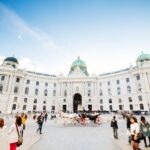
The Hofburg (Habsburg palace)
Then the Hofburg, the Habsburgs’ palace area. You’ll see why Vienna’s politics and culture are so tangled together. If you’re into monarchy-era storytelling, this is one of the most satisfying stretches because the architecture does the heavy lifting.
Burggarten (Mozart statue and the Butterfly Museum)
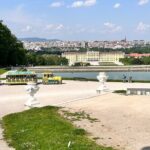
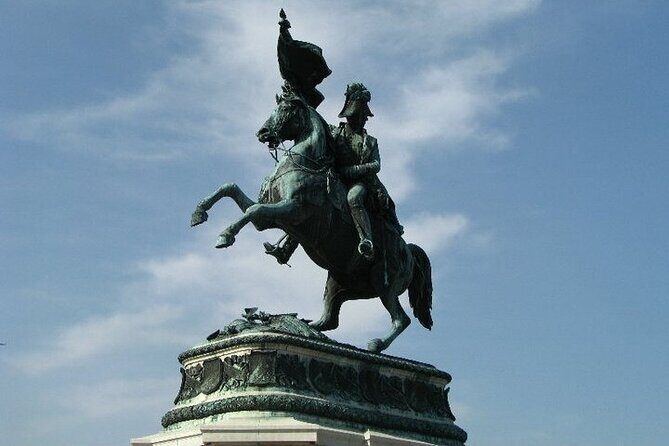
At Burggarten, the tour highlights the most photographed Mozart statue and the Butterfly Museum. This is a stop that pairs easily with family interests and casual wandering. Even if you skip extra museum time, the area works as a calm scenic connector.
Wiener Staatsoper (finish at Vienna State Opera)
You end at the Vienna State Opera. It’s a strong finale because it’s a place people already recognize, and you can plan your next step from there—dinner nearby, a show idea, or just a scenic evening walk around the area.
The included coffee-house break: where to recharge and what to order
The tour builds in a 30-minute break in a traditional Viennese coffee house. Coffee and apple strudel are included, which is great because this is exactly the kind of meal tourists often try to time right, and sometimes fail.
How to use the break well:
- Take 5 minutes to relax with your coffee before you start thinking about photos.
- Eat the strudel while it’s still warm—this is the best time for the flavor.
- If it’s winter, this break is also your reset from cold, which can make the rest of the walk feel easier.
If you want a simple strategy: plan to spend the last part of your day near the Opera area, so you don’t need to move far right after the tour.
Guide quality and the small-group advantage (the part you feel)
This tour’s biggest strength shows up in how it handles people. You get a friendly, talkable guide and a group size small enough to ask questions without raising your voice. One review highlighted how Nicoleta explained historical events with ease and made everyone feel welcome, including families.
That kind of guide matters because many stops are short. When time is tight, you need the right framing. A good explanation turns a photo spot into a story you remember.
Also, the route can be flexed when the weather is rough. In winter, a guide may try to give you chances to enter places briefly to warm up. That’s not just comfort—it’s motivation to keep going.
Who this tour fits best (and who should choose something else)
This 4-hour Vienna walking tour is ideal for you if:
- You’re in Vienna for a short time and want a smart orientation to the old core.
- You like guided storytelling that moves site to site without feeling like a lecture.
- You enjoy side streets and passages, not just big monuments.
- You want included food comfort built into the schedule.
You might want to skip it if:
- You want long museum visits or a deep dive into one subject.
- You strongly prefer slow pacing with fewer stops.
- You’re traveling on a day where rain or extreme cold is likely and you hate walking in weather.
For most first-timers, though, this is a very practical way to start. You’ll know where things are, and you’ll have a list of targets for later.
FAQ
FAQ
How long is the Vienna walking tour
It lasts about 4 hours.
What time does the tour start
The start time is 1:00 pm.
Where do I meet the guide
You meet at Mozarthaus Vienna, Domgasse 5, 1010 Wien.
Where does the tour end
The tour ends at Vienna State Opera, Opernring 2, 1010 Wien.
Is the tour offered in English
Yes, it is offered in English.
What is included in the price
Included are the 4-hour guided tour, a 30-minute break in a Viennese coffee house with coffee and apple strudel, a printed Vienna Information Package, suggestions for other places to visit, and a Vienna City Map.
Are museum entrance fees included
No. Entrance fees to museums are not included (though the route’s listed stops show several places marked as free).
How big is the group
The tour is described as a group of 4 to 18 for conversation, and the maximum is listed as 15 travelers.
Does the tour require good weather
Yes. It requires good weather, and if canceled due to poor weather you’ll be offered a different date or a full refund.
Can I cancel for a full refund
Yes. You can cancel up to 24 hours in advance for a full refund.
Should I budget for tips
Tips are not included, so you’ll want to plan for that.
Should you book this tour? If you’re aiming to understand Vienna quickly through real streets—Mozart context, medieval passages, baroque churches, and a finish at the Opera—yes. It’s a strong value because so much is packed in without forcing museum-ticket spending, and the coffee break is the kind of included comfort that keeps a walking tour fun instead of tiring. If your ideal day is slow and museum-heavy, pair this with a separate plan rather than expecting hours inside.