REVIEW · SALZBURG
Salzburg Christmas Market & City Tour
Book on Viator →Operated by Salzburg Experience · Bookable on Viator
Christmas in Salzburg moves at walking speed. In about 2 hours, I love how this tour strings together holiday markets with real local history—right down to the church link to Silent Night, Holy Night. Two standouts for me are the stop inside Salzburg Dom’s story-filled setting and the monastery-side moments like the nearby fresh bread smell at St. Peter’s. One thing to weigh: the market part can feel crowded, especially on weekends, so plan for slower walking and a lot of people.
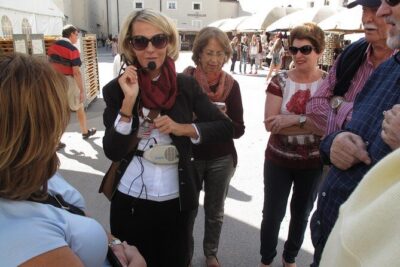
You’ll also like the human pace. With a group capped at 10, you get enough time to ask questions and still keep moving to the next photo spot without spending your whole afternoon in a queue.
In This Review
- Quick hits: what you’ll actually get from this tour
- Why this Salzburg Christmas tour makes sense in 2 hours
- Meeting at Residenzplatz and keeping the day stress-free
- First market stop at Residenzplatz: traditions, crafts, and salt trade stories
- Salzburg Cathedral and the Silent Night connection (plus a quick reality check)
- St. Peter’s Abbey (Erzabtei Stift St. Peter): music history and the cemetery’s mood
- Salzburg Festival Hall: Christmas-era performances and the Von Trapp link
- Getreidegasse: Mozart’s birthplace street and a smart shopping street walk
- Alter Markt sweets stop: coffeehouse vibes and Mozartkugel reality
- Back to Residenzplatz Christmas Market: tree lights and a final warm-up
- What’s included (and what’s not): gingerbread, mug, and the Dom fee question
- Price and value: where $348.41 makes sense
- Group size, language, and weather: the small details that improve your day
- Who should book this Salzburg Christmas Market & City Tour
- Should you book it
- FAQ
- How long is the Salzburg Christmas Market & City Tour?
- What does the tour cost?
- Is it offered in English?
- What is included in the price?
- Is the entrance fee to Salzburg Dom included?
- How big is the group?
Quick hits: what you’ll actually get from this tour
- A market-and-history route, not just a wander: you’ll connect decorations to Salzburg traditions
- Silent Night at the Cathedral area, tied to Josef Mohr’s lyrics
- St. Peter’s Abbey stop, where music history and even the cemetery atmosphere do the talking
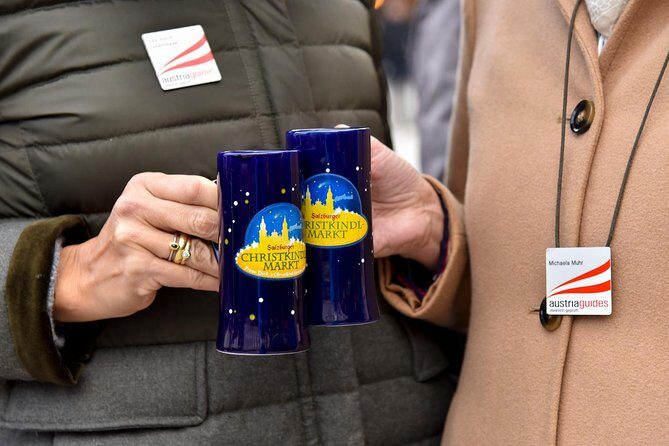
- Free tastings, including gingerbread and a Salzburg Christmas mug
- Mozart on foot, from his birthplace street to candy stops for Mozartkugel
- Small group energy (max 10), which helps you enjoy the scenes instead of getting swallowed by them
Why this Salzburg Christmas tour makes sense in 2 hours

Salzburg’s old town is gorgeous in December, but it can be a bit chaotic if you go in “solo stroll” mode. This tour helps because it gives you a route with built-in reasons to stop—so you’re not just scanning stalls and hoping you found the good stuff.
The timing is also smart. At roughly 2 hours, you’ll still have plenty of daylight or evening energy left to do your own shopping and linger with a hot drink.
And the guide part matters more than you might think. Local context turns the same wooden chalet, the same twinkle lights, and the same nativity scenes into something you can actually explain to someone later.
You can also read our reviews of more city tours in Salzburg



Meeting at Residenzplatz and keeping the day stress-free
You start at Residenzpl. 1 in Salzburg (near the Residenzplatz area) and end back at the same meeting point. Because it’s a walking tour through the pedestrian core of the city, this is one of those experiences where being early helps.
Practical note: old Salzburg is not the place to show up expecting easy parking. If you’re driving, plan to park outside the center and walk in; the meeting point is in the thick of the historic core.
Good news: the tour runs in all weather conditions. So bring layers, and think about shoes you can stand in for a bit of pavement and cobblestones.
First market stop at Residenzplatz: traditions, crafts, and salt trade stories
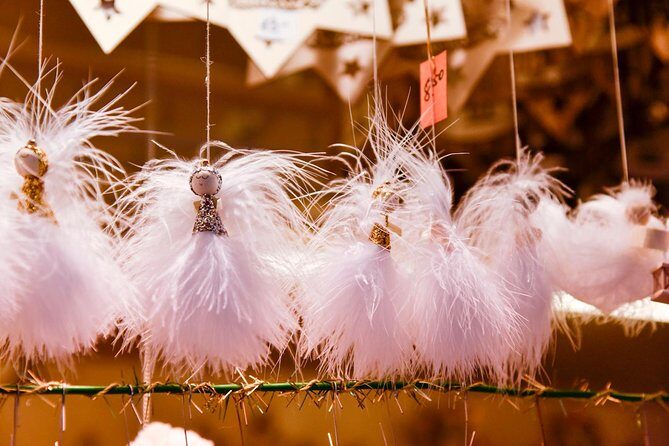
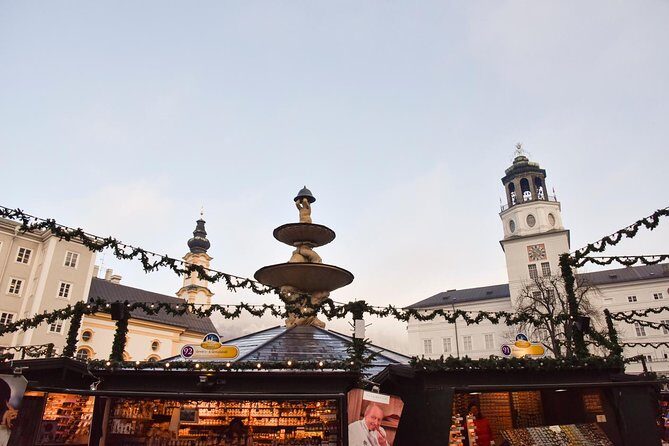
Your first stop circles the Residenzplatz market. This is where you get oriented fast: you’ll learn why Christmas markets mattered to Salzburg families, what traditions show up during the season, and how the city’s older trade life shaped everyday living.
What I like about this approach is that it helps you spot “real” crafts versus the generic souvenir stuff. The tour points you toward where you can still find arts and crafts connected to Salzburg rather than only mass-produced items.
Also, Residenzplatz is a strong starting location because it’s visually dramatic. You’re immediately surrounded by the kind of holiday atmosphere people travel for, but you’re not left to figure out what everything means on your own.
Salzburg Cathedral and the Silent Night connection (plus a quick reality check)

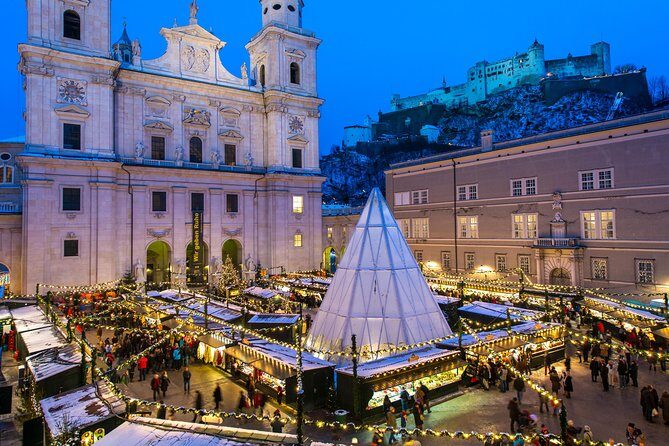
Next up is Salzburg Cathedral (Salzburg Dom) with time to see the baroque design from the 17th century and several interior highlights. The tour focuses on a few specific things: seven organs, a handcrafted manger, and a historic baptismal font.
The big story hook here is Josef Mohr. You’ll hear how the song connection relates to the church, tied to the lyrics of Silent Night, Holy Night. Even if you’ve heard the carol before, this adds a sense of place that generic holiday concert performances can’t match.
One reality check: the itinerary describes this as free time, but the tour listing also says the entrance fee to Salzburg Dom is not included. So treat this as a “look and learn at the cathedral complex” moment, with the possibility that the formal interior access may require a separate ticket depending on what’s open on the day.
Either way, it’s a high-value stop because the design choices aren’t random. Baroque churches were built to impress, and this one uses that theatrical style to amplify religious and seasonal meaning.
St. Peter’s Abbey (Erzabtei Stift St. Peter): music history and the cemetery’s mood
Then you move to Erzabtei Stift St. Peter Salzburg, one of Europe’s oldest Benedictine monasteries. This stop is less about buying things and more about understanding why Salzburg has such a strong musical identity.
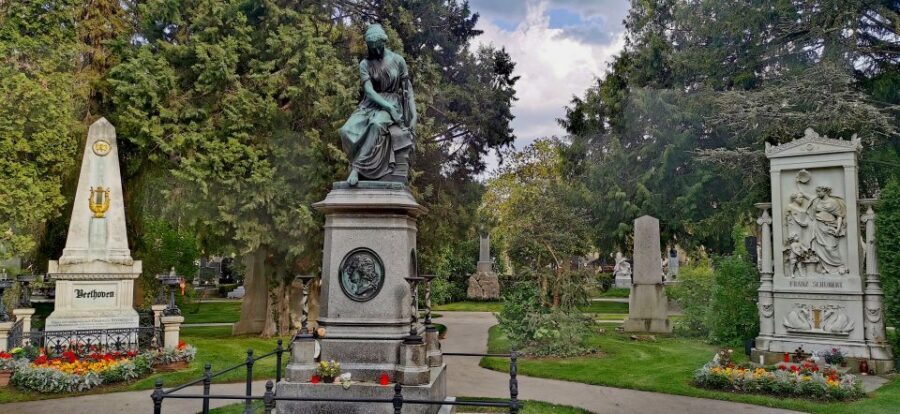
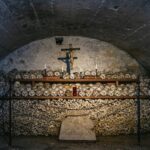
You’ll hear how the abbey ties to Salzburg history and to figures like Michael Haydn and Wolfgang Amadeus Mozart. And right next to the monastery is the cemetery with wrought iron crosses, which makes this a surprisingly moving detour for a Christmas market tour.
There’s also a practical sensory detail: follow the smell of freshly baked bread to the oldest bakery in town. If you like eating your way through travel (and who doesn’t), this is the moment where your nose starts driving.
What to expect time-wise: it’s short—about 10 minutes—so keep your expectations realistic. This is a “see what matters, learn the context” stop, not a long monastery wander.



Salzburg Festival Hall: Christmas-era performances and the Von Trapp link
Next is Salzburg Festival, the big festival hall where you’ll find Christmas performances tied to the venue’s long tradition. The tour connects it to cultural history, including the fact that the van Trapp family started their career with a choir contest in Salzburg.
This stop is a good reminder that Salzburg isn’t only about markets and photos. It’s a city where music and stage traditions run through the calendar, including the winter season.
Because it’s a quick stop, you’ll want to listen closely instead of scanning for sights. The best value here is the story the guide tells in the time you have.
Getreidegasse: Mozart’s birthplace street and a smart shopping street walk
From there, you head to Getreidegasse, described as Mozart’s most famous shopping street and tied directly to where he was born. You’ll hear how he began his career early, including with his sister, and you’ll get a “look outward” lesson on what you’re seeing in front of you.
The tour also mentions the Mozart Museum as worth a visit during your stay. I like how this point is handled: you’re not asked to do the museum as part of the tour, but you’re given the reason it’s there and why it matters.
If you enjoy window-shopping for character shops, handwritten-feel crafts, and old-town storefront style, this is one of the best segments to slow down on your own after the tour ends.
Alter Markt sweets stop: coffeehouse vibes and Mozartkugel reality
Then you arrive at Alter Markt, known for well-known coffee houses and candy shops. The tour suggests trying a Mozartkugel, the famous chocolate, and it includes the kind of background that makes the treat feel more connected to place.
This is short—about 5 minutes—so think of it as a taste-and-know moment. You’re not going to leave stuffed from Alter Markt, but you’ll have a clear idea of what to seek out when you’re browsing later.
If you’re budget-minded, plan to taste once and then choose carefully. Chocolate gifts can add up fast in Salzburg, and you’ll probably find better value if you buy a small “treat box” rather than a pile.
Back to Residenzplatz Christmas Market: tree lights and a final warm-up
You circle back to the Residenzplatz Christmas market to see the Christmas tree with many lights. The guide also covers the tradition of the trees—why green trees matter and how seasonal celebrations typically play out in winter.
This final stretch is where you can switch gears from listening to lingering. The tour ends with time to warm up with a drink and local food at the food stands. Those items aren’t listed as included, so be ready for extra costs if you decide to snack.
This wrap-up also helps you avoid the common mistake of arriving late to the markets. You get your educational framework first, then you can enjoy the lights and atmosphere with better instincts for what you want to do next.
What’s included (and what’s not): gingerbread, mug, and the Dom fee question
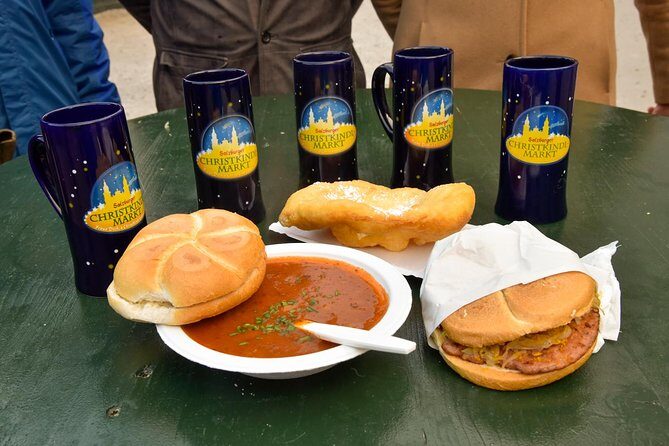
Included in the tour is a professional guide, free gingerbread tasting, and a free Salzburg Christmas mug. These small inclusions are good value because they reduce decision fatigue. You don’t have to debate whether the tasting is worth it—you just get to try.
The “not included” part explicitly flags the entrance fee to Salzburg Dom. Since the tour stops at the cathedral area, it may still feel like a full experience even if you skip paid interior access, but you should plan for the possibility of that separate fee if you want all the Dom access.
Also, at the end, warm drinks and food are presented as something you can buy at stalls. So treat those as add-ons, not part of the core price.
Price and value: where $348.41 makes sense
At $348.41 per person, this isn’t a bargain-basement market stroll. The question is whether you’re paying for time, expertise, and a tighter route.
Here’s why I think it can be worth it:
- You get a guided route through multiple key areas without spending your limited December energy figuring out what to prioritize.
- You’re getting context for landmarks tied to Christmas music and Salzburg identity—especially the Silent Night link and the Mozart connections.
- The free gingerbread tasting and mug help offset at least some daily costs you’d otherwise pay for snacks.
Where it might not be worth it for some people:
- If you’re mainly looking to spend hours browsing stalls and don’t care about historical context, the short time at each stop may feel too tight.
- If you’re traveling during peak weekend crowds, you may feel rushed even with a guide.
My practical advice: book this if you want a guided “starter pack” for Salzburg Christmas. Book something else (or plan extra time) if you’re a pure market browser who wants slow, long shopping loops.
Group size, language, and weather: the small details that improve your day
The tour is offered in English and is designed for most travelers, with a maximum of 10 people. That small group size is one of the best ways to keep a walking tour enjoyable in December—less waiting, less bottlenecking at corners.
You’ll also receive a confirmation at booking time and use a mobile ticket. That’s handy if you don’t want to juggle printed papers while you’re wandering.
And because it operates in all weather conditions, you won’t lose the experience if it’s damp or chilly. Just dress like Salzburg is going to be cold and you’ll be happier.
Who should book this Salzburg Christmas Market & City Tour
This works best if you:
- want market atmosphere plus real Salzburg context in one go
- enjoy music history and want it tied to places you can see
- prefer a small group guided walk instead of self-guided guessing
- like having a few planned stops so you don’t miss the most meaningful sights
It might not fit you as well if you:
- only want to spend time shopping and eating at stalls for hours
- dislike crowds and are set on going on a weekend without flexibility
A slightly funny but real tip: plan to be patient. December old town streets are busy. Your guide will help you move smarter, but you still get the season’s energy.
Should you book it
Yes, I’d book it if you want the most meaningful Salzburg Christmas experience in a short window. The big strengths—Silent Night history, the cathedral stop, the monastery-side bread smell moment, and the Mozart street connections—make it more than a simple holiday shopping circuit.
I’d think twice if your main goal is to park yourself at markets for a long browse and you can’t handle crowds. In that case, add your own free time before or after the tour so you still get the relaxed market experience you want.
If you can, pair this with a second evening of your own wandering. Do the tour for the “why,” then do the markets for the “wow.”
FAQ
How long is the Salzburg Christmas Market & City Tour?
The tour lasts about 2 hours.
What does the tour cost?
It costs $348.41 per person.
Is it offered in English?
Yes, the tour is offered in English.
What is included in the price?
A professional guide, free gingerbread tasting, and a free Salzburg Christmas mug are included.
Is the entrance fee to Salzburg Dom included?
No. The entrance fee to Salzburg Dom is not included.
How big is the group?
The tour has a maximum of 10 travelers.