REVIEW · SALZBURG
Salzburg Old Town Walking Tour, Mozart, Mirabell Gardens
Book on Viator →Operated by Rosotravel - Vienna Tours · Bookable on Viator
If Salzburg has a soundtrack, this walk is it. You’ll connect Mozart landmarks with baroque squares and a Sound of Music photo stop in Mirabell Gardens. The best part is how it gives you fast orientation for the rest of your trip, as guides like Florian, Norbert, Ehren, and Thomas have been praised for clear storytelling and pacing. One thing to watch: it’s a shared group walk, so if your guide is hard to hear or the group feels crowded, the experience can feel less personal.
I like that the route mixes famous names with real street-level Salzburg—so you’re not just taking pictures, you’re learning where things sit and how the city flows. You’ll also get the kind of practical “where to next” help that makes it easier to plan your own cathedral visit, river strolls, or a return to a market square. The possible drawback is simple: you pass many major sights, but some museum entries aren’t included, and you may not get inside everything.
In This Review
- Key Moments That Make This Walk Worth Your Time
- Start at Salzburg Congress and Let the City Set the Tempo
- Mirabell Palace and Gardens: Baroque Looks With Movie-Scene Timing
- Mozart and Music Institutions: Seeing the City’s Sound System
- Cross Makartsteg and Walk the Salzach for Real Old Town Views
- Getreidegasse, Alter Markt, and Residenzplatz: Where the Streets Still Function
- Salzburg Cathedral and Domplatz Area: Baroque Grandeur You Can Walk Into
- Kapitelplatz: From Sphaera to the Golden Globe Spin
- Fortress Hohensalzburg Photos at the Finish Line
- Price and What $39.22 Really Buys You
- Pace, Group Size, and Hearing the Guide
- Should You Book This Salzburg Old Town Walk?
- FAQ
- How long is the Salzburg Old Town Walking Tour?
- Is the tour offered in English?
- Do I need to buy tickets for Mirabell Gardens?
- Are Mozart museums included in the price?
- What is the group size limit?
- Is the tour accessible for people with disabilities?
- What should I wear or bring for the walk?
Key Moments That Make This Walk Worth Your Time
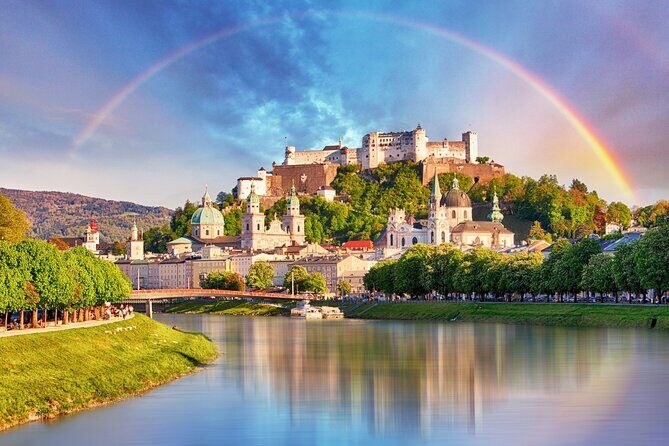
- Mirabell Gardens: free entry for the iconic floral layouts and the Sound of Music filming spot.
- Mozart’s sites without the long lines: you’ll see Mozart-related buildings and key viewpoints, with entry often left to you.
- Baroque Salzburg in compact form: Cathedral area, Domplatz, and Residenzplatz give you instant style and scale.
- River views from the Makartsteg Bridge: ideal for photos over the Salzach.
- Modern art in the old center: Kapitelplatz’s Sphaera golden globe lets you see a newer Salzburg layer.
- Strong guidance when the guide projects well: many people specifically highlight knowledgeable, entertaining guides and good crowd control.
Start at Salzburg Congress and Let the City Set the Tempo
You begin near Salzburg Congress at Rainerstraße 3, by the small park area called Kurgarten, close to Mirabell Palace. That’s a smart place to start because you’re already near the core walkable attractions, so the tour doesn’t feel like a long warm-up.
This is also where you learn how the day will move: you’ll cover a lot of ground in about two hours, with frequent short stops for explanation and photos. The group limit is up to 25, which is small enough to work, but big enough that you’ll still want to keep your spot when the guide speaks.
You can also read our reviews of more walking tours in Salzburg



Mirabell Palace and Gardens: Baroque Looks With Movie-Scene Timing
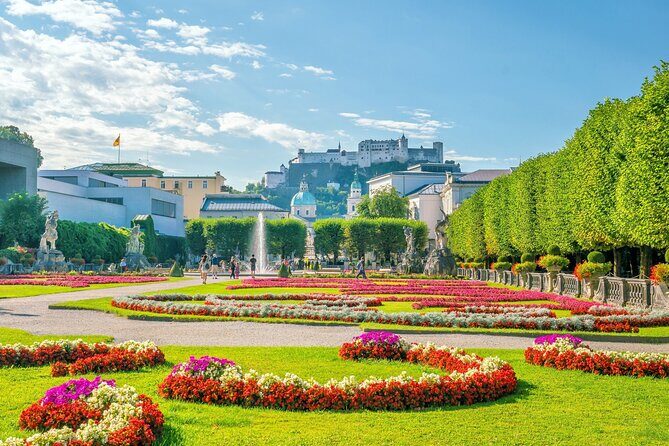
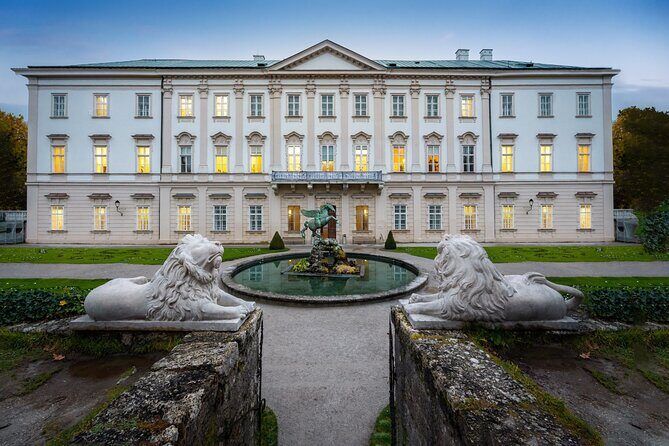
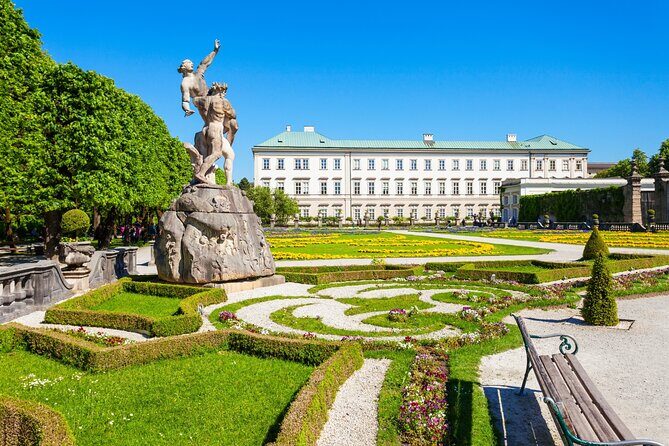
Your walk quickly turns into classic Salzburg beauty at Mirabell Palace. Even if you don’t go inside (entry isn’t included here), the building’s Baroque presence is a great “anchor” moment. It helps you calibrate what you’re seeing later in the Old Town—this city loves symmetry, drama, and detail.
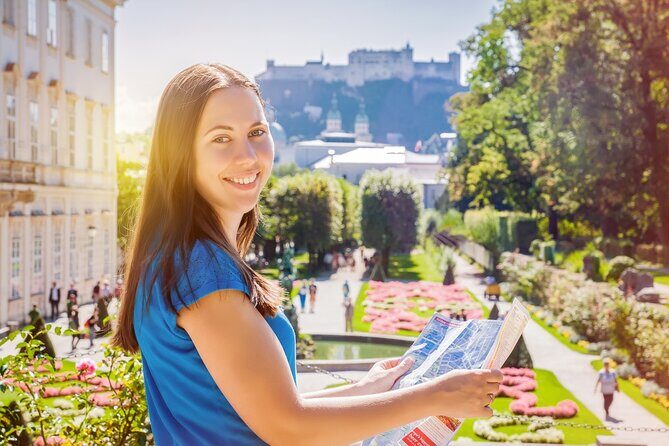
Then you’ll hit Mirabell Gardens, and this is one of the strongest reasons to book. The gardens are free to enter, and they’re easy to enjoy at a relaxed walking pace because the paths are designed for sightseeing. The filming location tied to The Sound of Music is a popular photo target, and it’s one of those scenes where knowing the context makes the look feel even more fun.
Season matters. In winter, parts of the gardens can be closed, and the operator notes that during the Christmas-market window (21.11 to 05.01), you’ll have a chance to visit a local market instead. If weather turns extreme (like snow), you’ll get an alternative route for safety—so you’re not stuck in a holding pattern.
Mozart and Music Institutions: Seeing the City’s Sound System

After Mirabell, the route shifts from palace grandeur to music-school Salzburg. You’ll pass Mozarteum University Salzburg, Salzburg’s prestigious music school carrying Mozart’s name. Even from the sidewalk, it signals what you’ll feel across the city: music isn’t a museum topic here. It’s part of the present-day identity.
Next, you’ll walk past the Salzburg Marionette Theatre exterior. You won’t see a performance on this walk, but the building tells you a lot about Salzburg’s long-running craft culture. It’s also the kind of stop that makes you think: this is where art traditions stay alive, not just where tourists pass through.
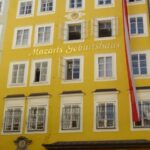
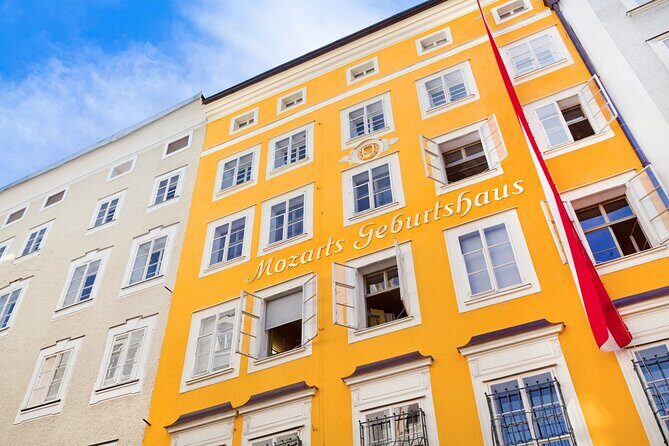
Then comes the Mozart-focused heart. You’ll view Mozart’s residence (Mozart Wohnhaus) on Makartplatz, where Mozart lived and composed many works. Entry isn’t included on this tour, but the outside view helps you connect his story to the actual streets you’re walking. You’ll also see Mozart’s birthplace later, again with museum entry not included, so you can decide whether you want to add time inside.
This is a nice balance: you get context fast, and you’re not forced into museum pacing when you might prefer walking and photos. If you do want more time in Mozart spaces, you’ll know where to return.
Cross Makartsteg and Walk the Salzach for Real Old Town Views
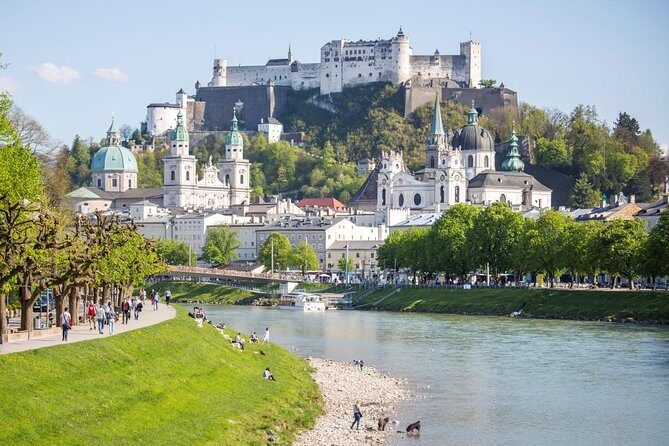
You’ll cross Marko-Feingold-Steg, the pedestrian bridge with classic postcard angles over the Salzach River. This is one of the best spots for a pause, because the river view instantly shows you why Salzburg is visually dramatic. The water gives depth to the old town skyline, and Hohensalzburg Fortress sits up on the hill as the constant backdrop.
From there, you’ll stroll along the Salzach river promenade. The walking is easy, and it works well as a mental breather between architecture stops and more information-heavy moments. If your phone camera eats battery quickly in daylight, this section is still worth slowing down for a couple of shots.
Getreidegasse, Alter Markt, and Residenzplatz: Where the Streets Still Function
Now you’re in the Old Town’s everyday rhythm. Getreidegasse is the iconic shopping street with historic charm and distinctive wrought-iron signs. It’s not just pretty; it helps you understand why Salzburg feels intimate even when it’s crowded. The street layout pulls you into small discoveries—alleys, storefronts, and sudden views into courtyards.
Next you’ll pass Alter Markt, described as Salzburg’s oldest market square. A market square is a useful thing to learn early on because it acts like a compass. From there, you can picture where food, cafés, and street life naturally gather.
Then comes Residenzplatz, a bustling historic square lined with Baroque buildings, lively cafés, and street performance energy. Even if you’re not stopping for a long sit-down, it helps you feel the scale of the center and what kind of atmosphere you’ll encounter outside the tour.


Salzburg Cathedral and Domplatz Area: Baroque Grandeur You Can Walk Into
You’ll reach the big architectural moment: Salzburg Cathedral. Here, you can enter the cathedral as part of the experience, and it’s noted as not included for ticketing on the tour itself, so you’ll want to be ready to pay separately if you haven’t already. Inside, the emphasis is on the Baroque design style—grand dome, frescoes, and the cathedral’s long musical connection.
Right around the Domplatz area, you’ll also spend time near Mariensäule, the 17th-century Marian column. These are the kinds of details that can disappear if you’re rushing, but on a guided walk you get the “what you’re looking at” explanation that makes the sculptures feel meaningful.
This segment is also where crowd density matters. The operator notes that public squares can get very crowded during special events like musical performances and festivals. If you’re visiting during peak season or near big concerts, consider bringing patience—and expect that your best photos may happen just after the group clears a bottleneck.
Kapitelplatz: From Sphaera to the Golden Globe Spin
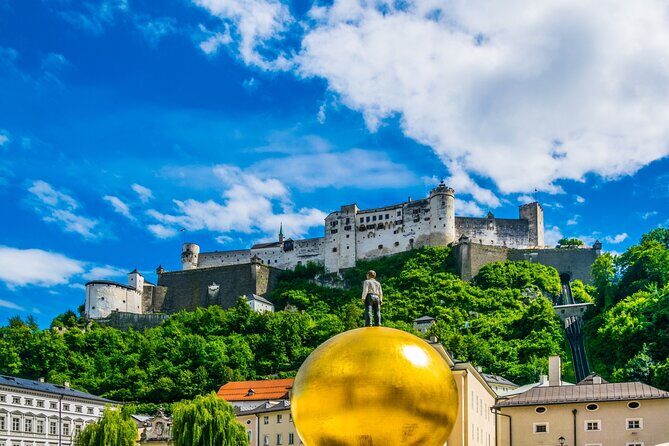
A quick jump in vibe brings you to Kapitelplatz and the installations tied to it. You’ll see the contemporary art piece Sphaera, a golden globe sculpture that spins atop a column. It’s a playful contrast to the Baroque you’ve just been absorbing, and it’s exactly the kind of stop that makes the Old Town feel like a living place, not a static postcard.
You’ll also be near Kapitelschwemme, a fountain described as ornate and dating back to medieval times. This helps you connect two time periods in one location: modern sculpture in the same space as older waterworks.
If you like photography, this is a good place to slow down. The globe’s movement and the surrounding stone architecture give you a mix of classic and quirky for your camera roll.
Fortress Hohensalzburg Photos at the Finish Line
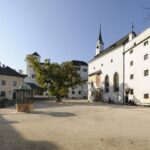
You end with a scenic photo stop area associated with Hohensalzburg Fortress. Even though fortress entry isn’t included in the walk itself, the viewpoint is a payoff moment. You finally see the skyline anchor that’s been sitting above town like a visual constant.
This ending also helps you plan the rest of your day. If you want the fortress experience, you’ll know where to aim for, and you can decide whether to schedule it for later based on your energy level. If you don’t, you still leave with a clear mental map of where it sits in relation to the squares and bridges you just walked.
Price and What $39.22 Really Buys You
At $39.22 per person for about two hours, you’re paying for guided routing, interpretation, and the practical shortcut of seeing major landmarks without spending your entire day figuring out logistics. You’re not paying for every museum ticket, though—several entries are explicitly not included, including Mirabell Palace and multiple Mozart-related museums, plus places like Mozarteum and the Marionette Theatre are treated as pass-by exterior sights.
The value comes from the mix of free stops and guided context:
- Mirabell Gardens is free (great for bang-for-time).
- Multiple squares and photo points are free and don’t require extra tickets.
- You get a route that links Mozart, baroque architecture, river scenery, and city layout in one go.
If you’re a first-time Salzburg visitor and you want a clean way to orient, this is a strong use of money. If you already know the city well and plan to do several museum entries on your own, you might get less out of a guided overview—still, the positioning and viewpoints are helpful.
Pace, Group Size, and Hearing the Guide
This walk is designed for outdoor movement through the Old Town, which can mean uneven surfaces and tight corners. The operator recommends comfortable shoes, and that’s not just advice—it matters when you’re trying to keep pace while taking photos and listening.
Group size is up to 25, and that’s where your experience can swing. Many guests praise how guides managed crowds and kept people on schedule, but a few feedback notes point to situations where it was hard to hear the guide due to crowding or one person taking most of the time. If you want the best shot at a smooth experience, show up early, stay close to the guide, and don’t get trapped behind slower walkers.
Also, the tour is not suitable for people with disabilities, and there’s no luggage storage for umbrellas, extra bags, scooters, or baby carriages. Bring only what you can comfortably carry.
Should You Book This Salzburg Old Town Walk?
Yes, if you want a fast, friendly route that connects Mozart locations, baroque highlights, and Mirabell Gardens into one easy plan. It’s especially worth it if you like having a guide point out what matters so you can decide later where to go deeper with your own time—like cathedral interiors or Mozart museum stops.
Book it with caution if you’re very sensitive to crowd noise or you need a slower, more accessible pace. And if you already plan to spend hours inside multiple museums, treat this as your orientation day, not your full sightseeing day.
If your goal is to leave Salzburg with clear next steps and a mental map—plus a few unforgettable photo moments—this is a solid choice at a fair price.
FAQ
How long is the Salzburg Old Town Walking Tour?
It’s listed as about 2 hours.
Is the tour offered in English?
Yes, it’s offered in English.
Do I need to buy tickets for Mirabell Gardens?
No. Mirabell Gardens has free entry on this tour, with seasonal notes about partial winter closures and alternative routing during extreme weather.
Are Mozart museums included in the price?
Mozart-related museum entries (like Mozart’s residence and Mozart’s birthplace) are not included on this tour, so you’d need to pay if you want to go inside.
What is the group size limit?
The tour has a maximum of 25 participants.
Is the tour accessible for people with disabilities?
No. It’s stated as not suitable for people with disabilities.
What should I wear or bring for the walk?
Wear comfortable shoes because there are uneven surfaces. Also note there is no luggage storage, so bring only what you can carry, and don’t bring baby carriages or pets.