REVIEW · SALZBURG
Salzburg Oldtown: Sightseeing Walking Tour with Licensed Local Guide
Book on Viator →Operated by Free Walking Tour Salzburg · Bookable on Viator
Salzburg feels big until you know the walkable shape of it. This 1 hour 30 minute Old Town loop is a fast orientation on foot, built around Mozart landmarks, squares, and classic Salzburg photo spots. It’s offered in English with a licensed local guide, plus you get a printed city map to keep after the tour.
I like that the pace is brisk but not rushed, with short stops where you actually get what to notice next. Two things really work for most trips: you see both the famous buildings and the less-obvious details (like the canal/modern-art angles and a monastery founding story), and you end up in the right area for more wandering. One possible drawback: you mostly admire exterior façades and courtyards rather than doing lots of church interiors during the walk.
In This Review
- Key highlights and what makes them useful
- Why a 90-Minute Old Town Loop makes Salzburg easier
- Meeting at Spirit of Mozart and ending near Mozartplatz
- Mozart Wohnhaus across the square: where the story begins
- Mirabell Garden glimpse, then Getreidegasse for the Mozart street feel
- Universitätskirche and the concert hall: churches and classical Salzburg
- St. Peter’s Abbey courtyard, Salzburg Cathedral façade, and fortress views
- Makartsteg and the river: love locks plus good orientation
- Mozartplatz statue: the 19th-century cult angle
- What you get for the price: map, postcard, and practical value
- Pacing, group size, and how to dress
- Who this tour suits best (and who might want to skip it)
- Should you book this Salzburg Old Town walking tour?
- FAQ
- What is the duration of the Salzburg Old Town sightseeing walking tour?
- Is the tour offered in English?
- Where do I meet the guide, and where does the tour end?
- Do I need admission tickets for the stops?
- How big is the group?
- Is the tour suitable for most people, and are service animals allowed?
Key highlights and what makes them useful
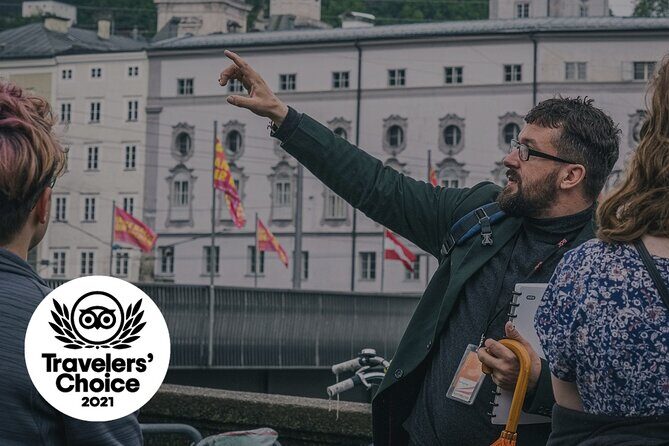
- A guided Mozart trail that links residence sites, birth-place area streets, and squares in a way that makes the map click
- Mirabell Garden time-saving: you get the quick context now, then can return later when you have more time
- Music culture stops that explain how the Salzburg Festival ties to the city’s big concert hall
- Old town views built in: fortress sightlines, river bridges, and Residence Square landmarks happen naturally on the route
- Take-home navigation help with a printed Salzburg city map plus a postcard
Why a 90-Minute Old Town Loop makes Salzburg easier
Salzburg is one of those cities where you can wander for hours and still feel like you’re crossing the same streets in circles. A short guided walk like this helps you “read” the old town. You learn what’s where, why it matters, and which places deserve extra time after you finish.
The structure is also smart for real vacations. At about 1 hour 30 minutes, it fits the morning before a long lunch, or the afternoon when you want a clean starting point. You’re not stuck with a half-day commitment, and you get enough context to make the rest of your sightseeing feel intentional.
The tour is also built around key Salzburg anchors: Mozart-related spots, the river crossings, major squares, and a couple of “look-and-learn” religious and cultural stops.
You can also read our reviews of more walking tours in Salzburg



Meeting at Spirit of Mozart and ending near Mozartplatz
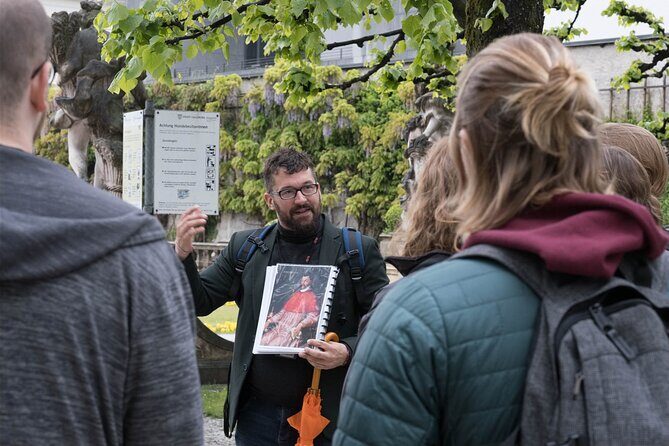
You start at Spirit of Mozart, Imbergstraße 33A, in central Salzburg. The end point is Mozartplatz, right by Salzburg Cathedral and Residenzplatz Square—the core of the Old Town.
That end location matters. When the tour finishes, you’re not dumped somewhere far away. You’re dropped into the area where you can keep walking toward shops, viewpoints, and cafés. The route is also designed around a short, practical backtrack if you want to return to the meeting point area later.
In real life, that reduces decision fatigue. You spend less time staring at maps and more time simply going where you want to go next.
Mozart Wohnhaus across the square: where the story begins

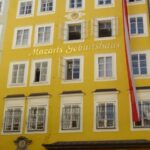
The walk kicks off at Mozart Residence (Mozart Wohnhaus). You’re looking at the house where Mozart lived from the age of seventeen. The guide points it out from the opposite side of the square, which is a subtle but useful choice—standing in the right place helps you take in the street energy around the landmark, not just the building itself.
You’ll also hear why Salzburg is sometimes called the Rome of the North. That line isn’t just trivia. It gives you a lens for the rest of the tour: Salzburg’s old-town style is meant to feel monumental, even when the streets are compact and walkable.
If you care about understanding a city beyond photos, this opening is a strong start. It tells you how to interpret what you’re seeing as you move.
Mirabell Garden glimpse, then Getreidegasse for the Mozart street feel
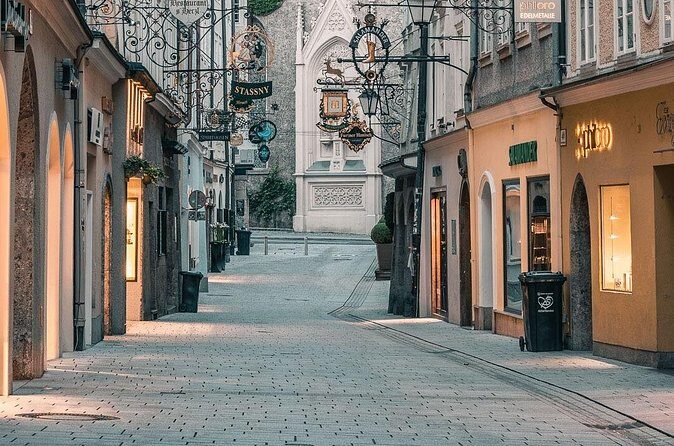
Next comes Schloss Mirabell and Mirabellgarten. You take a quick glance at Mirabell Garden and get the historical context—then the advice is practical: come back later for a fuller garden visit when you have time to slow down.
That “glance now, explore later” approach is a good travel habit. Gardens look best when you’re not rushing, but you still want the orientation first. This stop helps you place Mirabell in your day without pretending you’ll fully enjoy it in a few minutes.
After that, you move toward Getreidegasse, described as Salzburg’s most famous street. You cross the river and walk along Getreidegasse toward Mozart’s birthplace area. This is where the city starts to feel like a story you can follow on foot—street names and landmarks stop being random, and start connecting.
One small consideration: the walk is compact and busy-looking in places. If you dislike crowds, plan for it. The payoff is that you learn the “flow” of central Salzburg rather than isolating yourself in one quiet corner.
Universitätskirche and the concert hall: churches and classical Salzburg
At Universitätskirche, the guide explains the University Church as the last historic building in Salzburg, and you can enter as a group if it’s not closed. The interesting twist is that it’s not used as a church anymore, so you’re likely to experience a different kind of interior visit than you would at an active parish.
Even if you only get a brief interior look, it helps you understand Salzburg’s layering: university life, historic buildings, and changing uses over time.
Then you head toward Wilhelm-Furtwängler-Garten (part of the former monastery garden and now connected to the university). Here the tour also shifts into modern Salzburg context—talks about the university, modern art, and the canal system of the city before moving on.
That set-up makes the next stop more meaningful. The route leads you naturally to Grosses Festspielhaus, the big concert hall tied to the Salzburg Festival. You hear that the festival is a major classical music event, and that during the summer season, most concerts and opera happen in this hall for six weeks.
If you’re into music, this stop gives you more than location. It explains why this building is a focal point for the city each summer.
You can also read our reviews of more guided tours in Salzburg





St. Peter’s Abbey courtyard, Salzburg Cathedral façade, and fortress views

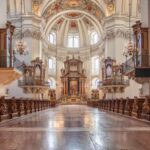
At Erzabtei Stift St. Peter Salzburg, the story gets deeper. Saint Peter’s is the place where Salzburg was founded in 696, and it’s described as the oldest monastery in the German-speaking region. You do not enter the church or the cemetery, because the monastery and church are still active and guided tours are not allowed there.
Instead, you visit the yard of the monastery and the guide shares what they know about the place. This is one of those trade-offs that’s worth understanding. You don’t get a long interior tour, but you still get the historical weight and the sense of place, without pushing against rules.
The next stop is Salzburg Cathedral. You’ll admire the façade and learn about the building’s history, but you won’t enter the cathedral during the walk. That’s actually helpful if your schedule is tight—you get the big-picture exterior understanding now, and you can decide later if you want the interior visit on your own time.
As you continue, you reach Kapitelplatz & Kapitelschwemme, where you get a view toward Hohensalzburg fortress and also catch notes about modern art and the oldest bakery of Salzburg. This is where the Old Town really starts to “feel like Salzburg,” because you’re seeing the fortress presence hovering over the city while also noticing everyday-life details.
Makartsteg and the river: love locks plus good orientation
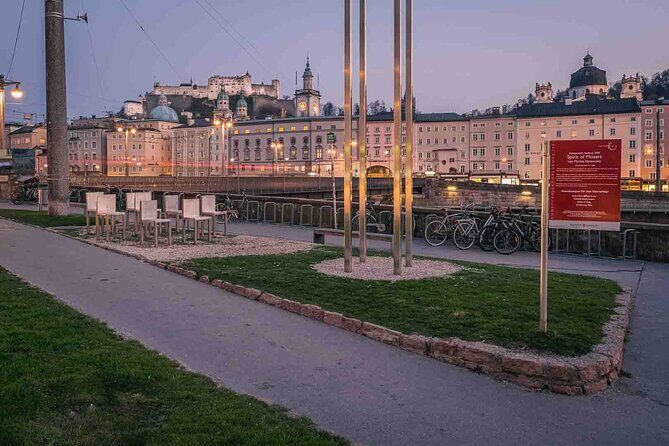
Makartsteg is next—this is the love lock bridge of Salzburg. You pass the river here and talk about the bridge, the river, and the buildings lining the water.
The bridge stop can sound like a quick photo moment, but it’s useful. Once you understand where the river runs and how the bridges connect the streets, the whole city map becomes easier. You stop feeling like you need to memorize routes and start feeling like you can navigate by geography.
Then you move to Residenzplatz, the main square and the heart of the old town. The square is called Residenzplatz because the archbishop’s residence was located here historically. If you’ve ever wondered why this city has such strong architectural power in a small area, this is the kind of explanation that makes it click.
Mozartplatz statue: the 19th-century cult angle
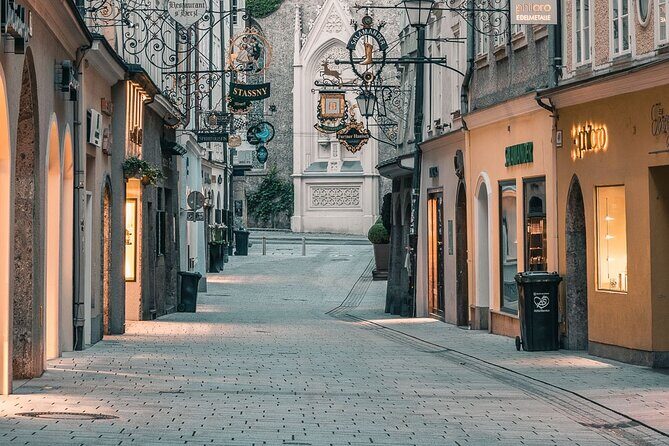
The final square stop is Mozartplatz. This is where the Mozart cult began in the 19th century, when they erected the Mozart statue. You’ll look at the statue and hear about the mystery surrounding Mozart, explained in the guide’s own way.
This ending works well because it ties the whole walk together. Earlier you learned about Mozart’s residence and street locations. Now you see how the city later turned Mozart into a public symbol.
Once you’re at Mozartplatz, you’re positioned right by the cathedral and Residenzplatz Square, so it’s easy to keep exploring without backtracking.
What you get for the price: map, postcard, and practical value
The price is $10.89 per person for an English walking tour around major Old Town highlights. You also get a mobile ticket, plus a walking tour city map and a postcard.
The best value piece is that most stops are presented without added admission costs in the tour flow. Several listed stops note free entry for the tour experience, and even when you don’t go inside, you still get the storytelling and sight interpretation that helps you visit later.
This is also a good deal for the time. At about 1 hour 30 minutes, you’re paying for guided context, not just walking time. In a city like Salzburg, that matters. If you spend your first morning without guidance, you often end up re-reading the map later and missing the city’s connections.
Cancellation is flexible too: you can cancel up to 24 hours in advance for a full refund. If your day plan changes, that reduces stress.
Pacing, group size, and how to dress
The maximum group size is 25. That’s large enough to have energy, but small enough that the guide can keep an eye on people and keep you moving at a good pace.
The stop times are short—often around five minutes—so the tour stays focused. It’s not a slow “coffee and chat” walk. You’ll move briskly between places, which is perfect if you want orientation and fast context.
Because it’s an outdoor walking tour, dress for the weather. Salzburg can feel chilly even when the sun tries to help, so bring layers you can adjust while you walk.
Who this tour suits best (and who might want to skip it)
This is a strong fit if you:
- want a clean orientation to Salzburg’s Old Town
- like Mozart and want a route that connects Mozart landmarks rather than visiting them randomly
- prefer walking between squares and river views
- want a printed map you can use immediately after
It’s less ideal if you:
- want long, uninterrupted time inside churches or historical interiors during the tour
- dislike exterior-only sightseeing (since the cathedral and some major religious sites are typically not entered on this walk)
- need a fully accessible, low-movement experience beyond a standard urban walk (the tour says most people can participate, but it is still a walking format)
If you do want interiors, treat this like your first chapter. You’ll know what to return to afterward, especially the spots where the guide tells you to come back and look inside later.
Should you book this Salzburg Old Town walking tour?
Yes, if you want a smart start to your Salzburg day. For roughly $10.89 and about 90 minutes, you get a guided path across the Old Town’s biggest anchors—Mozart, Mirabell, Getreidegasse, key squares, river views, and major cultural landmarks—plus a take-home map that keeps paying off after the tour ends.
Book it especially if your time is limited. It’s the kind of experience that makes your self-guided wandering after feel easier and more connected. If you’re planning to return to the cathedral interior, Mirabell gardens, or monastery areas on your own, this tour helps you choose where that extra time will matter most.
Just go in expecting a guided orientation with exterior views and short stops—not a long interior day. If that fits your style, you’ll likely be glad you did it.
FAQ
What is the duration of the Salzburg Old Town sightseeing walking tour?
The tour lasts about 1 hour 30 minutes.
Is the tour offered in English?
Yes, the tour is offered in English.
Where do I meet the guide, and where does the tour end?
You meet at Spirit of Mozart, Imbergstraße 33A, 5020 Salzburg, Austria. The tour ends at Mozartplatz, Mozartpl., 5020 Salzburg, Austria.
Do I need admission tickets for the stops?
The tour lists stops with free admission tickets, and the focus is mainly on guided viewing of sights during the walk.
How big is the group?
The tour has a maximum of 25 travelers.
Is the tour suitable for most people, and are service animals allowed?
Most people can participate. Service animals are allowed, and the meeting point is near public transportation.