REVIEW · VIENNA
Vienna: City Highlights Guided Bike Tour
Book on GetYourGuide →Operated by My Vienna Tours · Bookable on GetYourGuide
Vienna changes when you pedal through it. This 3-hour guided bike tour links the city’s big sights with stories ranging from Roman roots to the darker 1938 moment at Heldenplatz. You’ll get central Vienna in motion and a guide who keeps the history tied to what you’re seeing right then.
I love the way the route mixes power, culture, and spectacle. You’ll cycle past Vienna’s civic and governmental landmarks, then get a walk-in feel at St. Stephen’s Cathedral and the Spanish Riding School area, where the pause from biking makes the details stick.
One consideration: the ride is easy-going, but bikes can be a little worn, and some riders note helmets weren’t commonly used. If you want maximum comfort and safety, bring your own helmet and expect a few “quick photo, keep moving” moments.
In This Review
- Key things that make this bike tour work
- Getting oriented fast on Piaristengasse
- City Hall and Parliament: watching Vienna’s governance go by
- Hofburg Palace: Habsburg power in everyday form
- Kunsthistorisches Museum and the State Opera: learning by scale
- St. Stephen’s Cathedral and the vibe of Viennese everyday freedom
- Spanish Riding School: classical dressage without the long detour
- Heldenplatz and the 1938 speech moment you can’t avoid
- Pace, bike condition, and group size in real life
- Guides are the real product here
- Value check: is $55 for three hours a good deal?
- Should you book the Vienna City Highlights Guided Bike Tour?
- FAQ
- How long is the Vienna City Highlights Guided Bike Tour?
- Where is the meeting point?
- What’s included in the price?
- Are drinks or snacks included?
- What languages is the tour guide available in?
- Is the tour suitable for children?
- What’s the cancellation policy?
Key things that make this bike tour work
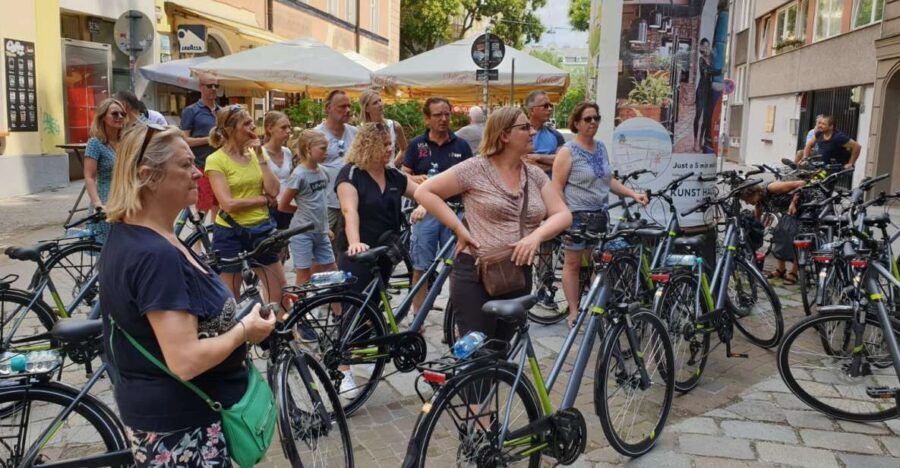
- Guides with real energy: names like Carin, Karin, Anita, Marcelo, Eddie, and Hein show up in reviews, and the best parts are their stories and pacing
- A smart mix of stops: Hofburg Palace, the Spanish Riding School, St. Stephen’s, and Heldenplatz—plus time on major civic buildings
- History you can place: Roman roots, World War context, and a direct 1938 Heldenplatz reference that turns the ride into a story map
- Flat, city-friendly cycling: Vienna is described as mostly flat with only a few small end-of-tour hills
- Great for first-timers: you cover a lot quickly without feeling rushed, especially with a small group
- Plan around photo expectations: a few reviews say photo opportunities weren’t always ideal or the group wasn’t always close to every best angle
Getting oriented fast on Piaristengasse
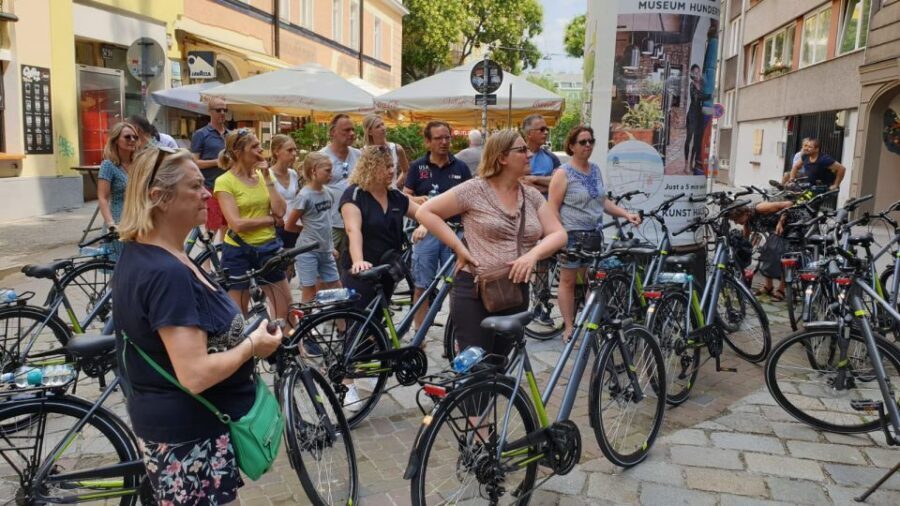
You start at Piaristengasse 56–58, and you’ll spot the meeting point by looking for the My Vienna Tours flag. This matters more than it sounds: Vienna’s center can feel “pretty big” when you’re on foot, and a fixed start keeps everyone aligned.
The tour runs for 3 hours, and the format is a guided bike ride through the center with a couple of short walk breaks. You’ll move through key areas at a comfortable pace, which is part of why so many people rate this tour highly.
Also, double-check your expectations on refreshments. Drinks and snacks aren’t included, so if you’re the type who needs a caffeine break, plan ahead. One review notes an optional stop for coffee, but you shouldn’t count on it as a guarantee.
Finally, languages are practical: the live guide is available in English, German, and Dutch. If you’re traveling with someone who prefers German or Dutch, that’s a real advantage for feeling included rather than guessing along.
You can also read our reviews of more cycling tours in Vienna
City Hall and Parliament: watching Vienna’s governance go by
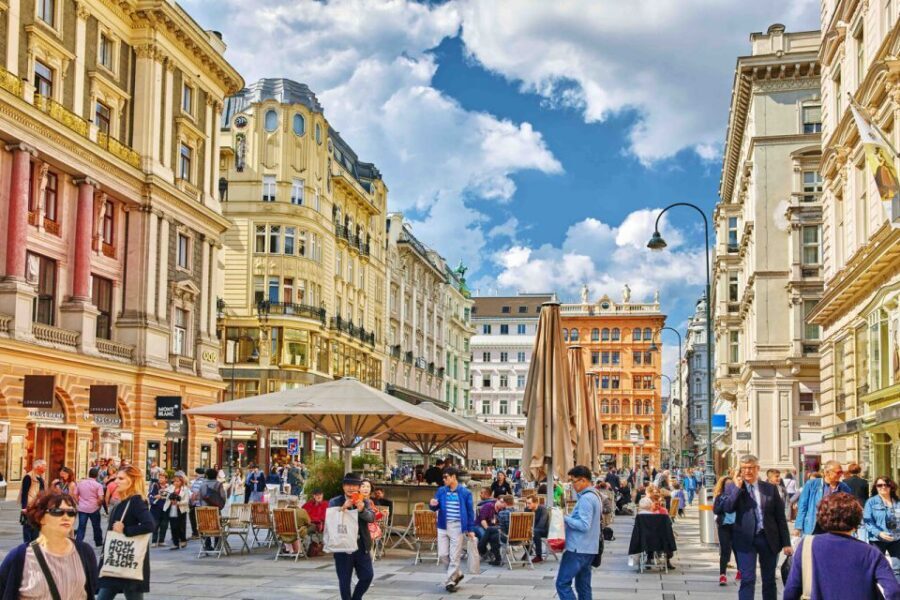
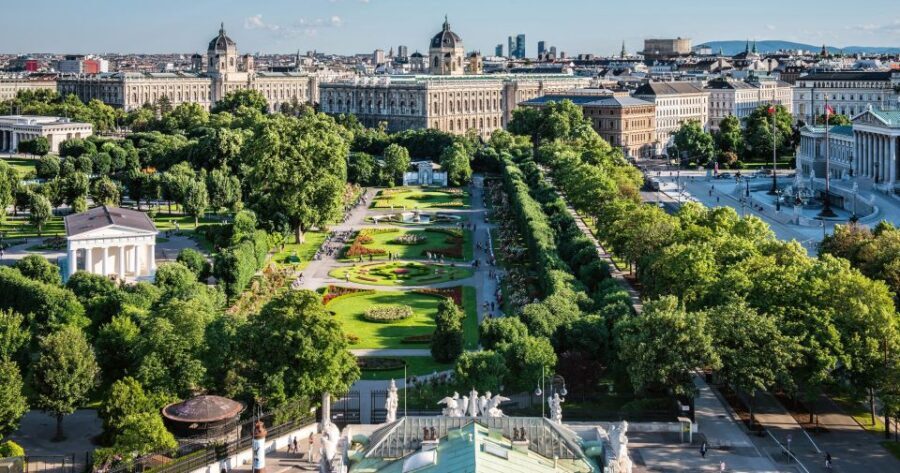
Early on, you’ll get guided stops and narration around Vienna’s civic and political landmarks, including Vienna City Hall and the Austrian Parliament Building. Even if you’ve seen photos of these buildings, cycling past them with a guide changes the experience: you understand why the architecture and street setting matter, not just what the building looks like.
What I like about this segment is the way it frames “Vienna as a place that runs on institutions.” You’re not stuck in one museum room where the context fades. Instead, the guide’s stories connect the surrounding streets, the scale, and Vienna’s long habit of turning governance into public spectacle.
There’s also a practical benefit: this is where you learn how the group rides. You pick up the rhythm—stop signals, regroup spots, and how the guide keeps you moving without making it stressful.
If you’re sensitive to city cycling, this is the moment to gauge comfort. Vienna’s cycling is described as manageable and generally flat, but you’re still in an urban environment where you need to stay alert.
Hofburg Palace: Habsburg power in everyday form
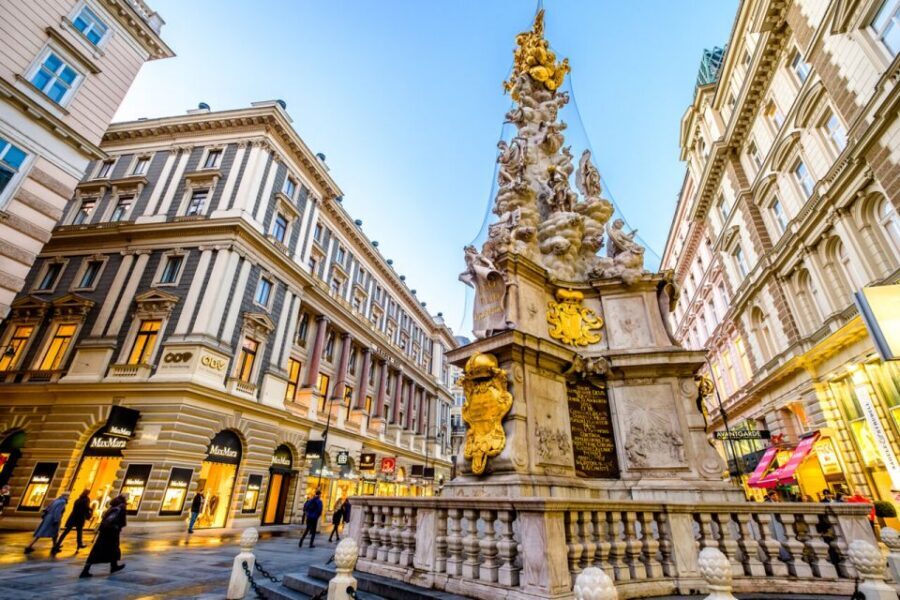
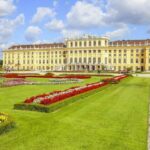
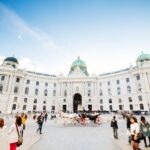
Next comes Hofburg Palace, and this stop carries the heavy “imperial residency” weight. The tour’s description frames it clearly as a palace built in the 13th century and a former residence of the princes of the Habsburg dynasty. That’s exactly the kind of anchor you want when you’re trying to understand why Vienna feels like it’s constantly referencing its own past.
I like that the guide doesn’t treat Hofburg as a standalone landmark. The narration is meant to build a timeline as you ride—so your mental picture of Vienna’s rulers grows alongside the streets you’re passing.
A common theme in the reviews is that guides keep the details engaging, whether that’s through architecture talk or political context. One reviewer specifically praises the guide’s historical and architectural passion, and that kind of enthusiasm matters here. Hofburg can feel grand and distant if you’re just photographing. With a guide, it becomes understandable.
If you’re prone to museum overload, this is a good balance. You’re not waiting in a line for long; you’re learning while moving, with short guided moments that keep the pace light.
Kunsthistorisches Museum and the State Opera: learning by scale
After Hofburg, you’ll cycle through the areas around Kunsthistorisches Museum and the Vienna State Opera. The tour provides guided time at both, and that’s the key. Even when you don’t go deep into one specific room, seeing major cultural buildings up close gives you a feel for Vienna’s idea of public art and public performance.
This segment also helps you visually connect “culture” to “status.” In Vienna, art and ceremony are never far from politics, and cycling through these spaces makes that connection easier than jumping between far-flung sites later.
From a rider’s point of view, these stops also break up the bike time. You’re spending time upright and looking, not just concentrating on the handlebars for three straight hours.
If you’re the type who wants long stops to take photos, pay attention to what some reviewers complained about: a few people felt photo spots weren’t always the best or the group wasn’t brought close enough for their preferred angles. That doesn’t ruin the tour, but it does mean you should bring a flexible mindset—and maybe save your most patient photography for after the tour.
St. Stephen’s Cathedral and the vibe of Viennese everyday freedom
Then you reach St. Stephen’s Cathedral, and the tour shifts into a walk. The tour description calls the cathedral a beloved feature of Viennese freedom, and that phrasing is useful. St. Stephen’s isn’t only a pretty skyline marker; it’s treated here as a symbol you can understand through the surrounding streets and the stories the guide shares.
This is also where the tour becomes more than “see big buildings.” You’re learning how Vienna’s identity shows up in religious architecture, public space, and what people choose to call meaningful.
One bright note: the tour also references Sacher Café, known for its chocolate cake. The data doesn’t say you’ll have a full sit-down there, but it does suggest you’ll connect the route with one of Vienna’s most famous food icons. Even if you don’t buy cake on the spot, having the landmark “in your mental map” helps you know where to go later when you have time to enjoy it properly.
Practical tip: if you’re hoping to eat afterward, don’t go all-in on pastries right before the tour ends. You’re biking for a while, and one sweet stop is enough.
You can also read our reviews of more guided tours in Vienna
Spanish Riding School: classical dressage without the long detour
Your next highlight is Spanish Riding School, with guided time and a walk. The tour description frames it as a center for classical dressage, which is exactly the kind of cultural detail that makes Vienna feel specific rather than generic.
This is a smart stop for a bike tour because it gives you variety. You go from civic buildings and palaces to a place associated with tradition, training, and performance. The guide’s explanations help you place the discipline inside Vienna’s broader cultural identity.
Also, the walk segment helps you slow down just enough to notice what you’d normally miss from a bike seat. Even if you’re not there for a show, the narration makes the site feel connected to the city instead of like another photo stop.
One small caution: if you’re chasing the most dramatic palace interiors or dressage demonstrations, a highlights bike tour won’t replace a full ticketed experience. Think of this as the orientation layer that tells you where to go next.
Heldenplatz and the 1938 speech moment you can’t avoid
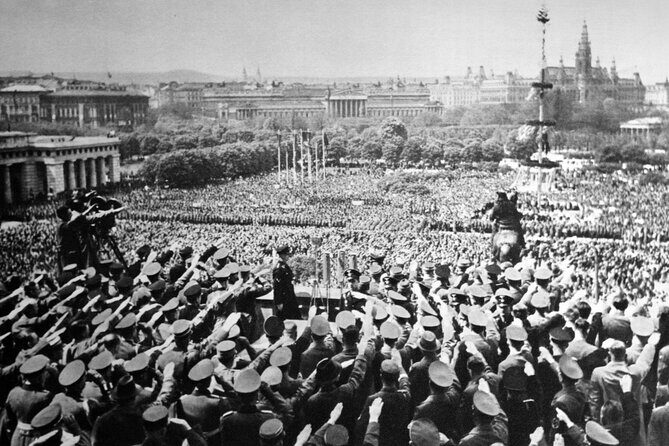
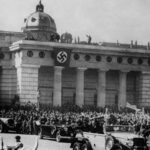
The tour ends with the weightier side of Vienna. You’ll ride through and walk at Heldenplatz, described as a place where Adolf Hitler gave his speech in 1938. The bike tour format might sound like a “happy sightseeing loop,” but this stop is used to confront real history in a real public space.
I appreciate that the tour’s story scope includes Roman roots and involvement in the world wars. That’s not just trivia. It gives you a framework for why Vienna’s monuments, institutions, and even street layout feel layered.
This is the part that turns “tour stops” into understanding. Once you’ve heard the guide connect the narrative to the setting, you start to notice how public squares function as stages for power—then and now.
If you’re sensitive to dark history, it’s still handled as part of a broader historical story. You’ll want to be mentally prepared, and the format keeps it grounded in place rather than floating as abstract lectures.
Pace, bike condition, and group size in real life
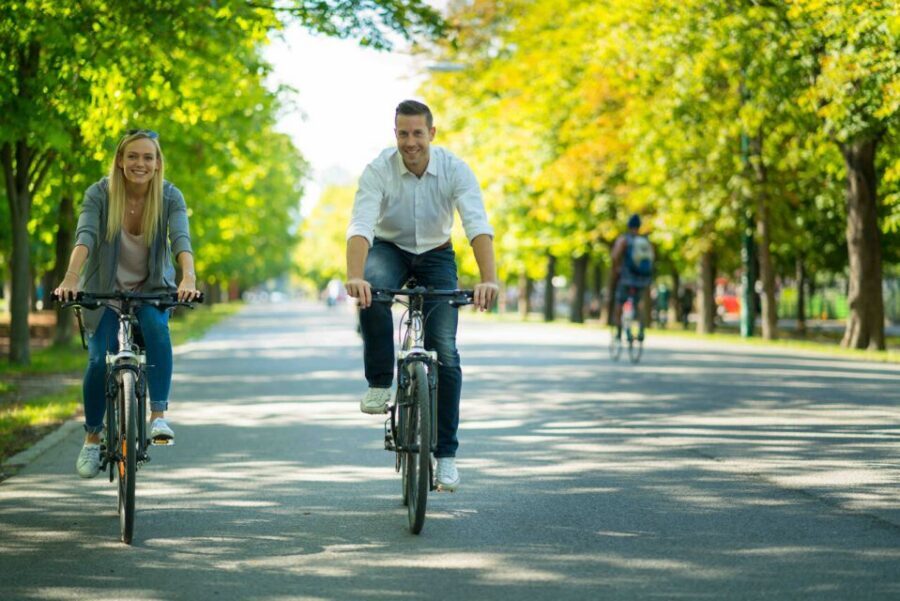
On paper, this sounds simple: bike for three hours, guided all the way. In practice, the comfort comes from how well the group is managed, and reviews are consistent about this.
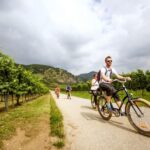
The ride is repeatedly described as not strenuous due to Vienna’s relatively flat streets, with only a few small hills near the end mentioned in at least one review. That means most fit adults should feel comfortable, as long as they’re okay riding in a city environment.
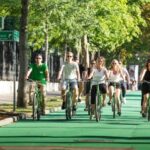
Group size seems to vary. One review notes a small group of 6 growing to 8; another mentions a group size of 11, and one comment complains that a tour group of 15 was too many for the feel of the experience. If you’re someone who prefers calm, close control, you may prefer the smaller end.
Bike condition also varies. A couple of reviews mention bikes weren’t in the best condition or were a bit tired, though still functional. Another review calls the bikes vintage, which they found fun. My advice: test your bike seat and brakes early, and if anything feels off, speak up immediately.
One safety note that comes up in reviews: helmets weren’t commonly worn. The tour data doesn’t state helmets are provided, so if you ride regularly, bring your own. It’s an easy way to upgrade comfort without changing anything else about your day.
Finally, photo expectations: a few reviews say there weren’t enough or the stops weren’t always at the best angle. If photos matter a lot to you, plan to do a second round on your own afterward for the exact viewpoints you care about.
Guides are the real product here
The star of this tour is the guide. You’ll see names like Carin, Karin, Anita, Marcelo, Eddie, Hein, Franz, and Erin in verified feedback, and the common thread is clear: guides bring stories with energy, answer questions, and make the route feel like a guided walk through Vienna’s meaning.
Several reviews praise how the guide manages the group well—helping everyone stay together and keeping the mood relaxed. Others highlight specific storytelling choices, including emphasis on the Jewish contribution to the city’s history, and that kind of careful selection can make a tour feel more complete than a standard “check the box” circuit.
You’ll also get direct help with recommendations beyond the sites in some feedback. That’s useful because Vienna is large, and a good guide can point you toward where to eat or what to do next.
If you’ve ever been on tours where the guide talks at you without interaction, one review wished for more engagement through questions and a bit more group interaction. That’s not a deal-breaker, but it’s a heads-up: the tour style seems more focused on narration than on turning the whole ride into a classroom discussion.
Value check: is $55 for three hours a good deal?
At $55 per person for 3 hours, the value depends on what you want out of Vienna on day one.
Here’s why I think it can be a solid deal:
- You’re not just riding. You’re getting guided time at major stops and walks at key sights.
- Cycling helps you cover ground that would take much longer on foot, especially across a city center route.
- The tour includes the bicycle and tour guide, so you’re paying mainly for the guidance and route planning.
Is it the cheapest option? No. But cheap tours often mean generic narration or less time at the right places. The high ratings and repeated praise for guide quality suggest you’re paying for storytelling and pacing, which is what makes the experience memorable.
One small tradeoff: drinks and snacks aren’t included, so you might still spend on a coffee or bite later. Add that cost into your day plan if you budget tightly.
If you want a fast orientation that helps you plan the rest of your trip, this price can feel fair. If you already know Vienna well and just want photos, it might feel unnecessary.
Should you book the Vienna City Highlights Guided Bike Tour?
Book it if you want an efficient way to understand Vienna’s center in one morning or afternoon. This tour is a strong fit for first-time visitors, people who like history told through places, and anyone who appreciates a guide with energy and clear explanations. The stops are meaningful: Hofburg, Spanish Riding School, St. Stephen’s Cathedral, and Heldenplatz give you both beauty and hard context.
Think twice if you’re extremely photo-focused and want long, slow access at perfect angles. Also consider skipping if your comfort level with riding in a city environment is low, or if you’re traveling with children under 8, since the tour isn’t suitable for them.
My final take: for $55 and 3 hours, you’re buying the ability to connect Vienna’s monuments to its story without spending your whole day moving between scattered sites.
FAQ
How long is the Vienna City Highlights Guided Bike Tour?
The tour lasts 3 hours.
Where is the meeting point?
You meet at Piaristengasse 56–58. Look for the My Vienna Tours flag.
What’s included in the price?
The price includes a bicycle and a tour guide.
Are drinks or snacks included?
No. Drinks and snacks are not included.
What languages is the tour guide available in?
The live guide is available in English, German, and Dutch.
Is the tour suitable for children?
It’s not suitable for children under 8 years.
What’s the cancellation policy?
There is free cancellation up to 24 hours in advance for a full refund.