REVIEW · VIENNA
Vienna: ‘Armenia In The Heart Of Austria’ Tour
Book on GetYourGuide →Operated by Ayrarat Tour · Bookable on GetYourGuide
A monastery tour in Vienna feels like time travel. This short visit takes you into Small Armenia: Armenian sacred art, a Baroque chapel tied to 1683, and a monastery library that’s seriously hard to top, all wrapped into a 2-hour experience.
Two things I really like: the way the tour makes the art readable (not just “pretty,” but with names, dates, and why it matters), and the chance to see the scale of the Mekhitarists Library, including thousands of manuscripts and an eye-popping collection of Armenian print. If you’re the type who enjoys details, this one is made for you.
One caution: it’s a packed, indoor-focused route with a fixed pace and it finishes with a Mechitharine liqueur tasting, so it may not suit you if you want a slow walkabout or you prefer not to include alcohol.
In This Review
- Key highlights you’ll feel (not just see)
- Finding the Mekhitarist Monastery: Small Armenia in Vienna
- Maria Schutz Church and the altars with real names and real meaning
- Loretto-Chapel: Mary with the Rose and the 1683 survival story
- The refectory’s monumental painting: an hour where your eyes can’t rest
- Mekhitarists Museum and Library: Armenian manuscripts, coins, and even Aivazovsky
- Mechitharine liqueur tasting: the sweet ending with real backstory
- Price and value: what $84 buys you in Vienna
- Who should book this Armenia in Vienna tour
- Should you book it?
- FAQ
- Where is the meeting point?
- How long is the tour?
- How much does it cost?
- What languages are available for the guide?
- How big is the group?
- What’s included in the ticket?
- Is there flexibility to book and cancel?
Key highlights you’ll feel (not just see)
- Maria Schutz Church: stop at the altars tied to Armenian devotion, with artists and architects you’ll recognize
- The Loretto-Chapel picture Mary with the Rose: the story is as dramatic as the painting
- Refectory and The Feeding of the Five Thousand: a monumental work that dominates the room
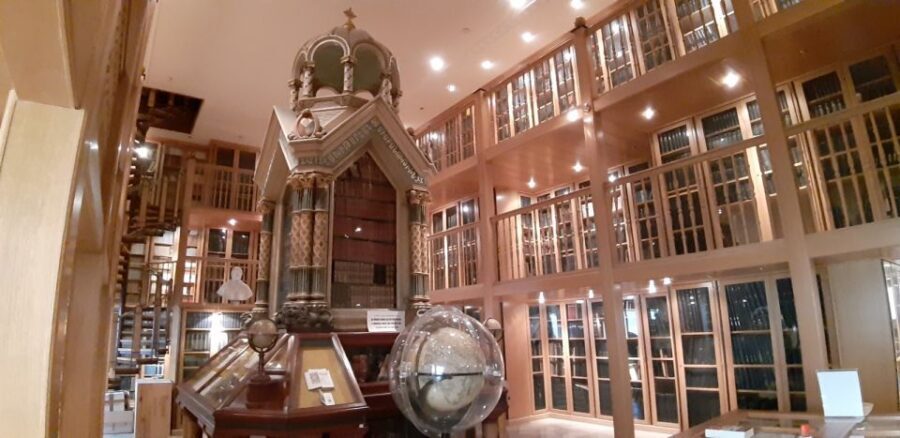
- Mekhitarists Museum and Library: Armenian manuscripts, coins, ceramics, carpets, and artwork
- Mechitharine liqueur tasting: a sweet, cultural ending you can actually remember
Finding the Mekhitarist Monastery: Small Armenia in Vienna
The best part of this tour starts before you even step inside: you’re meeting right at the main entrance of the Mekhitarist Monastery in Vienna, not at a distant museum annex or a random plaza. That small-group setup matters. With limited participation (up to 10), you get the feeling of a guided visit rather than a cattle-herded “look-and-go.”
From the start, your guide sets the stage with the history of the Mekhitarist Congregation in Vienna. Think of it as the backbone behind everything you’ll see next: why the community formed, how it kept its cultural identity, and why this monastery became a center for Armenian religious and scholarly life in Austria. You’ll also get the practical benefit of this introduction: after the context, the art and objects stop being random souvenirs and turn into “oh, that’s why this is here.”
And yes, the tour name is accurate. You’re not just visiting an Armenian church. You’re walking through a living pocket of Armenian heritage inside Vienna.
You can also read our reviews of more tours and experiences in Vienna.
Maria Schutz Church and the altars with real names and real meaning
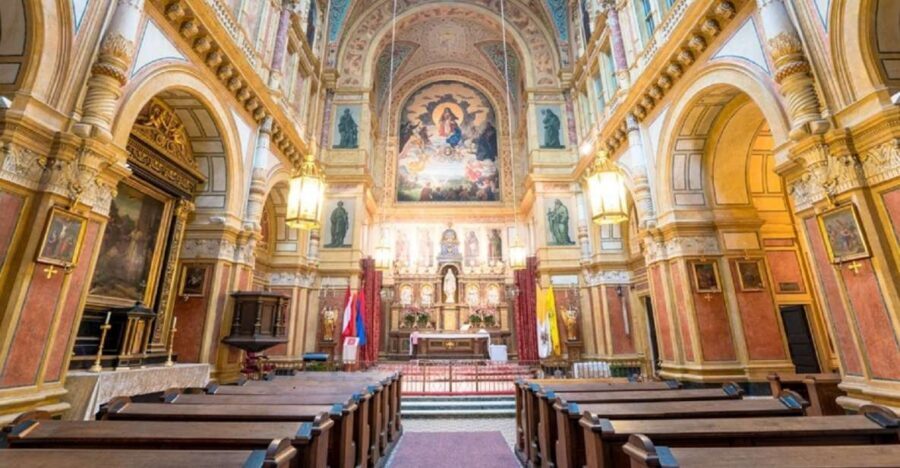
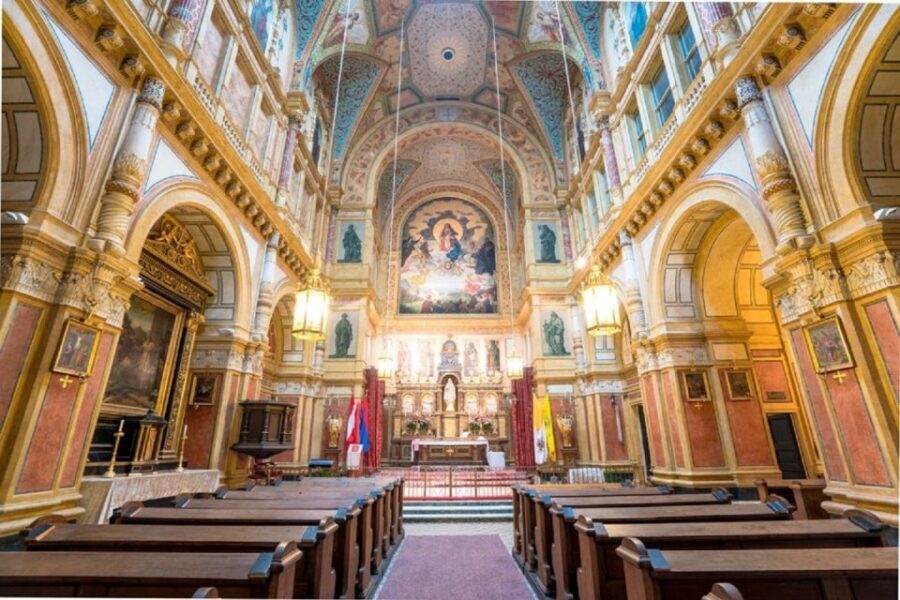
Inside Maria Schutz Church, the tour goes beyond admiring architecture. Your guide points out how the current church (built in 1874) replaced an older Cappuccine church. That kind of replacement story is useful in Vienna, where buildings often layer one era over another.
You’ll also tour the interior of Maria Schutz Church, where two altar works are key stop points:
- The altar painting showing St Mary’s protection of Armenia, painted by Camillo Sitte
- The altar dedicated to St Gregory the Illuminator, designed by Theophil von Hansen
These aren’t just “religious paintings.” They connect Armenian spirituality to Vienna’s artistic world. And here’s why I think this is a strong use of your time: you’re not only hearing about Armenian tradition, you’re learning how it intersects with major European artistic names. When your guide ties it together, the church becomes a map, not just a room.
For a first-time visitor to Vienna, this kind of cross-cultural context is gold. Vienna has plenty of famous domes and palaces. This tour gives you something quieter and more specific—an identity anchored in faith and scholarship.
Loretto-Chapel: Mary with the Rose and the 1683 survival story
Next you’ll move on to the Loretto-Chapel, where the baroque miraculous picture Mary with the Rose is the star. The painting’s reputation comes with a dramatic historical detail: it was rescued intact from the perils of the Turkish siege of Vienna in 1683.
That detail changes the way you look. Without it, you’d treat the chapel like any ornate side room. With it, you understand why people would guard this image through catastrophe and why the monastery would preserve what it could.
Baroque art often overwhelms people with motion, light effects, and rich ornament. Here, your guide gives you a lens: you’re not just reading aesthetics, you’re reading endurance—how a community holds onto sacred symbols when history gets brutal.
If you like religious history with specific dates attached, this stop is one of the most memorable in the whole itinerary.
The refectory’s monumental painting: an hour where your eyes can’t rest
From the chapel you’ll continue through the monastery interior, including the refectory. This is where the tour scores points for atmosphere. You’re not just swapping one church interior for another; you’re entering a different space with a different purpose—meals, community, daily rhythm.
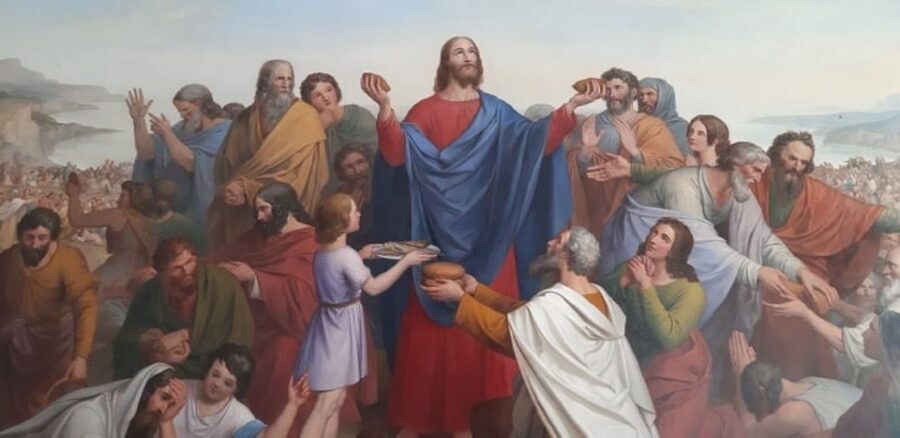
The headliner here is a monumental painting by Ludwig Ferdinand Schnorr von Carolsfeld: The Feeding of the Five Thousand. The key word is monumental. This work isn’t meant to be a quick glance. It’s the sort of painting that pulls you into scale—figures, arrangement, and a sense of drama built for a room where people gathered.
If you’ve ever visited churches and wished you could slow down without the tour guide rushing you, this is a good place to pause mentally. The painting gives you something to “anchor” on while your guide fills in background. The result is that you leave with a visual memory you can picture later, not just a list of what you saw.
Mekhitarists Museum and Library: Armenian manuscripts, coins, and even Aivazovsky
This is the big one: the Mekhitarists Museum and Library. If you’re even slightly curious about Armenian culture beyond food and music—if you want history you can touch—this section is where you’ll feel the wow.
Start with the library. You’ll learn that it holds more than 2,800 Armenian manuscripts and over 170,000 volumes of Armenian publications (ancient and modern). The collection of Armenian newspapers and magazines in the Western world is described as the largest—again, not just a nice set, but a lead role on the global stage.
Then you move into exhibitions where your guide points out the museum collections. You’ll see the numismatic holdings, including about 10,000 Armenian coins and around 20,000 coins from other countries. That detail matters because it frames the Armenian story as connected to broader trade, politics, and geography—not sealed off behind walls.
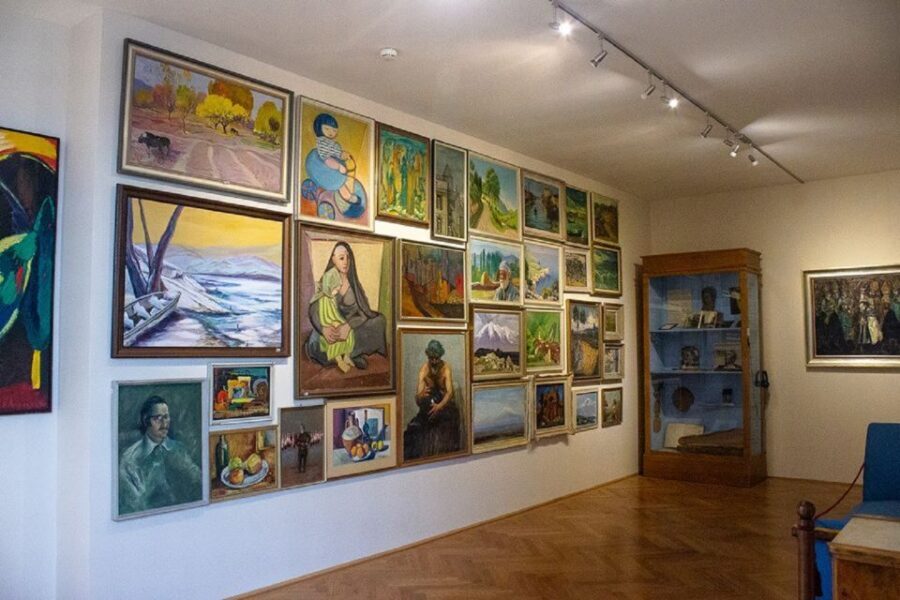
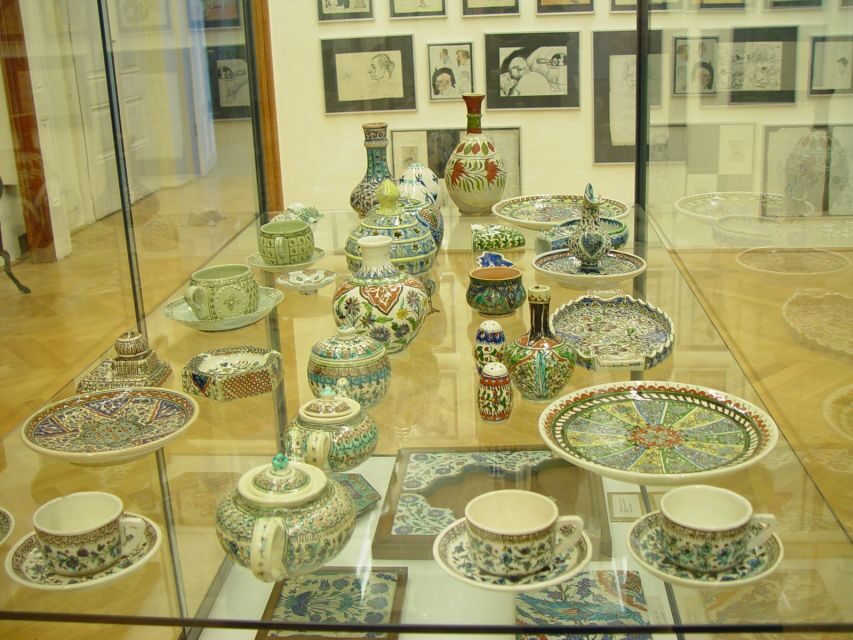
You’ll also encounter ceramics and carpets, with a strong focus on items of Armenian production. And if you’re an art lover, there’s an additional hook: paintings by Armenian artists, including three paintings by Aivazovsky.
At this point in the tour, the “small” idea in the tour title becomes ironic—in a good way. Yes, this is a pocket monastery in Vienna. But the intellectual footprint here is massive. In two hours, you don’t just learn facts; you get a sense of what it means for one community to preserve records, objects, and art across time.


Mechitharine liqueur tasting: the sweet ending with real backstory
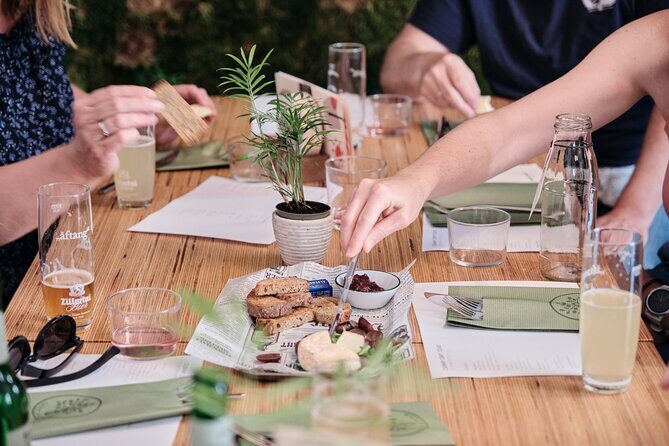
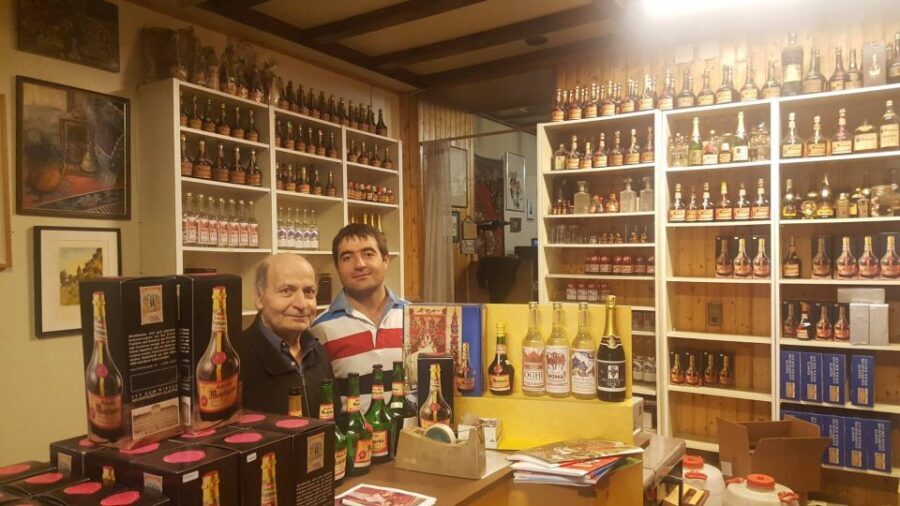
Most monastery tours stop at the doors and call it a day. This one finishes with a tasting of Mechitharine liqueur, which also becomes a mini lesson.
During the tasting, you’ll learn about the liqueur world, including its unique taste and its history. The guide also shares information about its families and the business behind it. That last part is important. People often treat monastery crafts as pure tradition with no modern story. Here, you get a sense of how something rooted in tradition continues to operate in the present.
If you enjoy food and drink as a cultural signal, this ending lands well. If you don’t drink alcohol, you can still treat it as a sensory moment—just know that the tasting is part of the experience you paid for.
Price and value: what $84 buys you in Vienna
At $84 per person for a two-hour small-group tour, the value isn’t only “you get a guide.” You’re paying for access and interpretation.
Here’s what you’re getting that helps justify the price:
- Entrance fees included
- A live guide service explaining specific artworks and collections
- A small group capped at 10 participants, which typically means more questions and less waiting
- A tasting included at the end
Is it expensive compared to a casual self-guided walk? Yes. But it’s not trying to be a casual walk. It’s trying to compress a lot of interior access—churches, chapel, refectory, museum, and library—into a focused route. In a city like Vienna, where time is always an issue, that “dense two hours” feeling is often exactly what you want.
Also, the multilingual options (Armenian, English, German) mean you’re not stuck with one-size-fits-all narration. That matters when the topic is complex: manuscripts, altarpieces, chapel stories, and historical connections need clear explanations.
Who should book this Armenia in Vienna tour
This tour is a strong match if you:
- Love art with names attached, not just generic descriptions
- Enjoy religious history with specific stories like the 1683 survival of Mary with the Rose
- Want a real Armenian cultural stop in Vienna that feels authentic and lived-in
- Like museums and libraries, especially ones with Armenian manuscripts and print history
It may be less perfect for you if:
- You mainly want outdoor sights and panoramic views
- You dislike tours that keep moving indoors on a set timeline
- You prefer to avoid any alcohol tasting experience
Should you book it?
I think you should book it if your idea of a great Vienna day includes one unforgettable interior stop and the kind of cultural depth you can’t get from a quick photo. The church interiors, the specific altarpiece stories, and the library’s scale turn this into more than a “cute detour.”
If you like to travel with your eyes open—especially when history is stored in books, coins, paintings, and chapel art—this tour fits. And if you end up remembering one thing, make it this: in a single short visit, you’ll see how Armenian identity took root in Vienna and kept growing.
FAQ
Where is the meeting point?
Meet in front of the main entrance of the Mekhitarist Monastery.
How long is the tour?
The tour lasts 2 hours.
How much does it cost?
The price is listed as $84 per person.
What languages are available for the guide?
The live tour guide is available in Armenian, English, and German.
How big is the group?
This is a small-group tour limited to 10 participants.
What’s included in the ticket?
Entrance fees, guide service, and a liqueur tasting are included.
Is there flexibility to book and cancel?
You can reserve now and pay later, and you can cancel up to 24 hours in advance for a full refund.