REVIEW · VIENNA
Vienna Walking Tour with Audioguide on Your Smartphone
Book on Viator →Operated by TouringBee · Bookable on Viator
This walk turns Vienna into an audio scavenger hunt. You get a smartphone audio guide with 29 historian-narrated stops, so you can pace yourself through major sights across central Vienna. The route is designed to work like a walking city map: press play, look up from the sidewalk, and move when you’re ready.
I like two things a lot. First, the narration is professionally prepared (29 audio recordings from a professional historian), so you’re not stuck with vague soundbites. Second, the format lets you pause for photos and café breaks without losing the thread, which makes the whole day feel less rushed and more like your trip.
One consideration: the app is doing the heavy lifting. If GPS navigation is glitchy or the next location feels hard to spot, you may need to restart and slow down. Also, finishing all the stops can mean a long walk (some feedback puts it around a 7 km circuit), so plan for real legs, not just a quick stroll.
In This Review
- Quick takes before you go
- The real payoff: using an audio guide as your Vienna orientation
- Price and value for a 2.5-hour self-guided route
- Before you start: how to make the app behave
- Itinerary walkthrough: what you’ll see at every key stop
- 1) St. Stephen’s Cathedral (Stephansdom)
- 2) Church of the Teutonic Order
- 3) Plague Column (Colonna della Peste / Pestsäule)
- 4) Peterskirche (St. Peter’s Church)
- 5) Café Demel (quick Viennese break)
- 6) Michaelerplatz
- 7) Emperor Joseph II Monument (Josefsplatz)
- 8) Donnerbrunnen
- 9) Imperial Crypt (final resting place of Habsburg royalty)
- 10) Memorial Against War & Fascism
- 11) Albertina Gallery
- 12) Vienna State Opera
- 13) Mozart Monument (Burggarten Park)
- 14) Maria Theresien Square
- 15) Hofburg Palace
- 16) Monument to Empress Elisabeth (Sisi)
- 17) Vienna City Hall (Rathaus)
- 18) University of Vienna
- 19) Beethoven’s House
- 20) Café Central
- 21) Collalto Palace
- 22) Vermahlungsbrunnen (Marriage Fountain) at Schönbrunn Palace courtyard
- 23) Ankeruhr Clock
- What makes this tour feel flexible in real life
- Where it can frustrate you (and how to avoid it)
- Who should book this Vienna smartphone walking tour
- Should you book this tour?
- FAQ
- FAQ
- How much does the Vienna walking tour cost?
- How long is the tour?
- Is this tour only available in English?
- Is there a live guide?
- What do I need to use the audio guide?
- Where does the tour start and end?
- Can I cancel for a full refund?
Quick takes before you go
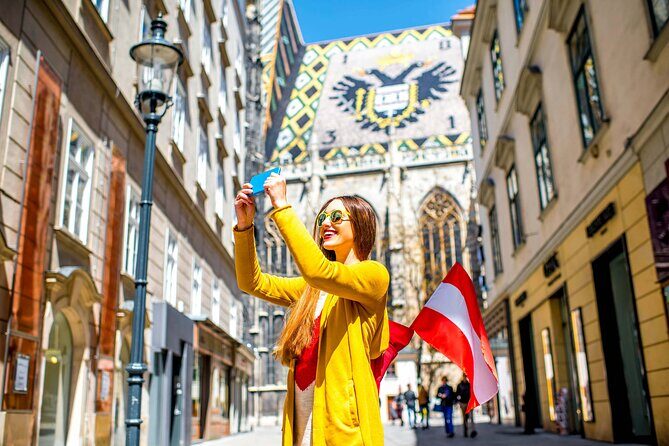
- 29 historian-narrated recordings: clear context without needing a live guide
- Offline map with route + GPS tracking: your blue-dot navigation should help you stay on track
- Flexible pacing: stop for coffee, linger at details, and resume when you want
- Major sights plus smaller stops: you’ll see famous landmarks and useful in-between moments
- Smartphone-only setup: you bring your phone and your own headphones
- Route can feel long: budget extra time if you want every stop
The real payoff: using an audio guide as your Vienna orientation
A Vienna walking day has one big challenge: the city looks baroque-everywhere, so it’s easy to miss what you’re actually seeing. This tour tackles that with a simple structure. You’re not just walking from one postcard to the next—you’re moving along a route that connects different eras and styles in a way that adds up.
The audio format is also practical. You can listen while moving, then switch to reading (or just looking) when you’re standing in front of the building. And because it’s a self-guided experience, you control the pace. If you’re jet-lagged, tired, or taking longer for photos, you can pause and come back later, instead of forcing yourself to keep up with a group.
The other strong point is the mix of big and small. You hit the headline sites—St. Stephen’s Cathedral, Hofburg, Maria Theresien Square, and the Mozart Monument—then you also get stops that explain the “why” behind Vienna’s look, like the plague column and memorials tied to the city’s modern past.
You can also read our reviews of more walking tours in Vienna
Price and value for a 2.5-hour self-guided route
At $8.40 per person, this is priced like an orientation tool. It’s not paying for an on-site guide, and that matters, because you should expect the experience to live or die by your phone setup. Still, for that price you get a lot of content: 29 audio recordings, a route map, and illustrations to identify landmarks.
Also, the cost is more attractive if you’re traveling as a couple or with friends who want control over timing. Instead of paying per hour for a guide, you pay once for the content and then you’re free to explore other nearby streets between stops.
Just keep expectations realistic: the listed duration is about 2 hours 30 minutes, but listening + walking time varies. If you do all stops carefully, you should assume it can take longer than the headline duration. That’s not a failure. It’s just how a “hit every stop” route behaves when you stop to read and take pictures.
Before you start: how to make the app behave
This is self-guided, meaning there’s no human guide waiting at the next corner. Your success comes from setup and navigation habits.
Here’s how to set yourself up for an easy start:
- Download and activate before you leave. The tour is delivered through an app (iOS and Android), and you’ll need to activate your purchase.
- Bring your own headphones. The listing is clear: headphones aren’t included.
- Use GPS and the offline map. The app includes an offline map with the route, and you should see your position (often described like a blue dot on the route line).
- Don’t assume every location is obvious. Some stops are small or may have weaker signage, so treat the map and route as the authority.
- If you get lost, pause and recover. Several real-world issues around location recognition can be solved by restarting the app and taking a slower approach to the next stop.
One more practical tip: start where the tour starts—Stephansplatz (1010 Wien). If you begin elsewhere, you’re more likely to spend time figuring out where the “current stop” should be. Starting at the correct point is the easiest way to prevent frustration.
Itinerary walkthrough: what you’ll see at every key stop
The best way to think about this tour is as a guided “greatest hits” route that also teaches you how to read Vienna. Below is what you can expect at each stop, plus what’s worth your time.
1) St. Stephen’s Cathedral (Stephansdom)
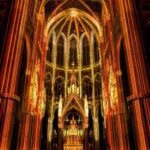
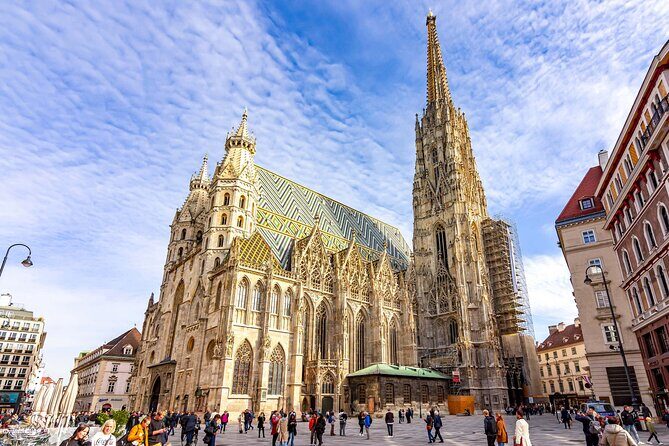
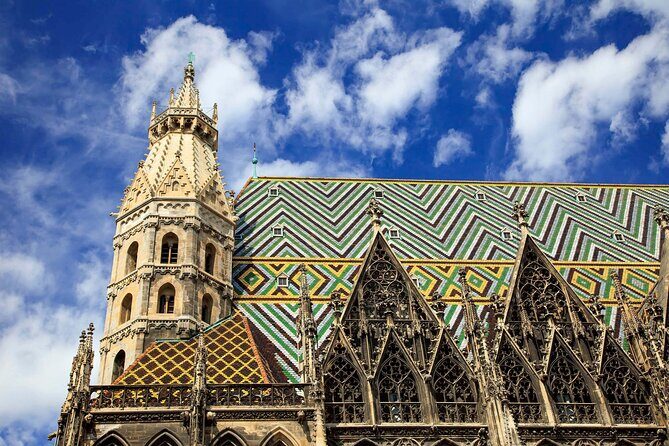
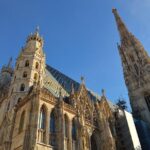
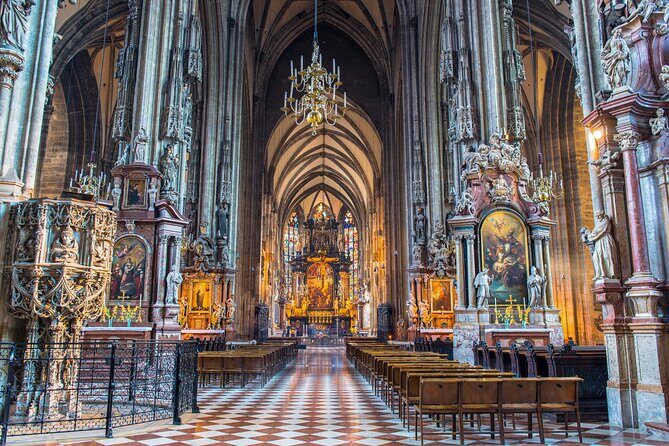
This is your classic Vienna opener. The cathedral’s Gothic look is the obvious draw, but the audio makes it more useful by pointing out features like the soaring spires, carved façade, and stained glass. Inside, you’ll hear about highlights such as the ornate High Altar and the mystical catacombs.
Practical note: St. Stephen’s is big. Even if the audio is short at this stop, you’ll want a little extra time just to orient yourself. If you’re interested in views, the route includes the idea of ascending the South Tower, so plan time accordingly and watch for any on-site ticketing rules.
Tip for your feet: Don’t rush this one. If you understand St. Stephen’s first, the rest of the walk starts to click.
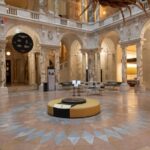
A few more Vienna tours and experiences worth a look


2) Church of the Teutonic Order
Next up is a Baroque church you can walk past without realizing what it is. The audio focuses on the 17th-century history and the ornate interior details like frescoes and sculptures. This is a good “slow down” stop because the building’s charm isn’t all about scale—it’s about decoration and atmosphere.
3) Plague Column (Colonna della Peste / Pestsäule)
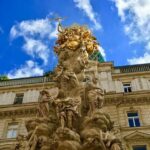
This stop is one of the most meaningful on the route, because it turns a monument into a story. The plague column was erected in gratitude for surviving the plague, and the baroque sculpture work is meant to carry that message of survival and resilience.
If you only glance and move on, you’ll miss it. Try standing still for 2 minutes and look for the figures and the overall vertical composition. It’s a powerful way to see Vienna’s mix of faith, art, and memory in one structure.
4) Peterskirche (St. Peter’s Church)
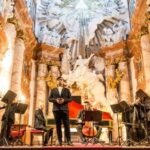
Another church stop, but with a different feel. Peterskirche is known for its Baroque dome and frescoes. This is also where the tour points you toward the possibility of a classical concert in the historic setting (just keep your expectations flexible; schedules aren’t guaranteed by the audio).
If you’re doing this walk on a day when you want more culture without committing to a full program, this kind of stop is ideal.
5) Café Demel (quick Viennese break)
Then you get the Vienna you can taste. Café Demel, established in 1786, is included as a stop where you can reset and grab pastries, cakes, and coffee. The audio nudges you toward Viennese specialties like Sachertorte.
Even a short pause here changes the walk. It breaks the rhythm and gives your body time to catch up with your curiosity.
6) Michaelerplatz
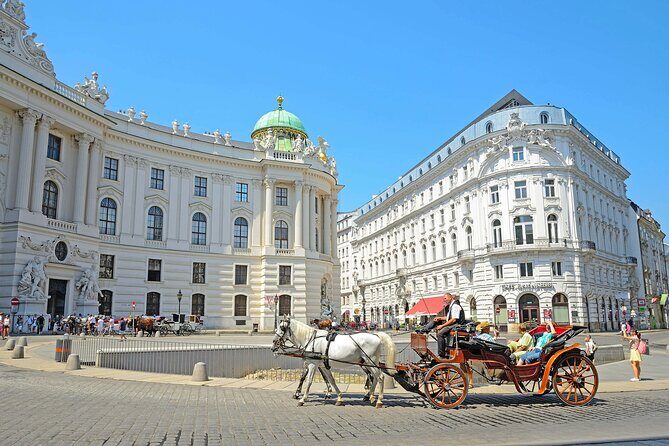
Michaelerplatz is about imperial power and layers of the city. The route highlights Hofburg Palace nearby, plus the Michaelerkirche, and it includes the idea that there are ancient ruins beneath the square at the Michaelerplatz Archaeological Excavations.
This stop works best if you look at the square first, then read the details second. Vienna often rewards that order.
7) Emperor Joseph II Monument (Josefsplatz)
This is a solid “Vienna after the Renaissance” stop, focusing on the reformist ruler Emperor Joseph II and his Enlightenment ideas. The bronze statue is your anchor; the audio uses it to connect you back to the Hofburg area.
8) Donnerbrunnen
The route keeps things lighter with a fountain stop. Donnerbrunnen is described as having intricate sculptures tied to mythological figures and scenes. It’s in Neuer Markt square, so it’s a good breather if the day has been long.
9) Imperial Crypt (final resting place of Habsburg royalty)
This is where the walk gets weighty again. The tour includes a segment on Vienna’s Imperial Crypt: the resting place of emperors, empresses, and other royalty. The audio emphasizes opulent tombs and intricate artwork.
Even if you don’t spend long here, don’t just walk through. Take a moment to notice how the art and status mix together. It’s one of the clearest ways to understand how Vienna turned power into visual culture.
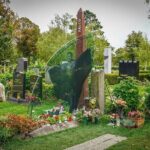
10) Memorial Against War & Fascism
Next you shift into modern history and remembrance. The memorial centers on a striking sculpture of a shattered column, intended to symbolize the destruction caused by war. The audio framing pushes you to reflect on the victims of oppression and the importance of peace.
If you’re the kind of person who needs some emotional spacing during travel, this stop might be a good place to pause before moving on.
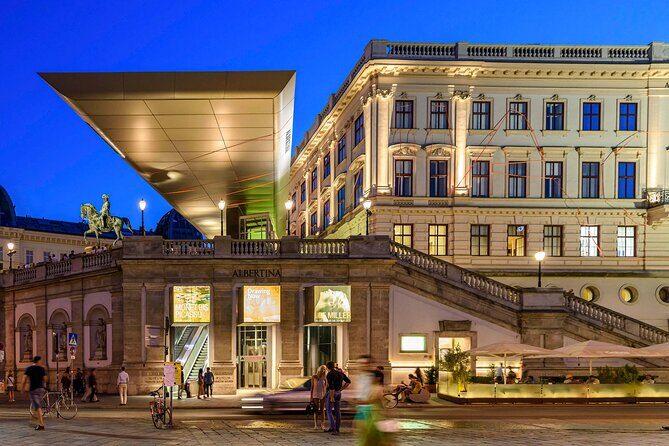
11) Albertina Gallery
Then it swings back to art. The tour brings you to the Albertina Gallery, described as spanning from Renaissance through contemporary work, and mentioning major artists such as Dürer, Monet, and Picasso.
Note: the audio doesn’t equal entry. Your tour ticket includes the audio, not necessarily gallery admission. So if you want to actually see inside, check current opening and ticket rules before you plan to linger.
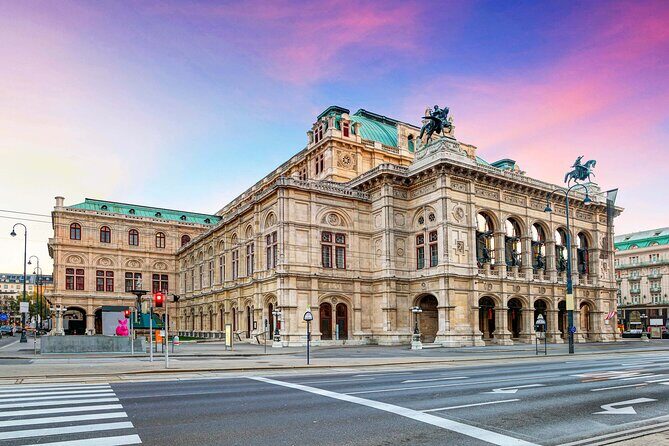
12) Vienna State Opera
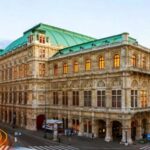
Right after Albertina, you’ll be near the Vienna State Opera—one of the most recognizable opera landmarks in the city. The audio emphasizes the grand architecture and opulent interiors and encourages you to think about world-class performances in that setting.
Again, being “near it” is not the same as being inside. Use the exterior moment to take in the scale, then decide if you want a show later.
13) Mozart Monument (Burggarten Park)
This stop is pure pleasure for music fans. The Mozart Monument in Burggarten Park turns the walk into a garden stroll with a statue anchor. The audio frames Mozart’s musical legacy and gives you a reason to slow down in the green space.
14) Maria Theresien Square
This area is about imperial symbolism. Maria Theresa Square is introduced through the large statue of Empress Maria Theresa. It’s also described as surrounded by historic buildings and lush greenery, which is useful because it gives you a visual break between more tightly packed landmark clusters.
15) Hofburg Palace
Now you’re in the heart of imperial Vienna. The tour calls Hofburg “the heart of imperial splendor” and highlights major components around it: the Sisi Museum and Imperial Apartments, plus the Spanish Riding School and the National Library.
This is a stop where you can either treat it as a quick overview or spend real time if you’re going inside. The audio gives you the names and the reason each matters, which makes any follow-up visit much easier.
16) Monument to Empress Elisabeth (Sisi)
In Volksgarten, you’ll find the Monument to Empress Elisabeth. The audio focuses on her as the beloved Sisi and highlights the graceful statue form. This stop pairs nicely with your Hofburg context, since it ties the palace world back to a specific person.
17) Vienna City Hall (Rathaus)
Next is a Gothic Revival landmark. Vienna City Hall is introduced through its spires and façade details and includes the idea of events or concerts in the square. The Rathausmann statue is a named feature in the tour.
This is a helpful stop if you’re trying to understand Vienna beyond palaces and churches—because civic architecture tells you how a city sees itself.
18) University of Vienna
The tour includes the University of Vienna, presented as academic since 1365. You’ll see the historic campus focus and the Main Building and University Library are mentioned as things to admire.
If you like cities that feel like they run on ideas (not just tourism), this stop adds a different Vienna flavor.
19) Beethoven’s House
Then comes a music composer stop with a personal timeline: Beethoven lived here from 1804 to 1815. The museum portion is described as showing his life and work, including original manuscripts and personal belongings.
Your best move here is to decide quickly: do you want a short window to see it, or just keep walking and save the interior visit for a more focused time?
20) Café Central
Café Central (established in 1876) is another “recharge your brain” moment. The audio frames it as a historic café where intellectuals and artists gathered, and it encourages you to try pastries and coffee.
This is a strong middle-of-the-route stop. It pairs well with your earlier Café Demel pause, and it gives you a second chance to enjoy Viennese café culture.
21) Collalto Palace
Next is Collalto Palace, described as a Baroque structure from the 17th century with interiors featuring intricate details and artworks. The audio position for this stop is great because it reminds you Vienna isn’t only about churches and big squares.
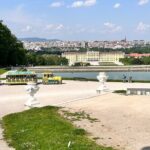
22) Vermahlungsbrunnen (Marriage Fountain) at Schönbrunn Palace courtyard
This one is romantic and quick. The Marriage Fountain at Schönbrunn Palace courtyard is described as portraying the union of two rivers, celebrating harmony and love. It’s a shorter stop, but it works well as a calm pause before the final stretch.
23) Ankeruhr Clock
Finally, you wrap with the Ankeruhr Clock on Hoher Markt. The audio describes it as an Art Nouveau engineering feature with whimsical figures that animate every hour.
This is a neat capstone because it’s different: more playful, more mechanical, more “Vienna does details” than “Vienna does grand halls.”
What makes this tour feel flexible in real life
The core value of a smartphone tour is control. You’re not stuck in a fixed group pace, and you can choose how long to linger. The route also includes coffee stops and scenic breaks, so it’s not just a single long grind.
Based on the way people use this format, the best strategy is to treat the route like a menu:
- If you want every landmark, listen fully and don’t skip pauses.
- If you’re tired, keep the story part short and focus on what you can see clearly.
- If you only care about the big icons, you can skip the smaller stops and still get the overview.
The audio guide also has a year of access after purchase. That’s useful if you return to Vienna later in the trip or even want to revisit parts of the route on a different day.
Where it can frustrate you (and how to avoid it)
The most common problem with audio walking tours is location recognition. If GPS thinks you’re somewhere else, the app can feel like it’s speaking to nobody.
Here are practical moves that reduce friction:
- Download in advance so you’re not fighting the network while walking.
- Keep your phone charged. Long days turn battery into your real bottleneck.
- Use the app’s map, not just the sound. When the landmark is small or signage is weak, the map becomes your safety net.
- Restart if needed. If the app loses track, restarting and then stepping slowly to re-lock the route can save you time.
- Expect extra time for the full loop. If you try to do everything right after a full day of sightseeing, your legs will decide the pace for you.
If you want a super smooth experience, plan your start time earlier in the day and aim for a relaxed pace. This isn’t a “power through Vienna in one afternoon” plan. It’s a “walk Vienna with context” plan.
Who should book this Vienna smartphone walking tour
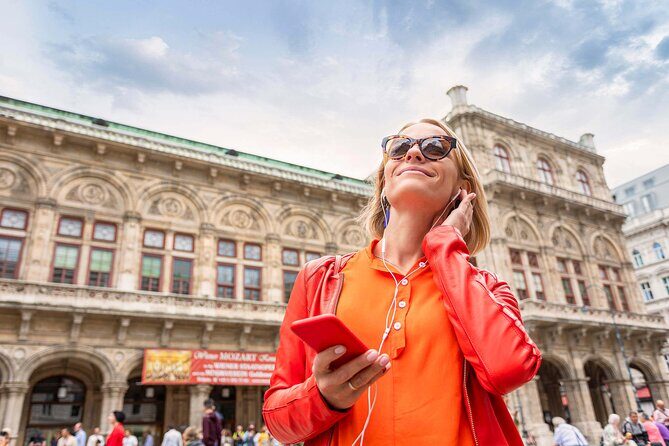
This one fits best if you:
- want a low-cost way to orient yourself in central Vienna
- prefer to walk at your own speed rather than follow a group
- like history explained in short, structured segments while you’re on the move
- plan to mix walking with café stops (Café Demel and Café Central are built into the route)
- are comfortable using an app with offline map + GPS
It might not be your best match if you:
- hate relying on phone navigation
- need constant turn-by-turn help from a human guide
- don’t want to walk a longer circuit if you’re finishing every stop
Should you book this tour?
If your main goal is to get your bearings and learn why Vienna looks the way it does, this tour is good value. The inclusion of 29 professional historian recordings, an offline route map, and landmark ID illustrations makes it easy to turn a walk into an education without paying for a guide.
I’d book it if you can handle app-based navigation and you bring headphones and a charged phone. I’d think twice if you’re very picky about accurate GPS, because a small mismatch can create delays at stops with weaker signage.
If you want a solo-friendly Vienna day that mixes icons with thoughtful stops—from St. Stephen’s Cathedral to the Mozart Monument—this is a solid way to do it.
FAQ
FAQ
How much does the Vienna walking tour cost?
It’s priced at $8.40 per person.
How long is the tour?
The duration is approximately 2 hours 30 minutes.
Is this tour only available in English?
Yes, the tour is offered in English.
Is there a live guide?
No. It’s a self-guided walking tour with audio delivered through a smartphone app.
What do I need to use the audio guide?
You’ll need your own smartphone and your own headphones. The audio guide app is for iPhone and Android, and you’ll follow the route on the mobile app map.
Where does the tour start and end?
It starts at Stephansplatz, 1010 Wien, Austria, and ends back at the meeting point.
Can I cancel for a full refund?
Yes, you can cancel up to 24 hours in advance for a full refund.