REVIEW · VIENNA
Vienna: Highlights Walking Tour with a Local Guide
Book on GetYourGuide →Operated by Guydeez Tours · Bookable on GetYourGuide
Big Vienna energy, no transfers.
This 3-hour highlights walk is a smart way to see major imperial stops without burning your whole day—think Maria-Theresien-Platz with the twin museum façades and Empress Maria Theresa, then straight into the story-rich architecture of Ringstrasse. I like how the route keeps you orbiting big-name landmarks, so you always know you’re in the right place. The other thing I really enjoy is the mix of eras: baroque palaces and museums, plus a Romanesque finish at St. Michael’s Church. One drawback to keep in mind: if you’re booking for a specific language, you’ll want to be sure your guide is actually available in that language on your date.
You’ll finish with the kind of calm contrast that Vienna does well. The tour ends around Heldenplatz and St. Michael’s Church, which gives the walk a natural “last chapter” feeling instead of a rushed exit. I also like that the pace is built for photo stops and short guided segments, so you can look up and read the buildings while the meaning is still fresh. Just know it’s a walking tour—comfortable shoes matter, and you’ll be on your feet for the full 3 hours.
In This Review
- Key things I’d look forward to
- Starting at Babenbergerstraße 9: the walk that strings the city’s big hits together
- Maria-Theresien-Platz: where Empress Maria Theresa faces two museum powerhouses
- Ringstrasse architecture walk: from medieval fortifications to official Vienna’s display cases
- Burgtor and the Napoleon defeat story you can literally walk through
- Kunsthistorisches Museum: palatial art context without the time tax
- Neue Burg, Hofburg, and Heldenplatz: power meets public space
- St. Michael’s Church: the Romanesque contrast that makes the walk memorable
- Danube photo stop: a quick reset from the palace-and-boulevard zone
- What you get for $38 in 3 hours (and why that can be good value)
- The guide can make or break the experience
- Should you book this walking highlights tour?
- FAQ
- How long is the Vienna highlights walking tour?
- Where is the meeting point?
- What does the tour cost?
- What languages are available?
- Is the tour wheelchair accessible?
- Is there a private group option?
- What’s included in the price?
- Can I cancel and rebook if plans change?
Key things I’d look forward to
- Maria-Theresien-Platz: the twin museums and Empress Maria Theresa create a classic Vienna photo frame
- Ringstrasse: former defensive lines turned into a boulevard of political and cultural architecture
- Burgtor: an arch that commemorates Vienna and its allies defeating Napoleon
- Kunsthistorisches Museum: royal-art vibes even when you’re mostly seeing the exterior and context
- St. Michael’s Church: a Romanesque landmark to close the loop on Vienna’s long timeline
Starting at Babenbergerstraße 9: the walk that strings the city’s big hits together
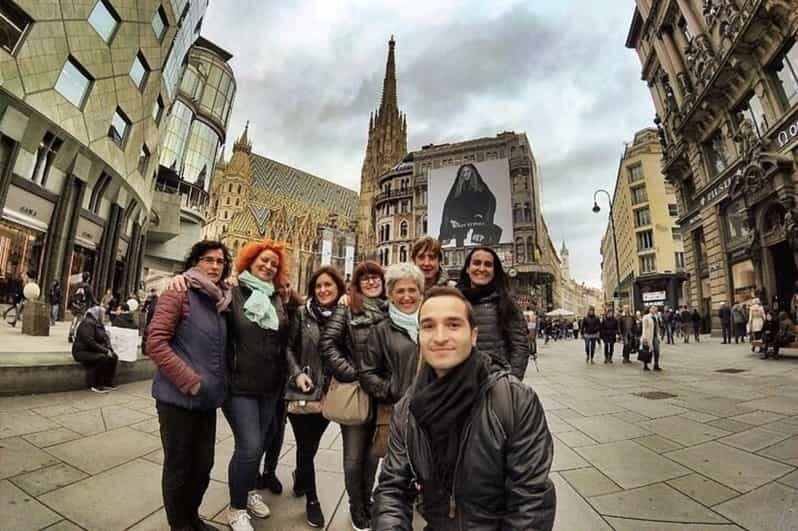
Meeting at Babenbergerstraße 9 is convenient because it puts you in the core of Vienna’s center-right sightseeing zone. The tour is designed as a steady chain of stops rather than a “single monument” experience. That matters, because Vienna can feel spread out even when it isn’t.
You should expect a tour that’s actively guided: photo stops, short guided segments, and sightseeing throughout. It’s not a museum marathon, and that’s a plus if you want the big visual takeaways first and save ticketed museum time for later.
You can also read our reviews of more walking tours in Vienna
Maria-Theresien-Platz: where Empress Maria Theresa faces two museum powerhouses
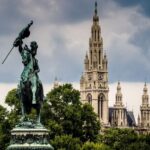
Maria-Theresien-Platz is the kind of square that quickly tells you what kind of city Vienna is. You’ll be surrounded by the Natural History Museum and the Art History Museum, flanking the statue of Empress Maria Theresa. It’s a strong opening because it’s instantly readable: three anchor points, huge scale, and a built-in sense of order.
What I like most here is that the square works like an intro chapter. You get context for why this area looks the way it does, and then you’re ready to understand the next stretch along Ringstrasse.
Practical note: this is an area where you’ll want a moment to just look up. A guide helps you connect architectural details to the people and politics behind them, instead of treating buildings like scenery.
Ringstrasse architecture walk: from medieval fortifications to official Vienna’s display cases
Next comes Ringstrasse, once medieval fortifications, now one of Vienna’s grand boulevards. The tour frames it as a transformation story: walls replaced by a showpiece city plan, where power and culture are meant to be seen.
You’ll pass the kind of landmarks that tend to look “important” even before you understand them: City Hall, Parliament, Burgtheater, and Vienna State University. The value of having a guide here is simple: you won’t just spot them—you’ll understand what they represent in Vienna’s long-running relationship between government, art, and public life.
A small consideration: Ringstrasse is a “look-and-walk” stretch. If you prefer slow, quiet streets, this portion might feel more like a grand corridor. Still, that’s exactly why it works on a 3-hour tour.
Burgtor and the Napoleon defeat story you can literally walk through
Then you reach Burgtor, the arch connected to Vienna and its allies defeating Napoleon. That detail matters because this isn’t an abstract historical trivia stop. It’s a piece of city symbolism built into stone, and it helps you see why Vienna commemorates certain moments so boldly.
This is also one of those spots where the guide’s job is part interpretation. Without that, you might notice the arch and move on. With it, you start connecting the structure to the larger defensive-and-political storyline that’s already been running through the route.
Kunsthistorisches Museum: palatial art context without the time tax
You’ll also spend time around Kunsthistorisches Museum, described as housing royal artistry within a palatial façade. Even if you’re not spending hours inside, the exterior setting is part of the experience. Vienna does this well: the building tells you the tone before you ever buy a ticket.
This stop is valuable because it bridges the architecture you’ve seen on Ringstrasse with the idea of court culture. It’s not only about grand design; it’s about what those courts wanted to collect, display, and project.
Timing-wise, this fits the tour format. You get orientation, context, and the “why” behind the look, so you can decide later if you want a deeper museum visit on your own.
You can also read our reviews of more guided tours in Vienna
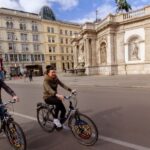
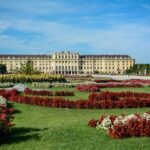
Neue Burg, Hofburg, and Heldenplatz: power meets public space
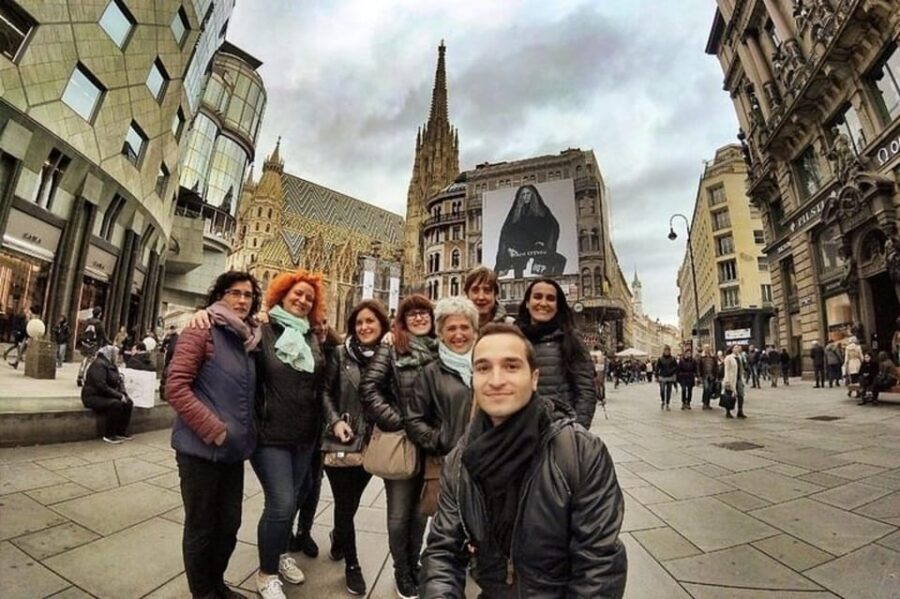
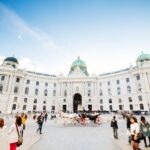
The walk includes Neue Burg, part of the wider Wiener Hofburg complex, plus time tied to the Hofburg cultural enclave. This is where you feel the imperial scale again—Vienna’s court life and its long-lasting presence in the city’s layout.
The tour then ends at Heldenplatz, described as a green expanse with historical weight. That pairing is smart: after you’ve been looking at monuments and formal buildings, you get a more open, park-like space to reset your senses.
This ending works well if you like your sightseeing to finish on a calm note. And it gives you an easy last-photo zone before you head off to dinner.
St. Michael’s Church: the Romanesque contrast that makes the walk memorable
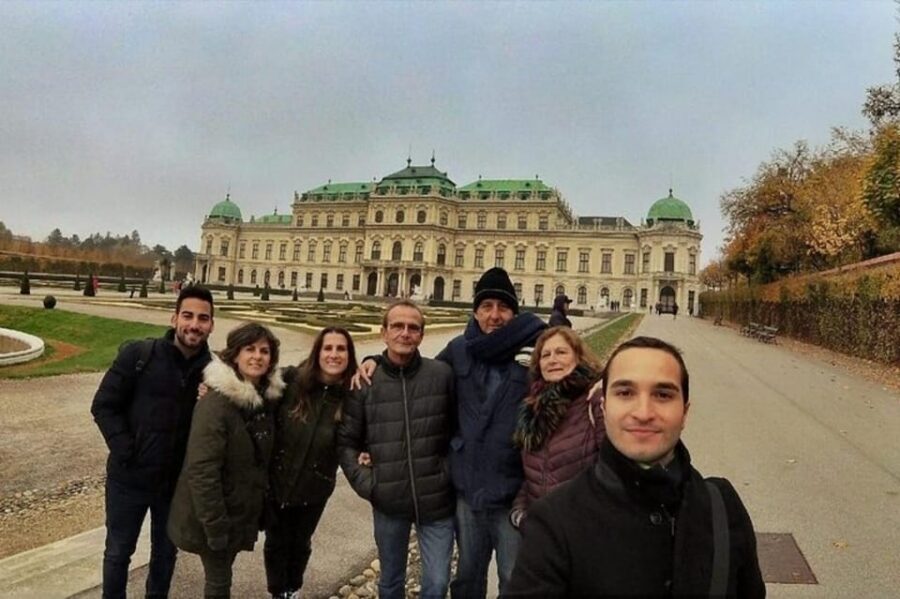
The final stop is St. Michael’s Church, noted for being Romanesque and among the city’s oldest churches. This is a great way to end because it shifts you away from the grand imperial timeline you’ve been following and back toward Vienna’s deeper past.
The Romanesque feel is the kind of contrast your brain remembers. If the earlier stops are about power and display, this is about endurance and longevity—an old structure still functioning as a landmark.
Even if you’re not a church-detail person, I think you’ll appreciate the change in texture and time period. It gives the tour a satisfying arc instead of a straight line of big buildings.
Danube photo stop: a quick reset from the palace-and-boulevard zone
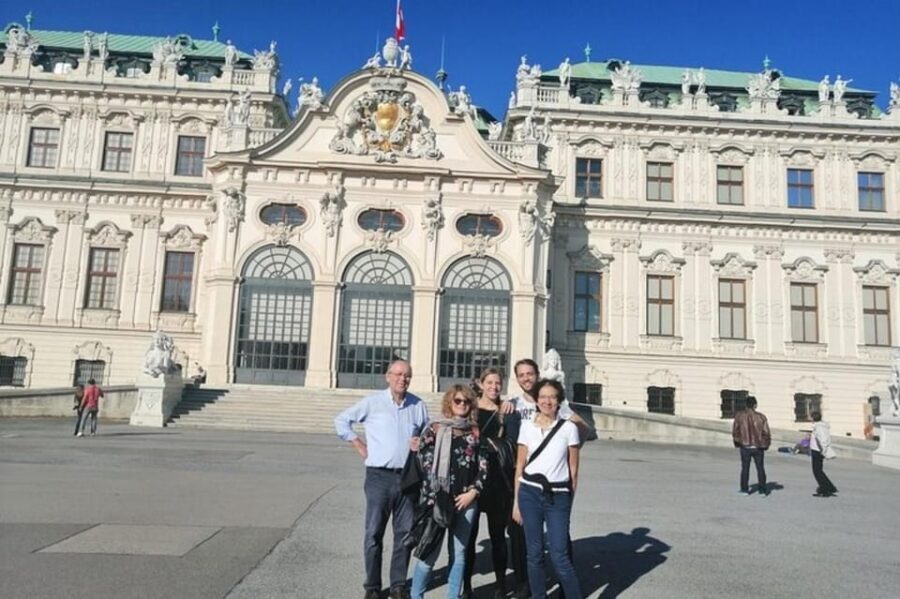
The itinerary includes a Danube photo stop with guided tour time. This kind of break is more important than it sounds. After you’ve been absorbing monumental architecture, standing near water gives your eyes a different kind of scenery and helps the photos look less like a straight checklist.
It’s not presented as a full “river visit” here—just a pause—so it won’t replace a longer Danube cruise. But it’s a nice pacing tool inside a 3-hour format.
What you get for $38 in 3 hours (and why that can be good value)
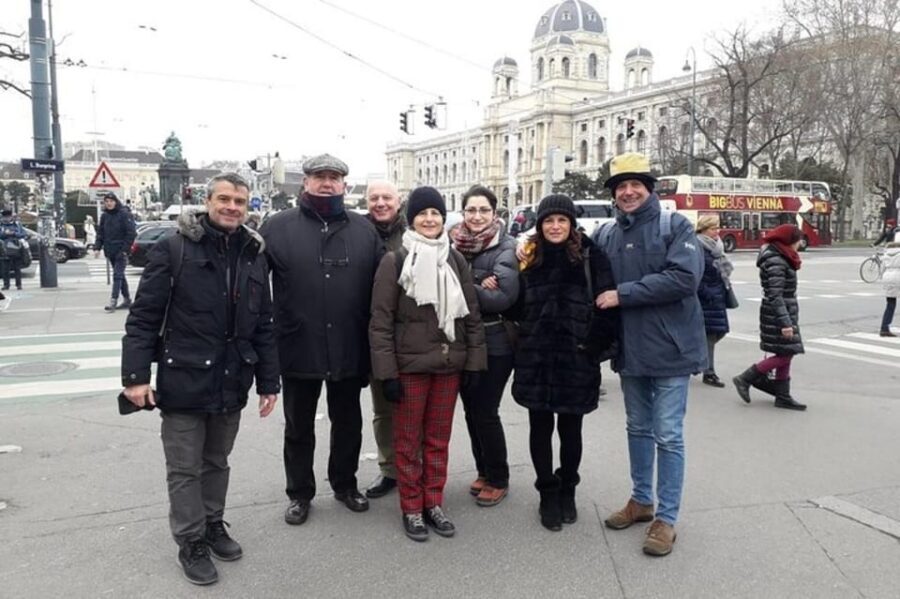
At $38 per person for a 3-hour walking tour with a live guide, the value comes down to efficiency. Vienna is packed with world-famous sights, but piecing them together on your own can feel like research time. A guide keeps you from getting lost in the details and helps you understand what you’re seeing while you’re seeing it.
You’re also getting a route that mixes:
- big square-and-boulevard views (Maria-Theresien-Platz and Ringstrasse)
- a history-linked monument (Burgtor)
- a major cultural institution façade (Kunsthistorisches Museum)
- an older spiritual landmark (St. Michael’s Church)
If you’re in Vienna for a short visit or you want a first pass to set your bearings, this kind of tour is a practical spend. If you already know you want deep museum time, you can treat this as your orientation and then pick one museum to go back to with tickets later.
The guide can make or break the experience
The guides are a major highlight in the feedback you can find for this tour style. I’ve seen examples of guides who keep things lively and answer questions in a way that makes the landmarks feel personal, not scripted.
A few guide names stand out: Ge for being knowledgeable and helpful, Gulam for combining humor with strong knowledge, Hugo for entertaining storytelling and even suggesting good cafes and restaurants, and Nathalie for sharing a love of Vienna in a dynamic way. If your guide hits that sweet spot—clear explanations plus good energy—you’ll likely feel like the tour flew by.
One thing to watch: language. There are cases where tours booked for Spanish were disrupted when Spanish-speaking guides weren’t available. That doesn’t mean you should avoid the tour—it just means you should treat language selection as a real priority. If Spanish (or French/English) is central to your enjoyment, confirm your language preference ahead of time so you don’t end up with a mismatch.
Should you book this walking highlights tour?
Book it if you want a focused, first-time friendly way to see Vienna’s key architecture and history in a single 3-hour loop, ending with Romanesque St. Michael’s Church and the open feel of Heldenplatz. It’s also a good fit if you like having a guide connect the dots between buildings, politics, and timelines.
Skip it or consider a different format if you hate walking, you need lots of seated breaks, or you’re hoping for a museum-heavy day. And if you’re picky about language, double-check that your guide availability lines up with what you selected, because that’s the one issue that can derail the experience faster than anything else.
If you want Vienna highlights without the planning headaches, this tour is a solid way to get your bearings fast—and then decide what to revisit on your own.
FAQ
How long is the Vienna highlights walking tour?
It lasts 3 hours.
Where is the meeting point?
Meet your guide at Babenbergerstraße 9.
What does the tour cost?
The price is $38 per person.
What languages are available?
The live tour guide is available in English, French, and Spanish.
Is the tour wheelchair accessible?
Yes, the tour is wheelchair accessible.
Is there a private group option?
Yes. Private group available is listed as an option.
What’s included in the price?
You get a walking tour with a guide (private or group depending on the option you select).
Can I cancel and rebook if plans change?
You get free cancellation up to 24 hours in advance for a full refund, and there is also a reserve now & pay later option.