REVIEW · VIENNA
Vienna: Meet Beethoven Life Private Guided Walking Tour
Book on Viator →Operated by Rosotravel - Vienna Tours · Bookable on Viator
Beethoven shows up around every corner. This intimate private walk ties Vienna landmarks to the composer’s life, with a licensed guide and a real stop at where he lived. I especially like that Beethoven Pasqualatihaus is included, so you’re not just doing photos from the sidewalk. Another plus is the structured route around the Ringstrasse area, where Vienna’s music culture feels built into the architecture.
One thing to consider: some sights on the way are exteriors only, and a few entries are not included (like optional Secession admission and some museum/church stops). If you want to step inside everything, your total cost and timing can rise.
In This Review
- Key highlights worth planning around
- Why this Beethoven-first route works in Vienna
- Secession to the Historic Center: setting the stage early
- Beethoven statue, Staatsoper, and the music-city “why”
- Theatermuseum, Hofburg (outside), and the civic Vienna detour
- Parks, Rathaus, and the Ringstrasse corridor you’ll remember
- Pasqualatihaus: the stop that justifies the tour’s time
- Optional concert upgrade: how to make the evening feel worth it
- How long is this, and what that means for your day plan
- Group size, guide style, and photo moments
- Price and value: what $264.50 buys you
- Who should book this Beethoven walking tour?
- Should you book it?
- FAQ
- How long is the Vienna Beethoven Life Private Guided Walking Tour?
- Is the tour private, or is it part of a group?
- What’s included, and what’s not included?
- Where does the tour start and end?
- What about the classical concert in the extended option?
- Can I cancel for free?
Key highlights worth planning around
- Pasqualatihaus entrance is included: You get access to the Beethoven-linked residence collection, not just a viewpoint.
- A licensed private guide in English: Expect commentary focused on Beethoven plus Vienna’s musical-era context.
- Ringstrasse landmarks in one walking route: Opera-area monuments, government buildings, and parks—good “first Vienna” value.
- Music-city stops beyond Beethoven: Staatsoper and other civic theatre buildings help you understand why Vienna mattered to composers.
- Optional concert upgrade (evening): In an extended option, you add a classical concert ticket for Beethoven, Mozart, Strauss, or Schubert.
- Flexible theme-based add-ons on request: Your guide can adjust to visit nearby highlights like Stephansplatz or Karlsplatz if timing works.
Why this Beethoven-first route works in Vienna
Vienna can feel like a museum with sidewalks. This tour helps you connect the landmarks to something human and specific: Beethoven’s presence in the city. The format matters. Instead of jumping between distant ticket lines all day, you walk a tight cluster of the Old Town and Ringstrasse corridor, then finish with the one stop that needs time—Pasqualatihaus.
You’ll also get the benefit of a private setup. That doesn’t just mean fewer people. It means the guide can slow down where Beethoven’s story needs it (or speed up if you’re more interested in the buildings). If your group includes both hardcore classical fans and people new to the subject, this is the kind of tour that can handle both—guides like Ingrid and Sergio have been described as tailoring the discussion to the group’s level.
The “consider” part is simple: walking tours are still walking tours. You’re choosing the experience of seeing many places close together, so you won’t have the option of lingering for long inside every building.
You can also read our reviews of more walking tours in Vienna
Secession to the Historic Center: setting the stage early
The tour begins at Friedrichstraße, then you meet your guide at Friedrichstraße 12 (1010 Wien). The first formal stop is the Secession Building (Secessionsgebaude). Even if you don’t pay to step inside, the exterior is the kind of Vienna eye-candy that stops you mid-sentence: the golden dome and the strong white-and-gold look. The guide will also connect it back to Beethoven, which is useful because the Secession era and Beethoven era aren’t the same moment—so you’ll want someone to explain why the link matters.
From there, you shift into the Historic Center of Vienna, where the pace becomes more conversational. This section is built for orientation: you’ll get big-picture context about the city’s architecture and how Vienna’s power and culture played out in stone, gardens, and grand building lines. You’ll also hear about Vienna’s late-19th-century Ringstrasse—a major corridor lined with monumental buildings, parks, and monuments.
Two practical notes:
- Plan for brief stops. The itinerary is designed to keep momentum rather than turn into one long “stand here” lesson.
- If you’re the type who likes to understand how places relate to each other, the Ringstrasse overview here will help later when you pass major civic buildings.
Beethoven statue, Staatsoper, and the music-city “why”
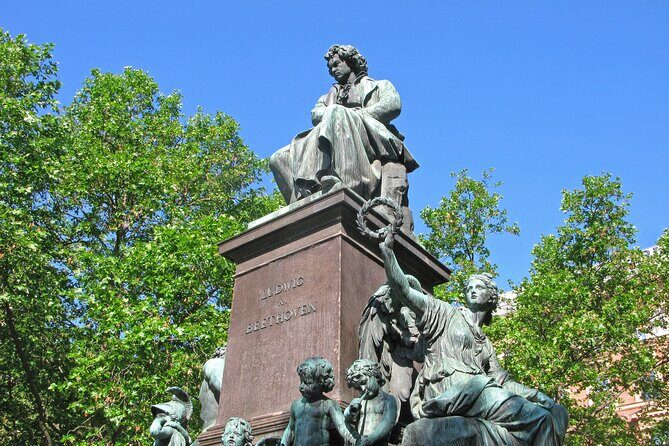
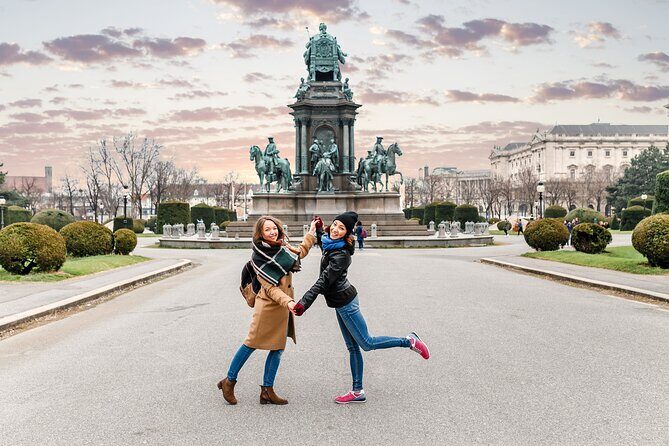
Next you reach the Beethoven Statue at Beethovenplatz. It’s a small stop in time, but it works. A composer statue in a public square makes Beethoven feel less like a textbook name and more like someone who belongs in daily Vienna life.
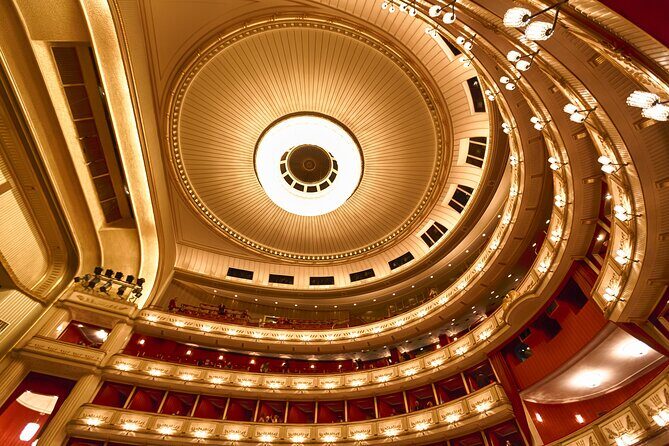
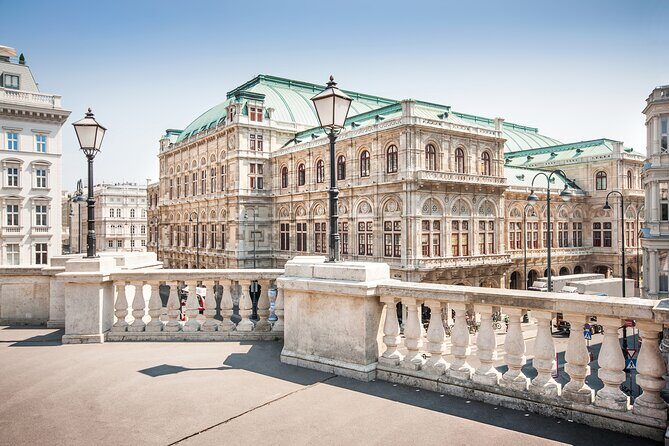
Then comes Wiener Staatsoper. The tour doesn’t try to make this a ticketed opera visit; it uses the location to explain Vienna’s musician reputation in a very direct way. You see the space where many performances happened, and that’s the point: Vienna didn’t just produce composers, it built institutions that kept music at the center of public life.
From there you pass Albertina, including a quick look at the building and its rooftop horse-rider statue. Albertina is known for major art collections, including works by artists such as Da Vinci, Raphael, Michelangelo, Dürer, and Rembrandt. Even if your priority is music, this stop is still worth it because it reinforces a theme: Vienna’s creative life wasn’t one-track. Art and music shared the same cultural status.
Theatermuseum, Hofburg (outside), and the civic Vienna detour
A lot of Beethoven tours focus only on Beethoven’s residences and the “great composer” sites. This one adds texture with civic and theatre architecture.
You’ll stop at the Theatermuseum area where Beethoven was connected to a private Viennese premiere of his 3rd Symphony, Eroica. The stop time is short, and you’re not spending hours inside, but the context helps you understand that Beethoven wasn’t just writing in quiet rooms. He was part of the city’s performance ecosystem.
Then you pass Hofburg, but only from the outside. That limitation is stated clearly in the route approach—this isn’t a palace interior tour. Still, Hofburg’s scale and style are the kind of Vienna that clicks into place once you’ve walked a bit. You get a sense of “power center” without turning your afternoon into a queue-and-ticket grind.
Parks, Rathaus, and the Ringstrasse corridor you’ll remember
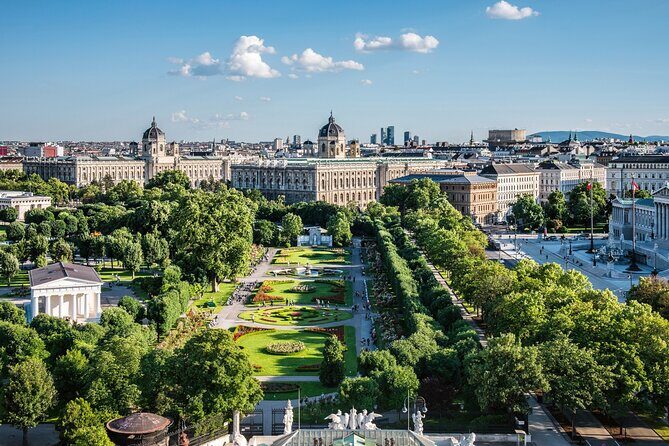
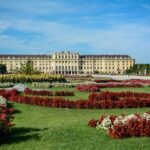
This route includes a pause in the Volksgarten—a quieter green pocket and a rose garden setting. It’s not just a break. It helps you avoid the “architecture fatigue” that hits once you’ve seen several big civic facades in a row.
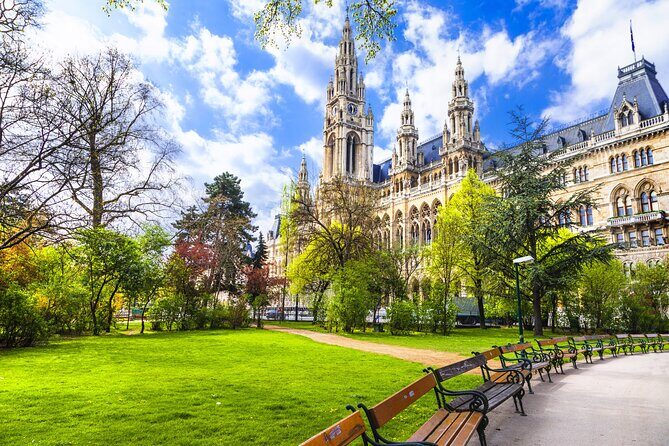
Next is Burgtheater and the Rathaus area. Burgtheater’s detailed exterior is a classic Ringstrasse-style spectacle—civic and cultural at the same time. The Rathaus stop is one of the more memorable “wow” moments because of the sheer scale. The tour notes the massive construction using around 30 million bricks, which gives you a concrete sense of how seriously Vienna treated municipal identity.
As you walk near the Rathaus square, you’ll also be in close vicinity to the Austrian Parliament Building and the University of Vienna. Even though they’re not the focus of this specific tour theme, they add extra context for how Vienna’s public institutions sit right in the middle of everyday strolling.
Then you hit Ringstrasse as the connective tissue: a key street segment that pulls you between major sights from the Opera area toward Rathaus. This section is great if you want a fast, logical loop that makes Vienna’s layout feel understandable, not chaotic.
You can also read our reviews of more guided tours in Vienna

Pasqualatihaus: the stop that justifies the tour’s time
If you only care about one thing, make it Pasqualatihaus. This is the heart of the Beethoven angle, with a full 2-hour visit that includes the entrance ticket.
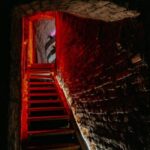
This residence is presented as an authentic Beethoven-linked space, connected to the old city fortifications as part of what remains from earlier Vienna walls. Inside, you’ll find a collection built around Beethoven materials—his notes, piano, photos, and paintings. The big value is that you’re not only seeing objects. You’re hearing stories tied to famous pieces like Fur Elise and Fidelio.
Here’s why this matters for you, practically:
- A walking tour is great for context, but Pasqualatihaus gives you the sustained attention Beethoven deserves.
- The included entry means you don’t have to figure out extra ticket timing mid-route.
- The “notes and instruments” angle supports the people who want more than landmarks; it gives you a sense of process and personal life, not just public genius.
If you’re short on museum time in Vienna, this is the kind of inclusion that feels efficient instead of rushed.
Optional concert upgrade: how to make the evening feel worth it
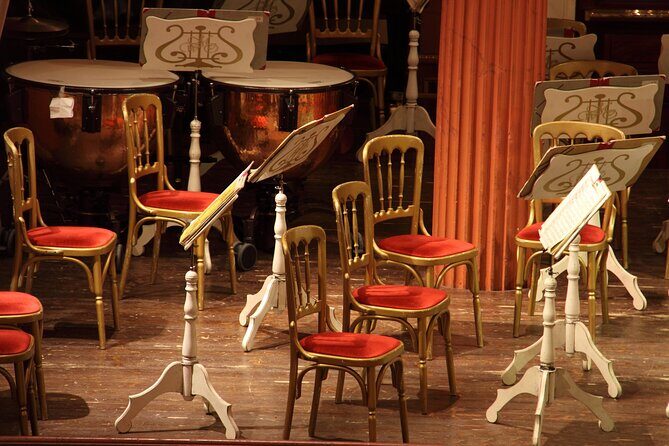
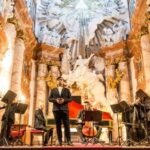
The extended option includes a ticket for a classical music concert tied to Beethoven, Mozart, Strauss, or Schubert. Concerts happen in different Old Town venues, and the exact performance can shift based on day, time, group size, and availability. Your concert ticket will list the exact time in the email you receive.
Timing matters: concerts usually start between 5:30 and 8 pm, and the tour notes the concert is a separate evening attraction. That means you should plan to be punctual and ready to transition from walking to listening without cutting it close.
How to think about the value: the tour price already covers an optional concert ticket only when you choose the extended version. So if you’re the type who wants a “Vienna night” with a classical performance, this upgrade can turn your day into a complete music experience—walking, context, then sound.
How long is this, and what that means for your day plan
The tour runs about 3 to 5 hours. That range gives flexibility, but it also means you need to plan other activities around it rather than stacking tightly scheduled museum tickets.
If you’re trying to optimize a first visit to Vienna, this is a strong option because you’ll cover:
- Secession exterior landmark
- Historic Center orientation
- Beethovenplatz and music-institution stops
- Ringstrasse civic corridor moments
- A major interior visit at Pasqualatihaus
If your schedule is tight, you can also treat the theme as a backbone and ask for small adjustments—your guide can visit additional nearby stops like Stephansplatz (including the option to go toward St. Stephen’s Cathedral), plus Karlsplatz and Karlskirche, depending on what fits.
Group size, guide style, and photo moments
This is a private tour, meaning only your group participates. That matters because Vienna landmarks can get crowded even when you’re not paying for entry. With fewer people, you get a more conversational pace and more room for questions.
The guide approach is clearly story-driven. The aim is to connect Beethoven’s life with Vienna’s buildings, streets, and cultural institutions. And because the tour includes statue and exterior stops, you’ll have built-in photo chances without turning the entire walk into a photo sprint.
One consideration: if you’re careful about health or personal space, a guided walking tour is still close-contact by nature. Bring your own preferences for how you want to move around the group and how you handle photos.
Price and value: what $264.50 buys you
At $264.50 per person, this isn’t a budget-only walking deal. Here’s the value logic that makes it easier to justify:
- Private, licensed guide: You’re paying for expert narration, not a crowded group headset tour.
- Included entry at Pasqualatihaus: That’s the big one. It’s a full, time-consuming indoor stop, and you’re not scrambling for tickets.
- Concert ticket in the extended option: If you choose the upgrade, the evening show ticket is part of the package, and the performance choice is arranged based on availability.
Where cost can rise is also clear: some stops have optional or non-included entries. Secession interior is optional (listed as roughly 4.5 to 9.5 EUR). Theatermuseum and Hofburg entry aren’t included (Hofburg is outside-only on this route). Karlskirche is also marked as not included if you want to go inside.
Bottom line: the tour makes the most sense when you want (1) a real guide-led explanation, (2) meaningful access to Pasqualatihaus, and ideally (3) the concert upgrade so the day has a musical payoff at night.
Who should book this Beethoven walking tour?
I’d point you to this tour if:
- You want a Beethoven-themed Vienna that explains the city’s music status, not just biographical facts.
- You value a private guide and like asking follow-up questions.
- You want one strong museum-like stop (Pasqualatihaus) without spending your entire day hopping between far-off sites.
- You’re considering an evening concert anyway and want it tied to Beethoven and the classical composers that made Vienna famous.
It’s less ideal if you:
- Only want free exterior viewing and don’t want to pay for any interior admission.
- Have zero tolerance for walking on cobbled sidewalks for several hours (this is still a walking plan).
Should you book it?
Yes—if Beethoven is your main reason for coming to Vienna, book this. The reason is simple: the tour doesn’t treat Beethoven like a name on a sign. It pairs public landmarks with a substantial included visit to Pasqualatihaus, plus (in the extended option) a real evening performance ticket.
If you’re deciding between base and extended, choose the extended option when you want the full arc: history on foot, then music in a hall. Choose the base option if you’d rather keep your evening open for your own plans and just focus on the city-meets-Beethoven story.
If you want a great Vienna day that feels purposeful instead of random, this is a strong bet.
FAQ
How long is the Vienna Beethoven Life Private Guided Walking Tour?
It lasts about 3 to 5 hours.
Is the tour private, or is it part of a group?
It’s a private tour/activity. Only your group participates.
What’s included, and what’s not included?
The tour includes a private walking tour led by a licensed guide, sightseeing of Beethoven-related places, entrance to Beethoven Pasqualatihaus, and (in the extended option) a ticket for a classical music concert. Not included are optional or separate admissions such as stepping inside the Secession building, and some other stop entries marked as not included.
Where does the tour start and end?
The meeting point is Friedrichstraße 12, 1010 Wien, Austria. The activity ends back at the meeting point.
What about the classical concert in the extended option?
Classical concerts are in venues in Vienna Old Town, and the venue and exact time can change based on availability and scheduling. The concert typically starts between 5:30–8 pm, and the exact time is provided on your concert ticket in the email.
Can I cancel for free?
Yes. You can cancel for a full refund if you cancel up to 24 hours in advance. If you cancel less than 24 hours before the start time, the amount paid is not refunded.