REVIEW · VIENNA
Vienna: Sightseeing Tour in an 8 seats electric classic car
Book on GetYourGuide →Operated by E-Oldtimer Panoramafahrt | Gratt KG · Bookable on GetYourGuide
Vienna looks best when you’re not rushing. This electric old-timer tour lets you glide past landmarks in comfort while the driver gives audio commentary as you go. Two things I really like: it’s a relaxing way to learn what you’re seeing, and it keeps the group together in one vehicle so nobody gets lost on the Ringstraße.
You’ll also appreciate the practical flexibility: it runs no matter the weather, and the schedule is short enough for a quick hit of Vienna’s biggest names. The one drawback to consider is audio clarity—if you sit in the back or in a less direct facing position, you may catch less of what the driver is saying.
If you’re after a fast, low-effort orientation to the city’s most famous sights, this tour is built for you. Just plan to choose your seat with listening in mind and don’t expect long stops or indoor visits.
In This Review
- Key Highlights Worth Your Time
- Why An Electric Old-Timer Works So Well In Vienna
- Getting Oriented Fast: Meeting At Café Mozart, Then Rolling
- The Albertina Start: A Clean Launch Into Vienna’s Star Attractions
- Albertina Through The Ringstraße: Opera, Boulevard Grandeur, And Statue Names
- Burggarten To Palmenhaus And Schmetterlingshaus: Green Break In The Middle Of It All
- Heldenplatz And Hofburg: Imperial Vienna In One Focused Pass
- Big Civic Vienna: Parliament, Burgtheater, Rathaus, And University Zones
- Old City Edges And The Seine-Style Turns Of Central Vienna
- Stephansdom And Wollzeile: The Central Anchor You’ll Remember
- Stadtpark To Musikverein: Music Vienna Meets Grand Hotels
- Short But Sweet: How the 60 Minutes Feel in Real Life
- Price And Value: When $259 Per Group Makes Sense
- Small Comfort Details That Can Make Or Break Your Experience
- Who Should Book This Electric Classic Car Tour
- Quick Tips For A Better Ride (And Better Photos)
- Should You Book The Electric Old-Timer Sightseeing Tour?
- FAQ
- How long is the Vienna sightseeing tour in the electric classic car?
- Where does the tour start and end?
- What is the meeting point?
- Is this a private group tour?
- What languages are available for the driver?
- How many people can be in the group?
- Is the tour suitable for bad weather?
- What price should I expect?
- Is cancellation allowed if plans change?
Key Highlights Worth Your Time
- Electric old-timer comfort: classic feel, modern zero-emission driving
- Driver audio commentary in English or German for real context
- Major sights stitched into one loop: Ringstraße, Hofburg area, and central old town
- Weather-proof sightseeing with minimal walking
- Group-friendly format for families and friends in one shared ride
Why An Electric Old-Timer Works So Well In Vienna
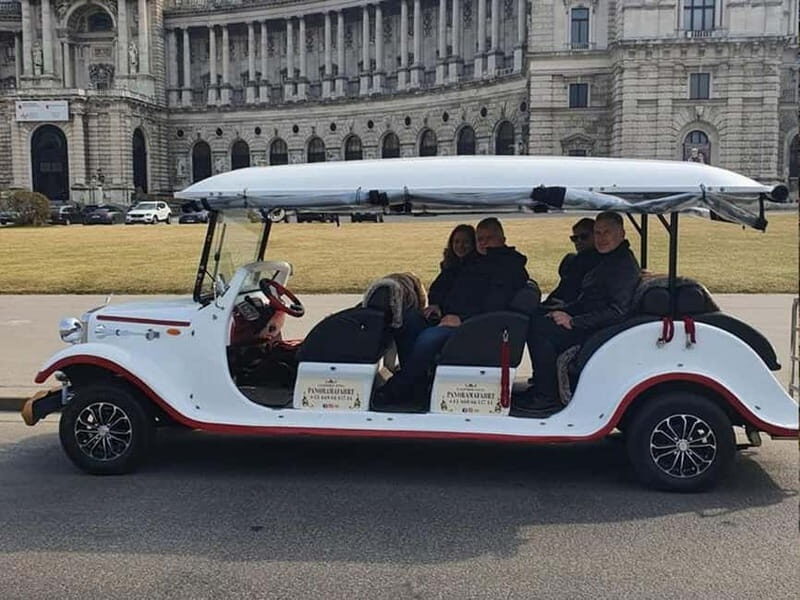
Vienna can be a lot on foot—great streets, but also a lot of crossing, waiting, and backtracking. This tour fixes that with an 8-seat electric classic car, so you get moving views without the effort. And because it’s electric, the ride feels calmer around you, especially in busy central streets.
What makes the experience feel “Vienna” is how you’re not just looking at random buildings. You’re traveling through the signature loops of the city where the big stories are written into the architecture—opera, imperial power, grand civic buildings, and church-and-market Vienna close together.
The “old-timer” style matters too. It changes the pacing from public-transport hustle to something more like a guided carousel of sights. You’ll still be in the middle of the action, but without the constant stop-and-go stress.
You can also read our reviews of more tours and experiences in Vienna.
Getting Oriented Fast: Meeting At Café Mozart, Then Rolling
The tour starts and ends at Café Mozart, Albertinaplatz 2, 1010 Vienna. The meeting point is in front of the Radisson Blu Hotel, at Herrengasse 12, so you’re in a very central zone for orientation. That’s useful on a first day, or any day when you want your bearings fast.
The total time is 60 minutes, which is perfect for a “greatest hits” pass. You’re not touring museums in detail here—you’re gathering context while the city slides by. For most people, that’s the right trade: you get the meaning behind the landmarks, and then you can decide later what deserves a deeper visit.
Seat choice is worth thinking about. In this type of car, where you sit affects how well you hear. If you want the commentary clearly, sit closer to the front or in a position that faces the driver more directly.
The Albertina Start: A Clean Launch Into Vienna’s Star Attractions
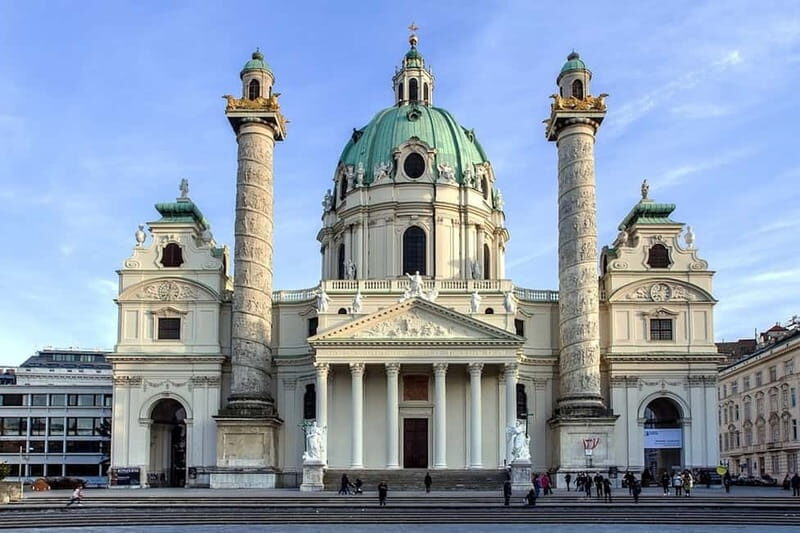
You begin at Albertinaplatz, which is an excellent starting point because it puts you near some of the city’s most “recognizable on sight” architecture. From here, the route immediately sets you on the classic Vienna corridor: the grand streets and monuments people come to see on photos, stamps, and postcards.
A smart way to enjoy the first minutes is to treat them like a warm-up. Listen closely to what the driver connects to the landmarks—Vienna becomes much easier to understand once someone links the names to what you’re actually seeing outside.
Then the tour starts layering in the details. The driver’s audio commentary helps you notice the features you might otherwise miss from a slow street corner.
Albertina Through The Ringstraße: Opera, Boulevard Grandeur, And Statue Names
This is where the tour flexes its “Vienna postcard, but explained” power. You’ll move through the Ringstraße, the long, grand boulevard that defines Vienna’s formal city center.
Here are the kinds of sights you’ll see along this stretch, and what to look for:
- Staatsoper (Vienna State Opera): even if you don’t know anything about opera, you’ll feel how monumental it is. It’s one of those buildings that signals cultural importance instantly.
- Ringstraße, längste Boulevard Straße der Welt: the tour frames the Ringstraße as a signature idea of the city, not just a road.
- Goethe Denkmal and Schiller Denkmal: these memorials are a fast shortcut to Vienna’s long-running love of literature and ideas.
- Akademie der bildenden Künste: you’ll spot the arts education presence in the architecture theme of the boulevard.
- Palais Schy: palaces like this are less about one single moment and more about how Vienna kept power and wealth expressed through façade and location.
- Mozart Denkmal: it’s a reminder that music isn’t separate from the city—it’s part of the street-level identity.
Also pay attention to how the route connects these points. The tour isn’t just listing names. It’s showing you how the city arranges culture, empire, and civic life in one connected loop.
Burggarten To Palmenhaus And Schmetterlingshaus: Green Break In The Middle Of It All
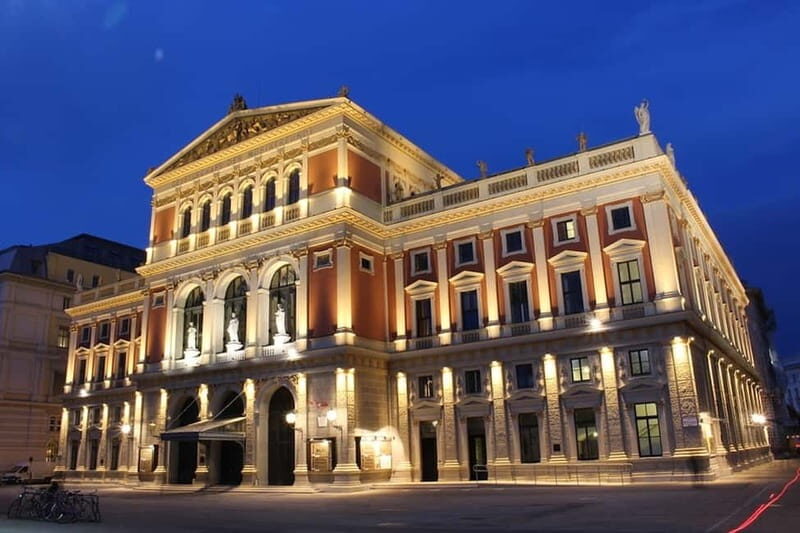
After the boulevard grandeur, you get a calmer rhythm around Burggarten. This is the kind of space where Vienna feels more lived-in, and less like a photo set.
On the ride, you’ll pass by:
- Burggarten
- Palmenhaus
- Schmetterlingshaus
- Neue(s) Burgtor (Neues Burgtor)
Why this segment matters: Vienna’s big streets can feel like one continuous timeline of monuments. This garden-and-pavilion zone adds a pause that helps the rest of the sights land better in your mind.
If you enjoy contrasts—big façade to quiet garden—this is a highlight. Even from the car, you can sense the shift from ceremonial streets to curated spaces designed for strolling.


Heldenplatz And Hofburg: Imperial Vienna In One Focused Pass
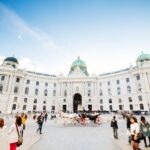
Now the tour shifts into the heart of imperial “power and presentation.” You’ll be in the orbit of Heldenplatz and Hofburg, and you’ll see how Vienna used architecture to make authority feel permanent.
Key stops you’ll pass by:
- Heldenplatz
- Hofburg
- Nationalbibliothek
- Welt Museum
- Präsidentenpalast
- Prinz Eugen Statue
- Erzherzog Karl Statue
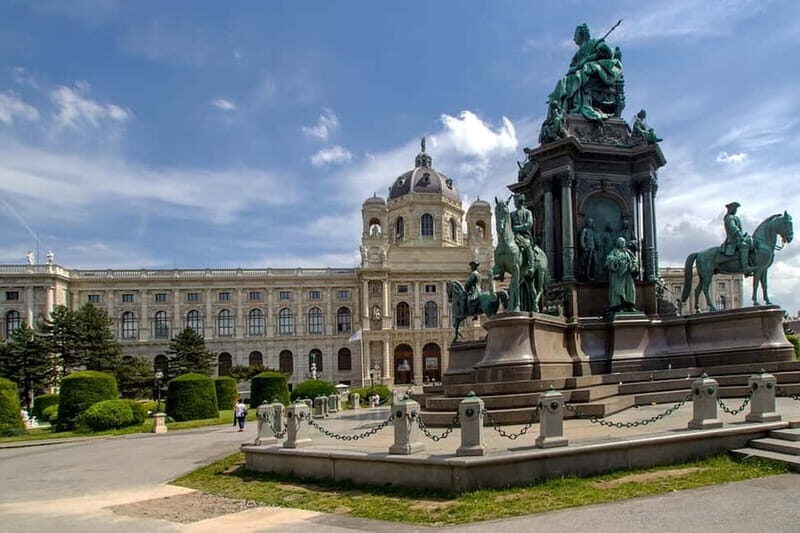
- Maria Theresia Statue
What I like about this part is the way the driver’s commentary gives you a framework for the statues. If you just see names on a plaque, it can blur together. With a guided audio explanation while you’re rolling past, you start to connect who these figures were and why they’re placed where they are.
Also notice the “collection” effect. The tour stacks personalities (military, rule, culture) and buildings (library, museum, palace) in a relatively short window. That’s why this 60-minute format works: it turns a confusing cluster into something organized.
Big Civic Vienna: Parliament, Burgtheater, Rathaus, And University Zones
Vienna doesn’t separate politics, theater, and learning the way some cities do. This segment shows how civic life and culture sit side-by-side along the city’s grand lines.
You’ll see:
- Parlament
- Burgtheater
- Rathaus
- Universität
- Liebenberg Denkmal
Look for the way the buildings represent different “roles” in the city. Parliament signals public decision-making. Burgtheater signals performance and national culture. Rathaus adds municipal identity. University connects to long-term thinking and institutions.
If you’re the type who likes to understand why a city feels the way it does, this section is strong. You’ll start recognizing Vienna as a place where big ideas got built into stone.
Old City Edges And The Seine-Style Turns Of Central Vienna
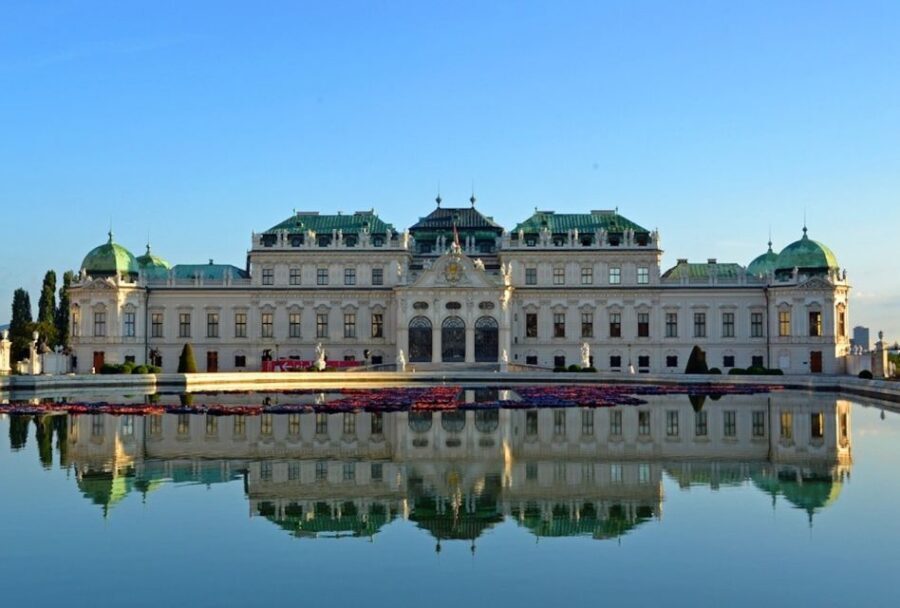
The route also touches the older layers of town—less formal than the Ringstraße, but still full of meaning. You’ll pass:
- die alte Stadt Mauer (old city wall areas)
- Palais Daum Kinski
- Palais Harrach
- Palais Ferstl mit Café Zentral
- Am Hof
- Hohe Brücke
- Salz Gries
- Marc Aurel Straße
- Hoher Markt
- Hochzeitsbrunnen
- Ankeruhr
- Wollzeile
This is the segment where you can start spotting Vienna as a living city, not just an imperial showcase. The old wall areas and market squares help you understand that Vienna’s identity isn’t only about palaces and opera.
One practical note: places like Ankeruhr (the clock) and Hoher Markt are visually distinctive. Even if you don’t stop, you’ll likely want to glance longer than you expect because they feel like “this is the real city” moments.
Stephansdom And Wollzeile: The Central Anchor You’ll Remember
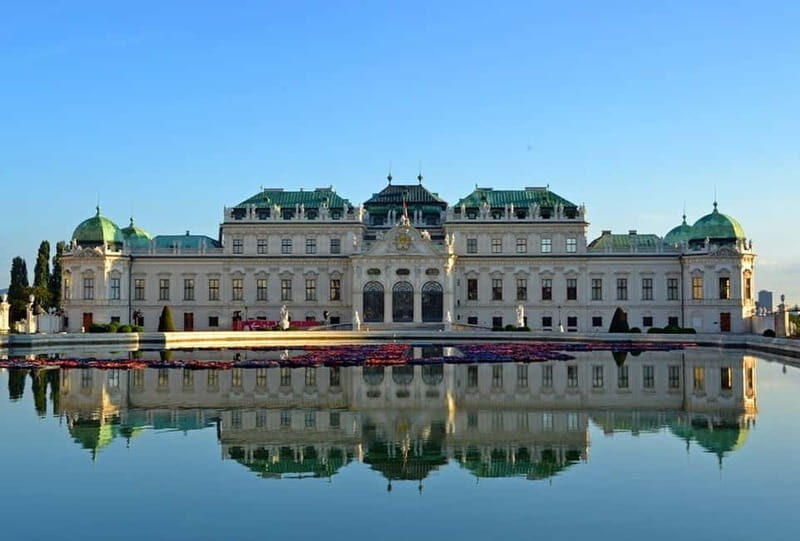
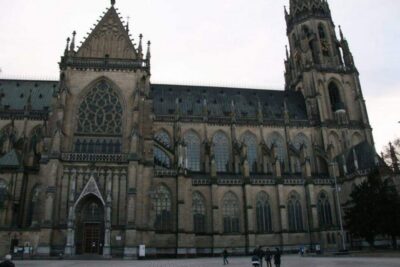
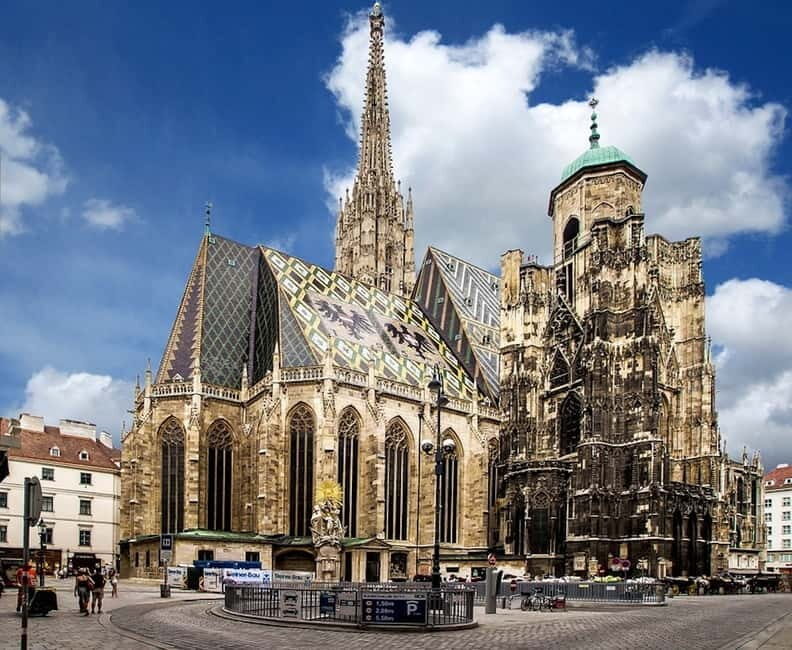
The ride brings you past Stephansdom, one of the most recognizable landmarks in Austria. You’ll also go by Wollzeile, a street associated with shopping and old-town energy.
Even without stepping inside, Stephansdom is a key orientation point. After you’ve seen it once from the outside, the rest of central Vienna tends to make more sense when you return later on your own.
This is also where families often enjoy the ride most, because the landmark is so obvious. It’s easier for kids, teens, and first-timers to feel, I see it, we’re in Vienna.
Stadtpark To Musikverein: Music Vienna Meets Grand Hotels
Vienna’s music identity isn’t tucked away—it’s placed in the city’s everyday sightlines. This portion includes:
- Stadtpark
- Johann Strauss Denkmal
- Kursalon Hübner
- Schwarzenberg Platz
- Café Schwarzenberg
- Musikverein
- Hotel Imperial
- Grand Hotel
- Hotel Bristol
- Hotel Sacher
- and then back toward Staatsoper and Albertina
What to look for: this isn’t just “pretty buildings.” It’s a map of Vienna’s performance culture and its famous hotel history—places that function like social landmarks.
The Musikverein area is especially satisfying because the building is instantly tied to classical music. If you’ve ever heard the word Musikverein in recordings or concert announcements, you’ll likely feel a click when you see it.
And then you’ll notice how the tour threads the city’s glamour through real streets. The hotels—Imperial, Bristol, Sacher—serve as visual waypoints of old-world prestige.
Short But Sweet: How the 60 Minutes Feel in Real Life
A 60-minute car tour is never going to replace slow wandering. But it’s great for what it is: a guided snapshot that makes your later self-guided exploring smarter.
Think of it like this:
- If you have one limited day, this gives you context so you can choose what to revisit.
- If you’re tired or traveling with mixed-age family members, you still get major landmarks without a long walk.
- If you like history, you’ll appreciate the driver linking names to what you see.
The pace is designed for seeing a lot of Vienna without stopping at every corner. That’s the trade: less time at each site, more time connecting the city’s story.
Price And Value: When $259 Per Group Makes Sense
The price is $259 per group up to 8. For a private group, that’s not just transportation—it’s your driver-led, audio-supported guided route through central Vienna.
Value depends on how you travel:
- If you’re a small group and split the cost, you often end up paying less than the “everyone pays separately” feeling you get on some shared tours.
- If you fill the car closer to the cap, the per-person value gets noticeably better.
- If you’re traveling as a family and want everyone together, private routing is a win because nobody gets left behind.
Also consider the format: you get emission-free driving, comfort, and a structured sight loop in an hour. If you’d otherwise spend that hour walking and trying to figure out what you’re looking at, paying for guidance becomes a form of time-saving.
Small Comfort Details That Can Make Or Break Your Experience
The car is meant for comfort, and most of the experience’s charm comes from that relaxed pace. Still, a couple things matter:
1) Listening clarity depends on seating. If you’re at the back or sitting opposite the direction of travel, you may struggle to catch the driver’s words.
2) The tour is an overview, not an inspection. You’ll see a lot of places, but the stop-and-stare time is limited. If you want deep photos or interior visits, plan to return later on your own.
One more human detail: drivers often set the tone. In prior experiences with this kind of tour setup, the driver’s humor and friendliness have been a big part of why the ride feels memorable. If you want a relaxed vibe, you’re likely to get it.
Who Should Book This Electric Classic Car Tour
This tour fits best if you:
- want a first-time orientation to Vienna in about an hour
- are traveling with a family and want everyone in the same vehicle
- prefer less walking but still want guidance and context
- have limited time and want to see Ringstraße, Hofburg area, and central sights without planning every turn
It may not be the best choice if you:
- expect to go inside major attractions during the ride
- want long pauses at each stop
- need perfectly clear audio from any seat position, every time
Quick Tips For A Better Ride (And Better Photos)
- Choose a seat where you can face the driver more directly for better audio commentary.
- Bring your phone for quick landmark shots, but don’t expect perfect still photography—this is moving sightseeing.
- Use the first few minutes to listen for the “big themes” the driver is connecting. It helps the later stops click into place.
- If you’re celebrating something, keep it low-key and fun. The tour’s relaxed mood is the kind where a cheerful moment can become part of your day.
Should You Book The Electric Old-Timer Sightseeing Tour?
I’d book it if you want a comfortable, guided way to see Vienna’s headline landmarks in a short window. The mix of Ringstraße, imperial sights around Hofburg, the central old-town highlights like Stephansdom and Ankeruhr, plus the music-and-hotel glamour makes it a strong “greatest hits with context” choice.
I’d skip it or pair it with more time on your own if you’re the kind of traveler who needs long stops, museum interiors, or perfectly quiet audio from every seat. For most people, though, an hour in an electric classic car with driver commentary is exactly the kind of value that makes a trip feel organized without feeling rushed.
FAQ
How long is the Vienna sightseeing tour in the electric classic car?
The tour lasts 1 hour.
Where does the tour start and end?
It starts and ends at Café Mozart, Albertinaplatz 2, 1010 Vienna.
What is the meeting point?
Meet at 1010 Vienna, Herrengasse 12, in front of the Radisson Blu Hotel.
Is this a private group tour?
Yes. It’s listed as a private group.
What languages are available for the driver?
The driver offers commentary in English and German.
How many people can be in the group?
The summary lists up to 8 people per group, and the highlights also mention the old-timer can take up to 10 persons—confirm the exact capacity when booking.
Is the tour suitable for bad weather?
Yes. The experience is described as going sightseeing no matter the weather.
What price should I expect?
The price is $259 per group (up to the stated group size).
Is cancellation allowed if plans change?
Free cancellation is available up to 24 hours in advance for a full refund.