REVIEW · VIENNA
From Vienna: Mauthausen Memorial Private Day Trip
Book on GetYourGuide →Operated by Vienna à la carte · Bookable on GetYourGuide
A sobering place with a well-run plan. This private Vienna-to-Mauthausen Memorial day trip is interesting because you’re taken door-to-door and then explore with an audio guide in 11 languages, at your own pace. One of the best parts is that the route is built for comfort and clarity, so you can focus on what you came to see, not on transport puzzles.
The one thing to consider is that your on-site time is set at about 3 hours, which can feel quick if you want extra museum time or a slower, more absorbing pace.
In This Review
- Key Highlights You’ll Notice Fast
- Mauthausen Memorial: What You’re Really Visiting
- Private Transport from Vienna: The Real Value
- The On-Site Plan: Audio-Guide Time, Not a Rushed Checklist
- Arriving at 11:45: How to Make Those First Steps Count
- Wiener-Graben Quarry: Seeing Forced Labor in Place
- Stairs of Death: Why This Section Hits Different
- SS-Quarters, Prisoners’ Barracks, and the Camp Prison
- Gas Chamber: Handling the Most Difficult Section
- Room of Names: A Direct Way to Honor Victims
- Mauthausen Museum Re-Opened: What It Adds
- The Timing Works: When You’ll Eat, Rest, and Return to Vienna
- Price and Value: Is $1,343 per Group Worth It?
- Who This Day Trip Suits Best (and Who Should Rethink It)
- A Practical Packing Checklist for a Memorial Day
- Should You Book This Vienna to Mauthausen Memorial Private Day Trip?
- FAQ
- How long is the Vienna to Mauthausen Memorial day trip?
- What time does the tour start from Vienna?
- Is lunch included in the price?
- Do I get audio guidance inside the memorial?
- What languages are available for the audio guide?
- Does the tour include hotel pickup and drop-off?
- Is this tour wheelchair accessible and is it suitable for children?
Key Highlights You’ll Notice Fast
- Hotel pickup and return in a private vehicle: fewer logistics, more actual time at the memorial
- Self-guided tour with an audio guide (11 languages): you control the pace and language
- Room of Names: a focused moment to honor victims and pay respects
- Key preserved areas: Wiener-Graben Quarry, SS-Quarters, prisoners’ barracks, camp prison, and the gas chamber
- Skip the ticket line: less waiting before you start processing the site
Mauthausen Memorial: What You’re Really Visiting
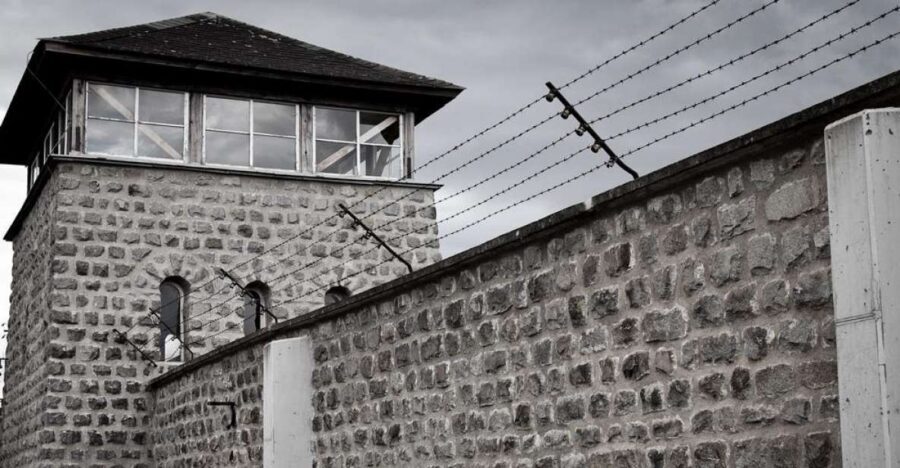
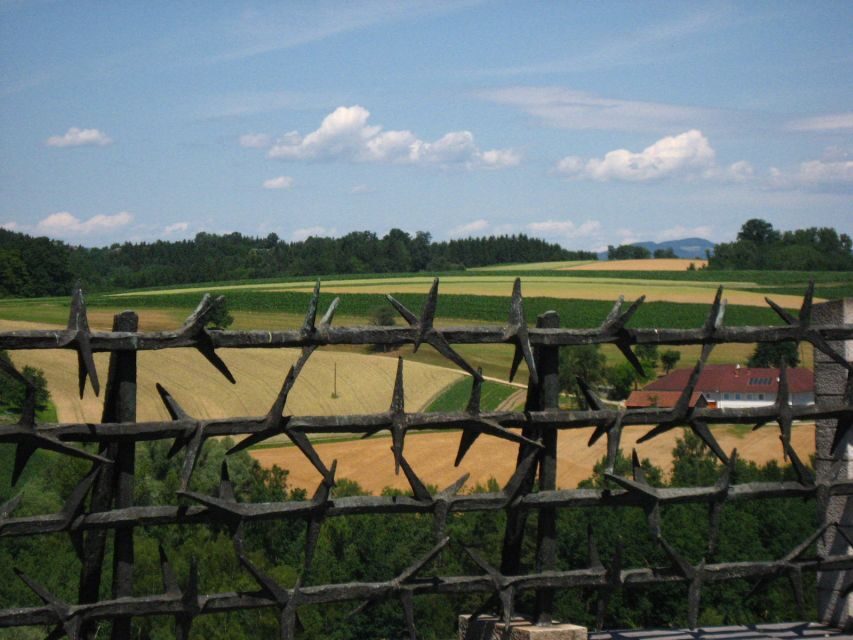
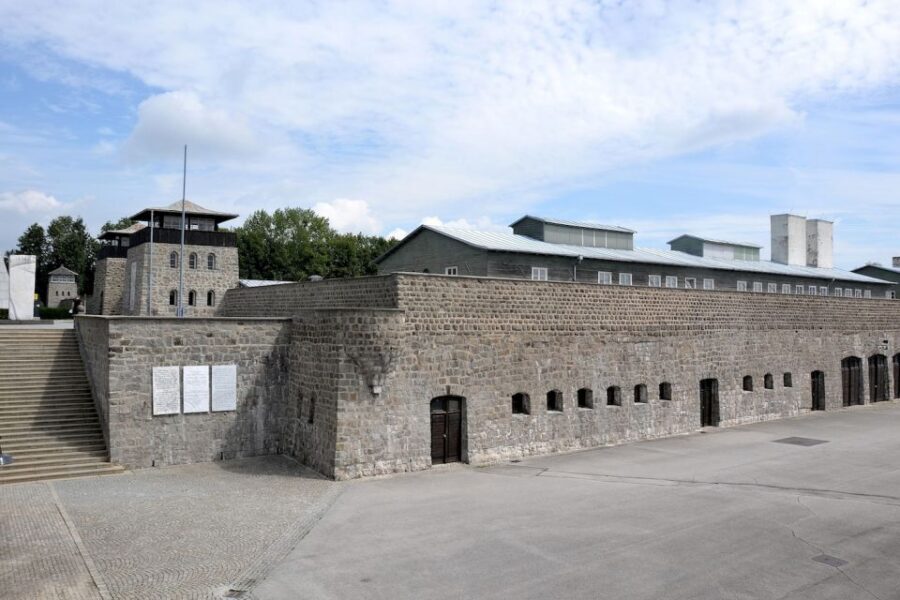
Mauthausen, in Upper Austria, wasn’t just a prison. It was one of the largest labor camp complexes of the Third Reich. Between 1938 and 1945, about 200,000 people were imprisoned here from across Europe, and roughly half did not survive.
That scale is hard to hold in your head while you’re standing in the preserved parts of the camp. So I like how this day trip keeps things simple: you get transport from Vienna, then you’re free to walk and listen with an audio guide. Instead of rushing you through talking points, it lets you match the experience to your own emotional and mental pace.
You’ll also find a site designed for remembering, not spectacle. The Room of Names is specifically built for honoring victims. It’s one of those places where your own silence feels appropriate. Don’t try to rush past it; it’s the kind of stop that changes how you read the rest of the memorial.
You can also read our reviews of more private tours in Vienna


Private Transport from Vienna: The Real Value
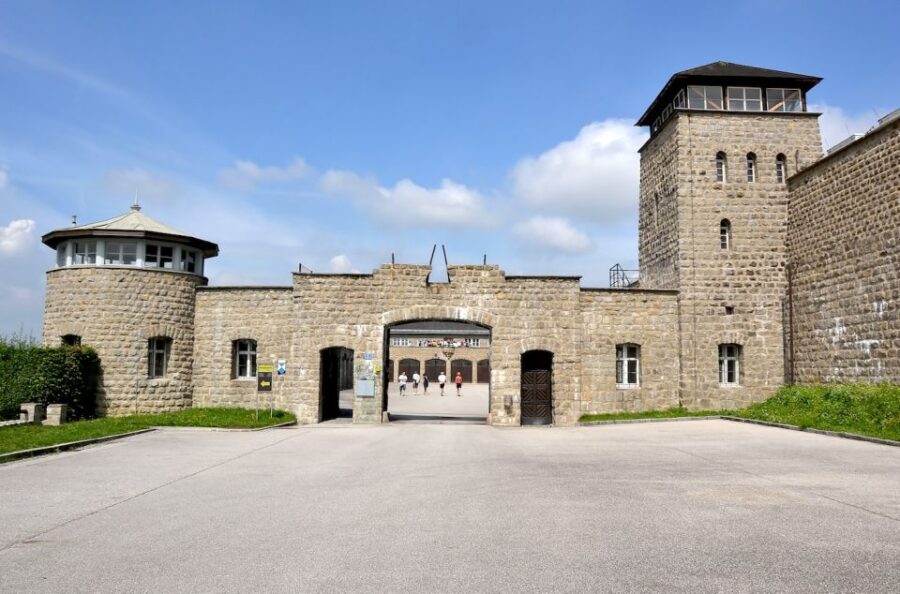
Getting to Mauthausen on your own can be done, but a private day trip removes the stress. You’re picked up from your Vienna hotel and driven across Lower Austria to the memorial in a private limousine or minivan.
Why that matters: memorial visits tend to take longer than you think, and mentally you’ll want time to transition. A comfortable car and a calm schedule helps you arrive with steadier attention. The driver is English-speaking, and the experience includes a “friendly English-speaking driver” accompaniment—so if you need practical help along the way, you’re not left improvising.
Comfort details are part of the experience too. One account notes mineral water in the vehicle, which is a small thing but genuinely helpful on a day that includes walking and emotional concentration.
And because it’s a private group (up to 8 people), you’re not stuck with the pressure of matching a larger crowd’s pace.
The On-Site Plan: Audio-Guide Time, Not a Rushed Checklist

This is a self-guided memorial visit, which is a big deal. You won’t be herded nonstop by a group script. Instead, you explore the preserved historic premises at your own pace with an audio guide.
The audio guide languages are:
English, Spanish, Czech, Dutch, French, German, Hebrew, Hungarian, Italian, Polish, Russian.
That matters if you’re traveling with someone who reads better in their own language. It also helps you choose how “in the moment” you want the information to feel. Some people prefer to listen continuously; others pause the audio and just take in what’s in front of them.
Also included: skip the ticket line. That sounds minor, but before a memorial, every minute of waiting can feel like dead time.
Plan to give yourself room to slow down. Even if you feel you’re “doing it efficiently,” Mauthausen doesn’t reward speed. It rewards attention.
Arriving at 11:45: How to Make Those First Steps Count
The tour start is set for 9:30 AM with pickup in Vienna. You travel out to Mauthausen, and you typically arrive around 11:45 AM for about 3 hours on site.
Those first minutes are when you’ll decide how you want to experience the memorial:
- Follow the audio guide in order, like a course
- Use it as a support tool and stop when you feel you should read, reflect, or look closer
- Switch between listening and silence, especially after heavier sections
Either way, get your bearings early. Identify the Room of Names location in your route, then decide whether you want to visit it earlier or later. Some people feel the need to honor victims right away. Others want to understand the setting first, then return for that reflective moment.
Wiener-Graben Quarry: Seeing Forced Labor in Place
One of the featured stops is the Wiener-Graben Quarry. Quarries in labor systems weren’t just workplaces; they were spaces where exhaustion, control, and survival pressures played out day after day.
When you’re standing in and around areas tied to forced labor, the history becomes physical. The audio guide helps connect what you’re seeing with what happened here—without requiring you to read everything on-site like it’s a textbook.
A practical tip: wear shoes you trust. The site involves walking between different preserved locations. Even if you consider yourself “fine on your feet,” plan for the kind of fatigue that sneaks up on you after you’ve been paying attention to detail for hours.
A few more Vienna tours and experiences worth a look






Stairs of Death: Why This Section Hits Different
The Stairs of Death is part of the route. It’s one of the most famous preserved elements of Mauthausen, and it tends to hit emotionally faster than people expect.
What I think helps here is how the format works: you have audio guidance, but you’re not being forced along at someone else’s tempo. You can stop, breathe, and let the meaning land before moving on.
If you’re sensitive to symbolism, don’t feel pressured to “get through it.” The memorial is designed for remembrance, not performance. You can take your time at a section like this and still stay within the allotted visit window.
SS-Quarters, Prisoners’ Barracks, and the Camp Prison
The tour also includes stops at the SS-Quarters, prisoners’ barracks, and the Camp Prison.
These are the places where the system becomes clear as a designed environment:
- The SS-quarters help show who held power and how the camp functioned.
- The prisoners’ barracks remind you that this was not abstract—it was housing, crowding, and everyday exposure to danger.
- The camp prison sections bring you closer to confinement and punishment mechanisms.
Because your tour is self-guided with audio, you can spend more time on the part that you feel you need most. If you’re trying to understand the logic of control, you may linger in power-related areas. If you’re trying to understand daily suffering, you may focus more on the prisoners’ side.
Try to resist the urge to treat each stop like a photo opportunity. Instead, think of them like chapters. When the chapters connect in your mind, you’ll get more than the sum of the rooms.
Gas Chamber: Handling the Most Difficult Section
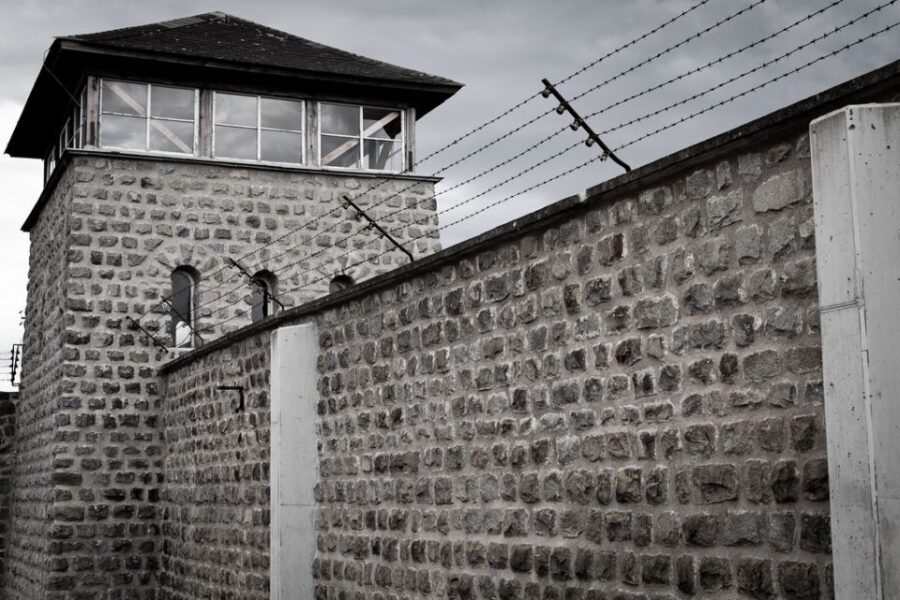
The route includes the gas chamber. This is the portion that can be emotionally intense.
With self-guided audio, you’ll likely notice a difference between people’s coping styles:
- Some want the audio narration to help them process what they’re seeing.
- Others prefer to pause the audio and just stand for a moment.
Do what helps you. There’s no scoring system for how you react. If you feel overwhelmed, step out of a line of sight and come back when your mind catches up.
Because the tour includes only about 3 hours total on site, you should also consider your pacing for the emotional sections. If you spend 20 extra minutes in one difficult area, you might have slightly less time for the museum and the Room of Names later. That’s not a problem—it’s just information so you can decide.
Room of Names: A Direct Way to Honor Victims
You’ll also visit the Room of Names, included as a key highlight. This is the most explicitly memorial-focused part of the day trip.
It’s also one of the best places to slow down and shift gears from learning to honoring. The audio guide can provide context, but the real value here is the act of paying respects. The design supports a reflective moment rather than a hurried stop.
If you want to do this properly, give yourself a little buffer. When you’re trying to see everything on a schedule, you can accidentally treat the Room of Names like a checkbox. This tour’s self-guided structure helps you avoid that.
Mauthausen Museum Re-Opened: What It Adds
The day trip includes the recently re-opened Mauthausen Museum. This is important because memorial sites alone can leave questions in your mind: what was happening elsewhere, how did the camp system evolve, and how should you interpret the preserved structures?
A museum helps you connect the physical remains to broader context. You’ll get a clearer framework for what you saw outside and why those locations matter.
Keep in mind: your on-site time is about 3 hours. Depending on how long you spend in the quarry, stairs, and prison areas, you may need to skim quickly through the museum highlights rather than reading every sign. That’s normal. The goal is understanding the bigger picture, not reading every sentence on your first pass.
The Timing Works: When You’ll Eat, Rest, and Return to Vienna
After your visit, you’ll leave the memorial around 2:45 PM.
Then there’s a short snack stop at a local restaurant for about 30 minutes, at your own expense. Lunch isn’t included, so bring cash if you plan to buy food there. (The tour notes cash for lunch, and since lunch isn’t part of the package, that’s on you.)
You should arrive back in Vienna around 5:30 PM for hotel drop-off. That makes it a true day trip: enough time to do the memorial, not so long that you lose the entire evening.
Practical note: bring layers. Even in the right season, museum and outdoor sections can vary in temperature, and walking between buildings adds that mid-day chill.
Price and Value: Is $1,343 per Group Worth It?
The price is $1,343 per group up to 8 for a duration of about 8 hours.
Let’s do the math. If you fill the group size completely (8 people), you’re at roughly $168 per person. If you’re a smaller party, it’s higher per head—but you’re paying for what’s hard to replicate cheaply: private door-to-door transport, a professional English-speaking driver, self-guided audio included, and skip-the-ticket-line entry.
If you’re traveling with:
- a group that can realistically share the cost,
- someone with limited patience for transport logistics,
- or you simply want to arrive calm and leave knowing you didn’t miss key areas,
then this price can make sense. It buys you time and simplicity, not just transportation.
Also, the format avoids the hidden costs of “DIY friction.” When you go on your own, you still spend energy figuring out routes and timing. Here, the day is built. That’s part of the value.
Who This Day Trip Suits Best (and Who Should Rethink It)
This works best if you want a private, well-structured memorial visit with language support.
It’s a strong fit for:
- adults and mature teens who can handle a difficult historical site,
- anyone who wants to go at a personal pace with an audio guide in their language,
- groups up to 8 who prefer privacy over public-tour crowds.
It’s not suitable for children under 14, according to the tour information.
If you’re traveling with someone who needs a wheelchair-accessible route, you’re in luck: the tour notes wheelchair accessibility.
A Practical Packing Checklist for a Memorial Day
This is not a day for just comfortable shoes. Think about mental comfort too.
Bring:
- sturdy walking shoes
- a light layer or jacket for changing indoor/outdoor temps
- cash for lunch (since lunch isn’t included)
- your patience for a day that’s emotionally heavier than a normal sightseeing trip
And one more: expect that you may want to stop and sit longer than planned. The self-guided nature helps with that. You’re not required to keep marching for someone else’s timing.
Should You Book This Vienna to Mauthausen Memorial Private Day Trip?
If your goal is to visit Mauthausen with minimal logistics and maximum flexibility, I’d say this is a good booking.
Choose it if you want:
- private hotel pickup/drop-off
- a self-guided audio experience in 11 languages
- time to honor victims at the Room of Names
- included access benefits like skipping the ticket line
- a schedule that gets you back to Vienna by evening
Consider passing or pairing it with extra planning if you know you’ll want much more than 3 hours on-site, especially for deeper museum time. The route is built for a focused day, not for a slow multi-session exploration.
In the end, you’re buying a well-run framework for a difficult place. And that’s exactly the kind of value that helps you show up with respect, clarity, and the attention the memorial deserves.
FAQ
How long is the Vienna to Mauthausen Memorial day trip?
The duration is 8 hours.
What time does the tour start from Vienna?
The recommended start time is 9:30 AM.
Is lunch included in the price?
No. Lunch is not included, and you should carry cash for lunch or for what you choose to buy during the snack stop.
Do I get audio guidance inside the memorial?
Yes. The self-guided tour includes an audio guide available in 11 languages.
What languages are available for the audio guide?
The audio guide is available in English, Spanish, Czech, Dutch, French, German, Hebrew, Hungarian, Italian, Polish, and Russian.
Does the tour include hotel pickup and drop-off?
Yes. Hotel pickup in Vienna and hotel drop-off in Vienna are included.
Is this tour wheelchair accessible and is it suitable for children?
It is wheelchair accessible. Children under 14 are not suitable.