REVIEW · VIENNA
Private Van & Walk Tour – One Perfect Day in Vienna
Book on Viator →Operated by SCHINDL Local Services & Day Tours · Bookable on Viator
Vienna’s best moments fit in one day. This private Van & Walk tour is built for people with limited time who still want real context, not just photo stops. You’ll start with doorstep pickup and then move through a tight route that lays out how the city “works,” so you can explore smarter afterward.
I especially like the way the day balances big-name landmarks with street-level details, so Vienna feels understandable instead of overwhelming. The second thing I love is the private format: guides such as Walter, Brigitte, and Sabine are known for keeping the pace organized while still giving room for your interests and questions.
One consideration: this is an ambitious 7 hours. You’ll see a lot, but some stops are brief, so if you want deep museum time, you’ll still want a separate day for that.
In This Review
- Key takeaways before you go
- Why one full day works (and why a van matters)
- The day’s rhythm: pickup, driving, and the walking segment
- Price and value: what $1,080.22 per group really buys
- Stop-by-stop: what you’ll see and what to look for
- Staatsoper area and the Sacher connection
- Heldenplatz: imperial space with a dark historical layer
- Prater: the landmark with long staying power
- Hundertwasserhaus: eco-fantasy in public housing form
- Upper Belvedere Palace grounds and views
- Schonbrunner Gardens: palace grandeur without the museum trap
- The Arte Nouveau building linked to the 50-euro cent design
- Naschmarkt: Vienna’s food-and-market “belly”
- Rathausplatz and the Ring’s big-picture layout
- Volksgarten and the temple of Theseus
- Hofburg: political power and what you can’t fully cover in one pass
- Colonna Della Peste (Pestsaule) near the Graben
- St. Stephen’s Cathedral: the skyline anchor
- Who this tour is best for (and who might want a different plan)
- The guide factor: why the private format shows up immediately
- Practical planning tips for your day
- Should you book One Perfect Day in Vienna?
- FAQ
- FAQ
- What time does the tour start?
- How long is the tour?
- Is this tour private?
- Do you get hotel pickup?
- Are tickets included for attractions?
- What languages are offered?
Key takeaways before you go
- Hotel/port/train pickup saves you the first-stress part of arrival day
- Private guide guidance helps you “read” Vienna as you go, not just follow a checklist
- An efficient route connects palaces, parks, markets, and the cathedral area in one flow
- Mostly free admissions at stops keep costs down compared to a day of paid entrances
- A short, manageable walking segment turns the day into an orientation loop you’ll remember
- A small group (up to 7) keeps the experience flexible and easier to manage
Why one full day works (and why a van matters)
If Vienna is your first big stop in Central Europe, you’ll notice two things fast: the city is gorgeous, and it’s also spread out in a way that can eat your time. A van-and-walk plan fixes that. You get quick transfers between key areas, so your energy stays for the parts that actually need slowing down—palace courtyards, garden views, and the old-city skyline.
I like that the tour doesn’t act like a theme park. It’s not just, “Here’s a building, move along.” It’s more like, “Here’s what to look for, and here’s why it matters,” which is how you start recognizing patterns in Vienna: power near the Hofburg, ceremony along the Ring area, and art/innovation showing up in unexpected places.
This is also a strong choice if you’re traveling with kids (when they can handle a full day) or if your group includes mixed interests: architecture people, history people, and “show me the best viewpoints” people can all find something.
You can also read our reviews of more walking tours in Vienna
The day’s rhythm: pickup, driving, and the walking segment
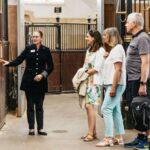
The tour starts at 9:00 am, and it runs about 7 hours. You’ll meet your group at hotels and vacation rentals around town, at the Reichsbrücke pier / Nussdorf pier, or at major train stations like Vienna Hbf and Vienna West. The tour is private, so you’re not sharing your guide with strangers.
Inside the day, there’s a clear rhythm:
- A driving portion handled by a professional driver in an air-conditioned minivan
- A guided walking segment later in the itinerary, after you’ve already gotten oriented
That sequence matters. You build familiarity first (by being carried around the city with explanations), then you walk with the mental map already loaded. One of the practical perks I like from the guide experience is that this kind of day tends to include small “real-life” help—staying comfortable, knowing timing, and handling logistics like where to pause.
And yes, it can be warm in summer. Even when conditions aren’t perfect, the structure of van transfers helps you avoid the worst kind of vacation fatigue: long, unnecessary standing in the heat.
Price and value: what $1,080.22 per group really buys
This tour is priced at $1,080.22 per group (up to 7 people). That means the cost per person changes a lot depending on how full your group is. If you hit the maximum group size, you’re roughly in the $150-per-person range. If you’re fewer people, the per-person cost rises—but you still gain a private guide, private van transport, and a tightly managed route.
Where it becomes value is in time. Vienna is easy to “waste” by moving slowly between far-flung neighborhoods, especially if you’re trying to see opera landmarks, palace complexes, art architecture, markets, and the cathedral skyline all in one trip.
The tour also does a smart thing financially: many stops are listed as admission-free for what you’re doing there. The big exception you should expect is that some museum-grade entrances aren’t included (like things inside the Hofburg), which makes sense for a day that’s trying to show you many places quickly.
Stop-by-stop: what you’ll see and what to look for
Staatsoper area and the Sacher connection
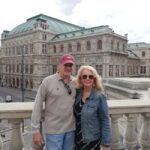
The day kicks off near the Vienna State Opera (Staatsoper)—one of the world’s leading opera houses. Tours are possible, but the building is at its best when there’s a performance happening. Even if you don’t go inside, it’s worth learning how to “read” it: this is Vienna putting culture on a pedestal.
From there, the route connects to the Sacher hotel story tied to the profits from the famous Sacher-Torte, widely described as the world’s first chocolate cake. It’s one of those Vienna facts that makes the city feel less like a postcard and more like a lived-in place where tradition, business, and art blur together.
If you like food history, pay attention here. Vienna often ties pleasures to power and patronage, and this is a good early example.
You can also read our reviews of more private tours in Vienna



Heldenplatz: imperial space with a dark historical layer
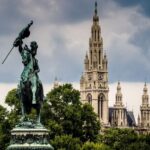
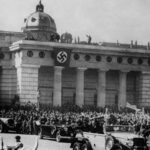
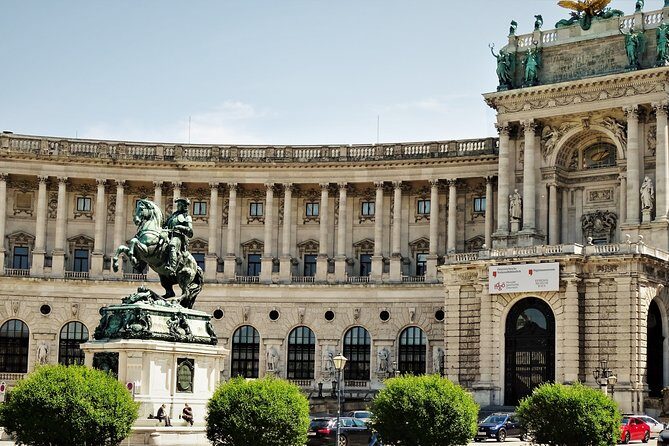
Next up is Heldenplatz, the monumental courtyard at the Hofburg complex. You’ll hear about the infamous balcony used for Hitler’s Anschluss speech. This stop can feel heavy fast—so your guide’s job is crucial here, because context is what turns a viewpoint into understanding.
What I like about including Heldenplatz is that it’s not hidden. It forces you to face a real part of the 20th century that shaped modern Europe, while also showing how the imperial layout still dominates the space today.
Prater: the landmark with long staying power
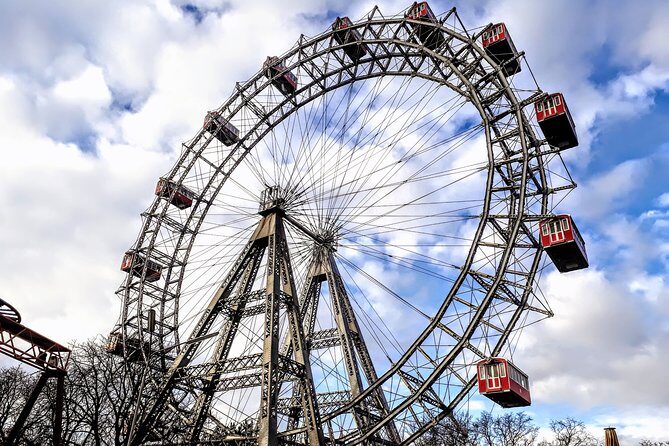
Then you head to Prater, home to the Ferris wheel that’s been operating for over 120 years and is one of Vienna’s major landmarks. This is a different side of the city—pleasure, public entertainment, and the kind of landmark that locals use as a reference point.
Prater is also a nice breather in the day’s rhythm. You’re not in a formal palace courtyard or a religious interior. You’re in a place that feels like Vienna’s everyday imagination.
Hundertwasserhaus: eco-fantasy in public housing form
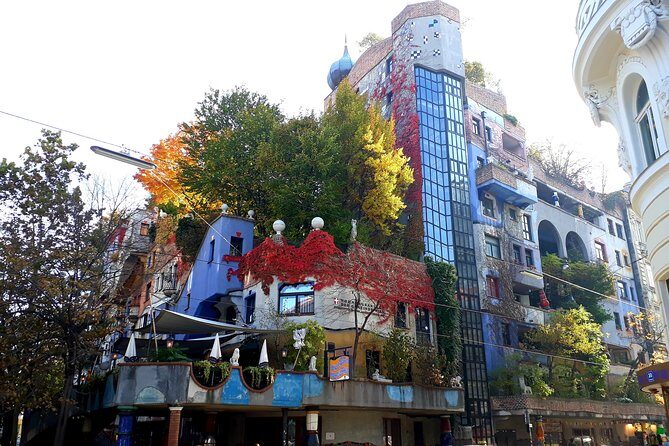
After Prater, you’ll see the Hundertwasserhaus, a public housing project known for an eco-fantasy style. It’s easy to think of Vienna as classical—then this throws that expectation out the window.
Spend a moment looking beyond the first striking shapes. The point here isn’t just the color and the curves; it’s the idea that everyday living can be designed with creativity and respect for nature. That’s the “why” your guide should connect to your mental map of the city.
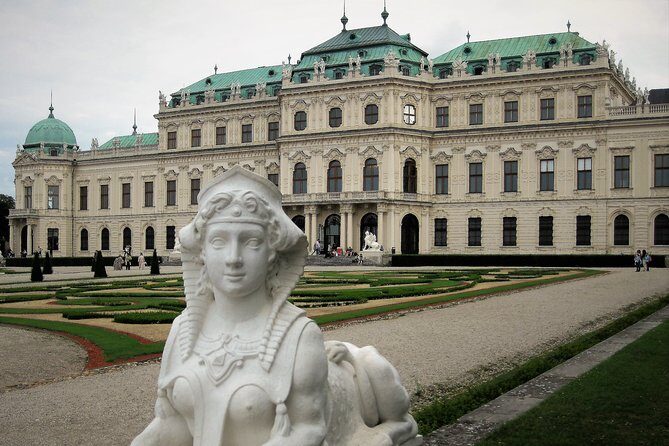
Upper Belvedere Palace grounds and views
The next stop is Upper Belvedere Palace, often described as the best baroque garden-palace in town, with a chance for panoramic city views. The day is timed so you can enjoy the gardens and viewpoint experience without turning it into a full museum day.
The drawback of a day like this is that you won’t have hours inside. But the benefit is that you get the garden setting and the perspective—two things that can take a full separate visit otherwise.
If you’re planning a longer Vienna trip, this is also a good “starter” site. It tells you whether Vienna’s baroque style hits your taste enough to warrant deeper time later.
Schonbrunner Gardens: palace grandeur without the museum trap
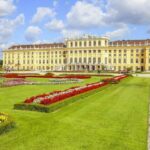
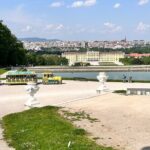
Then it’s on to Schönbrunner Gardens. You’ll enter the gardens and get those classic vistas—exactly the kind of “Vienna wow” that photos never fully capture.
The gardens help you understand why Schönbrunn matters: it’s architecture plus planning plus landscape. This is also where you can quietly judge what kind of Vienna traveler you are. If you enjoy garden walking and sightlines, you’ll likely want another half-day later for parks and viewpoints.
The Arte Nouveau building linked to the 50-euro cent design
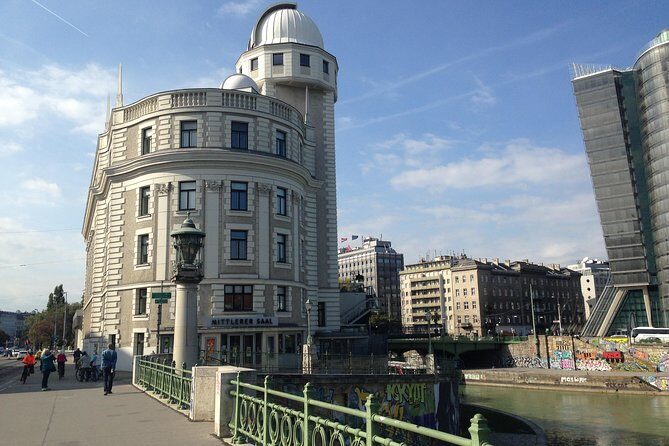
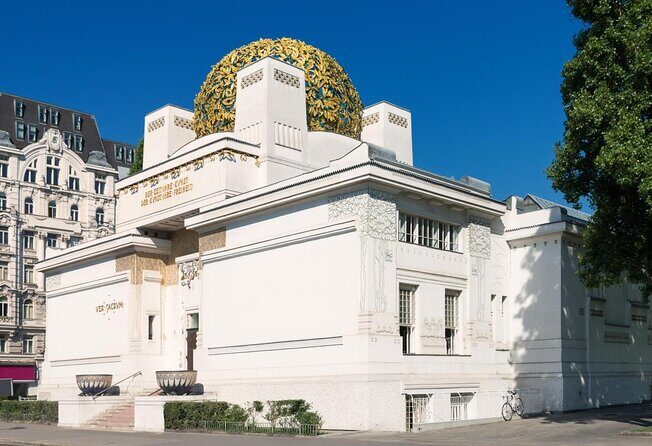
You’ll also pass by an iconic Arte Nouveau building, the same type of design seen on the back of Austria’s 50-euro cent coin. This is a quick stop, but it’s a useful marker. Vienna isn’t only baroque and grand palaces; it also has a more modern, stylized artistic language.
Keep your eyes on the details your guide calls out. With Arte Nouveau, the beauty often lives in small design choices—shapes, lines, and decorative rhythms.
Naschmarkt: Vienna’s food-and-market “belly”
Next is Naschmarkt. This is Vienna’s belly: a mix of market life and places to eat, set in historic market stalls dating to 1915. It’s the kind of stop where you can reset your senses during a long day.
Even if you don’t eat right away (food and drinks aren’t included), you’ll want to notice how locals use the space. Naschmarkt works best when you treat it like a living neighborhood, not a snack line.
Rathausplatz and the Ring’s big-picture layout
Then comes Rathausplatz, which sits in the wider Ring area—a cluster of major civic buildings like the Parliament, Burgtheater, and the Rathaus itself. Your guide can help you see the logic of the Ring: it’s Vienna showing off how it wants to be seen as a modern capital.
There are seasonal variations mentioned in the tour description, including city food fair timing and evenings with open-air theatre featuring music-movies during certain months. Even when you’re there outside a festival window, the location is useful because it gives you structure for understanding how the city’s main streets connect.
This is also near Café Landtmann, known as Freud’s favorite. You won’t spend time inside unless you choose to, but the fact matters. Vienna’s cafés aren’t just coffee stops; they’re part of the city’s intellectual history.
Volksgarten and the temple of Theseus
After that, the walking segment begins around Volksgarten. You’ll see a rose-collection setting and the temple of Theseus, a Greek liberation monument from the 1820s.
This section is special because it changes the pace. You’re not just looking at big architecture; you’re walking through a designed public space. The temple also adds a classic reference point—Greek themes reappearing in a European capital that kept turning to antiquity for legitimacy and inspiration.
Hofburg: political power and what you can’t fully cover in one pass
The itinerary then brings you to the Hofburg, described as the center of political power for more than 700 years. This stop includes different museums, the Treasury, and the Spanish Riding School, but admission is not included for what’s inside.
So what do you do with your time? Use it as orientation. The exterior and the sense of scale are the main win for a “one perfect day” plan. If you want Hofburg museums or the riding school experience, you’ll need a separate booking.
Colonna Della Peste (Pestsaule) near the Graben
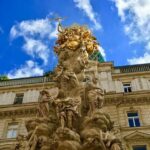
You’ll also see Colonna Della Peste, or Pestsaule, a baroque monument on the Graben boulevard. It dates back to violent conflicts between Catholics and Lutherans, which gives another layer to Vienna’s public monuments: they weren’t only decorative; they were messages and memorials.
This is a quick stop, but I like that the day doesn’t skip the smaller, more specific markers. These are the moments that make your mental map sharper.
St. Stephen’s Cathedral: the skyline anchor
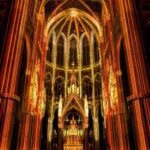
Finally, you reach St. Stephen’s Cathedral. It’s been a center of faith for close to six hundred years and dominates Vienna’s skyline even now. Your time here is shorter, but the first impression is strong: it’s a visual anchor that helps you orient yourself for everything nearby.
This kind of ending works well because cathedral areas often connect to your next day’s independent exploring. Once you understand where it sits, you’ll find it easier to plan your own route afterward.
Who this tour is best for (and who might want a different plan)
This tour fits best if you:
- Have one main day and want the city’s core highlights plus practical orientation
- Prefer a guided day that balances big sights with useful context
- Want a private group experience with a small ceiling of up to 7
- Like architectural variety, from opera and palaces to markets and modern housing projects
It may not be ideal if you want:
- Museum time inside multiple major venues
- A slow, unstructured day with long café breaks built into the schedule
- A trip where food is the main focus, since food and drinks aren’t included
The guide factor: why the private format shows up immediately
The biggest recurring strength with this type of tour is the guide. When your guide can explain what you’re seeing and keep the day organized, Vienna stops feeling like a jumble of monuments.
In particular, guides such as Walter and Brigitte are repeatedly described as strong at mixing clear context with humor, plus adjusting pacing to how your group is doing. If you’re the kind of person who asks why a building is shaped the way it is, or what a historical moment means for what you see today, you’ll likely find this day satisfies.
One small but real comfort: with a full-day route that includes both driving and walking, guides who pay attention to practical needs (like where to pause and how to handle basic comforts) can make the difference between a tiring day and a memorable one.
Practical planning tips for your day
A few things will make this tour smoother:
- Wear shoes you can walk in without thinking. Even when it’s “just a segment,” the whole day is still physical.
- Bring water, especially if you’re going in warm weather. The itinerary is active, and you’ll want to stay comfortable.
- Plan to eat on your own. Food and drinks aren’t included, so treat Naschmarkt as a place to graze if you want, or use one of your breaks to find a sit-down meal.
Also, keep your expectations aligned: this is about seeing, orienting, and connecting the dots. It’s not a multi-day museum plan.
Should you book One Perfect Day in Vienna?
I’d book it if your priority is a confident first impression with smart pacing and a guide who helps you understand what you’re looking at. It’s a good value when you’re filling the group, and it’s especially worth it if you’re saving Vienna for later in a bigger trip and you need your bearings fast.
I wouldn’t book it if you want leisurely exploration or you’re hoping to do multiple ticketed museum interiors as part of this one day. In that case, you’ll likely feel rushed, and Vienna will win you over more slowly anyway.
If you’re aiming for a first-day “Vienna starter pack” that you can build on tomorrow, this is exactly that.
FAQ
FAQ
What time does the tour start?
It starts at 9:00 am.
How long is the tour?
The duration is about 7 hours.
Is this tour private?
Yes. It’s a private tour/activity, so only your group participates.
Do you get hotel pickup?
Yes. Pickup is offered from hotels and other meeting locations in the city, including train stations and specified piers.
Are tickets included for attractions?
Many stops are listed as admission free for what you’ll do there, but admission is not included for the Hofburg museum sites (the Treasury/museums area).
What languages are offered?
The tour is offered in English, and you’ll also receive a mobile ticket.