REVIEW · VIENNA
Private Vienna Art Nouveau Walking Tour
Book on Viator →Operated by Insight Cities · Bookable on Viator
Vienna’s trains are art. This private 3-hour Art Nouveau walking tour lines up Secession Building masterpieces with Otto Wagner’s modernist vision, guided with real historical context as you move station to station. I especially like how the route mixes the famous showpieces (Klimt’s Beethoven Frieze at the Secession House) with the practical beauty of the city’s transit buildings. You also get the small-group flexibility of a private format that keeps the pacing comfortable.
One thing to plan for: a couple of the best stops involve entrance fees, and the Otto Wagner Pavillon visit depends on the season and opening hours (April to October).
In This Review
- Key points you’ll care about
- From the Secession Building to Klimt’s Beethoven Frieze
- Stadtpark and Karlsplatz: Jugendstil you can walk up to
- The Otto Wagner Pavillon: a seasonal stop with real payoff
- Postsparkasse: where Art Nouveau meets business-grade seriousness
- Naschmarkt and Otto Wagner apartment buildings: design with everyday energy
- Finishing at metro stations, including the Emperor’s tiny stop
- Price and tickets: what $490 really means for your group
- How the private format changes the whole experience
- Who should book this tour (and who might skip it)
- Should you book this Vienna Art Nouveau private walking tour?
- FAQ
- How long is the private Vienna Art Nouveau walking tour?
- What group size is this tour priced for?
- Where do we meet for the tour?
- Is hotel pickup included?
- Are entrance tickets included for all stops?
- Does the tour include visits to the Otto Wagner Pavillon?
- What is the end point of the tour?
- Do I need to pay extra for the Secession House?
- Is food included?
Key points you’ll care about
- Private group up to 10: your pace, your questions, no waiting for strangers
- Klimt’s Beethoven Frieze at the Secession House area, with help paying tickets
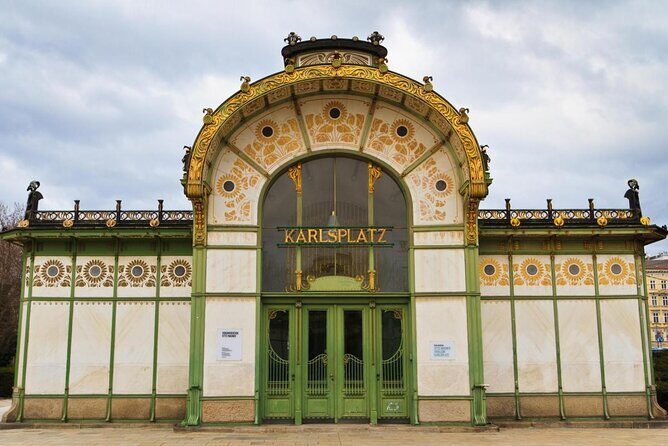
- Otto Wagner’s Jugendstil transit buildings on and around Karlsplatz and the postal station
- Seasonal museum stop: Otto Wagner Pavillon only from April to October
- End at metro stations, including a tiny Emperor-related stop that adds a fun twist
From the Secession Building to Klimt’s Beethoven Frieze
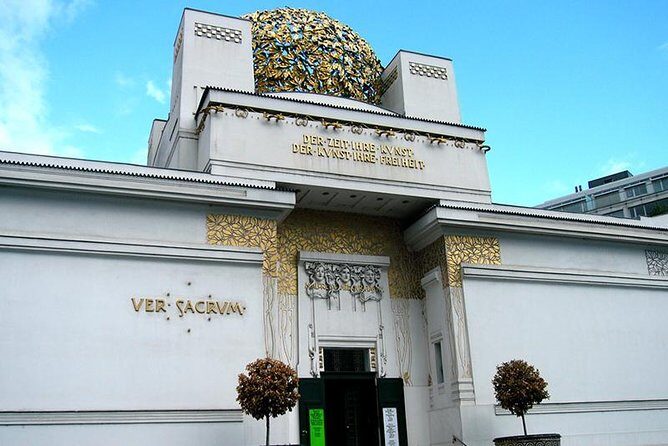
If Art Nouveau in Vienna is a music box, the Secession Building is the song. You start at the Secession Building (Secessionsgebaude), an exhibition hall completed in 1898 by Joseph Maria Olbrich. It wasn’t built just to impress passersby. It was meant as a manifesto for the Vienna Secession, a group of artists who broke away from the long-established art establishment.
Here’s what makes this stop work so well for your brain: you’re seeing the exterior idea first, then you get the inside payoff. The building originally hosted exhibitions connected to Gustav Klimt, and the interior is known for the Beethoven Frieze. That frieze is a key reason many people book this tour at all, because it’s Art Nouveau ambition in one concentrated place—allegory, symbolism, and that signature late-19th-century mix of art and attitude.
Practical note: the Secession Building interior admission is not included. If you tour from Tuesday to Sunday, you’ll be paying an adult ticket rate listed for Secession House (students and seniors cost less), and the guide helps you handle it. So you’re not stuck figuring it out with a dead phone battery and a ticket machine.
You can also read our reviews of more walking tours in Vienna
Stadtpark and Karlsplatz: Jugendstil you can walk up to
From the Secession vibe, you head into the green and then straight to one of Vienna’s most design-forward corners: the Stadtpark and the Karlsplatz area.
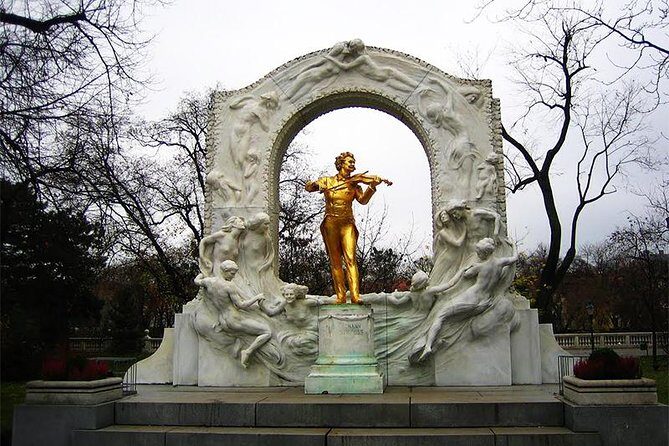
At Stadtpark, it’s only a short pause, but that’s a good thing. This isn’t a long nature detour. It’s more like a breather between big statements—enough time to reset before the architecture starts talking again. The park stretches along Vienna’s Ringstraße area, which is part of why it’s such a handy stop in a walking route.
Then comes Karlsplatz, where the whole tour’s theme gets practical. Karlsplatz Stadtbahn Station is a former station of the Viennese Stadtbahn. And above ground, the architecture is Jugendstil (Vienna’s Art Nouveau language) you can read instantly: Otto Wagner’s influence shows up in the station buildings’ clean modern lines and design logic. Joseph Maria Olbrich is also tied into the look here, so you get that feeling that Vienna’s Art Nouveau isn’t one person’s style—it’s a whole circle of thinkers.
This is one of the tour’s strongest choices: you’re not only looking at museum pieces. You’re looking at city infrastructure that people used every day. That’s how you understand why this movement mattered.
The Otto Wagner Pavillon: a seasonal stop with real payoff
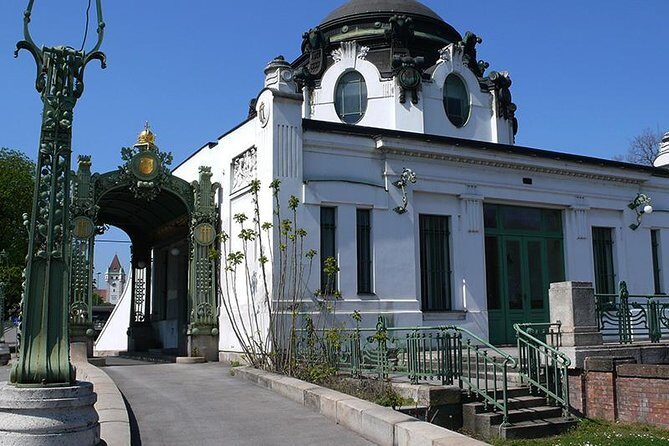
From Karlsplatz, the route continues to the Otto Wagner Pavillon on the same station architecture theme. This is an exhibit on Otto Wagner’s life and work, housed in an art nouveau station building he designed.
Here’s the catch: it’s only incorporated from April to October, when the museum is open. In other months, you might still see the exterior and station context, but you won’t count on the indoor exhibit.
If you’re the type who likes to connect the dots, this stop matters because it turns the walk from aesthetic sightseeing into architect storytelling. Wagner wasn’t just decorating buildings. He treated transit and modern city function like serious design work. Seeing that translated on-site makes the earlier Karlsplatz details feel less random.
Admission isn’t included for the pavilion portion, and the listed ticket costs are simple: one general price and a lower rate for seniors, students, Vienna Card holders, and persons with disabilities. If you’re planning your budget, this is one of the few parts you can estimate confidently.
Postsparkasse: where Art Nouveau meets business-grade seriousness
Next you hit Postsparkasse, the Austrian Postal Savings Bank building designed and built by Otto Wagner. This stop is a favorite for a reason: it’s Art Nouveau in a setting that has nothing to do with salons or galleries. It’s architecture built to handle money, paperwork, and daily operations—yet it still carries the Jugendstil stamp.
The building is regarded as an important work tied to the Vienna Secession / Art Nouveau style. That matters because it shows how the movement wasn’t trapped in exhibition halls. It spread into institutions, services, and the city’s systems.
This is also where your guide’s job becomes obvious. A great Art Nouveau walk needs someone who can explain why these buildings look the way they do—what the shapes and materials are trying to communicate, and what modernity meant to Vienna around 1900. On past departures, guides like Barbara have been praised for handling a wide range of questions about art, Vienna’s past, and how the city fits together today. That kind of answering style is exactly what makes a multi-stop architecture tour worth your time.
Naschmarkt and Otto Wagner apartment buildings: design with everyday energy
After the heavy architecture stops, the walk shifts into the Naschmarkt area, Vienna’s best-known food market. You don’t need to plan a full meal here, but the short stop helps you keep the day grounded. There are around 120 colorful market stands and lively restaurants, so even if you’re not buying anything, it adds texture to the route.
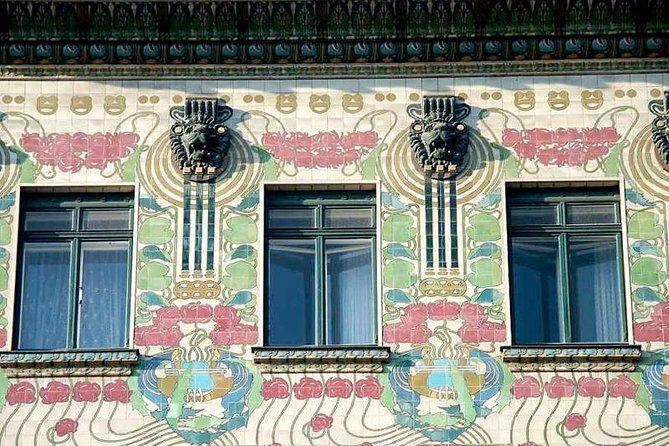
And this is where Otto Wagner apartment buildings often come into the storyline. The tour focus includes two apartment houses designed by Otto Wagner. In the same general area and downtown side of the walk, you may see famous apartment facades connected to the Jugendstil era, including places people associate with the Majolikahaus and the Zacherlhaus names that show up in tour highlight conversations.
What’s the value? Apartment buildings are where architecture becomes real-life. In a single building you can see how Art Nouveau principles were applied to mass living: structure, rhythm, and façade identity—not just grand public monuments.
If you’re an architecture nerd, this is also the moment to slow down and look at the details on the façade. That’s where the design intentions show up, and it’s easy to miss without a guide pointing you to what to notice.
You can also read our reviews of more private tours in Vienna



Finishing at metro stations, including the Emperor’s tiny stop
Most walking tours end with a scenic viewpoint or a café recommendation. This one ends differently: at a pair of metro stations. You get to close the loop by returning to the transit world that started your route’s thinking.
One of the fun details here is a tiny stop built just for the Emperor. That kind of story is perfect for architecture-minded people because it reminds you transit in Vienna wasn’t only functional—it was also political, ceremonial, and tied to how the city displayed authority.
Finishing at stations also helps you move onward without fuss. You’re already in the system, so you can head to your next stop—museum, dinner, or just the nearest bakery with good odds.
Price and tickets: what $490 really means for your group
The tour price is $490 per group (up to 10 people). That matters because private tours often charge per person, and this one lets you “group-fix” the cost.
At the maximum group size (10 people), you’re looking at about $49 per person. If you’re a smaller group—say just two or four—your cost per person rises fast. So this tour is best value when you can share it with friends or family.
Also, there’s a two-part cost picture:
- What’s included: a 3-hour private guided walk, plus the mobile ticket
- What’s not included: entrance fees, and those vary by stop and day
Your budget planning should focus on:
- Secession House admission for Tuesday to Sunday (with listed adult and student/senior rates)
- Otto Wagner Pavillon admission (from April to October, with listed general and reduced rates)
Food and drinks aren’t included unless specified, so if you’re hungry after the Naschmarkt stop, you’ll want to grab something on your own.
How the private format changes the whole experience
A walking tour can be fine. A private one can be great, because Vienna’s architecture rewards attention. If you’re traveling with someone who asks lots of questions, a private guide saves you from the timing squeeze of a larger group.
This tour is clearly set up for a smooth private flow:
- Only your group participates
- You get a personal expert guide
- The route is built around major stops, but the pacing can stay human
In the end, that’s what you’re paying for. Not just access to buildings, but the chance to get answers while you’re standing in front of them.
That’s also why guide quality shows up so strongly in the feedback you’ll find attached to this experience. Guides like Wolfgang have been highlighted for giving a strong education even if one person in the group knows the style better than the other. And Annelie has been praised for framing Vienna Secessionism and Vienna itself in a way that made the architecture feel understandable, not just decorative.
Who should book this tour (and who might skip it)
Book it if you:
- Care about architecture and design, not just photo stops
- Want Art Nouveau explained through real locations, especially the Secession-to-Wagner storyline
- Appreciate a guide who can answer questions on art and Vienna’s development
- Are traveling with 2–10 people and can share the group price
You might consider something else if:
- You hate paying separate entrance fees (a couple stops do require them)
- You want long free time for wandering. This is a structured 3-hour route with stops paced for walking and explanation.
- You’re visiting outside April to October and really want the Otto Wagner Pavillon indoor exhibit. In that case, you’ll want to confirm what you’ll actually see for the pavilion portion.
Should you book this Vienna Art Nouveau private walking tour?
Yes, if your goal is to understand Vienna’s Art Nouveau as a system—artists, architects, and city function all working together. This tour does a good job connecting the big names and big places: the Secession Building area and Klimt’s Beethoven Frieze, Wagner’s station architecture at Karlsplatz, the postal powerhouse at Postsparkasse, then the market zone and Otto Wagner apartment buildings as the day stays grounded.
It also fits well with couples or small groups who want a guided day without the chaos of merging into a crowd. Just go in knowing that a couple of the best indoor moments come with entrance fees, and the Pavillon exhibit is seasonal.
If you like your Vienna with a bit of brainpower and a bit of beauty (and not much waiting around), this one is an easy yes.
FAQ
How long is the private Vienna Art Nouveau walking tour?
It’s about 3 hours.
What group size is this tour priced for?
The price is per group for up to 10 people.
Where do we meet for the tour?
The meeting point is Operngasse 7, 1010 Wien, Austria.
Is hotel pickup included?
Pickup is offered, but hotel pickup and drop-off are not included.
Are entrance tickets included for all stops?
No. Entrance fees are not included. The Secession House and the Otto Wagner Pavillon (seasonal) require separate admission.
Does the tour include visits to the Otto Wagner Pavillon?
Yes, but only from April to October when the museum is open.
What is the end point of the tour?
The tour ends in Vienna at a pair of metro stations, including a tiny stop built just for the Emperor.
Do I need to pay extra for the Secession House?
If you tour Tuesday to Sunday, admission to Secession House to see Klimt’s Beethoven Frieze is ticketed, and your guide will help you pay.
Is food included?
Food and drinks are not included unless specified.