REVIEW · VIENNA
Private Vienna Highlights History Walk — WWII and Post War Vienna
Book on Viator →Operated by SCHINDL Local Services & Day Tours · Bookable on Viator
WWII Vienna, explained street by street. This private walk with hotel pickup and a flexible itinerary turns famous landmarks into a clear story from the Second Republic’s birth to the city’s final wartime days.
I especially like the way the tour uses big, recognizable sights—Belvedere Palace gardens, Heldenplatz, Hofburg, and St. Stephen’s—to show how power changed hands without changing the street layout. One thing to plan for: it’s roughly three hours of moving, with a few outdoor stretches, so bring layers and expect a steady walking pace.
In This Review
- Key highlights you’ll notice right away
- Private Vienna Highlights: WWII and Post-War Meaning in Every Corner
- Getting In Smoothly: Pickup Times, Mobile Ticket, and a Short Commute
- Belvedere Gardens: Where Imperial Planning Meets Second-Republic Reality
- Soviet Memory at Schwarzenbergplatz and the Allied Contrast
- Ringstraße by Tram: The City’s Prestige Project Rebuilt
- Burggarten and the Mozart Court Garden with a Dark Footnote
- MuseumsQuartier, Flak Towers, and the Reality of Concrete
- Heldenplatz: Imperial Ceremony, the Anschluss Speech, and the Fragility of Power
- Hofburg: From Seven Centuries of Seat-of-Power to a Modern Austria
- Judenplatz Holocaust Memorial: Quiet, Essential, and Clearly Anchored
- Pestsäule and St. Stephen’s: Plague Devotion and a Cathedra l After 1945
- Price and Value: Why a Private Group Can Be a Smart Deal
- Who This Walk Fits Best (and Who Might Prefer Something Else)
- Should You Book This WWII and Post-War Vienna Highlights Walk?
- FAQ
- How long is the tour?
- Is this tour private?
- What language is the tour offered in?
- Does it include hotel pickup?
- Are admission tickets included for the stops?
- What is not included in the price?
Key highlights you’ll notice right away
- Private guide for your group (up to 10), in English
- WWII and post-war Vienna, connected site by site instead of handed as a lecture
- Hotel pickup to start clean and simple
- Belvedere gardens and views that make the political story feel real
- A short Ringstraße tram ride that ties together art, culture, and reconstruction
- Meaningful stops at Judenplatz and St. Stephen’s with clear, human context
Private Vienna Highlights: WWII and Post-War Meaning in Every Corner
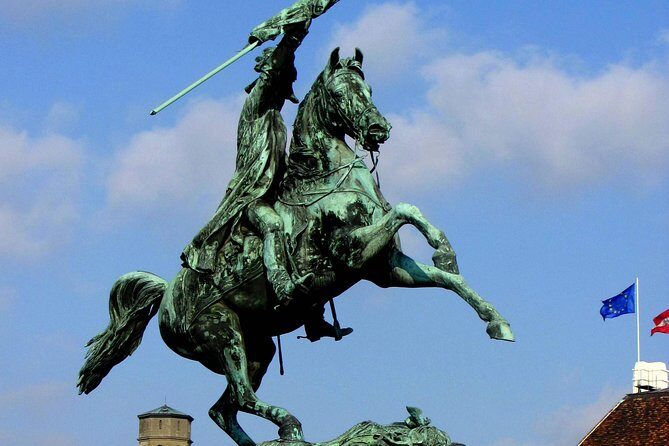
If you’ve ever looked at Vienna and thought, how did all this beauty survive the 20th century, this is the kind of tour that answers you—without getting gloomy for the sake of it. You’ll walk a tight loop through the center and nearby sights, with the theme always on: how Austria remembered, rebuilt, and reframed itself after Nazi rule and the war’s end.
The best part is that the story isn’t told only from plaques. It’s tied to where things sit: terraces, palace courtyards, parade squares, memorial locations, and the cathedral’s surroundings. That means your brain starts mapping history onto the city you’re standing in, and the whole walk becomes easier to remember later.
You’ll also appreciate the small-group setup. With a maximum of 10 people, the guide can actually answer questions and adjust. Some guides—like Walter, who’s known for good organization and pacing—also find room to keep the experience from feeling rushed. If you like history but hate feeling like you’re stuck in class, this works.
You can also read our reviews of more walking tours in Vienna
Getting In Smoothly: Pickup Times, Mobile Ticket, and a Short Commute
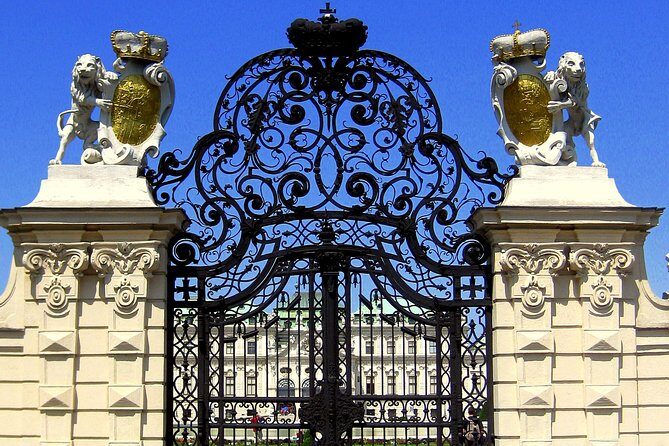
This tour runs at 09:30 and 14:00, so it fits both a morning sightseeing sprint or a post-lunch start. It’s built for visitors who don’t want to wrestle with planning the first leg. Hotel pickup is included, and the meet-up is set up so you can start from where you already are.
You’ll receive a mobile ticket, which is handy in a city where paper can get lost in jacket pockets. And even though public transport to and from is not included, the guide helps you make sense of what to use during the walk, including that short tram segment along the Ringstraße.
One practical note: the tour is marked as moderate physical fitness. You’re not expected to climb mountains, but you are on your feet. If you’re the type who likes to stop for photos often, this is actually a good thing—just know you’ll keep moving.
Belvedere Gardens: Where Imperial Planning Meets Second-Republic Reality
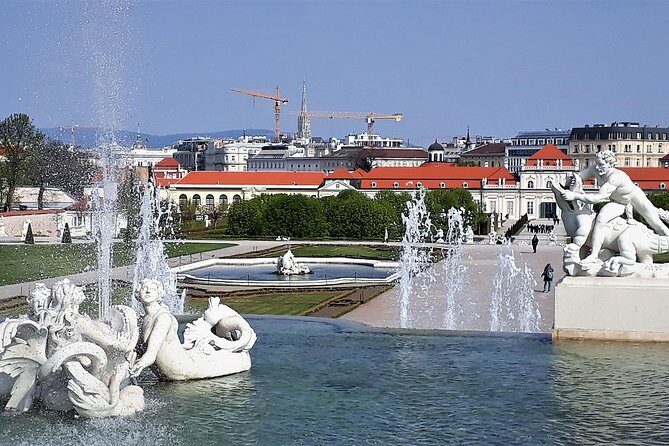
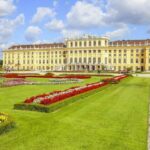
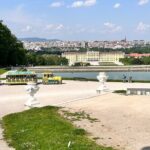
The walk begins at the Belvedere area, starting with the Upper Belvedere gardens and terrace panoramas. This is not just a pretty opening. It’s where the tour’s “before and after” theme clicks. Prince Eugene built the palace complex, and the area becomes a symbolic reference point for Austria’s post-war identity—especially around the Second Republic and the year 1955, when Austria’s new political phase is highlighted.
From the viewpoint, it’s easy to understand why power liked this kind of layout. The buildings, axes, and sightlines are designed to impress. Then the guide connects that to what changed after the war: the same city space that once served imperial ambitions becomes part of a neutral, post-war narrative.
You’ll also spend time descending through the Belvedere garden axis, a baroque landscape designed with order and hierarchy baked into the design. The garden isn’t treated like background scenery. It’s read as a political statement—how the city visually teaches you what to admire, what to focus on, and where to stand.
A small win for time management: the tour schedule shows admission ticket free for the Belvedere garden stop. That helps you keep the day moving without adding extra ticket time.
Soviet Memory at Schwarzenbergplatz and the Allied Contrast
Next comes Schwarzenbergplatz and the Soviet War Memorial tied to 1945—honoring Red Army soldiers who died as Nazi rule ended in Vienna. This stop is a reminder that liberation and occupation can live in the same memory. The guide’s job here is to keep it human, not abstract.
Vienna has layers. The city wasn’t “one story” after the war. It was multiple stories that overlapped—politically, culturally, and in how monuments were placed. This square helps you see that even well-meaning markers can carry complicated feelings.
Right after, the walk includes the Hochstrahlbrunnen (the alpine tap water fountain) framed by the French Embassy. This is a clever contrast: two Allied powers, two different architectural and civic messages. You’re effectively looking at how countries show their presence—through monumentality on the one hand, and daily-life civic identity on the other.
Ringstraße by Tram: The City’s Prestige Project Rebuilt
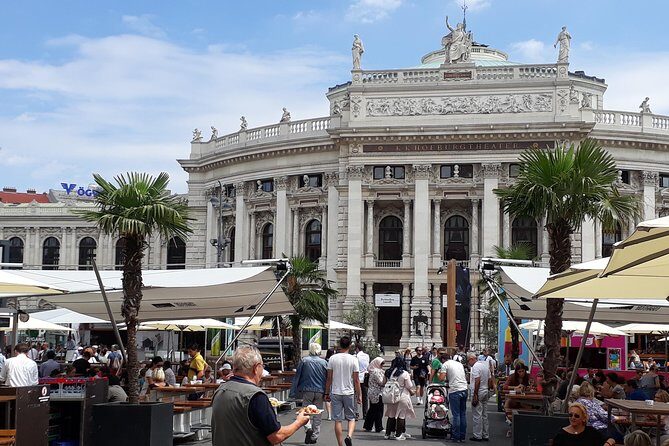
After those historic squares, you’ll take a short tram ride along the Ringstraße. This matters because it breaks up the walking and gives you a moving perspective of the grand boulevard that shaped Vienna’s 19th-century prestige. The Ring isn’t just a road; it’s a stage set for how the city wanted to be seen.
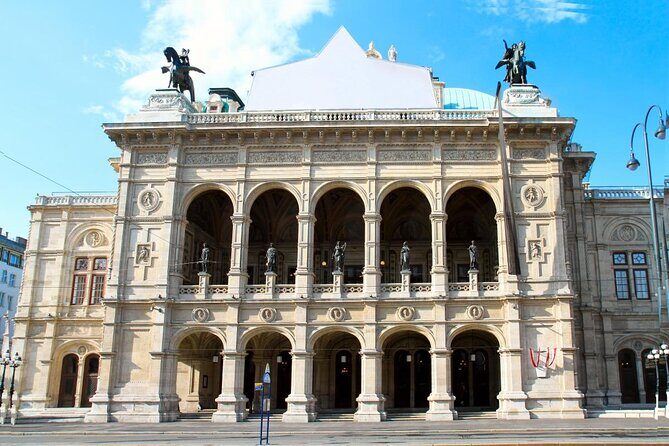
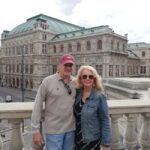
You’ll pass the rebuilt State Opera, which the tour frames as a symbol of cultural continuity after wartime destruction. The message is subtle but clear: even when buildings were damaged, the idea of Vienna as a cultural capital didn’t disappear. It got repaired—and that repair becomes part of the story you’re walking through.
This segment also helps you rest your legs for a moment. If you tend to run out of stamina mid-day, a small transit break can be the difference between enjoying history and just surviving it.
You can also read our reviews of more private tours in Vienna


Burggarten and the Mozart Court Garden with a Dark Footnote
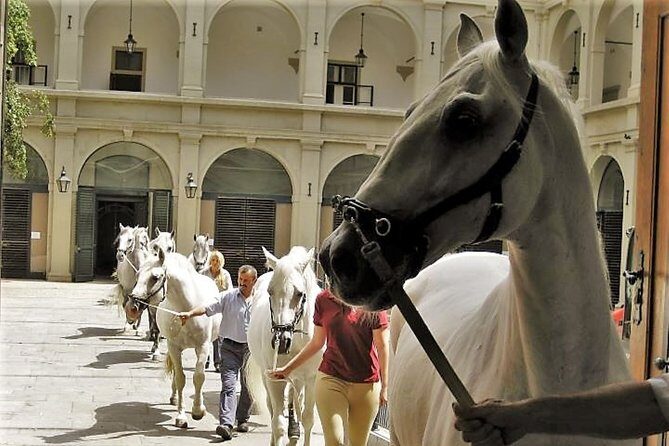
At Burggarten, you’ll find Mozart presiding over a garden that once belonged to the imperial court. It’s a calm, elegant pause—but the tour doesn’t leave you floating in “nice scenery.” The guide uses the setting to show how the imperial world still echoes in the most ordinary-looking corners.
One of the most striking nearby connections is the Academy of Fine Arts, referenced through the story of it rejecting a young Adolf Hitler. It’s one of those historical footnotes that sounds small at first, then hits harder when you remember how the 20th century unfolded.
That pairing—Mozart and a chilling rejection—works because it’s not meant to shock you for shock’s sake. It’s used to show how one city can contain both artistic greatness and the gears that later turned toward catastrophe.
MuseumsQuartier, Flak Towers, and the Reality of Concrete
Then you shift toward MuseumsQuartier Wien, where Maria Theresa commands the square. Twin museum buildings shape the space, but the tour’s attention turns to something you might otherwise miss: a FLAK tower, described as one of six in Vienna, with indestructible concrete that survived the militarized final months.
This is where Vienna’s beauty gets complicated. The tour asks you to look past the postcard version and notice the infrastructure of the war period. Those towers are functional, blunt, and still there—so you can literally compare what the city looked like in peacetime versus what it had to tolerate while the war closed in.
If you like history because it changes how you see, this is a high-impact moment. You come away with a new habit: spotting what the city kept, what it rebuilt, and what it simply adapted.
Heldenplatz: Imperial Ceremony, the Anschluss Speech, and the Fragility of Power
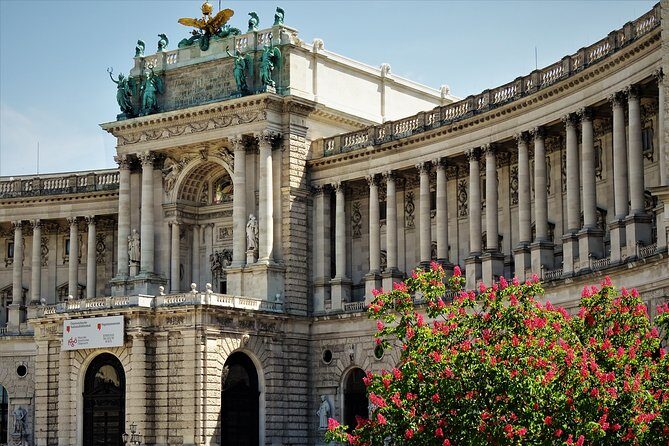
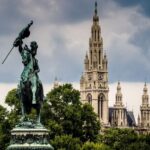
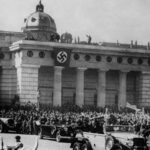
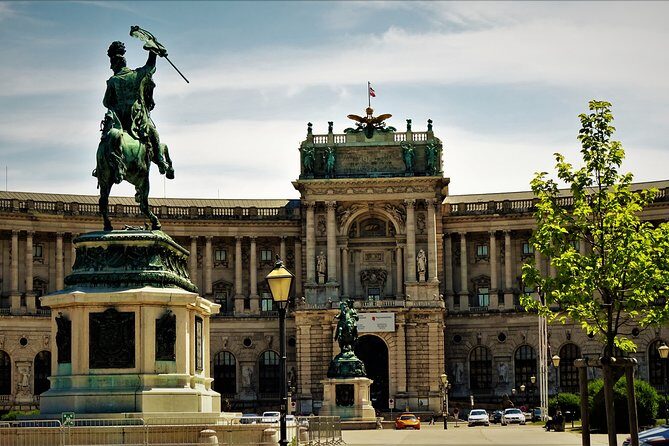
At Heldenplatz, the tour goes big in theme. This square was a stage for imperial ceremony and military pride, and in March 1938 it’s linked to Hitler’s Anschluss speech. The guide treats it as a place where politics and spectacle overlapped.
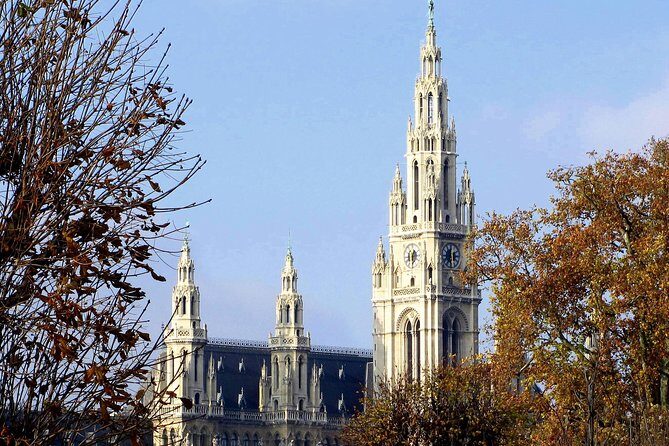
Today, the framing helps you understand how “power” still shows itself in architecture. Heldenplatz is surrounded by major civic and cultural buildings—parliament, city hall, museums, and the Burgtheater—which makes the atmosphere feel both grand and slightly unsettling. The grandeur doesn’t cancel the history; it emphasizes it.
This stop also gives you a chance to notice something practical: squares like this help you understand how the city hosts crowds and ceremonies. When you picture the past events, the geometry of the space starts doing the explanation for you.
Hofburg: From Seven Centuries of Seat-of-Power to a Modern Austria
Next is the Hofburg, introduced as a palace-city and a seat of power for seven centuries. The tour frames the shift from dukes and emperors to Austria’s modern presidency, showing continuity and change in one long architectural record.
This part works especially well if you like big-picture context. It’s one thing to hear about monarchy and republic in a timeline. It’s another to stand in the physical complexity of a building that kept being used as roles changed.
From there, you move through the area where imperial façades, ecclesiastical grandeur, and luxury boutiques are close enough that they blend in your visual field. The tour uses that mix as a reminder that Vienna has always balanced ceremony, commerce, and spirituality—often in the same view.
Judenplatz Holocaust Memorial: Quiet, Essential, and Clearly Anchored
Not every stop is about grand architecture. Judenplatz shifts the tone in a necessary way. You’ll stand at the site connected to Vienna’s medieval Jewish community, destroyed in 1421, and the tour points to the Nameless Library memorial for the 65,000 Austrian Jews murdered in the Shoah.
This is one of the moments where the guide’s pacing matters. The tour gives it time—about 15 minutes—which helps you absorb what you’re looking at rather than just passing through quickly.
If you’ve been to memorials before, you’ll notice something here: it doesn’t try to add “extra emotion” by force. It provides a clear anchor for the tragedy, and then steps back, so you can reflect on what the city chose to remember.
Pestsäule and St. Stephen’s: Plague Devotion and a Cathedra l After 1945
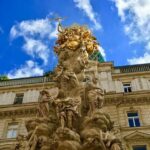
After the solemnity at Judenplatz, the walk turns toward Colonna Della Peste—the Pestsäule (Plague Column). The guide presents it as Counter-Reformation in marble, art and devotion used to reclaim the city after crisis. It’s a stark reminder that Vienna has faced disasters before the 20th century’s political collapse.
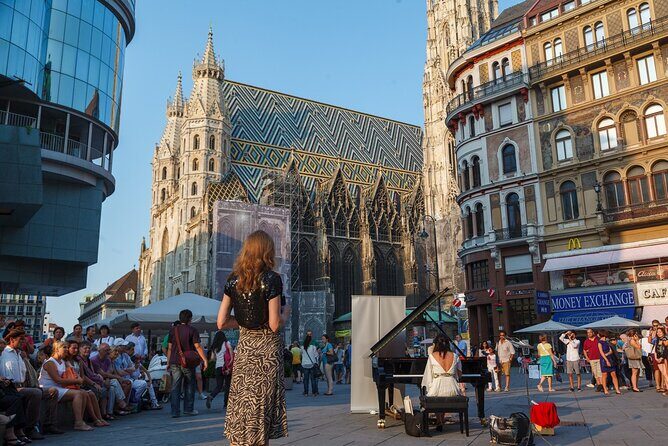
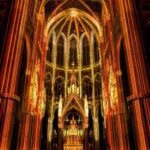
Then you reach St. Stephen’s Cathedral, described as Vienna’s Gothic heart. The tour gives a specific wartime detail from April 1945: parts of the cathedral burned because looters set fire to nearby shops. It’s a small sentence, but it lands, because it shows how war affects more than battlefields. When chaos spreads, even sacred buildings can be touched by fire.
This stop closes the loop. Earlier you learned about memorials and political transitions; here you end with a place that survived, scarred, and still dominates the city’s center.
Price and Value: Why a Private Group Can Be a Smart Deal
The price is $342.40 per group, with a maximum group size of up to 10 and a duration of about 3 hours. On paper, it sounds like a “private” cost. In practice, private tours often work out better than you expect when you split among friends or family.
Here’s what you’re paying for: a private licensed Austria guide plus hotel pickup. That combination matters in Vienna, where your time can disappear quickly if you have to manage meeting points, transit, and orientation. You also get a guide who can adjust to your interests—so if you care more about the Anschlus period versus the post-war rebuilding story, the pacing can shift.
Also, the tour schedule notes admission ticket free for multiple planned stops, which helps keep your spending predictable. You still pay for food and drinks on your own, and public transport isn’t included, but the major sight time is planned to avoid ticket headaches.
If you’re traveling with kids, older relatives, or a mixed group, the private format is often worth it because the guide can slow down, answer questions, and keep everyone engaged.
Who This Walk Fits Best (and Who Might Prefer Something Else)
This is a great choice if you want a high-level, connected narrative of WWII and post-war Vienna without hopping between far-flung sites. It’s especially good for first-time Vienna visits, because you’ll cover a meaningful chunk of the center quickly: Belvedere area, Ringstraße corridor, inner civic squares, and the cathedral.
It also suits you if you like asking questions. The tour format is private, and some guides in the team are known for being warm with questions—like Brigitte, who’s described as making the city feel like it’s being explained by a friendly local, or Alex, who answers beyond the strict tour script.
What might not be ideal: if you hate walking, or you’re expecting a mostly indoor experience, you may feel exposed. The tour is designed for movement. Rain can happen in Vienna, and since several stops are outdoors, pack for the weather and keep expectations realistic.
Should You Book This WWII and Post-War Vienna Highlights Walk?
Yes, if you want history that sticks because it’s tied to where you stand. The tour’s mix of Belvedere, Ringstraße, Heldenplatz, Hofburg, Judenplatz, and St. Stephen’s creates a logical arc from imperial-era symbolism through Nazi-era trauma and into post-war Austria.
Book it especially if you’re traveling with 2 to 6 people and can split the group cost, or if you’d rather spend your morning or afternoon with a guide who can connect details for you. If you’re the kind of traveler who likes the first day in a city to be about orientation plus meaning, this is a strong fit.
FAQ
How long is the tour?
The tour lasts about 3 hours.
Is this tour private?
Yes. It’s a private tour/activity, and only your group participates.
What language is the tour offered in?
The tour is offered in English.
Does it include hotel pickup?
Yes. Hotel pickup is included, but hotel drop-off is not.
Are admission tickets included for the stops?
The tour info shows admission ticket free for the listed sights and stops.
What is not included in the price?
Public transport to and from attractions, as well as food and drinks, are not included. Hotel drop-off is also not included.