REVIEW · VIENNA
Street Art Tour in Vienna
Book on Viator →Operated by Prime Tours Vienna · Bookable on Viator
Street art in Vienna can feel like a secret—until you walk the right route. This tour gives you an insider walk with a guide who cares about urban art, plus lessons on the artists and styles that made it to city walls. I also like the way it mixes iconic spots with calmer neighborhoods, and you’ll even get pointers for quick local bites like Austrian sausage and beer or wine. One possible drawback: part of the focus is on tagging and street-art culture in general, so if you want only big, polished mural art, you may notice more raw street markers along the way.
You’ll cover about 2 to 2.5 hours, moving at a pace that works for most people with a moderate fitness level, and the group stays small (max 20). It runs in all weather, so you’ll want the right shoes and a light layer even if the forecast looks optimistic. The tour is in English and uses a mobile ticket, which makes it easy to get going without extra paperwork.
In This Review
- Key moments you shouldn’t miss
- Street art in Vienna, but taught like a real story
- Spittelau: where the chimney sets the tone
- Das Werk: a Hall of Fame for Viennese street-art names
- Danube Canal (Donau Kanal): the longest open-air gallery lesson
- Friedensbrücke: art that changes because it gets overpainted
- Schottenring near Flex: learning to recognize signatures and styles
- Price and what you’re really paying for ($46.96)
- How the tour logistics affect your day
- Who this tour fits best (and who might want a different option)
- Practical tips to get more from every stop
- Should you book this Vienna street art tour?
- FAQ
- What’s the duration of the Street Art Tour in Vienna?
- How much does the tour cost?
- Is the tour in English?
- Do I need a printed ticket?
- Where does the tour start and where does it end?
- Is food and drink included?
- Does the tour run in bad weather?
- What kind of fitness level do I need?
- How many people are in a group?
Key moments you shouldn’t miss
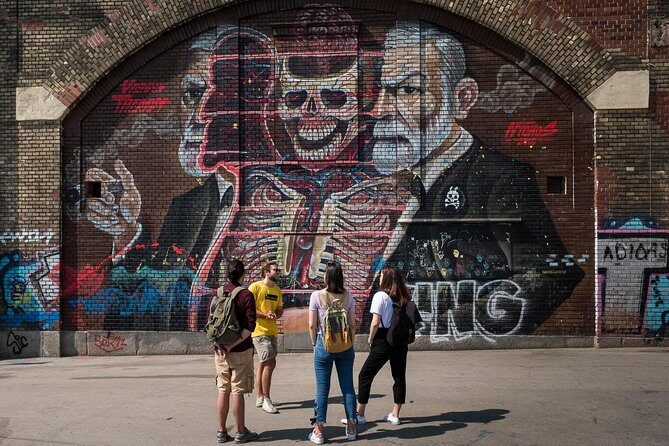
- Spittelau District Heating Plant: a chimney-area starting point with early global context and a few illegal pieces to discuss.
- Das Werk Hall of Fame: famous names you might spot instantly, including Roa, Nycos, Stratton, and Lugosi.
- Danube Canal (Donau Kanal): Vienna’s long stretch of legal and nonlegal walls, taught like an open-air classroom.
- Friedensbrücke: street-art hits from the TS90 crew and an octopus by Manuel Muriel, plus the fun of overpainting risk.
- Schottenring near Flex: a close-up finish where you can start recognizing signatures and styles on your own.
- Local-on-the-go food ideas: Austrian sausage plus guidance on pairing with beer or wine nearby.
Street art in Vienna, but taught like a real story
Vienna is famous for grand buildings and museum hours, but its street art scene runs on something different: permission, rebellion, timing, and community. This tour helps you connect those dots instead of just pointing at walls. The guide sets the tone with urban-art context, talking about how street art moves around the world and how Vienna’s artists fit into that bigger map.
I like the mix of famous and slightly off-route stops. It keeps the walk from feeling like a greatest-hits highlight reel, and it also gives you a chance to see how street art can change from one block to the next. If you’re the type who looks closely, you’ll walk away with better instincts for what matters on a wall: style, lettering, placement, and the artist signature logic.
The other thing to know upfront: the tour is not a studio-style art lecture. It’s built for street reality, which means you’ll hear about legal vs. nonlegal work and tagging culture. That’s valuable, but it can be a mismatch if your ideal street-art experience is only finished-looking murals.
A few more Vienna tours and experiences worth a look

Spittelau: where the chimney sets the tone
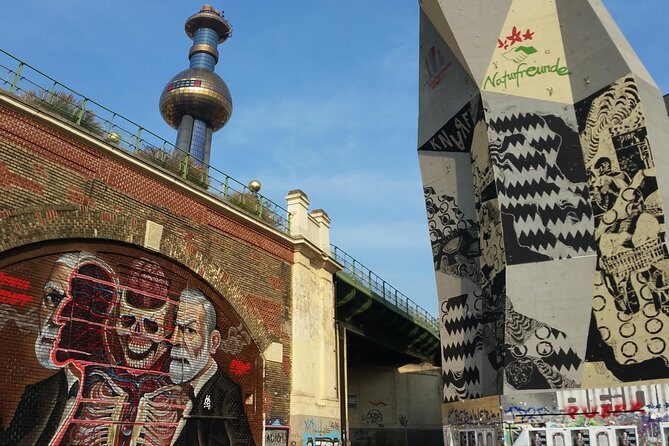
Your walk starts at the District Heating Plant Spittelau area (1090 Vienna). This is a strong first stop because it frames street art away from the usual city-center mood. You get suburban surroundings plus the contrast of a famous chimney in Vienna, which makes the art feel grounded in place rather than floating from nowhere.
At this first segment, you should expect a quick orientation plus discussion of the street-art scene globally. You’ll also get a chance to view a few pieces—described as illegal in the tour’s framing—so your guide can explain why certain works show up where they do. It’s a good way to understand how street art spreads: not just as aesthetics, but as communication and identity.
Practical tip: this is an early stop, so use it to get your bearings. Once you know how your guide reads the walls—symbols, styles, and how artists develop their look—you’ll start noticing things faster along the rest of the route.
Das Werk: a Hall of Fame for Viennese street-art names
Next you head to Das Werk, described as a hall-of-fame space for Viennese street art. This is the kind of stop that pays off immediately because it gives you real anchor points. When you hear names like Roa, Nycos, Stratton, and Lugosi, it becomes easier to understand what street art can look like when it’s recognized and cataloged as part of the scene.
Think of it as your visual reference library. In a single area, you can learn how different artists approach scale, character, lettering, and texture. Even if you’re not a lifelong street-art person, you’ll leave with a set of mental images you can compare later. That makes the next stops more fun because you’re not just seeing random paintings on walls.
There’s also a pacing benefit here. Das Werk is a mid-walk stop with enough time to actually look, not just pass by. If you tend to rush through photos, this section is a moment to slow down and read what the artist is doing.
Danube Canal (Donau Kanal): the longest open-air gallery lesson
The biggest chunk of the tour is the Danube Canal area (Donau Kanal), presented as Vienna’s long open-air street art gallery experience. This is where you get both legal and nonlegal walls along the canal line, and it becomes a guided comparison game.
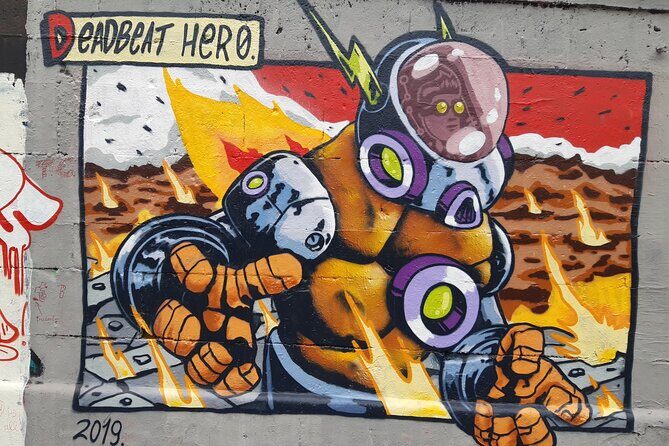
Your guide will talk about “hall of fame” style walls, tagging basics, and the kinds of techniques prominent Vienna street artists use. The key value here is learning to separate what street art is doing socially (tagging, identity, signals) from what it’s doing visually (style, color rhythm, form). It changes how you look at walls even after the tour ends.
Here’s the consideration to keep in mind. The route can include a fair bit of tagging-focused material and wall-to-wall variety. That doesn’t mean you’ll only see tags, but it does mean that the tour’s “lesson” is part of the experience. If you want mostly finished mural masterpieces, you might feel like the canal section is heavier on street markings than expected.
Practical tip: wear shoes you trust. Canal-area walking can mean uneven surfaces and longer stretches where you’ll be stopping to look at multiple pieces.
Friedensbrücke: art that changes because it gets overpainted
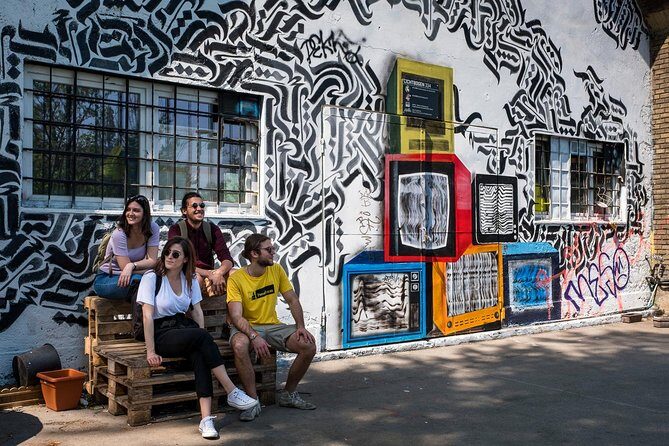
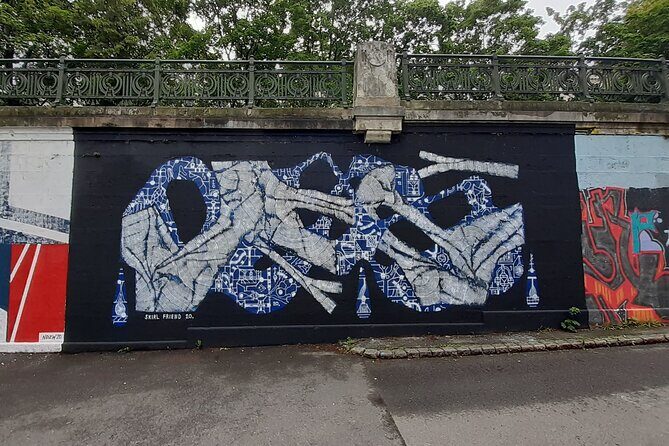
After the canal, you head to Friedensbrücke, a crossing area where you’ll see pieces tied to the TS90 local crew and other newer works. One specific detail worth clocking is an octopus piece attributed to Manuel Muriel. Even if you’re not into street art fandom, specific standout themes like this help you remember what you saw and what to look for later.
The biggest real-world factor at Friedensbrücke is change. Pieces here are often overpainted, so each visit can feel slightly different. That’s actually part of the charm, but it’s also the reason you should avoid the expectation that you’ll always find every exact piece in the same condition.
How this helps you as a traveler: it teaches you a street-art skill—how to appreciate what’s there now, not only what you saw in photos online. Street art works on its own schedule, and that makes this stop feel more alive than a museum wall.



Schottenring near Flex: learning to recognize signatures and styles
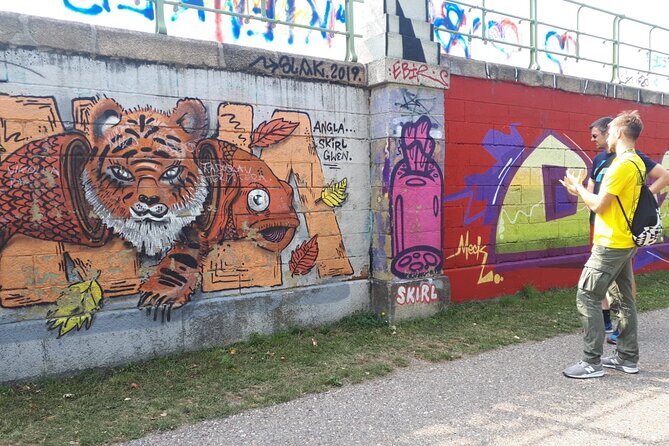
The final stretch ends near Schottenring U-Bahn, close to the Flex night club area. This is a smart way to finish because it ties street art to real neighborhoods where you can keep moving after the walk.
During the last part, you’ll see more pieces along the way, framed as a chance to spot and recognize styles and unique signatures of artists. For many people, this is the moment when the entire tour starts clicking. Instead of asking what you’re looking at, you start asking how the artist built it: what lettering style it uses, what visual rules it follows, and how the piece communicates.
This ending is also practical for your next step. The area around Schottenring has plenty of spots for food and coffee, so after you learn the street-art “language,” you can still enjoy Vienna without scrambling for transport.
Price and what you’re really paying for ($46.96)
At $46.96 per person, this tour costs more than some classic walking tours, but you’re paying for a tight focus and a guide who can read the scene. You’re also paying for the structure: a route built around specific art sites, time to look, and cultural context that helps you interpret what you see.
The tour runs about 2 to 2.5 hours, and it’s usually booked around 38 days in advance, which tells me demand is steady for this style of experience. The group cap (max 20) matters too. Smaller groups generally mean more chances to ask questions and get real explanations instead of quick photo stops.
What’s included is straightforward: a local guide, a professional guide, and a tour escort/host, plus all activities. What’s not included is food and drinks, and you’ll also likely need to budget for transportation to and from the meeting/ending areas (listed as €2.2 one way). In other words, plan on handling your own transit and eating on your own schedule.
If your goal is to see Vienna in a way that’s more than sightseeing snaps, this price can make sense. If you only want a quick pass-by of walls, you can probably do that on your own. But the guided interpretation is the value.
How the tour logistics affect your day
This experience is offered in English with a mobile ticket, which is ideal if you dislike printed vouchers. Confirmation happens at booking time, and the tour runs in all weather conditions, so you should dress for rain, wind, and cooler temps if needed.
The route is designed for people with moderate physical fitness. That usually means walking a fair bit and stopping often, but not climbing anything extreme. Still, treat it like a real city walk: bring comfortable shoes and give yourself time to stretch your legs between stops if you need it.
The meeting point is Spittelau (1090 Vienna), and the tour ends near Franz-Josefs-Kai L (1010 Wien), close to Schottenring U-Bahn. That end location is handy because you can connect quickly to the rest of your day’s plans, especially if you’re hopping between sights and neighborhoods.
And yes, you’ll get local on-the-go food ideas during the tour concept. You’re not paying for meals as part of the ticket, but you can use the guide’s suggestions to find something simple and local nearby afterward.
Who this tour fits best (and who might want a different option)
This is a great fit if you like street art beyond the surface. If you enjoy learning names, understanding tagging culture, and noticing style differences, you’ll probably love how the route teaches you to look. It’s also a good match if you want neighborhoods away from the main tourist trail, while still ending in a place with easy transit and plenty of food.
It’s less perfect if you’re hoping for a strictly curated mural-only itinerary. The canal segment in particular can lean into tagging and street-art culture, which is interesting for most people but can feel like a mismatch for those expecting only big, finished pieces.
The small group size also means it works well for mixed ages. If you’re traveling with family members or friends who don’t want a slow museum pace but still want context, the walking format can be a strong compromise.
Practical tips to get more from every stop
If you want to maximize what you take home from the tour, come in ready to look, not just photograph. Pay attention to the basics your guide points out: lettering style, recurring visual motifs, and the difference between polished murals and quick tags. That’s how the final section near Schottenring becomes more rewarding.
Bring a layer. Even if Vienna looks mild, a street-art walk can be chilly or damp depending on the day. Also, plan your day so you’re not rushing right before or right after. You’ll want a little breathing room for the canal and the bridge area where you’ll likely stop frequently.
Lastly, don’t chase specific pieces like they’re fixed museum objects. This tour includes stops where the art can change, including places noted for overpainting. The lesson is part of the experience: street art is temporary, and that is exactly why it feels alive.
Should you book this Vienna street art tour?
Book it if you want an organized, English-speaking walk that teaches you how Vienna’s street-art scene works—names, styles, legal vs. nonlegal context, and how to recognize signatures on walls. The route is thoughtfully arranged, and the combination of Spittelau, Das Werk, the Danube Canal, Friedensbrücke, and Schottenring gives you both landmark context and real neighborhood texture.
Hold off or choose something else if you only want polished mural art and you’d be disappointed by tagging-heavy explanations. Also, if your day has to be ultra-structured, remember the tour runs in all weather and you’ll be outdoors most of the time.
If you want to leave Vienna with better eyes—so you can spot street art in your own wandering later—this tour is a solid bet for the time and the price.
FAQ
What’s the duration of the Street Art Tour in Vienna?
It lasts about 2 to 2.5 hours.
How much does the tour cost?
The price is $46.96 per person.
Is the tour in English?
Yes, it’s offered in English.
Do I need a printed ticket?
No. You get a mobile ticket.
Where does the tour start and where does it end?
It starts at Spittelau (1090 Vienna) and ends near Franz-Josefs-Kai L (1010 Wien), close to Schottenring U-Bahn.
Is food and drink included?
No. Food and drinks are not included, though the tour concept includes ideas for local on-the-go staples.
Does the tour run in bad weather?
Yes, it operates in all weather conditions. You should dress appropriately.
What kind of fitness level do I need?
It’s suited for travelers with a moderate physical fitness level.
How many people are in a group?
The tour has a maximum of 20 travelers.