REVIEW · VIENNA
Vienna Art Nouveau Walking Tour
Book on Viator →Operated by Insight Cities · Bookable on Viator
Art Nouveau hides underground in Vienna. This Vienna Art Nouveau Walking Tour is a focused 2.5-hour stroll through Jugendstil architecture, mixing famous landmarks with the city’s early metro engineering. I especially love how it spotlights Otto Wagner’s designs in places most people rush through, and how the guide connects the style to real Viennese life around 1900. The main catch: you’ll be outside for a while, and a couple of stops can involve extra museum or exhibition tickets depending on the day and season.
The pacing works well if you want a smart orientation without feeling trapped in a long museum day. It’s also built for small groups (up to 8 people), so you can ask questions and get clear answers as you walk between stations and buildings. If you prefer totally indoor, slow-paced sightseeing, this may feel a bit fast and transit-heavy.
One more practical note: some highlights are free to view, but seeing Gustave Klimt’s Beethoven Frieze at the Secession House can require an extra ticket on certain days. Your guide helps with payment, but it’s worth budgeting so you’re not surprised.
In This Review
- Key points before you go
- Why this Art Nouveau-focused tour feels better than a museum-only day
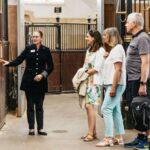
- Meet at Operngasse 7: what to expect from the group and pacing
- Stop 1 at Karlsplatz: Otto Wagner Pavillon and the small museum break
- Stadtpark metro station: the preserved station and the river engineering story
- Kettenbrücke and the Secession building: Jugendstil as a cultural statement
- The imperial station ride: why Wagner’s style looks both modern and grand
- Price and value: what $180.04 covers, and what might cost extra
- Who should book this, and who should pick a different day
- Should you book the Vienna Art Nouveau Walking Tour?
- FAQ
- How long is the Vienna Art Nouveau Walking Tour?
- Where is the meeting point for the tour?
- Is the tour offered in English?
- What’s included in the price?
- Are there additional entrance fees for certain stops?
- Is free cancellation available?
Key points before you go
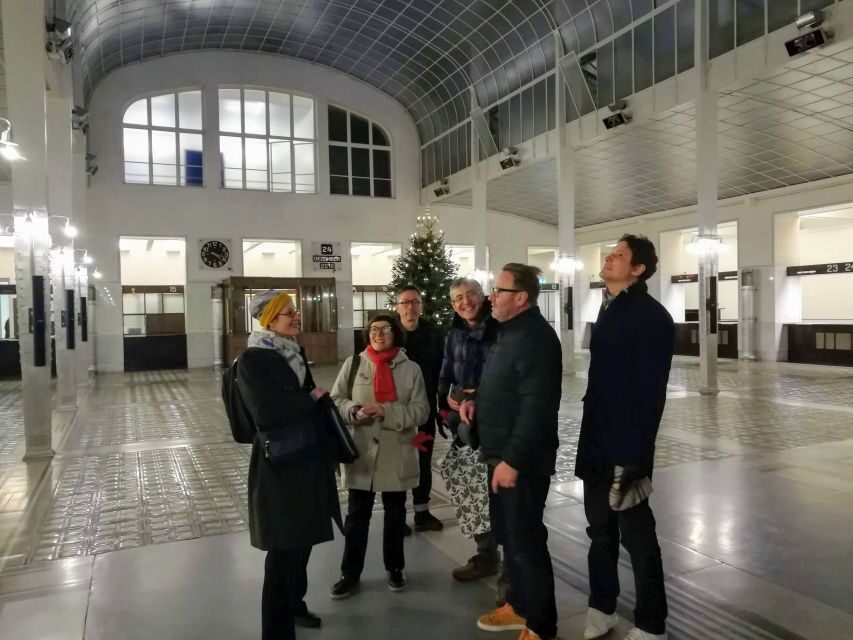
- Small group (max 8) makes the walk feel personal instead of rushed
- Metro stations as art: Jugendstil details in places you’d never think to tour
- Otto Wagner on full display at Karlsplatz, plus apartments and station design themes
- Klimt at the Secession House may be extra depending on your day
- Guides bring strong architectural context and can adjust for weather
Why this Art Nouveau-focused tour feels better than a museum-only day
Vienna around 1900 wasn’t just fancy buildings for postcards. It was a city arguing with itself—about modern life, new materials, and who should be impressed by progress. This tour’s genius is that it shows that argument in public spaces: metro stations, a pavilion tied to Otto Wagner, and the Secession building.
You’re not hunting for one “perfect” façade and calling it a day. Instead, you get repeated motifs—how lines curve, how stone and metal are used, how ornament becomes structure—so the style starts to make sense. That pattern is why this tour works even if you’ve been to Vienna before. You’ll likely still learn a few new angles, especially about why Wagner’s work looks both modern and oddly ceremonial.
And the route is built for momentum. In a few hours you can see a chain of related examples across different neighborhoods without a full-day travel plan. It’s a good choice when you want culture with a schedule you can actually keep.
You can also read our reviews of more walking tours in Vienna
Meet at Operngasse 7: what to expect from the group and pacing
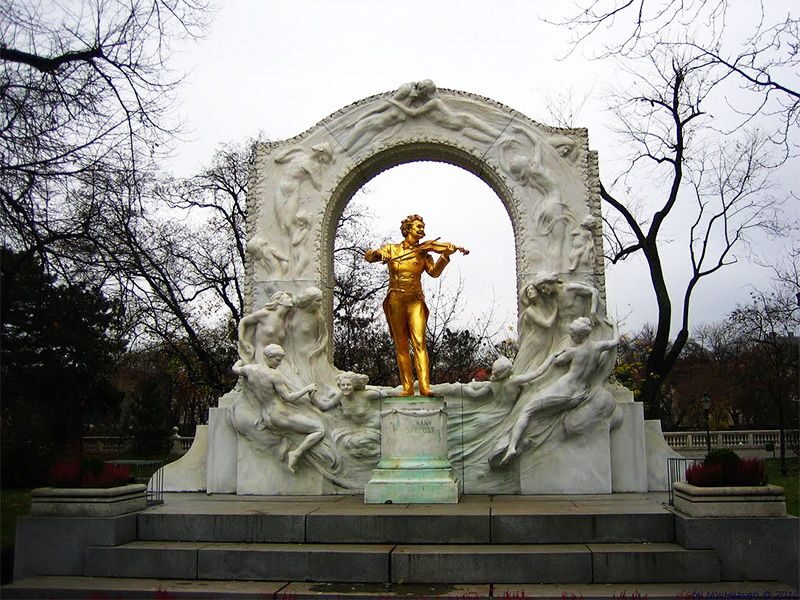
You start at Operngasse 7, 1010 Wien. From the start, the tour leans on being near public transportation, which matters because you’ll move between stops efficiently. The duration is listed at about 2 hours 30 minutes, and on the ground you should plan for a brisk but not sprinting walk.
The small max group size (up to 8 travelers) is more than a comfort perk. It tends to mean you get better sightlines, more time to ask questions, and fewer long waits when the guide checks in with the group. Based on past experiences shared by guests, guides often bring a strong personal teaching style. In one case, the guide described their background as a lawyer—an approach that can make the architecture explanations feel tight and logically organized.
One more thing: even in good weather, you’ll still be outside and walking between stations. If the day is cold or rainy, bring a jacket you don’t mind wearing for a couple hours. A past guide even offered to use a car to keep people from getting soaked when conditions were rough—so if the weather turns, don’t hesitate to communicate that early.
Stop 1 at Karlsplatz: Otto Wagner Pavillon and the small museum break
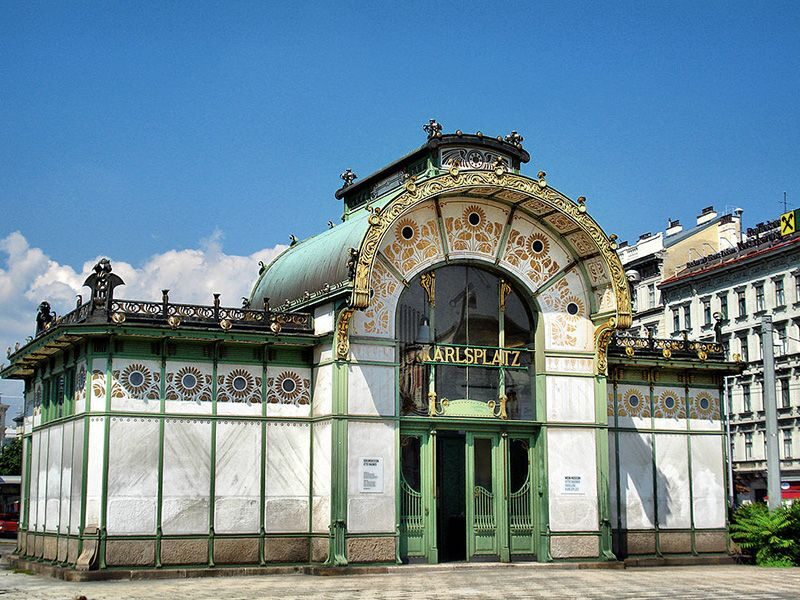
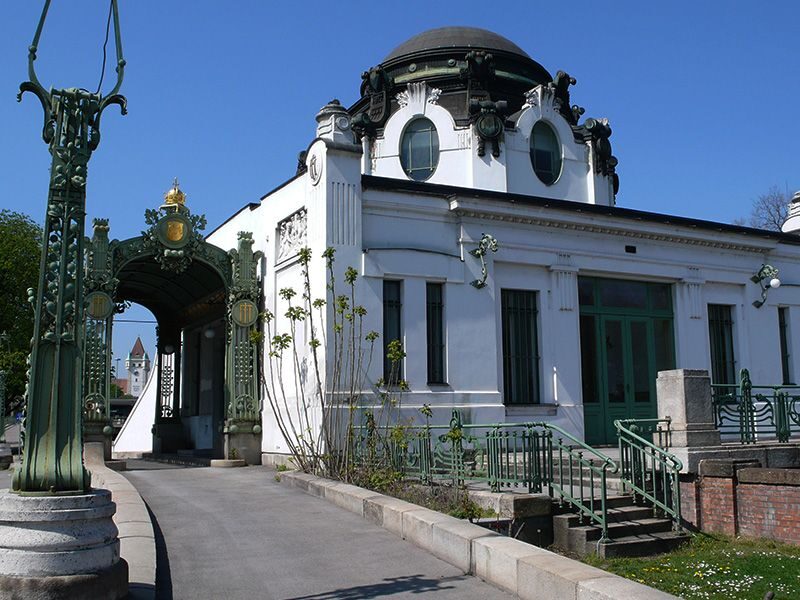
The walk opens at the Otto Wagner Pavillon at Karlsplatz, a gorgeous, photogenic start that instantly tells you what kind of tour this is. It’s not just “look at the building.” You begin with context, including a visit to the small Wagner Museum housed here.
This is one of those stops where you can feel the architecture philosophy before the bigger stage gets loud. Wagner’s designs often aim for clarity—form that’s not just decoration, but part of the function. Seeing the pavilion first helps you recognize what you’ll later notice in stations: materials treated as design, structure shaped with intent, and ornament that behaves like engineering, not frosting.
Cost note: Admission for the pavilion depends on the season. The tour information says the pavilion visit includes admission when open April to October, with fees listed as €5 for general admission and €4 for senior citizens, students, Vienna Card holders, and persons with disabilities. In other periods, you might find the situation different, but the safest move is to check the day’s museum status with your guide at the start.
Watch for value: This is included in the tour only in the sense that it’s part of the route; the admission cost is listed separately for certain months. So treat this as a “likely small add-on” rather than free-and-for-sure.
Stadtpark metro station: the preserved station and the river engineering story
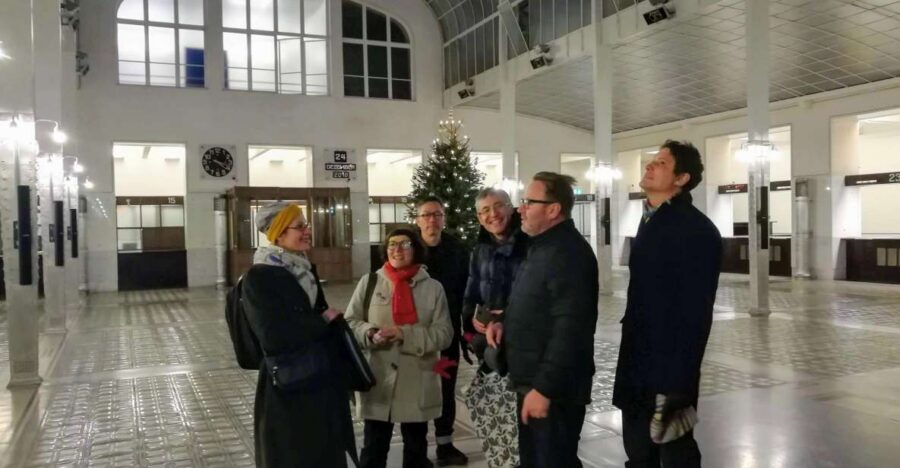
Next you move to Stadtpark, and you’ll start seeing how Jugendstil shows up in transit design. The key detail here is that Stadtpark station is the best preserved of the original metro stations still in use. That kind of survival matters. You’re not just looking at a style; you’re seeing a piece of how Vienna built for the future and then kept part of the original vision alive.
The most interesting thing in this stop is the artificial riverbed that was constructed for the little Vienna river. When the city train was built, the river needed to be rechanneled. So the question became: how do you integrate water—something alive and unpredictable—into a new underground and urban system?
This is where the tour goes beyond pretty details and turns into real-world engineering storytelling. You’ll learn that Art Nouveau isn’t only flowers and curves. It’s also about problem-solving with materials, planning, and integrating nature into infrastructure.
Cost note: The station admission for this part is listed as free.
How long it feels: Expect this stop to be a conversation-heavy one, because the guide has a lot to connect here—architecture, urban planning, and why Vienna’s metro was more than just transportation.
Kettenbrücke and the Secession building: Jugendstil as a cultural statement
From Kettenbrücke station, you visit the Sezession art building (often spelled Secession), described as the icon par excellence of Viennese Jugendstil. This isn’t a minor stop. This is the moment the tour starts feeling like a proper art story.
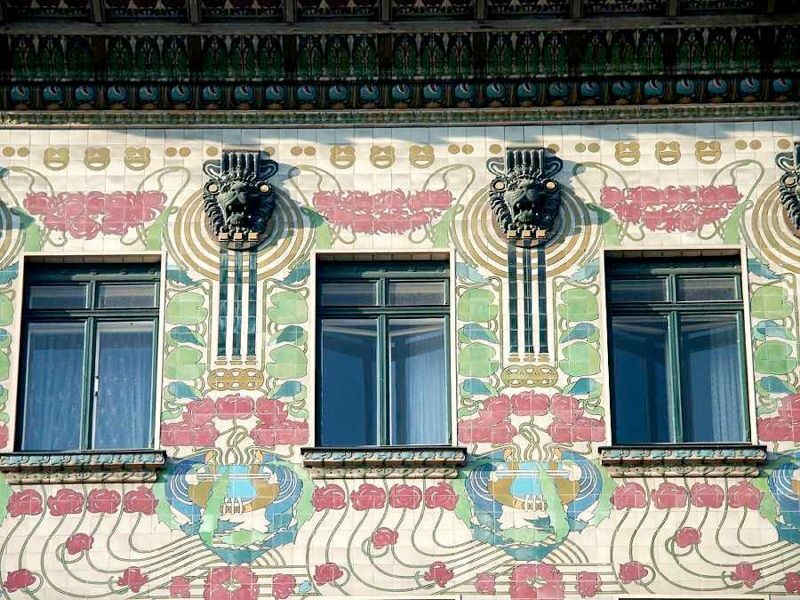
The Secession building works because it’s a clear example of how movement and ideas translate into architecture. You’ll also pass or explore two apartment houses by Otto Wagner, which help you see Wagner’s range. Not every Jugendstil landmark is a single famous façade. Some are everyday buildings that show how a city’s style spreads through housing and urban living.
This is also the stop where you learn the philosophy behind Jugendstil—what the practitioners valued, and the kinds of symbols and materials that kept showing up. If you’ve ever felt that Art Nouveau is hard to “read” visually, this is where it starts to click. The guide’s goal here is to teach your eyes how to look at details, not just where to stand to take a photo.
Then comes an important add-on possibility: the tour includes time that can connect to Klimt’s Beethoven Frieze at the Secession House. The tour info states that admission fees apply Tuesday to Sunday:
- €9.50 for adults
- €6 for students and seniors
Your guide helps you pay.
Cost note: This is explicitly listed as not included, so plan for it if you care about the Frieze. If you don’t, you can still get plenty from seeing the exterior and learning the design thinking, but that famous interior artwork is a big reason many people choose this day.

The imperial station ride: why Wagner’s style looks both modern and grand
After Secession, you step onto the metro for the last stop: the imperial station. This part is short but meaningful. The station is described as having been erected outside Schönbrunn castle solely for the Emperor to use.
That single fact changes the atmosphere. This is no longer just design for commuters. It’s design tied to power and politics—how the city wanted to signal support for the metro to critics. The tour explains this symbolic meaning: the station carried a message that the emperor backed the line.
Inside this small but dynamic building, you’ll recognize elements you saw earlier in the walk—design logic that repeats across sites. That’s the payoff of a themed route. Wagner’s approach can feel consistent, even when the setting changes from modern transit to something imperial and ceremonial.
What I’d watch for: Look for how structure and materials are used to create presence. Even without getting technical, you should start to feel that the ornament isn’t random. It’s connected to function and status.
Cost note: Admission for this part is listed as free.
Price and value: what $180.04 covers, and what might cost extra
At $180.04 per person for a roughly 2.5-hour guided experience, you’re paying mainly for three things:
- A professional guide who can connect Jugendstil, Otto Wagner, and Vienna’s urban story
- Access to a route that chains together metro stations and key buildings in one efficient plan
- A small-group format (max 8 people) that helps the time feel usable
Most of the structural and sightseeing parts are listed as free: pavilion museum is seasonal, and the metro station stops are free. The main potential extra costs are the seasonal pavilion admission and the Secession House exhibition.
Here’s the realistic way to plan it:
- If your date falls between April and October, budget around €5 (general) for the Wagner Pavilion museum portion.
- If your day is Tuesday to Sunday, budget €9.50 (adults) for Klimt’s Beethoven Frieze at the Secession House.
So in practice, you might pay the tour price plus something like €5 to €15 total in add-ons depending on your schedule and interests. That’s not cheap, but it’s not outrageous for a tour that gives you a guided “how to see this style” experience across multiple sites.
Also, you’re not paying for museum complexity. You’re paying for orientation and explanation. If you’re the type who likes architecture stories with a strong narrative, the value makes sense fast.
Who should book this, and who should pick a different day
This tour is a strong fit if:
- You care about Art Nouveau/Jugendstil and want help reading it visually
- You like city history that includes planning and engineering, not only paintings
- You want a Vienna activity that doesn’t require a full museum afternoon
It may be less ideal if:
- You hate walking or you get very cold easily (it’s outdoors and you’ll be on your feet)
- You only want big-ticket museum interiors and don’t want to spend time on stations and exteriors
- You’re not interested in Otto Wagner or the Secession movement
In terms of comfort and logistics, the group size is small enough that you’re unlikely to feel like a number. And the tour is offered in English with a mobile ticket option, which can simplify entry points and reminders on the day.
Should you book the Vienna Art Nouveau Walking Tour?
If you’re hoping to understand Vienna around 1900, this is one of the better ways to do it in a short window. You get Otto Wagner’s work tied together across multiple stops, and the metro stations make the whole subject feel real and lived-in, not just curated for visitors.
I’d book this if:
- You want a guide who can explain what you’re seeing
- You’d like a weather-proof plan that still feels flexible
- You’re curious about the Secession movement, with an option to see Klimt’s Beethoven Frieze if you want it
I’d think twice if:
- Your main priority is long museum time over guided architecture reading
- Your schedule can’t handle a couple hours outside and between stations
FAQ
How long is the Vienna Art Nouveau Walking Tour?
It’s about 2 hours 30 minutes.
Where is the meeting point for the tour?
The start point is Operngasse 7, 1010 Wien, Austria.
Is the tour offered in English?
Yes, the tour is offered in English.
What’s included in the price?
You get a 2.5-hour guided tour of Vienna Art Nouveau metro stations and iconic buildings, plus a professional guide.
Are there additional entrance fees for certain stops?
Yes. The Otto Wagner Pavilion visit can require admission April to October (for example €5 general, €4 for seniors/students/Vienna Card/people with disabilities). Also, if your tour runs Tuesday to Sunday, admission to the Secession House to see Klimt’s Beethoven Frieze is listed as €9.50 for adults and €6 for students and seniors.
Is free cancellation available?
Yes. You can cancel for a full refund up to 24 hours in advance.