REVIEW · VIENNA
Vienna: Secrets of the Fiaker & Horse-Drawn Carriage Ride
Book on GetYourGuide →Operated by Riding Dinner OG · Bookable on GetYourGuide
This carriage begins with the horses. I love the behind-the-scenes visit to a working Fiaker stable and the way the guide explains daily Fiakerei life, including what happens to the horses after their shifts. I also like that the hour-long ride drops you at Michaelerplatz with a real commute feel, not just a photo stop. One possible consideration: the stable is outside the center, and the ride route may feel more local than sightseeing-only.
For 90 minutes, you get a compact combo: a guided barn tour plus an original Fiaker ride back toward the city. The group stays small (up to 10), and you’ll have live guiding in English and German.
If you want Vienna that’s a bit off the main-boulevard script, this is a strong choice—especially if horses are part of your travel story.
In This Review
- Key Things to Know About This Fiaker Stable + Carriage Ride
- Finding Rappachgasse 34A in Simmering (and Showing Up Ready)
- The 30-Minute Stable Tour: What Fiakers Do Before You Ever Sit Down
- Horse Welfare You Can See, Not Just Hear
- The Hitching-and-Ready Phase: Watching Work, Not a Staged Photo
- The One-Hour Fiaker Ride Into Vienna’s Center
- Route details worth knowing
- What the ride feels like
- Drop-Off at Michaelerplatz (and Why That’s a Smart Place to Continue)
- Price and Value: $38 for Stable Time Plus an Hour on the Road
- Falco Breakfast Option at Schwarzenbergplatz: A Practical Add-On
- Who Should Book This Fiaker Experience?
- Should You Book the Vienna Fiaker Stable and Carriage Ride?
- FAQ
- How long is the Fiaker stable and carriage ride experience?
- Where do I meet the group?
- Where do I get dropped off after the ride?
- What’s included in the price?
- Is food included?
- What languages are the guides?
- How big is the group?
- Do I need special clothing or shoes?
- Is there free cancellation and can I pay later?
Key Things to Know About This Fiaker Stable + Carriage Ride
- You start at the working Fiaker Horse Center in Simmering (Rappachgasse 34A), not at a tourist pickup point.
- Lohnkutchen insight: you’ll see how the traditional horse taxi setup works and why there are two teams.
- Coachman and routine talk: you learn what the work looks like, and what “day after day” care involves.
- An hour-long carriage ride into town heads through St. Marx and continues toward the center via the Ringstraße.
- Small group pace: limited to 10 people, so the guide can actually answer questions.
- Hands-on moments can vary: many runs include petting/close contact, but treat it as a tour first, not a full on-stables experience.
Finding Rappachgasse 34A in Simmering (and Showing Up Ready)
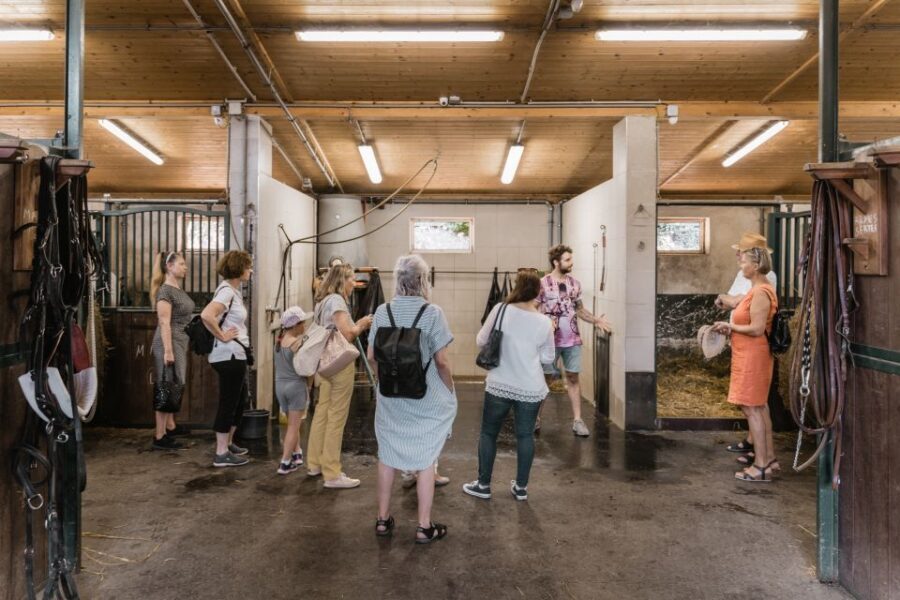
This tour starts at Rappachgasse 34A, 1110 Vienna. It’s in the 11th district, Simmering—so plan on going a little farther than the usual Ringstraße loop. That distance is part of the point: you’re going where the work happens, not where the carriage just waits for photos.
If you’re relying on public transport, a practical route is to take the U3 to Simmering, then switch to the S80 toward Haidestrasse and walk about 10 minutes from there. I like this approach because it doesn’t require complicated transfers.
One thing to take seriously: you’ll enter a stable. Wear shoes you don’t mind getting a bit dusty (closed-toe is ideal). You’ll also want to dress for the weather because you’ll spend time near horses and outdoors before/after the barn portion.
A few more Vienna tours and experiences worth a look

The 30-Minute Stable Tour: What Fiakers Do Before You Ever Sit Down
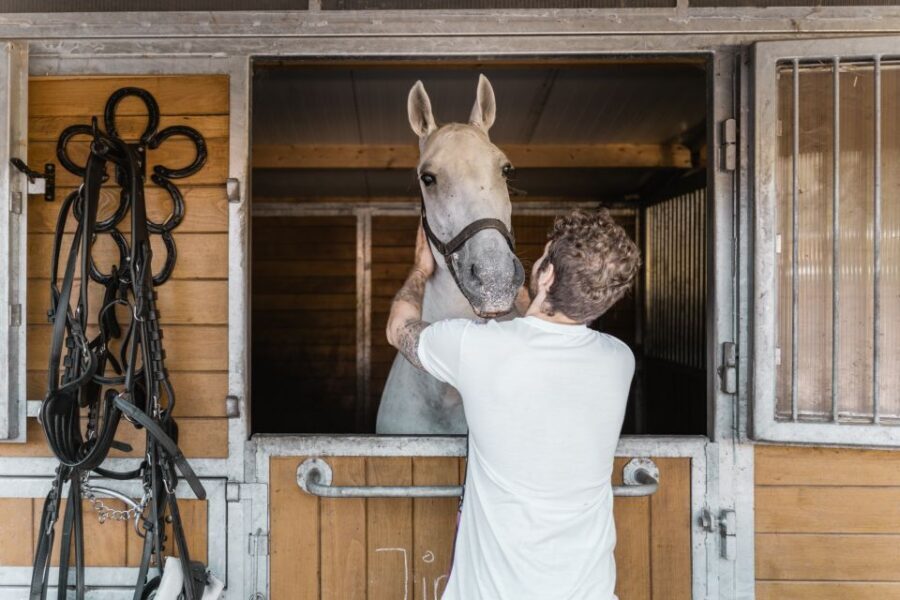
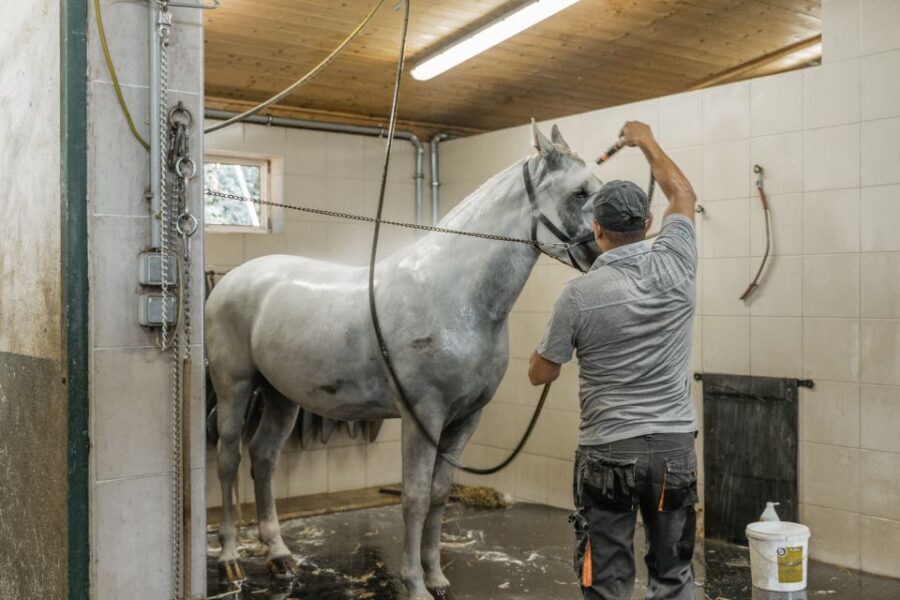
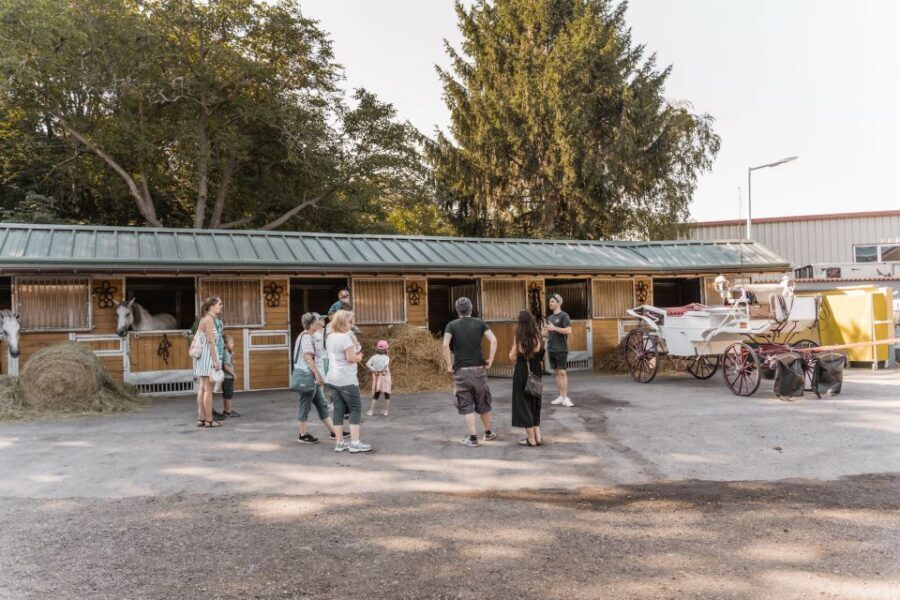
The experience is built around a single idea: Fiakerei is work, not just theater. The guided portion is about 30 minutes, and it’s focused on the real rhythm of a Fiaker operation.
Here’s what you should expect to hear and see:
- The daily work of the Fiaker coachman—what the job looks like before the city ride begins.
- The history behind Fiakerei and how Vienna’s horse transport became such an iconic system.
- Behind-the-scenes context on the traditional two-team setup: you get a look at the original Lohnkutchen horse-taxi concept (the “two teams” piece matters).
- A stable-house perspective on horse care: you’ll see how the horses are managed as living partners in a working business.
I especially like that this part is designed to answer the questions people actually have when they spot a Fiaker on the street: Who are the Fiakers? Where did the tradition come from? And what happens to the horses when the shift ends?
In terms of what you’ll be doing, it’s typically a guided look through the yard and stable area. In many cases there’s time for close contact—people often mention being allowed to stroke or touch the horses. Still, keep expectations realistic: this is a working stable, so your hands-on time may be limited depending on how the operation is running that day.
Horse Welfare You Can See, Not Just Hear
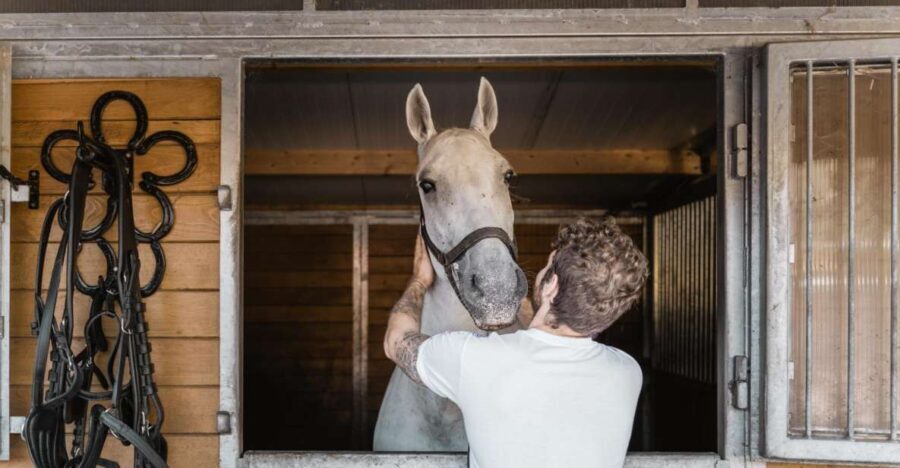
When a city sells the romance of horse travel, the welfare question always hangs in the air. This is why the stable tour portion feels valuable: it’s not only a lecture. You’re in the setting where care happens, and the focus stays on the horses.
From what you’re told during the visit, the key message is that horse welfare is central to how the business runs. You may hear specifics like:
- Horses get scheduled rest time (including rostered days off).
- Horses can be rotated to a quieter setting away from the city’s daily noise.
- The operation plans for horses’ long-term working lives and retirement at a reasonable age.
Some people also report meeting horses with recognizable temperaments (with mentions of Lippizaner-type horses), and seeing horses kept groomed and in good condition. You’ll also likely notice cleanliness—again, because you’re visiting an active operation rather than a “museum stable.”
This is a good moment to ask questions. If you’re the type who wonders about tack, harness fit, or how drivers manage a working pair of horses, bring those questions. The guides operate in English and German, so you won’t be stuck guessing what matters.
The Hitching-and-Ready Phase: Watching Work, Not a Staged Photo
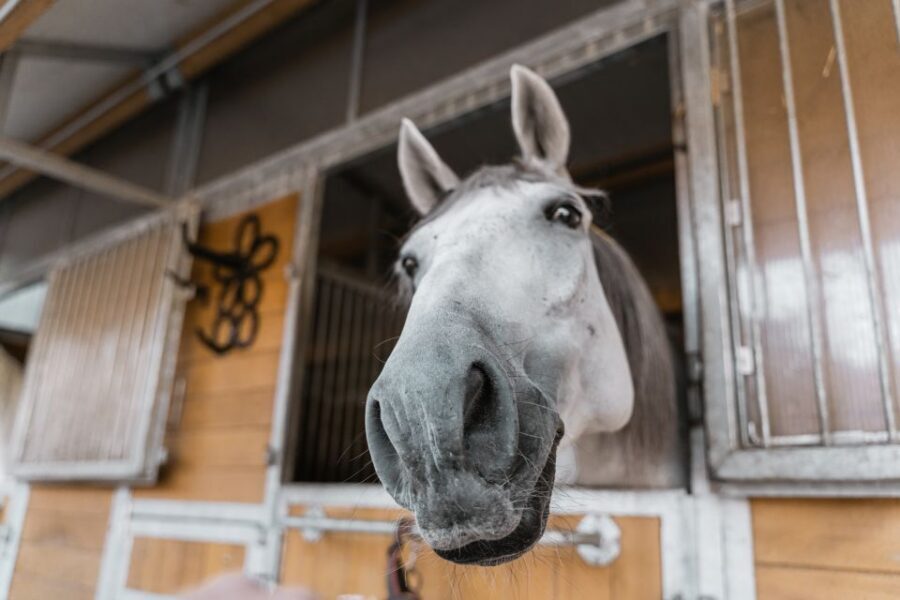
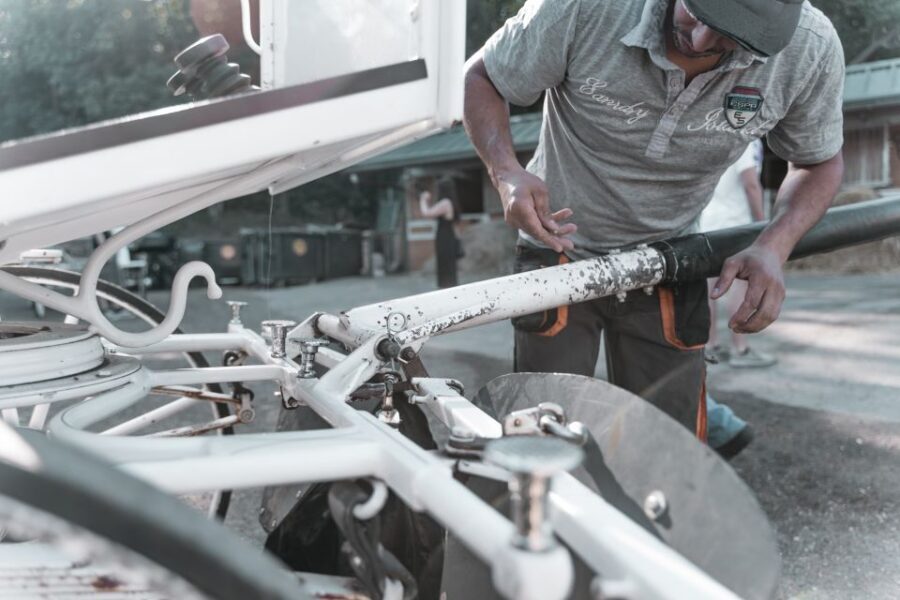
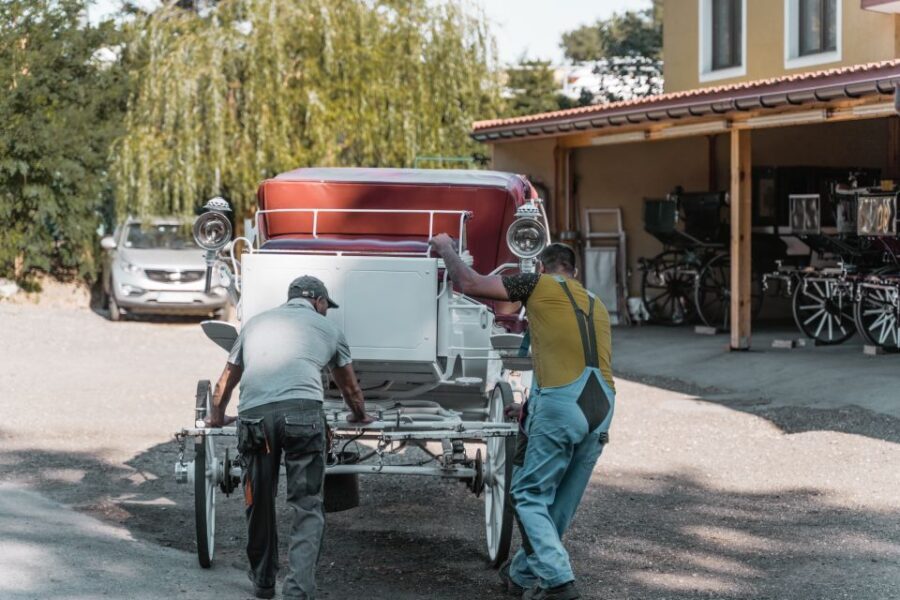
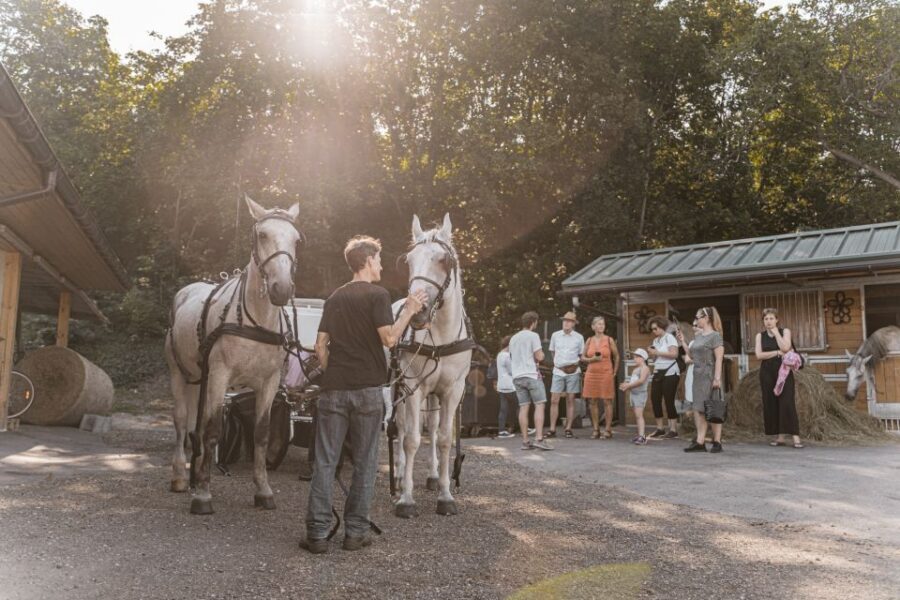
Before the carriage ride, there’s a transition moment: seeing the teams hitched and getting ready. Even if you’re only watching from the side, that’s where the experience stops feeling like a souvenir and starts feeling like a real craft.
This portion adds value because it answers the unspoken question: how does a carriage operation actually go from stable to street? Watching the setup also helps you understand why the guide’s information about the horses and routine makes sense—this isn’t just a show, it’s logistics.
One practical takeaway: the carriage experience afterward feels smoother because you start with the prep. You’re not sitting down with zero context—you already understand what you’re about to witness.
The One-Hour Fiaker Ride Into Vienna’s Center
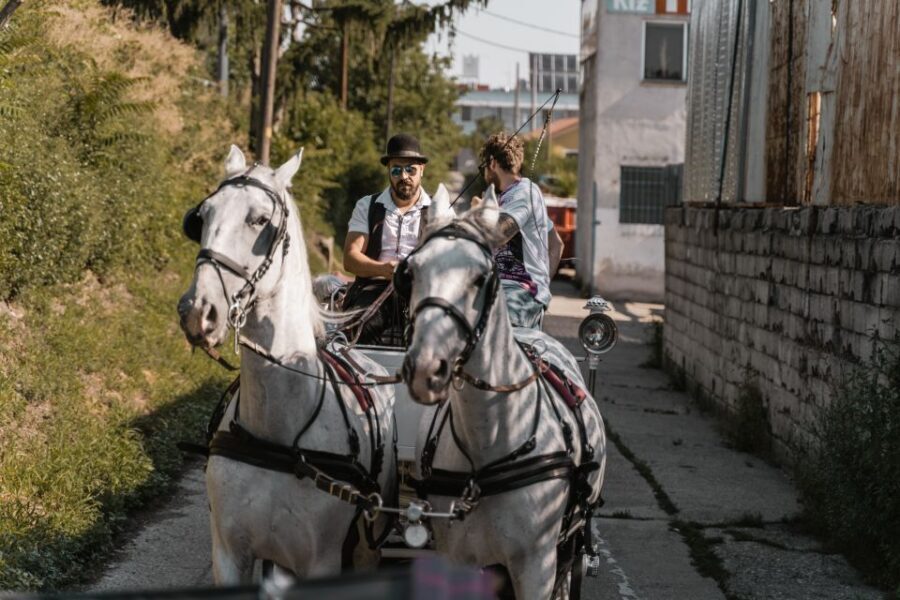
After the stable tour, you climb into an original Viennese Fiaker carriage for about one hour. The ride is designed to be scenic in a practical way: it follows real streets, with real city rhythm, on the way back toward the center.


Route details worth knowing
The ride takes you through the St. Marx district, then heads toward the famous Ringstraße area. You’ll end up dropped off at Michaelerplatz (with some programs also referencing Stephansplatz depending on the exact flow).
This is a solid way to see Vienna because you get a moving “in-between view.” You’re not only looking at postcard sites—you’re watching how the city connects: neighborhoods, architecture styles, and street layouts you might not notice while walking fast or riding a quick bus.
What the ride feels like
Expect a slower pace than the usual city tour pace. That slower pace is the whole point: you hear the horses, you feel the carriage sway, and you get time to look up at buildings rather than just forward-scrolling through them.
One balanced note: not every minute is guaranteed to be a top-sights parade. Some people find that the most “wow” sight moments arrive later. So if your goal is a constant stream of major landmarks, you might feel slightly less satisfied than someone who expects a curated route. Still, you do pass through central main-road territory via the Ringstraße, so it’s not a back-of-town wandering trip.
Drop-Off at Michaelerplatz (and Why That’s a Smart Place to Continue)
You finish near Michaelerplatz in the 1st district, a great jumping-off point for more exploring. I like this kind of ending because it sets you up for the rest of a Vienna day without forcing you to backtrack.
Michaelerplatz is convenient for:
- Walking into the historic core area
- Connecting to major sights on foot
- Getting to meals and cafés around the central streets
Also, there’s an option for a Falco breakfast add-on, which pairs nicely with an early stable visit if you want food after horses and carriage time.
Price and Value: $38 for Stable Time Plus an Hour on the Road
At $38 per person for about 90 minutes, you’re not paying only for the carriage ride. You’re paying for a stable visit that explains the tradition, plus the ride itself.
This matters because the carriage component alone can easily feel short when you’re paying for a tourist-style loop. Here, you get context first and time on the road afterward—two different kinds of value.
A useful benchmark you may hear from other visitors is that typical Vienna carriage rides can run much higher (one booking compared around 150 euros for a shorter central ride). Even if you use that only as a rough comparison, the bigger point is clear: this format bundles education and time together, and that usually makes people feel it was worth the spend.
If you’re traveling with kids or a horse-loving group, the value often clicks even faster because the stable portion turns the experience into more than a single photo moment.
Falco Breakfast Option at Schwarzenbergplatz: A Practical Add-On
There’s an optional add-on: Falco Breakfast, which includes the stable tour followed by breakfast at Cafe Falco’s at Schwarzenbergplatz (1010 Vienna).
Breakfast choices are listed on-site and can include:
- Fiaker Breakfast (small goulash with pastries)
- Stable Boy Breakfast (pastries, ham, bacon, cheese, butter, orange juice)
- Galloper Breakfast (pastries, butter, jam, orange juice)
- Horseshoe Breakfast (croissants, butter, jam, orange juice)
- Two-Horse Breakfast (Sacher sausages with mustard, pastries)
And a hot drink of your choice is included with the breakfast.
I like this option because it turns the morning into a full “horse-and-city” sequence. You’ll already be in the working-horse mindset, and then you get a proper sit-down meal in central Vienna right after.
Who Should Book This Fiaker Experience?
This is a good match if:
- You’re interested in horse culture and want the working side, not only the tourist side.
- You like “small-group, ask-questions” tours (max 10 people).
- You want a Vienna experience that uses time well: stable context plus an hour of carriage movement.
- You’re bringing kids who enjoy animals. Many families find the stable portion especially memorable because it’s tangible and real.
It may be less ideal if:
- You only want a nonstop parade of famous landmarks (some of the route is more everyday city travel).
- You expect a long, hands-on barn session. The stable visit is short and guided, and practical access can vary.
Should You Book the Vienna Fiaker Stable and Carriage Ride?
Book it if you want Vienna that feels like work-life heritage: horses, harness craft, coachman routine, and a carriage ride that actually connects districts—not just a short loop.
I’d skip it only if your priority is constant top-sight spotting for the full hour. This tour is more about understanding the Fiaker system and feeling how the ride fits into real city transport.
If you come prepared with good shoes, comfortable weather clothing, and a curious attitude, you’ll likely leave with a sharper appreciation for why Vienna keeps the Fiaker tradition alive—and what it asks of the people and horses behind it.
FAQ
How long is the Fiaker stable and carriage ride experience?
The total duration is 90 minutes, with about 30 minutes for the guided stable tour and about 1 hour for the horse-drawn carriage ride.
Where do I meet the group?
You meet at Rappachgasse 34A, 1110 Vienna.
Where do I get dropped off after the ride?
You’ll be dropped off in the city center at Michaelerplatz (and the experience also references Stephansplatz as part of the central drop-off area).
What’s included in the price?
Included are the stable visit and the Fiaker ride back toward the city center (Stephansplatz / Michaelerplatz).
Is food included?
Food and beverages are not included in the standard experience. There is an optional Falco Breakfast add-on with listed breakfast choices and a hot drink included.
What languages are the guides?
The live tour guide offers English and German.
How big is the group?
It’s a small group limited to 10 participants.
Do I need special clothing or shoes?
You should dress according to the weather and wear appropriate shoes since you’ll be entering a stable.
Is there free cancellation and can I pay later?
The experience offers free cancellation up to 24 hours in advance for a full refund, and it also offers a reserve now and pay later option.