REVIEW · VIENNA
Vienna: City of Music Private Walking Tour
Book on Viator →Operated by Insight Cities · Bookable on Viator
Vienna sings before you even enter the hall. This private walk strings together the places where Mozart and Beethoven left their musical fingerprints, with a guide who explains the connections in plain language as you go. You also get those handy listening pauses on headphones so the city’s music isn’t just talked about—it’s heard while you look.
What I like most is the private, just-for-your-group setup. With a flat per-group fee (up to 10), you’re not squeezed into a big herd, and your guide can tailor the pacing and questions—especially if your group includes a mix of music fans and curious non-experts. I also really enjoy the tour’s flow: iconic landmarks first, then the quieter “this is where it happened” angle.
One consideration: this is a walking tour, and several of the stops you’ll want to linger at are external or pass-by moments. A couple of the indoor sites have admission that isn’t included, so you may pay extra if you decide you want to go in.
In This Review
- Key highlights at a glance
- A Vienna music walk that actually sounds like music
- Price and value: a flat group fee that can work for families
- Pickup, meeting points, and getting into the right rhythm
- Stephansdom: the cathedral that functioned like a music hall
- Mozarthaus Vienna and Figaro House: seeing where opera ideas grew
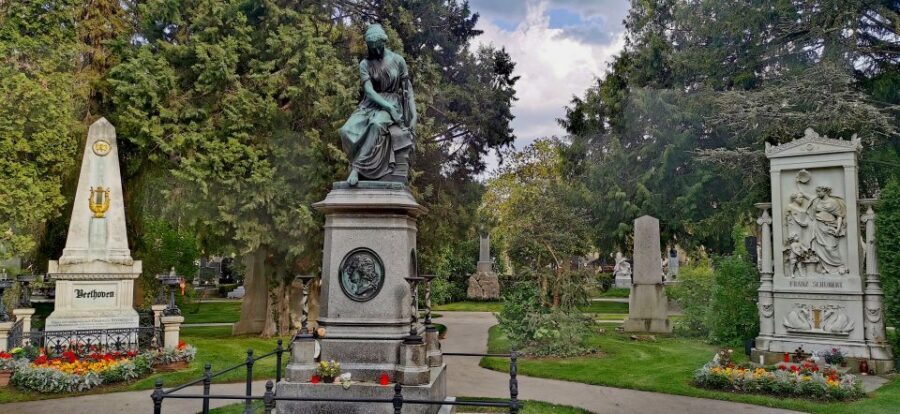
- Beethoven’s Vienna: statue, apartments, and the idea of a “restless life”
- The Hofburg link: Archduke Rudolph, patronage, and Missa Solemnis
- Inner City: the headphone listening moment that makes the whole thing click
- How a private guide helps even if you’re not a classics person
- What to watch for at each stop (so you don’t miss the best parts)
- Who this tour suits best
- Should you book this Vienna City of Music private walking tour?
- FAQ
- How long is the Vienna City of Music private walking tour?
- How many people are in a group?
- What does the price include?
- Is pickup available?
- Is there a central meeting point?
- What language is the tour offered in?
- Do you get to listen to music during the tour?
- Are tram or metro tickets included?
- Can I cancel for a refund?
Key highlights at a glance
- Private guide for up to 10: better questions, easier pacing, less time waiting around.
- Headphones listening session: you’ll hear selections while exploring the inner city for about 45 minutes.
- Stephansdom stop with music context: Haydn, Mozart, Salieri, and Vivaldi connections tied to the cathedral.
- Beethoven’s Vienna, not just his works: apartments, monuments, and Pasqualati-House links.
- Hofburg + Archduke Rudolph thread: a focused story on patronage and patron relationships in the music world.
A Vienna music walk that actually sounds like music
Vienna is full of classical culture, but it can feel like a museum you’re wandering through—until someone gives you the map of why these buildings matter. That’s the strength of this Vienna: City of Music private walking tour: it connects sites to composers and specific musical eras, then gives you listening moments so the story has a soundtrack.
I especially like the “city as instrument” approach. You’re not just seeing pretty facades. You’re learning how these places shaped performances, careers, and even friendships. Guides like Annelie (based on prior feedback) are good at making the connections feel personal and understandable, even if your classical training is rusty. And because it’s private, you get more of that back-and-forth energy instead of feeling stuck listening to a script.
The tour is built around about 3 hours of walking, split into short blocks at each highlight. That pacing matters in Vienna, where you can otherwise lose steam quickly—because you’ll be on your feet, then you’ll get a structured reason to stop.
You can also read our reviews of more walking tours in Vienna
Price and value: a flat group fee that can work for families
The price is $564.72 per group (up to 10). For some people, that sounds steep—until you do the math for a group. If you have 6–10 people, the cost per person drops fast, and you gain something you can’t easily “buy” in a standard group tour: control over questions, tempo, and where you want extra time.
This is also a tour with practical inclusions that support value:
- a mobile ticket
- pickup offered
- English-language guidance
- only your group participates, so you’re not competing for your guide’s attention
Where you might spend extra is admission at a couple of stops that are marked as not included. If your group is the type that always wants “one more door you can go through,” it’s smart to budget a bit beyond the base price. If you prefer to keep it outdoors and focus on the stories and listening moments, the experience stays very cost-predictable.
One more value point: this tour is often booked around 111 days in advance on average. That’s a hint you’ll want to plan ahead, especially if you’re traveling in peak seasons or want a specific departure time.
Pickup, meeting points, and getting into the right rhythm
Logistics can make or break a walking tour. Here, you have two good options for starting:
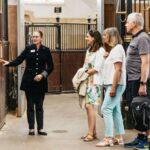
- pickup at your hotel or holiday flat (your guide sends their photo, phone number, and bio when you book)
- or meet in the center at Café Mozart, Albertinaplatz 2 if you want an easy rendezvous
If you’re using public transport, note that tram/metro tickets aren’t included, but the guide can help you figure out what you need if you don’t have a pass.
The tour is near public transportation, so you shouldn’t feel trapped at the start. And because the pace is built into short stops—many around 20 minutes—you’re less likely to get the slow fatigue that hits longer, unstructured walks. Still, wear comfortable shoes. You’ll be walking through central Vienna for the full experience time.
Stephansdom: the cathedral that functioned like a music hall
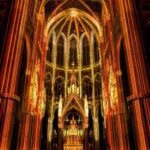
Your first major stop is St. Stephen’s Cathedral (Stephansdom), and the timing is built to keep it meaningful rather than rushed—about 20 minutes. This is one of those places where your eyes naturally scan for detail, so it’s a great first anchor. You get that instant sense of scale, then your guide ties the building to music rather than just architecture.
The tour’s angle here is performance history. You’ll learn how Stephansdom served as an important venue in earlier centuries for composers such as Haydn and Mozart, plus Salieri and Vivaldi. Even if you only know a couple of names, the idea is clear: Vienna didn’t treat music as something separate from daily life. It was braided into major public spaces.
Admission for this stop is free, which helps set expectations early. Also, because this is the kind of landmark you’ll likely see again on your own later, getting the “why it mattered” first makes the rest of the trip snap into focus.
Mozarthaus Vienna and Figaro House: seeing where opera ideas grew
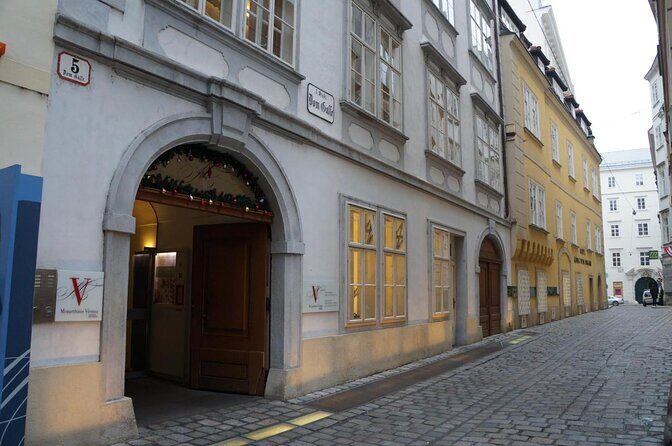
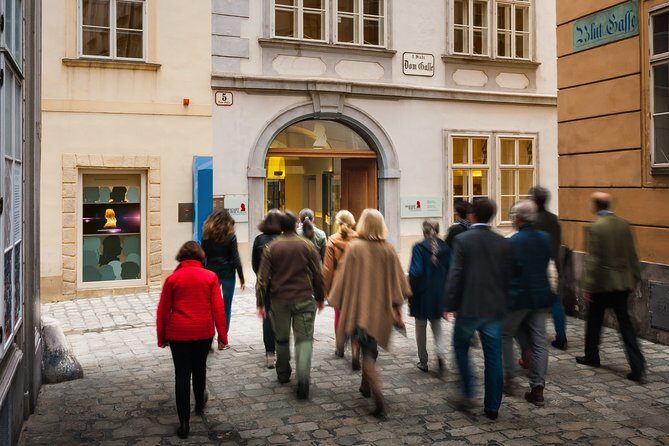
Next comes Mozarthaus Vienna, with a stop connected to what’s often referred to as the Figaro House (or Mozarthaus). You’ll have about 20 minutes here, aimed at putting you close to Mozart’s residency from 1784 to 1787—the years tied to many of his famous operas and instrumental pieces.
This is a different kind of stop than Stephansdom. The cathedral gives you grandeur and context; Mozarthaus gives you proximity to the routine side of genius. Your guide’s job is to help you connect what you’re seeing with how Mozart worked—where ideas came from, and how Vienna’s musical world shaped what he composed.
One drawback to consider: admission here is not included. So you’ll have to decide on the spot (with your guide’s help) whether you want to pay extra to go inside more fully. If your group prefers to keep costs controlled, you can still get plenty out of the exterior and the storytelling thread.
You can also read our reviews of more city tours in Vienna


Beethoven’s Vienna: statue, apartments, and the idea of a “restless life”
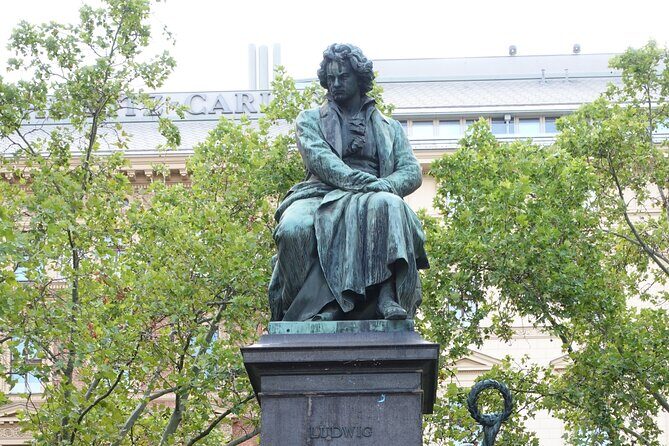
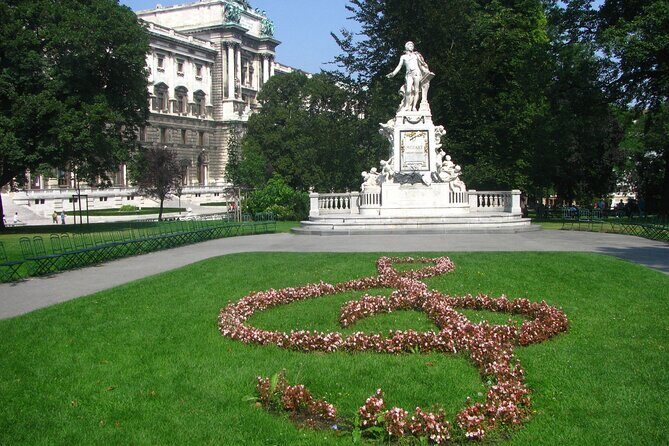
After Mozart comes the Beethoven section, and it’s handled in a way that makes him feel more human than mythic. First you pass Beethoven’s statue. This is another short moment—about 20 minutes—but it’s designed to set up a major theme: Beethoven’s pattern of moving around.
You’ll explore his erratic life in Vienna, including the fact that he lived in sixty different apartments. That number isn’t just trivia. It helps explain how Vienna worked for working artists—how connections, patrons, housing, and circumstances all shaped what composers could do.
From there, the tour keeps you moving, including a pass by Mölker Bastei and a direct story link to Pasqualati-House, which sits opposite the University of Vienna. Beethoven’s restless routine shows up again here, and the tour frames his music as a bridge: the apex of the Classic era and a doorway into developments that helped define Romantic music.
Again, some of the sites in this middle stretch are not included for admission, so think of this part as story-first. You’re paying for the connections and the “watch the building while someone explains the composer” magic, not for constant entry fees.
The Hofburg link: Archduke Rudolph, patronage, and Missa Solemnis
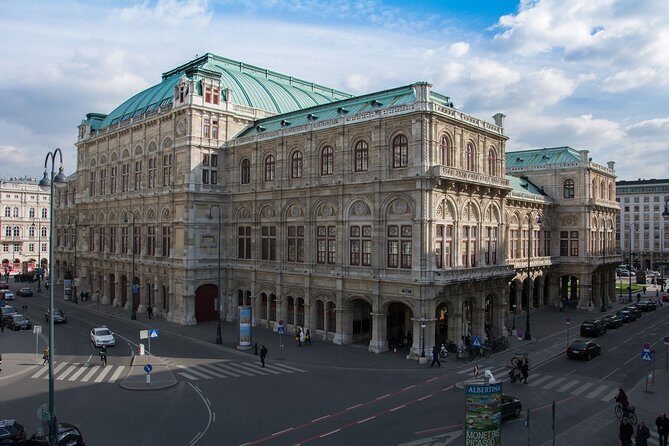
The final “composer-and-people” stop is the Hofburg area, where the story shifts from Beethoven as an individual to Beethoven as part of a larger court-based musical ecosystem.
Here’s what makes this section stand out: it focuses on his relationship with Archduke Rudolph, the youngest son of Emperor Leopold II, and one of Beethoven’s best friends. You’ll learn that Rudolph took piano lessons with Beethoven at this residence area, and that Beethoven had a strained relationship at times with the high aristocracy—yet Rudolph was a meaningful supporter.
The tour also highlights a concrete musical outcome: Beethoven dedicated his Missa Solemnis to Archduke Rudolph. The point your guide will make (and it’s a good one) is that major compositions often come from relationships—support, access, and expectations. This is one of the best ways to turn “music history” into something more grounded.
Admission details aren’t clearly marked as included or separate for this stop, but as with most of the tour, plan on an outdoor-and-story emphasis unless your guide suggests an optional indoor visit.
Inner City: the headphone listening moment that makes the whole thing click
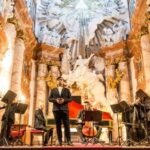
The tour’s last segment is where it becomes memorable in a different way. You spend about 45 minutes in the inner city exploring major sights while wearing headphones and listening to selections of Vienna’s musical masterpieces.
This is the secret sauce for non-music people, honestly. Sightseeing alone can turn into a checklist. But listening while you walk turns the city into an atmosphere. Even if you can’t name every piece or composer, you’ll start hearing patterns: dramatic moments, lyrical lines, and those “Vienna sound” rhythms people associate with the Classic and early Romantic eras.
It also adds a nice rhythm to the day. You get a break from constant explanation and let your ears do some of the work. This is especially valuable if your group includes friends who don’t want every stop turned into a lecture.
Admission for this final segment is free, and it’s a smart way to get real emotional payoff without extra entry costs.
How a private guide helps even if you’re not a classics person
One of the strongest themes from prior visitors is that this tour works for people who don’t consider themselves classical music experts. That makes sense because the guide’s job is not to perform a recital; it’s to translate.
In practice, you can expect help with:
- understanding why specific places mattered in performances or composition
- connecting composers to Vienna’s geography and social world
- keeping the stories human (Beethoven’s apartment life, patron friendships, and the court connection)
The tour is also well-suited to couples and friends who like history but get bored with dates-only narratives. And if your group is mixed—one big music fan, one casual listener—private format helps your guide balance the attention without leaving anyone behind.
A practical tip: bring at least a couple of names you already know. If Mozart and Beethoven are the core, that’s enough. The tour can build outward from there.
What to watch for at each stop (so you don’t miss the best parts)
Because several locations are either pass-by or have optional admissions, it helps to know what to prioritize. Here’s how I’d approach it if you want the most out of the experience:
At Stephansdom, focus on the building’s public role. Ask how the space shaped performance life historically.
At Mozarthaus Vienna, treat it like a “composer’s work environment” moment. If you’re considering entry, decide early so you don’t lose time at the threshold.
In the Beethoven stretch (statue, Mölker Bastei, Pasqualati-House, and the University-area setting), listen for the theme of movement and patronage. The “sixty apartments” idea becomes a lens for everything else.
At the Hofburg link, pay attention to Archduke Rudolph and the dedication of Missa Solemnis. That’s where the tour often turns from biography into cultural context.
During the headphone walk, let the audio guide your attention. If you try to multitask too hard—scrolling, taking calls—you’ll miss the whole point.
Who this tour suits best
This is a great fit if you want:
- a private walking experience with a guide who can answer your questions
- a Vienna “music story” that goes beyond the basic highlights
- a mix of major landmarks and composer-specific connections
- an experience that stays approachable for people who are not heavy into classical music theory
It also works well for groups where cost-sharing matters. Up to 10 people at a flat per-group price can be a strong deal compared with booking multiple individual tours.
If you already plan to do major museum visits and you want a lighter, story-based day, this tour can act like a connective tissue—linking your later museum time to the people and places you heard about here.
Should you book this Vienna City of Music private walking tour?
If your group wants Vienna’s classical composers placed into real streets and real buildings, I’d say this is an easy yes. The combination of private guiding, composer-focused stops, and the headphones listening segment makes it more than a sightseeing loop.
I’d especially book it if:
- you have 3–10 people and want the per-group value to work in your favor
- you like history with a human angle
- you want your experience to be understandable even without a music background
- you want a flexible day with morning or afternoon departures
I’d think twice if:
- your group strongly prefers lots of indoor time and paid museum entries every stop
- you dislike walking for about three hours total
- you’re traveling with someone who needs totally included admission at every site
FAQ
How long is the Vienna City of Music private walking tour?
It runs for about 3 hours.
How many people are in a group?
It’s a private tour, and the group size is up to 10 people per booking.
What does the price include?
The price is $564.72 per group and includes the private walking experience. Admission is marked as free for some stops and not included for others.
Is pickup available?
Yes. Pickup is offered at your hotel or holiday flat.
Is there a central meeting point?
Yes. Your guide can meet you at Café Mozart, Albertinaplatz 2 if you prefer a central spot.
What language is the tour offered in?
The tour is offered in English.
Do you get to listen to music during the tour?
Yes. There’s a segment in the inner city (about 45 minutes) where you listen to selections on headphones while exploring.
Are tram or metro tickets included?
No. Tram or metro tickets aren’t included, but your guide will help you purchase what you need if you don’t have a pass.
Can I cancel for a refund?
Yes. You can cancel up to 24 hours in advance for a full refund. If you cancel less than 24 hours before the start time, the amount paid isn’t refunded.