REVIEW · VIENNA
Vienna Private Walking Tour including State Opera
Book on GetYourGuide →Operated by Travmonde OÜ · Bookable on GetYourGuide
Vienna’s power stops and starts with buildings. On this Vienna private walking tour, you’ll walk a straight line through empires and music, ending at the State Opera with the kind of context that makes the city feel legible fast. You’ll cover Roman Vindobona, Habsburg rule, two world-shaping eras, and the places where classical composers became part of daily life.
What I love is the way the route turns big eras into concrete stops. You’ll see Roman traces at the squares near the center, then move into the Habsburg world through landmarks tied to court power and ceremonial religion. I also love how the tour keeps music present without turning it into a lecture—especially around the opera building, where famous names like Gustav Mahler, Herbert von Karajan, and Claudio Abbado sit naturally in the story.
One drawback to plan for: opera access can vary. Even when a State Opera stop is included, some days may mean lobby-level access rather than a fuller behind-the-scenes visit, and timing can shift if the opera’s own schedule changes.
In This Review
- Key things you’ll notice on this Vienna private walk
- Meeting at Stephansplatz 8A: the best kind of start point
- State Opera expectations: what you’ll see, and what can change
- Roman Vindobona to the Habsburgs: a timeline built from streets and squares
- Mozart Monument and imperial facades: how to look like you mean it
- Michaelerkirche and Michaelertor: the emperors’ church lesson
- Graben and Richard Lionheart: why street names keep history alive
- Peterskirche and the 4th century anchor
- Stephansplatz and Stephansdom: getting beyond postcard mode
- The music angle: why classical names make sense on a street walk
- Timing and pacing: how 3 hours feels in real life
- Price and value: $323 per group up to 15
- Who this private Vienna walking tour suits best
- Should you book this Vienna private walk with the State Opera?
- FAQ
- Where is the meeting point for this Vienna Private Walking Tour?
- How long is the tour?
- Is this tour private?
- What languages are available with the guide?
- Is the State Opera visit included?
- Are entrance fees included?
- What should I bring or wear?
- Is this tour suitable for people with mobility impairments?
- Does the tour cover major historical periods like the World Wars?
- Is free cancellation available?
Key things you’ll notice on this Vienna private walk
- State Opera context you can actually use: history from the 1860s Vienna Court Opera to the 1920 name change, plus major works linked to the house
- A walkable timeline: Roman Vindobona → Holy Roman Empire → Habsburg monarchy → Austro-Hungarian era → World Wars → Second Republic
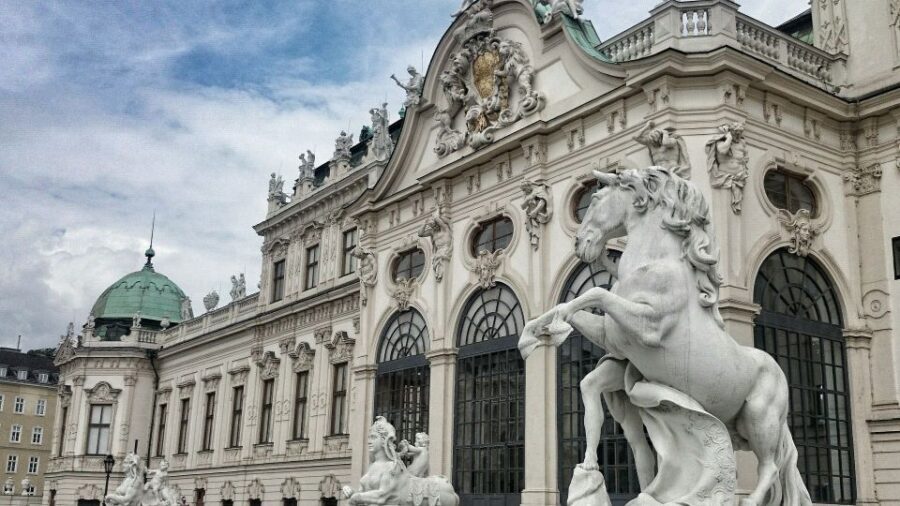
- Imperial Vienna in stone: Hofburg, Kunsthistorisches Museum facade views, and the church of the emperors, Michaelerkirche
- Get-your-bearings streets: Der Graben, Peterskirche, and Stephansplatz set the city’s geometry in your head
- Stephansdom is more than a photo: you’ll get Roman-Gothic details and why it mattered in the center
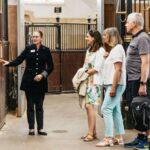
- Private-group pacing: 3 hours with a guide, typically best for people who want dialogue, not a headset rhythm
Meeting at Stephansplatz 8A: the best kind of start point
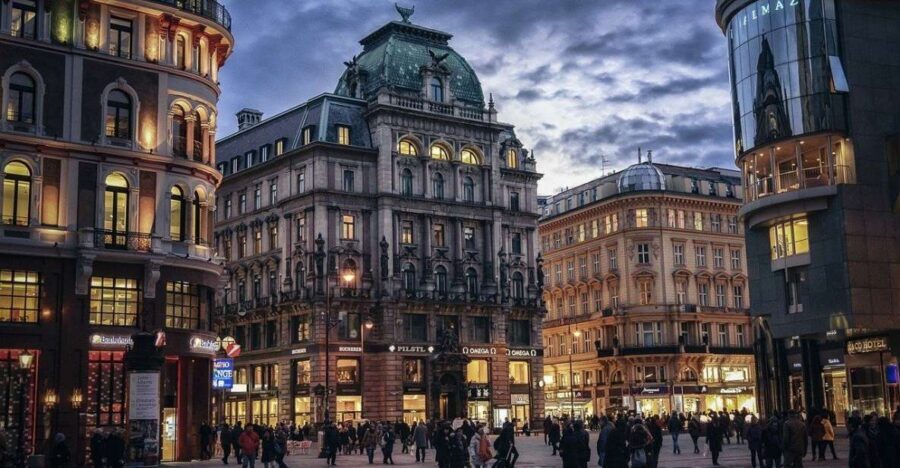
You meet at Stephansplatz 8A (1010 Wien), which is a smart anchor because it puts you in the emotional center of Vienna right away. From here, the city opens in all directions, so the tour can bounce across eras without feeling random. You’ll start with orientation, then the guide will start linking what you see to what came before.
You also get a quick “why Vienna looks like Vienna” moment early. The city’s older layers show up in how streets curve, where major churches rise, and how public space funnels people toward power buildings. If you’re coming in on your first day or first few days, this start helps you stop thinking in museum rooms and start thinking in neighborhoods and eras.
You can also read our reviews of more walking tours in Vienna
State Opera expectations: what you’ll see, and what can change
The tour’s music anchor is the Vienna State Opera, a building with a long identity. It traces back to the 1860s, when it was known as the Vienna Court Opera, and the name shifted in 1920 as Austria’s early republic took shape. Even if you’ve seen opera photos before, the place hits differently in real scale—especially when the guide frames it as a working stage tied to the city’s political and cultural life.
You’ll also hear how this opera house connects to the repertoire and to major artistic figures. The tour references productions like Verdi’s Don Carlo, plus La Traviata and La Clemenza di Tito. It also brings in the heavyweights who helped shape the house’s reputation, including Gustav Mahler, Herbert von Karajan, and Claudio Abbado.
That said, here’s the practical part: what counts as the “Opera visit” can differ by day. One key detail to know is that some versions of this experience are essentially a visit to public spaces such as the lobby, not full interior access. If you care a lot about deeper access, ask the guide in the first minutes what areas you’re entering and whether you’re getting anything beyond the public-facing parts. This avoids the common disappointment of assuming more access than the building is allowing that day.
Roman Vindobona to the Habsburgs: a timeline built from streets and squares
A big part of the appeal here is that Vienna isn’t treated as one era. The guide builds your understanding in steps: Roman Vindobona, then the imperial centuries of the Holy Roman Empire, followed by Habsburg dominance, then the more modern shocks of the World Wars and the birth of the Second Republic.
What makes this work on foot is that the route keeps giving you visual anchors while the story moves. You’ll look for evidence of earlier layers—Roman remains in central public space and older wall traces near the core of the city. Even if you only catch partial remains, the guide’s framing helps you see the city as a palimpsest: layers laid over earlier layers, not a clean slate.
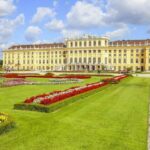
You’ll also get a sense of why the Habsburg era felt so permanent. The tour points you toward the grand institutions that symbolized authority—especially the cluster around the Hofburg. This is where Vienna’s political story feels architectural, not abstract.
Mozart Monument and imperial facades: how to look like you mean it
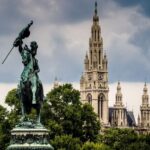
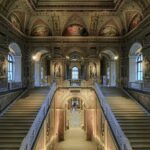
This tour doesn’t just say Mozart and move on. You’ll stop near the Mozart Monument and then shift into the imperial visual grammar around the Art History Museum (Kunsthistorisches Museum) and the Hofburg. These are the kinds of places where, if you don’t have a guide, you might admire the building and miss the point.
With the guide, you can connect the dots. The art museum facade and the Hofburg setting aren’t random beauty; they’re part of how the monarchy displayed itself—collecting, commissioning, performing power through culture. It’s a useful mental model for Vienna: buildings are not just buildings here. They’re political messaging and cultural branding that happens to look stunning.
If you like architecture, this section is where you’ll notice the tour’s pacing. Instead of rushing through, you’ll usually get enough time to read the facade lines and then translate them into history.
Michaelerkirche and Michaelertor: the emperors’ church lesson
One of the most interesting stops is around Michaelertor and the Michaelerkirche (Church of St. Michael). The tour frames Michaelerkirche as the official church of the emperors for years. That detail matters, because it changes how you look at a church. You stop thinking of it only as religious space and start thinking of it as a symbol tied to rule, ceremony, and state identity.
Even if the church itself is not the reason you booked, this stop helps you understand Vienna’s layout. Gates like Michaelertor work like punctuation marks—edges that separate spaces and signal movement into more formal territory. You’ll feel that in your walking rhythm as the route turns from broad public squares into corridors of authority.
You can also read our reviews of more private tours in Vienna




Graben and Richard Lionheart: why street names keep history alive
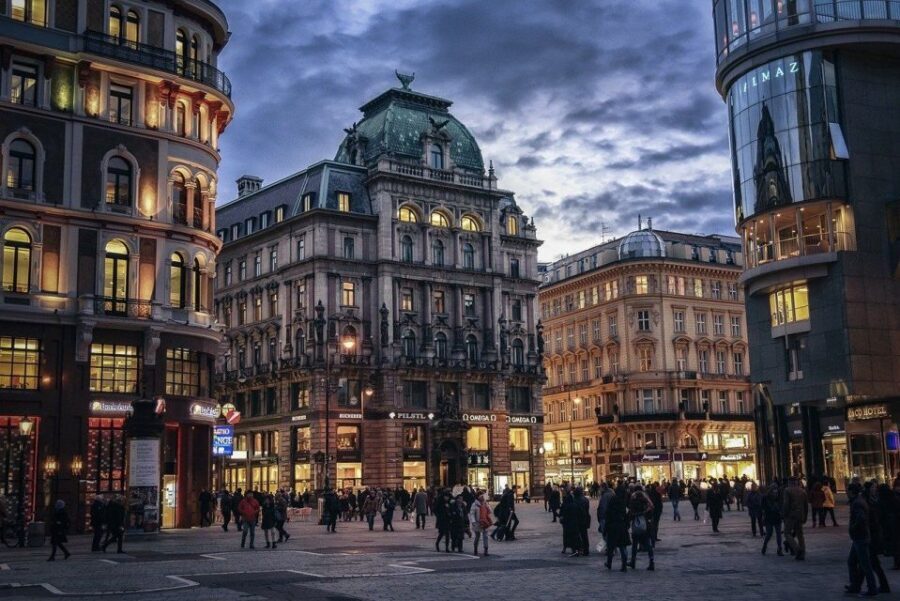
The tour includes the classic central street Der Graben (often called “the Graben”). Here you get a detail that makes the whole street feel older and more story-filled: the guide explains that this area dates back to the Roman Empire and was once used by Richard Lionheart to enter the city.
You might not spot Roman ruins standing there, but the idea is the point. Vienna’s center didn’t spring up fully formed in one century—it grew layer by layer, with major routes surviving because they worked. When the guide links a modern shopping street to a medieval arrival route and then to Roman-era planning, you’ll start noticing historical survival patterns everywhere.
Peterskirche and the 4th century anchor
Another stop is Peterskirche (St. Peter’s Church), described as having existed since the 4th century. That is one of those facts that can sound like trivia until a guide tells you why it matters. In Vienna, an old church near the center can function like a time marker: it helps you understand continuity even while the rulers and empires changed.
This part of the walk also supports the “listen and look” style that makes historical tours worth it. Instead of cramming dates, you’re asked to compare what’s around you now—street scale, centrality, public access—with what those early centuries must have looked like. It’s a small shift in your attention that makes the stop feel smarter, not slower.
Stephansplatz and Stephansdom: getting beyond postcard mode
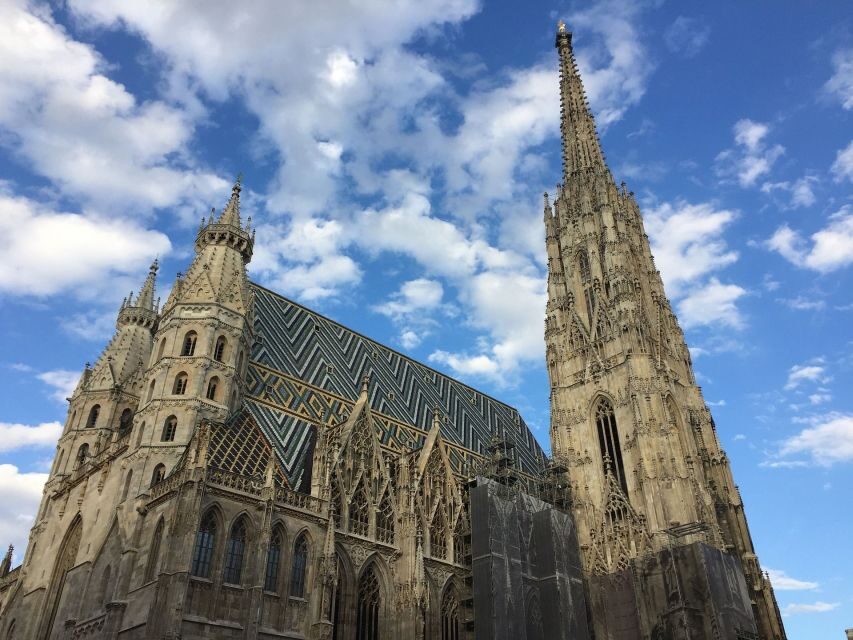
You end up at Stephansplatz and the mighty Stephansdom (St. Stephen’s Cathedral), described as one of the tallest churches in the world and a major Roman-Gothic masterpiece. The key value here is that the cathedral becomes the visual conclusion to the story you’ve been building for hours.
With a guide, Stephansdom isn’t just a landmark; it’s a summary of how Vienna represented power, belief, and identity in a single landmark you can’t ignore. You’ll also get help connecting the cathedral’s role to the earlier route logic: squares, gates, churches, and imperial buildings all point back to this central stage.
If you love taking photos, this is where you’ll do it. But even if photos aren’t your priority, the cathedral stop is a good moment to simply pause. Vienna’s central space has a way of making you stand still without trying.
The music angle: why classical names make sense on a street walk
Vienna’s musical heritage shows up here in a practical way. The tour name-drops major composers such as Mozart, Haydn, Beethoven, Schubert, Johann Strauss (father and son), Johannes Brahms, and Gustav Mahler, plus the larger idea that music was intertwined with the city’s elite culture and civic identity.
What’s useful for you is that the guide keeps linking these names to places instead of treating them like a random list. When you’re standing near the State Opera, for example, the composers become part of a larger explanation of why the opera house mattered: it wasn’t entertainment tucked away from politics. It was one of the main stages where Vienna presented itself.
That’s the difference between a music talk and a street walk. Here, you can connect the sound of the culture to the architecture holding it.
Timing and pacing: how 3 hours feels in real life
This is a 3-hour private tour, so it stays focused. You won’t get everything at every stop, which is fine, because the guide’s job is to keep the thread moving. The route hits a lot of ground emotionally even if the physical walking is manageable.
One thing to plan for: the opera portion can be schedule-sensitive. If the opera’s own programming affects access, timing can shift, and in rare cases, a planned opera visit may not happen as expected. So when you book, treat the State Opera entry as a best-effort access item within the 3 hours—not a guarantee of a long, behind-the-scenes experience.
If your group likes a calm pace with time to actually look up at facades and read details, this format works well. If you want lots of stops and lots of free time, consider pairing it with another shorter activity afterward.
Price and value: $323 per group up to 15
At $323 per group up to 15, you’re paying for a guide plus a private-group format with enough attention to cover a full timeline walk. That can be good value if you’re traveling as a small circle and want history tied tightly to what you’re seeing.
But the value depends on how you define the “State Opera” part. If your ideal is simply a meaningful look at the building and a well-explained context, this price can feel reasonable. If your ideal is deep interior access, you should confirm what’s included that day, because some versions may limit the visit to public areas like a lobby.
In other words: you’re mostly paying for the guide’s structure and the route’s focus. If you’re the kind of person who likes to understand how cities work through landmarks, you’ll get your money’s worth.
Who this private Vienna walking tour suits best
This tour is a strong fit if you want a coherent overview of Vienna’s core and you like learning through walking. It also helps if you’re interested in how empires shape cities—Roman origins through Habsburg grandeur to the modern political shift after the Second Republic.
It’s not suitable for people with mobility impairments, so plan for a different option if walking distance or steps are an issue.
One more human factor: the subject matter includes major topics like the World Wars and the Jewish history tied to central neighborhoods. On at least one past run, the guide Franziska Pfisker was reported to have added politically charged remarks that made some people uncomfortable and pushed the tone beyond straightforward historical explanation. If your group prefers strictly neutral, historical commentary, I’d suggest setting that expectation early with your guide.
Should you book this Vienna private walk with the State Opera?
Book it if you want a fast, place-based history of Vienna’s center, plus a State Opera stop that gives context for why the building matters. You’ll likely appreciate the way the route connects Roman traces, imperial sites, and the cathedral’s centrality into one understandable story.
Skip or rethink it if your priority is guaranteed full interior access inside the opera beyond public areas, or if your trip has tight timing and you can’t absorb possible schedule shifts tied to the opera’s day-to-day operations. In that case, consider planning a separate, independently confirmed opera-focused activity.
If you do book, I’d do one practical thing: at the start, ask the guide what exact areas of the State Opera you’ll enter and how the 3 hours will be structured around it. That one question can make the difference between a “great story walk” and a “we expected more.”
FAQ
Where is the meeting point for this Vienna Private Walking Tour?
The meeting point is Stephansplatz 8A, 1010 Wien, Austria.
How long is the tour?
The tour lasts 3 hours.
Is this tour private?
Yes. It is a private group tour (priced per group up to 15 people).
What languages are available with the guide?
The live guide offers English and German.
Is the State Opera visit included?
Yes, the tour includes a visit to the State Opera.
Are entrance fees included?
No. Entrance fees are not included.
What should I bring or wear?
Bring comfortable shoes.
Is this tour suitable for people with mobility impairments?
No, it is not suitable for people with mobility impairments.
Does the tour cover major historical periods like the World Wars?
Yes. The highlights include learning about the World Wars and the birth of the Second Republic, along with earlier eras such as Roman times and Habsburg rule.
Is free cancellation available?
Yes. You can cancel up to 24 hours in advance for a full refund. The listing also supports reserve now & pay later.