REVIEW · VIENNA
Private Vienna Full-Day Tour with Schönbrunn Palace Entry & Lunch
Book on Viator →Operated by Local CoolTour · Bookable on Viator
Vienna history comes in full color. This private full-day tour strings together major sights you can see on foot, then caps it with Schönbrunn Palace and a real market lunch in Naschmarkt.
I really like how the route gives you context, not just photos. Two standouts for me are the way the day threads WWII and Jewish heritage through the center, and the fact that Schönbrunn includes skip-the-line entry with audioguides so you don’t lose time standing around.
One thing to consider: this is a walking-heavy day with lots of short stops, so comfortable shoes matter more than good intentions.
In This Review
- Key highlights you’ll feel right away
- A day built around meaning, not just landmarks
- WWII memory and Jewish heritage you can actually visit
- Practical tip
- The churches and the clockwork show: Ruprechtskirche and Ankeruhr
- Market-squares Vienna: Hoher Markt to Mozart Wohnhaus
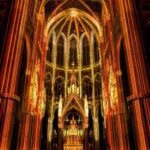
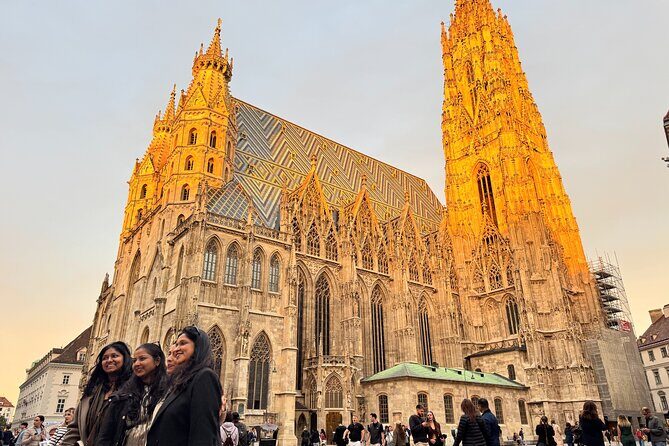
- St. Stephen’s Cathedral and the Plague Column: awe with context
- Roman ruins to imperial power: Michaelerplatz, Hofburg, Heldenplatz
- Austrian National Library exterior and Augustinerkirche: Habsburg ceremony
- Spanish Riding School and the Vienna State Opera exterior: culture as performance
- Naschmarkt lunch: schnitzel with a real local setting
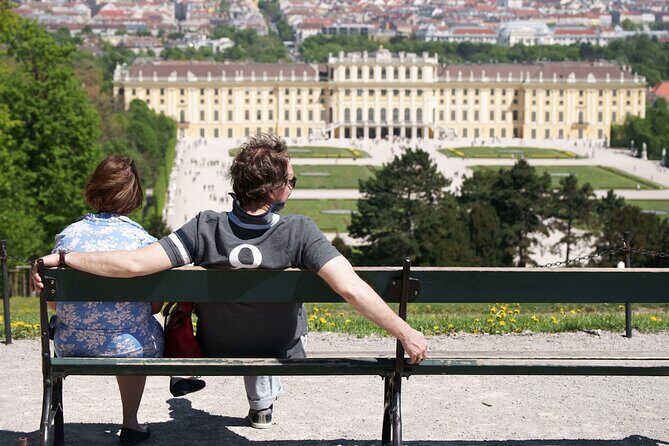
- Schönbrunner Gardens and Schönbrunn Palace: the payoff stop
- Price and value: what $306.75 buys you in real time
- What to wear and how to pace yourself
- Should you book this private Vienna + Schönbrunn day?
- FAQ
- How long is the tour?
- Is this tour private?
- What’s included with Schönbrunn Palace?
- Is lunch included?
- Are there vegetarian or pork-free options?
- What language is the tour offered in?
- Where do you meet and where do you end?
Key highlights you’ll feel right away
- WWII and Jewish history in the city center: Denkmal der Opfer des Faschismus, Stadttempel, and more, in a single day
- Time saved at Schönbrunn: skip-the-line access plus an audioguide-based palace visit
- A market lunch that’s part of the plan: Schnitzel and beer (with vegetarian options)
- Vienna icons in manageable bites: St. Stephen’s, Hofburg, Spanish Riding School, and the State Opera exterior
- Clockwork theater moment: the Ankeruhr with figures that come to life
- A guide who can connect the dots: praised guides include Jakob, Anna, Aida, and Elisabetta
A day built around meaning, not just landmarks
This tour starts at a site that forces you to look at the 20th century first: the Denkmal der Opfer des Faschismus (Monument to Victims of Fascism). It’s a short stop, but it sets the emotional tone—Vienna rebuilding after the war is the backdrop for nearly everything you’ll see today.
From there, the pace stays practical: quick introductions, then walking to the next place. You’re not stuck for hours in one museum. Instead, you get a guided “walking timeline,” with stops that explain why these buildings still matter.
This is also one of the smarter ways to do central Vienna if you only have a half day to spare. You’ll see a lot of famous faces—cathedral, palace, opera-style grand architecture—without turning the day into a sprint.
You can also read our reviews of more private tours in Vienna

WWII memory and Jewish heritage you can actually visit
If you care about how a city remembers its past, this route makes it easy. The day highlights multiple layers of Vienna’s history without feeling like a textbook.
Stadttempel is one of the most striking stops. It’s Vienna’s only synagogue to survive WWII intact, built in 1826. You’ll also get it as a place of reflection, not just architecture. That matters because a synagogue is still a living space—quiet, meaningful, and far from touristy.
You’ll also pass a series of markers that help you connect the dots around Jewish life in Vienna. One stop focuses on the Hoher Markt area and the city’s Jewish history. Another pairs the story with nearby landmarks so it doesn’t feel random.
Even if this is your first time in Vienna, the sequence helps you understand why you’re seeing what you’re seeing. You get a sense of continuity: survival, change, and the way the city’s center still holds traces.
Practical tip
Bring a small amount of patience for emotional sites. Some stops are brief by design, but it’s worth taking a minute and letting the context land before moving on.
The churches and the clockwork show: Ruprechtskirche and Ankeruhr
After the historical weight of the first locations, the tour gives you beauty in short, memorable bursts.
Ruprechtskirche (St. Rupert Church) is a Baroque standout. The architecture is the obvious draw, but what makes this stop work is the guided attention to details you’d otherwise miss—interior decor, the organ, and stained glass.
Then you hit one of Vienna’s most fun mechanical moments: the Anker Clock. You don’t just look at it; you watch it do its thing. Figures come to life on a historic timepiece, which turns a “quick photo stop” into a tiny performance.
This kind of contrast is why the day feels more like a story than a checklist. It gives you an emotional swing from serious to playful without breaking the flow.
Market-squares Vienna: Hoher Markt to Mozart Wohnhaus
Vienna’s city center works best when you stop and breathe between bigger sights. This tour builds that breathing room in small ways.
At Hoher Markt, you’ll get the atmosphere of a historic market square. The emphasis here is on local life—stalls, crafts, and the kind of street energy that’s hard to recreate from a guidebook alone.
Then you shift into music country with Mozart Wohnhaus, Mozart’s former residence. The key isn’t just that it’s Mozart. It’s that the stop is framed as an introduction to his life and work—so when you look around, you’re imagining the person, not only the statue version.
If Mozart is your entry point to Vienna (and it often is), this stop helps you feel oriented. You’ll notice themes later in the day—ceremony, performance, and the way Vienna turns culture into daily life.
A few more Vienna tours and experiences worth a look
St. Stephen’s Cathedral and the Plague Column: awe with context
Two iconic landmarks land back-to-back: St. Stephen’s Cathedral and the Column of Pest.
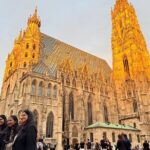
St. Stephen’s gives you the big-hitter moment. You’ll spend about 20 minutes, with time focused on the Gothic interior and the works of art and medieval relics. The goal here isn’t to run through everything. It’s to stand where you can take in the cathedral as a complete space.
Then you step into a totally different kind of reminder at Column of Pest (Plague Column). This stop is a quiet one—resilience in stone. You’re guided to reflect on the people affected by past pandemics, and to see that the city has gone through dark chapters before and after, not just at one dramatic moment.
For me, that combination works. It keeps you from treating the cathedral like a postcard and the plague column like a random statue. Together, they show how Vienna uses sacred spaces and memorials to talk about survival.
Roman ruins to imperial power: Michaelerplatz, Hofburg, Heldenplatz
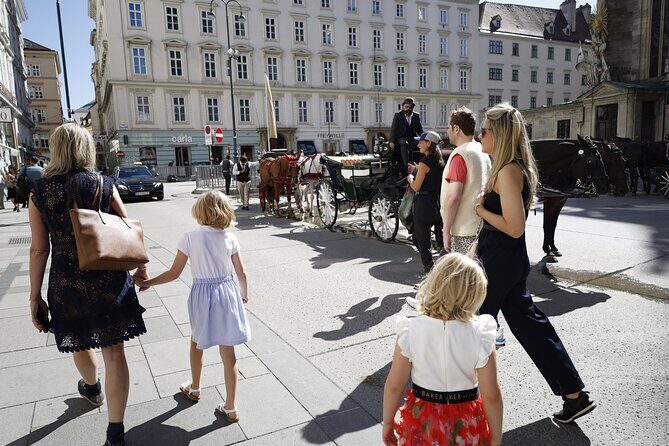
Vienna’s center isn’t only medieval and Baroque. You also get older layers.
At Michaelerplatz, the Roman ruins show up as a short but memorable archaeological moment. You’ll walk among remnants of an earlier Vienna and get a feel for how the city’s timeline stretches back farther than most first-time visitors expect.
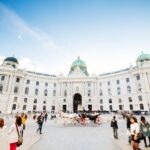
Then the tour pivots to imperial scale with the Hofburg. You’ll focus on the grandeur of Austria’s imperial past, plus the life of Empress Sissi (Elisabeth). Even with a shorter stop, it helps you understand why the Hofburg is still a gravitational center of Viennese identity.
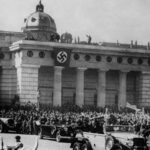
Next is Heldenplatz, a panoramic stop that gives you architectural context around Neue Burg and the Ringstrasse. It’s an efficient way to orient yourself to the big picture: Vienna’s political and architectural evolution, seen from a single vantage point.
Austrian National Library exterior and Augustinerkirche: Habsburg ceremony
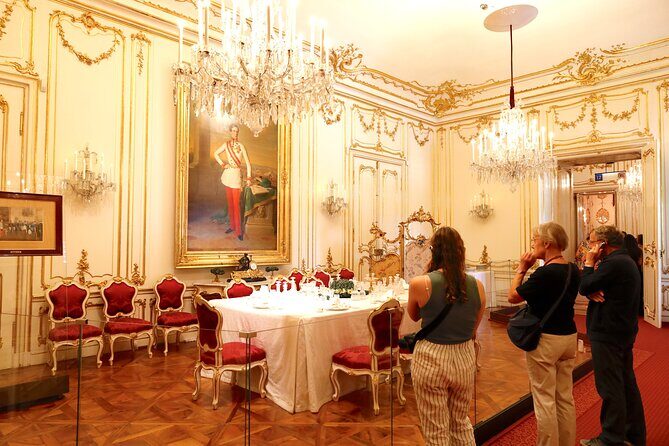
You also get a quick look at two classic “power and tradition” signals.
The Austrian National Library stop is exterior-focused. You’ll hear how it connects to Emperor Charles VI and the Habsburg legacy. If you love grand architecture, this is the kind of stop that makes the city feel planned, not accidental.
Then the tour moves to Augustinerkirche, known for royal weddings and burials. This is where names like Emperor Franz Joseph and Empress Elisabeth (Sissi) come into the conversation. It turns the Habsburg story from portraits into places where life events happened.
If you’re wondering why a tour spends time on churches that aren’t always on first-time “musts,” this part answers that. Vienna’s most famous personalities are tied to ceremonial spaces, and those spaces are still readable today.
Spanish Riding School and the Vienna State Opera exterior: culture as performance
Two more stops continue the performance theme—horses and opera.
At the Spanish Riding School, the focus is on Lipizzaner stallions and the long-running equestrian tradition. You won’t be watching a show here, but you’ll understand why this institution matters and what makes its role in Vienna different from other stables or museums.
Then you get Vienna State Opera as an exterior view. It’s a classic architectural moment from the Ring area—enough to satisfy the visual craving, without pretending you’ll see a performance in a six-hour day.
This is a good pairing: the riding school represents discipline and tradition; the opera represents art and spectacle. Together, they help explain how Vienna turns culture into identity.
Naschmarkt lunch: schnitzel with a real local setting
At some point in a big sightseeing day, you need an anchor. Naschmarkt provides that.
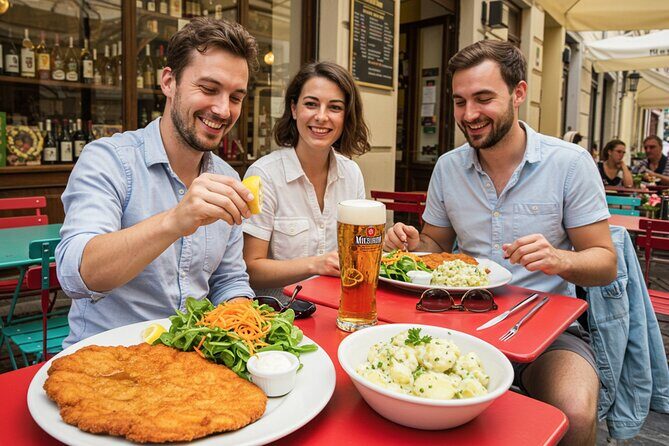
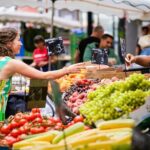
You’ll stroll through Vienna’s famous market area, then head for lunch. The plan includes a meal featuring perfectly breaded Schnitzel and a classic local beer. In other words, it’s not just a “sit down somewhere.” It’s an actual market lunch with a social vibe.
Diet notes that matter:
- There’s a vegetarian option for the traditional Viennese Schnitzel.
- The included schnitzel is made of pork.
- If you don’t eat pork, a veal schnitzel is available upon request for an additional €10.
This lunch inclusion is part of the value of the day. You’re paying for a guided route that feeds you in the same neighborhood you’re already walking through, rather than forcing you to scramble for food between sights.
Schönbrunner Gardens and Schönbrunn Palace: the payoff stop
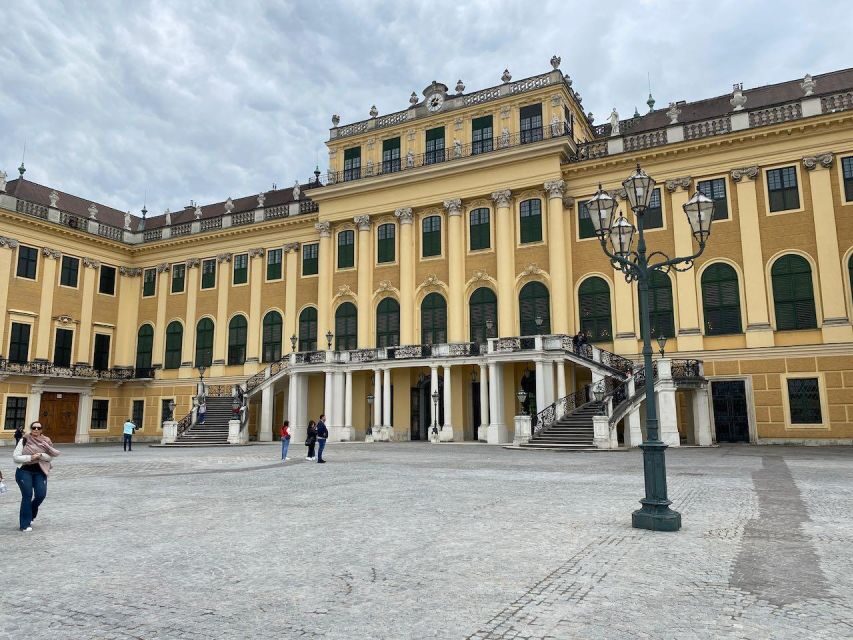
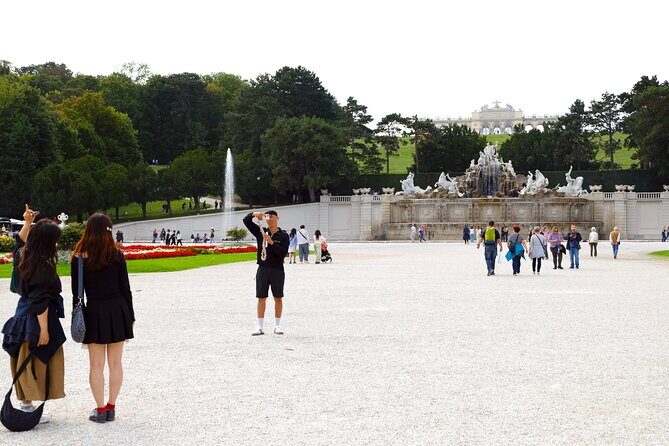
The final stretch is where the whole day earns its keep: Schönbrunner Gardens and Schönbrunn Palace.
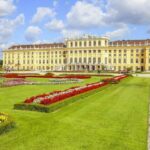
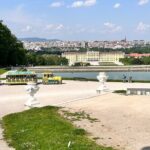
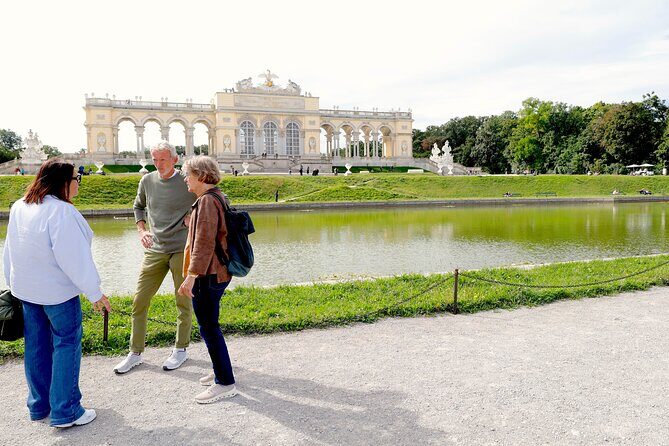
You’ll start with the gardens, around 20 minutes. This is the moment for those “Vienna royalty” views—paths, palace sightlines, and the feeling that the city’s grandeur has room to breathe.
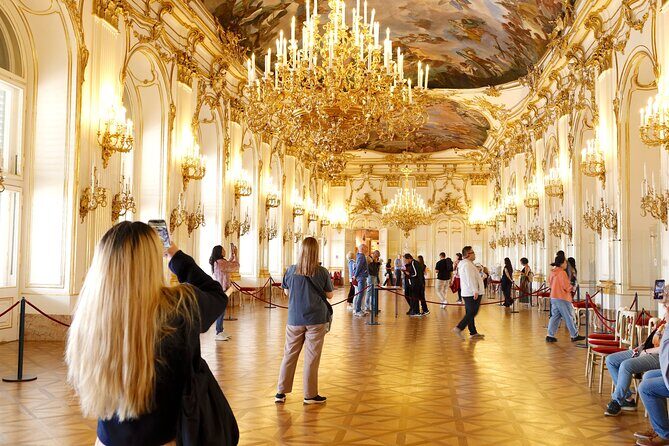
Then comes Schönbrunn Palace itself. You get skip-the-line tickets and an audioguide-based visit, with about one hour inside. There’s no guide inside the palace for you; the plan relies on the audioguides, so you can move at your own tempo within the time window.
Why this matters for you:
- Skip-the-line helps protect your schedule. With palace visits, waiting can eat your morning or afternoon fast.
- Audioguides let you pause and re-start without feeling rushed, as long as you pay attention to the pace of the group.
Schönbrunn is also a UNESCO World Heritage Site, which gives the visit extra weight. It’s not just a big pretty building; it’s a major expression of Habsburg power made public through architecture and landscape.
Price and value: what $306.75 buys you in real time
At $306.75 per person for about 6 hours, you’re paying for a few things that add up on a day like this.
You’re getting:
- A private guide for your group (so you’re not stuck listening to strangers’ questions)
- A route that connects distant-feeling stops into one coherent story
- Metro ride to Schönbrunn
- Lunch in Naschmarkt
- Skip-the-line access to Schönbrunn plus audioguides
- Mobile ticket convenience
Is it cheaper than doing things on your own? Usually, yes it is not. But it’s often better value when you add up time savings plus the “why” behind the sights. This tour leans into interpretation: why a synagogue survived, why a plague column still stands, why the Hofburg and Heldenplatz are read together.
For solo travelers or small groups who want a full day without logistics math, it’s the kind of price that can feel fair.
What to wear and how to pace yourself
This day is short stops piled back-to-back. Even if each stop is 10–20 minutes, you’ll still feel the walking.
Do this:
- Wear comfortable shoes you can handle for hours.
- Bring a layer for weather swings, since you’ll spend time outdoors at multiple stops (markets, memorials, palace grounds).
- Treat the stops like chapters. You don’t need to “win” the whole day with photos.
And keep in mind a small scheduling reality: one part of the day may include optional break timing. For example, if the group requests skipping a planned coffee break, the guide can adjust the schedule. If you care about a specific pause, ask your guide early in the day so the plan matches your preferences.
Should you book this private Vienna + Schönbrunn day?
Book it if you want a one-day Vienna that’s more than the usual highlights reel. This is a strong choice when you:
- Want context alongside the big sights
- Like history that includes darker chapters and living heritage
- Prefer a private guide and a schedule that handles time sinks (like Schönbrunn lines)
- Enjoy market food and don’t want to plan lunch separately
Skip it (or adjust expectations) if you hate walking, want long museum time, or expect a full guided tour inside Schönbrunn with a person speaking the whole way. Here, the palace visit uses audioguides, and the rest of the day is structured around lots of short stops.
If that fits your style, this tour is a very efficient way to leave Vienna with more than memories—you’ll leave with a clearer sense of how the city remembers, performs, and rebuilds.
FAQ
How long is the tour?
The tour lasts about 6 hours.
Is this tour private?
Yes. It’s private, and only your group participates.
What’s included with Schönbrunn Palace?
You get skip-the-line access to Schönbrunn Palace, and audioguides are included. A guide inside the palace is not included.
Is lunch included?
Yes. Lunch is included at Naschmarkt, with Schnitzel and a classic local beer.
Are there vegetarian or pork-free options?
There is a vegetarian option. The included schnitzel is pork; if you need veal instead, it’s available upon request for an additional €10.
What language is the tour offered in?
The tour is offered in English.
Where do you meet and where do you end?
You start at Denkmal der Opfer des Faschismus (Morzinpl. 4, 1010 Wien) and end at the entrance of Schönbrunn Palace (Schönbrunner Schloßstraße 47, 1130 Wien).