REVIEW · SALZBURG
Salzburg Introduction Walking Tour
Book on GetYourGuide →Operated by insightcities.com · Bookable on GetYourGuide
Salzburg can feel like a movie set, but this tour is built for understanding. You’ll walk through the UNESCO-listed old center while an expert guide connects Salzburg’s history, music, and architecture into one clear story.
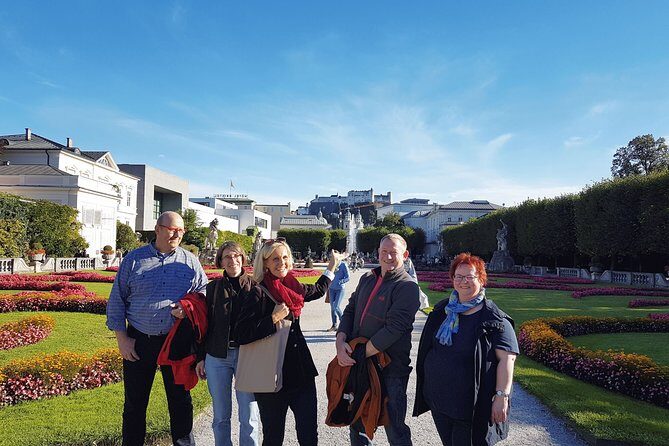
I especially like how the walk is structured around real landmarks you’ll actually remember: Mirabellgarten, Mozart Geburtshaus, the big squares, and St Peter’s Abbey. I also love the guide style—on one group, the guide Liza was from Salzburg and handled questions with confidence, stopping along the way to explain what you’re looking at and why it mattered.
One caution: at this price point, you’ll want a guide who matches your expectations. The tour provider says guides are professors, doctoral students, historians, journalists, art critics, and published authors, but one earlier experience flagged that the guide felt less historian-focused, which can make the cost feel steep.
In This Review
- Quick hits that shape your Salzburg walk
- Old Town Salzburg in 150 minutes: what you’re really buying
- Starting where locals start: meeting point and route rhythm
- UNESCO Salzburg: how the guide connects buildings to the bigger story
- Mozart Birthplace and the musical heritage thread
- Mirabellgarten: the calm start before the city gets loud
- Alter Markt: the public square where history feels daily
- Residenzplatz and Domplatz: architecture with a purpose
- St Peter’s Abbey: Salzburg’s older layers in one guided segment
- Price and what you get for $176 per person
- English guidance, group size, and the kind of traveler who fits best
- Tips that help you get more out of the 2.5-hour walk
- Should you book this Salzburg Introduction Walking Tour?
- FAQ
- How long is the Salzburg Introduction Walking Tour?
- Where does the tour start?
- Is the tour guided in English?
- What major stops are included in the route?
- Is admission to Mozart’s residence included?
- Who leads the tour?
- Is this tour available for private or small groups?
- Is free cancellation offered?
Quick hits that shape your Salzburg walk
- Historian-led commentary that ties together salt commerce, medical innovations, and music in one route
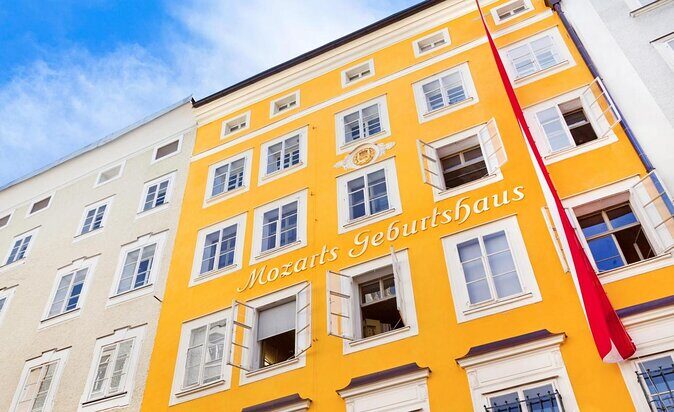
- Mozart Birthplace area on the walking circuit, with a note that entry isn’t included
- Gothic and Baroque architecture woven into what you see at each square and church stop
- Good pacing for a 150-minute overview of old town without rushing the essentials
- Question-friendly guide energy, including stops to decode buildings, shops, and public spaces
- Small-group or private options, which usually helps the explanations land better
Old Town Salzburg in 150 minutes: what you’re really buying
This is a classic “introduction walking tour,” but it’s not the usual vague stroll where you hear dates and then drift apart. The promise here is an organized walk through Salzburg’s historic core, guided by someone trained to interpret the city—history, art, and context, not just reciting facts.
The timing matters. At 150 minutes (about 2.5 hours), you’ll have enough time to cover major sights without turning the experience into a sprint. You also won’t leave feeling like Salzburg was a single famous postcard—because the guide’s themes go beyond Mozart, even if Mozart is the magnet that brings people in.
And yes, the city is set up for this kind of tour. Salzburg’s center has been on the UNESCO World Heritage List since 1997, so you’re walking through a place where the “why” behind the buildings is part of the point.
You can also read our reviews of more walking tours in Salzburg



Starting where locals start: meeting point and route rhythm
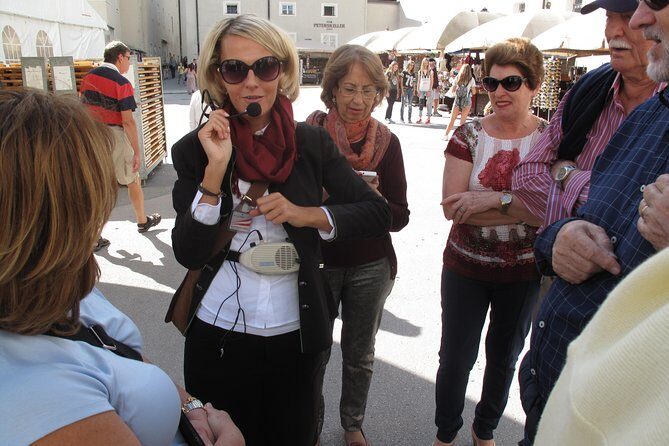
You meet outside Coffeehouse Salzburg at Linzergasse 39 (also listed as Linzer G. 39). That’s a practical central start: you’re already in old-town territory, so you’re not spending the first 20 minutes commuting across town.
What I like about this kind of route is how it naturally builds momentum. You begin with a major garden setting (Mirabellgarten), then pivot toward Salzburg’s musical identity (Mozart Geburtshaus), then move into the public-space core with market and palace-adjacent squares (Alter Markt and Residenzplatz). After that, you shift into religious and historic depth (Domplatz and St Peter’s Abbey).
The whole thing feels like walking the city’s “story spine.” If you enjoy getting your bearings fast—seeing the major landmarks in a logical order—this format will help you later when you explore on your own.
UNESCO Salzburg: how the guide connects buildings to the bigger story
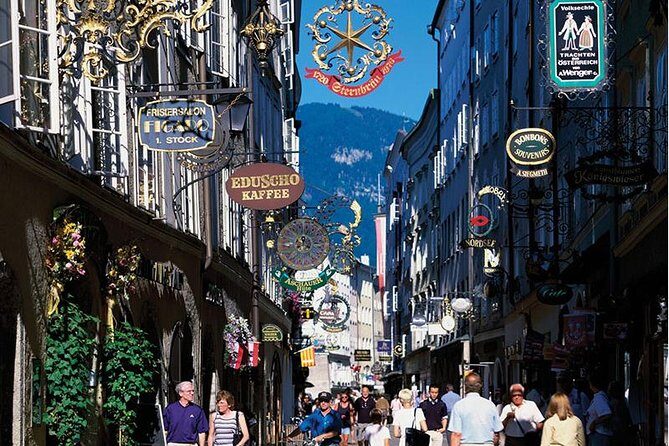
A UNESCO-listed old town isn’t just pretty. It’s a living explanation of how a city grew, what it traded, what it believed, and what it built to show power and faith.
On this tour, you’re not asked to memorize a timeline. Instead, the guide-led discussion is designed to help you understand Salzburg’s identity: its medieval salt commerce, medical innovations, and the way culture and music became part of its public image. That’s valuable because it changes what you see. When you look at a square or a church and you know what economic or cultural forces shaped it, the place stops being scenery and starts being a document.
Also, the focus on Gothic and Baroque architecture isn’t an abstract lecture. As you move from one landmark to the next, the guide points you toward the visual language—forms, proportions, and styling—that Salzburg became famous for.
Mozart Birthplace and the musical heritage thread
Mozart is the headline, but this tour tries to make him the starting point, not the ending. You’ll visit Mozart Geburtshaus, which is the Mozart birthplace area, guided as part of the walk.
Here’s the practical value: the guide can help you place Mozart in the larger Salzburg context. The tour frames Salzburg’s exceptional musical heritage as something produced by the city’s institutions and culture, not just one gifted composer. If you’ve ever walked through a “Mozart site” feeling like you’re looking at a name tag, you’ll likely prefer this approach.
One key note for your planning: admission to the Mozart residence itself isn’t included. So if seeing inside is a top priority, budget extra time and money—or treat the walk’s guided perspective as the main event and consider a separate visit later.
Mirabellgarten: the calm start before the city gets loud
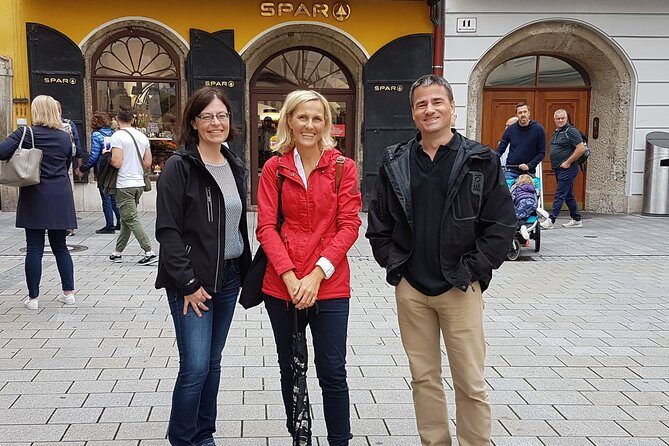
Mirabellgarten is your first guided stop, and that opening matters. It sets a tone that Salzburg does well: an elegant, structured contrast to the more formal civic and religious spaces you’ll hit later.
Even if gardens aren’t usually your thing, this stop works as a decompression point. You get a moment of visual clarity before the tour moves into heavier historical symbolism at the squares and churches. It’s a nice way to start a 2.5-hour walk without immediately feeling like you’re chasing crowds.
If you’re traveling with kids, this kind of “breather stop” can help keep attention from collapsing. For adults, it helps you start noticing architectural details and design choices that reappear elsewhere in old town.





Alter Markt: the public square where history feels daily
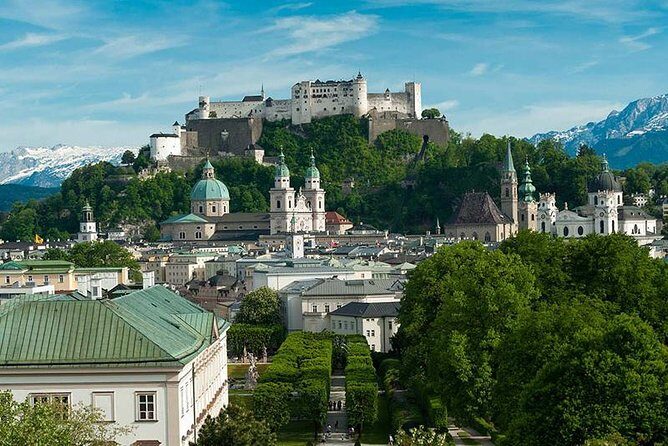
After Mirabellgarten, you shift into Alter Markt for a guided segment. This is where the tour leans into everyday Salzburg life—market energy, civic space, and the way commerce and community shaped the city.
I like this stop because it’s a bridge. Before you reach the grander palace-adjacent and cathedral-area spaces, you get a sense of how people would have moved through this part of town day after day. When the guide ties public space to themes like trade (including Salzburg’s medieval salt commerce), the square stops being an empty “photo spot” and becomes a setting.
If your travel style is to ask questions while you walk, this is a good moment to do it. The tour’s format encourages stopping periodically for explanations, and public squares tend to generate better questions because there’s so much visible—facades, streets branching off, and the geometry of movement.
Residenzplatz and Domplatz: architecture with a purpose
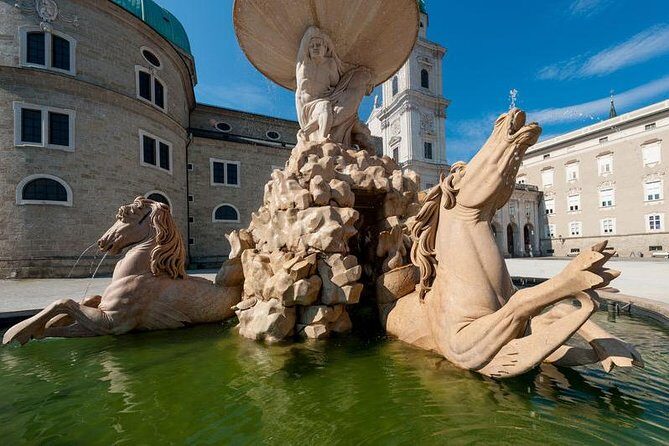
Two of the big anchors on your route are Residenzplatz and Domplatz. These are the kinds of places where Salzburg’s Gothic and Baroque look becomes more than decorative. It’s tied to authority, faith, and civic identity.
At Residenzplatz, you’ll be in the zone of impressive “institutional” Salzburg—where grand architecture signals status and cultural importance. This is also a great spot for understanding how music and patronage fit together in a city known for Mozart and beyond.
Then you move to Domplatz, which places you near the cathedral-area atmosphere. This part of the walk adds weight to the story. The guide’s historian-led framing helps you see religious architecture as long-term memory, not just something to admire from the outside. You’ll likely come away noticing details you would have missed if you were only passing through.
One small consideration: these squares can be visually dense. If you’re the type who gets overwhelmed in big architectural spaces, pace yourself. Give the guide the first explanation, then take a minute to look again on your own. It makes the second viewing stick.
St Peter’s Abbey: Salzburg’s older layers in one guided segment
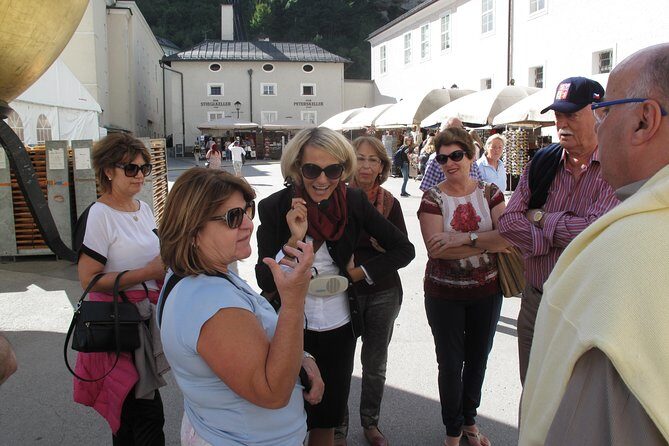
St Peter’s Abbey is the final listed major stop, and it’s a strong choice to end with something historic and grounded. Abbeys bring a different kind of time scale than squares or birthplaces. The atmosphere is more about continuity—how ideas, learning, and spiritual life evolved in a place over centuries.
This segment also fits the tour’s broader themes. When you connect Salzburg’s medical innovations and cultural development with its institutional religious setting, the city starts to feel like one coherent machine. The tour’s value is in those connections.
If you like quiet reflection at the end of a walk, this stop gives you that. You’ll still be in motion, but the final guided explanation helps you slow your brain down for a moment and absorb the bigger picture.
Price and what you get for $176 per person
Let’s talk money honestly. At $176 per person for a 150-minute historian-led walk, this isn’t a budget option. You’re paying for a guided structure and a guide with a background in history and interpretation.
So what’s the value?
- You get a guided, 2.5-hour walkthrough of the UNESCO historical center with an expert historian guide.
- The focus is not only “see this, next that.” It’s an informed discussion touching salt commerce, medical innovations, musical heritage, and the Gothic-Baroque architecture around you.
- You also get live English guidance and the option for private or small groups, which can make the explanations more personal.
Where the cost can feel less justified:
- If you expect deep focus solely on Mozart, you’ll want to know that Mozart residence admission is not included.
- If what you want most is pure historian credentialing, you may want to set expectations carefully. One earlier experience flagged a mismatch between expectations and guide focus, which is the kind of thing that can make an expensive tour feel overpriced.
My advice: treat it like paying for context. If you’re comfortable self-guiding and just want exterior sights, you might not need this level of interpretation. But if you want Salzburg explained in a way that makes the city make sense quickly, this price can feel reasonable.
English guidance, group size, and the kind of traveler who fits best
This tour runs in English, and it offers private or small groups. I like that because it changes what the guide can do. In small settings, it’s easier to pause, ask questions, and get answers that relate to what you’re staring at.
This is a great fit if you:
- want a structured introduction to Salzburg old town,
- care about how music and architecture link to the city’s identity,
- enjoy walking with a guide who can answer follow-ups,
- plan to explore the city further afterward and want a map made of stories, not just streets.
It’s less ideal if you:
- want a quick “checklist” of photos,
- are only interested in Mozart and nothing else,
- strongly prefer to go inside major paid attractions as part of the tour (since Mozart residence admission is not included).
Tips that help you get more out of the 2.5-hour walk
You can make this tour work better for you with a few mindset tweaks.
- Come ready to pause. The value is in the stop-and-explain rhythm, where the guide frames what you see in plain language.
- Bring your curiosity. If something catches your eye—a doorway, a square layout, a church exterior—ask what it meant in the city’s story.
- Treat Mozart as a doorway, not a finish line. Let the guide connect musical heritage to the rest of Salzburg’s identity.
If you’re prone to rushing, you may feel the time slipping by. But if you enjoy slow attention in key spaces, you’ll likely leave feeling like you’ve learned how Salzburg works.
Should you book this Salzburg Introduction Walking Tour?
I’d book it if you want an efficient, guided “how Salzburg became Salzburg” walk—especially if you love music, architecture, and the kind of city storytelling that makes the next day easier. The historian-led discussion is the core product, and the route is built around major anchors that give your understanding something solid to stand on.
I’d hesitate only if you’re hoping for a Mozart-focused tour with included admission, or if you’re highly sensitive to the guide matching a specific interpretation style. In that case, look closely at your expectations for how historic the commentary should feel versus how much it stays broad.
If you want the city explained clearly in 150 minutes, and you’re okay paying for context, this is a strong Salzburg introduction.
FAQ
How long is the Salzburg Introduction Walking Tour?
The tour lasts 150 minutes (about 2.5 hours).
Where does the tour start?
Meet outside Coffeehouse Salzburg at Linzergasse 39 (also listed as Linzer G. 39).
Is the tour guided in English?
Yes, the live tour guide speaks English.
What major stops are included in the route?
The tour includes Mirabellgarten, Mozart Geburtshaus, Alter Markt, Residenzplatz, Domplatz, and St Peter’s Abbey.
Is admission to Mozart’s residence included?
No. The Mozart residence admission ticket is not included.
Who leads the tour?
The guides are described as professors, doctoral students, historians, journalists, art critics, and published authors.
Is this tour available for private or small groups?
Yes, private or small groups are available.
Is free cancellation offered?
Yes, you can cancel up to 24 hours in advance for a full refund.