REVIEW · VIENNA
Vienna: Guided Walking Tour of City Highlights in a Small Group
Book on Viator →Operated by Maria Tours Live · Bookable on Viator
Vienna can feel like a marble maze of palaces and churches. This guided walk is a clean way to sort it all out, moving from the Maria Theresia monument through the imperial core to Stephansdom in about two hours.
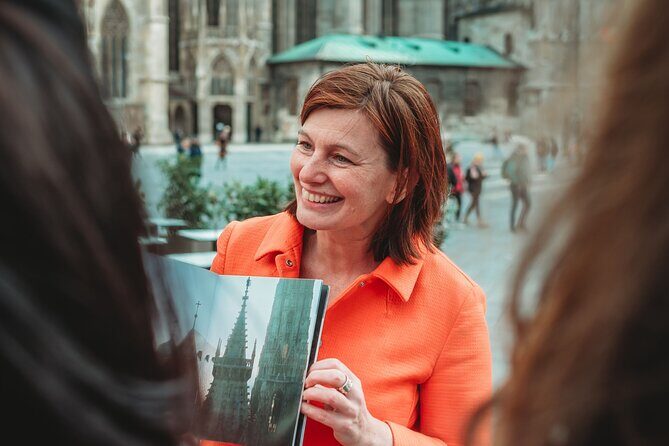
I love how this tour stays small (10 people or fewer, with a stated maximum of 6), so questions actually land and you can hear every story. I also like the practical way the guide works: pictures and maps in hand, quick photo stops timed to what you’re looking at.
One thing to plan for: it is an outside-only route with stairs/steps, and it does not go inside museums or sights, so you’ll need separate tickets if you want interiors.
In This Review
- Key things I’d mark on your Vienna plan
- First stop: Maria Theresia Memorial and a route that makes sense
- The imperial circle: Ringstraße to Burgtor (what to look at and why)
- Heldenplatz and the Hofburg: the view angle matters
- Burggarten, the Palm House, and a science-leaning stop list
- Vienna’s art icons from the sidewalk: Staatsoper and the library halls
- Spanish Riding School and Lipizzan energy in the street
- St. Michael’s, Graben/Kohlmarkt, and the church-concert connection
- Stephansdom: finishing where Vienna feels most alive
- Price and value: why €-level history costs about $42
- Who should book this walking tour (and who shouldn’t)
- A few guide-style details that make it feel personal
- Should you book this Vienna city highlights walking tour?
- FAQ
- Where does the tour start?
- What time does the walking tour begin and where does it end?
- How long is the tour?
- Is this tour inside museums?
- What language is the tour offered in?
- What size is the group?
- Are tickets included for major sights?
- Is the tour suitable if I’m using a stroller or have limited mobility?
- Is audio recording allowed?
Key things I’d mark on your Vienna plan
- A 10-person-or-fewer group keeps the pace calm and the guide easy to hear
- Outside-only stops mean no museum entries, but you still get the full “what you’re seeing” context
- Maria’s orange-sign meeting spot is easy to find at Maria-Theresien-Platz
- Tight center loop covers Ringstraße, Heldenplatz, Hofburg areas, and the old-town shopping streets
- Real local tips show up alongside the history (food stops and even Christmas market guidance)
- Ends at Stephansdom so you finish exactly where most first-time Vienna days naturally restart
First stop: Maria Theresia Memorial and a route that makes sense
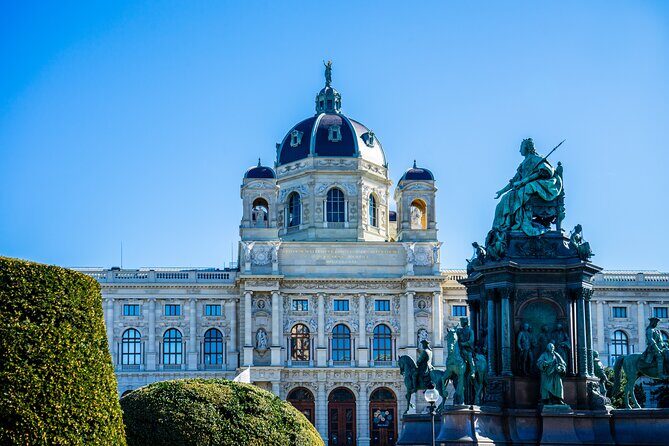
Meet your guide directly in front of the big Maria Theresia Denkmal at Maria-Theresien-Platz, 1010 Vienna. The guide holds an orange sign, which matters because this is a busy spot and you don’t want to waste time wandering for someone to lead you. Expect to start at 10:00 am, then keep moving at a comfortable walking speed.
You also get a small heads-up for comfort: there isn’t a set water or coffee stop built into the tour. The closest public restrooms are about five minutes away, so it’s smart to handle that early, especially if you’re starting with the 10:00 slot. The tour runs in all weather, so dress for rain or cold rather than hoping for good luck.
This is a city-highlights format, not a museum day. That actually helps on a short trip: you get orientation for Vienna’s major landmarks without the “ticket line” problem. And because the group is capped small, the guide can slow down when a question pops up or when a view demands extra time for pictures.
You can also read our reviews of more walking tours in Vienna
The imperial circle: Ringstraße to Burgtor (what to look at and why)
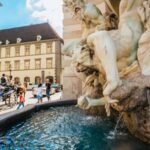
From Maria Theresia’s monument, you head into the broader imperial story of Vienna. One of the first big “aha” stretches is crossing the Ringstraße, the famous circular boulevard around the historic center. This is where Vienna flexes its grandeur: major public buildings, classic facades, and that sense that the city was designed to be seen.
Then the route brings you to the palace-wall era—specifically the Burgtor. When Napoleon’s presence caused serious damage in 1809, new work followed in the early 1820s, and Burgtor became the only remaining gate of Vienna’s former city walls. Seeing it on foot gives you scale. You feel the boundary between old defenses and the later, more ceremonial Vienna.
Practical note: some stops are kept tight—think quick orientation, not long lingering. That’s why it’s helpful that the guide uses pictures and maps: when you only have a short window at a facade, visual cues make the architecture click fast.
Heldenplatz and the Hofburg: the view angle matters
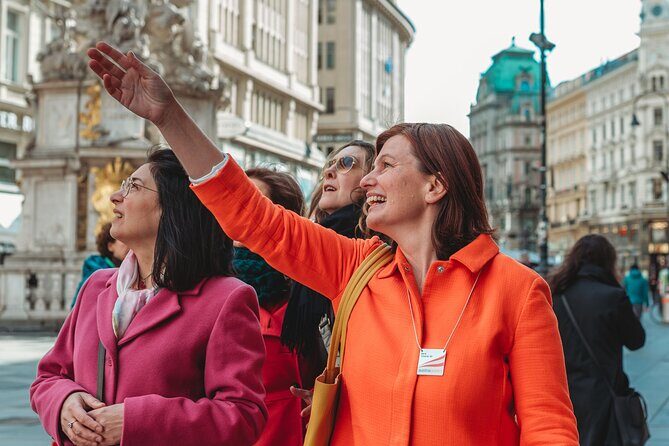
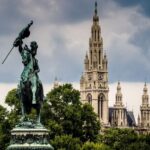
The walk then moves to Heldenplatz (Heroes Place), dominated by large equestrian statues of Prince Eugen and Archduke Karl. This square isn’t just a photo-op. It’s laid out to frame authority and power, and the guide points out how the space relates to the nearby Imperial Palace and the Volksgarten.
You’ll also get one of the best “from the street” advantages Vienna offers: you don’t need an interior ticket to appreciate the planning. From Heldenplatz, you can take in what the imperial complex is trying to project—big scale, clear sight lines, and a grand setting for state life.
Next comes the Hofburg. Historically, it started as a 13th-century castle and grew into the Habsburg residence as their realm expanded. On this tour, you’re not going inside. But that is still valuable because you get the overall geometry of the complex: where major components sit, how the different eras overlap, and which buildings help you read the site as a single story instead of scattered landmarks.
The tour also highlights the Gothic Imperial Chapel, tied to the Vienna Boys’ Choir and their High Mass performances on Sundays. Even if you’re not attending a service, it gives you a way to connect the building style to living tradition.
Burggarten, the Palm House, and a science-leaning stop list
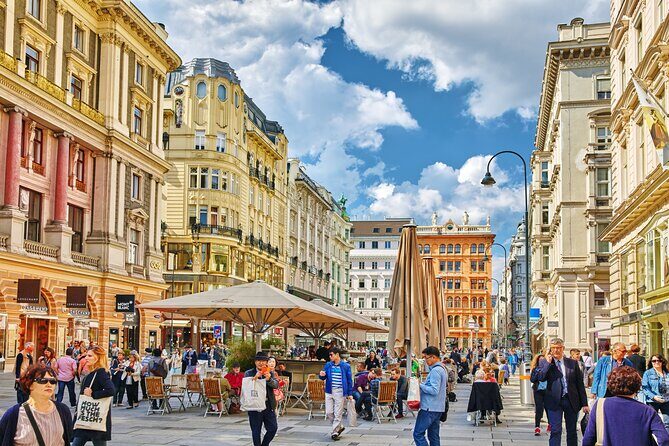
After the palace area, the route transitions to the Burggarten, the Hofburg’s garden. You’ll hear that it was created in 1819 as the Emperor’s Garden, built on foundations of an older fortified area. Again: you’re not entering the garden for a long stroll. You’re using it as another lens for Vienna—how power turns into cultivated space.
The walk also includes the Palm House in Burggarten, also known for the butterfly house concept in the town’s center. This kind of stop is short, but it breaks up the heavy “stone and ceremony” feeling you can get early in Vienna. It’s a nice reset before the route pushes back into cultural landmarks.
From here, the tour points out the Albertina graphic-art idea—specifically the Albertina’s collection of drawings and prints. Even without entering, you get the framing: founded in 1776, and known for an enormous range of work spanning centuries. The guide also emphasizes why some masterpieces aren’t on permanent display due to light sensitivity. That small bit of conservation logic is a smart way to make museum-going feel less like random chance later.
Vienna’s art icons from the sidewalk: Staatsoper and the library halls
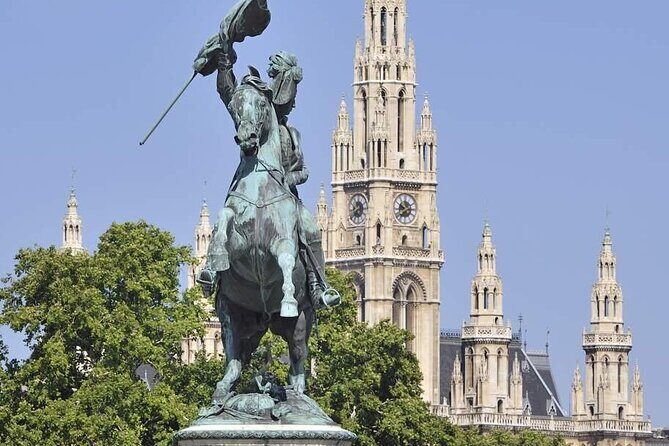
A highlight for many people on this kind of Vienna route is hitting the iconic cultural institutions without getting stuck in ticket logistics. Here, that includes Wiener Staatsoper, one of the world’s most famous opera houses. You’ll get a solid exterior view and the context to recognize why this building matters in Vienna’s identity—music as civic pride, not just entertainment.
Right around the same cultural zone, the tour moves toward the Austrian National Library area. You’ll see the Augustinerkirche, plus the baroque State Hall and the Redoutensäle at Joseph Square. Even if your reading of baroque details is still in training mode, this stop helps you understand that Vienna’s libraries weren’t always quiet places. They also served as ceremonial spaces that hosted important public moments.
If you like to understand a city’s “why,” these stops are a good match. They explain how art, learning, and power were tied together in imperial Vienna.
You can also read our reviews of more guided tours in Vienna

Spanish Riding School and Lipizzan energy in the street
Then you’re at the Spanish Riding School area, specifically Stallburg, the elegant stables for the Lipizzan horses. This is another stop where you don’t need to enter to get meaning. You’re seeing the purpose-built setting for a centuries-old equestrian tradition.
One of the best things about Vienna is that it often gives you something extra in passing—another reason this tour is easy to enjoy. Some people end up spotting Lipizzan activity nearby, simply because the stables and movement around them can cross with your timing. You might not plan on it, but it’s nice when the city cooperates.
Also, no matter what day you go, your guide can usually point out what to watch for in the area so it feels more than a “seen that” photo.
St. Michael’s, Graben/Kohlmarkt, and the church-concert connection
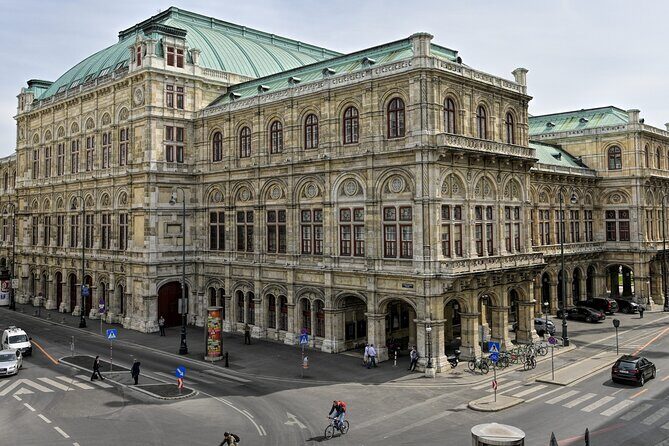
After the cultural institutions, the route goes into the old-town commercial and religious heart. Graben and Kohlmarkt are where you get the classic Vienna shopping miles. Even if you’re not buying anything, it’s worth walking through the street rhythm. Vienna’s center feels curated in a way that’s hard to fully catch from a single tram stop.
You’ll also pass St. Michael’s Church, dating back to 1220. Older buildings do something to your sense of time. They make you feel the layers of Vienna, not just the latest “wow” facade.
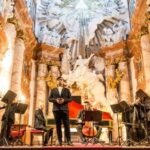
The route also includes a 300-year-old Catholic church stop known for classical concerts. The point isn’t to turn this into a full concert ticket day. It’s to clue you in that Vienna’s churches are not only historic—they can be active venues for performances. If music is part of your trip, you’ll now know to look for concert options around these sites.
Stephansdom: finishing where Vienna feels most alive
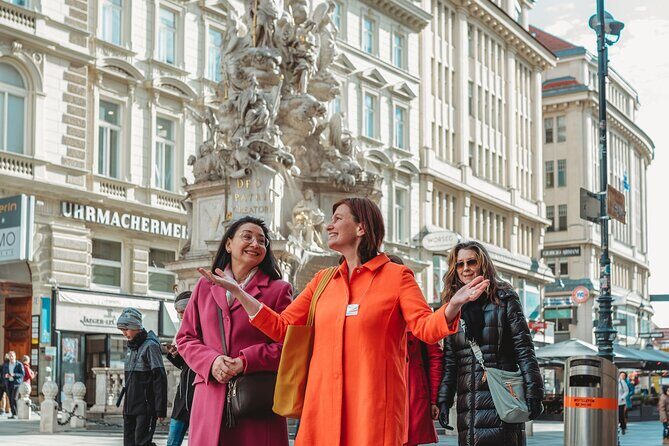
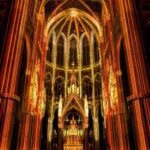
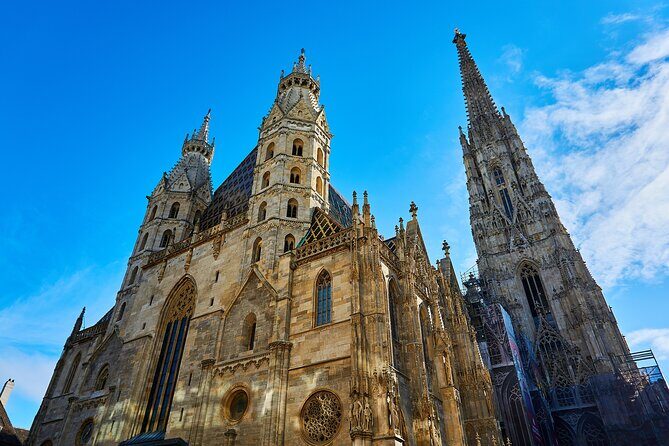
All roads in the center tug toward Stephansdom, and this tour ends right by St. Stephen’s Cathedral at Stephansplatz 3. It’s a smart ending point because it lets you treat the rest of your day like a choose-your-own-adventure.
The guide’s pacing usually means you’re not totally wiped out by the time you reach it. Also, since the tour runs outside only, you can use your leftover time for whatever you’re curious about next: photo wandering, a coffee break nearby, or planning a deeper interior visit for another day.
If you’re a first-timer, finishing at Stephansdom gives you a natural visual anchor. From there, it’s much easier to aim yourself toward whichever direction feels right—toward more museums, toward shopping streets, or toward a quieter neighborhood exploration later.
Price and value: why €-level history costs about $42
At $42.05 per person for about two hours, this isn’t cheap in the “do-it-yourself walking” sense. But it’s good value if you’re using it for orientation and context. Vienna can overwhelm you with names and buildings. A guide compresses that learning curve into a fast, walkable loop.
Here’s the math that usually matters for value:
- You’re paying for a professional English-speaking local guide who explains what you’re looking at.
- You’re not paying for museum entries—so if your trip budget is tight, you still get major landmarks without adding big ticket costs.
- The small group size is doing real work. If you’ve ever been stuck listening to a guide through 30 shoulders, you know why 10 people changes everything.
One more practical plus: pictures and maps help you remember what you saw. Vienna is visual. If you only take photos and skip interpretation, the next day can feel like a blur. Here, you leave with a mental framework.
If you want to spend your time inside major museums, this tour is not that day. But if you want the street-level overview first, it’s a strong way to make your later ticket choices feel smarter.
Who should book this walking tour (and who shouldn’t)
This tour is a strong fit if you:
- want a first-day Vienna orientation
- like architecture and civic history explained in plain language
- prefer small group pacing with room for questions
- want a guide who can point you toward food and seasonal sights
It’s not the best match if you:
- need an easy route without stairs/steps (the tour includes them)
- rely on a baby stroller
- plan to bring luggage or large bags (not allowed)
- want inside museum time (this is external visits only)
If you have walking disorders, it’s explicitly not recommended. In that case, you might be happier with a more accessible sightseeing plan that doesn’t require steps.
A few guide-style details that make it feel personal
The biggest differentiator here isn’t just the landmark list. It’s how the guide works through the city.
From the feedback I’m seeing through the tone and comments people leave, Maria is the type of guide who mixes history with practical local guidance. People highlight her warmth, her energy, and her ability to answer questions without making you feel rushed. Several notes mention restaurant tips like a local Beisl for Wiener schnitzel, Figolettas for Italian food, and Bitzinger Wurstelstand for brats. That kind of inside knowledge is exactly what helps after the tour ends.
There are also mentions of seasonal guidance, including best spots for Christmas Markets with a map. And at least a few reviews mention small thoughtful extras—homemade punch in a flask and local chocolates—things that don’t change the route, but do make the experience feel like it came from a person who truly loves Vienna.
Should you book this Vienna city highlights walking tour?
Book it if you want a smart, small-group way to get your bearings fast and understand the city’s big landmarks without ticket stress. The format works especially well as a first introduction day: Maria’s explanations plus the photo-and-map support help the places stick.
Skip it (or pair it with something else) if your main goal is museum interiors or if mobility is a major concern. Since the tour stays outside, you’ll want separate time for the museums you’re most excited about.
If your priority is: see the essentials, learn what you’re looking at, and end near Stephansdom ready to continue—this one is a very reasonable pick.
FAQ
Where does the tour start?
The tour starts at Maria-Theresien-Platz, 1010 Wien, Austria, at the Maria Theresa Memorial. Your guide will be in front of the monument with an orange sign.
What time does the walking tour begin and where does it end?
It starts at 10:00 am and ends next to St. Stephen’s Cathedral (Stephansdom) at Stephansplatz 3, 1010 Wien, Austria.
How long is the tour?
The duration is approximately 2 hours.
Is this tour inside museums?
No. The tour does not visit inside any museums. It is an external-visits walking tour.
What language is the tour offered in?
The tour is offered in English.
What size is the group?
The tour is limited to 10 people or fewer, and the information also notes a maximum of 6 travelers.
Are tickets included for major sights?
Admission tickets are not included for certain sights (like the opera house and the library area). The tour also includes stops marked as free, but you should expect the tour to stay outside without museum entry.
Is the tour suitable if I’m using a stroller or have limited mobility?
It is not suitable for use with baby strollers. The tour includes stairs/steps and requires moderate physical fitness; it is not recommended for travelers with walking disorders.
Is audio recording allowed?
No, audio recording is not allowed.