REVIEW · VIENNA
Vienna: mumok Museum of Modern Art Entry Ticket
Book on GetYourGuide →Operated by Museum moderner Kunst Stiftung Ludwig Wien · Bookable on GetYourGuide
Vienna’s modern-art cube hits like a wake-up call, and mumok is a serious place for it. I love the basalt cube setting in the MuseumsQuartier, and I love having 4,800 m² of galleries to explore at my own pace. The mix of famous names and risk-taking art is the point here, not a side quest.
I also like how the permanent collection and special exhibitions overlap in a practical way: you can spot big ideas and then see them evolve through Pop Art, Fluxus, Conceptual Art, Vienna Actionism, and newer film and media. And if you’re traveling with kids or just like hands-on moments, the museum runs educational programs for both adults and children.
One possible downside: if your expectations are built around a heavy lineup of major gallery pieces every single room, a temporary exhibition can feel lighter depending on what’s showing that day. That’s especially true if you’re hoping for a nonstop run of blockbuster works.
In This Review
- Key things to know before you go
- The basalt cube: your first reason to care
- What you’ll see: permanent collection highlights (and why they’re worth your time)
- Temporary exhibitions: how to choose without getting disappointed
- A simple way to plan your day inside 4,800 m²
- Pop Art to Vienna Actionism: the themes that make mumok click
- Interactive programs for adults and children: the surprising advantage
- Café and library breaks: stay human in a modern museum
- Price and value: is $15 a fair deal?
- Getting the most out of your ticket (without overthinking logistics)
- Should you book mumok entry ticket?
- FAQ
- Where is mumok located?
- How much is the entry ticket?
- How long is the ticket valid for?
- What’s included with the ticket?
- What is not included?
- What should I know about opening days?
- Is there free or reduced admission?
- Is the museum wheelchair accessible?
- Which languages are offered?
- Can I change my plans if needed?
Key things to know before you go
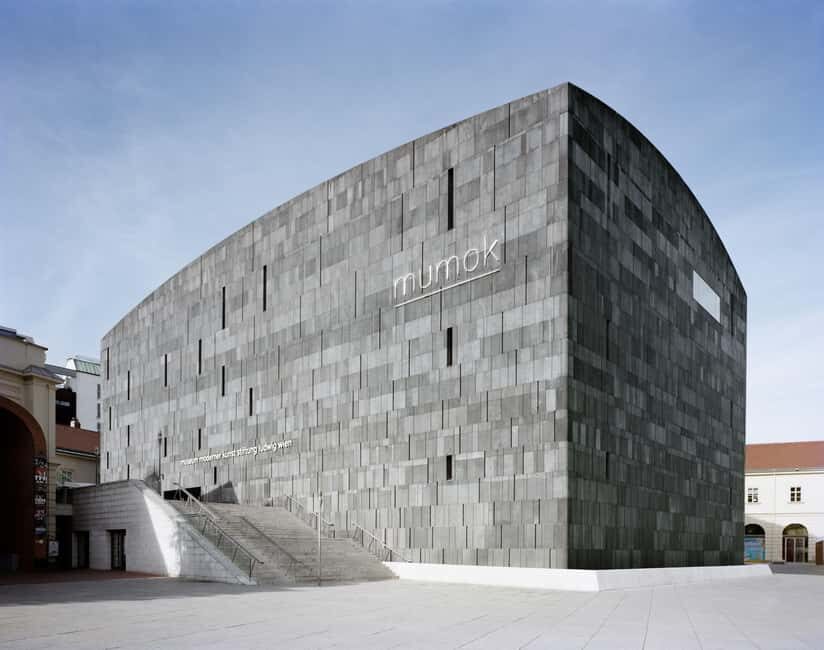
- Basalt cube architecture: The dark-gray cube is visually sharp against Vienna’s usual look, and it makes the visit feel modern even before you enter.
- Permanent collection with major artists: Expect touchpoints with Warhol, Picasso, Yoko Ono, and VALIE EXPORT.
- Modern-to-now art range: The museum’s themes move from Pop Art and Fluxus to Conceptual Art and Vienna Actionism, then into film and media.
- Temporary exhibitions that keep the building changing: Plan to treat this as a different museum each time you visit.
- Interactive education for adults and kids: If you want more than just looking, check what’s scheduled during your visit.
- On-site café and library: It’s built for breaks, not just sprinting from room to room.
The basalt cube: your first reason to care
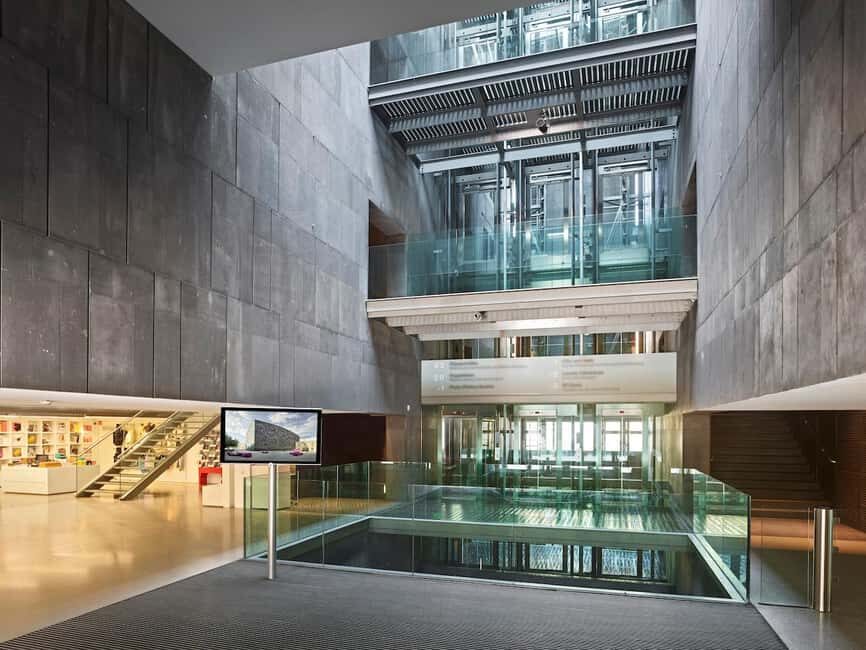
The most immediate thing about mumok is the building itself. This is not “museum inside a historic palace” Vienna stuff. It’s a striking cube of dark-gray basalt, and it rises right in the MuseumsQuartier, where you’ll already be surrounded by culture and activity.
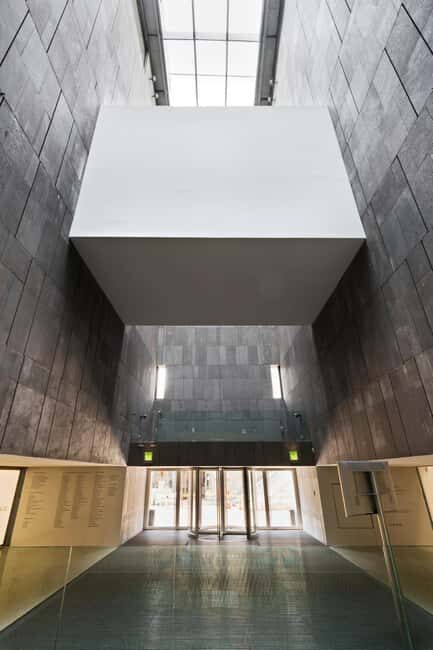
The cube shape matters because it changes how you move through the day. You’re not wandering a maze of old corridors—you’re exploring a purpose-built space designed for modern display. Even if you’re not a die-hard art person, that architecture makes the visit feel intentional and current.
And yes, the contrast is real. One of the clearest impressions you’ll get is that the building looks atypical for Vienna, and that’s exactly why it works. It gives you a “this is the present” feeling the moment you arrive.
A few more Vienna tours and experiences worth a look


What you’ll see: permanent collection highlights (and why they’re worth your time)
mumok’s permanent collection is a strong backbone for a first-time visit, because it connects major modern voices to later experiments. You’ll see iconic names like Warhol and Picasso, plus artists such as Yoko Ono and VALIE EXPORT—so you’re not stuck only in obscure corners.
What I like is that the museum doesn’t treat modern art as a single style. The collection spans movements and approaches, including Pop Art and Fluxus, Conceptual Art, and Vienna Actionism. If you’ve ever wondered how artists shifted from making images to making ideas, you’ll get plenty of proof here.
A useful way to think about it: this collection gives you language. Even if you don’t fully “get” every work at first glance, you can start noticing patterns—how artists challenge rules, how media changes what art can be, and how performance and concept can matter as much as a finished painting.
Temporary exhibitions: how to choose without getting disappointed
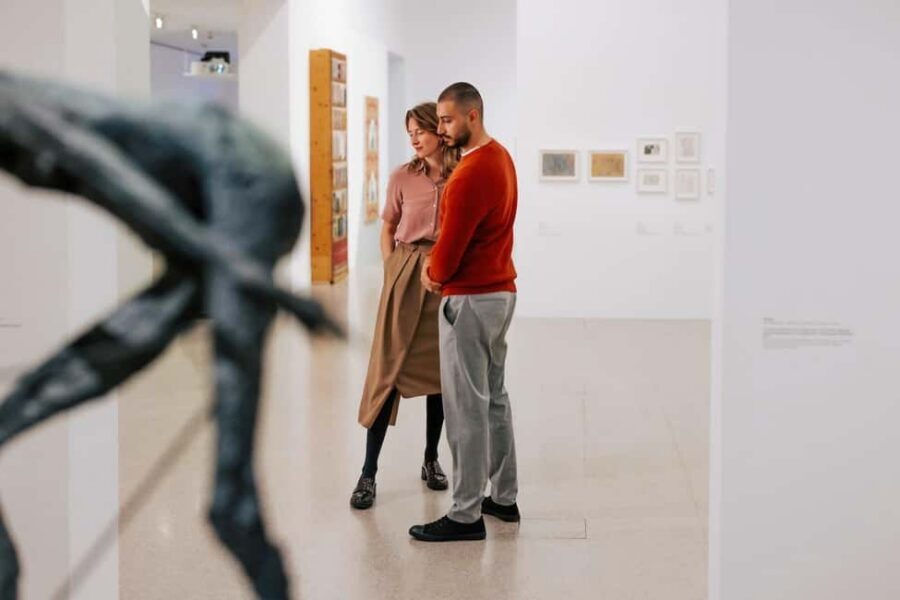
mumok also has special exhibitions that bring in newer international work and keep the museum from feeling static. The museum focuses on cutting-edge ideas, including film and media, which means you might walk into a room that feels more like an installation or a media experience than a traditional gallery layout.
Here’s the practical tip: treat the temporary exhibition as your mood pick, not your whole reason to go. Even with a great museum, one temporary show might click with you and another won’t. And because the exhibitions change, the only correct plan is to arrive ready to enjoy the permanent collection no matter what.
That said, one caution from a past visitor: they felt the exhibition lineup was not strong enough in works. I take that as a reminder to manage expectations. If you’re the type who needs a “hit list” of major masterpieces on every wall, you’ll want to check what’s on view before committing.
A simple way to plan your day inside 4,800 m²
With 4,800 m² of galleries, you can’t really see everything in one go. The good news is that mumok is designed for discovery, so you don’t have to feel guilty about skipping.
My go-to strategy for a one-day entry ticket is to pick three anchors:
1) Start with a permanent-collection zone where you’ll recognize a few names (Warhol, Picasso, Yoko Ono, or VALIE EXPORT). That gives you momentum fast.
2) Then switch into the movement threads you’re most curious about—Pop Art/Fluxus, Conceptual Art, or Vienna Actionism.
3) Finish with a temporary exhibition or film/media room to see what’s new and how the museum thinks now.
You’ll likely spend more time where the museum pushes you to slow down. That’s the value of this kind of modern art museum: it’s not always about speed. Sometimes the work asks you to re-check what you assumed art had to be.
Also, you can use your breaks as part of the route. The on-site café and library are there for a reason. If your brain is overloaded, take 20 minutes, reset, and come back with better focus. You’ll enjoy the next rooms more.
Pop Art to Vienna Actionism: the themes that make mumok click
mumok is built around the idea that modern art keeps changing its rules. If you only read labels, you’ll still get the big categories—but you’ll get more by connecting the themes yourself as you walk.
Here’s what I’d watch for as you move:
- Pop Art and Fluxus: Look for how playfulness and provocation sneak into the work. It’s not just about style; it’s about attitude.
- Conceptual Art: Pay attention to the idea behind the object. Sometimes the art is the question.
- Vienna Actionism: This is where performance and intensity often become part of the story. Even if you’re cautious about darker themes, it can be one of the most memorable parts of the day because it challenges your comfort level.
- Film and media: Newer works often hit differently because the medium changes the pace. Some pieces want you to stay, watch, and reorient.
This matters because it helps you stop treating the museum like a checklist. Instead, you’re building a mental map of what the artists were trying to do—then noticing how that goal shifts across decades.
You can also read our reviews of more museum experiences in Vienna




Interactive programs for adults and children: the surprising advantage
Not every modern art museum has a strong education program. mumok does, and that’s a real plus if you’re traveling with kids—or if you just like learning that isn’t boring.
The museum offers educational programs for all ages, and that can make the visit feel more grounded. Instead of relying only on your own interpretation (which can be hit or miss), you can use the museum’s teaching approach to guide your attention.
Practical advice: plan your day so you don’t lock yourself into a single route with zero flexibility. Keep a little time buffer to check what’s running when you arrive. If there’s an adult-focused session, it can refresh how you read the works. If there’s a kids program, it can turn the visit into something more than quiet museum time.
Café and library breaks: stay human in a modern museum
Modern art days can add up fast—bright spaces, dense ideas, and a lot of visual noise (even when the work is subtle). That’s where the on-site café and library come in handy.
I like having a place inside the museum where you can cool down without “leaving and returning” to the city plan. If you’re traveling with family, it also helps keep the day from turning into a negotiation over what comes next.
The library is also a quiet option if you want context. Labels give you basics, but the library can help you go deeper at your own speed. You don’t need to study for hours; even a quick look can make the next room click.
Price and value: is $15 a fair deal?
The entry ticket price is $15 per person for a one-day visit. For that money, you get access to:
- the permanent collection
- temporary exhibitions
- educational programs for all ages
- the on-site café and library
That’s the core value. You’re not paying extra for separate entrances or “must-have” add-ons. And because the museum covers both major modern artists and newer film/media work, you have multiple ways to enjoy your day even if you end up loving only one part.
Is it worth it? If you’re even moderately curious about modern and contemporary art, I think the price is fair because the museum is big and the content range is real. The main reason it might feel expensive is if you’re expecting a small museum with a tight “greatest hits” approach. mumok is more exploratory than that.
Getting the most out of your ticket (without overthinking logistics)
Your ticket is valid for one day, and you’ll want to check available starting times. That’s the one piece of planning that actually affects your experience: picking the right start time helps you avoid wasting energy wondering where to go first.
Also remember:
- The museum is closed on Mondays.
- Children and young people under 19 get free admission.
- Students under 27, seniors, unemployed people, and disabled persons get reduced admission.
- There’s an annual pass option for regular visitors and U27 visitors.
If you’re traveling as a student or with a group that qualifies for reduced or free admission, it can drastically improve value. It’s worth checking those categories before you buy.
Wheelchair access is available, which matters for comfort and independence inside a larger museum.
Should you book mumok entry ticket?
Book it if you want a modern art museum day in a compact, easy-to-reach setting with big ideas, real artists, and changing exhibitions. I’d especially recommend it if you’re curious about how art shifts from Pop and conceptual work into media and performance history.
Skip or reconsider if you need guaranteed blockbuster masterpieces in every room, or if you know you dislike contemporary experimentation. A temporary exhibition might not land for everyone, and that can affect how satisfying the day feels.
If you can, check what’s on view before you go—then use the permanent collection as your safety net. With that mindset, your $15 day has a strong chance of being a worthwhile Vienna highlight.
FAQ
Where is mumok located?
mumok is in Vienna (State), Austria, in the MuseumsQuartier area.
How much is the entry ticket?
The price is $15 per person.
How long is the ticket valid for?
The ticket is valid for 1 day.
What’s included with the ticket?
Your ticket includes access to mumok’s permanent collection, access to temporary exhibitions, educational programs for all ages, and access to the on-site café and library.
What is not included?
Guided tours and transportation to the museum are not included, and food and drinks aren’t included.
What should I know about opening days?
The museum is closed on Mondays.
Is there free or reduced admission?
Yes. Children and young people under 19 get free admission, and there are reduced rates for students under 27, seniors, unemployed people, and disabled persons.
Is the museum wheelchair accessible?
Yes, mumok is wheelchair accessible.
Which languages are offered?
The information provided lists languages as available, but it does not specify which ones.
Can I change my plans if needed?
There is free cancellation up to 24 hours in advance for a full refund, and there is also a reserve now & pay later option.