REVIEW · VIENNA
World War II History Vienna Old Town Private Walking Tour
Book on GetYourGuide →Operated by Rosotravel Austria · Bookable on GetYourGuide
One walk, and Vienna’s WWII story clicks into place. This private 2-hour tour strings together the big causes and the local consequences, starting at Morzinplatz and moving through the Old Town’s visible memorials. I love how the guide connects history to real street locations, not just dates. I also like the mix of imperial landmarks and dark WWII reminders, so you can see how ordinary life and political power collided.
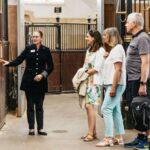
The biggest win here is the human-scale storytelling from a 5-star licensed guide in your language, with time to ask questions. Guides mentioned by name—Peter, Sanda, Alexander, and Frau Heuberger—are highlighted for things like professionalism, patience, and pacing (even in intense heat). That’s exactly what you want when the subject is heavy and you still need to follow a coherent timeline.
A possible drawback: this is a walking tour through the center of Vienna, and it covers sensitive topics tied to Nazi persecution. If your group has limited stamina or you’re not ready for Holocaust-focused context, plan your pace and take breaks early.
In This Review
- Key things that make this WWII tour work
- Starting at Morzinplatz: where the Gestapo story is anchored
- Inner Stad walking route: propaganda, daily life, and why it feels different in person
- Hofburg and Heldenplatz: imperial power, then war memory underneath
- St. Stephen’s Cathedral area and the Old Town contrast
- The tour ends by the State Opera: a 1945 bombing reminder you can’t ignore
- What the private guide format really changes for you
- Price and value: what $214 buys you in real terms
- Who this tour is best for (and who should think twice)
- A few things to know before you go (so it feels good on the day)
- Should you book this WWII history tour in Vienna?
- FAQ
- Where does the tour meet?
- How long is the tour?
- Is this tour private?
- What topics are covered during the walk?
- Which sights will we see?
- What languages are available for the guide?
- How large is the group?
- Can I cancel and get a refund?
- Is there an option to pay later?
Key things that make this WWII tour work
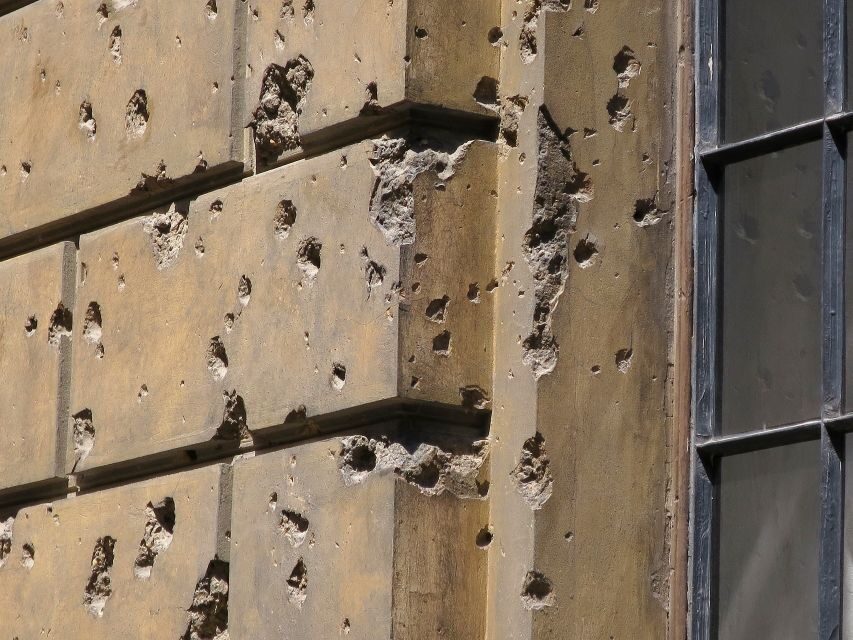
- Morzinplatz starting point: you begin at the memorial to Nazi terror victims, near the former Hotel Metropol Gestapo connection.
- Clear timeline in street form: from Franz Ferdinand’s assassination through Hitler’s annexation and Vienna’s bombing and liberation.
- Jewish Vienna and remembrance stops: Holocaust memorials and remembrance stones are part of the walk, not an afterthought.
- Imperial Vienna meets wartime memory: Hofburg exterior, Heldenplatz memorial crypt, and Franz Joseph’s monument sit next to WWII meaning.
- Guided language + private group: your tour is led in English and many other languages, and your guide can actually hear your questions.
- Ends at a 1945-bombing reminder: the Monument Against War and Fascism near the Vienna State Opera gives the walk a strong final note.
Starting at Morzinplatz: where the Gestapo story is anchored
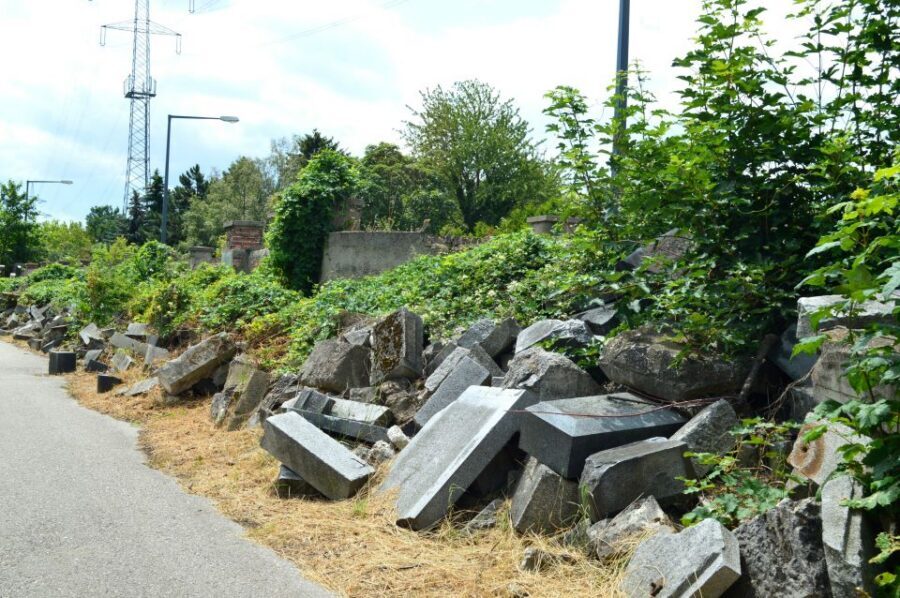
I like tours that start with a place you’d otherwise walk past without understanding its weight. Here, you meet at Denkmal der Opfer des Faschismus (Memorial to the Victims of Nazi Terror) at Morzinpl. 4. From the start, the tour frames Vienna not as a postcard, but as a city that became involved—politically and physically—in the machinery of WWII.
Right away, you’re also pointed toward the connection with the former Hotel Metropol, which in 1939 was used as Gestapo headquarters in Vienna. That detail matters. It turns what could be abstract history into a specific location you can mentally revisit later when you’re back in your hotel room. You’re not just learning what happened; you’re learning where the fear and enforcement were concentrated.
And because you begin at a memorial, the tone is set. This is not a casual history stroll. It’s a guided walk that’s respectful about what happened to targeted communities, especially Jewish citizens.
You can also read our reviews of more walking tours in Vienna
Inner Stad walking route: propaganda, daily life, and why it feels different in person
After the meeting point, the walk through Inner Stad (Old Town) is where the tour earns its keep. The city’s architecture can look timeless, but your guide explains how daily life shifted under German occupation and how propaganda shaped behavior.
You’ll hear about the timeline of events leading into WWII and also what followed—so you can connect political decisions to visible outcomes. In practice, that means the guide spends time on causes and consequences, not just key dates. You learn about Adolf Hitler and also about Austrian Nazi figures like Ernst Kaltenbrunner, which helps explain the human side of how the system worked (and why responsibility wasn’t limited to one country or one uniformed stereotype).
Then there’s the part many people struggle to grasp from books alone: the way ordinary life and public messaging can coexist with persecution. As you pass Holocaust Memorial and Remembrance Stones, the focus shifts toward the tragic fate of Vienna’s Jewish citizens. That’s a necessary reminder that monuments are not decoration—they’re documentation of people who were erased and survivors who fought for memory to remain.
Practical tip: because this is a narrative-heavy walk, you’ll get more from it if you wear comfortable shoes and keep your attention on the guide’s connections between stops. If you try to multitask, you miss the “why” and it turns into a list of sites.
Hofburg and Heldenplatz: imperial power, then war memory underneath
The tour’s use of the Hofburg area is smart. Hofburg is part of imperial Vienna—grand, formal, unmistakably historical. But the guide brings you to its WWII and WWI layers too, so you can see how different eras overlap in the same city spaces.
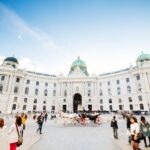
You’ll view the Hofburg palace complex from the outside, and then you’ll connect the story to Heldenplatz. That’s where the Memorial Crypt dedicated to WWI and WWII victims comes into the picture. It’s a powerful contrast: an imperial court setting layered with remembrance for mass death.
Why this is valuable: it prevents a common mistake. It’s easy to treat WWI and WWII as separate worlds with different causes and different kinds of victims. In Vienna, your guide ties them into one longer arc, letting you feel how one conflict’s aftermath and political instability fed the next disaster.
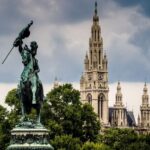
You also pass the monument to Emperor Franz Joseph I in Burggarten. It’s a familiar name, and your guide’s interpretation is the key—because the point isn’t to worship the past. It’s to understand how old legitimacy and new ideologies collided in the same urban landscape.
St. Stephen’s Cathedral area and the Old Town contrast
The highlights also include St. Stephen’s Cathedral, and that inclusion isn’t random. In the Old Town, the city’s most iconic religious landmark makes a useful counterpoint to the darker political story you’re following.
Here’s how it tends to land: you look up at a place people associate with faith and continuity, then you remember that the 20th century still broke into that continuity. Your guide uses that contrast to keep the history grounded in place. The cathedral doesn’t explain WWII by itself; what explains WWII is the way the city was repurposed by occupation, propaganda, and state violence—and then memorialized afterward.
If you’re the type who likes to photograph buildings, this is a good section for it, but keep your phone down long enough to hear the transitions. The best “aha moments” are usually in the small narrative bridges the guide makes between one site and the next.
The tour ends by the State Opera: a 1945 bombing reminder you can’t ignore
The final stop is near the Vienna State Opera, ending at the Monument Against War and Fascism. This is a strong closing choice because the area carries the physical and symbolic memory of the 1945 bombing.
It’s also a practical finishing point. You’ll finish in a part of town where it’s easy to orient yourself and plan your next meal or museum visit. The monument gives you a clear thematic end: after walking through persecution, propaganda, and memorials, you end with a statement built against war and fascism.
For me, that last leg matters because it stops the tour from feeling like a museum exhibit you can walk through and forget. Instead, you leave with a message you’ll likely keep thinking about as you move through Vienna on your own.
You can also read our reviews of more private tours in Vienna



What the private guide format really changes for you
This is a private group tour, and the guide-to-group setup is designed for questions. There’s also a group-size limit of 1–25 people per guide, with additional guides for bigger groups (and higher pricing when that happens).
That structure matters because WWII history is the kind that generates real questions fast:
- Why did people comply?
- How did propaganda work day to day?
- How did Austria’s political situation connect to the wider war?
- What do certain memorials mean beyond the obvious names?
A group that can actually hear the guide makes those questions possible, and that’s where the experience tends to become more than “seeing sites.” It becomes understanding.
Also, multilingual availability means you’re not forced into a lingua franca. The tour lists guides fluent in English, German, Italian, French, Spanish, Russian, Polish, Chinese, Japanese, Croatian, Portuguese, Arabic. If you’re not comfortable in English, that’s a real value add.
Price and value: what $214 buys you in real terms
At $214 per person for a 2-hour private walking tour, the price isn’t cheap. But you’re not paying just for sightseeing.
You’re paying for:
- A 5-star licensed guide with expert commentary on World War II, World War I, and the Holocaust
- Interpretation that links the timeline (Franz Ferdinand’s assassination, Hitler’s annexation, bombing and liberation) to actual Vienna sites
- Guided context around propaganda, Austrofascism, and the fate of Jewish citizens, including specific remembrance locations
- A route that covers multiple emotional registers—imperial Vienna, wartime structures, and memorials
If you were to DIY this route, you could read plaques and buy a guidebook. That works for surface familiarity. But if you want the “why these places matter together” level of understanding, a strong guide is what turns it into something you’ll remember.
Where value gets even better: if your group includes kids or you’re traveling with mixed experience levels, a flexible guide pace helps. One account specifically praised a guide for patience when traveling with a small child. Another described balancing tour time, explanation, and shade during extreme heat. That’s not just comfort—it’s better retention, because you’re actually able to stay engaged.
Who this tour is best for (and who should think twice)
This tour fits best if you:
- Want a structured timeline covering WWI and WWII and how events connected
- Prefer guided interpretation over reading alone
- Care about understanding Austria’s role in Nazi-era persecution, not just the broad European war story
- Appreciate walking tours that cover both iconic landmarks and the less comfortable parts of the city
You might think twice if:
- Your group is very sensitive to Holocaust and Nazi persecution topics and needs a gentler approach
- You have limited mobility or fatigue risk (it’s a walking format)
- You’re looking for only broad “highlights” without the harder historical details
A few things to know before you go (so it feels good on the day)
Two-hour walking tours go faster than they look on paper. I recommend planning for short stops to orient yourself, and keeping your expectations realistic: you’ll cover a focused slice of Old Town history rather than every relevant monument in Vienna.
Also, do the basics:
- Wear comfortable shoes
- Dress for weather
- Check your email the day before for any important updates
And mentally prepare for tone. This is a history walk that includes memorials and explicit reminders of Nazi terror and the Holocaust. If you show up curious and open, you’ll leave with more understanding than you expected.
Should you book this WWII history tour in Vienna?
If you want WWII history that feels connected to the streets, not trapped in a lecture hall, this is a smart booking. The meeting point at Morzinplatz, the Holocaust remembrance stops, the Hofburg/Heldenplatz memorial context, and the ending near the State Opera create a route with a clear narrative arc.
The biggest reasons to book are the guide quality focus and the way the tour links major events to local Vienna sites. If that’s what you’re after, the price makes more sense. If you’re looking for a light, casual wander, you might prefer something else.
Overall: book it when you want clarity, context, and a guided walk through Vienna’s most complicated layers.
FAQ
Where does the tour meet?
You meet your guide in front of Denkmal der Opfer des Faschismus (Memorial to the Victims of Nazi Terror), Morzinpl. 4, 1010 Wien, Austria.
How long is the tour?
The tour lasts 2 hours.
Is this tour private?
Yes, it’s a private group tour.
What topics are covered during the walk?
You’ll learn about major events leading up to and after World War I and World War II, including Franz Ferdinand’s assassination, Hitler’s annexation of his homeland, the bombing and liberation of Vienna, Austrofascism, and the Holocaust.
Which sights will we see?
You’ll see key places and monuments such as Hofburg (exterior only), St. Stephen’s Cathedral, the Holocaust Memorial and Remembrance Stones, the Memorial Crypt at Heldenplatz, the Emperor Franz Joseph I monument in Burggarten, and the Monument Against War and Fascism near the Vienna State Opera.
What languages are available for the guide?
Guides are listed as fluent in English, German, Italian, French, Spanish, Russian, Polish, Chinese, Japanese, Croatian, Portuguese, and Arabic.
How large is the group?
The tour limits group size to 1–25 people per guide to ensure everyone can ask questions and hear well. Larger groups require additional guides.
Can I cancel and get a refund?
Yes. You can cancel up to 24 hours in advance for a full refund.
Is there an option to pay later?
Yes. The tour offers reserve now & pay later, so you can book without paying today.