REVIEW · VIENNA
Hotrod Vienna Daylight Tour The most famous & fastest Tour Vienna
Book on Viator →Operated by Hotrod Tour Vienna · Bookable on Viator
Hot rods and Vienna in the same breath. You’re not just looking at monuments here; you’re getting behind the wheel for quick-hit views of Vienna, including the Ringstraße ride that car lovers dream about. What I like most is the hands-on fun (one driver per car means you actually drive) and the safety setup with helmets and headsets. The catch: this is a driving experience first, so if you want long, detailed history stops, you may feel the pace and noise get in the way.
The tour stays tight and organized, with a small max group size of 10 and a real pre-drive briefing. Guides like Rufat, Ryan, Martin, Alan, Mari, Lela, and Patrick are repeatedly called out for making the route feel safe and exciting, with clear instructions before you hit busy streets.
Price-wise, it’s $181.48 per person for about 1 hour 30 minutes (give or take for prep and walking), which is steep compared to standard sightseeing. But you’re paying for the privilege of driving a sporty mini-car around major landmarks, plus included insurance and equipment. If you do that in Vienna, you’re getting a rare mix of speed and famous sights.
In This Review
- Key Things You’ll Notice on This Hotrod Vienna Tour
- What You’re Driving in Vienna (and Why “One Driver Per Car” Matters)
- Judengasse 4: Meeting Point, Briefing, and That First Roll Out
- Schwedenplatz and the Danube Canal Side: Old Town Meets Modern Energy
- Entering the Ring: From High-Speed Freeways to Imperial Vienna
- Stadtpark and the Golden Johann Strauss Memorial: Green Space Without the Walk
- Vienna State Opera and Hofburg: Big Culture Icons at Road Speed
- Town Hall, Schottentor, and the Ring’s 19th-Century Architecture
- Headsets, Engine Noise, and How to Hear the Guide Without Stress
- Price and Insurance: Is $181.48 Worth It?
- When the Timing Works Best: Daylight, Weather, and Driver Comfort
- Who Should Book This Hotrod Vienna Daylight Tour
- Should You Book It
- FAQ
- How long is the Hotrod Vienna Daylight Tour?
- What does the Hotrod Vienna Daylight Tour cost?
- Is the tour offered in English?
- Do I need a driving license to participate?
- What is the minimum age?
- Where do I meet, and does the tour end there too?
- What safety equipment and hearing setup are included?
- Is food or hotel pickup included?
- What sights will we see during the drive?
- What happens if the weather is poor?
- Is there free cancellation?
Key Things You’ll Notice on This Hotrod Vienna Tour
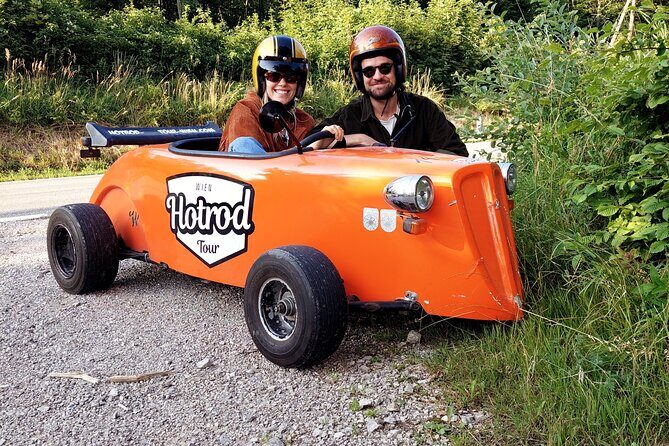
- You drive in a real street setting with a guide guiding the route, not a closed track.
- One driver per car keeps it fun for everyone who’s eligible to drive.
- Helmet + headsets + guide mean you get safety gear and narration without shouting over traffic.
- The Ringstraße sequence gives you that classic grand-boulevard feel in a short time.
- Big landmarks with quick photo moments keep the tour moving, even if you’re not doing a slow museum-style visit.
- Noise and traffic demand focus; the narration is helpful, but you’ll still drive first.
What You’re Driving in Vienna (and Why “One Driver Per Car” Matters)
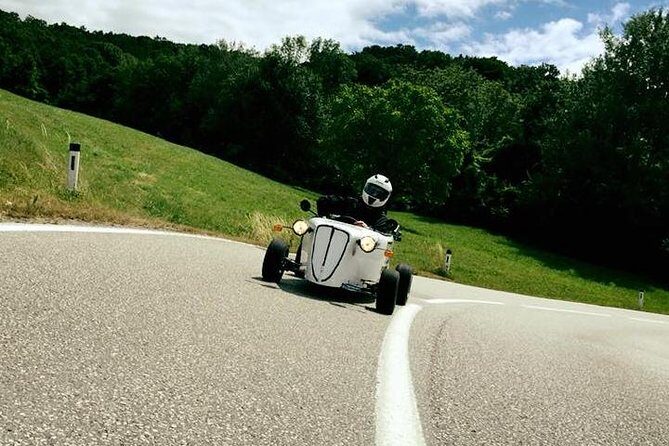
This is a true driving tour, not a hop-on van ride with a steering wheel shaped like a gimmick. The highlight is that you’re seated in a small hot rod and guided through Vienna’s key areas, so you get views from the driver’s perspective and the fun of doing it yourself.
The setup is built for participation. Since it’s one driver per car, you’re more likely to actually drive for the full experience rather than spending the time as a passenger while someone else gets the adrenaline. That’s a big difference from many city driving experiences where only a subset of the group controls the vehicle.
You also get practical safety support: helmet use is included, and you’ll have headsets so you can hear the guide. The tour includes fully comprehensive insurance, with a €500 deductible, plus an option to reduce that deductible to €250 for an extra fee of €10. If you’re risk-averse, that math matters.
One more thing: these cars are small, and you’ll be close to street furniture and other vehicles. You don’t need to be a race driver, but you do need to be comfortable driving in real traffic at city speeds and stoplights.
You can also read our reviews of more tours and experiences in Vienna.
Judengasse 4: Meeting Point, Briefing, and That First Roll Out
You meet at Judengasse 4, 1010 Wien, and the tour ends back at the same spot. The meeting location is convenient for public transport, and it’s close enough to the famous Anchor clock area that you’re not stuck on the edge of the city.
Right at the start, you get the kind of briefing that makes this work in a city full of pedestrians and trams. You’ll have helmet use and headsets, plus clear instructions before you roll out. The pacing is short and focused, because the point is to get you on the road quickly while keeping everyone together.
Then comes the moment most first-timers worry about: getting used to the controls. Some groups also get a short practice period before heading into the street traffic area, which helps you feel the car’s response and steering without being stressed at the first intersection.
You should also mentally plan for a “tour start” that isn’t just sitting in the car. There’s prep time, a short walk to and from the vehicles, and a briefing component that blends into the total tour duration of about 1 hour 30 minutes.
Schwedenplatz and the Danube Canal Side: Old Town Meets Modern Energy
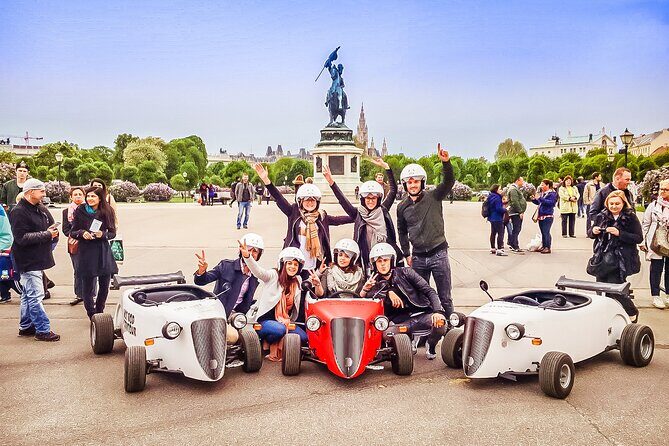
The early part of the route moves you toward Schwedenplatz, which is described as the interface between old and new Vienna. This is a smart first stop because it tells you what the rest of the tour feels like: quick scenic segments, city rhythm, and just enough landmark context to orient you fast.
From Schwedenplatz you get a feel for the Danube Canal area, including street art and that mix of hip bars and local charm. It’s not a museum stop. It’s a “get your bearings” moment with the city moving around you.
Here’s the practical benefit for you: Schwedenplatz helps reset your expectations. You start to understand that this is not a slow, narrated walk. It’s motion. If you can handle that, you’ll enjoy the drive even more because the sights come at you at a fun pace.
The possible drawback is exactly what you’d expect from a driving tour: you’re busy watching the road, so the area’s character lands through windows and brief visuals more than through long explanations.
Entering the Ring: From High-Speed Freeways to Imperial Vienna
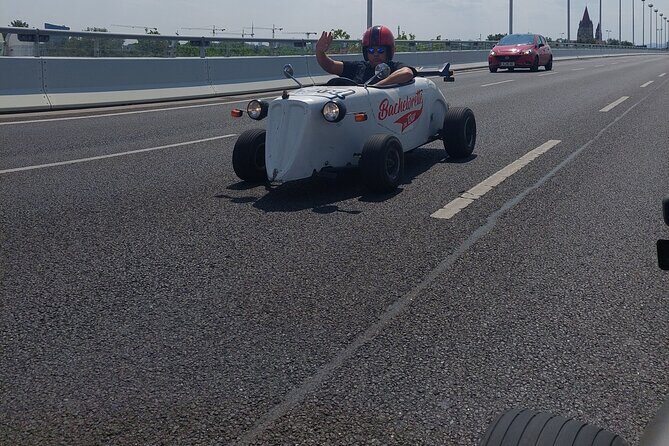
Then you transition into a classic Vienna feel: the Ringstraße. The tour notes a contrast between faster roads and historic streets, and that shift is a big part of why this route works.
You go from modern-feeling driving into the grandeur of imperial Vienna, which makes the Ring road ride feel like a reward. This is where the city’s scale hits you: broad boulevards, landmark density, and that sense of turning a corner into postcard Vienna.
If you’re a car person, this is the segment you’ll likely talk about later. The experience combines motion and city geometry, and the guide keeps the group together so you don’t waste time or get lost in traffic patterns.
If you’re nervous about street driving, this is also where confidence matters. Some people choose earlier or later time slots to reduce stress because traffic can change how easy it feels to follow the group. The narration can be harder to catch when engine noise and city sounds get loud, so focus on safe driving first.
Stadtpark and the Golden Johann Strauss Memorial: Green Space Without the Walk
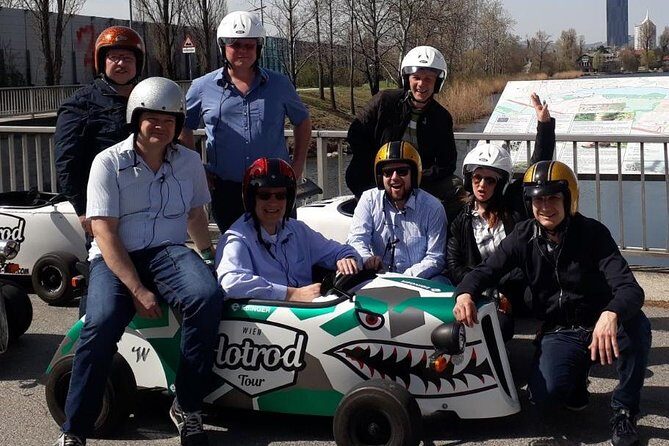
After the Ring sequence, the route heads to Stadtpark, Vienna’s central green area. This stop is valuable because it’s a break from dense buildings and gives you a quick look at a softer side of the city.
The standout detail here is the Golden Johann Strauss Memorial, Vienna’s most famous Strauss monument. The tour frames it as a natural idyll right in the center, and that’s exactly what you’ll appreciate from the car: you see how a city can be both grand and calm, without needing a long hike.
One thing to keep in mind: like the other stops, this isn’t a long stop-and-stroll experience. You’re not here to wander for hours. You’re here to glimpse, photograph if you can, and keep rolling.
If you love quick introductions and then want to return later for slower exploration, this is a good rhythm. If you want deep context in each location, you may find yourself wishing for more time on foot.


Vienna State Opera and Hofburg: Big Culture Icons at Road Speed
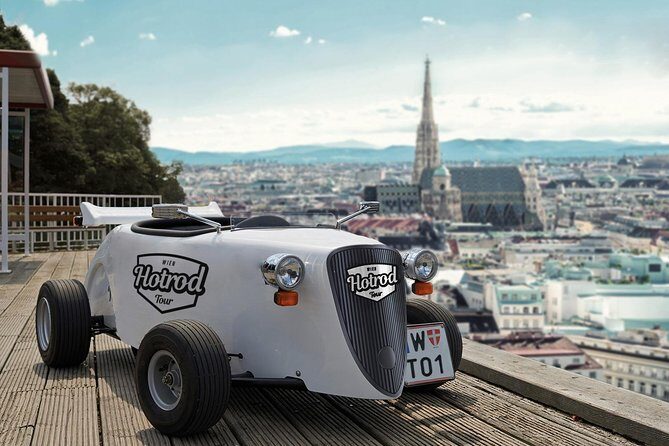
Next come Vienna’s heavyweight cultural stops: the Vienna State Opera and then Hofburg and Heldenplatz.
The Vienna State Opera is presented as a UNESCO World Heritage Site and one of the most famous opera houses in the world. From a driving tour, the appeal is simple: you can see the scale and position of the building in the city instantly, without arranging museum hours or long walks.
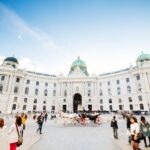
Then you move to Hofburg & Heldenplatz for an imperial-city photo moment. This area is tied to Habsburg history, and the tour description also points you toward the Spanish Riding School and the Sisi Museum. Even if you don’t go inside on this trip, seeing the complex from the road helps you understand why these sites matter and where they sit in the wider city plan.
This is also where the emotional impact tends to hit for people. The architecture and open squares are made for photos, and you’re passing them at a speed that keeps the day from feeling like “just waiting around.” You’re still driving, but the landmarks feel like the main event.
Town Hall, Schottentor, and the Ring’s 19th-Century Architecture
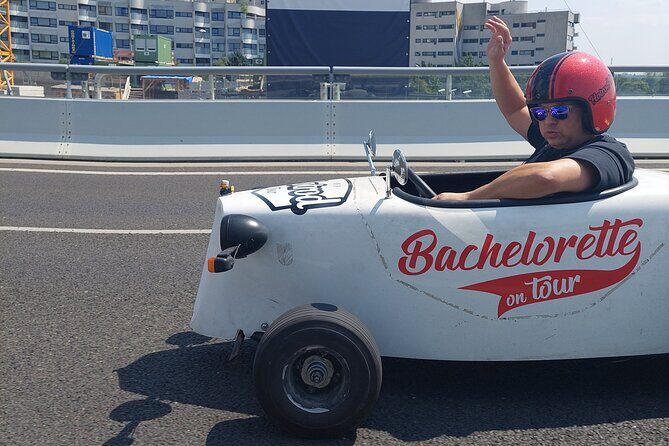
For the late-tour segment, you get Town Hall and Schottentor, with an emphasis on the architectural jewels of Ringstraße.
The Vienna City Hall gets called out for Gothic splendor, and the route also passes notable institutions like Burgtheater and the University of Vienna. This stretch is a nice bridge between royal-era imagery and the city’s later, grand civic face.
The way this tour is structured helps you build a fast mental map: opera, imperial center, then major civic architecture. That sequence works well if you’re trying to understand Vienna’s layout in a single afternoon or evening.
You’ll also likely get one last chance for photos near the end when you return toward Judengasse. The tour wraps back at the meeting point, so you can end where you started, no extra transport needed.
Headsets, Engine Noise, and How to Hear the Guide Without Stress
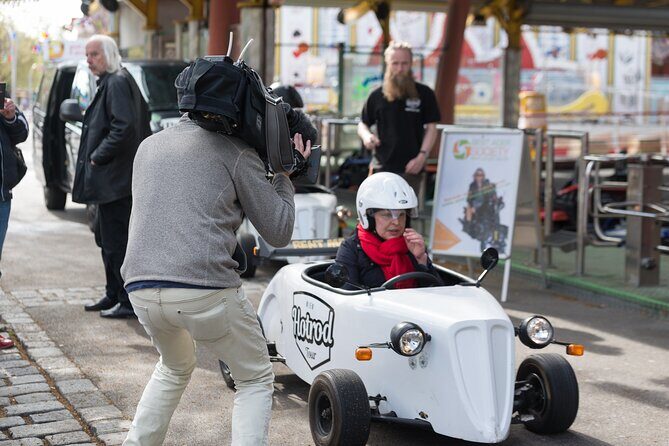
This is one place where you should go in with realistic expectations. The tour includes headsets, and they’re helpful for hearing guidance and location context. But Vienna traffic noise plus engine noise can make the narration inconsistent.
What I recommend so you don’t miss the best bits: treat the guide’s story as helpful context rather than a compulsory lecture. Drive first, listen when you can, and if you get separated or momentarily tuned out, you’ll have chances to get back in the group and reconnect.
Also consider the time of day. If you want a calmer experience, choose a slot when traffic is lighter. That advice comes up because bumpy streets, louder intersections, and slower-moving tram-and-car rhythms can make the whole experience feel more intense.
And if you’re thinking about bringing a phone for photos or video: keep it secure. City vibrations and quick movements can shake loose items.
Price and Insurance: Is $181.48 Worth It?
At $181.48 per person, this isn’t a budget activity. You’re paying for four big things all at once:
- a real hot rod driving experience on city streets
- included helmet use and headsets
- a local guide managing the group
- included insurance with a €500 deductible
That insurance structure is worth reading closely. You start with the €500 deductible, and there’s an optional add-on to cut it to €250 for an extra €10. If you’d rather reduce financial risk, the upgrade can be an easy decision. If you’re comfortable with the baseline deductible, you might skip it and put your money into another Vienna activity afterward.
Food and drinks are not included, and there’s no hotel pickup or drop-off. So you’ll want to plan meals around it and factor in transit to Judengasse 4.
Still, for the kind of experience you’re getting—driving past Vienna’s most famous landmarks rather than just watching them—the value can feel strong. It’s basically paying for a fast, high-energy orientation to the city plus a memorable stunt-like moment that’s hard to replicate on your own.
When the Timing Works Best: Daylight, Weather, and Driver Comfort
This is the daylight version of the tour, which helps for photos and easier visibility. But weather matters. The tour notes it requires good weather, and if it’s canceled due to poor weather, you’ll get either a different date or a full refund.
Also, city driving is less fun when streets are wet or slick. Some people say rain makes the experience less appealing, and it makes sense: traction and confidence shift, and the whole group wants conditions that feel safe.
For comfort, focus on these practical factors:
- You need a moderate physical fitness level.
- You need a valid driving license.
- You must be 18+.
- The cars are small, so height and seat fit matter for legroom and reach.
This tour is best for people who like speed, want quick overviews, and are happy to trade deep stops for motion.
Who Should Book This Hotrod Vienna Daylight Tour
This is a great match if:
- you’re a car lover or adrenaline fan
- you want a fast way to see major Vienna sights in about 90 minutes
- you’re comfortable driving in traffic and at intersections
- you want a unique Vienna memory that feels different from walking tours
You might skip it if you:
- want slow, detailed museum-level history at each stop
- get frustrated by loud environments and short stops
- don’t like driving in city traffic or aren’t confident behind the wheel
The tour size is small (max 10), and the one-driver-per-car setup makes it more interactive than many guided sightseeing options.
Should You Book It
If you want an energetic, driver-focused way to see central Vienna, book this. The route hits the big names—Schwedenplatz, Stadtpark, Vienna State Opera, Hofburg/Heldenplatz, and Ringstraße architecture—and you get the sights through motion, not just on foot. At $181.48, it’s a splurge, but it’s the kind of splurge that can be worth it because you’re doing something you can’t easily copy on your own.
If your priority is quiet sightseeing with detailed commentary, put your money toward a walking tour or museum day. This one is about driving, safety briefings, and getting your bearings fast.
FAQ
How long is the Hotrod Vienna Daylight Tour?
It runs for about 1 hour 30 minutes.
What does the Hotrod Vienna Daylight Tour cost?
The price is $181.48 per person.
Is the tour offered in English?
Yes, it’s offered in English.
Do I need a driving license to participate?
Yes. A driving license is obligatory.
What is the minimum age?
The minimum age is 18.
Where do I meet, and does the tour end there too?
You meet at Judengasse 4, 1010 Wien, Austria, and the tour ends back at the meeting point.
What safety equipment and hearing setup are included?
The tour includes a helmet and headsets so you can hear the guide clearly.
Is food or hotel pickup included?
No. Food and drinks are not included, and there’s no hotel pickup or drop-off.
What sights will we see during the drive?
You’ll see areas including Schwedenplatz, Stadtpark (Golden Johann Strauss Memorial), Vienna State Opera, Hofburg & Heldenplatz, and Town Hall & Schottentor, plus a ride on the Ring.
What happens if the weather is poor?
If the tour is canceled due to poor weather, you’ll be offered a different date or a full refund.
Is there free cancellation?
Yes. You can cancel up to 24 hours in advance for a full refund.