REVIEW · VIENNA
Private tour of historical Vienna with Jan
Book on Viator →Operated by Jan Kepinski · Bookable on Viator
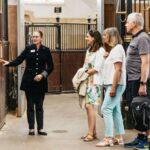
Vienna starts clicking when you have a guide. This private 2–3 hour walk with Jan turns famous landmarks into clear stories—without the crush of a big group. You’ll move through Vienna’s historic core, then hit major Habsburg sites like the Hofburg courtyards, plus a proper coffee-house break along the way.
Two things I really like: first, Jan’s style is big on storytelling that makes architecture and power feel personal, not textbook. Second, the tour feels well paced and practical, with stops planned for variety—monuments, churches, park relief, and an actual Viennese coffee pause at Conditorei SLUKA.
One consideration: it’s a walking route from Stephansplatz to Naschmarkt, so plan for some time on your feet and bring comfortable shoes—especially if you’re booking as part of a busy first day in the city.
In This Review
- Key highlights you’ll feel right away
- Why this private Vienna history tour feels different from the usual
- The walking route: Stephansplatz in the morning, Naschmarkt when you’re done
- Stop 1: Historic Center of Vienna and the “how to read the city” lesson
- Stop 2: The Hofburg courtyards and the Habsburg story you can walk through
- Stop 3: Heldenplatz and the grandeur of Vienna’s public power
- Stop 4: Maria Theresien Square, twin museums, and what modernization did
- Stop 5: Conditorei SLUKA and the Art Nouveau coffee-house break
- Stop 6: St. Stephen’s Cathedral, postwar rebuilding, and the city’s core
- Stop 7: The Church of the Jesuits, baroque that most people skip
- Stop 8: Stadtpark as a breather from the old streets
- Stop 9: Graben and Kohlmarkt shopping streets—and the plague column story
- How the tour’s structure helps you actually navigate Vienna
- Price and value: $432.53 per group is the real calculation
- Who should book this tour (and who might choose differently)
- Should you book Historical Vienna with Jan?
- FAQ
- Is this tour private?
- How long is the tour?
- What does the price include?
- Is pickup available?
- Where does the tour start and end?
- Is the tour in English?
- Do I need an admission ticket for the stops?
- Can I get a mobile ticket?
- Are service animals allowed?
Key highlights you’ll feel right away
- Private pace for up to 10 people, so questions and detours stay natural
- Jan’s insider explanations tie together monuments, rulers, and what changed in Vienna
- Habsburg focus at the Hofburg courtyards, not just photo stops
- Coffee-house culture at Conditorei SLUKA, with cakes and a classic Art Nouveau interior
- A tight central loop that balances churches, squares, park air, and high-end shopping streets
- Ending at Naschmarkt so you can keep the day going with real food options
Why this private Vienna history tour feels different from the usual
If you’ve ever joined a “highlights of Vienna” group tour, you know the pattern: you shuffle, you take photos, you get a few facts, then you’re herded forward. This one keeps the human pace. It’s built around a small private group (up to 10), which means Jan can slow down when something matters to you—and speed up when you’re eager to move.
I also like that the tour isn’t only about big names. You get orientation around the historical downtown area, plus context for the city’s identity. Jan doesn’t just point at buildings; he connects the dots between rulers, public spaces, religion, and daily life.
The other practical win: the route is structured so you’re not bouncing randomly across town. It starts at Stephansplatz and finishes at Naschmarkt, which is a smart arc for first-time visitors who want a sensible path through Vienna rather than a patchwork of rides.
You can also read our reviews of more private tours in Vienna

The walking route: Stephansplatz in the morning, Naschmarkt when you’re done
The tour begins at Stephansplatz (1010 Wien), one of Vienna’s easiest launch pads to find on foot and by transit. From there, you work your way through the old town and beyond, with each stop adding a new layer of how Vienna evolved.
It ends at Naschmarkt (1060 Wien), an open-air food market. That matters because you leave the tour in a place where you can immediately switch from “learning mode” to “tasting mode.” If you’re planning a first day, it’s one of those rare finishes that actually helps your next decision: where to eat, what to do next, and how to keep the city momentum going.
Stop 1: Historic Center of Vienna and the “how to read the city” lesson
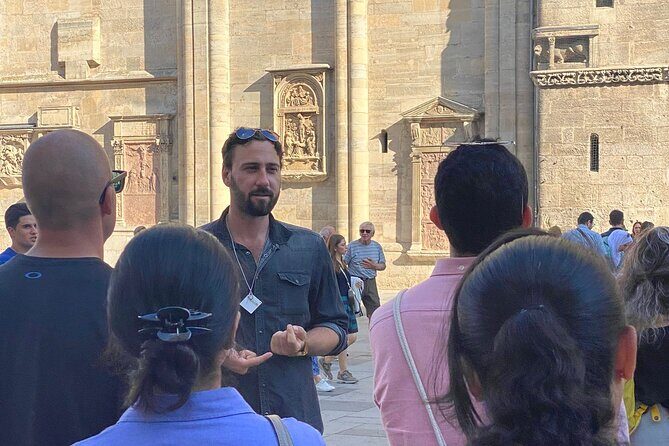
You start in the Historic Center of Vienna, where the focus is on history through the cultural and historic monuments and buildings of the old town. This is where Jan helps you build a mental map.
What I like here is that the tour doesn’t treat the center like an outdoor museum. You also get insight into eating and shopping opportunities—so you’re not just learning where things are, you’re learning how Vienna works day to day. And the idea behind the “livable city” angle is useful: it frames what you’re seeing as more than scenery.
A minor trade-off: because this first section is about orientation and context, it can feel slightly less dramatic than a single grand sight. But it’s the right move if you want everything else to land.
Stop 2: The Hofburg courtyards and the Habsburg story you can walk through
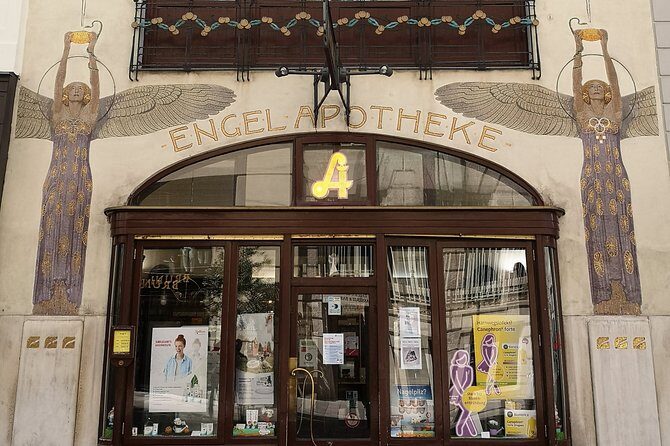
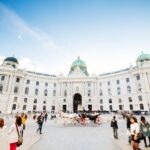
The Hofburg is the former grand palace of the rulers of Austria, and Jan treats it like a story with chapters. Instead of a single hallway “checklist,” you explore the palace’s outer courtyards—described as a patchwork of wings and palace buildings from different periods by different rulers.
That matters. Courtyards are easier to “read” on a walk than interiors. You can see how layers accumulate over time, and you can grasp why the Habsburg dynasty is described as essential to Austrian heritage. Jan’s goal here is not just Habsburg name-dropping; it’s explaining how power shaped space.
Also, the tour plan notes free admission for this stop, so you’re not forced into a ticket-only rhythm before you get into the more emotional parts of the route.
Stop 3: Heldenplatz and the grandeur of Vienna’s public power
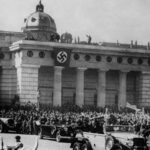
From the Hofburg area, the route moves into Heldenplatz, the Hero’s square. This is one of the best places to capture the grandeur of Viennese historic architecture—exactly the kind of stop that makes a city feel legible in photos and in person.
You’ll also hear stories about the heroes of the Austrian Empire, plus a mention of the mighty National Library palace nearby. If you care about how architecture signals authority, this is a good moment to slow down.
Time is short here—about 15 minutes—so if you’re someone who hates rushed photo stops, tell Jan what you want more of. The small-group format is what makes that possible.
You can also read our reviews of more historical tours in Vienna

Stop 4: Maria Theresien Square, twin museums, and what modernization did
Next is Maria Theresien Square, flanked by the two impressive twin museums: Natural and Art History. The memorial is to Maria Theresia, and Jan uses the square to explain how under her rule Austria began a long enlightened modernization process.
That story is tied to a shift toward a centralized state and the rise of a new middle class of bureaucrats. In other words: this stop isn’t only about beauty. It’s about how government, class, and education shaped Vienna into the city you’re walking through.
Again, you get the stop without a ticket burden—the plan lists it as free—and the duration is brief, so it works like a mental reset between larger sights.
Stop 5: Conditorei SLUKA and the Art Nouveau coffee-house break
Now for the part that makes Vienna feel like Vienna: Conditorei SLUKA. This is a traditional Viennese coffee house, and the stop is built around an experience you can actually take part in—cakes and coffee—inside a beautiful end-of-century Art Nouveau interior.
I like this stop because it changes the pace without changing the topic. You’re still learning, but your body gets a break. It also connects daily culture to the grand monuments you’ve been seeing, which is exactly what helps the city stick.
One practical note: if you have dietary needs, bring them up here so Jan can steer you appropriately. The stop is short—about 30 minutes—so timing matters.
Stop 6: St. Stephen’s Cathedral, postwar rebuilding, and the city’s core
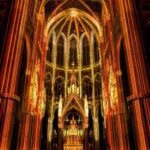
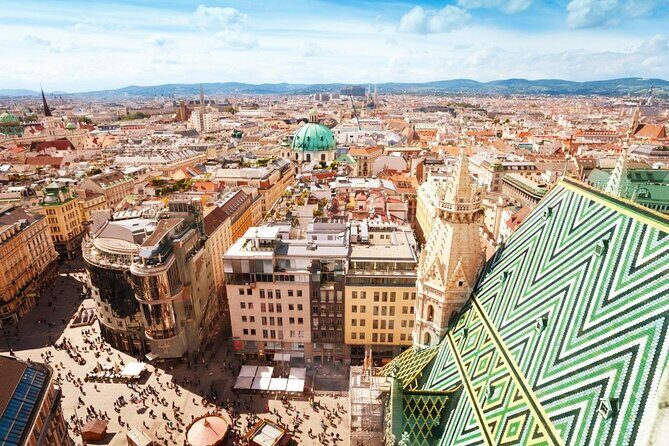
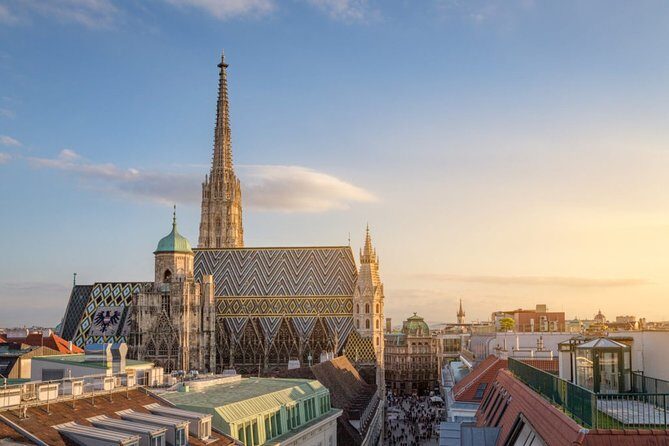
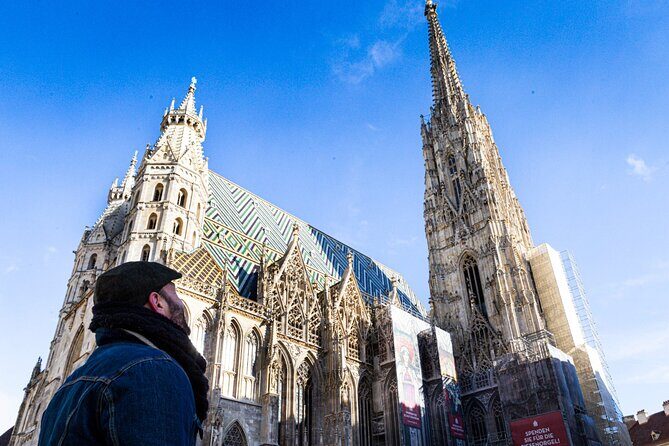
The tour then moves to St. Stephen’s Cathedral, described as the spiritual and geographical heart of Vienna. Construction spans many decades and different styles, which gives you a built-in lesson: Vienna’s identity isn’t one single era. It’s layered.
Jan also covers the cathedral’s postwar reconstruction, framing it as a positive and cooperative spirit after a time of war. That turn is thoughtful: you’re not only touring stone and style—you’re hearing how the city itself tried to come back together.
This stop is about 10 minutes, so it’s more of an emotional highlight than a long sit-down visit. If you want longer time inside, you can ask Jan how to extend the experience after the tour.
Stop 7: The Church of the Jesuits, baroque that most people skip
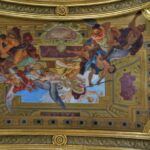
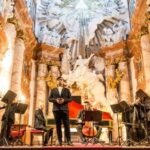
Next is the Church of the Jesuits, described as one of the finest but least visited baroque churches in Vienna. That’s a nice contrast to the cathedral: you go from a famous symbol to a place many people overlook.
The pitch here is the flamboyant Austrian baroque—exactly the kind of detail-heavy style that rewards a guide who knows what to point out. Since the stop is about 10 minutes, it works best if you let Jan set the pace and focus your attention on key visual cues.
Stop 8: Stadtpark as a breather from the old streets
After concentrated historic sights, the tour shifts to Stadtpark. It hugs the southern part of the great Ringstrasse boulevard and is dedicated to painters, musicians, and politicians of Vienna’s golden age.
This is where you get respite in a fresh green space and a break from narrow old-town streets. I appreciate this kind of stop because it stops the tour from becoming an endless “same feeling” parade of stone fronts. It also gives you a chance to reset your legs and your eyes.
It’s about 15 minutes, so it’s not a whole second attraction. It’s timed relief.
Stop 9: Graben and Kohlmarkt shopping streets—and the plague column story
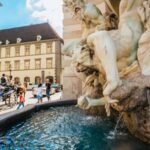
The final major sightseeing segment heads to Graben and Kohlmarkt, high-end shopping streets dominated by famous luxury brands and coffee houses. Even if you aren’t shopping, it’s a great “feel” stop: you see another side of Vienna’s public life.
Graben gets a special attention detail: the baroque plague column commemorates survival of a devastating plague at the end of the 17th century. That kind of story gives you something more than storefronts—it connects the street to a lived historical trauma and survival narrative.
This section is short—about 10 minutes—before you reach the tour’s endpoint at Naschmarkt.
How the tour’s structure helps you actually navigate Vienna
A lot of history tours fail at the same thing: they don’t help you use the information afterward. This one does, for a few reasons.
First, your stops move in a logical arc, which makes it easier to return to places later on your own. Second, the mix of squares, palaces, churches, and parks helps you learn Vienna as a set of connected spaces, not disconnected photos. Third, Jan’s role as a licensed guide and an English-speaking storyteller means you can ask follow-up questions and get answers in real time.
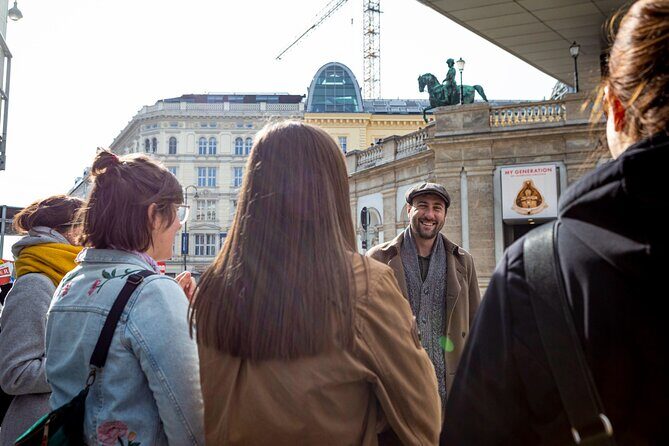
The personal touch is also a theme in the experience. People describe Jan as able to answer questions, keep a good pace, and tailor the tour to interests and needs. If you’re traveling with kids or you want the “dark history” parts handled gently, that’s where a private guide can matter.
Price and value: $432.53 per group is the real calculation
The price is $432.53 per group for up to 10 people, for a 2–3 hour tour. That pricing structure is key. It’s not “per person,” so your cost per traveler drops fast if you’re traveling as a small group or family.
Also, the planned stops list free admission tickets for each segment. That doesn’t mean you never spend money in Vienna—but it does mean your guide time isn’t eaten up by ticket lines and extra paid entry fees built into the route.
Pickup is offered, and you get a mobile ticket plus a qualified, state-licensed guide in English. Put all of that together and it’s a straightforward value case: you’re buying time with a guide who can interpret the city, not just transport between stops.
Tips/gratuity aren’t included, so budget a little for that in your total trip math.
Who should book this tour (and who might choose differently)
This experience is a strong fit if:
- You’re in Vienna for a first taste and want a guided orientation through central history
- You care about how architecture and political power shaped public spaces
- You want a private format where questions aren’t a hassle
- You like the idea of a coffee-house stop that feels cultural, not touristy
It may not be your best match if:
- You prefer long museum hours and timed indoor ticket experiences
- You want purely photo stops with minimal talking
- Your schedule only allows very short blocks and you can’t handle a 2–3 hour walking circuit
Should you book Historical Vienna with Jan?
If you want Vienna to make sense fast, I’d book it. The route hits major anchors—the Hofburg courtyards, Heldenplatz, Maria Theresien Square, St. Stephen’s Cathedral, the Church of the Jesuits, and the Stadtpark break—then finishes in a practical place for food at Naschmarkt.
The value is strongest when you travel with others (up to 10), because the price is per group. And because the tour is private with an English-speaking, state-licensed guide, it’s a good “question-friendly” way to learn the city without feeling like you’re stuck behind a crowd.
If you’re deciding between a mass tour and a private one, this is the cleaner choice: it keeps the pace human and the explanations tied directly to where you’re standing.
FAQ
Is this tour private?
Yes. It’s a private tour/activity, and only your group participates.
How long is the tour?
The duration is about 2 to 3 hours.
What does the price include?
The guided tour is included, and the admission tickets for the listed stops are shown as free. Gratuity is not included.
Is pickup available?
Pickup is offered.
Where does the tour start and end?
It starts at Stephansplatz, 1010 Wien, Austria, and ends at Naschmarkt, 1060 Wien, Austria.
Is the tour in English?
Yes. It’s offered in English.
Do I need an admission ticket for the stops?
The tour details list admission ticket as free for each of the stops.
Can I get a mobile ticket?
Yes. A mobile ticket is provided.
Are service animals allowed?
Yes, service animals are allowed.