REVIEW · VIENNA
Historical Hitler Walking Tour of Vienna
Book on Viator →Operated by Good Vienna Tour GMBH · Bookable on Viator
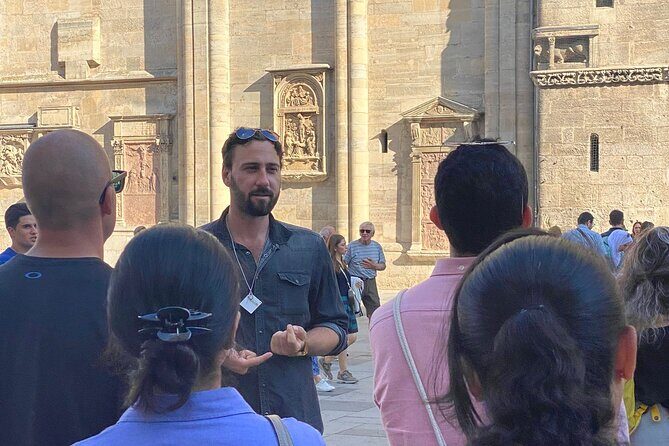
Vienna can look like a postcard, then history flips the page. This walking tour connects Hitler’s Vienna to the city’s art, politics, and persecution in a way that makes the past feel painfully close. I especially liked the way guides like Dieter (and others such as Wolfgang and Stephan) keep the story organized and easy to follow, with enough stops to absorb what you’re seeing.
Two things I really liked: you spend real time at major memorials like the Judenplatz Holocaust Memorial, not just outside plaques, and you also learn how Vienna’s cultural machine changed after 1938—starting at the Vienna State Opera. The pace works for a history-focused walk of about 2.5 hours, and the small group size helps you hear the guide and stay together.
One drawback to consider: the title can make you expect a strict, point-by-point Hitler biography. Instead, it’s more accurate to think of it as Hitler’s connection to Vienna plus the broader environment that enabled Nazism, including antisemitism and how Jewish worship was physically hidden.
In This Review
- Key Things You’ll Notice on This Hitler Walking Tour of Vienna
- Entering the Story at Albertinaplatz
- Price, Time, and What You’re Actually Paying For
- The Route in Plain English: Albertina to Schwedenplatz
- Stop 1: Vienna State Opera and the Cultural Turn After 1938
- Stop 2: Memorial Against War & Fascism at Albertinaplatz
- Stop 3: Akademie der bildenden Kunste and the Rejection Story
- Stop 4: Heldenplatz and Hitler’s 1938 Speech
- Stop 5: Judenplatz Holocaust Memorial and Austrian Jewish Victims
- Stop 6: Morzinplatz and the Gestapo Footprint at the Metropole
- Stop 7: Infopoint Jewish Vienna and the Hidden Seitenstettentempel
- Hearing the Guide, Staying Warm, and Making the Most of the Walk
- Who This Tour Suits Best (and Who Might Want Something Else)
- Should You Book This Historical Hitler Walking Tour of Vienna?
- FAQ
- How long is the tour?
- Where does the tour start and end?
- Is the tour offered in English?
- Do I get a mobile ticket?
- Are there entry fees at the stops?
- What should I bring for the walk?
- Is the group size limited?
Key Things You’ll Notice on This Hitler Walking Tour of Vienna
- Small group (up to 25) makes it easier to follow instructions and hear your guide.
- A clear route from Albertinaplatz to Schwedenplatz links art sites and memorials in one flow.
- Free-to-enter stops are built into the walk, so you’re mostly paying for the guiding and context.
- Vienna State Opera gets explained in terms of how cultural life and artists were targeted after the Anschluss.
- Judenplatz and Morzinplatz show two sides: the Holocaust memorial story and the Gestapo footprint.
- The synagogue location is a history lesson in how Jewish worship was hidden from view.
Entering the Story at Albertinaplatz
This tour starts at Albertinaplatz, right outside the Albertina area, with the guide meeting you near the Albertina Museum. If you’re arriving from central stations or most hotel areas, you’ll find the location easy to reach by tram or metro, and it’s the kind of plaza where a group can gather without too much chaos.
From the start, the guiding method matters. You’re not just hearing dates. You’re getting an explanation for how Vienna functioned before and after the Nazi takeover—how people, institutions, and cultural life were pushed into a different direction. That framing is what keeps the walk from feeling like a random list of WWII references.
Also, because this is a walking tour, comfort matters. Wear shoes you trust on uneven sidewalks and cobblestone patches. Bring water and weather gear too—Vienna can shift fast, and you’ll want to stay steady in cold wind or sudden rain.
You can also read our reviews of more walking tours in Vienna
Price, Time, and What You’re Actually Paying For
At $32.65 per person for about 2 hours 30 minutes, it’s priced like a solid city-history outing rather than a premium theater ticket. The value comes from what’s included: a licensed guide and an organized route through sites tied to Hitler, Austria’s Nazi era, and Jewish life in Vienna.
Why that’s good value: many of the stops highlighted on the route are listed as admission free, so you’re not paying over and over for entry fees. You’re paying for interpretation—especially around the uncomfortable question of how a major cultural city made space for persecution and, later, mass murder.
One more practical note: the tour is capped at 25 travelers, and reviews often mention the group stays together well. That matters for a topic like this, where you want to hear every detail and not lose your place in a busy square.
The Route in Plain English: Albertina to Schwedenplatz
The tour ends a few minutes’ walk from Schwedenplatz, where you’ll find U-Bahn line connections (U1 and U4) and lots of places to grab dinner. That ending point is convenient because it gives you an easy “pause button” after the emotional heaviness of the Holocaust stops.
It also means the walk stays focused: you move through the center in a way that links art and politics with memorials tied to Jewish victims and wartime terror. You’re not doing long transfers or changing neighborhoods three times. It’s meant to be a concentrated route.
The tour language is English, and it uses a mobile ticket. You’ll get confirmation after booking, and the typical start time is 2:30 pm.
Stop 1: Vienna State Opera and the Cultural Turn After 1938
Your first major stop is the Vienna State Opera. The building’s opening is part of the story too—celebrated in 1869 with Emperor Franz Joseph and Empress Elisabeth and Mozart’s Don Giovanni. That early grandeur is important, because it sets up the contrast you’ll hear next.
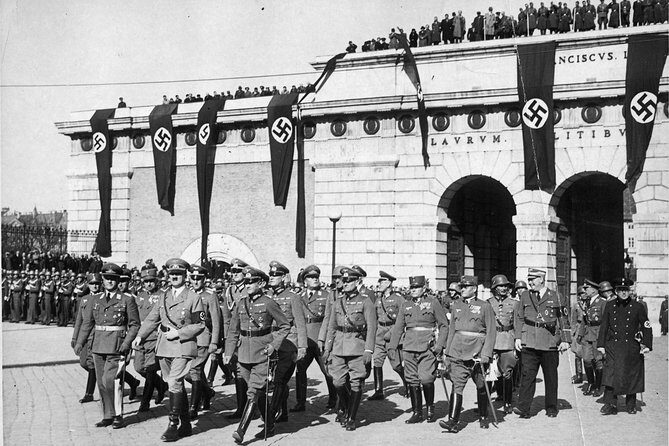
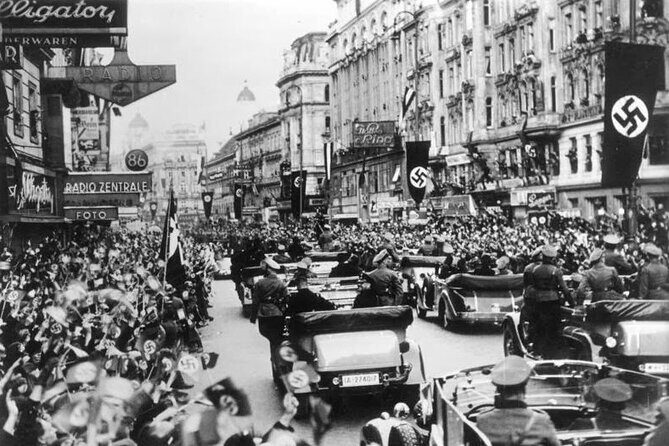
After 1938, everything changes. The guide explains how the Nazi takeover affected Vienna’s arts world. Adolf Hitler visited the State Opera on June 19 and October 27, 1938, and that period of National Socialism brought the departure, persecution, and murder of artists and employees. For certain works, there were also performance bans.
This stop is the one that turns the tour from “history facts” into “how institutions change.” Even if you’re not a theater person, you’ll get a clearer picture of how power can work its way into culture—then use culture to signal approval.
Stop 2: Memorial Against War & Fascism at Albertinaplatz
Next you move to the Memorial Against War & Fascism. It’s a sculptural work by Austrian artist Alfred Hrdlicka, and it has stood since 1988 at Albertinaplatz. The memorial is meant to remind you of what happens in the darkest era of Austria’s history, and it’s dedicated to all victims of war and fascism.
I like this stop for one reason: it broadens the focus. You’re not only learning about one political figure. You’re reminded that victims of violence and authoritarian rule include far more than one group and far more than one moment.
It also gives you a mental reset before you move into more targeted Holocaust-related locations.
You can also read our reviews of more historical tours in Vienna


Stop 3: Akademie der bildenden Kunste and the Rejection Story
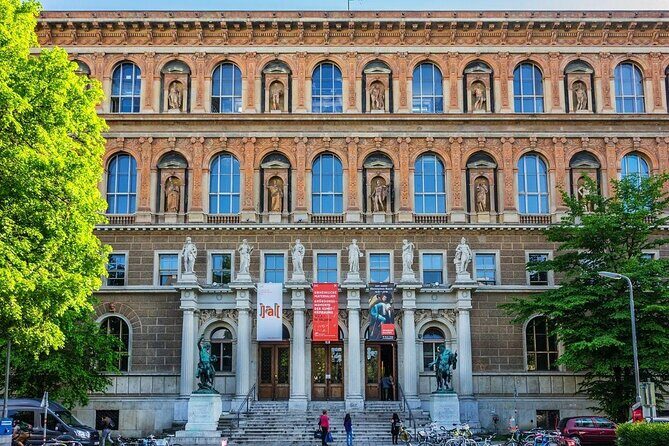
Then comes Akademie der bildenden Kunste, presented as the art school that didn’t accept Hitler as a student. The stop is short—about 10 minutes—but it’s powerful because it cuts through the myth that history always produces a straight line.
In the context of the full walk, the rejection functions like a pivot point. You’ll hear how early life and early ambitions relate to what came later, and you’ll also get an angle on how Vienna’s art world collided with political radicalization.
If you like your history with human-scale details—schools, careers, institutional doors that open or close—this stop delivers that kind of texture.
Stop 4: Heldenplatz and Hitler’s 1938 Speech
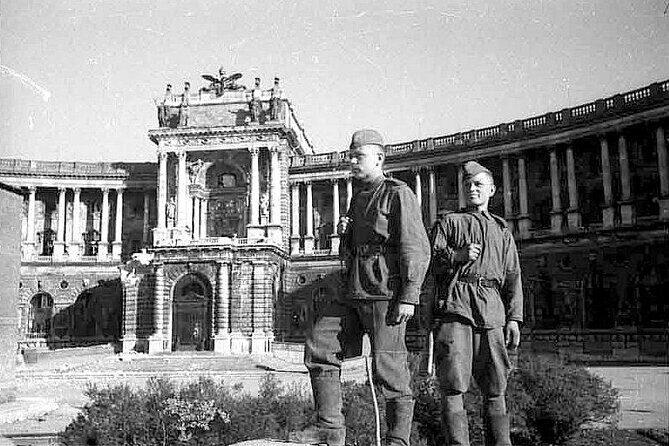
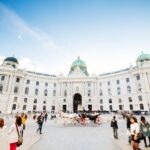
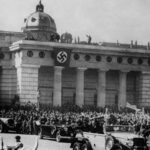
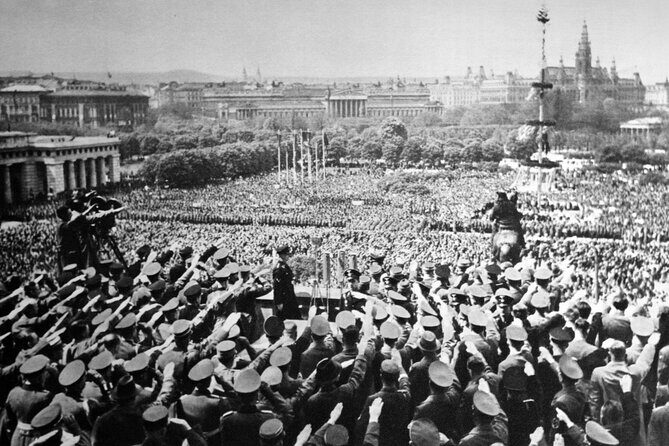
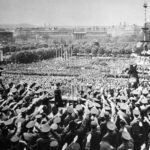
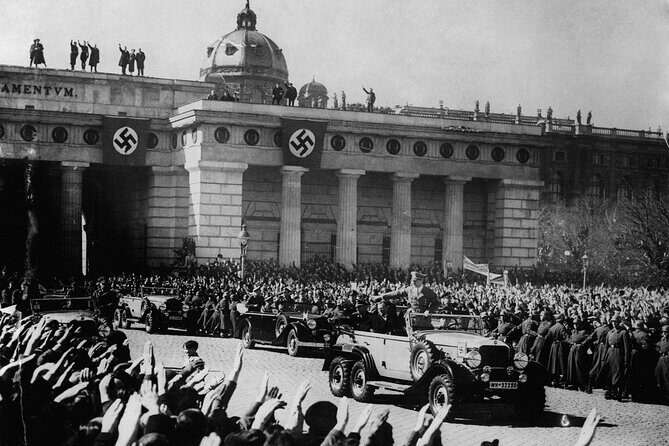
At Heldenplatz, the tour focuses on March 15, 1938, when Hitler delivered a major speech from the balcony of the Neue Hofburg. The guide frames the speech as an epitome of the Nazi seizure of power—and also the trauma it caused for the Second Republic.
This is one of those stops where the location does a lot of the work. Big civic squares can make speeches feel “inevitable,” even when you know how wrong they are. Your guide helps you read what you’re seeing: not just architecture, but the political theater of a takeover.
One consideration: the topic here can feel heavy and a little surreal, especially if you’re used to Vienna as pure elegance. Keep your emotional “volume” steady—give yourself a few seconds before moving on.
Stop 5: Judenplatz Holocaust Memorial and Austrian Jewish Victims
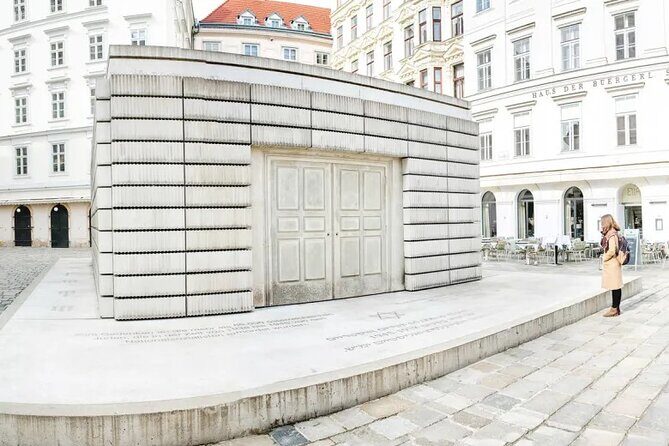
Then you reach Judenplatz Holocaust Memorial (Mahnmal für die österreichischen jüdischen Opfer der Schoah). This stop is about the Austrian Jewish victims murdered by National Socialists between 1938 and 1945—more than 65,000 people.
This is where the walk becomes deeply personal, even if you never knew those victims’ names. The guide’s job here is to ground the memorial in context, so you understand it as a specific local tragedy, not just a generic WWII reference.
I strongly recommend you take your time at this stop. Even if you think you know the basics, the goal of this tour is to show how Vienna fits into the larger Holocaust story—and how persecution wasn’t some distant event. It was tied to real neighborhoods and real institutions.
Stop 6: Morzinplatz and the Gestapo Footprint at the Metropole
At Morzinplatz, the tour points you to a memorial connected to the former luxury hotel Metropole, which became one of the most brutal Gestapo headquarters in the Third Reich.
This is another short stop, but it hits hard because it shows how ordinary-seeming urban space can turn into machinery for terror. Your guide helps connect the dots between Nazi power, secret police operations, and the everyday geography of a city.
If you want a tour that respects the topic instead of treating it like a checklist, you’ll probably appreciate this stop’s tone.
Stop 7: Infopoint Jewish Vienna and the Hidden Seitenstettentempel
The final major content stop is at Schwedenplatz area, with a specific focus on Jewish Vienna and the synagogue story behind the Seitenstettentempel. The key detail here is physical: the synagogue is hidden behind a tenement building.
The guide explains why. According to regulations at the time, non-Catholic places of worship had to be hidden and couldn’t be visible from the street. So the synagogue sits behind a five-story apartment building, and there’s an inscription above the gate that invites you toward thanksgiving and praise.
I like ending on this point because it’s not only about destruction. It’s also about survival and presence—how Jewish life had to adapt to visibility rules imposed from outside.
It’s also an easy “aha” moment. Once you see where something is supposed to be visible, then notice how it’s concealed, you understand the layer of constraint many communities faced long before the violence of the Holocaust era.
Hearing the Guide, Staying Warm, and Making the Most of the Walk
A big part of enjoying this tour is practical: you’re outside for much of it, and topic-heavy tours can feel longer if the delivery is hard to hear. One review noted that some guidance uses audio equipment, and on windy days that can affect clarity. So keep your device tuned if you’re given one, and don’t be shy about asking your guide to repeat a key point.
On cold days, reviews also mention that guides built in a couple of indoor stops to warm up. That’s a real quality-of-life factor here. It can turn a painful winter walk into something manageable, and it keeps the focus on what you’re learning instead of on your hands going numb.
If you’re coming in summer, the advice flips: bring sun protection and water. Vienna’s streets can bake even when the history feels ancient.
Who This Tour Suits Best (and Who Might Want Something Else)
This tour fits you best if you:
- want a history-focused walk with specific Vienna locations
- like connections between politics and culture, not just WWII dates
- want to see Holocaust remembrance sites tied to Austrian Jewish victims
- appreciate a guide who can keep a group moving without rushing emotional stops
If you’re looking for a purely biography-style Hitler route with constant references to him alone, you might feel the title oversells the focus. The stronger promise is Vienna’s social and cultural context around the Nazi takeover, with Hitler’s life and influence woven into the local story.
Finally, if you’re sensitive to Holocaust and Gestapo content, know that the tour includes memorial sites directly tied to the Holocaust and persecution.
Should You Book This Historical Hitler Walking Tour of Vienna?
Yes—if you want a guided route that uses Vienna’s buildings and squares to explain how power changed daily life, then moved toward mass murder. The stop selection makes sense: State Opera for cultural change, Heldenplatz for political theater, Judenplatz for the Jewish victims of the Schoah, and Morzinplatz for the Gestapo footprint. That combination gives you a coherent picture, not random facts.
You might skip or pair it with something lighter if you:
- want a strict Hitler biography
- can’t handle Holocaust-related locations
- prefer a shorter tour (this one is about 2.5 hours of walking)
If you do book, show up with comfortable shoes and weather gear. This is one of those walks where preparing a little makes the experience far better.
FAQ
How long is the tour?
It’s about 2 hours 30 minutes.
Where does the tour start and end?
It starts at Albertinaplatz in central Vienna and ends at Schwedenplatz, with easy access to U1 and U4.
Is the tour offered in English?
Yes, the tour is offered in English.
Do I get a mobile ticket?
Yes, it includes a mobile ticket.
Are there entry fees at the stops?
The listed stops on the route are marked as admission ticket free.
What should I bring for the walk?
Wear comfortable shoes and clothes, and bring weather protection like water, sunblock, and a raincoat or umbrella since Vienna weather can change quickly.
Is the group size limited?
Yes, the tour has a maximum of 25 travelers.