REVIEW · VIENNA
Fall in Love with Vienna Tour- the best of Vienna on foot!
Book on Viator →Bookable on Viator
Vienna moves fast, so this walk helps you pace it. In just 3 hours, you skim the big-name landmarks and learn how they connect, from Mozart’s world to the Opera—plus your guide will snap photos for you and share where locals go. I like that it’s built for real conversation in a small group (max 18), so the walk feels personal instead of like a stamp-collecting line. One catch: if crowds thicken, it can get a bit harder to hear the guide, and the stops involve some standing and cobbles.
My favorite part is the food-and-drink stops. You get a planned 30-minute break at a classic Viennese coffee house (Jan to Nov), and along the way you’ll pass major cafés tied to the city’s thinkers and artists, including Freud’s favorite haunts. It’s not a museum-only tour, so if you’re chasing deep, slow detail for every building, you’ll still want to do some follow-up on your own after the walk.
In This Review
- Key points I’d prioritize before you book
- Why this Vienna on-foot highlights tour fits first-time visitors
- Price and time: what $72.59 gets you (and what it doesn’t)
- Route overview: from Mozarthaus to Vienna’s Opera house
- Stop-by-stop: what you’ll get at each highlight
- 1) Mozarthaus Vienna (Mozart’s longtime home area)
- 2) A wafer shop near St. Stephen’s
- 3) Stephansdom (St. Stephen’s Cathedral)
- 4) Colonna della Peste (Pestsaule)
- 5) Peterskirche (Peters Church)
- 6) Julius Meinl coffee shop on Kohlmarkt
- 7) St. Michael’s (St. Michaels)
- 8) The Hofburg
- 9) Sisi Museum
- 10) Heldenplatz
- 11) Volksgarten and the Garden of 1,000 roses
- 12) Pallas-Athene-Brunnen (fountain before Parliament)
- 13) Vienna City Hall (Rathaus)
- 14) Burgtheater
- 15) Café Landtmann (Freud connection)
- 16) Beethoven Pasqualatihaus (passing by Beethoven’s residence)
- 17) Schottenkirche
- 18) Palais Ferstel (passage and architecture)
- 19) Café Central
- 20) Demel Vienna (Empress Elisabeth’s favorite sweets)
- 21) Spanish Riding School
- 22) Augustinerkirche (50 hearts in a chapel)
- 23) Albertinaplatz
- 24) Hotel Sacher (the Sacher cake birthplace)
- 25) Wiener Staatsoper (Vienna State Opera)
- What makes the guide’s style matter here
- Walking comfort: pace, shoes, and why 3 hours feels longer
- Who should book this tour (and who should pair it with something else)
- Should you book Fall in Love with Vienna Tour?
- FAQ
- How long is the Vienna highlights walking tour?
- Is the tour offered in English?
- Where does the tour start and where does it end?
- Are museum entrance fees included?
- Is there a coffee shop stop?
- What should I consider for walking comfort?
Key points I’d prioritize before you book
- Small group feel (max 18): easier questions and better pacing through the center
- Photo help built in: your guide will take pictures for you at key sights
- A real coffee break (Jan–Nov): 30 minutes to recharge in a classic café
- Lots of “free to see” highlights: many stops are quick exterior looks with free entry
- First-time friendly route: Mozart, Habsburg power, grand squares, and opera all in one sweep
- Practical follow-up tips: you’ll get suggestions for museums, venues, restaurants, and what to do next
Why this Vienna on-foot highlights tour fits first-time visitors
This is the kind of tour that helps you understand Vienna as a whole, not just as a list of buildings. The guide doesn’t only point and move on—you’ll get the story of why each place matters, from the Habsburgs’ grip on the city to the way music, religion, and court life shaped the streets you’re standing on.
The format also works well if you’re short on time. Three hours sounds quick, but the itinerary is packed with compact stops around the historic center, and many are “look-and-learn” moments where you don’t need to buy museum tickets to get value.
The biggest “real life” win: you’re not wandering blindly after arrival. Even if you’ve browsed photos online, the tour gives you names to remember, routes to trust, and ideas for what to explore next—so your time after the walk feels smarter.
You can also read our reviews of more tours and experiences in Vienna.
Price and time: what $72.59 gets you (and what it doesn’t)
At $72.59 per person for about 3 hours, you’re paying mainly for three things: a guide’s context, the efficient walking route, and a coffee-house pause. Entrance fees are not included, and most of the stops are designed so you can enjoy the sights without paid entry.
That matters because a guided walking highlights tour can be cost-effective in a city where so much is ticketed. You’re also getting extra support materials: a Vienna city map, a printed information package, and a local guide who can suggest museums, venues, and places to eat.
What you should not expect: a replacement for ticketed museums or a slow, hour-by-hour deep history seminar. This tour is a strong overview—then you choose your follow-ups.
Route overview: from Mozarthaus to Vienna’s Opera house
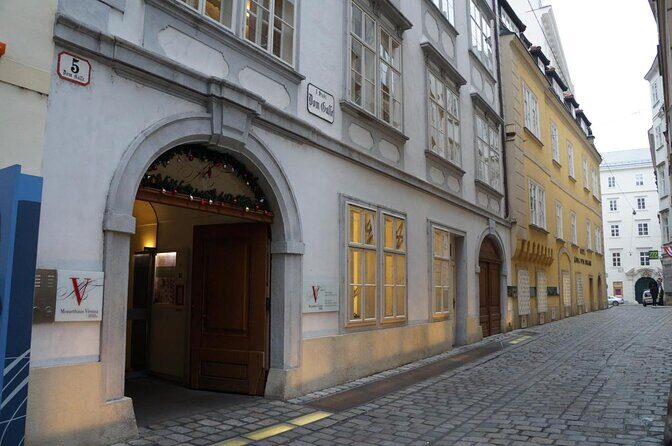
The walk starts at Mozarthaus Vienna (Wien Museum Mozart apartment) at Domgasse 5, and it ends outside the Vienna State Opera at Herbert-von-Karajan-Platz. Along the way, you’ll cover the core “greatest hits” of central Vienna: St. Stephen’s area, the Habsburg palace orbit, grand ceremonial squares, and the café culture stretch.
You can choose morning or afternoon departures to fit your schedule, and the tour runs in English. The group size is capped at 18, and the pace is set for people with a moderate fitness level—meaning you should plan for steady walking and a bit of standing.
Tip for your comfort: wear shoes you can trust on uneven cobblestones. This is the kind of street surface that’s fine for normal city walking, but not ideal for flexible sandals.
Stop-by-stop: what you’ll get at each highlight
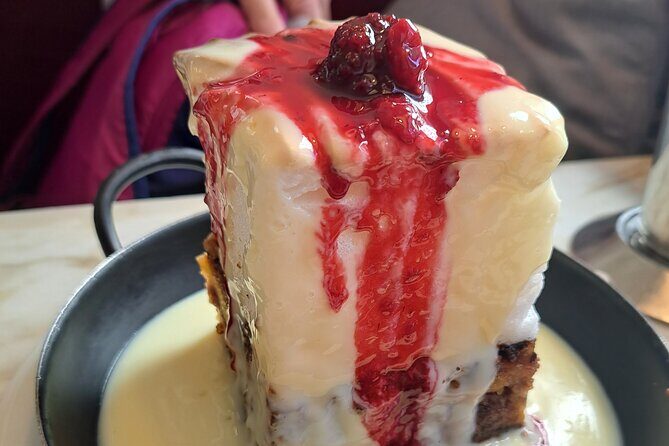
1) Mozarthaus Vienna (Mozart’s longtime home area)
You begin at Mozarthaus Vienna, tied to Mozart’s life in Vienna. This is a smart first stop because it frames the city as more than palaces and churches—music and creative life belong here too.
If you’re interested in concerts, the guide can help with booking options by request for venues across the city.

2) A wafer shop near St. Stephen’s
You’ll pop into Vienna’s “sweet stop” zone near the cathedral area—this is a wafer paradise that became a big success in recent decades and sells both classic wafer and other candy styles. The point isn’t just the snack; it’s the reminder that Vienna’s traditions also live in everyday treats.
Go with an open mind. Even if you think you know wafer, Vienna does it differently, and it’s a fun low-pressure taste stop mid-walk.
3) Stephansdom (St. Stephen’s Cathedral)
Next is Stephansdom, the iconic cathedral of Saint Stephen from the 11th century. You’ll get a quick orientation to what makes it central to Vienna’s identity and how the surrounding area developed.
This stop is mostly about seeing the façade and understanding its place in the city’s story—quick, memorable, and easy to connect with later plans.
4) Colonna della Peste (Pestsaule)
The Pestsaule is a tall Baroque memorial ordered by Emperor Leopold II as gratitude for help during the plague epidemic. This kind of stop is short, but it adds depth: Vienna’s art and architecture aren’t just decoration; they’re tied to survival and gratitude.
It’s the perfect “stop with meaning” before you move on to interior-style church architecture.
5) Peterskirche (Peters Church)
Peterskirche looks like it could be a gallery inside. It was rebuilt from scratch after the earlier building was destroyed in the 16th century, which is exactly the sort of history that makes Vienna feel layered instead of frozen in time.
Expect a quick orientation to why it’s considered high Baroque at its best.
6) Julius Meinl coffee shop on Kohlmarkt
If you want to understand coffee culture in Vienna, this is a strong cue. You’ll check out the central Julius Meinl coffee shop on Kohlmarkt, a street known as one of the pricier shopping areas right in the historic center.
Even if you don’t go inside here, the stop sets you up for the bigger café moments later.
7) St. Michael’s (St. Michaels)
You’ll pass St. Michaels, dating back to the 12th century. This is one of those “you might blink and miss it” stops if you’re not with a guide—so it’s valuable that it’s included.
It also helps you map the religious buildings into a readable route.
8) The Hofburg
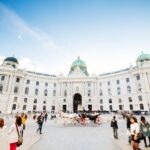
Now you shift into the seat of power: The Hofburg, where the Habsburg court lived for centuries. You’ll learn which parts were tied to major figures like Elisabeth and Maria-Theresa, and you’ll get a sense of how the palace worked for the people and workers who ran daily life.
This is one of the stops that makes Vienna feel like a functioning machine, not a museum display.
9) Sisi Museum
Connected to the Emperor’s Apartments, the Sisi Museum is a dedicated look at Empress Elisabeth. The guide’s storytelling style is part of the appeal here—you’re not just collecting dates; you’re understanding a person and how legend turns into history.
If you’re a fan of royal stories, this stop will likely be a highlight.
10) Heldenplatz
On Heldenplatz—the square of the Heroes—you’ll see the ceremonial setting of the Winter Palace and learn what sits around it, including museum spaces and the scale of court life.
This is a “big space” stop, good for photos and for getting a sense of how grand the city’s political theater was.
11) Volksgarten and the Garden of 1,000 roses
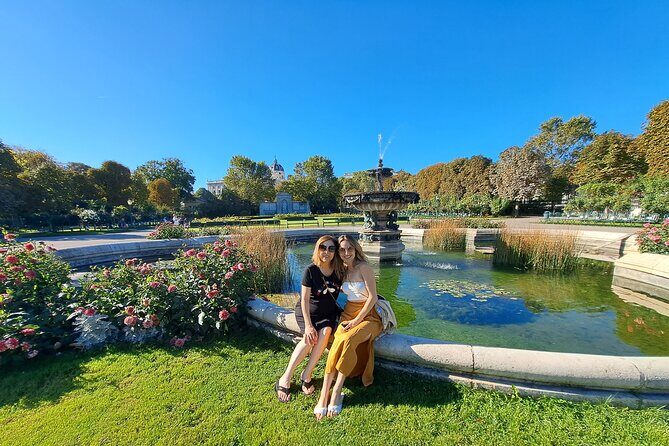
Volksgarten dates from 1821 and is known as the Garden of the 1000 roses. It’s one of those calming breaks where the tour turns from architecture to atmosphere.
You’ll also see a Greek-style temple reminder of the Habsburgs’ interest in Greece—another example of how political tastes shaped public space.
12) Pallas-Athene-Brunnen (fountain before Parliament)
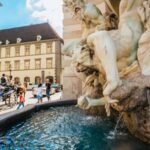
The Pallas-Athene-Brunnen is placed in front of the Austrian Parliament and is considered elegant and beautiful. You’ll learn about what the goddess holds and what it represents, which makes the fountain far more than a quick background photo.
13) Vienna City Hall (Rathaus)
You’ll see the City Hall with its new-Gothic look and hear about events that bring the square to life, including festivals and the largest Christmas market in Vienna.
This stop connects the “grand buildings” to modern city rhythms—useful if you’re planning what to do later in your trip.
14) Burgtheater
Burgtheater, built in the 17th century by Maria Theresa, is a stop for people who like theater and performance culture. It’s also a nice reminder that Vienna’s creativity isn’t just music—it spans drama and public life.
15) Café Landtmann (Freud connection)
You’ll pass Café Landtmann, known as the favorite coffee house of psychologist Sigmund Freud. Even if you don’t order here, the stop gives you a sense of Vienna’s mental and cultural history.
It’s a cue to keep an eye out for “thinking places” as you explore.
16) Beethoven Pasqualatihaus (passing by Beethoven’s residence)
You’ll pass Beethoven Pasqualatihaus, a composer residence turned museum. This is a short stop, but it helps you connect the music-story to real physical addresses in the city.
It’s the kind of detail that makes your later reading click.
17) Schottenkirche
Schottenkirche is a 13th-century church, monastery, and museum area. The guide helps you understand early church presence in Vienna and you’ll admire the look that makes it distinct.
This stop adds variety: it’s not only palace and café, it’s spiritual and architectural.
18) Palais Ferstel (passage and architecture)
At Palais Ferstel, you’ll see a beautiful palace building with coffee shops, restaurants, and shops inside. You can walk through the passage and take in the architecture and fountain.
It’s a good palate cleanser before the tour moves into more café time.
19) Café Central
You’ll pass Café Central, often described as Vienna’s most famous coffee house in a historic palace setting. Even if you only step in briefly or just look around, it’s worth it as a landmark.
It also sets you up for the emotional warmth of the break later.
20) Demel Vienna (Empress Elisabeth’s favorite sweets)
Next is Demel outside the Winter Palace, tied to Empress Elisabeth’s favorite cake shop. You’ll learn why candy and pastries are treated like culture here—and you’ll also see the focus on chocolates, pancakes, and cakes.
If you want a sweet “I’m in Vienna” moment, Demel fits the bill.
21) Spanish Riding School
You’ll talk about the tradition of the Spanish Riding School, including the training and the history of military presence and prestige. This stop is a mix of culture and spectacle, and it helps round out Vienna beyond buildings into living tradition.
22) Augustinerkirche (50 hearts in a chapel)
At Augustinerkirche, you’ll hear about a small chapel containing 50 hearts of emperors and empresses—kept since the 17th century. It’s compact, but it’s an unforgettable detail.
This is the kind of moment that sticks in your memory long after you leave.
23) Albertinaplatz
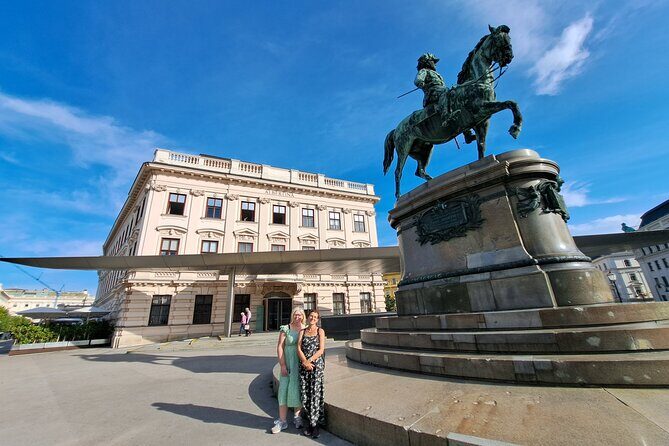
You’ll reach Albertinaplatz, tied to the Albertina museum and also to a memorial for the Jewish community of Vienna. You’ll also see the central tourist information office nearby.
This stop helps you understand Vienna as both grand and reflective.
24) Hotel Sacher (the Sacher cake birthplace)
You’ll finish with a stop tied to Hotel Sacher and the story of the Sacher cake. It’s a fun final “taste of Vienna” idea before the Opera, especially if you plan to try the cake later.
25) Wiener Staatsoper (Vienna State Opera)
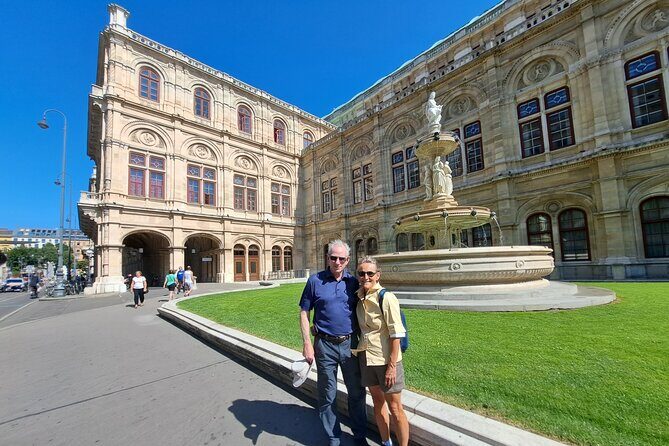
And finally, Vienna State Opera on Ring street. Built in 1869, it’s one of the city’s most recognizable music stages—and it’s the perfect place to end a tour that started with Mozart.
What makes the guide’s style matter here
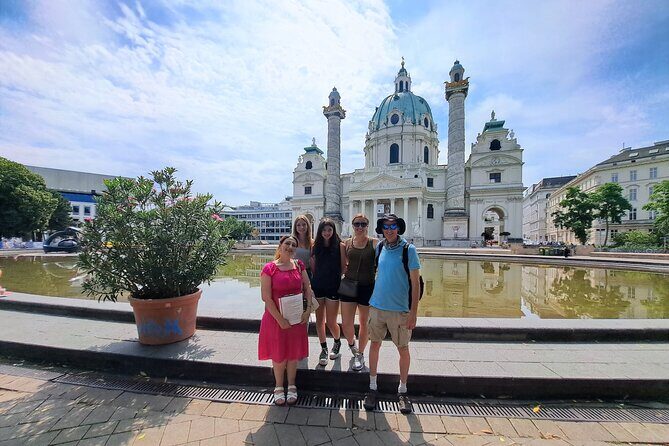
This tour lives or dies on the guide, and the good ones here are clearly comfortable mixing street-level facts with the emotional meaning behind them. You’ll likely get:
- photo help at stops
- local recommendations for what to do next
- a printed info package and city map to carry home
In practice, guides like Nicoletta and Nicola are described as flexible and tuned into different needs, including adjusting timing when someone in the group moves slower. Moritz is mentioned for enthusiasm and pacing that still leaves room for questions. And Reka is noted for making the experience feel personal and inspiring.
That variety matters because Vienna is a city where you can either sprint and forget—or connect the dots and leave with a plan.
Walking comfort: pace, shoes, and why 3 hours feels longer
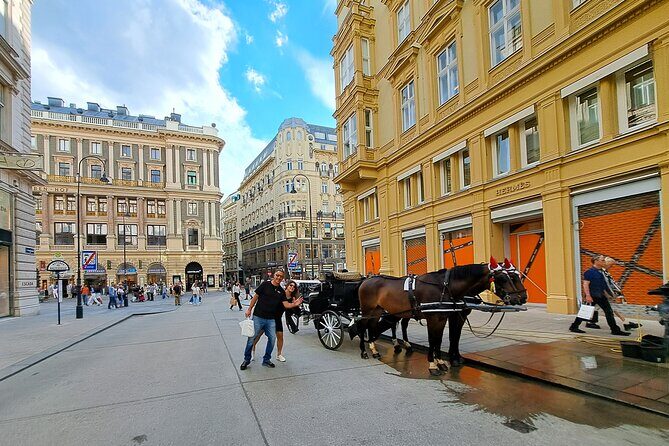
Even though it’s only about three hours, the route is packed. One tour-style description mentions around 5 kilometers of walking, and the itinerary includes enough short stops that you’ll be on your feet for most of the experience.
So plan your body like it’s a mini-city hike:
- wear supportive shoes (cobblestones are real)
- bring water
- expect some standing at busy corners
If you’re traveling with kids or older relatives, the group size cap can help, but you’ll still want to consider how you handle frequent sidewalk stops and traffic-light crossings.
Who should book this tour (and who should pair it with something else)
This is a great match if you:
- are visiting Vienna for the first time
- want a fast, organized overview before branching out
- like café culture and architecture in the same afternoon
- want a guide to point you toward what’s worth deeper attention
You might want to pair it with separate plans if you:
- want a museum-heavy day (because entrance fees are not included)
- crave long explanations at each stop
- don’t enjoy quick photo-and-move-style sightseeing
A good strategy: do this walk early in your trip, then return on your own to the spots that grabbed you most—like the palace areas, the museums you pass, or any church where the guide’s details make you curious.
Should you book Fall in Love with Vienna Tour?
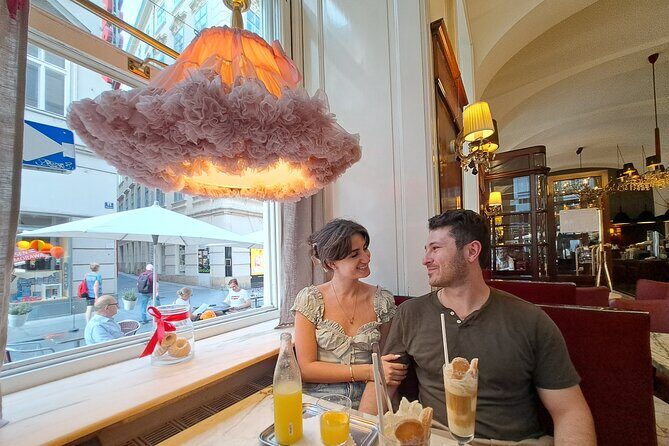
If you want the most “Vienna” per hour, yes, this one makes sense. For about the cost of a couple of museum tickets, you get a structured route through major landmarks, a coffee-house reset, and practical ideas for what to do next.
Book it if you like your sightseeing with context and you want to feel oriented quickly. Skip it (or plan a follow-up) if you expect every stop to be thoroughly explored with paid entries. This tour is designed to introduce Vienna—and then help you choose where to go deeper.
FAQ
How long is the Vienna highlights walking tour?
It lasts about 3 hours.
Is the tour offered in English?
Yes. The tour is offered in English.
Where does the tour start and where does it end?
It starts at Mozarthaus Vienna (Wien Museum Mozart apartment), Domgasse 5, 1010 Wien, and ends at Vienna State Opera (Herbert-von-Karajan-Platz), Ringstrasse area.
Are museum entrance fees included?
No. Entrance fees to museums are not included. Many stops are listed with free admission for the exterior viewing.
Is there a coffee shop stop?
Yes. There is an extra 30-minute break in a traditional Viennese coffee house, and it runs January to November only.
What should I consider for walking comfort?
You’ll want moderate physical fitness. The tour involves walking and short stops, and it’s best with good walking shoes since the route includes uneven cobblestones.