Vienna surprises you in small spaces. This 2-hour private walk is a smart way to see Vienna beyond the main postcards, with lesser-known courtyards and passages that feel like you found them by accident. I also like how the guide brings Mozart’s real-life Vienna to the surface while correcting common false stories you’ll hear elsewhere. One thing to keep in mind: it’s still a central-city walking route, so if you only want the biggest, most obvious monuments, you may wish the stops were more blockbuster.
The Old University Quarter adds serious payoff: you’ll get to see an impressive Baroque church and learn how the area was destroyed in World War II and then rebuilt afterward. I also appreciate the practical side of the tour—your guide shares where to eat and what to drink, from coffeehouses and bars to sausage stalls and ice cream shops. You finish at Schwedenplatz with enough context to keep exploring on your own.
In This Review
- Key highlights to look for on this Vienna route
- Starting at Albertina Square: a quick orientation that pays off later
- Lanes and courtyards near St. Stephen’s without losing your time
- Mozart in Vienna: real connections and myths you’ll stop repeating
- Old University Quarter and its Baroque church after WWII
- Prince Eugene of Savoy’s palace: power, strategy, and a different Vienna
- The Greek Quarter and the Viennese Bermuda Triangle stories
- Food and drink intelligence: coffeehouses, bars, sausage stalls, and ice cream
- Prince Eugene, Mozart, and WWII all in one loop: why the mix makes sense
- Price and group value for a 2-hour private tour
- Logistics that affect your day (and how to plan around them)
- Should you book this Vienna walk?
- FAQ
- How long is the tour?
- Where do I meet the guide?
- Is hotel pickup included?
- What language options are available?
- What is included in the price?
- What should I expect regarding fees, food, and drinks?
Key highlights to look for on this Vienna route
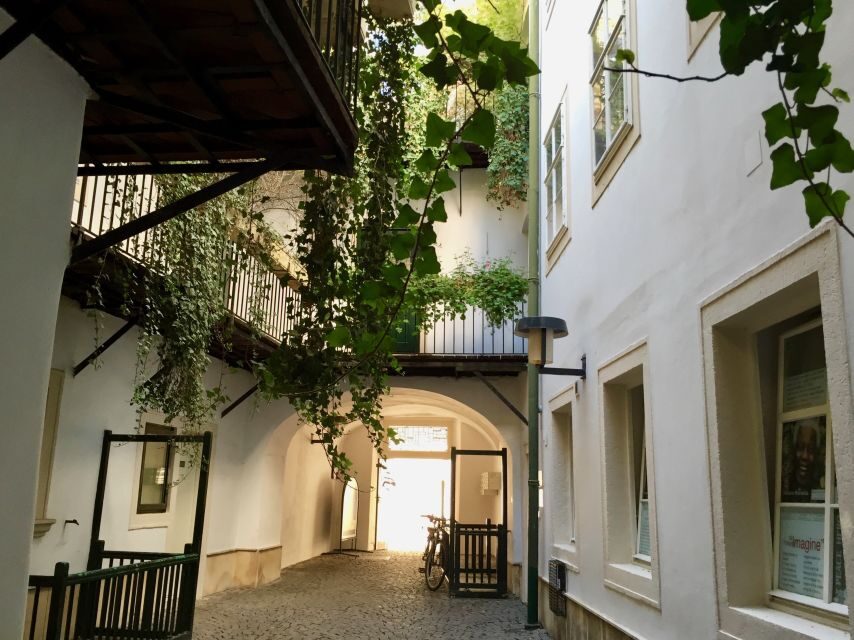
- Courtyards and passageways that help you understand Vienna’s street-life, not just its facades
- Old University Quarter sights plus the WWII destruction and post-war rebuilding story
- Mozart talk that separates real connections from easy myths
- Prince Eugene’s palace view that adds a power-and-empire layer to the city
- Greek Quarter and the Viennese Bermuda Triangle stories for the scandal-and-myth angle
- Food and drink intelligence that points you to places you’d otherwise overlook
Starting at Albertina Square: a quick orientation that pays off later
The tour kicks off at Albertina Square, with the official meeting point in front of the Tourist Information. You start in a place that’s easy to reach and good for getting oriented, which matters because the best part of this experience isn’t one single building—it’s the way the guide links streets, neighborhoods, and stories into one walking narrative.
Right away, you’ll be nudged away from the fastest tourist path. Expect your guide to steer you into narrow lanes, courtyards, and connecting passages—small spaces that change how Vienna feels when you’re not just facing outward at big landmarks. After two hours, you’ll understand the logic of where you are and why certain areas became important.
This is also a tour with a live guide in Polish, English, or German, so you can ask questions as you go. In at least one strongly praised experience, the guide Evelin was highlighted for answering questions clearly and pointing out spots that truly didn’t feel obvious.
You can also read our reviews of more tours and experiences in Vienna.
Lanes and courtyards near St. Stephen’s without losing your time
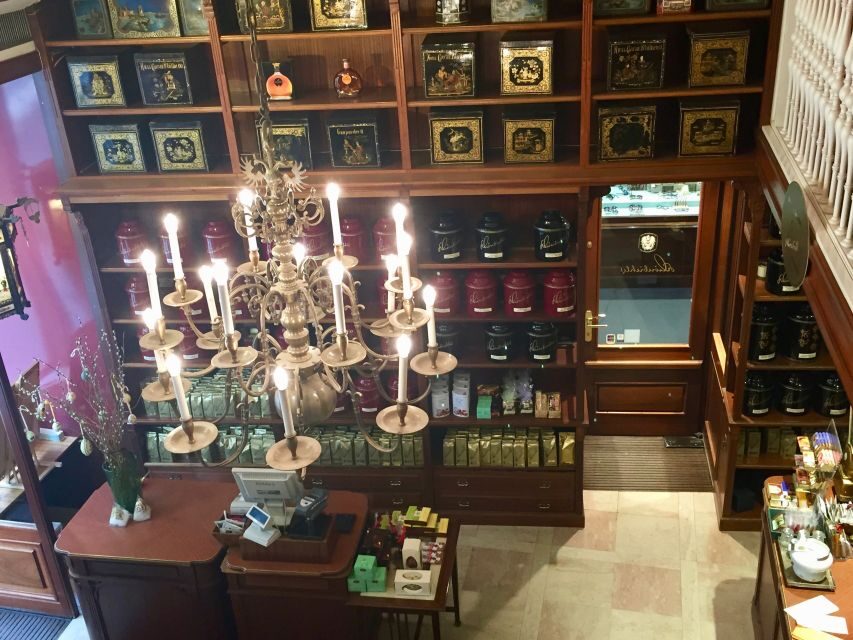
The promise here is simple: see what most visitors miss while still staying in a realistic walking loop. As you move, you’ll encounter the kind of quiet architectural moments Vienna is famous for—courts tucked behind streets, passageways that shorten routes, and small corners that shift the mood from grand to intimate.
This matters more than it sounds. Vienna’s main sights can be impressive but also tiring when you only look forward at street-level views. The courtyards and passages give you contrast, and they help you notice how the city’s design supports everyday life—people walking through, locals cutting across, and buildings shaping the street the way stage sets shape a scene.
A practical note: it’s a walking tour for 2 hours, so wear comfortable shoes. That’s not a generic warning—when a tour leans into lanes and passages, your feet do the work that your eyes will enjoy later.
Mozart in Vienna: real connections and myths you’ll stop repeating
One of the strongest reasons to book is the Mozart thread. The tour doesn’t just name-drop; it frames Mozart’s life in Vienna and includes the kinds of false stories people repeat when they’re not sure where they came from. You’ll hear not only what’s connected to Mozart, but what’s commonly misunderstood.
That myth-busting aspect is more valuable than a long list of dates. It trains you to spot the difference between a compelling story and a story with substance. And once you know what’s questionable, Vienna’s musical aura becomes more than romantic wallpaper—it becomes specific.
You’ll also see how Mozart fits into the broader idea of the city: not a museum figure sealed behind glass, but a person moving through real neighborhoods and social currents. That’s especially satisfying on a tour that starts near central connections and ends at Schwedenplatz, so you can follow up afterward with your own walking.
Old University Quarter and its Baroque church after WWII
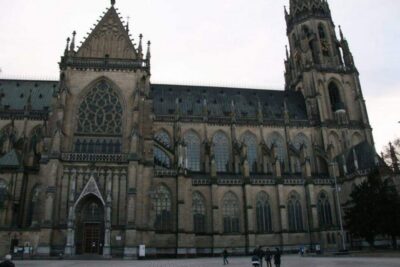
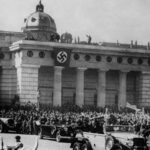
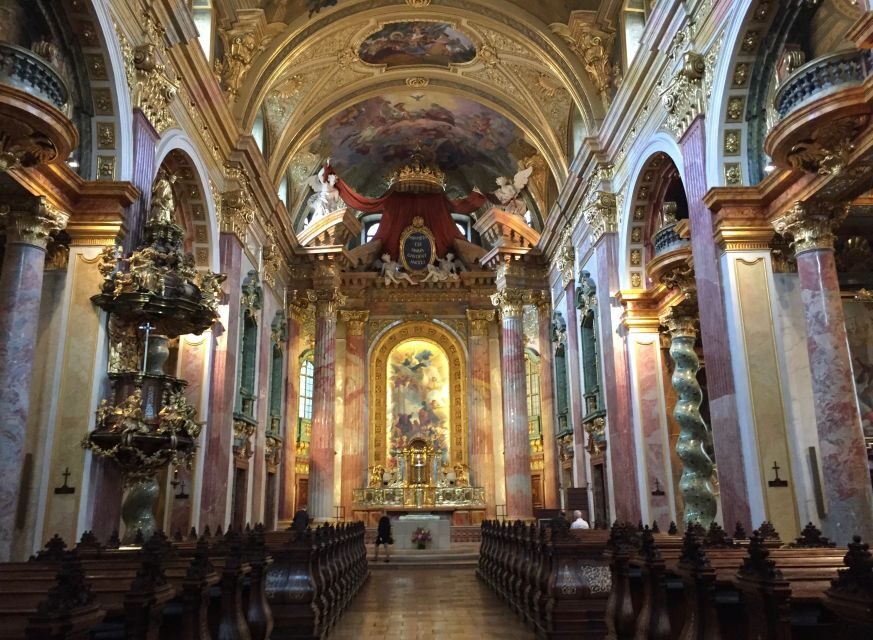
When the route reaches the Old University Quarter, the experience gets heavier—in a good way. You’ll visit the impressive Baroque church tied to the university area and learn what happened to this part of Vienna during World War II, followed by the post-war reconstruction efforts that reshaped it.
This section works because it explains the city as a living thing, not just a preserved object. If you only view buildings as they exist today, you miss the human pressure behind their forms: damage, loss, and later choices about what to restore and how. The tour gives you the story behind those choices in plain language.
You should expect this stop to be more than quick exterior photos. Even in a short 2-hour tour, the WWII and rebuilding part adds context that makes subsequent sightseeing more meaningful. You’ll also walk away with a sense of why this quarter looks the way it does—because it was rebuilt with intention, not left frozen in time.
Prince Eugene of Savoy’s palace: power, strategy, and a different Vienna
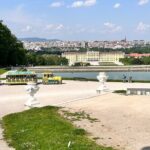
Another standout highlight is Prince Eugene of Savoy. You’ll admire Prince Eugene’s palace, and the point isn’t only architectural beauty. The guide uses him to show a different side of Vienna: the military and political leader whose legacy ties into how the city built and defended its position.
It’s a smart contrast with Mozart. Where Mozart connects to culture and daily life, Prince Eugene connects to command, conflict, and court influence. Together they widen your understanding of Vienna fast—especially if this is your first trip and you don’t yet have the mental map of how all the pieces fit.
Look at the palace as more than a pretty façade. In this tour’s framing, it’s a clue to how authority lived in Vienna: where power gathered, how it announced itself, and how the city’s image was crafted.


The Greek Quarter and the Viennese Bermuda Triangle stories
This part of the tour is where you get the fun factor: the secrets of the Greek Quarter and the “Viennese Bermuda Triangle” angle. You’ll hear stories that mix local identity with legend, myth, and the kind of scandal chatter that makes a city feel like it has a pulse.
Even if you’ve read about Vienna, this sort of storytelling can change how you move through it. It gives you something to look for while you explore later: the cultural fingerprints, the odd reputational twists, and the neighborhood energy that doesn’t show up in standard guidebooks.
A good guide balances the entertaining with the credible. You’ll come away with a sense of what to take with skepticism, what to remember, and what to use as a prompt for your own wandering after the tour ends.
Food and drink intelligence: coffeehouses, bars, sausage stalls, and ice cream
One of the best practical benefits is that you don’t leave guessing what to do with hunger. Your guide shares local tips on where to get the best food and drinks, plus guidance on famous coffeehouses and bars. You’ll also hear about popular sausage stalls and ice cream shops—exactly the kind of recommendations that turn a walk into a mini food mission.
This is a value booster because it can save you time later. Instead of spending your limited energy searching reviews or asking strangers for suggestions, you get an informed short list from someone who knows what’s close, what’s worth it, and what locals gravitate toward.
If you’re traveling with picky eaters or you simply don’t want to decide from scratch at 6:00 pm, this section is a relief. The tour doesn’t include food or drinks, but it makes it easier to choose when the craving hits.
Tip for your next step: write down the guide’s top picks right after the tour. Then, when you’re tired, you won’t have to rely on memory.
Prince Eugene, Mozart, and WWII all in one loop: why the mix makes sense
At first glance, the themes can seem scattered: Mozart, a military leader, a university church, WWII destruction, Greek Quarter stories, and a quirky “Bermuda Triangle.” But the mix is the point. Vienna isn’t one vibe. It’s a stack of layers, and this tour teaches you to read those layers without turning it into homework.
You also get variety within the short time. One moment you’re focused on myth vs. fact. The next, you’re hearing about rebuilding after destruction. Then you’re admiring a palace connected to strategy and empire. That keeps energy up and helps you remember what you’ve learned because each theme lights up a different part of the city.
This is why the route ends at Schwedenplatz. That finish isn’t random—it’s a place that feels like a gateway. From there, you can decide what to follow: more culture, more food, more waterfront strolling, or more neighborhood wandering.
Price and group value for a 2-hour private tour
The price is listed as $353 per group up to 8 for a 2-hour walking tour. For a private guide, that’s the key detail: the cost is for the group, not per person.
Here’s the practical value math:
- If you’re booking for 2 people, you’re paying $353 total, so it’s about $176.50 per person.
- If you can fill it closer to the max (8 people), it drops to about $44.10 per person.
So this tour tends to be best value when you’re traveling with friends or family and can split the cost. If you’re solo or a couple without flexibility, it can still be worth it if you value a guided route that’s tailored and not just a standard highlights shuffle. The “private group” format also makes it easier to ask questions, which several praised experiences specifically pointed out.
One more note on what’s not included: entrance fees and food/drinks aren’t part of the price. That’s normal for a short walking tour, but it means you should budget a little extra if you plan to go inside any sights or grab a meal afterward.
Logistics that affect your day (and how to plan around them)
Hotel pickup is included for the private option if you select it, but the meeting point is in front of the Tourist Information. That usually works out best if you’re nearby at the start time anyway, because you want minimal stress before a city walk.
The biggest “day-of” consideration is the walking itself. Two hours isn’t long, but the tour intentionally includes lanes and passages, which means you’ll want shoes that don’t punish you. If you’re planning other activities the same day—especially standing or museum time—keep the walking comfort in mind.
Also, one caution from past experiences: there was at least one reported case where the guide didn’t show up at the agreed meeting point. That’s not something I’d expect routinely, but it does underline a simple best practice—arrive a little early and keep your confirmation details handy. If something feels off, address it quickly.
Should you book this Vienna walk?
I’d book it if you want Vienna to feel personal and specific in a short time. This tour is especially strong for:
- first-time visitors who want context and a mental map,
- travelers who like story-based guiding (Mozart myths, WWII rebuilding, Prince Eugene),
- small groups who can split the private guide cost,
- anyone who cares about food ideas beyond famous museum shop snacks.
I wouldn’t prioritize it if your ideal day is mostly major-ticket monuments with minimal walking into smaller corners. The route focuses on smaller spaces and story threads, so you’ll enjoy it most if you’re willing to slow down a bit and look for the quieter details.
FAQ
How long is the tour?
It lasts 2 hours and is a walking tour.
Where do I meet the guide?
Meet in front of the Tourist Information.
Is hotel pickup included?
Hotel pickup is included if you choose the private option. Hotel drop-off is not included.
What language options are available?
The live guide is available in Polish, English, and German.
What is included in the price?
The tour includes the 2-hour walking experience, and hotel pickup if the private option is selected.
What should I expect regarding fees, food, and drinks?
Entrance fees, food, and drinks are not included.