REVIEW · VIENNA
Vienna: Tour RAXI (electric rickshaw) 3 hours in Vienna
Book on GetYourGuide →Operated by Guide from Vienna - RAXI Tours · Bookable on GetYourGuide
A rickshaw tour, minus the sweat. With Nicole’s RAXI electric pedicab, you glide past Vienna’s Danube Canal and Prater with front-row sightlines and an itinerary built around architecture and history. The trade-off is simple: it’s limited to two adults, and it isn’t suitable for wheelchair users.
Pickup is designed to feel easy, with meeting points at Michaelerplatz, Café Landtmann, Reichsbrücke, Praterstern, or Herrengasse. Nicole brings headsets so you catch every explanation clearly, and she adds a battery-powered heated blanket when the air turns cold.
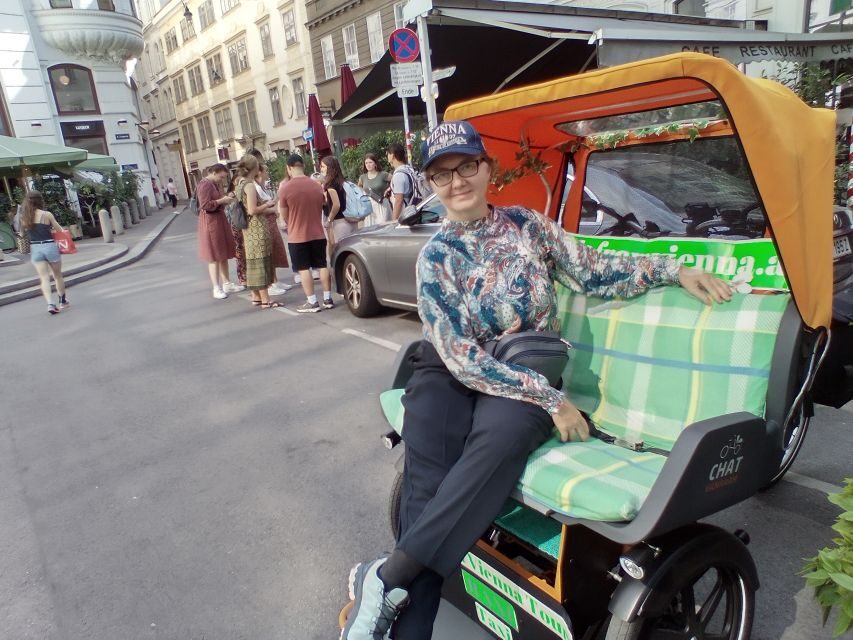
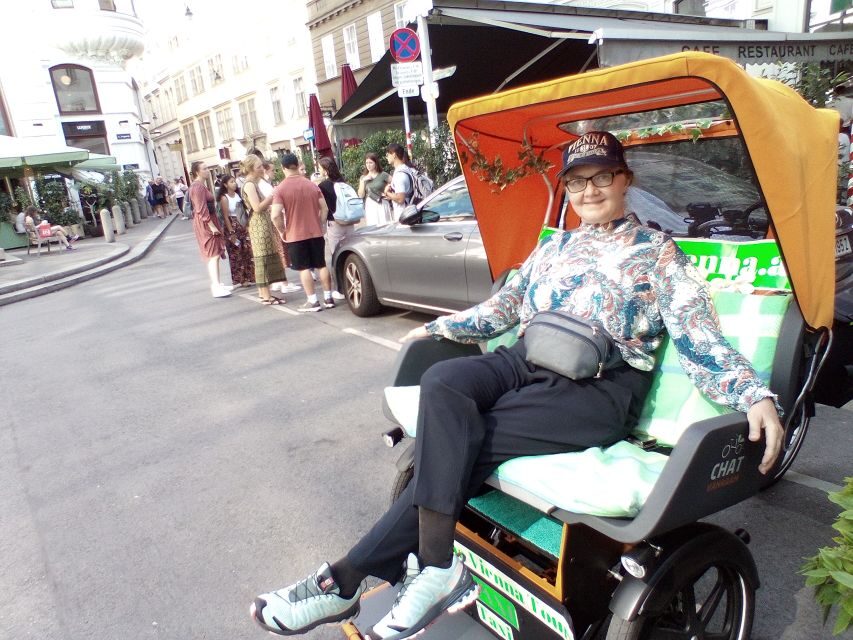
Once you’re seated, the comfort details do the work: a retractable footplate for easier entry, shock absorbers for a smoother ride, and the engine tucked under the seats so you don’t feel heat radiating at you. You’ll spend your time choosing what matters most, with stops that can include an old Gothic residential tower and the Hundertwasserhaus.
In This Review
- Quick highlights you’ll actually use
- Why a Vienna electric rickshaw works so well (especially if you want more than photos)
- Comfort and sightlines: the RAXI details that change your whole ride
- The Historic Center vibe: architecture moments you can’t reach fast on foot
- Prater: classic Vienna energy, reached without the slog
- Old Danube and Donau Park: the calm side of Vienna you get to reach quickly
- Danube Canal: modern-meets-old views that photography can’t capture alone
- Hundertwasserhaus: why this building changes how you see “ecological” in Europe
- Pickup zones, drop-off flexibility, and how the 3 hours add up
- Price: $182 per group up to 2, and where the value actually comes from
- Weather plan: what happens when the city turns icy, windy, or rainy
- Who this tour suits best (and who should choose something else)
- Should you book Nicole’s RAXI tour?
- FAQ
- How long is the Vienna RAXI electric rickshaw tour?
- Is this a private tour?
- How many people can ride the RAXI?
- Where can I meet the guide for pickup?
- Where can the tour end (drop-off)?
- What’s included in the price?
- What languages are offered?
- What should I bring for cold or wet weather?
- What happens if the weather makes the RAXI tour impossible?
- Is luggage allowed?
- Can I record the tour explanations?
Quick highlights you’ll actually use
- Two-person RAXI comfort with shock absorbers, canopy shade, and easy entry
- Front-row views that help you see and photograph without ducking traffic
- Danube-side time without leg burn across Old Danube, Donau Park, and the Danube Canal
- Hundertwasserhaus for the first-ecological-building story in Europe
- Cold-weather support: heated blanket plus a waterproof picnic blanket
- Weather backup plan that switches to public transport if RAXI can’t run
Why a Vienna electric rickshaw works so well (especially if you want more than photos)
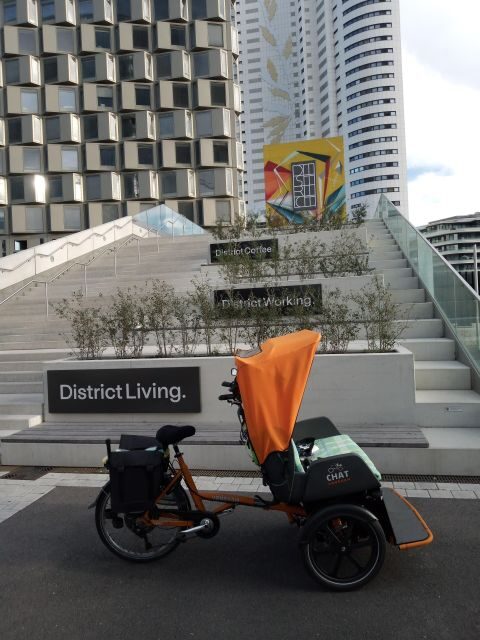
Vienna can be a lot on foot. This tour is built for seeing big areas of the city comfortably, without the slow fatigue that comes from crisscrossing streets and stopping every few blocks.
I like the logic here: the RAXI is still a bike, so it goes where two-wheeled routes work best. That’s how you get a calmer pace and more “city feel,” instead of bouncing between landmarks on and off taxis.
The experience also stays flexible. If your focus is architecture, history, or a specific building you’ve circled on your map, Nicole can shape the route around your interests.
And yes, this is a private group. That matters because you’re not sharing headphones with a crowd, and you can ask follow-up questions as you move.
A few more Vienna tours and experiences worth a look


Comfort and sightlines: the RAXI details that change your whole ride
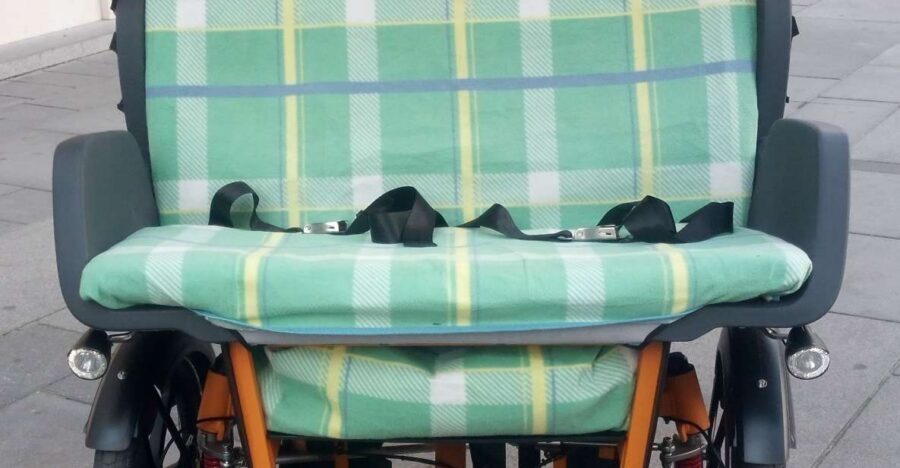
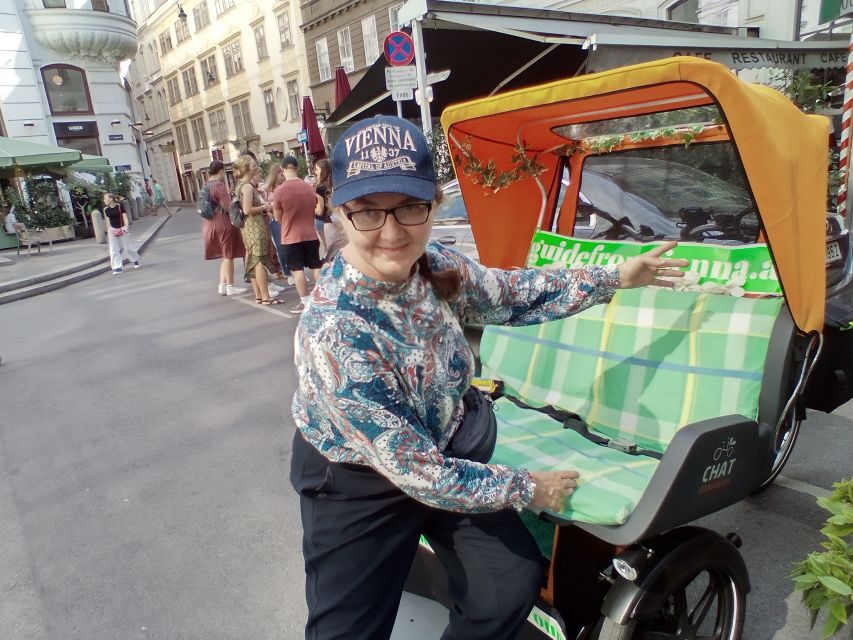
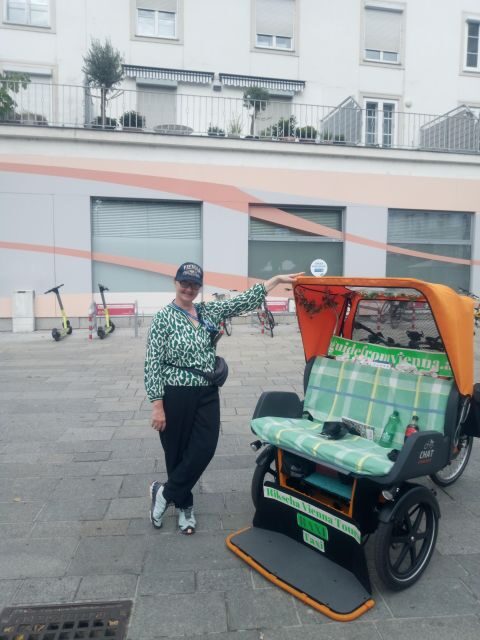
The RAXI setup is what makes this tour feel effortless. You’re not stuck behind someone’s shoulder line, and the seating configuration helps you keep a wide view of streets and buildings as you roll along.
The bike is designed for two adult comfort, and it’s maintained regularly in workshops. Nicole keeps it in excellent condition, but the key point is you’re not in a car. You’re in an open-air style ride, so that affects what you should wear (more on weather later).
A few practical comfort features are worth knowing before you go:
- Shock absorbers help on uneven surfaces and keep the ride steadier.
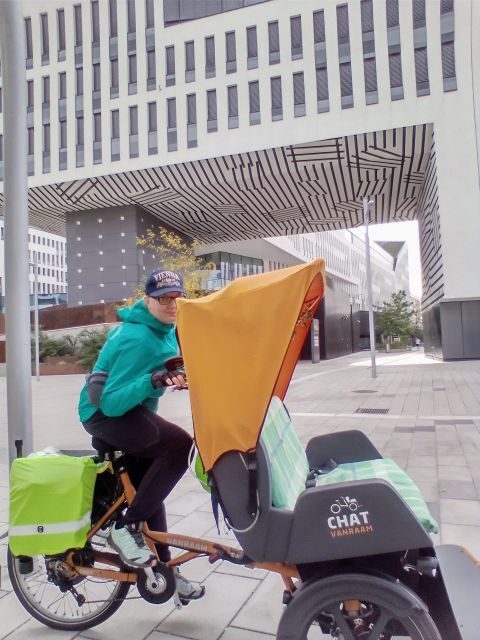
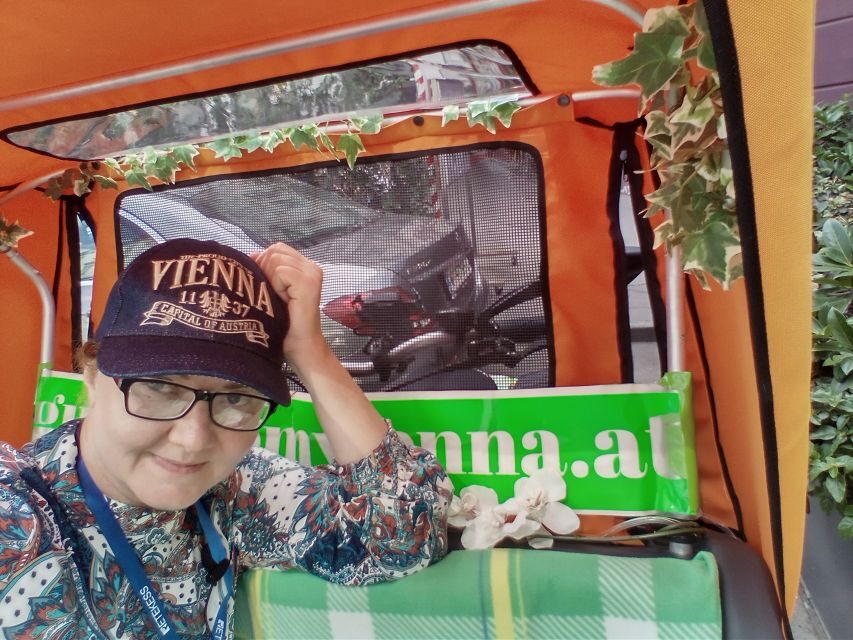
- The orange canopy gives some shade and light protection.
- The retractable footplate makes getting in and out easier than you’d expect.
- The engine is under the seats, so you don’t get hot air radiating toward you.
- If you bring walking sticks or hiking sticks, there’s a special frame for transporting them.
Nicole also uses headsets for clear audio. That sounds small until you’re in a quieter side street or a park edge and you realize you can hear every detail without leaning in.
Finally, there’s comfort gear for bad timing and cold air. You get a warm battery-powered heated blanket for two and a large waterproof picnic blanket if it’s windy or rainy.
The Historic Center vibe: architecture moments you can’t reach fast on foot
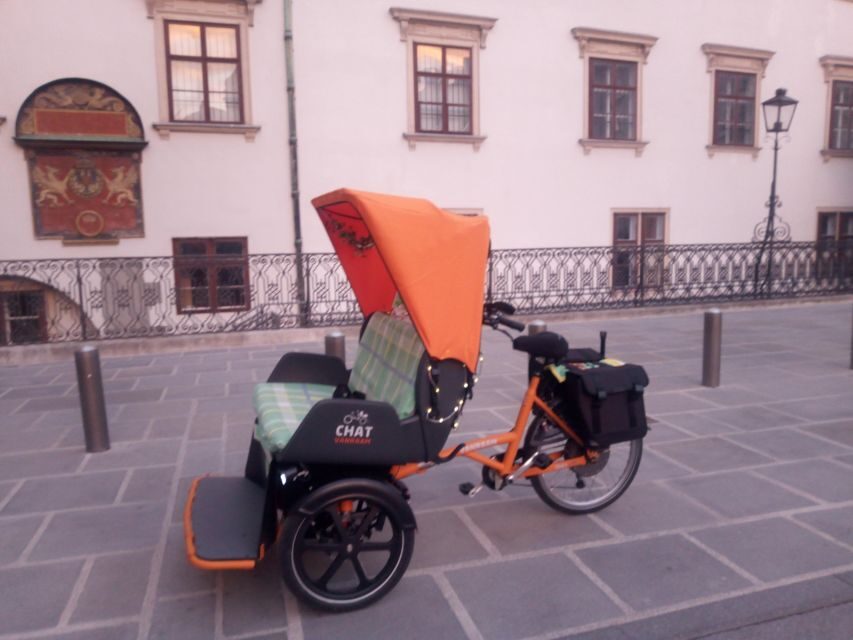
Your tour typically starts with a quick safety briefing, then you move into Vienna’s historic core. This is the part where the city starts stacking layers: older forms, newer buildings, and the way neighborhoods transition as you glide through.
One stop to watch for is the Gothic residential tower. It’s described as the oldest Gothic residential tower in Vienna, and that’s exactly the kind of detail that rewards having a guide. You don’t just see it. You learn what makes it different and why it matters in the city’s architectural story.
You’ll also get that “imperial-era” feel as the ride connects you to parks and green corridors near the old power center. The point isn’t to rush through famous squares. It’s to understand how the city layouts support prestige, movement, and public space.
The walking-optional advantage is real here. Even if you’re visiting in a colder month, you can still cover a lot of ground without your legs doing the heavy work.
Possible consideration: you’re viewing Vienna from seated height while moving. That’s great for wide context, but if you’re the type who wants long museum-style reading time at each curbside stop, you may wish for a bit more stop-and-stare time than a 3-hour format allows.
Prater: classic Vienna energy, reached without the slog
Prater is one of those places that feels instantly Vienna. You get the classic mix of open space and city identity, and you also get a change in pace from the historic center.
In a short tour window, Prater works well because it provides variety. You can look outward, take in the park atmosphere, and still catch architectural clues from nearby streets.
Nicole’s approach helps here: the route can be personalized, so if you want more emphasis on architecture lines, she can steer the ride accordingly. If your interest leans more toward history and how Vienna grew into these areas, she’ll frame the sights to match.
And because this is a ride instead of a hike, you can spend your energy on noticing. You’ll look at details—rooflines, facades, and the contrast between modern and very old architecture—without paying for it with sore feet.
Old Danube and Donau Park: the calm side of Vienna you get to reach quickly
The Danube corridor is where Vienna feels wide and slow. This tour brings you to areas like the Old Danube and Donau Park, which is a nice shift after tighter streets.
The value of stopping here is not just scenery. It’s perspective. Vienna isn’t only palaces and churches; it’s also green public space shaped by the river and the way the city uses it.
Old Danube and Donau Park give you a chance to see the city’s relationship with water and parks—without committing to a long trek. For anyone who wants fresh air but doesn’t want to burn half a day walking, this is a smart pairing.
You’ll also get short guided moments so the places don’t feel like random scenery. Nicole can explain what you’re looking at and connect it back to Vienna’s bigger story.



Danube Canal: modern-meets-old views that photography can’t capture alone
The Danube Canal segment is one of the most fun parts of the ride because it blends different eras in view. You can spot modern structures while still reading the older rhythm of the city through the waterways and their surrounding paths.
A practical benefit: the canal area often offers straightforward routes for two-wheeled travel. That makes it easier to keep the tour moving while still getting real sight windows.
This is also where the guided explanations matter most. Buildings along water edges can look “pretty” on a screen, but the meaning comes from hearing why each area developed when it did and how it fits Vienna’s layout.
And since you’re in an electric pedicab, you avoid that tricky travel trade-off of either rushing past or stopping too long. You get a balanced pace.
Hundertwasserhaus: why this building changes how you see “ecological” in Europe
Then comes Hundertwasserhaus, a stop that’s specifically highlighted as the first ecological building in Europe. Even if you’ve seen photos before, seeing it in person can hit differently because the design is meant to be lived with, not just photographed.
You’ll get a guided explanation that frames why the building is important in the broader European conversation about ecological design and architecture.
What I like about including Hundertwasserhaus at the end of a Danube-and-park sequence is that it shifts the theme. You’ve moved through the city’s river logic and public-space feel, then you land on an architecture statement that turns design philosophy into walls, windows, and shapes you can literally point at.
If you care about modern architecture and want a stop that feels both playful and meaningful, this is the one to prioritize. If you don’t, you’ll still find it memorable because it’s so visually specific.
Pickup zones, drop-off flexibility, and how the 3 hours add up
This is a 3-hour private tour, and it runs on real urban logistics. Your pickup can happen at several metro-friendly or easy-to-find spots: Herrengasse (near the metro and Vapiano Pizza), Reichsbrücke, Café Landtmann, Michaelerplatz, and Praterstern. If you’re staying in a hotel, pickup may be possible if you choose the closest option and coordinate by email.
One useful detail: hotel pickup and drop-off can depend on constructions and bike ways. So if your hotel is tucked into an area with access restrictions, Nicole will help you align with the nearest practical meeting point.
The drop-off options are similarly flexible, which can help you finish near where you want to wander next. Common drop-off points include Reichsbrücke, Herrengasse, Praterstern, Michaelerplatz, and Café Landtmann.
Two people per RAXI is part of the design, not a side note. The combined weight limit is 180 kg, and it’s important for comfort and safety. If you’re traveling with a small group of four, you’ll need to book accordingly.
And one more “real world” note: there’s no room for luggage or large bags. Plan to travel light so you’re not dealing with storage while you’re trying to enjoy the ride.
Price: $182 per group up to 2, and where the value actually comes from
At $182 per group for up to two adults, this isn’t the cheapest way to see Vienna. But it doesn’t try to be. The value comes from combining four things that are usually separate and expensive when you piece them together:
- Private guiding with headsets (you’re not competing with a crowd for answers).
- Door-to-meeting-point pickup and drop-off, with multiple options across the city.
- Comfort gear for cold and wet weather, including a battery-powered heated blanket.
- A route that reaches multiple zones (historic center, Prater, and the Danube corridor) without making you pay for it in walking time.
If you’re traveling as a couple, or you’re two friends who want a custom route, this pricing starts to make more sense. You’re effectively buying time and comfort, not just transportation.
If you’re visiting for a short layover, this kind of “cover key areas” approach can be a good deal. Three hours is short, but the route structure is designed to hit major themes rather than just sampling one neighborhood.
My practical takeaway: if you’ll regret long walking, or you want a guide to connect the dots between Gothic architecture and ecological design, this price is easier to justify.
Weather plan: what happens when the city turns icy, windy, or rainy
RAXI rides run within specific weather limits. The tour can operate between +2°C (as long as roads aren’t slippery) and 30°C, with a maximum wind of 50 km/h. Very light rain or snow is allowed, and a rain cover is available.
Light rain protection is built in, but this is still an outdoor ride. Even in warmer months, the air and wind near parks and waterways can feel cooler than you expect. One smart move is packing layers rather than relying on a single outfit.
If weather makes the RAXI tour impossible, Nicole can do almost the same route using public transport. In that case, you’ll also have to walk some. Your pickup from your meeting point or hotel remains free, and Nicole sends a message 48 hours in advance if RAXI can’t run and public transport is the alternative.
Also note: the guide can’t allow recording of explanations due to copyright rules. Bring a phone for photos, but don’t record audio.
Who this tour suits best (and who should choose something else)
This experience is a strong fit if:
- You want to see multiple Vienna areas in a short time window.
- You prefer minimal walking but still want real guidance, not just a drive past landmarks.
- You’re interested in architecture and want specifics, not generic big-name stops.
- You’re traveling as a couple or small private group of two.
It may be a poor fit if:
- You’re using a wheelchair. The tour isn’t suitable for wheelchair users.
- You’re carrying luggage or large bags (these aren’t allowed).
- You’re expecting a car-like experience in any weather. This is a bike-based system, and conditions matter.
If you want comfort plus city views, this hits the sweet spot.
Should you book Nicole’s RAXI tour?
Book it if you want a relaxed, guide-led Vienna loop that connects the Danube Canal, Prater, park areas, and a standout architectural stop like Hundertwasserhaus—without turning your day into a long walking test.
Skip it if you need wheelchair access, you’re carrying bulky luggage, or you’re traveling with more than two people who can’t fit the RAXI’s two-adult setup and 180 kg combined limit.
If you’re on the fence, my advice is simple: choose this when you value comfort, clear storytelling through headsets, and front-row sightlines. That’s where the experience really earns its keep.
FAQ
How long is the Vienna RAXI electric rickshaw tour?
The tour lasts 3 hours.
Is this a private tour?
Yes. It’s a private group experience.
How many people can ride the RAXI?
The RAXI is designed for two adult riders, with a combined weight limit of 180 kg.
Where can I meet the guide for pickup?
You can meet at Herrengasse (near the metro station and Vapiano Pizza), Reichsbrücke, in front of Café Landtmann, at Michaelerplatz, at Praterstern (in front of the dinner gondel on the bike way), or your hotel if pickup is possible.
Where can the tour end (drop-off)?
Drop-off options include Reichsbrücke, Herrengasse, Praterstern, Michaelerplatz, and Café Landtmann.
What’s included in the price?
Included are hotel pickup and drop-off (depending on constructions and bike ways), headsets, a map of Vienna, your individual route, a warm battery-powered heated blanket for two people, and a large waterproof picnic blanket for windy or rainy weather.
What languages are offered?
The live tour guide offers German and English.
What should I bring for cold or wet weather?
You’ll receive a heated blanket and a waterproof picnic blanket, but it’s still wise to dress in layers because conditions near parks and the Danube can feel cool.
What happens if the weather makes the RAXI tour impossible?
Nicole can do almost the same tour using public transport, but you will have to walk as well. Pickup from your meeting point or hotel stays free, and you’ll get a message 48 hours in advance. You can cancel free of charge if you don’t want the public-transport option.
Is luggage allowed?
No. Luggage or large bags are not allowed.
Can I record the tour explanations?
No. Any recording of the explanations is strictly prohibited by copyright.