REVIEW · VIENNA
Belvedere Palace & Museum Tour
Book on GetYourGuide →Operated by insightcities.com · Bookable on GetYourGuide
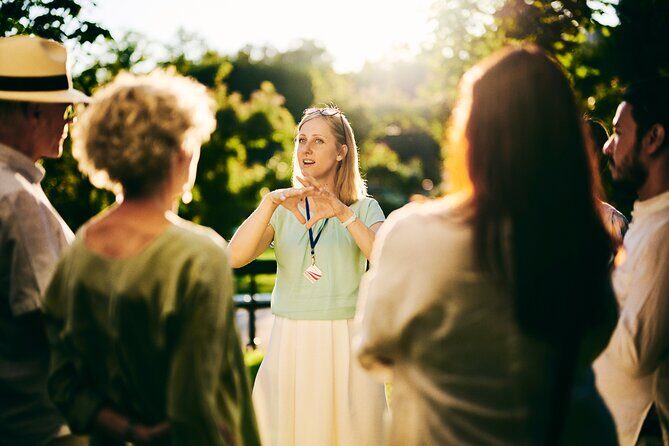
Baroque palaces reward a good guide. I like that this tour is led by an art historian and turns big-name paintings into clear stories, with Klimt’s The Kiss often highlighted. Guides such as Brianna and Peter are specifically noted for being engaging and interactive, so you won’t feel like you’re just standing and reading labels.
One thing to plan for: entrance tickets aren’t included, and the meeting point is the ticket office entrance (not the palace entrance you expect). If you’re even a little rushed, that extra logistics step can cost you a few minutes.
In This Review
- Key things to know before you go
- Belvedere Palace in 150 Minutes: what this tour really covers
- Meeting the guide at Belvedere’s ticket office entrance (not the main palace door)
- Upper Belvedere: the Baroque architecture moment you can’t skip
- Austrian Gallery Belvedere: where the stories behind the paintings start clicking
- Lower Belvedere: the second half that makes the visit feel complete
- The real value: an art historian guide who makes hard things easy
- Tickets and total cost: what you’re paying for
- Logistics that matter: ticket office timing and confirmation problems
- The Vienna focus (and a quick note on the mixed description you might see)
- Who should book this Belvedere Palace & Museum Tour
- Should you book? My call
- FAQ
- FAQ
- How long is the Belvedere Palace & Museum Tour?
- What’s included in the price?
- Are museum entrance tickets included?
- Is the tour offered in English?
- Do I skip the ticket line?
- Where do I meet the guide?
- Is pickup available?
- Is the group private or small group?
- How does the guide help with tickets to avoid waiting?
- Can I cancel and get a full refund?
Key things to know before you go
- Art historian guide in English: you get context, symbolism, and technique, not just dates on the wall
- Upper + Lower Belvedere in one flow: you see more of the palace-museum combo than most quick visits
- Skip-the-line entry (but not museum tickets): your guide helps you get in faster
- Klimt-focused moments: the tour often spotlights The Kiss and what makes it tick
- A clear start at the ticket office entrance: it’s on the right side as you enter the garden from Prinz Eugen Street
- Private or small groups available: easier pace and more questions
Belvedere Palace in 150 Minutes: what this tour really covers
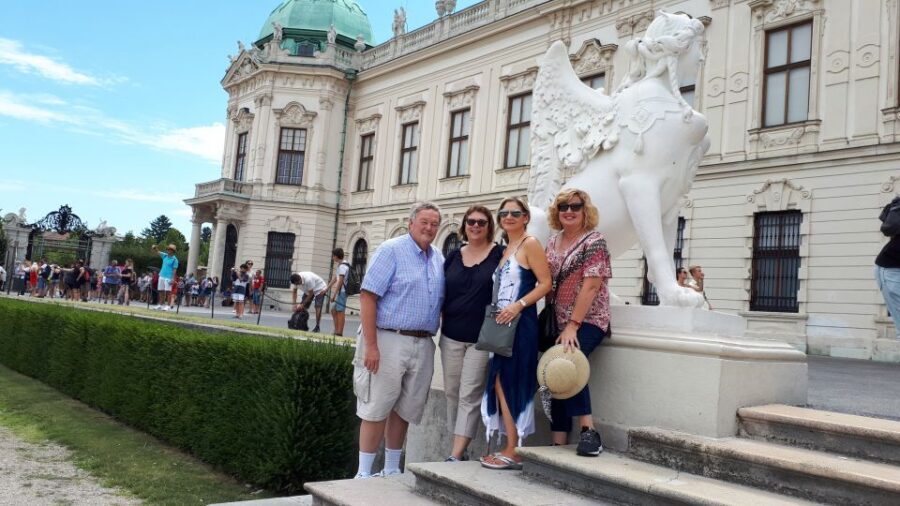
This is a 2.5-hour guided visit to one of Vienna’s most important palace complexes, with time built in for interpretation. You’ll go through Upper Belvedere and Lower Belvedere, then finish back at Belvedere Palace, so you’re not hopping across town or stuck in only one wing.
For first-timers, I like the compact structure. Instead of trying to figure out the museum alone (and missing key sightlines and themes), you get an art historian guiding the route and explaining why each room matters. It also helps that the format is designed for actual looking, not just walking through.
And if you’re coming for one or two “must-see” works, this kind of guided pace can be a big upgrade. When a guide points out symbolism and technique—something noted in strong comments from guides like Brianna and Peter—you start seeing details that you normally would pass by.
You can also read our reviews of more museum experiences in Vienna

Meeting the guide at Belvedere’s ticket office entrance (not the main palace door)
This tour is a classic case of: arrive early, and don’t rely on the first entrance you spot. Your meeting point is the Palace ticket office entrance, and it’s not the same place as the main palace entrance.
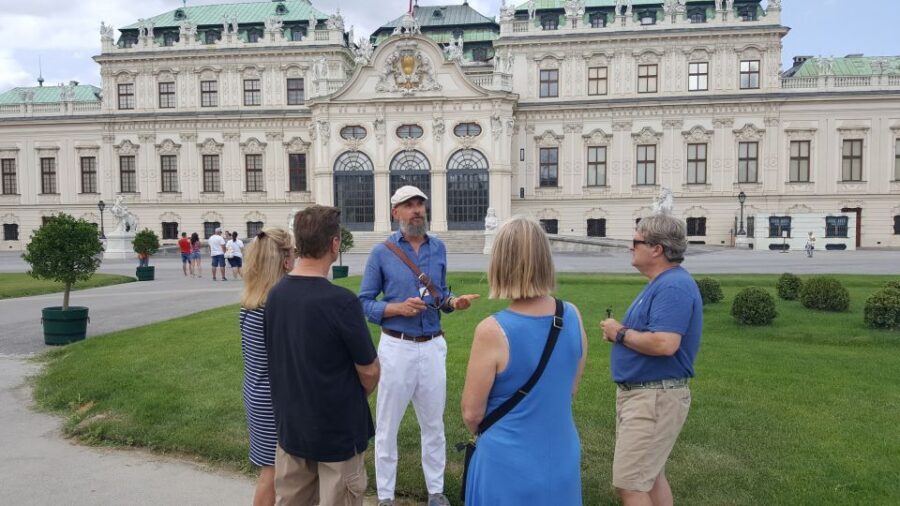
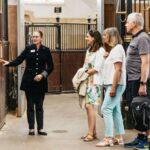
Here’s the simple version: when you enter the gardens from Prinz Eugen Street, look for the ticket office entrance on the right-hand side. That’s where you should go to connect with your guide.
If you selected pickup, you’ll meet your guide in your hotel lobby or at the door of your holiday flat, then follow them by public transport to Belvedere. (That optional pickup is handy if you don’t want to navigate the area on arrival day.)
If you get to the wrong door, it’s not the end of the world—but the tour timing is tight enough that I’d rather you avoid the mismatch.
Upper Belvedere: the Baroque architecture moment you can’t skip
You start with a guided tour in Upper Belvedere, and this is where the palace starts doing its job. In many museums, the building is just the container. Here, the palace is part of the storytelling.
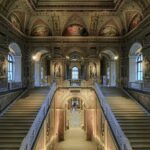
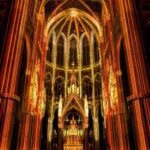
As you move through Upper Belvedere, pay attention to the way Baroque design creates visual momentum. Long sightlines pull you forward; staircases and axis views make you feel the building’s confidence. You’re not only looking at art—you’re learning how the whole complex was designed to impress.
One practical note: Upper Belvedere can feel busy when crowds move in waves. If you’re the type who gets frustrated when you’re constantly squeezed, take a steady pace with your guide. In a guided group, you’ll usually have a rhythm that prevents you from feeling lost.
This stop is especially good if you like the “why” behind the experience. A good guide helps you connect architecture to the mood that the paintings are meant to carry.
Austrian Gallery Belvedere: where the stories behind the paintings start clicking
Next comes the Austrian Gallery Belvedere, and this is the part where the tour earns its ticket value. The Austrian collection format is great for seeing how art sits inside a national conversation—how styles shift, how artists learn from each other, and how major works become cultural anchors.
Most importantly, your guide doesn’t just point at famous paintings. With art historian commentary, you get details that make looking easier. In particular, strong feedback highlights how guides explain Klimt’s The Kiss in a way that’s accessible—covering things like symbolism, technique, and the work’s historical context.
That matters because The Kiss is one of those paintings people think they already understand from postcards. But when someone shows you what to notice, you end up seeing new layers. You notice pattern work differently. You notice how the painting’s materials and surfaces contribute to its feel. You notice why the imagery hit the world the way it did.
If you’re not a lifelong art fan, don’t worry. An effective guide turns art appreciation into a simple set of habits: look for composition, look for meaning, and ask what changed over time.
If you are an art person, you’ll probably enjoy it too—because the guide’s explanations can sharpen what you’re already drawn to.
Lower Belvedere: the second half that makes the visit feel complete
Then you shift to Lower Belvedere for another guided segment. This stop often works like the follow-up chapter. Upper Belvedere helps you understand the palace setting and the big themes; Lower Belvedere tends to make the museum side feel more grounded and complete.
Use this time to slow down a touch. In a guided tour you can accidentally rush through because you trust the route. Lower Belvedere is where you can rebalance: spend a little longer on the works your guide highlights, and don’t feel bad about pausing.
The Lower Belvedere experience is also where you can compare art presentation. Even if the works are similar in fame, the room context can change how they land. Your guide’s narration helps connect those dots so the palace-museum combo doesn’t feel like two separate visits stapled together.
A small drawback: if you’re the type who hates crowds, the second half can sometimes be as busy as the first, depending on arrival times. Your best move is simple—stay with your guide and keep your eyes on where the group is headed.


The real value: an art historian guide who makes hard things easy
I love tours where the guide has a teaching style that fits real people. This one is explicitly led by an art historian, and the results show in the way guidance is described: interactive, approachable, and built to help you connect art to context.
Two specific guide strengths come up in comments tied to Brianna and Peter. First, they’re praised for deep knowledge of art history. Second—and this is what makes the experience work for non-experts—they make that knowledge feel usable, not like a lecture.
That’s the difference between seeing a museum and understanding it. Without context, you might leave with a list of names. With context, you leave with a way of seeing: what to look for, how to interpret choices, and how to notice the details you’d normally miss.
Also, the tour’s pace (about 150 minutes) is a sweet spot. Long enough to feel like you learned something, short enough that you’re not trapped in fatigue when the day’s next stop calls.
Tickets and total cost: what you’re paying for
This tour lists a price of $176 per person, and entrance tickets are not included. Adults are listed at 22.50 EUR for tickets, which you’ll pay separately.
Is it good value? In my view, yes—if you care about more than just pass-through sightseeing. You’re buying a timed guided experience with an art historian plus skip-the-ticket-line service. In practice, that saves time and reduces friction, especially if you’re traveling during peak season.
But if you’re on a strict budget and you’re happy to roam with a self-guided plan, you might question the cost. In that case, you could still enjoy Belvedere—but you’ll have to do more reading and figuring out on your own.
My practical advice: treat the paid tour as the guide-to-meaning upgrade, not just an access ticket. If you like being led through art with explanation, you’ll feel the value.
Logistics that matter: ticket office timing and confirmation problems
Belvedere can be a little tricky the first time, because “palace entrance” and “ticket office entrance” are not the same thing. Go to the ticket office side you can spot on the right as you enter the gardens from Prinz Eugen Street.
There’s also a small reality check: one past booking experience described difficulty because the booking didn’t register in the system properly, making it harder to find the guide. That’s not something you can control, but you can reduce risk.
Do this: bring your confirmation email, and arrive with enough buffer time to talk to staff if needed. If your guide is difficult to locate, a little patience beats rushing.
Good news for your museum entry process: your guide can help you purchase tickets at the start of the walk, or a separate invoice approach can be used so the guide can prepay and you avoid waiting in long lines. Either way, it’s designed to keep your time spent in the palace, not stuck at the counter.
The Vienna focus (and a quick note on the mixed description you might see)
You should expect a Vienna palace and museum experience centered on Upper and Lower Belvedere. The tour information you’re given may also mention a Berlin gallery-magnet idea and famous gallery names, but the actual structure you’ll follow is clearly tied to Belvedere Palace.
So if you’re booking with very specific expectations about a Berlin-style gallery walk, it’s smart to confirm with the provider before you go. For most people, though, the palace-first format is exactly what you’ll want: structured art time in Vienna with a guide who explains what you’re seeing.
Who should book this Belvedere Palace & Museum Tour
You’ll likely love it if:
- You want a guided route that covers both Upper and Lower Belvedere without you having to plan every room
- You enjoy art-history context and want help noticing details
- You’re coming for Klimt and want more than the postcard version of The Kiss
- You prefer small-group or private pacing so you can ask questions
You might skip it if:
- You only want a self-paced walk with zero guidance
- You dislike guided groups or you prefer full control of timing
- You’re extremely price sensitive and would rather spend money on extra time in the galleries on your own
Should you book? My call
I’d book this if you want Belvedere to feel understandable, not just impressive. The combination of art historian commentary, a two-part palace visit, and skip-the-line entry is built for efficiency without turning the day into a sprint.
The one reason not to book is simple: if you don’t want to pay extra on top for museum tickets, or if you’re the type who gets stressed by meeting points and logistics. If you’re okay with that, you’ll get a clearer, more satisfying museum visit.
FAQ
FAQ
How long is the Belvedere Palace & Museum Tour?
The tour duration is listed as 150 minutes.
What’s included in the price?
It includes the 2.5-hour tour and an art historian guide.
Are museum entrance tickets included?
No. Entrance tickets are not included. Adults are listed at 22.50 EUR.
Is the tour offered in English?
Yes, the tour guide language is English.
Do I skip the ticket line?
Yes, the tour description states skip the ticket line.
Where do I meet the guide?
Meet at the Palace’s ticket office entrance, which is not the main palace entrance. It’s on the right-hand side as soon as you come into the garden from Prinz Eugen Street.
Is pickup available?
Pickup is optional. You can meet the guide in your hotel lobby or at the door of your holiday flat, then use Vienna public transport to reach the palace.
Is the group private or small group?
The tour offers private or small groups available.
How does the guide help with tickets to avoid waiting?
The tour info says your guide can help you purchase tickets at the beginning, or the supplier can send a separate email invoice so the guide can prepay and help you avoid long lines.
Can I cancel and get a full refund?
Yes. Free cancellation is offered up to 24 hours in advance for a full refund.