REVIEW · VIENNA
Vienna: Big Bus Hop-On, Hop-Off Tour by Open-Top Bus
Book on GetYourGuide →Operated by Big Bus Vienna GmbH · Bookable on GetYourGuide
Vienna clicks into focus from an open-top bus. It is a fast, flexible way to hit the big sights—St. Stephen’s Cathedral, the Vienna State Opera, Hofburg, and Schönbrunn—while the 8-language audio keeps the story straight. I especially like the hop-on flexibility, because you can linger at photos, then jump back on when you’re ready. One thing to plan around: the last bus departs at 4:00 PM, so this is mainly a daytime strategy.
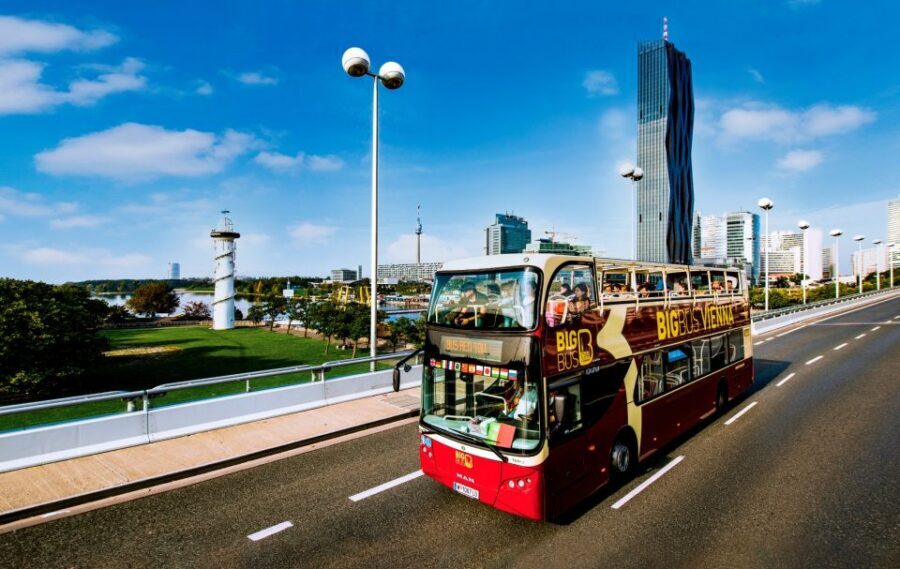
I also like how the routes split old Vienna from modern Vienna. The City Route takes you through the Museum Quarter and out toward UNO City and Danube Island, while the Palace Route reaches the outskirts for stops like Belvedere Palace and Hundertwasserhaus. Traffic can slow things between stops (it’s Vienna traffic, not magic), so build in a little buffer if you’re going museum-to-museum.
If you’re staying long enough, the 48-hour option upgrades the experience beyond the bus. You can add a guided imperial-history walking tour at 11:30 AM, and you also get Vox/POPGuide digital options to keep learning on your own schedule. The only drawback is simple: with both bus time and a walking tour, you’ll want a rough plan so you don’t lose the best sights to timing.
In This Review
- Key things to know before you ride
- Getting Oriented: Why a Hop-On, Hop-Off Bus Works in Vienna
- The Two Routes: City vs. Palace (They’re Not Just Color-Coded)
- City Route: Museum Quarter to Danube Island energy
- Palace Route: Imperial landmarks and expressionist architecture
- Opera to St. Stephen’s: Two Hop-Off Anchors You’ll Use All Day
- Hofburg and Schönbrunn: How the Bus Helps You Prioritize Palaces
- Belvedere and Hundertwasserhaus: A Palace + Left-Field Pair
- UNO City and Danube Island: Modern Vienna Without Leaving the Flow
- The 48-Hour Upgrade: Walking Tour, Vox Extras, and Better Timing
- The guided imperial-history walking tour at 11:30 AM
- Vox POPGuide: self-guided extras you can use at your own pace
- A Vienna sausage plate for 48-hour + walking tour
- Audio Commentary in 8 Languages: The Real Secret Weapon
- Using the Big Bus App and Mobile Voucher Like a Local
- When It Feels Long: Timing, Crowds, and What the Day Will Tell You
- Price and Value: Why This Usually Beats Trying to DIY Everything
- Who Should Book This Bus Tour in Vienna
- Should You Book the Big Bus Vienna Hop-On, Hop-Off Tour?
- FAQ
- How long is the Big Bus Vienna hop-on, hop-off tour?
- Where does the tour start?
- How often do the buses run?
- How do I board and use my ticket?
- Is there a guided walking tour included?
- What sights does the route cover?
- Is the tour wheelchair accessible?
Key things to know before you ride
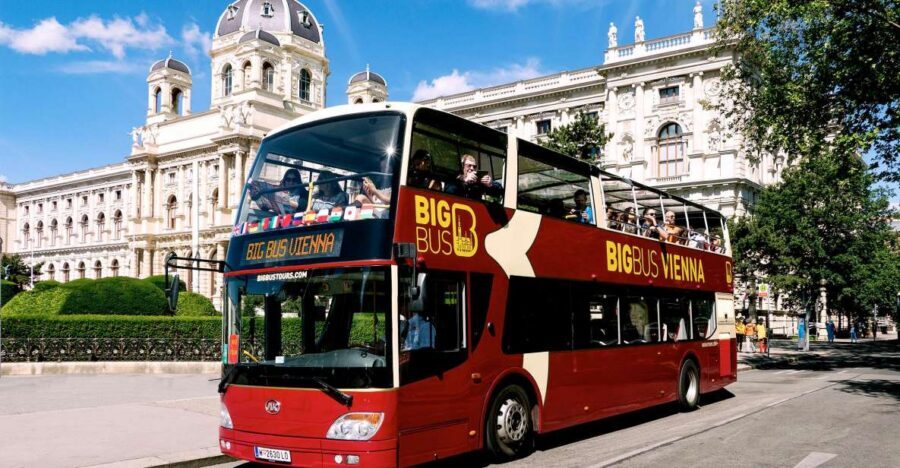
- 8-language onboard audio + headphones to make every stop make sense
- Two routes that feel different: City highlights modern stretches, Palace reaches the imperial landmarks
- 48-hour pass adds a guided walking tour on imperial history (about 90 minutes)
- Vox POPGuide self-guided options (Secrets of Vienna or Vienna in the 19th Century) in six languages
- Stop 1 at Opera is your hub—including the walking-tour departure point
- Live bus tracking in the Big Bus app so you’re not guessing
Getting Oriented: Why a Hop-On, Hop-Off Bus Works in Vienna
Vienna is gorgeous, but it’s also spread out. One day on foot can get tiring fast, especially if you’re bouncing between palaces, cathedrals, and museums. This bus tour works because it’s not just sightseeing—it’s an orientation tool.
I like that the audio commentary keeps you from wandering with only guidebook vibes. As you pass the major landmarks—Cathedral, Opera, Hofburg, and Schönbrunn—you get the who/what/why, in Spanish, English, French, German, Italian, Portuguese, Russian, and Arabic. That makes it easier to decide what’s worth your next hop-off.
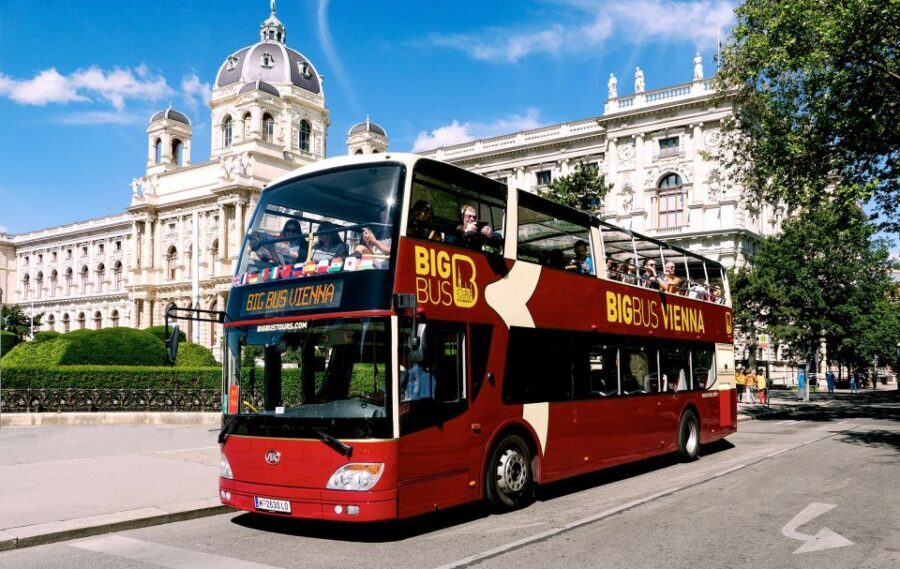
The open-top double-decker setup is also part of the value. On cooler days, you can dress for the wind and enjoy real views. On hot days, the downstairs area can feel stuffy, so you may want to choose your seat based on the weather.
You can also read our reviews of more tours and experiences in Vienna.


The Two Routes: City vs. Palace (They’re Not Just Color-Coded)
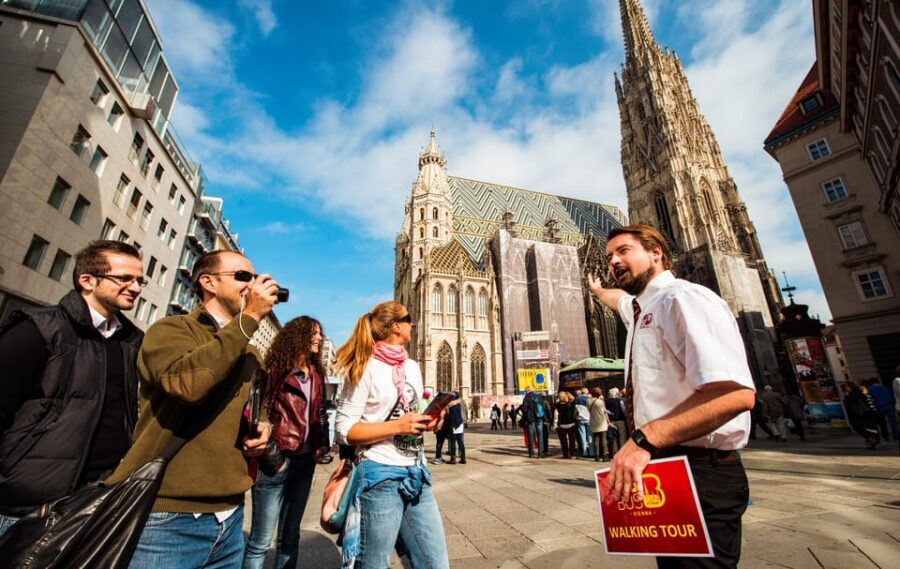
This is where the tour earns its keep: you’re choosing between routes that cover different “Vienna moods.”
City Route: Museum Quarter to Danube Island energy
The City Route is built around the idea of Vienna as both a grand historical capital and a modern city. You’ll roll through areas connected to the Museum Quarter, then continue toward parts of the city that look forward—UNO City and Danube Island are called out highlights. If you like taking photos from big vantage points, this route helps you cover a lot without constant taxi/train hopping.
Palace Route: Imperial landmarks and expressionist architecture
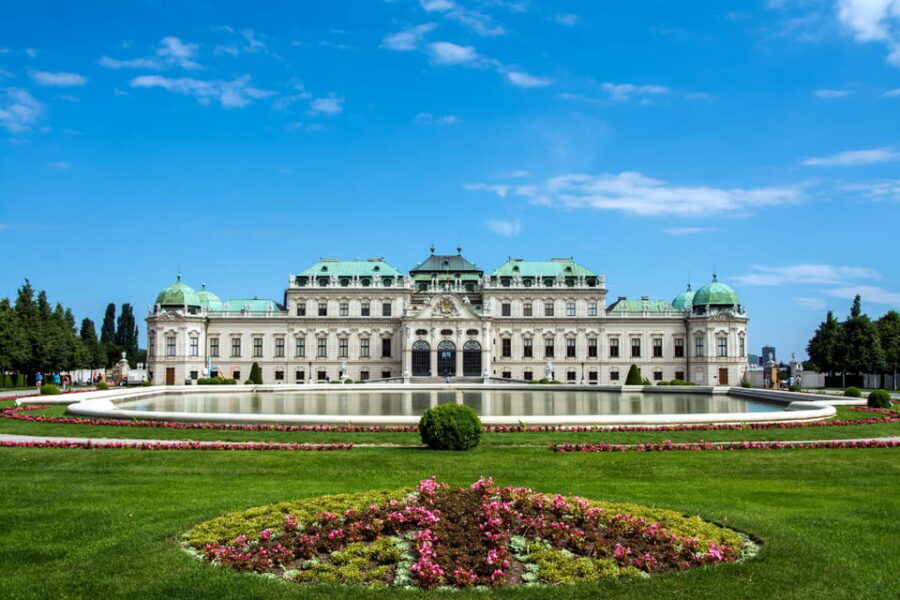
The Palace Route is the one for classic postcard Vienna and the stories behind it. Schönbrunn Palace, Hofburg Palace, and Belvedere Palace are among the headline palaces you’ll want to see. It also reaches beyond pure royal drama with a stop for Hundertwasserhaus, an expressionist landmark that feels like a creative contrast to the formal palaces.
If your brain likes variety, do both routes. If your time is tight, pick the route that matches your priorities: palaces and imperial power, or a bigger sweep that also includes modern Vienna stretches.
Opera to St. Stephen’s: Two Hop-Off Anchors You’ll Use All Day
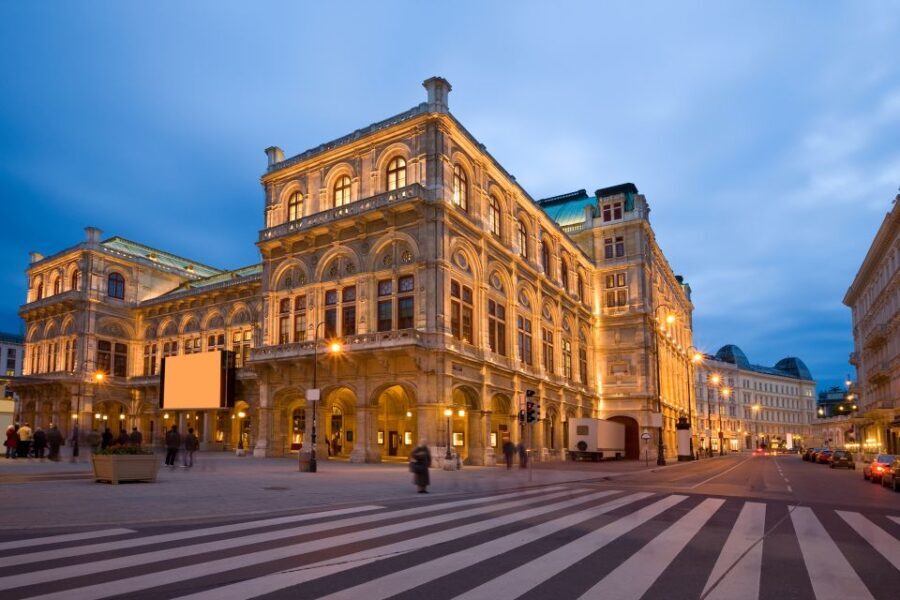
St. Stephen’s Cathedral and the Vienna State Opera are the kind of landmarks that make a first-time visit snap into place. They’re central, visually dominant, and useful for planning because they sit near a lot of walking options once you hop off.
The bus route gives you an easy rhythm: ride past, hop off for a focused look, then return later. Even if you don’t plan to spend hours at each stop, just having that circulation is helpful. You’ll also feel less pressure to cram every museum into one exhausting afternoon.
One practical tip: since buses run about every 30–45 minutes, you don’t want long “maybe” periods where you’re still deciding. If you’re unsure, hop off for 20–30 minutes. You can always come back.


Hofburg and Schönbrunn: How the Bus Helps You Prioritize Palaces
Hofburg and Schönbrunn are big names in Vienna, but they can also become decision traps. The bus tour helps you solve that because it puts both in reach with other stops, so you can judge how much you really want to commit.
Hofburg Palace connects you with Vienna’s imperial government and court life, while Schönbrunn is the grand palace-side experience many people picture first. With hop-on, hop-off, you’re not locked into a palace schedule. You can ride the route, get your bearings, then hop off where your curiosity is highest.
If you’re the type who likes to understand the place before entering, the onboard audio does a nice job of setting context. And once you’ve got that context, walking around outside (even before you go in) feels much more rewarding.
Belvedere and Hundertwasserhaus: A Palace + Left-Field Pair
Vienna can sometimes feel like a constant stream of baroque and stately facades. The Palace Route balances that with two very different flavors.
Belvedere Palace gives you the imperial-palace scale in a setting that’s known for being visually striking. Hundertwasserhaus adds something completely different: an expressionist landmark that looks playful and unpredictable. That contrast is exactly why I like having both stops on the same “palette” day.
If you only have one day, this is a good combo to target because it covers both high-form history and a more creative edge. It also helps if you have one person in your group who gets palace-saturated. One hop-off to something like Hundertwasserhaus can reset the day.
UNO City and Danube Island: Modern Vienna Without Leaving the Flow
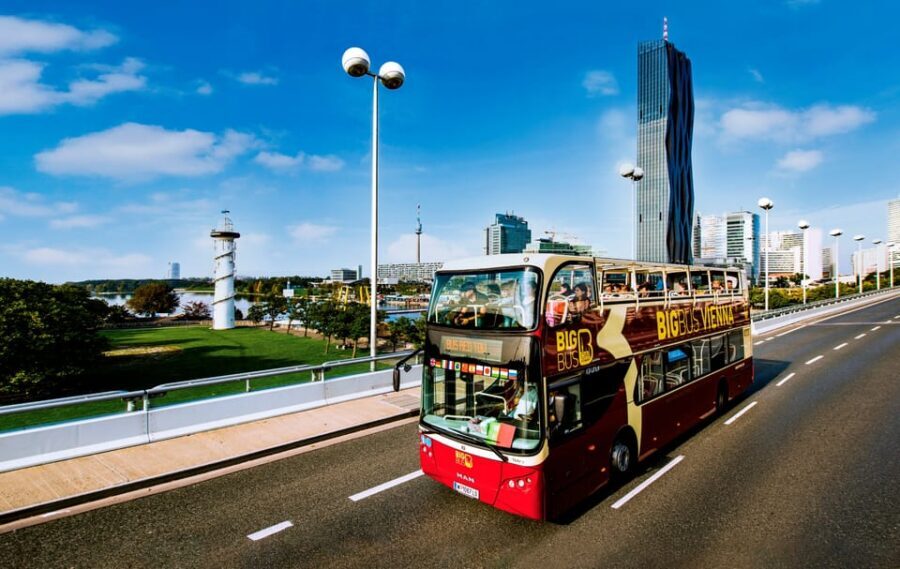
A lot of visitors go to Vienna for the imperial sights and then call it done. But Vienna’s story includes modern architecture and river views too, and this tour takes you that way on the City Route.
UNO City and Danube Island are flagged as highlights, and the value is practical. You see the city stretching beyond the classic center while staying on a simple loop with predictable pickup points. That’s especially helpful if you don’t want to spend your day learning transit routes.
Also, this is where the open-top experience really pays off. Even without a formal stop plan, rolling along with big river/modern-city sightlines is one of those “I’m glad I did this” moments.
The 48-Hour Upgrade: Walking Tour, Vox Extras, and Better Timing
If you can swing it, the 48-hour pass changes the tour from simple transportation into a learning plan.
The guided imperial-history walking tour at 11:30 AM
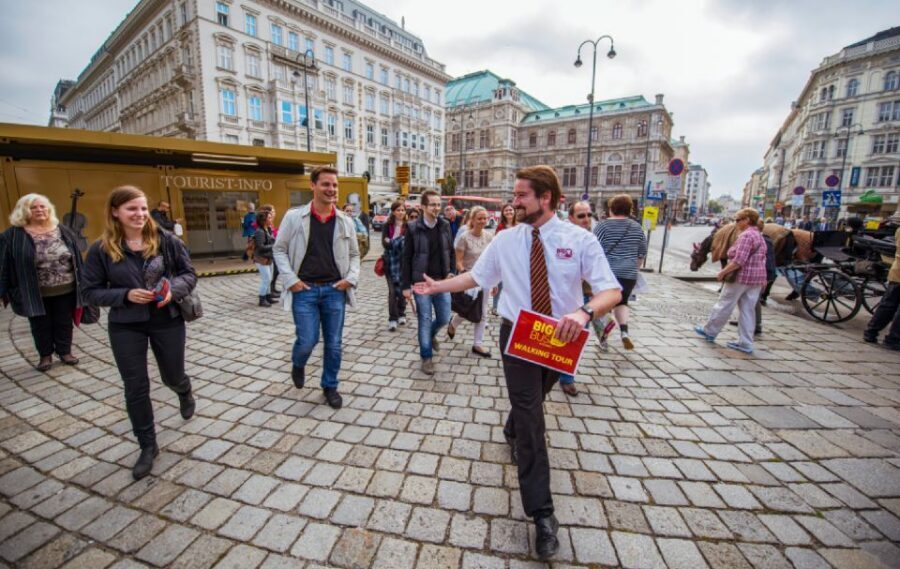
With the 48-hour ticket option that includes the guided walking tour, you get a licensed guide-led walk about Vienna’s imperial history. It departs daily at 11:30 AM from Stop 1: Opera, located at Walfischgasse 2, and runs about 90 minutes in English.
This time matters because it gives you a framework for the rest of your bus day. After a guided walk like this, the palaces and major landmarks feel connected, not random. I like pairing this with a second bus route later—because then you’re watching for what the guide set up.
Vox POPGuide: self-guided extras you can use at your own pace
The 48-hour ticket also includes a code for the Vox POPGuide app. Once you activate your QR with Big Bus staff and redeem the code, you can access two self-guided tours: Secrets of Vienna or Vienna in the 19th Century. These are available in six languages.
That’s a smart add-on if you like to keep moving but still want more stories. It also gives you flexibility if the day is rainy or you need to fit in a museum timed visit.
A Vienna sausage plate for 48-hour + walking tour
If you select the 48-hour ticket with the walking tour included, you also get a free Viennese sausage plate at ZUM KAISER Sausage Stand. It’s located about a one-minute walk from Big Bus Stop 1. This is useful because it keeps you from scrambling for lunch right after the walk.
Audio Commentary in 8 Languages: The Real Secret Weapon
Vienna is visual, but it’s also detail-heavy. The onboard audio commentary is what turns “pretty buildings” into “oh, that matters.”
You get audio in eight languages, and the setup includes headphones provided. If you prefer your own headphones, that works too. The audio itself is described as clear, with different voices that help keep your attention, which is a big deal on a bus—especially if you tend to drift off on other tours.
The practical angle: you can listen while traveling between stops, then hop off knowing exactly what you’re looking for. That reduces wasted time and helps you avoid the classic mistake of spending the afternoon admiring façades without learning what they represent.
Using the Big Bus App and Mobile Voucher Like a Local
This tour is designed for easy self-navigation. You board using your mobile voucher or QR, and you activate it at any Big Bus stop. Meeting points can vary by option, so check what your exact ticket directs you to before you start walking.
Once you’re on the ground, download the Big Bus app for live bus tracking and stop locations. It’s the difference between waiting around and timing your hop-off with less stress. When you’re in a city with lots of walking routes, saving time at the start matters.
I also like that the tour is wheelchair accessible. For anyone using mobility aids, this kind of hop-on setup can be far simpler than coordinating multiple transit legs.
When It Feels Long: Timing, Crowds, and What the Day Will Tell You
Buses run from 9:30 AM, with service every 30–45 minutes, and the last tour departs at 4:00 PM. That schedule is totally fine for most sightseeing plans, but it does mean you should treat this as a daytime tool. If you want late-night Vienna views, add a separate plan.
You might also notice traffic congestion in the center. Even with frequent buses, road slowdowns can add time between stops. The fix is simple: don’t schedule a critical museum entry for every hop-off. Use the bus to move and orient, then commit to your longest indoor time at the stops that truly grab you.
Seat choice is another real-life factor. In colder months, downstairs can feel warmer. In summer heat, downstairs can be hot since it’s less breezy. If you can, match your seat to the weather and your comfort level.
Price and Value: Why This Usually Beats Trying to DIY Everything
At about $36 per person (depending on your selected option), this tour can be good value because it combines transportation and interpretation in one ticket. The biggest cost you avoid isn’t the bus fare—it’s the time and planning effort of stitching together a bunch of separate rides and then figuring out what’s where.
The value gets stronger if you’re using both routes during your pass window. Two routes covering palaces, cathedral/opera, and even modern stops means you’re more likely to check off major highlights without turning the day into a logistics test.
The 48-hour upgrade can also be a strong deal if you’re trying to do a lot in a short trip. It adds the guided imperial-history walk, the Vox POPGuide code, and (with the walking-tour option) a free Viennese sausage plate near Stop 1. That’s not just extra stuff—it’s a way to make the time feel more meaningful.
One more value point: kids age 4 and under travel free and do not require a ticket. That can help if you’re traveling as a family and need a low-friction sightseeing plan.
Who Should Book This Bus Tour in Vienna
This is a great fit if you want:
- A quick way to cover Vienna’s headline sights without building a transit spreadsheet
- A flexible plan where you can change your mind at a stop
- Audio guidance in multiple languages so everyone in your group can follow along
It’s also a smart choice if you’re visiting for a short window and want an overview first. If you’re the type who likes to decide later what to spend more time on, hop-on, hop-off is perfect.
If you already know you want only one palace and one museum, then you might not need the full pass. But if your day is still fluid, this is one of the easiest ways to keep your options open.
Should You Book the Big Bus Vienna Hop-On, Hop-Off Tour?
I’d book it if you want a low-stress way to see both classic Vienna and modern stretches, with audio in 8 languages doing the heavy lifting. The Stop 1 at Opera hub plus the option to add the 48-hour guided walking tour makes it easier to structure two days without over-planning.
Skip it only if you’re staying long enough to walk everything comfortably or you already have a detailed itinerary that doesn’t need bus help. Otherwise, this tour is a practical way to get your bearings fast and turn Vienna’s big landmarks into a connected story.
FAQ
How long is the Big Bus Vienna hop-on, hop-off tour?
The experience runs from about 90 minutes up to 2 days, depending on whether you choose a 24-hour or 48-hour pass.
Where does the tour start?
The first tour departs from Big Bus Stop #1: Opera at 9:30 AM. The exact meeting point can vary depending on the option you book.
How often do the buses run?
Buses run about every 30–45 minutes, with the last tour departing at 4:00 PM.
How do I board and use my ticket?
Board by using and activating your mobile voucher or QR at any Big Bus stop.
Is there a guided walking tour included?
A guided city walking tour is included with the 48-hour option. It departs daily at 11:30 AM from Stop 1 (Opera) at Walfischgasse 2 and lasts about 90 minutes in English.
What sights does the route cover?
You can expect stops and/or views around major landmarks like St. Stephen’s Cathedral, the Vienna State Opera, Hofburg Palace, Schönbrunn Palace, Belvedere Palace, Hundertwasserhaus, and parts of modern Vienna such as UNO City and Danube Island.
Is the tour wheelchair accessible?
Yes, the tour is wheelchair accessible.