REVIEW · VIENNA
Vienna: Imperial Treasury in the Hofburg Palace
Book on GetYourGuide →Operated by Kunsthistorisches Museum · Bookable on GetYourGuide
Crown jewels, relics, and royal drama in one room. In the Hofburg Palace’s Swiss Wing, the Imperial Treasury turns Habsburg power into tangible objects, from the Austrian Imperial Crown to surviving pieces tied to Empress Elisabeth. You’re not just looking at jewelry here—you’re seeing how rule, faith, and propaganda were worn like armor.
I love the fact that this collection is packed but not endless. You can plan an experience of about an hour (often around 1–1.5 hours if you linger), and the highlights jump quickly from crown regalia to religious rarities like the Holy Lance. One possible drawback: the galleries can be dim, and because this experience uses a voucher, you should expect a bit of ticket-counter hassle—sometimes a line to exchange your code.
In This Review
- Key highlights you shouldn’t miss
- Why the Hofburg Swiss Wing treasury feels like Vienna’s power vault
- What you’ll actually see inside (and why it’s not just jewelry)
- Austrian Imperial Crown and the Holy Roman Empire regalia
- Empress Elisabeth’s diamonds: where the court turns human
- The Order of the Golden Fleece, Burgundy, and the “King of Rome” cradle
- Legendary treasures: Holy Lance, the Holy Grail bowl, and the unicorn horn
- How to pace the visit so you don’t rush the good parts
- Audio guide vs. coming with your own guide: what makes sense
- Tickets, QR codes, and the voucher reality at the palace
- Light levels and why you might want to plan your attention
- Who this Imperial Treasury stop is best for (and who should think twice)
- Should you book the Imperial Treasury in the Hofburg?
- FAQ
- How long should I plan for the Imperial Treasury visit?
- Is an audio guide included?
- Where is the meeting point inside the Hofburg?
- Do I need a printed voucher?
- Is the Imperial Treasury wheelchair accessible?
- Who qualifies for free admission?
- Can I cancel for a refund?
Key highlights you shouldn’t miss
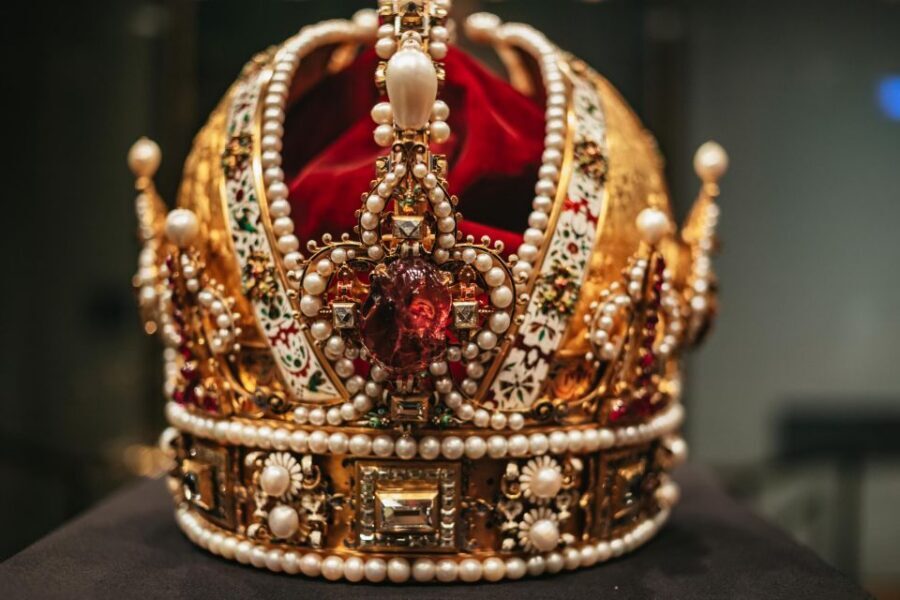
- Austrian Imperial Crown: a show-stopper linked to the Holy Roman Empire regalia
- Elisabeth’s jewelry pieces: diamonds and gem details tied to Sisi’s original collection
- Order of the Golden Fleece treasure: a powerful symbol of elite status and loyalty
- The “Holy Grail” agate bowl: a legendary object presented as one of the court’s great marvels
- Holy Lance and unicorn horn: relic-style legends mixed right in with crown jewels
Why the Hofburg Swiss Wing treasury feels like Vienna’s power vault
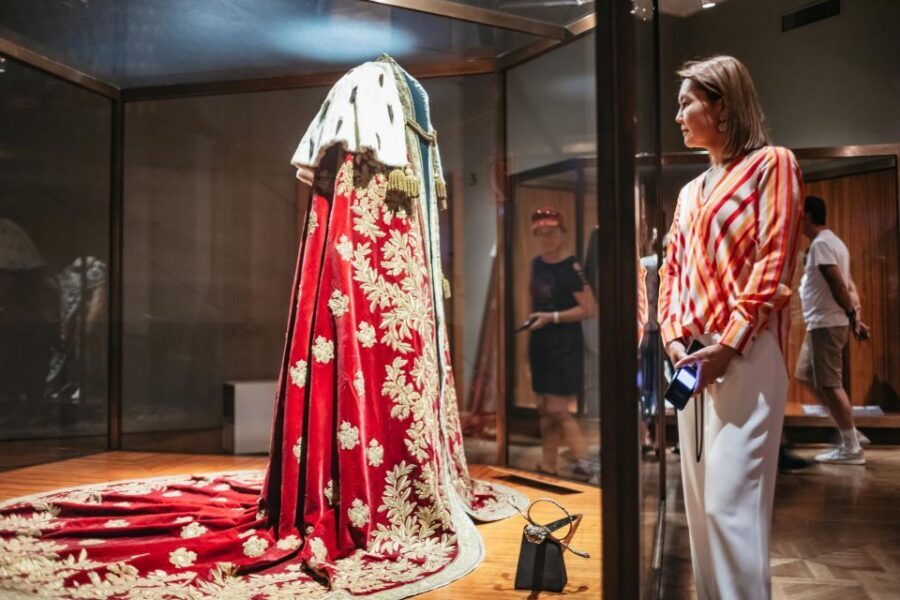
If you’ve ever wondered how a family like the Habsburgs managed to look untouchable for centuries, the Imperial Treasury is a blunt answer: they turned wealth into objects you can stand inches from. It’s inside the oldest part of the Hofburg Palace, the Swiss Wing, and that setting matters. This isn’t a modern museum built to be neutral. It’s a historic palace space that already feels like it was designed to impress.
The visit is also refreshingly practical. You’re not required to commit to a half-day plan. The experience is set for 1 day, and the common pacing is about an hour to an hour and a half. That’s a real advantage in Vienna, where you’re often balancing palace lines, museums, churches, and coffee breaks.
At $18 per person, this also hits a sweet spot for value. You’re paying for access to a concentrated collection of crowns, ecclesiastical pieces, and legendary objects—so you get “big Vienna” without needing an all-day ticket.
You can also read our reviews of more tours and experiences in Vienna.


What you’ll actually see inside (and why it’s not just jewelry)
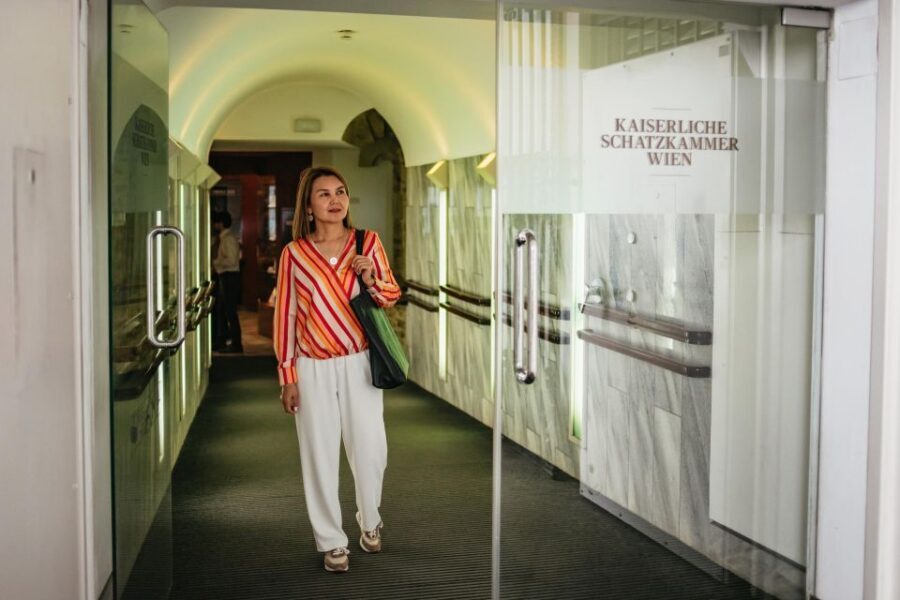
The Imperial Treasury is famous for a reason: it mixes three things that rarely sit together in one place.
First, you have royal regalia—the kind of objects tied to authority, succession, and the right to rule. In this collection, the crown isn’t just decorative. It’s a political prop made physical.
Second, there are religious relics and sacred objects. The display includes items presented as relics and legendary religious treasures. This helps explain why royal power and spiritual power were braided together for much of European history.
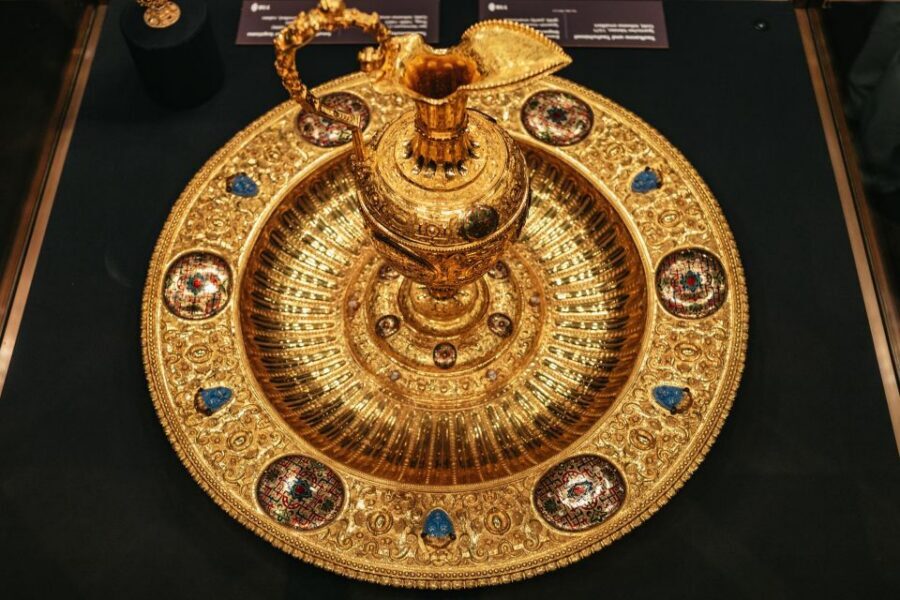
Third, there are the details—jewels, gemstones, and settings that show how craftsmanship carried meaning. When you look at famous stones like the large emeralds mentioned for this treasury, you start to understand the Habsburg strategy: luxury that survives, luxury that communicates.
This mix is why the collection works so well even if you’re not a full-time jewelry nerd. You’ll still come away understanding what mattered to the court.
Austrian Imperial Crown and the Holy Roman Empire regalia
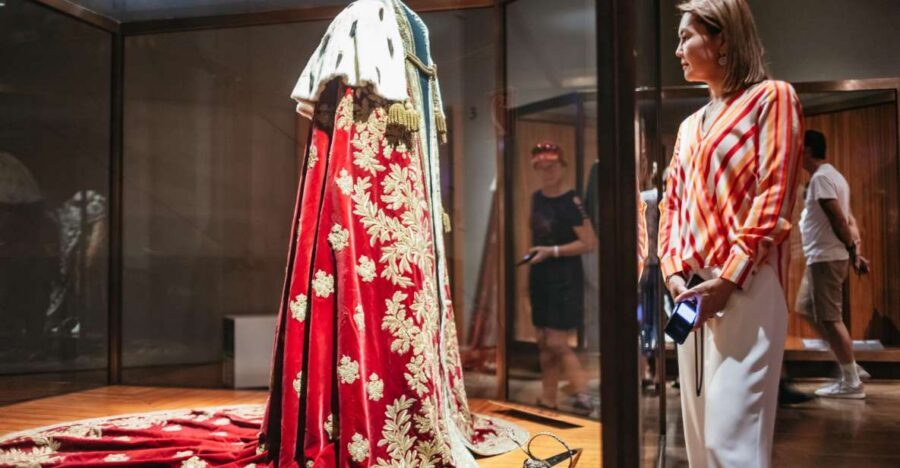
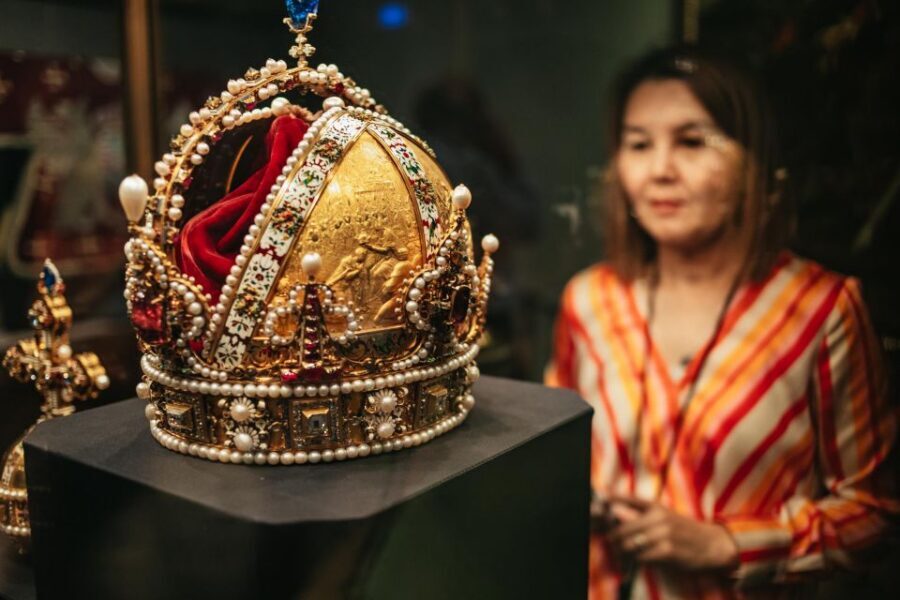
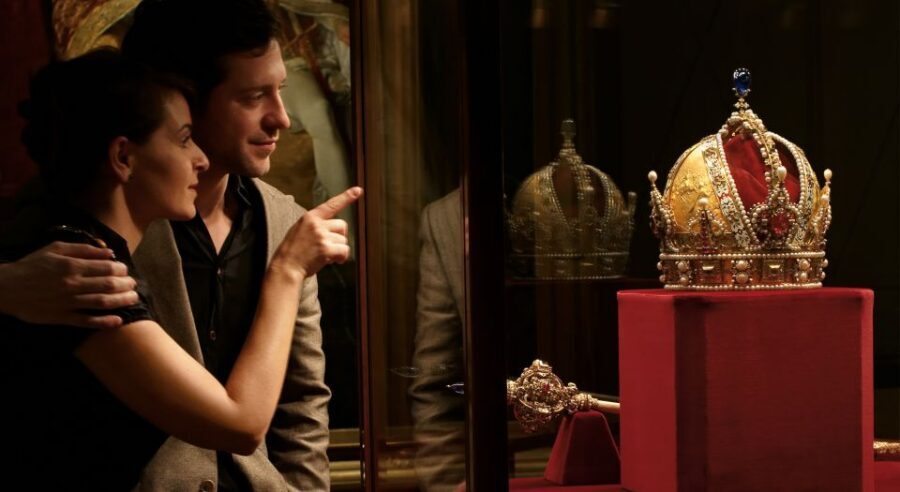
The star category here is the regalia tied to the Holy Roman Empire, especially the Imperial Crown. For many people, this is the moment the whole story clicks: this treasury isn’t simply about Habsburg taste, it’s about their place in a larger political world.
And then there’s the Austrian Imperial Crown, singled out as one of the most beautiful crowns in the world. Even without any extra theatrics, crowns like these usually do the same thing: they force you to slow down. You start noticing proportions, jewel placement, and how the crown reads as a symbol from a distance as well as up close.
If you only have the attention span for one major stop in Vienna’s palace world, the Imperial Treasury is a strong candidate because it delivers “headline objects” in a compact setting.
Empress Elisabeth’s diamonds: where the court turns human
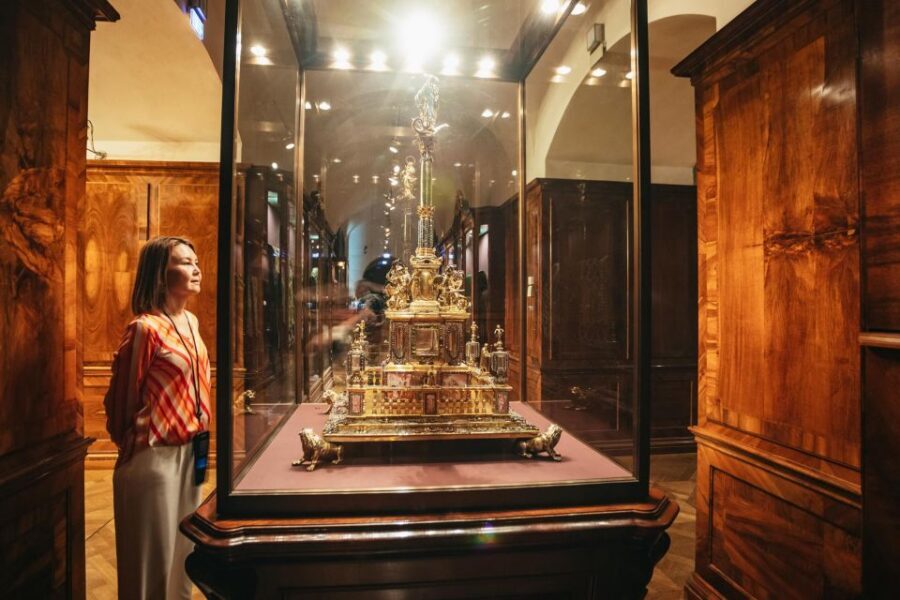
The treasury doesn’t stay frozen in official portraits. It includes jewels and diamond pieces connected to Empress Elisabeth (Sisi), including parts of her original jewelry.
This matters because it shifts the tone from state power to personal splendor. You’re still looking at wealth, but it’s wealth that belonged to a specific person—someone with a reputation, a life story, and a mythos that still travels with her today. That makes the gemstones feel less like anonymous decoration and more like artifacts of an actual human presence.
This is also one reason many visitors enjoy taking their time. If your mind tends to wander while you read placards, Elisabeth’s items give you a hook. You can’t help but wonder what she wore, what her court used, and how these jewels survived across reigns.
The Order of the Golden Fleece, Burgundy, and the “King of Rome” cradle
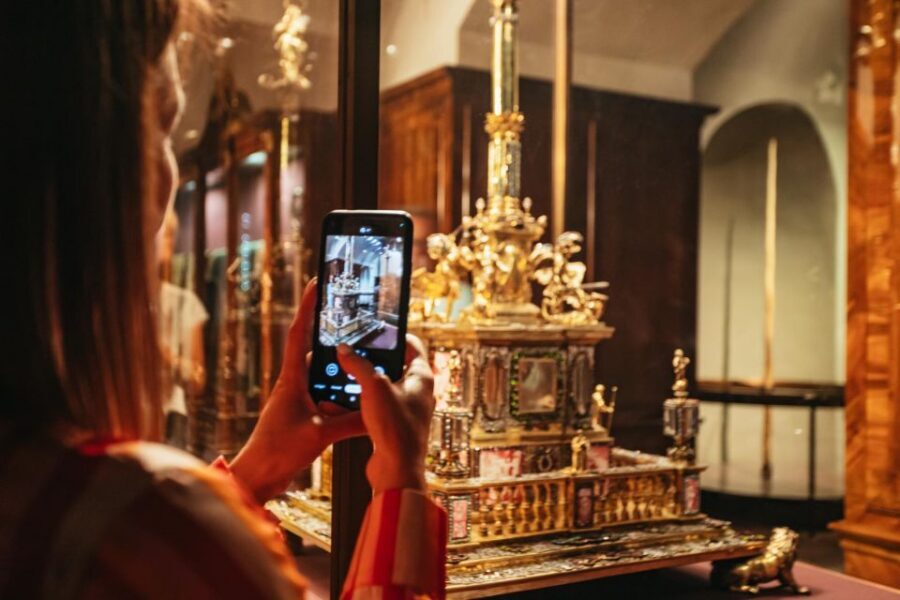
Beyond crowns and stones, the treasury highlights elite orders and royal lineage.
You’ll see the treasure of the Order of the Golden Fleece, a name you’ll recognize in European history circles. Here, the “order” isn’t just a title—it’s represented as material proof of belonging. For a visitor, this is one of those objects that helps you connect history terms to something you can point to.
The collection also includes 15th-century Burgundy pieces. That helps broaden the frame from strictly Habsburg objects to the wider court culture they collected from and represented.
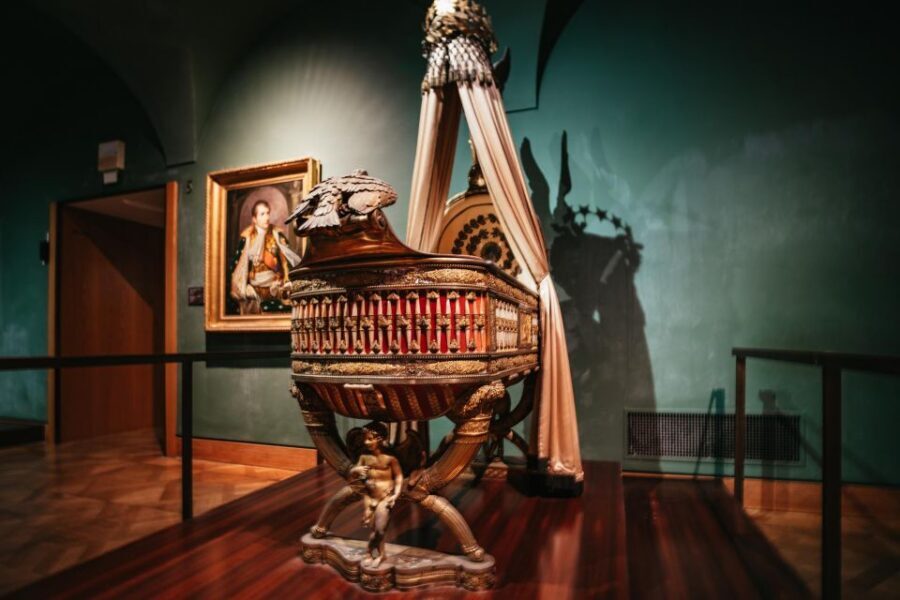
One especially intriguing non-jewel item category mentioned for this treasury is the cradle of the King of Rome (Napoleon II). Even if you’re not expecting to feel emotional in a room full of diamonds, a cradle changes the temperature. It’s a reminder that dynasties were built around family milestones—babies, heirs, and the political value of who came next.

Legendary treasures: Holy Lance, the Holy Grail bowl, and the unicorn horn
If you’ve ever loved the idea that medieval courts collected miracles as much as medals, this section is for you. The treasury includes legendary objects described in dramatic terms, such as:
- Holy Lance (8th century)
- The Holy Grail, presented as the world’s largest agate bowl
- The horn of a unicorn
The point here isn’t to turn your brain into a debate club. The value for most visitors is cultural. These items were part of how courts created authority: by linking themselves to sacred legends, miraculous narratives, and symbols that made power feel ordained.
Also, legendary objects are often easier to remember later. You’ll walk out with a mental “save file” that’s more vivid than another room of crowns. In a city packed with palaces and museums, that matters.
How to pace the visit so you don’t rush the good parts
The Imperial Treasury doesn’t usually require a full museum strategy. You can treat it like a focused stop.
A realistic pacing guideline:
- Plan on about an hour if you want to hit the main highlights.
- Plan 1–1.5 hours if you want to read labels and actually compare jewel details.
Some visitors also report needing a break halfway through and being able to re-enter easily. That’s a good sign: if you take your time, you’re not stuck in an all-or-nothing sprint.
My practical advice: decide before you go what “win” looks like.
- If you want crown-and-relief satisfaction, give yourself 60 minutes.
- If you want jewelry details and the story behind the regalia, give yourself closer to 90 minutes.
Audio guide vs. coming with your own guide: what makes sense
The ticket information here is simple: your entrance ticket is included, but an audio guide is not listed as included. You can still have a richer experience if you add audio or a guided explanation on the spot.
Here’s the practical trade-off:
- Without audio or a guide, you’ll still enjoy the objects—this treasury is arranged so you can navigate it.
- With audio or a guide, you’ll get more narrative, which matters for legends and order-style objects where names can blur together.
If you’re the kind of person who likes to ask questions, consider adding a guided tour through another source (this entrance ticket itself doesn’t include a guided tour). A couple of guide experiences were highlighted by name—one guide called Petee gave a detailed overview of the Habsburg line and explained Franz Joseph and Sisi, and another guide called Alex was praised for doing an excellent job. Those are examples of what good interpretation can add.
If you’re traveling with your own guide, that’s allowed—just know you’re still working with an entrance ticket for the treasury itself.
Tickets, QR codes, and the voucher reality at the palace
This is the part that can trip you up, even if the museum experience is great.
Your booking uses a printed voucher requirement. In practice, some people found the voucher-to-ticket process involved standing in line to exchange a code for actual museum tickets. Another visitor mentioned difficulties when a voucher wasn’t printed, and the staff still helped, but the smoothest path is to arrive prepared.
So do this:
- Bring your printed voucher.
- Build a small buffer for the ticket counter.
- Expect that inside the Hofburg, signage can feel confusing, so arrive with a plan for where the Swiss Wing is.
Think of this as the only “rough edge” worth planning around. Once you’re past the ticket moment, the experience itself is the payoff.
Light levels and why you might want to plan your attention
Some visitors have commented that the lighting can make it harder to see details clearly. If you care about gemstones, settings, and close-up craftsmanship, don’t plan to speed-run.
Instead:
- Give your eyes time to adjust.
- Focus on a few major pieces rather than trying to “see everything” at once.
It’s one of those museum realities: you don’t need perfect light to enjoy a treasury, but you do need a little patience.
Who this Imperial Treasury stop is best for (and who should think twice)
This visit works especially well if you like:
- Crown jewels and court regalia
- Religious relic-style objects
- A concentrated museum stop you can finish without half a day
It can also work if you’re traveling with family. The data notes that children and young people under 19 generally enjoy free admission.
Consider thinking twice if:
- You want a walk-through with lots of outdoor scenery or modern interactive displays. This is a historic treasure room experience.
- You hate ticket-counter lines or any kind of voucher exchange. If you’re very sensitive to time, factor in extra minutes.
And if you’re doing a palace-and-museum loop in Vienna, this is a great “anchor” stop. It’s compact, it’s iconic, and it gives you stories you’ll spot later in the city.
Should you book the Imperial Treasury in the Hofburg?
Yes—if you want a high-impact, low-commitment visit to Vienna’s most famous treasure setting.
Book it when:
- You want top-tier objects (crown jewels, Habsburg diamonds, legendary relics) in a single place.
- You like a museum you can finish in about an hour to an hour and a half.
- You’re okay planning for a printed voucher and a possible ticket-counter exchange.
Skip or rethink it if:
- You strongly prefer guided tours to be included automatically.
- You don’t want to deal with voucher and ticket-counter logistics.
For most people, the math is simple: for $18, you get access to a world-class collection housed in one of Vienna’s power-center buildings, and you can pace it around your day.
FAQ
How long should I plan for the Imperial Treasury visit?
Most people seem to finish in about an hour, with many taking around 1–1.5 hours if they read and linger over details. The experience is designed as a short stop inside the Hofburg.
Is an audio guide included?
An entrance ticket is included, but an audio guide is not listed as included. Some visitors found audio/headsets useful on site, but the baseline ticket doesn’t promise it as part of the package.
Where is the meeting point inside the Hofburg?
The meeting point is the Swiss Wing in the Vienna Hofburg Palace.
Do I need a printed voucher?
Yes. A printed voucher is required.
Is the Imperial Treasury wheelchair accessible?
Yes. The experience is listed as wheelchair accessible.
Who qualifies for free admission?
The info notes that children and young people under 19 generally enjoy free admission. It also says school groups under 19 must be registered via the museum’s booking department.
Can I cancel for a refund?
Yes. The experience offers free cancellation up to 24 hours in advance for a full refund.